
Reviewed · HISTORICAL TOURS
Corfu: History and Culture Walking Tour
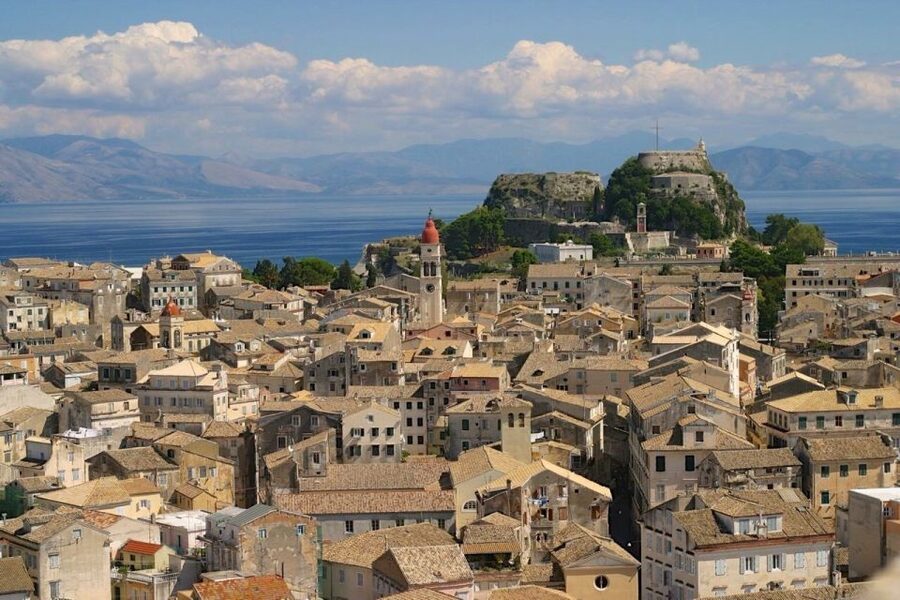
Corfu’s story is written in stone. This three-hour walk brings together the Old Venetian Fortress, quiet lanes, grand squares, and the island’s Greek, Venetian, French, and British influences. I like the compact route and the chance to see Corfu Town with a local guide rather than simply passing through its prettiest streets.
I also like the small group of no more than eight people, which gives you a better chance to ask questions and follow the guide’s pace. Guides such as Nausica, Alice, Valia, Arita, and Ariti have earned strong praise for their warmth and local insight. The main drawback is practical: the route includes fortress paths, steps, and uneven streets, so it is not suitable for people with mobility impairments.
In This Review
- Key points to know before you book
- Why Corfu’s history works best on foot
- Meeting at the statue of Schulenburg
- Inside the Old Venetian Fortress
- From quiet alleys to lively squares
- St. Spyridon Church and Corfu’s Orthodox identity
- Town Hall Square and Corfu’s former elite
- The guides make the difference
- Is $93 a fair price?
- Who should book this walk?
- Final verdict: a strong introduction to Corfu Town
- FAQ
- How long does the Corfu History and Culture Walking Tour last?
- What is included in the tour price?
- Does the tour include food or drinks?
- Where does the tour meet?
- Is hotel pickup and drop-off provided?
- Is this a private tour?
- Can I cancel the booking?
Key points to know before you book
- The Old Fortress is the tour’s anchor, with a guided visit and views along the way.
- Corfu Town’s mixed past comes alive through Venetian, French, British, and Greek influences.
- St. Spyridon Church has a striking 16th-century design and the highest bell tower in the Ionian Islands.
- Town Hall Square reveals Corfu’s former social elite, with monuments and stories about the neighborhood.
- The group is limited to eight people, making conversation with the English-speaking guide easier.
- The $93 price includes fortress admission, but not food, hotel transfers, or other transport.
Why Corfu’s history works best on foot
Corfu Town is the kind of place where a short walk can cross several centuries. The route is not built around a single monument. Instead, it links the fortress, old lanes, churches, fountains, squares, and civic buildings so you can see how outside powers shaped everyday life.
That matters because Corfu’s past is not a simple Greek story. Venetian rule left a strong mark on the fortifications, streets, buildings, and local traditions. French and British periods added further layers, while Greek Orthodox faith and local customs remained central to life on the island.
I like this approach for a first visit because it gives you a framework for the town. Later, when you walk through Corfu on your own, you will recognize why certain buildings look different from others and why the city feels distinct from many mainland Greek destinations.
The three-hour length is also well judged. It is long enough to cover the main historic center without turning into an all-day march. At the same time, you should expect a real walking tour rather than a quick introduction. Comfortable shoes are essential.
More Walking Tours in Corfu
- Corfu Town: Guided Walking Tour and Local Food Tastings
★ 4.9 · 313 reviews - Taste Corfu: Private Corfu Food Walking Tour
★ 5.0 · 82 reviews - Corfu: Gastronomy Walking Tour
★ 4.9 · 78 reviews
Meeting at the statue of Schulenburg
The tour begins at Agoniston Politechniou, with the guide waiting by the statue of Schulenburg in front of the Old Fortress. This is a useful starting point because you are already beside one of Corfu’s major historic sites.
There is no hotel pickup or drop-off, so you need to make your own way to the meeting point. If you are arriving from a cruise ship, staying outside Corfu Town, or visiting on a tight schedule, allow enough time to reach the fortress before the start.
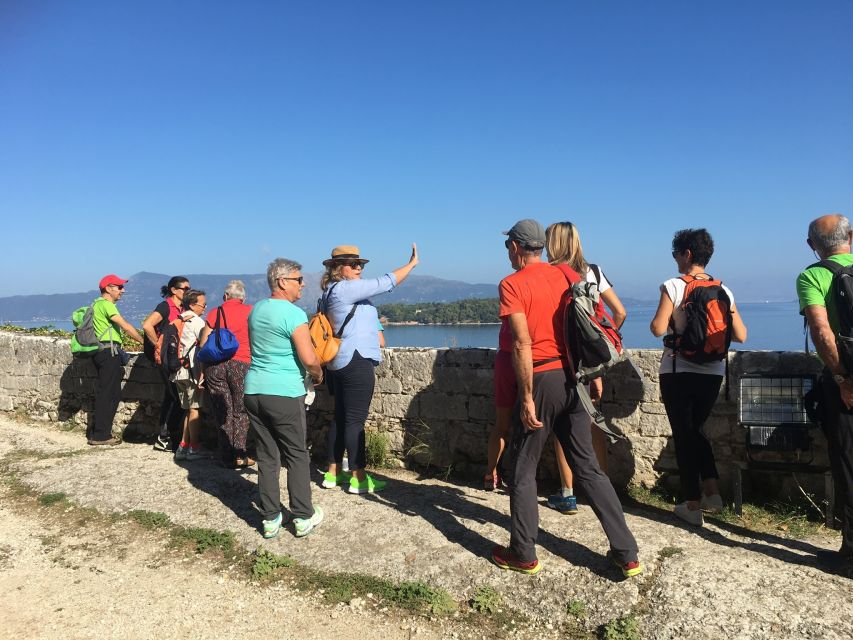
The guide leads the tour in English. Since the group is capped at eight participants, you should get a more personal experience than on a large coach excursion. That small size is especially useful in the old town, where narrow lanes and busy public spaces can make it hard to hear in a big group.
The exact starting time depends on availability, so check the schedule before booking. The operator also allows you to reserve now and pay later, which can help if your Corfu plans are still shifting.
Inside the Old Venetian Fortress
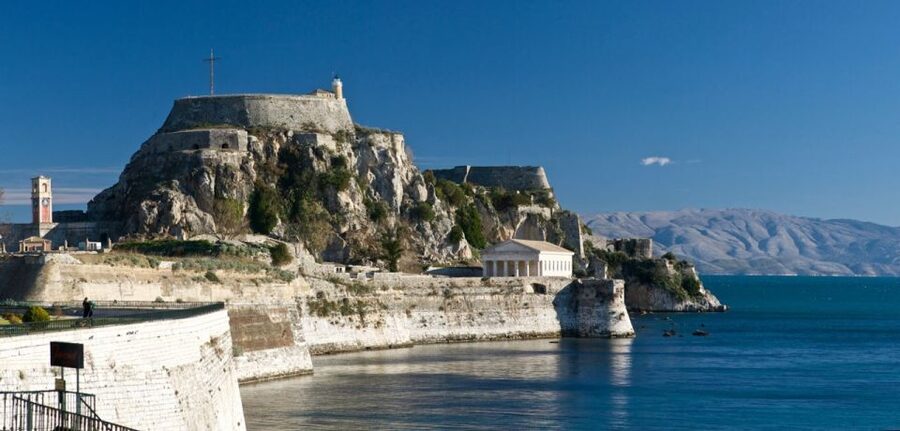
The Old Fortress is the clearest physical reminder of Corfu’s Venetian period. It occupies a powerful position in the historic center and gives the walking tour a strong opening. You visit the fortress with a guide, and the entrance fee is included in the price.
The value here is not only the admission ticket. A guide can explain how the fortress fits into Corfu’s wider story and point out the influence of Venetian rule on local culture and traditions. Without that context, it is easy to admire the walls and views while missing the human story behind them.
Expect a walking visit with scenic views along the way. The fortress section also sets the tone for the rest of the tour, showing how Corfu’s location made it important to successive powers. Its defenses were not built simply for decoration. They reflect the island’s position and its long history of outside control.
This is likely the most physically demanding part of the outing. The tour is not suitable for people with mobility impairments, and comfortable footwear is specifically recommended. If uneven surfaces, inclines, or steps are difficult for you, this may not be the right way to see Corfu Town.
The fortress can also be a good place to ask questions early in the tour. Guides praised for this experience, including Valia and Arita, have been noted for explaining not only the buildings but also the people and traditions connected with them. That broader view is what makes the visit more than a walk around old defenses.
From quiet alleys to lively squares
After the fortress, the route continues through Corfu Town’s historic center. You move between narrow alleyways, open squares, fountains, and older streets that reveal how the town developed over time.
I like this part because it slows the pace. The fortress gives you a grand historical setting, but the center shows how history sits alongside daily life. A quiet lane can lead to a lively square, and a fountain or façade can open a conversation about the city’s changing rulers and residents.
The route description refers to deserted alleyways as well as lively public spaces. That contrast is useful. Corfu Town is not just a collection of postcard views. Some streets feel calm and tucked away, while others are social gathering points. A guide helps connect those spaces instead of treating them as unrelated stops.
The cultural focus is one of the strongest reasons to book this walk. You are not only hearing dates and names. You are learning how Venetian, French, British, and Greek influences affected Corfu’s identity and inhabitants. That makes the tour a good choice if you want to understand why the island feels different from other parts of Greece.
Past outings have sometimes included small tastings of local products, such as dairy items or liquor, but food is not included in the listed price. Treat any tasting as an occasional extra rather than a promised part of the tour. The guide may also offer useful restaurant suggestions. Nausica, in particular, has been praised for helping visitors find places to eat and for suggesting a visit to the Asian Museum after the walk.
More ancient sites near Corfu:
- Small-Group Food and Cultural Tour in Corfu
★ 5.0 · 299 reviews - Historical Delphi One Day Tour with Arachova Stop & Expert Guide
★ 4.5 · 1,247 reviews - Historic Athens: Small Group Electric Bike Tour
★ 4.9 · 740 reviews - Naxos Half Day History and Culture Guided Tour
★ 5.0 · 491 reviews
St. Spyridon Church and Corfu’s Orthodox identity
The route continues to St. Spyridon Church, one of the most important religious landmarks in Corfu Town. This 16th-century Greek Orthodox church has distinctive architecture and a bell tower described as the highest in the Ionian Islands.
This stop adds balance to the fortress. The Venetian defenses explain outside power, while St. Spyridon brings the focus back to local faith and tradition. The church helps show that Corfu’s identity was shaped by interaction, not replacement. Foreign rulers left their mark, but Greek Orthodox life remained a major part of the city.
You should listen closely here because the church is also tied to the island’s cultural memory. The guides are praised for explaining customs, heritage, and the many identities Corfu has held over time. A good guide can make the church feel connected to the streets around it rather than treating it as a quick photo stop.
One detail that may interest history-minded visitors is the connection to Prince Philip’s christening, mentioned during one guided visit. The tour does not promise a separate royal-history segment, but this sort of detail can help place Corfu within wider European history.
As with the fortress, dress and behavior should be respectful inside a working church. The supplied information does not specify a dress code, so I would simply plan to enter as you would any active place of worship.
Town Hall Square and Corfu’s former elite
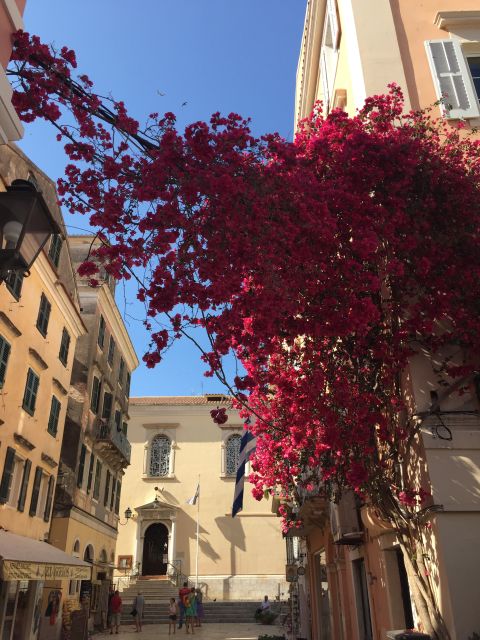
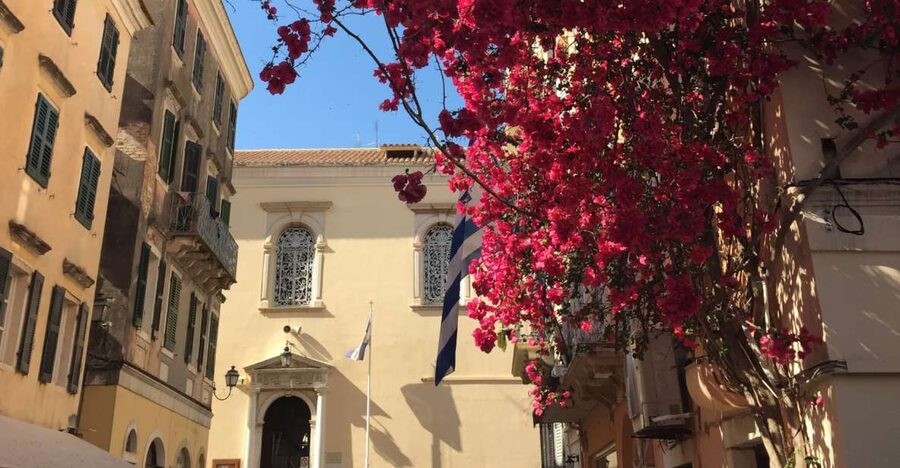
The final main stop is Town Hall Square, once regarded as the most exclusive neighborhood in Corfu. Here, you see impressive monuments and hear about the elite who met and socialized in the area.
This is a smart ending because it shifts the story from military power and religious life to status, society, and civic identity. Corfu’s history was shaped not only by rulers and armies but also by the people who controlled local institutions and gathered in prestigious public spaces.
Town Hall Square also gives the tour a sense of development. You can compare the fortress as a symbol of defense, the church as a symbol of faith, and the square as a symbol of public life. Together, these stops offer a useful way to read the city.
The tour finishes back at Agoniston Politechniou. Since there is no hotel transfer, you remain responsible for continuing to your next stop. That is not a problem if you plan to explore Corfu Town afterward, and the guide’s restaurant or museum suggestions may help you decide what to do next.
The guides make the difference
The strongest part of this experience is the quality of the guiding. Alice has been praised for making the history and culture easy to understand. Nausica is described as lively, warm, and deeply attached to her city. Valia is noted for explaining Corfu’s history, traditions, and changing identities in a pleasant way.
Arita has received praise for her enthusiasm and for sharing advice on coffee and restaurants. Ariti has been described as passionate and open to questions. Another guide was praised for adjusting the time spent in different areas, which is valuable when a group wants more detail at one stop and less at another.
These comments point to something important: the experience depends partly on who leads your group. The overall rating is 4.9 from 55 reviews, and the repeated praise centers on clear explanations, local feeling, patience, and a good sense of humor.
The best guides do not bury you in dates. They explain why a building matters, how the city changed, and what those changes meant for local people. That is the level of guiding you should hope for here.
Is $93 a fair price?
At $93 per person, this is not the cheapest way to walk around Corfu Town. You can see many streets and public spaces on your own for free. The price makes more sense if you place value on interpretation, fortress admission, and a small English-speaking group.
The group limit of eight is a major part of the value. You are less likely to be lost at the back of a crowd, and you have more room to ask about architecture, religion, family traditions, food, or local recommendations. The included Old Fortress ticket also saves you from paying that entrance cost separately.
The price does not include meals, tastings, or hotel transport. You should budget separately for food and arrange your own way to and from the meeting point. Some past tours have included unexpected samples of local food or liquor, but I would not book this expecting a tasting experience.
For a first visit, the tour offers good value if you want a clear explanation of Corfu’s layered past in a short period. If you already know the fortress and old town well, or prefer to explore at your own pace, the price may be harder to justify.
Who should book this walk?
I would recommend it to you if this is your first time in Corfu Town and you want more than attractive streets and quick photographs. It also suits history fans, architecture lovers, cruise passengers with a few hours, and anyone curious about the island’s mix of cultures.
It is a good fit for people who enjoy asking questions. The guide-led format is especially useful if you want to understand the connection between Venetian rule, French and British influence, Greek Orthodox tradition, and modern Corfiot identity.
You should think twice if you dislike walking on uneven ground, need step-free access, or want a food-focused tour. Food is not included, and the central purpose is history and culture. Also, if you need hotel pickup, this tour does not provide it.
Book with comfortable shoes and a flexible attitude. Weather has not always been ideal on past tours, but a guide was able to work around poor conditions. Still, the experience is primarily outdoors, so plan accordingly.
Final verdict: a strong introduction to Corfu Town
You should book this tour if you want Corfu’s main historic sights explained as parts of one connected story. The Old Fortress, St. Spyridon Church, quiet lanes, public squares, and Town Hall Square each show a different side of the city.
I especially like the balance between major landmarks and ordinary streets. You get the fortress and church, but you also hear how successive powers affected local traditions and social life. With a three-hour format, fortress admission included, and a group limited to eight, the $93 price is reasonable for a guided first look.
Skip it if mobility is a concern or if you want a relaxed food tour with no set historical focus. For most first-time visitors who want to understand why Corfu Town looks and feels the way it does, this is a worthwhile choice.
FAQ
How long does the Corfu History and Culture Walking Tour last?
The tour lasts three hours. Check availability for the starting times offered on your chosen date.
What is included in the tour price?
The price includes admission to the Old Fortress and a licensed English-speaking guide.
Does the tour include food or drinks?
No food is included. Some past outings have featured local samples or liquor tasting, but these should not be treated as a guaranteed part of the tour.
Where does the tour meet?
Your guide waits by the statue of Schulenburg in front of the Old Fortress at Agoniston Politechniou.
Is hotel pickup and drop-off provided?
No. You need to arrange your own transport to the meeting point and after the tour.
Is this a private tour?
No. It is a small-group tour limited to eight participants.
Can I cancel the booking?
Yes. You can cancel up to 24 hours in advance for a full refund. The activity also offers a reserve-now, pay-later option.
Just added around Corfu
- Symphony of Flavors – Olive Oil & Food Pairing at Corfu Town★ 4.9 · 66 reviews
- Corfu: Stand Up Paddle Board in Sidari★ 4.7 · 37 reviews
- Paleokastritsa: Paradise, Yali Beach, & Blue Caves Boat Tour★ 4.9 · 65 reviews
- Corfu: Northwest Coast and Village Charms 4×4 Tour★ 4.7 · 44 reviews
- Agios Gordios: Corfu ATV Quad Tour with Lunch at Pink Palace★ 4.3 · 108 reviews
- Corfu: Shore & Shared Tour – Achilleion, Mon Repos, Old Town★ 5.0 · 45 reviews
- Corfu: Shore & Shared – Palaiokastritsa, Lakones, Kratsalo★ 4.9 · 137 reviews
- Corfu: Paxos Island Full-Day Cruise with Blue Caves★ 4.2 · 120 reviews
Historical Tours, compared.
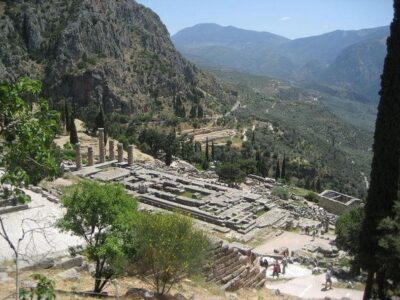
Historical Delphi One Day Tour with Arachova Stop & Expert Guide
Read our review →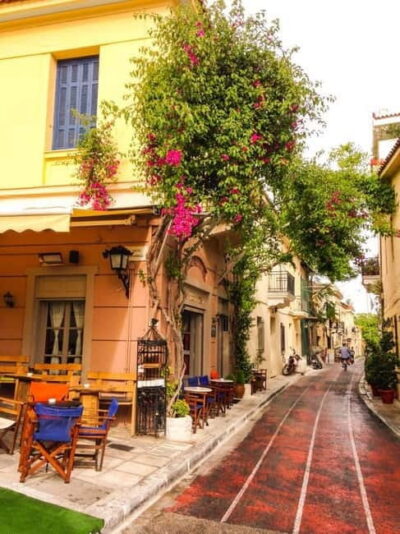
Historic Athens: Small Group Electric Bike Tour
Read our review →
Half-Day Guided History and Culture Sightseeing Tour
Read our review →


Throne of Helios: The History of Rhodes in 9D Experience
Read our review →
The History of Athens: Greek Mythology Private Tour
Read our review →Browse the lists this tour appears in