
Reviewed · TRAIN EXPERIENCES
Full-Day Meteora Tour from Thessaloniki by Train
Meteora makes a long day worth the effort. This 13-hour trip combines a morning train ride from Thessaloniki, a Mercedes Sprinter transfer from Kalambaka, and visits to monasteries perched on towering rock pillars. I like the easy mix of rail travel and local guiding, and I especially like that the van reaches viewpoints and monastery roads that would be awkward to manage alone. The drawback is the journey: train connections can be late, confusing, or cramped, leaving you only a few hours at Meteora.
I also like the human touch provided by guides such as Katerina, Ava, Demetrios, and Vasilios, who have been praised for clear explanations, personal stories, and help with photographs. Entrance fees are extra, and the supplied details disagree about lunch: one description says lunch is included, while the inclusions list says it is not. Confirm this before paying.
In This Review
- What makes this Meteora day trip useful
- Why Meteora is worth the long ride from Thessaloniki
- The morning train from Thessaloniki
- Meeting the van in Kalambaka
- Saint Nicholas and the first climb
- Roussanou and the easier approach
- Great Meteoron, the largest monastery
- Varlaam and its remarkable church
- Holy Trinity and the highest effort
- Agios Stefanos, the easiest monastery to reach
- Badovas caves and the best photo stops
- What the guides add to the day
- Food, fees, clothing, and physical effort
- Who should book this $59 tour?
- FAQ
- How long does the Meteora tour from Thessaloniki last?
- Where does the tour begin?
- How do I reach Meteora from Thessaloniki?
- How many monasteries will I visit?
- Are monastery entrance fees included?
- Is lunch included?
- What clothing should I wear?
- Can I cancel for a refund?
What makes this Meteora day trip useful
- A rail journey from Thessaloniki: You travel through the Greek countryside and change trains at Paleofarsalos before reaching Kalambaka.
- Three monastery visits: The planned tour includes three active monasteries, with views of additional sites from the van and road.
- A Mercedes Sprinter transfer: An English-speaking driver meets you at Kalambaka station and handles the steep, tight roads.
- Hermit caves and cliff views: You see the Badovas caves and broad views of monasteries above the valley.
- A small amount of free time: You have about an hour in Kalambaka before the return train.
- A demanding but manageable day: Stairs, early timing, train changes, and possible delays are the main practical concerns.
Why Meteora is worth the long ride from Thessaloniki
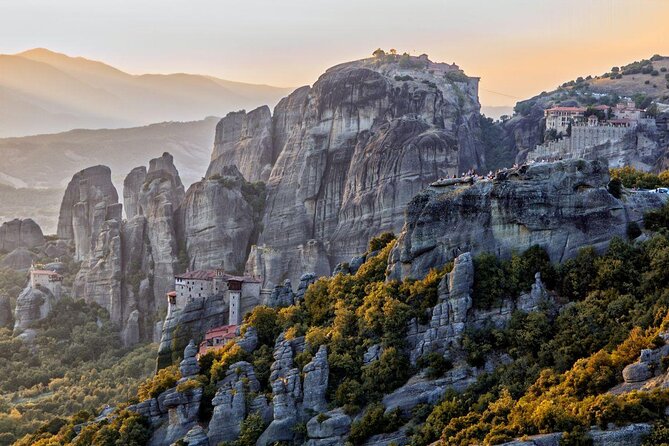
Meteora is not simply a collection of old churches. It is a place where geology and religious history are impossible to separate. Huge stone pillars rise above the valley, and monasteries sit on their tops or cling to their sides. Monks came here seeking solitude and safety, first using caves and difficult rock ledges before more organized monasteries developed.
The name Meteora refers to something suspended in the air, a fitting description when you look up from Kastraki or Kalambaka. From the road, the monasteries seem almost detached from the earth. Once you reach one, the impression changes. You notice stairways, bridges, courtyards, chapels, painted walls, and the practical work required to live in such a place.
A day trip gives you a strong first look without asking you to plan local transport, monastery opening times, or the best route between the rocks. Your driver does the hard part. Your guide adds the stories that make the buildings more than scenic photo stops.
The trade-off is time. The train ride takes roughly three hours each way, and the full outing lasts about 13 hours. That leaves a concentrated visit at Meteora rather than a relaxed stay. I would choose this option if Thessaloniki is your base and you cannot spare an overnight visit. If you can stay in Kalambaka or Kastraki, you will have more time to see all six monasteries and walk at a gentler pace.
A few more Thessaloniki half-days to weigh up
- Local Agency – 1 day by Train Thessaloniki to Meteora in English or Spanish
★ 4.5 · 36 reviews - From Thessaloniki: Train Trip to Meteora & Monastery Tour
★ 4.7 · 26 reviews - Chersonissos: Mini-Train City Highlights Tour
★ 3.8 · 148 reviews
The morning train from Thessaloniki
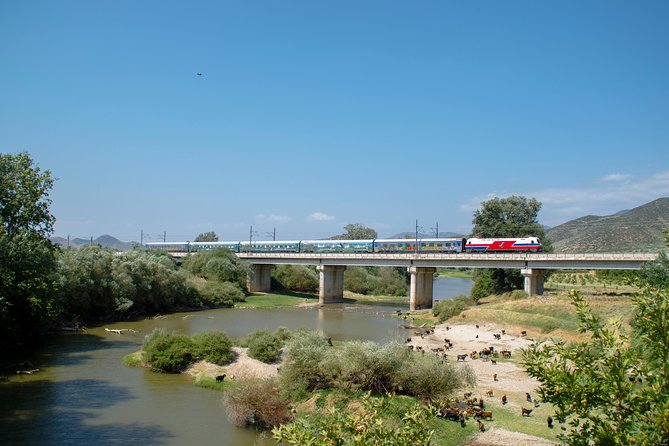
The day begins at Thessaloniki railway station at 8:15 a.m. You receive the train tickets and make your way through the rail journey to Kalambaka, changing at Paleofarsalos. The countryside provides a pleasant start, with a chance to watch rural Greece pass by instead of spending the entire trip on a bus.
The train connection is the part of the day that requires the most alertness. One train ticket was difficult to interpret because it was not written clearly in English, and the change at Paleofarsalos nearly caused confusion. Keep your ticket handy, check the platform, and ask railway staff for help if the connection is unclear.
Delays are also possible. Several departures and return connections ran late, and Greek rail timing was described as unpredictable. One return journey left someone waiting on a dark platform for two hours. That is not a reason to reject the tour, but it is a reason to keep expectations realistic. This is not a tightly controlled private transfer from door to door.
The train section also affects the value of the $59 price. You get round-trip rail transport, a local guide, mineral water, and a vehicle at Meteora for a relatively modest price. Yet a low fare cannot remove the distance or the uncertainty of public rail travel.
Meeting the van in Kalambaka
At Kalambaka station, an English-speaking driver meets you and transfers you in an air-conditioned Mercedes Sprinter with Wi-Fi. The vehicle is a major advantage once you arrive. Meteora’s roads wind around tall rocks, and the driver can stop at viewpoints and bring you close to the monastery entrances.
The group limit is listed as 34 people, but the vehicle experience can vary. Some groups have found the minibus comfortable, while one person expected a smaller VIP-style group and instead found a coach carrying more than 30 people. Ask about the expected group size if personal space matters to you.
Drivers named in the feedback include Dinos and Sotos. They were praised for handling narrow roads, finding good photo positions, and helping with pictures. That support matters because the best views often come quickly, between monastery stops.
The first stop is Kastraki, a traditional village at the foot of the rocks. You have about 30 minutes here. Kastraki gives you a sense of local life that the high monasteries cannot provide, with its close connection to the cliffs and countryside. It is also a useful moment to see the setting from below before you begin climbing.
Saint Nicholas and the first climb
The Holy Monastery of Saint Nicholas of Anapafsas is the first monastery encountered on the route upward. It was founded at the end of the 14th century, and its name is commonly linked either to a benefactor or to its role as a resting point for pilgrims beginning the ascent.
That second explanation fits the experience nicely. Saint Nicholas is an introduction to the vertical character of Meteora. You are not strolling into a large complex from a level plaza. You are moving through a place shaped by steep rock, limited space, and the need for refuge.
The stairs here can be a serious part of the day. One account described more than 500 steps in and out at the first monastery, though the exact number may depend on the route used and the day’s schedule. Wear shoes with a secure grip, move at your own pace, and do not save all your energy for the final stop.
Same stretch of coastline, a completely different day out:
- Thessaloniki: Full-Day Bus Trip to Meteora
★ 4.8 · 3,471 reviews - From Thessaloniki: Pozar Thermal Baths and Edessa Day Trip
★ 4.7 · 1,243 reviews - From Thessaloniki: Day Trip to Dion and Mount Olympus Park
★ 4.7 · 1,046 reviews - Thessaloniki: OTE Tower Rotating Experience with Light Meal
★ 4.6 · 857 reviews
Roussanou and the easier approach
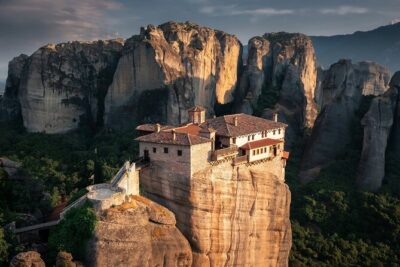
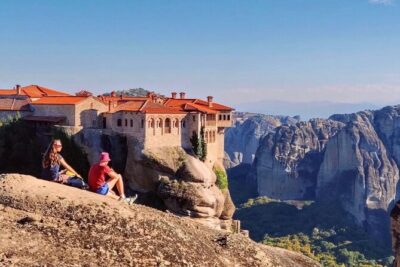
The Holy Monastery of Roussanou occupies a lower rock than several of its neighbors, making it more accessible. Its main church was founded at the end of the 16th century and decorated about 30 years later. The monastery suffered heavy damage during World War II and became a convent in 1988.
Roussanou is a good contrast to the higher sites. You still get the drama of a monastery above the valley, but the approach may feel less punishing than the tallest climbs. The rock, bridge, and surrounding views also make it one of the more photogenic stops.
The schedule says you visit three active monasteries, but the route information also lists several possible sites, including Saint Nicholas, Roussanou, Great Meteoron, Varlaam, Holy Trinity, and Agios Stefanos. The exact three can depend on opening days, access, and timing. The tour may show the exteriors of additional monasteries even when you do not enter them.
Great Meteoron, the largest monastery
Great Meteoron is the biggest and oldest monastery in the group. It was founded by Saint Athanasios the Meteorite, whose work helped organize monastic life at Meteora into a more structured community.
This is the stop that best explains the scale of the site. From the rock, you look across at other monasteries and understand how separate these communities once were. Inside, you can expect a more substantial complex than at the smaller foundations, though the time available on a day trip remains limited.
The route description assigns only about 10 minutes to this stop, which appears brief for a monastery of such importance. Treat the listed times as a guide rather than a promise. A short visit may mean an exterior look or a focused stop, while the actual order can shift during the day.
Varlaam and its remarkable church
Varlaam is the second-largest monastery and sits opposite Great Meteoron. It was founded in the mid-14th century by the hermit Varlaam, then later developed by the priest-monks Theophanes and Nectarios Apsarades.
Its main church was built in 1541 and 1542 and decorated in 1548. The wall paintings are linked by style to Frago Catelano, a noted painter from Thebes. You do not need to be an art specialist to appreciate the setting. The combination of painted religious scenes, old stone, and a monastery perched high above the valley gives the visit real weight.
The planned time here is about 45 minutes, with the entrance fee not included. At 3 euros per monastery, entering three sites costs 9 euros per person. Carry small cash if possible, and remember that modest clothing rules apply inside.
Holy Trinity and the highest effort
Holy Trinity is often described as the most difficult monastery to reach. The path leads first to the foot of the rock, followed by roughly 140 steps. Once you reach the top, the view across the valley is the reward.
The monastery had already been organized by 1362, according to a document connected with Symeon Uressis Palaeologos. Its position makes the old search for solitude easy to understand. The rock feels separated from the world below, even though the road and modern visitors are now close by.
If stairs are difficult for you, this may be the point to judge your energy carefully. The tour involves some walking and stairs, and the schedule can make the effort feel greater because you are also managing a long rail journey.
Agios Stefanos, the easiest monastery to reach
Agios Stefanos is the most accessible monastery on the route. Instead of a long stair climb, you cross a small bridge to the entrance. This makes it the best option for anyone who cannot manage many steps but still wants to enter a Meteora monastery.
Monastic life here dates to the early 12th century. The site includes two churches: an older 16th-century chapel damaged during World War II and the Greek Civil War, and an 18th-century main church dedicated to Saint Charalambos. The monastery holds his holy relics.
The planned visit lasts about 30 minutes. That is enough for a focused look, but not a leisurely study of every detail. If you want to see Agios Stefanos, confirm that it is among the three monasteries scheduled for your departure, since the route can change.
Badovas caves and the best photo stops
The Badovas hermit caves add an important layer to the visit. The monasteries are the grand, organized face of Meteora, while the caves point to the earlier search for isolation. Hermits lived in places that were even more difficult to reach, using the cliffs as shelter and spiritual retreat.
The van also passes other monasteries and viewpoints. This is where the driver’s local skill helps. Dinos and Sotos were praised for stopping at good positions and taking photographs, while guides such as Katerina and Ava were praised for helping people get pictures of themselves with the rocks behind them.
Bring a camera, but do not spend the entire day looking through it. The scale of the rocks is difficult to capture, and the best memories may come from simply looking across the valley from a monastery balcony or road bend.
What the guides add to the day
The strongest part of this experience is often the guiding. Katerina has been praised for personal connections to the monasteries, a warm manner, and clear explanations. Ava was described as informative and helpful with photographs, while Demetrios received praise for explaining the sights and adapting to the group.
That matters at Meteora because the buildings can blur together if you only see them from the outside. A guide can explain why a monastery sits where it does, how monastic life developed, and what the paintings or relics represent.
The guiding style may not be identical every time. One person found the guide too casual and opinionated, while most of the detailed feedback praised the guides’ warmth and command of the subject. I would regard the guide as a major benefit, but not a guaranteed match for every personality.
Food, fees, clothing, and physical effort
The information supplied for this tour is inconsistent about lunch. The overview says lunch is included, but the detailed inclusions say lunch is not included. Confirm this before departure and carry money for food in Kalambaka or along the route.
Entrance costs are clearly listed at 3 euros per monastery, or 9 euros if you enter three. Mineral water, the local guide, and the air-conditioned vehicle with Wi-Fi are included.
Dress rules are strict. Women should avoid short skirts and wear long sleeves, while men may not wear shorts. There are stairs at several monasteries, so this is not a completely easy sightseeing day. Most people can participate, but anyone with limited mobility should favor Agios Stefanos and ask the operator which monasteries are planned.
Cancellation is free up to 24 hours before the start time. Later cancellations are not refunded, and poor weather can lead to a new date or full refund.
Who should book this $59 tour?
I would book this tour if you have only one free day from Thessaloniki and want a practical first look at Meteora without renting a car. The $59 price is good value once you include the round-trip train, local transfer, guide, water, and Wi-Fi vehicle. Add the 9 euros for three monastery entrances, and possibly lunch if it is not included.
You should choose it with open eyes. The day is long, the train changes require attention, and delays can reduce your time at Meteora. If you dislike public transport uncertainty, a private transfer or overnight stay may suit you better.
For most people with limited time, this is a strong choice. You get the main cliffs, several historic monasteries, hermit caves, a local guide, and the chance to see one of Greece’s most unusual sacred sites in a single day. If your schedule allows two nights in Kalambaka or Kastraki, that would be better. If it does not, this tour gives you the experience without making the planning your problem.
FAQ
How long does the Meteora tour from Thessaloniki last?
The experience lasts approximately 13 hours, beginning at 8:15 a.m. and ending back at the Thessaloniki meeting point.
Where does the tour begin?
It begins at Thessaloniki railway station, at the stated meeting point in Thessaloniki 546 29, Greece.
How do I reach Meteora from Thessaloniki?
You take a morning train, change trains at Paleofarsalos, and continue to Kalambaka. An English-speaking driver meets you at Kalambaka station and transfers you to Meteora by air-conditioned Mercedes Sprinter van.
How many monasteries will I visit?
The tour is described as visiting three active monasteries. The route information lists Saint Nicholas, Roussanou, Great Meteoron, Varlaam, Holy Trinity, and Agios Stefanos as possible sites, so the exact three can vary.
Are monastery entrance fees included?
No. Entrance fees are listed as 3 euros per person at each monastery.
Is lunch included?
The supplied tour details conflict on this point. One description says lunch is included, while the detailed inclusions say it is not, so confirm before booking.
What clothing should I wear?
Women should not wear short skirts and should have long sleeves. Men are not allowed to wear shorts. Comfortable shoes are also useful because several monasteries require stair climbing.
Can I cancel for a refund?
You can cancel at least 24 hours before the start time for a full refund. Cancellations or changes made within 24 hours are not refunded. If poor weather causes the tour to be canceled, you are offered another date or a full refund.
Just added around Thessaloniki
- Thessaloniki city from or to SKG airport transfer★ 5.0 · 25 reviews
- Wine Tasting Experience from Thessaloniki★ 5.0 · 25 reviews
- Traditional Greek Food Tour With A Local★ 5.0 · 43 reviews
- Thessaloniki Private Walking Tour with a Local★ 4.5 · 30 reviews
- Upper Town Historical Tour Experience at Greece★ 5.0 · 44 reviews
- Thessaloniki Jewish Heritage – Private Experience – 4 hrs★ 5.0 · 41 reviews
- Thessaloniki Street Food Tour with a Local Guide★ 5.0 · 43 reviews
- Thessaloniki Bike Tour, the best way to explore the city★ 5.0 · 28 reviews
Train Experiences, compared.
Corinth, Cave of Lakes, Odontotos Railway Private Tour with Greek Lunch Included
Read our review →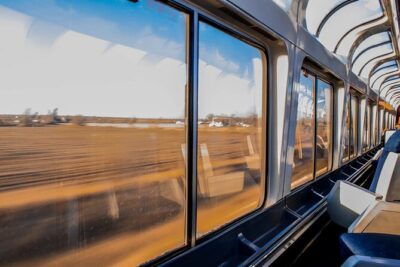
Mount Olympus And Dion Full-Day Tour From Athens By Train
Read our review →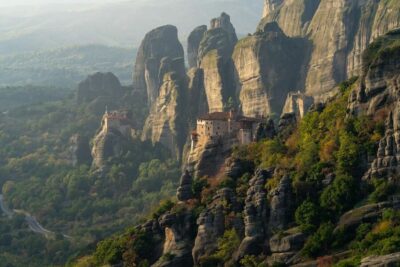
Local Agency – 1 day by Train Thessaloniki to Meteora in English or Spanish
Read our review →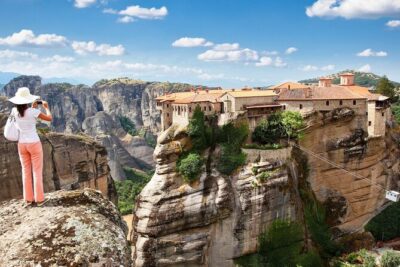
Private Full-Day Trip to Meteora by Train From Athens – Local Agency
Read our review →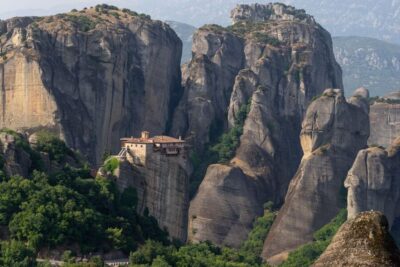
Athens to Meteora DayTrip by Train in Spanish language – Local Agency
Read our review →Browse the lists this tour appears in