
Reviewed · WINE TOURS
Kostantakis Winery – Milos Island Tour & Wine Tasting Experience
Wine tastes better with a family story. Kostantakis Winery offers a close look at small-scale winemaking on Milos, from indigenous grapes and old equipment to a natural cave cellar. I especially like the personal welcome from family members such as George, Petros, and Sophia, plus the generous tasting of eight wines with local cheese and island products. The main drawback is transport, since getting to the winery is not included and the experience can run closer to two and a half hours than two.
This is a relaxed, small-group outing rather than a polished commercial show. With a maximum of eight people, you have a real chance to ask questions about the grapes, the family business, and the problems of making wine on a dry volcanic island. I also like that you can stay longer for another glass after the formal tour ends, though you should not plan a tight dinner reservation immediately afterward.
In This Review
- Key points to know before booking
- Why Kostantakis feels different from a standard tasting
- Starting at Kostantakis Suites in Pollonia
- Walking through Milos vines and volcanic soil
- Old machines, working facilities, and the cave cellar
- Eight wines, local cheese, and a generous pour
- The mood: relaxed, local, and a little unhurried
- Is the $72.41 price good value?
- Who will enjoy this Milos winery visit?
- Booking and cancellation advice
- Should you book Kostantakis Winery?
- FAQ
- How long does the Kostantakis Winery experience last?
- Where does the tour start and finish?
- How many wines are included?
- What food and drinks are included?
- Is transportation included?
- Who can join the wine tasting?
Key points to know before booking
- Family-run for more than 50 years: You meet people connected directly to the winery, including the winemaker’s son.
- A natural cave cellar: The wine is stored in a cave, giving the visit a distinct sense of place.
- Eight wines with island snacks: The tasting includes wine, water, local cheese, olives, and other products from Milos.
- Indigenous grapes only: The family focuses on grape varieties suited to the island rather than relying on familiar international names.
- Small groups, English service: The group is capped at eight people, and the experience is offered in English.
- Allow extra time: The advertised duration is about two hours, but the full visit may take around two and a half.
Why Kostantakis feels different from a standard tasting
Milos is better known for beaches, white villages, and volcanic rock than for wine. That makes Kostantakis Winery an appealing change of pace. You are not simply seated at a table while someone pours a flight. The visit connects the wine to the island, its climate, and one family’s long effort to make a living from local grapes.
The winery has been producing its own wine for more than 50 years. That detail matters because the visit feels rooted in household tradition rather than built only for tourism. The family makes wine on a small scale and also produces a grape distillation, giving you another way to understand how the harvest is used.
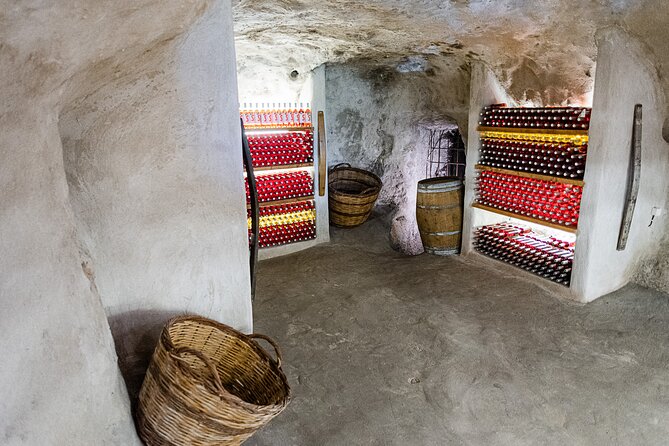
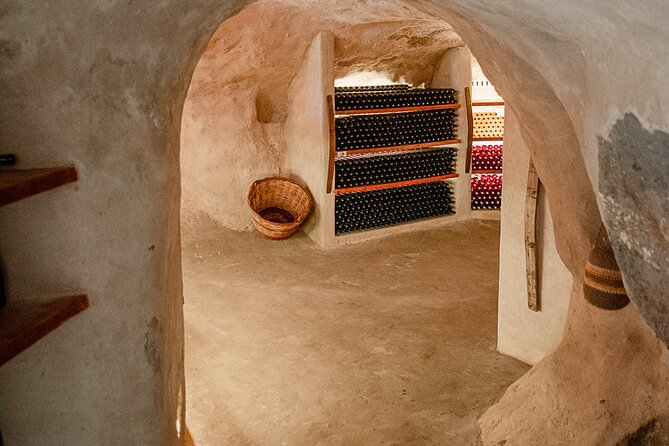
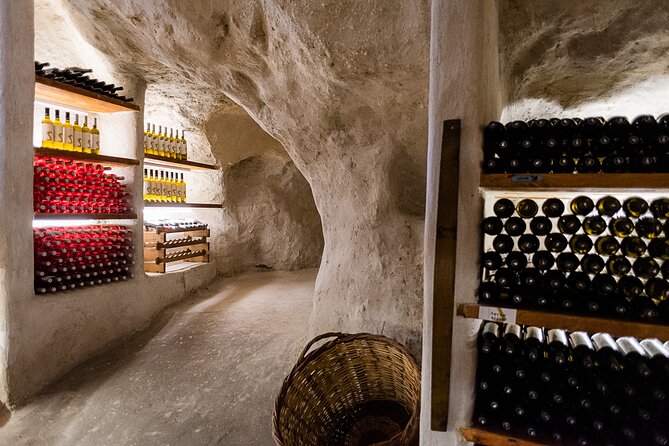
The setting adds much of the charm. The tour includes a walk through the vineyard, a look at the winemaking facilities, and a visit to the natural cave where the bottles are stored. You get a sense of the full process, from grape to cellar, without the long drives and large crowds found at bigger wine estates.
I would choose this experience for its human scale. A family member leads the visit, answers questions, and explains the work in plain terms. George is praised for his friendly, clear presentation, while Petros and Sophia are also noted for making the tasting personal and enjoyable. The exact guide may vary, but you should expect a warm welcome from the team.
More Milos wineries worth an afternoon:
- Milos Island: Kostantakis Winery Wine Tasting Experience
★ 4.8 · 236 reviews - Santorini Wine Adventure with 12 Wine Tastings, Tapas and Sunset
★ 5.0 · 1,715 reviews - Tour and Wine Tasting in Mykonian Land
★ 5.0 · 1,357 reviews
Starting at Kostantakis Suites in Pollonia
The meeting point is Kostantakis Suites in Pollonia, and the activity ends back there. Meeting at the property keeps the start simple once you arrive, but you still need to plan how you will reach it.
Transportation is not included. One account describes the venue as roughly 20 miles away, while another says you can take a public bus near the winery and walk the remaining distance. Because those details may depend on your starting point and the current bus route, check the route before booking and allow extra time for the final walk.
This is especially important if you are staying in another part of Milos. A taxi, rental car, or bus connection may be needed, and the wine tasting itself means driving afterward requires care. The meeting instructions should be treated as part of your planning, not as a minor detail.
Once you arrive, the small group size helps set the tone. The maximum is eight people, so this is not the kind of outing where you need to compete for the guide’s attention. The compact format also suits anyone who prefers conversation over a formal lecture.
Walking through Milos vines and volcanic soil
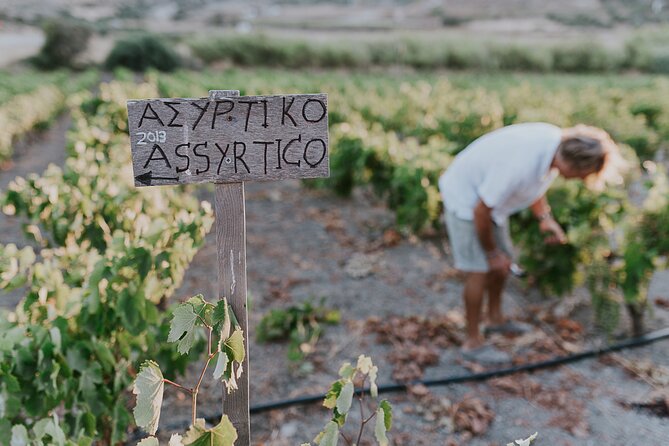
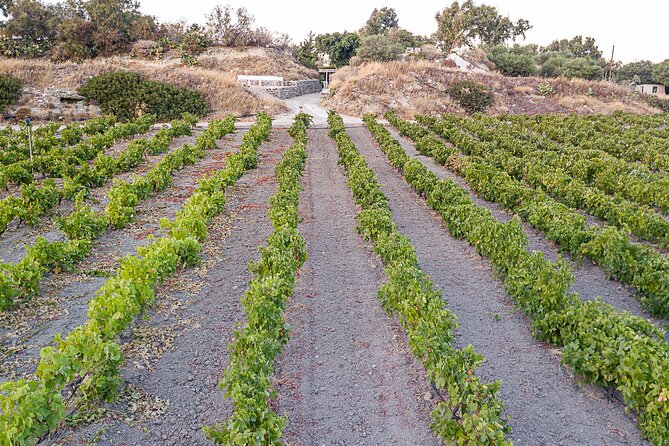
The vineyard walk is the first useful lesson in why Milos wine tastes different. The family works only with indigenous grape varieties, and the guide explains how those vines cope with the island’s particular climate.
The information provided does not list each grape by name, so you should not arrive expecting a technical catalog of varieties. Instead, the focus is on local growing conditions and the practical work of producing wine in an island setting. This makes the walk accessible even if you do not know much about wine.
The tasting includes more white and rosé wines than red, along with a special orange wine. That balance reflects the character of the selection you are likely to try, though the exact pours can change. The orange wine is a useful point of comparison because it gives you something less familiar than a basic white or rosé.
The vineyard portion is not a long hike. It is a guided look at the vines and their setting, followed by an explanation of what happens after harvest. Wear shoes that feel secure for walking around an active winery, and bring water even though water is included with the tasting.
Old machines, working facilities, and the cave cellar
After the vineyard, you see the traditional machines and facilities used in the winemaking process. This is one of the best parts of the tour for anyone who wants more than a scenic photo. The equipment shows how a small operation works, and the guide can explain the steps in the family’s own production.
The visit then moves into the natural cave used to store the wines. A winery built around a cave gives the experience a strong sense of place, and it is far more memorable than a generic cellar room. The cave also helps explain why the family’s property is part of the story, not simply a backdrop for tasting glasses.
The guide’s explanation ties the site to the family’s past and to the challenges of being the only winery on the island. That does not mean you will receive a long formal lecture. The appeal is the direct conversation: ask how the family works, why it uses local grapes, and how island conditions shape the wines.
Some of the facilities are traditional, while the tasting area has had recent updates. That combination works well. You get a look at the old methods and then finish in a more comfortable place designed for sitting, talking, and eating.
More food tours in Milos:
- Greek Food Walking Tour in Athens
★ 5.0 · 4,740 reviews - Athens: Street Food Tasting Tour
★ 4.9 · 2,557 reviews - Small Group Greek Traditional Food Tour in Athens 20+ Tastings
★ 5.0 · 1,759 reviews - Santorini Wine Stories: Sunset Tour with Tasting & Dinner
★ 5.0 · 1,285 reviews
Eight wines, local cheese, and a generous pour
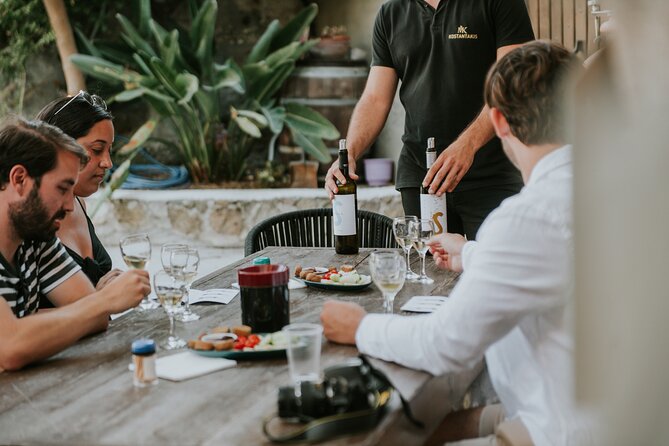
The tasting is the main event, and it is more substantial than a token sample. The official format includes eight wines, while some tastings have included about nine pours. You may receive white, rosé, orange, and other styles from the winery’s range, so do not assume every visit will follow the same sequence.
The pours are described as generous. That is good news if you want to compare the wines properly, but it also means you should pace yourself. Water is included, and you should use it. If you are driving, arrange a different way back.
The food is simple and local: cheese, olives, and other island products. It is not presented as a full meal, so plan to eat before or after if you need dinner. Still, the snacks matter. Salt, fat, and bread or similar accompaniments help reset your palate between wines and make the tasting feel like a social Greek afternoon rather than a row of isolated samples.
The best approach is to keep notes about what you like. The purpose is not to identify the most expensive or technically impressive bottle. It is to decide which style suits you. You may prefer the fresh whites, a rosé for a warm evening, or the unusual orange wine.
You can also buy a bottle to enjoy during your stay, although the supplied details do not specify prices or shipping options. Ask the staff what is available before you make plans around taking wine home.
The mood: relaxed, local, and a little unhurried
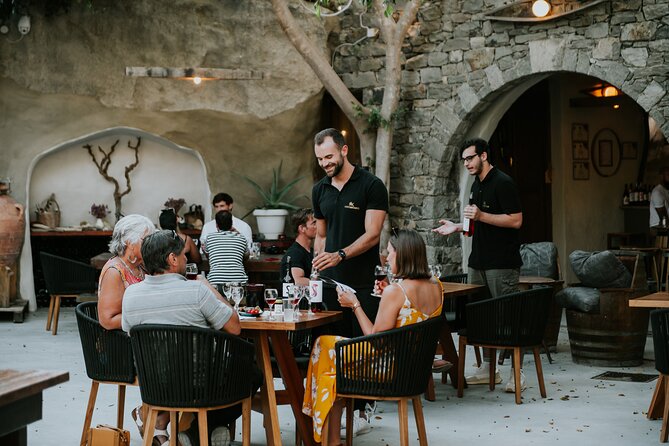
The setting is repeatedly praised for its calm feel. The outdoor area and patio make this an easy early-evening activity, and the sounds of crickets add to the slow pace. Friendly cats may also appear around the property, which adds to the informal family atmosphere.
This is not a rushed stop where you are pushed out as soon as the last pour is served. The family welcomes questions, and you are allowed to stay longer for another glass after the main experience. That flexibility is a strength, though it creates the one timing issue worth taking seriously.
The advertised duration is about two hours. In practice, the vineyard walk, equipment and cave visit, full tasting, questions, snacks, and relaxed conversation can stretch to about two and a half hours. If you have a ferry, dinner reservation, or sunset plan, leave a generous buffer.
I would schedule it in the late afternoon or early evening if possible. The experience suits that part of the day, when you can slow down and move into dinner afterward. The exact start time is not provided here, so confirm it when you book.
Is the $72.41 price good value?
At $72.41 per person, this is not a budget drink stop. The value depends on what you want from a winery visit.
You are paying for more than eight glasses. The price includes the vineyard walk, explanations from the family team, the traditional equipment, the cave cellar, water, local snacks, and a small-group format capped at eight people. You also get time to ask questions rather than being part of a large coach group.
For a serious wine enthusiast, the price can make sense because the tasting is generous and includes unusual local production, including orange wine and grape distillation. For someone who only wants one glass with a view, it may feel expensive.
I think the strongest value is the combination of access and atmosphere. Many tastings give you wine but little context. Here, the wine is tied to Milos, the family, the cave, and the limits of island production. That makes the experience worthwhile for people who care about local food and traditional work, not just the number of pours.
The included snacks also help, but do not treat them as lunch. You are getting tasting accompaniments, not a full spread. Add the cost of transport when you compare the total with other Milos activities.
Who will enjoy this Milos winery visit?
You should consider booking if you like:
- Small family businesses with a personal welcome
- Local grape varieties and unusual wine styles
- Food and drink experiences with a clear connection to place
- A slow afternoon or early evening activity
- Asking detailed questions about production
- Tastings where the pours are not stingy
- Quiet settings rather than large organized groups
The visit also works well if you are new to wine tasting. You do not need specialist vocabulary. The guides explain the process and help you compare the wines, while the relaxed mood keeps the experience from feeling formal.
It is less suitable if you want a full meal, need exact two-hour timing, or dislike arranging your own transport. It may also be a poor fit if you are under 18, since alcohol and wine tasting are allowed only for people aged 18 and older.
Most people can take part, and service animals are allowed. The property is near public transportation, but you should still confirm the route and walking distance before setting out.
Booking and cancellation advice
Confirmation is provided at the time of booking, and the activity is offered in English. Since the experience averages booking 51 days in advance, reserve early if your Milos dates are fixed, especially in the busy summer season.
Free cancellation is available if you cancel at least 24 hours before the local start time. Cancellations or changes made less than 24 hours ahead are not accepted for a refund, so check your transport and dinner plans before the deadline.
Should you book Kostantakis Winery?
I would book this tour if you want an authentic, low-key Milos experience that combines wine, family stories, local food, and a memorable cave cellar. The strongest features are the small group, the personal guides, the indigenous grapes, and the generous tasting.
Before you commit, solve the transport question and leave at least half an hour more than the advertised duration. If you can handle those details, Kostantakis Winery offers a thoughtful break from the beach circuit and a good way to understand a less obvious side of Milos.
FAQ
How long does the Kostantakis Winery experience last?
The advertised duration is approximately two hours. You should allow around two and a half hours, since the full visit may include extra questions, generous tasting pours, and time to stay for another glass.
Where does the tour start and finish?
The tour starts at Kostantakis Suites in Pollonia, Milos, and ends back at the meeting point.
How many wines are included?
The tasting includes eight wines according to the tour details. Some tastings have included about nine pours, so the exact number may vary.
What food and drinks are included?
Wine, water, local cheese, olives, and other products from Milos are included. The food is tasting accompaniment rather than a full meal.
Is transportation included?
No. Transportation to the venue is not included. The winery is near public transportation, and one account notes that you can take a public bus nearby and walk the rest of the way.
Who can join the wine tasting?
Only people aged 18 and older may take part in the alcohol and wine tasting. Most people can participate, and service animals are allowed.
Just added around Milos
- Milos Half-day Tour to Kleftiko★ 4.5 · 73 reviews
- Half-Day Small-Group Motorboat Rib Cruise to Kleftiko★ 5.0 · 37 reviews
- Half-Day Private Romantic Sailing Getaway to Kleftiko★ 5.0 · 81 reviews
- Shared Morning Cruise from Pollonia to Polyaigos★ 5.0 · 25 reviews
- Catamaran Half Day Afternoon Cruise With Sunset: Kleftiko★ 4.5 · 30 reviews
- Rent a boat in Milos★ 4.5 · 39 reviews
- Private Daily Sailing Cruise to Discover the Highlights of Milos★ 5.0 · 33 reviews
- Private Luxury Boat Tour to Kimolos & Poliegos★ 5.0 · 36 reviews
Wine Tours, compared.
Santorini Wine Adventure with 12 Wine Tastings, Tapas and Sunset
Read our review →

Santorini Highlights Small-Group Tour with Wine Tasting option
Read our review →
PREMIUM Semi-Private Athens Afternoon Food Tour & Wine Tasting
Read our review →
Santorini Sunset Wine Tour with Santo Winery Views
Read our review →Browse the lists this tour appears in