
Reviewed · THESSALONIKI TOURS
Thessaloniki: Vergina and Pella Day Trip
Macedonian history comes alive here. This 8.5-hour bus trip from Thessaloniki links Pella, the ancient capital of Macedon, with Vergina, home of the royal tombs of Aigai. I especially like the superb mosaics at Pella and the haunting museum built around Philip II’s burial chamber. The trip also benefits from guides such as Eva, Stelios, Eleni, and Lazaros, who have been praised for clear explanations and strong knowledge of the region.
The main drawback is cost. The $58 tour price covers transport and tour assistance, but entrance tickets add another €40 for most adults. You also get only about an hour at Pella’s museum and archaeological site, so you need to move with purpose.
In This Review
- Key points to know before you book
- Why this day trip matters
- The 8:00 a.m. start in central Thessaloniki
- Pella’s museum: a quick introduction to Macedon
- Pella’s archaeological site and its famous mosaics
- The Royal Tombs of Aigai at Vergina
- Lunch in Vergina and the choice it involves
- The New Museum of Aigai
- How the guides shape the day
- Transport, timing, and the pace of the route
- What the price really buys you
- Who should book this Pella and Vergina trip?
- Should you book it?
- FAQ
- Where does the tour leave from?
- How long does the day trip last?
- What is included in the price?
- Are entrance tickets included?
- Is lunch included?
- What should I bring?
- Can I cancel or pay later?
Key points to know before you book
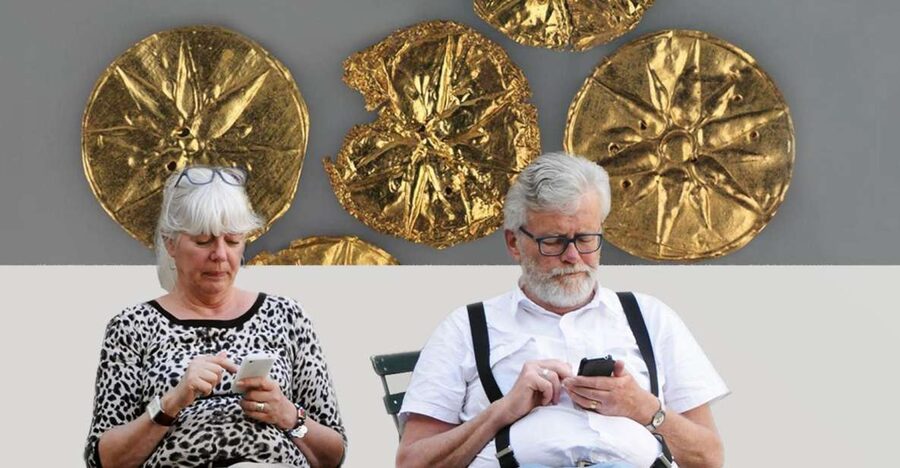
- Philip II’s golden burial treasures: Vergina’s Royal Tombs Museum displays the famous gold larnax, the sixteen-rayed Macedonian sun, the oak wreath, armor, and other grave goods.
- Pella’s remarkable mosaics: The ancient market includes the Abduction of Helen and Amazonomachy mosaics, made from tiny colored stones and central to the visit.
- A history-focused day: The route connects three major periods, from the ancient Macedonian kingdom to the Hellenistic world shaped by Alexander and his successors.
- A practical Thessaloniki departure: The bus leaves at 8:00 a.m. from the Venizelos Statue at Aristotelous Square and Egnatia Street, a central meeting point.
- Lunch is separate: A traditional Greek tavern stop is included in the schedule, but your meal is not included in the tour price.
- Bring cash and identification: You need cash for entry tickets, and an ID card or passport may be required for reduced admission.
Why this day trip matters
Thessaloniki is an excellent base for seeing northern Greece, but Pella and Vergina are not simple public-transport stops. They sit in Central Macedonia, outside the city, and the two sites tell different parts of the same story.
Pella was the working capital of ancient Macedon. It was a city of streets, houses, public spaces, trade, and daily life. Vergina, identified with ancient Aigai, reveals the royal world behind that kingdom: tombs, weapons, ceremonial objects, and the burial goods of the dynasty that produced Philip II and Alexander the Great.
I like the way the day moves from ordinary life to royal power. At Pella, you see the world of homes and public buildings. At Vergina, you enter a darker, more ceremonial setting filled with objects made for kings and queens.
The tour is led in English, and the guide usually gives historical background during the drive before letting you explore parts of the sites on your own. That arrangement works well for people who want context but do not want to be marched from display to display.
A few more Thessaloniki half-days to weigh up
- From Thessaloniki: Pozar Thermal Baths and Edessa Day Trip
★ 4.7 · 1,243 reviews - From Thessaloniki: Day Trip to Dion and Mount Olympus Park
★ 4.7 · 1,046 reviews - Full-Day Trip to Meteora from Thessaloniki
★ 4.5 · 542 reviews
The 8:00 a.m. start in central Thessaloniki
The meeting point is at the Eleftherios Venizelos Statue, where Aristotelous Square meets Egnatia Street. The bus is scheduled to leave at 8:00 a.m., and the company warns that it cannot wait for late arrivals because of road restrictions.
This is not a meeting point to approach casually at the last second. I would arrive early, especially if you are unfamiliar with Thessaloniki’s streets or are carrying a day bag. Bring your passport or ID card, some cash, water, and comfortable shoes.
The ride toward Pella takes roughly 45 minutes for about 50 kilometers, although the itinerary describes the coach legs as about an hour. The vehicle is modern and air-conditioned. Several guides and drivers have received praise for keeping the day on time, while one tall passenger found the minibus seats a little tight. If you are tall, your comfort may depend on the particular vehicle used that day.
Pella’s museum: a quick introduction to Macedon
Your first major stop is the Archaeological Museum of Pella. You have about an hour here, which is enough for a focused visit but not for a slow reading of every label.
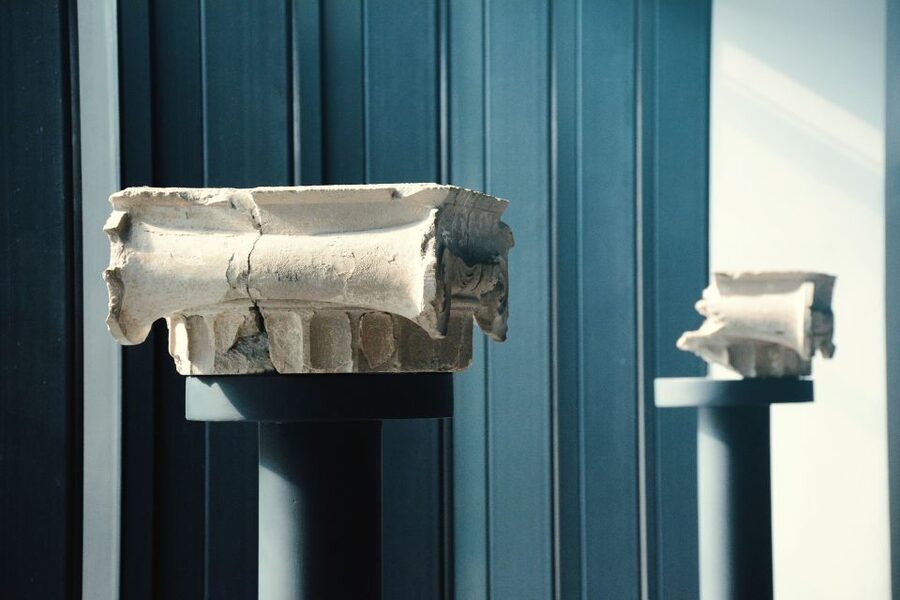
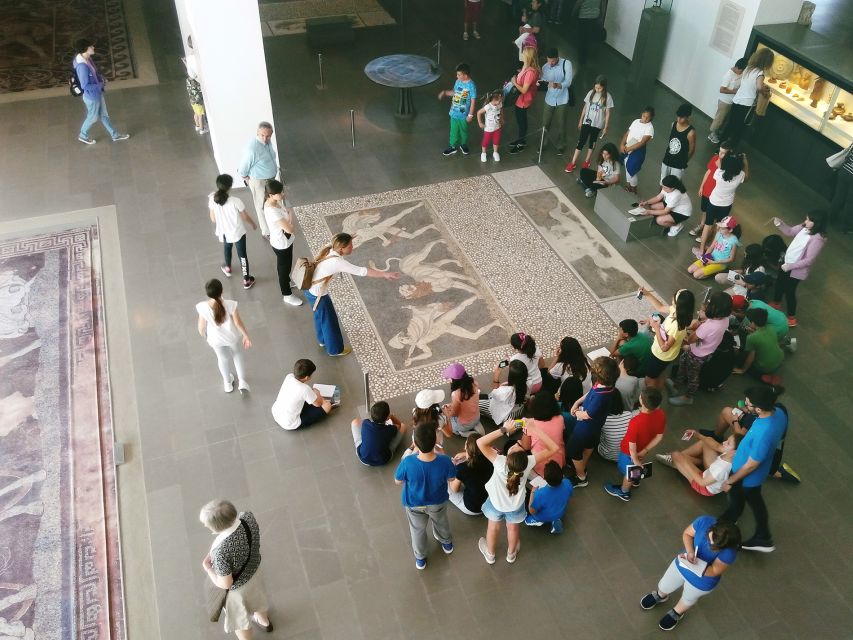
The museum helps you understand Pella as a real city rather than just a name linked to Alexander. Displays cover objects from daily life and show how people lived during the Macedonian period. Household items, pottery, tools, artistic pieces, and other finds give the site a human scale.
The guide’s introduction is useful because it gives you a framework before you enter. I recommend listening carefully at the start, then choosing the displays that interest you most. Some visitors have found the museum deserves more time, so do not linger too long over the first rooms.
The museum is modern and well arranged, but the hour passes quickly. If you enjoy reading every explanatory panel, you may need to prioritize. A useful trick is to photograph longer text panels and read them later, provided photography is permitted in the museum.
Pella’s archaeological site and its famous mosaics
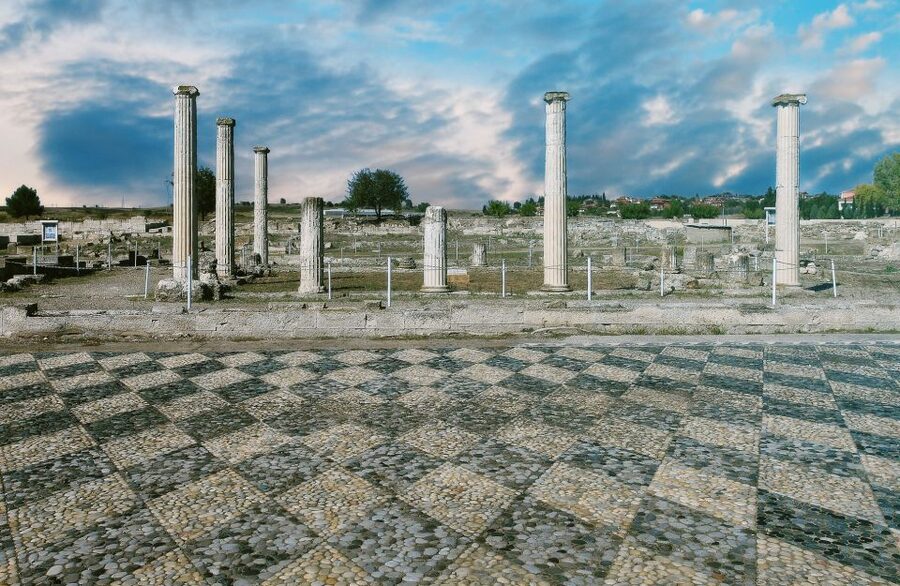
Next comes the archaeological site, also scheduled for about an hour. This is where the city plan begins to make sense. You can walk among the remains of the ancient market and see the scale of a once-important Macedonian capital.
The highlight is the set of floor mosaics. The Abduction of Helen and Amazonomachy scenes are especially memorable, with detailed figures and movement created from small pieces of stone. These are not minor decorative fragments. They show the artistic taste and wealth of the city’s upper class.
You explore this part largely on your own, so it helps to know what you want to find before you arrive. The site is broad, and the time limit can feel short. Some sections may look overgrown, and the open-air setting offers less protection from the sun than the museum.
Wear sneakers or sturdy sandals. The ground is not the place for delicate footwear, and summer heat can make even an easy walk tiring. The best approach is to see the key mosaics first, then wander if time remains.
Pella is an important stop, but it is not always the emotional high point of the day. Its strength is scale and daily life. Vergina provides the drama.
Same stretch of coastline, a completely different day out:
- Thessaloniki: Full-Day Bus Trip to Meteora
★ 4.8 · 3,471 reviews - Thessaloniki: OTE Tower Rotating Experience with Light Meal
★ 4.6 · 857 reviews - Mount Athos Glassbottom Cruise with Ammouliani Island visit
★ 4.3 · 592 reviews - Thessaloniki Hop-on Hop-off Sightseeing Bus Tour
★ 4.0 · 473 reviews
The Royal Tombs of Aigai at Vergina
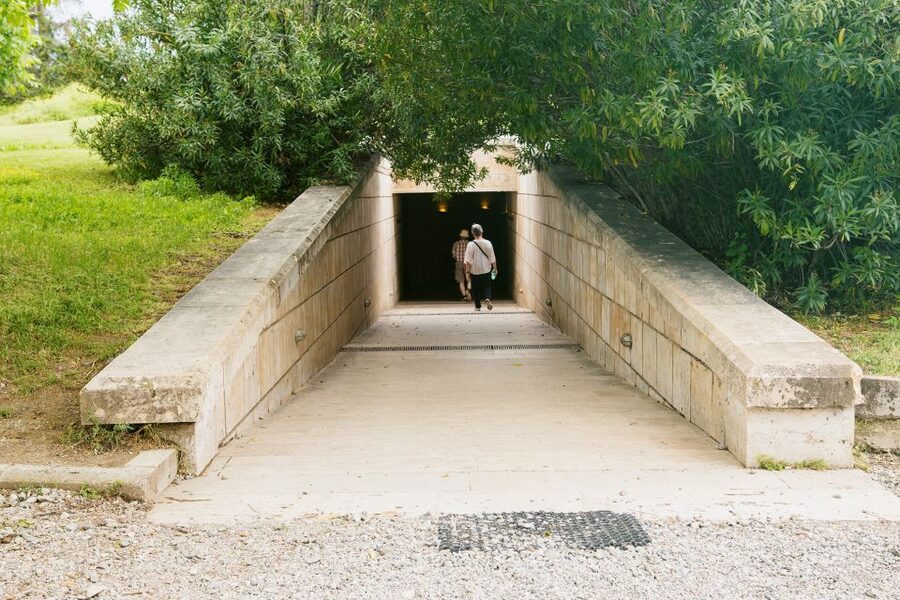
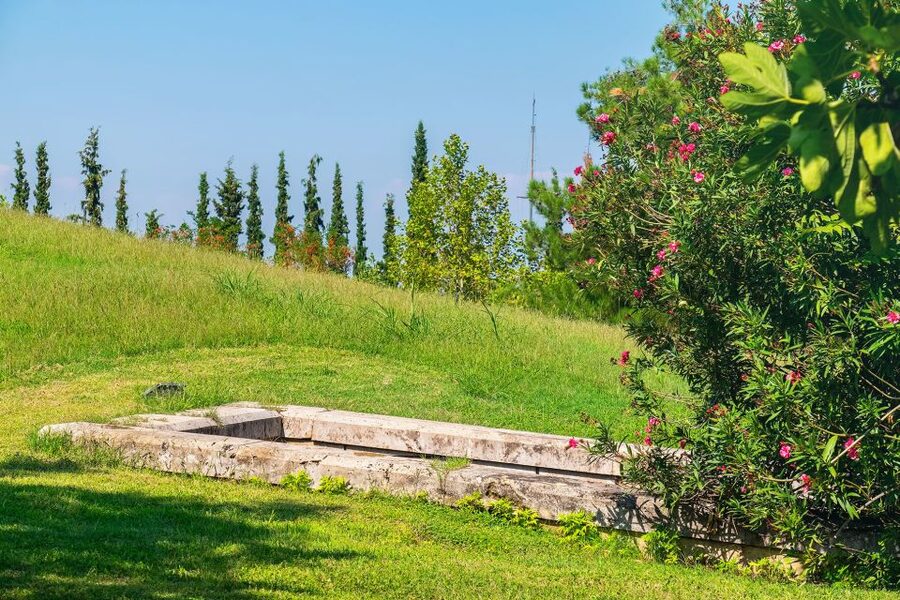
The Royal Tombs Museum at Vergina is built into the burial mound and keeps the ancient tombs in a dim, atmospheric setting. This is the moment when the tour shifts from an open archaeological site to a concentrated royal collection.
Inside, you see the golden larnax associated with Philip II, the father of Alexander the Great. The urn holds cremated remains and carries the sixteen-rayed sun, the emblem linked with the Argead dynasty and ancient Macedon.
The gold oak wreath is another major object. It was placed with Philip II for his funeral pyre and gives you a direct connection to the ceremony surrounding a Macedonian king. Armor, weapons, grave goods, and objects from other burials fill out the picture.
The setting matters. Rather than viewing the objects in a bright modern gallery with little connection to their original setting, you see them near the tombs where they were found. The low light and underground design create a serious mood. You might find the experience more powerful than the individual objects alone.
The schedule gives you about 90 minutes here. That is generally more generous than the time at Pella, though one guide and several visitors would have preferred slightly more museum time and less time around the tombs. If you are fascinated by funerary archaeology, use the full stop. If the tomb architecture interests you less, you may feel ready to move on before the group does.
Lunch in Vergina and the choice it involves
Lunch takes place at a traditional Greek tavern in the Vergina area. The meal is not included, so keep cash available. The stop lasts about an hour, and the service has been described as quick, which matters on a tightly timed day.
This is a practical meal break rather than a long, leisurely restaurant visit. You can expect the chance to eat local Greek food and rest after several hours of walking and museum visits. I would not plan on treating lunch as an extended cultural stop, since the afternoon includes another major museum.
Because the tour price does not include lunch or admissions, your final cost is higher than the advertised $58. For a full day of transport, coordination, and English-language guiding, the base price is fair. Still, you should budget for the €40 in adult entrance fees, plus food. The value is strongest if you would otherwise struggle to reach both sites independently.
The New Museum of Aigai
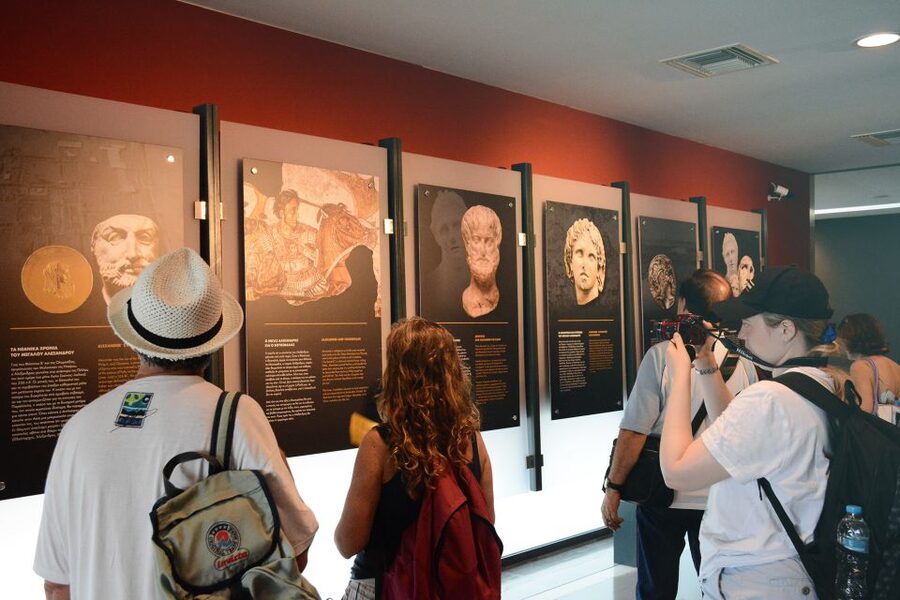
After lunch, the group visits the New Museum of Aigai. This museum presents finds from the old Macedonian capital and broadens the story beyond the famous tomb of Philip II.
An impressive portrait of Alexander the Great introduces the collection. You then encounter material from several sides of Macedonian royal life:
- Coins from across the Hellenistic world, including those of Macedonian kings and Alexander’s successors
- Monumental sculptures
- Sarissa spears and helmets linked with Macedonian phalanx soldiers
- Painted pottery
- Banquet vessels used at aristocratic gatherings
- Jewelry and royal insignia from burials of queens
The temporary numismatic exhibition is particularly useful for showing how far Macedonian influence spread after Alexander’s campaigns. Coins are small, but they carry names, portraits, symbols, and political messages across a large part of the ancient world.
This museum also helps correct an overly narrow focus on Alexander himself. His story is important, but the collection shows the institutions, soldiers, artists, women, rulers, and ceremonies that surrounded the Macedonian court.
The museum is modern and visually strong. If you are mainly interested in Philip II’s tomb, the earlier stop may remain your favorite. If you want a fuller view of Macedonian society and the Hellenistic period, this final museum adds real value.
How the guides shape the day
The quality of the guiding is one of the strongest parts of this experience. Guides including Eva, Stelios, Eleni, Evaggelia, Yannis, Konstantina, and Lazaros have been praised for clear explanations, patience, organization, and enthusiasm.
Eva has been described as an archaeologist trained at the University of Thessaloniki. Stelios has also been praised for his archaeological background, while Lazaros is known for bringing energy and humor to the long ride. These details matter because the sites can be difficult to understand from labels alone.
The guide often explains the historical setting on the bus, then gives you time to look around independently. I prefer this balance. You get the basic story before entering, but you still have room to pause at the objects that catch your eye.
One caution: the historical presentation may lean toward admiration for Alexander and Macedonian achievement. If you prefer a more critical account of conquest and empire, ask questions and keep the bigger picture in mind. The tour is strongest as an introduction, not as a full academic treatment of ancient Macedonian politics.
Transport, timing, and the pace of the route
The complete outing lasts about 8.5 hours, including the return to the same Venizelos Statue in Thessaloniki. The route is sensibly arranged: Pella first, then Vergina, lunch, the New Museum of Aigai, and back to the city.
The bus ride never lasts much more than about an hour between stops. That makes the day easier than a route with one long transfer. Air conditioning is especially important in June, July, August, and September, when the open-air ruins at Pella can be hot.
The schedule is efficient, but it is not leisurely. You should expect to watch the clock at Pella. Vergina receives more attention, yet even there you cannot linger indefinitely. The advantage is that you see four substantial attractions in one day. The trade-off is that none receives the relaxed pace you might enjoy on a private visit.
Drivers such as Dimitris and Nikos have been praised for smooth driving and keeping the air-conditioned vehicle ready after stops. That kind of small efficiency makes a difference when the weather is hot and everyone is tired.
What the price really buys you
The tour costs $58 per person before admissions and lunch. The included services are round-trip transport, basic travel transport insurance, and assistance with the ticket lines. A live English guide is also part of the experience.
The two site admissions together cost €40 at the stated full rate, €20 for Pella and €20 for Vergina. Reduced or free entry depends on age, nationality, season, and valid identification. EU citizens up to age 25 and non-EU citizens up to age 18 can receive free admission under the stated rules. EU citizens age 65 and over may receive reduced admission from October 1 through May 31, but during June through October only the full price applies to seniors.
That seasonal rule is easy to miss. Bring your passport or ID if you may qualify, but carry enough cash for the full amount in case the reduction does not apply.
For many people, the total remains good value. You are paying for a full-day vehicle, a carefully arranged route, a guide, and access to places that are awkward to connect without your own car. It is less attractive if you want complete control over museum time or already have private transport.
Who should book this Pella and Vergina trip?
I would choose this tour if you have a serious interest in archaeology, ancient Greece, Alexander the Great, Philip II, or the origins of the Hellenistic world. It also suits first-time visitors to northern Greece who want to make one substantial excursion from Thessaloniki without renting a car.
Families with older children may find the gold objects, weapons, mosaics, and royal tombs more engaging than a purely lecture-based history tour. The day includes walking and outdoor exposure, so sturdy shoes, water, and sun protection are sensible.
I would think twice if you dislike fixed schedules, short museum visits, or group transport. The open-air portion at Pella may feel rushed, and the added entrance fees make the final cost much higher than the starting price.
Should you book it?
Book this day trip if you want the most practical way to connect Pella and Vergina from Thessaloniki. The strongest reasons are the Royal Tombs Museum, Pella’s mosaics, reliable transport, and guides who can make the ancient evidence easier to read.
Before booking, accept three things: admissions and lunch are extra, Pella is timed tightly, and the day is built around a group schedule. If those limits suit you, this is one of the best history-focused outings available from Thessaloniki. If your priority is slow museum study, arrange a private visit instead.
FAQ
Where does the tour leave from?
The meeting point is at the Eleftherios Venizelos Statue at Aristotelous Square and Egnatia Street in Thessaloniki. Departure is scheduled for 8:00 a.m.
How long does the day trip last?
The full experience lasts about 8.5 hours, including transportation back to Thessaloniki.
What is included in the price?
The price includes round-trip transportation by modern air-conditioned bus, basic travel transport insurance, and skip-the-line assistance at the sites. An English-speaking live guide is also provided.
Are entrance tickets included?
No. The entrance fee is €20 for the Museum of Vergina and €20 for the Pella archaeological site and museum at the stated full rate.
Is lunch included?
No. The tour stops at a traditional Greek tavern in the Vergina area, but lunch must be paid for separately.
What should I bring?
Bring cash for entrance tickets and lunch, along with a passport or ID card. Comfortable walking shoes are recommended, especially for the archaeological site at Pella.
Can I cancel or pay later?
You can cancel up to 24 hours in advance for a full refund. The reserve-now, pay-later option lets you book without paying immediately.
Just added around Thessaloniki
- Thessaloniki: Aristotle’s Birthplace and Mt. Athos Cruise★ 4.4 · 52 reviews
- Thessaloniki: Walking Tour★ 4.9 · 27 reviews
- Thessaloniki: Small-Group Wine Tasting Tour with Appetizers★ 4.8 · 31 reviews
- Thessaloniki: Self-Guided Audio Walking Tour & Narrative★ 3.5 · 28 reviews
- Thessaloniki: City Sightseeing Hop-On Hop-Off Bus Tour★ 4.2 · 285 reviews
- Thessaloniki: Museum of Illusions Admission Ticket★ 4.3 · 147 reviews
- Thessaloniki:Selfie Museum, a 60-minute immersive experience★ 4.8 · 33 reviews
- Thessaloniki: Halkidiki Beach-Hopping with Swimming★ 4.9 · 52 reviews
Thessaloniki Tours, compared.



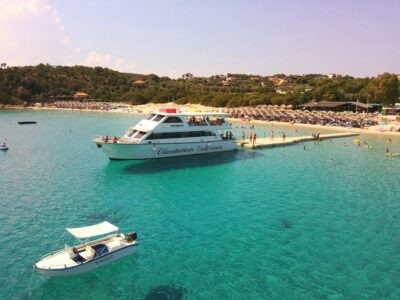
Mount Athos Glassbottom Cruise with Ammouliani Island visit
Read our review →
Thessaloniki Hop-on Hop-off Sightseeing Bus Tour
Read our review →
Browse the lists this tour appears in