
Reviewed · SELF-GUIDED TOURS
Ancient Agora: Audiovisual self-guided tour with 3D models
The birthplace of democracy fits in your phone. This audiovisual self-guided tour helps you make sense of Athens’ Ancient Agora, the city’s political, commercial, religious, and social center from the 6th century BC onward. I like the mix of 3D reconstructions and 360-degree views, which can make ruined buildings easier to picture. I also like the freedom to use the guide before, during, or after your visit.
The main drawback is simple: your entrance ticket is not included. You pay $7.89 for the digital guide, then €10 for full admission or €5 at the reduced rate. You also need your own charged smartphone, earphones, and enough internet or storage to get the app working.
In This Review
- Key points to know before you go
- Why the Ancient Agora matters
- Getting more from the app’s 16 monuments
- The political center of ancient Athens
- Following Socrates and the philosophers
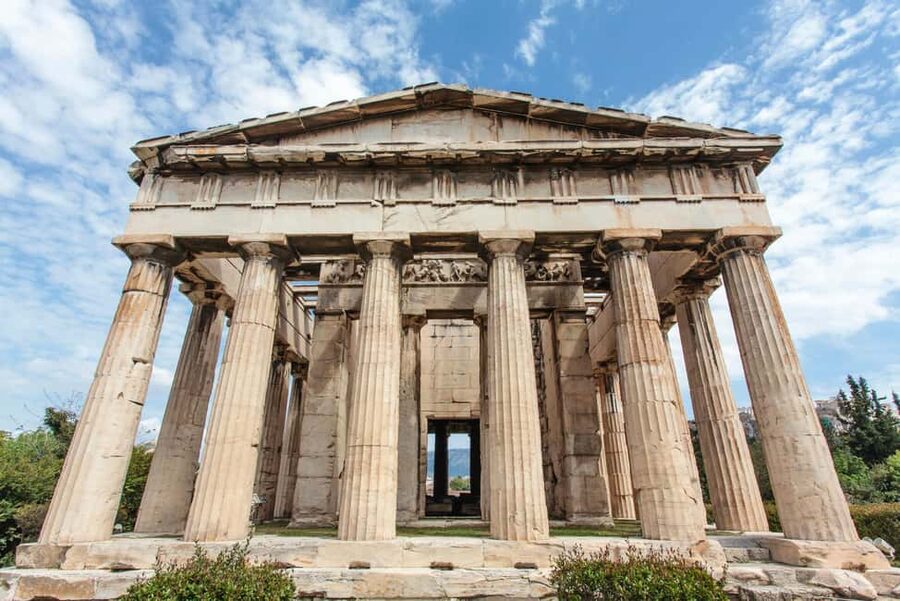
- The Temple of Hephaistos deserves extra time
- Planning the visit around five days of access
- What the $7.89 price really buys you
- Who will enjoy this self-guided format
- Practical ways to use it well
- Should you book the Ancient Agora audiovisual tour?
- FAQ
- Is the entrance ticket included?
- How long is the tour valid?
- Can I use the guide before or after my visit?
- Which languages are available?
- Do I need internet access?
- How much phone storage does the tour need?
- Do I need to bring my own phone and headphones?
- Which phones support the tour?
Key points to know before you go
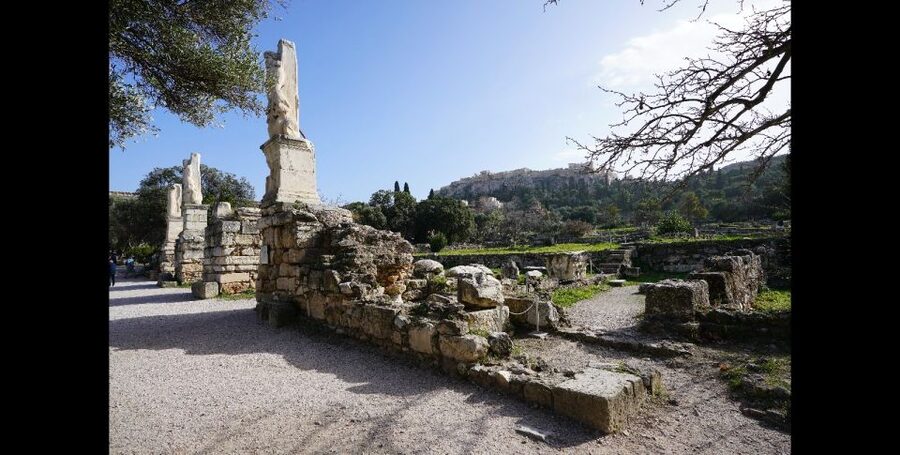
- Fourteen monuments receive 3D models, videos, and 360-degree views, giving you more than a basic audio track.
- Sixteen monuments include written and audio information, with an integrated map to help you find them.
- The Agora was the working heart of ancient Athens, not just a collection of broken columns.
- Socrates and other philosophers taught in this area, adding a human side to the political story.
- The Temple of Hephaistos is the visual highlight, and one of the best-preserved ancient Greek temples.
- The guide remains valid for five days after first activation, so you do not have to finish it in one visit.
Why the Ancient Agora matters
The Acropolis gets the famous photographs, but the Ancient Agora explains how Athens functioned day to day. This was where people met, traded, worshipped, handled public business, argued cases, and took part in the early development of democracy.
That wider purpose is what makes an audio guide useful here. Ruins can look like a scatter of stones if you do not know what each space once did. The app helps connect the remains to civil administration, courts, sanctuaries, fountains, workshops, and stoas.
I especially like the focus on democracy. The Agora was not a modern parliament, and you should not expect a single grand hall where democracy suddenly appeared. Instead, the guide presents a public setting where political and civic life took shape through institutions, meetings, decisions, and debate.
The site also brings famous names closer to ordinary places. Socrates and other philosophers taught and talked around Athens, and the Agora was part of that world. You are not simply looking at architecture. You are walking through the setting where ideas about public life, citizenship, law, and philosophy were put into practice.
A few more Athens half-days to weigh up
- Athens: Acropolis Ticket with Optional Audio or Live Guide
★ 4.2 · 11,055 reviews - Athens: Cape Sounio & Poseidon Temple Trip with Audio Guide
★ 4.4 · 4,521 reviews - Athens: Acropolis Ticket with Audio Guide
★ 4.0 · 3,575 reviews
Getting more from the app’s 16 monuments
The guide provides written and audio information for 16 monuments. That combination suits different kinds of visits. You can listen while walking, stop for a closer look, or read the text when the site is noisy or your phone audio is difficult to hear.
The integrated map is important. Ancient sites often make sense only when you understand where one building sits in relation to another. A map can help you identify monuments without constantly guessing which pile of stone belongs to which period or purpose.
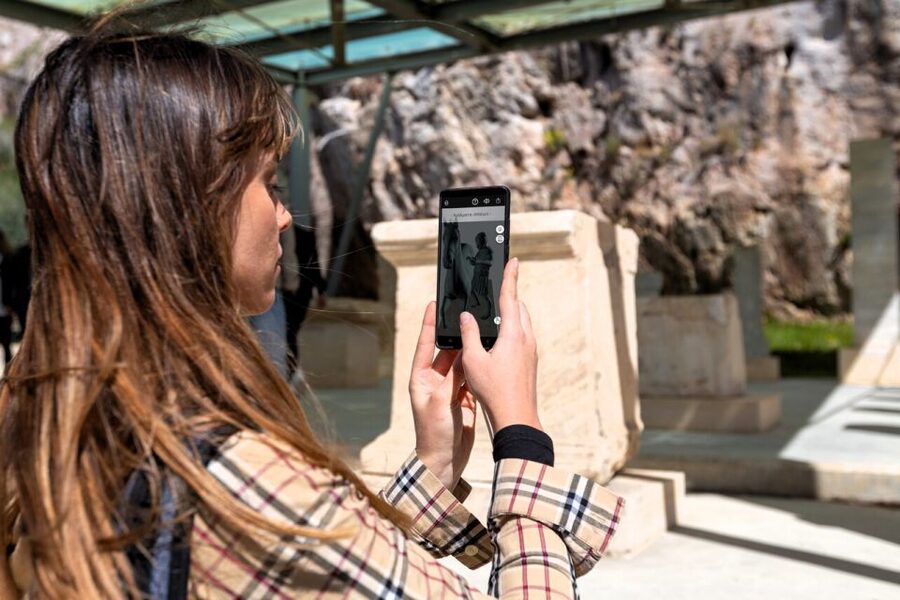
Fourteen monuments also have 3D models, immersive videos, and 360-degree panoramic views. These are the strongest parts of the digital format. A model can show the height, roofline, columns, or arrangement of a building that survives only in fragments.
Use those reconstructions as visual help, not as proof that every detail is certain. Ancient buildings changed over time, and modern models necessarily interpret the evidence. Still, they give you a much better sense of the original setting than a bare ruin does.
The 360-degree views are useful before your visit, too. You can get your bearings at home and decide which areas deserve more time. Afterward, they let you revisit parts of the Agora without needing to remember every detail from the ground.
The political center of ancient Athens

One of the tour’s main strengths is the way it treats the Agora as a working civic center. This was not merely a scenic stop for philosophers and tourists from antiquity. It handled the practical business of the city.
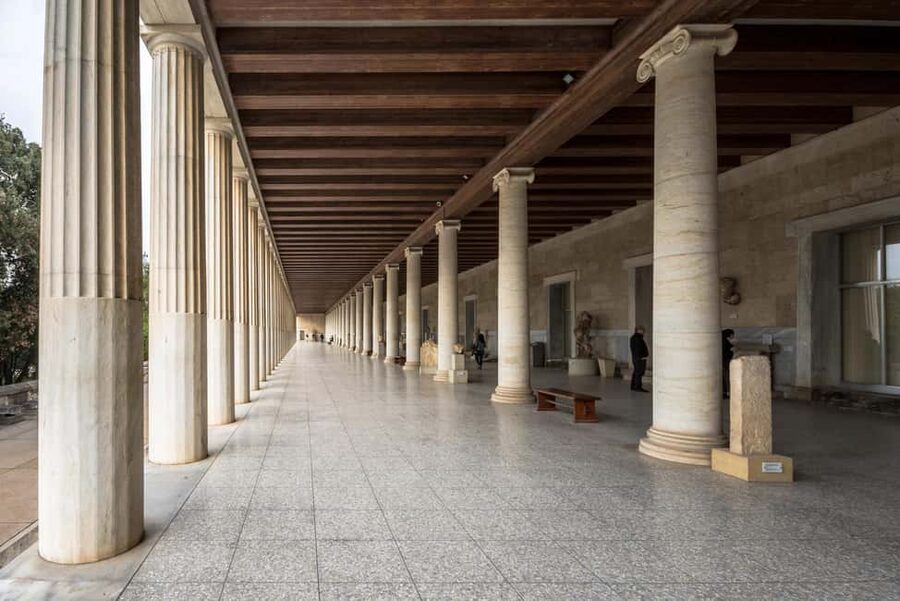
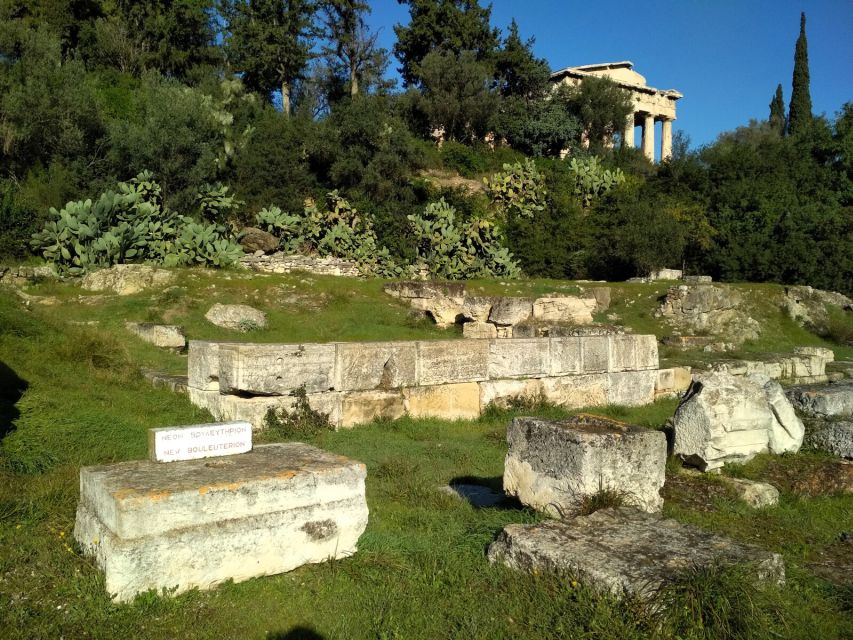
The guide covers civil administration and courts, along with temples, fountains, stoas, and workshops. That range matters because it shows how closely daily life and public life were linked. Commerce, worship, law, and politics occupied the same broad urban area.
You might find the administrative sections less immediately dramatic than the Temple of Hephaistos. They are still essential. Without them, the Agora becomes a pleasant ruin rather than the place where Athens organized much of its public life.
Take time with the map and written explanations around these areas. The app is most valuable when you pause to ask what happened there, who used the space, and why the building mattered. If you simply play the audio while walking quickly, you may miss the point.
Following Socrates and the philosophers
The connection with Socrates gives the Agora a strong personal angle. Philosophical teaching was not separated from public life in a quiet academic campus. Ideas were discussed in the same city spaces where people worked, traded, worshipped, and handled public affairs.
The guide’s related stories help broaden the visit beyond building names and dates. Thirteen monuments include related stories, and the extra material can help you connect a structure to ancient Greek culture and everyday ideas.
This is a good feature for first-time visitors who want context without joining a scheduled group. You can choose how much background you need. A history enthusiast can read and listen to more material, while someone on a short Athens visit can focus on the main monuments.
The limitation is that an app cannot respond to your questions. A human guide can change the pace, explain a confusing point, or add a local observation. This product is best for independent visitors who prefer control over a fixed walking group.
Same stretch of coastline, a completely different day out:
- Athens: Acropolis & up to 5 Archaeological Sites Combo Pass
★ 4.4 · 12,619 reviews - Athens: Acropolis, Parthenon & Acropolis Museum Guided Tour
★ 4.8 · 9,316 reviews - Athens: Cape Sounion & Poseidon Temple Sunset Half-Day Trip
★ 4.8 · 8,241 reviews - Athens: Acropolis and Parthenon Guided Walking Tour
★ 4.6 · 5,882 reviews
The Temple of Hephaistos deserves extra time
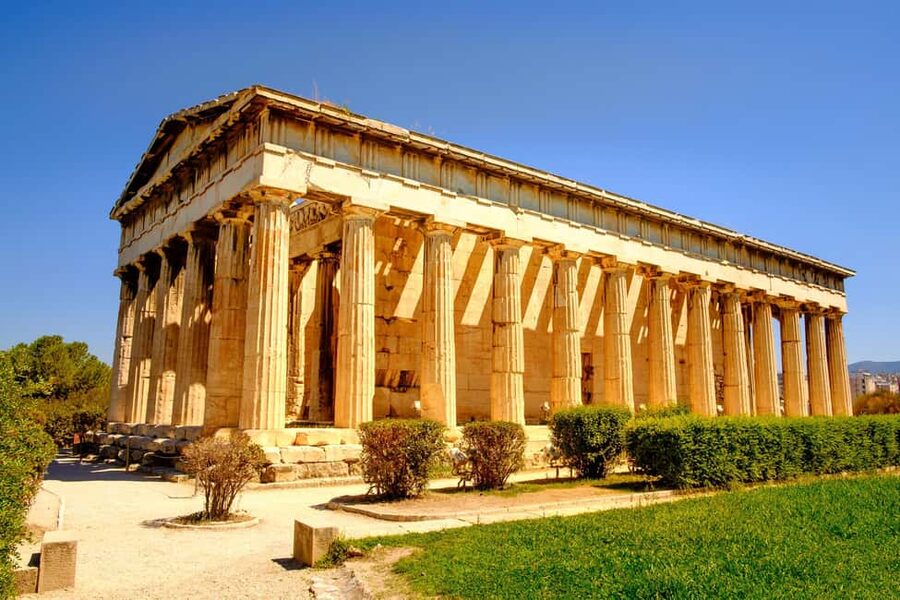
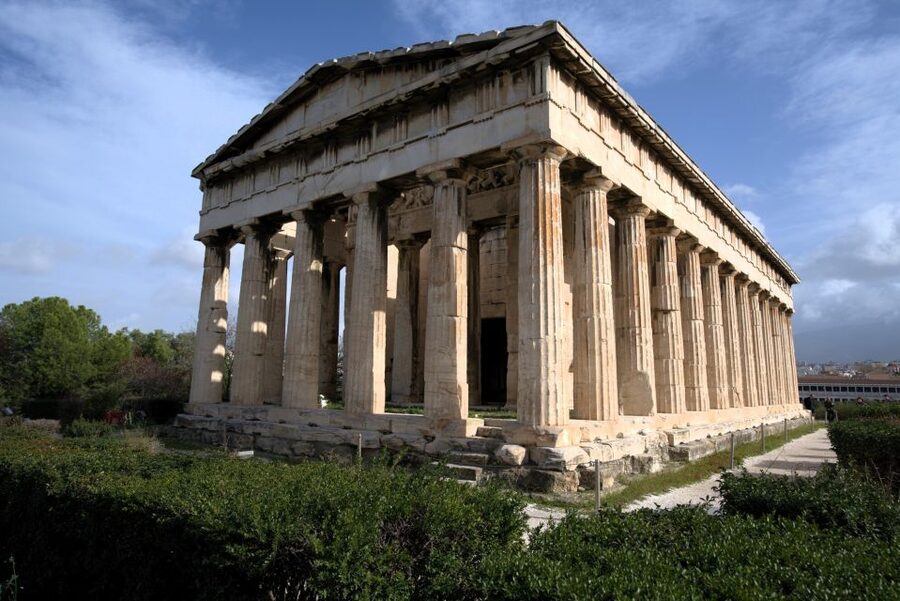
The Temple of Hephaistos is the architectural prize of the Agora. It is described as Greece’s finest preserved temple, and it gives you a clearer idea of what ancient Greek temple design looked like than many ruined sites can.
Because the temple survives so well compared with much of the surrounding Agora, it can also help you understand the 3D models elsewhere. Look at its columns, proportions, and overall form, then use the digital reconstructions to imagine how less complete buildings might once have appeared.
Do not treat the temple as the entire visit, though. Its strong preservation makes it easy to spend all your time there and rush through the civic and commercial areas. The political story is the reason to visit the Agora, while the Temple of Hephaistos is the most visible reminder of its architectural quality.
The app’s audio, written text, and visual material should work together here. Read the description, listen to the historical information, then compare the real remains with the model or panoramic view. That three-part approach is more useful than relying on photographs alone.
Planning the visit around five days of access
The guide is valid for five days from first activation. That is generous for a digital product covering one archaeological site. You could activate it shortly before visiting, use it in the Agora, and return to the material later.
You can also use it anywhere before, during, or after the visit. I would download the content on Wi-Fi before leaving for the site. Internet access is required for effective use, and the provider recommends downloading the tour in advance unless you have enough mobile data.
The content takes about 200MB of storage. That is not a large amount for most phones, but it is worth checking before your day out. Delete unrelated files if necessary, and fully charge your phone. The app does not supply a phone or headphones.
You can listen in English, Greek, German, Spanish, Italian, French, Dutch, or Chinese. That broad language choice makes the guide more useful for international visitors and for groups who do not want to share a single guide language.
The tour works on iOS 11.0 or later and Android 5.1 or later. Check your phone before purchasing. A technical problem at the entrance is a poor way to begin an ancient history lesson.
What the $7.89 price really buys you
At $7.89 per person, the guide costs less than many live guided visits, but it is not a substitute for the entrance ticket. Add €10 for full admission or €5 at the reduced rate, and the total cost becomes more important to your decision.
The value is strongest if you plan to use the visual content. Sixteen monuments receive written and audio information, while 14 include 3D models, videos, and 360-degree views. That is a substantial set of material for one archaeological site, especially if you use it before and after your visit.
The five-day validity also improves the value. You do not have to race through every section. You can prepare in advance, listen on site, and review the material later. The guide can also help you decide how much time to allow for the Agora before you arrive.
There is a useful bonus: 68 written and audio items about ancient Greek culture and facts. That extra content gives the purchase more life beyond the physical walk. It may suit you if you want a broader introduction to ancient Greece rather than only monument labels.
The value is weaker if you want a live person, personal stories, or a carefully managed route. You are paying for a digital tool, not transportation, food, entry, or guide services.
Who will enjoy this self-guided format
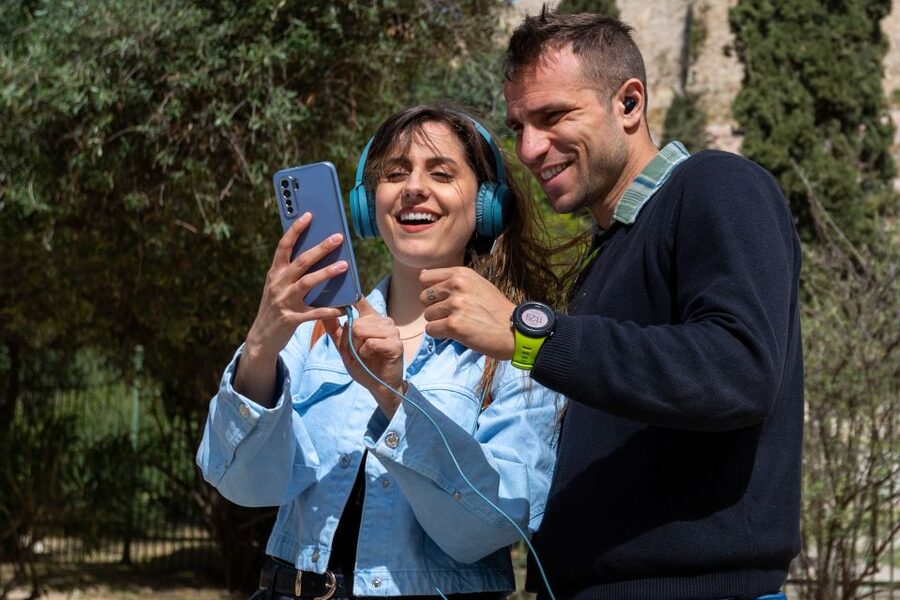
I would choose this tour if you like setting your own pace. You can stop often, skip material, replay a section, or return to it later. Families and mixed-interest groups may also appreciate the flexibility, since each person can use the information differently.
It suits history-minded visitors who want more than a name and date. The models and videos are especially helpful if you have trouble picturing ancient buildings from foundations and partial walls.
It is also a practical choice if you arrive outside the timing of a live tour or simply dislike walking in a group. The guide does not force you to follow someone else’s speed.
I would think twice if your phone battery is unreliable, your mobile data is limited, or you do not like listening through earphones. The experience depends on your device. A human guide is also the better choice if you want questions answered in real time.
The overall rating is 3.9 from 31 reviews, which suggests a generally useful product with some unevenness rather than a perfect experience. I would keep expectations realistic: this is a well-equipped digital companion, not a personal archaeologist in your pocket.
Practical ways to use it well

Download everything on Wi-Fi before you enter the archaeological site. Check that the content opens, confirm your phone meets the operating-system requirements, and carry earphones.
Start with the map so you know what the 16 monuments are and where they sit. Then use the audio for the main route and save longer written sections for places where you want to stop.
Compare the physical remains with the 3D models. This is where the product earns its price. A short pause to match a reconstruction with the stones in front of you can change the whole visit.
Use the 360-degree views and videos after the visit if the site feels crowded or if you miss a particular area. Since access lasts five days from activation, you have room to revisit the material.
Remember that the entrance fee is separate. Check official opening days, hours, and ticket details before setting out, since the app itself does not provide admission.
Should you book the Ancient Agora audiovisual tour?
Book it if you want independent pacing, visual reconstructions, several language choices, and enough access time to prepare before the visit and review it afterward. The combination of 3D models, 360-degree views, videos, audio, and written information gives the Agora more shape than a basic audio track.
Skip it if you want a live guide, do not want to rely on a smartphone, or prefer to keep costs limited to the entrance ticket. For everyone else, the $7.89 price is reasonable when you use the five-day access and the bonus cultural material. Bring your own phone, headphones, and patience, then let the Agora’s civic story take center stage.
FAQ
Is the entrance ticket included?
No. The digital guide costs $7.89 per person, while admission to the Ancient Agora costs €10 for a full ticket or €5 at the reduced rate.
How long is the tour valid?
It is valid for five days from the first activation.
Can I use the guide before or after my visit?
Yes. You can use the self-guided tour anywhere and anytime before, during, or after your visit.
Which languages are available?
Audio guidance is available in English, Greek, German, Spanish, Italian, French, Dutch, and Chinese.
Do I need internet access?
Yes. Internet access is required for effective use. You should download the tour content over Wi-Fi before visiting unless you have sufficient mobile data.
How much phone storage does the tour need?
The content requires approximately 200MB of storage.
Do I need to bring my own phone and headphones?
Yes. A smartphone and headphones are not included. You should also make sure your phone is fully charged.
Which phones support the tour?
The self-guided tour requires iOS 11.0 or later or Android 5.1 or later.
Just added around Athens
- Delphi One Day Trip from Athens★ 4.0 · 98 reviews
- Mercedes Private Tour to Delphi and Arachova★ 5.0 · 30 reviews
- Private Delphi and Hosios Loukas Monastery – Great Lunch and Drinks Included★ 5.0 · 36 reviews
- Day tour to Ancient Olympia,Ancient Sparta Mycenae Including Meal★ 5.0 · 54 reviews
- Athens: Half Day Trip To Cape Sounio/Poseidon Temple Semi Private★ 5.0 · 131 reviews
- Athens Half-Day Private Tour Acropolis, Parthenon City Highlights★ 5.0 · 35 reviews
- From Athens: Day Tour to Mykonos★ 5.0 · 64 reviews
- Culinary Secrets of Downtown Athens★ 5.0 · 103 reviews
Self-Guided Tours, compared.


Cape Sounio & Poseidon Temple Trip with Audio Guide
Read our review →
Acropolis Museum Ticket with optional Audio Guide
Read our review →
Acropolis Ticket & Optional Self-Guided Audio Tours
Read our review →
Parthenon & Acropolis Museum with Audio or Live Tour Option
Read our review →
Knossos Palace Entry Ticket with Optional Audio Guide
Read our review →Browse the lists this tour appears in