
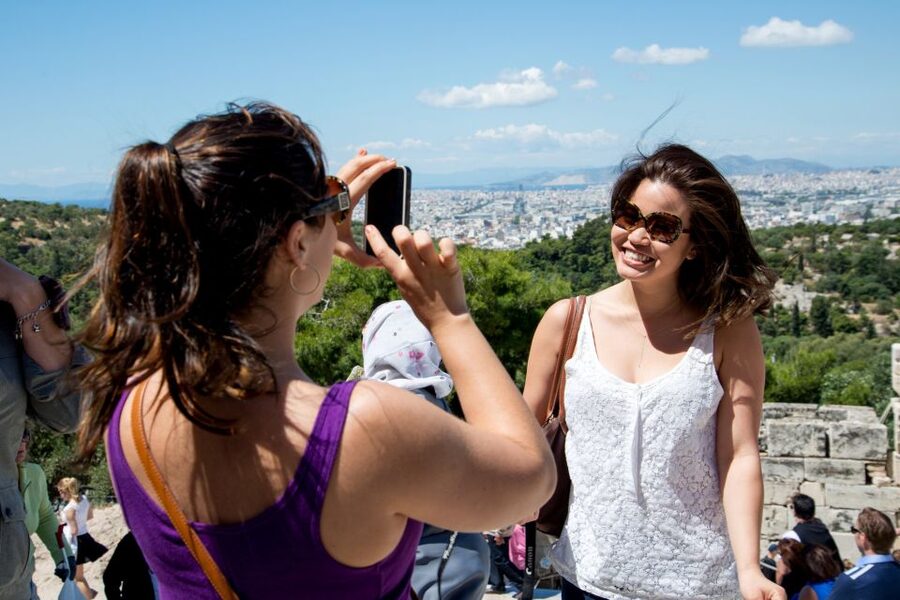
Reviewed · ACROPOLIS TOURS
Athens: Acropolis, Parthenon & Acropolis Museum Guided Tour
Ancient Athens rewards a good guide. This Acropolis and Museum tour brings the hill’s temples, theaters, and myths into focus, then carries the story into the modern Acropolis Museum. I like the licensed guides’ strong storytelling, and I like that the route includes both the outdoor ruins and the original works preserved below.
The price is about $40 per person, depending on the option you choose, which is fair for a three to four-hour guided visit with museum access. You can also choose a private group. The main caution is physical: steep, uneven walking, hot sun, and crowds can make this a poor fit for anyone with mobility or heart problems.
The experience works best when you want context, not just photographs. Guides such as Sotos, Jason, Chrysa, Giota, Ioannis, and Julia have been praised for clear English, humor, and a talent for making the ancient sites easy to follow. Just remember that the Acropolis itself has no special skip-the-line entrance, even though ticket-office lines can be avoided with the proper option.
In This Review
- Key points to know before you book
- Starting on the Acropolis Hill
- Theater of Dionysus: where the drama began
- Herodes Atticus and the healing sanctuary
- The Propylaea and Temple of Nike
- The Erechtheion and its famous Caryatids
- The Parthenon and the Golden Age of Pericles
- The short break before the museum
- The New Acropolis Museum
- How the guides shape the experience
- Is $40 a good value?
- Who should book this Acropolis tour?
- Should you book it?
- FAQ
- How long does the Acropolis and museum tour last?
- Is the tour available in English?
- Does the tour include Acropolis tickets?
- Does the tour include Acropolis Museum tickets?
- Is there a skip-the-line entrance to the Acropolis?
- Is there a separate entrance to the Acropolis Museum?
- Are hotel pickup and drop-off included?
- Can I take a wheelchair or baby stroller?
- What should I bring?
- Do I need identification for a reduced or free ticket?
Key points to know before you book
- Theater of Dionysus comes first for a reason: This is where ancient Greek drama took shape, giving you a human starting point before the grand temples above.
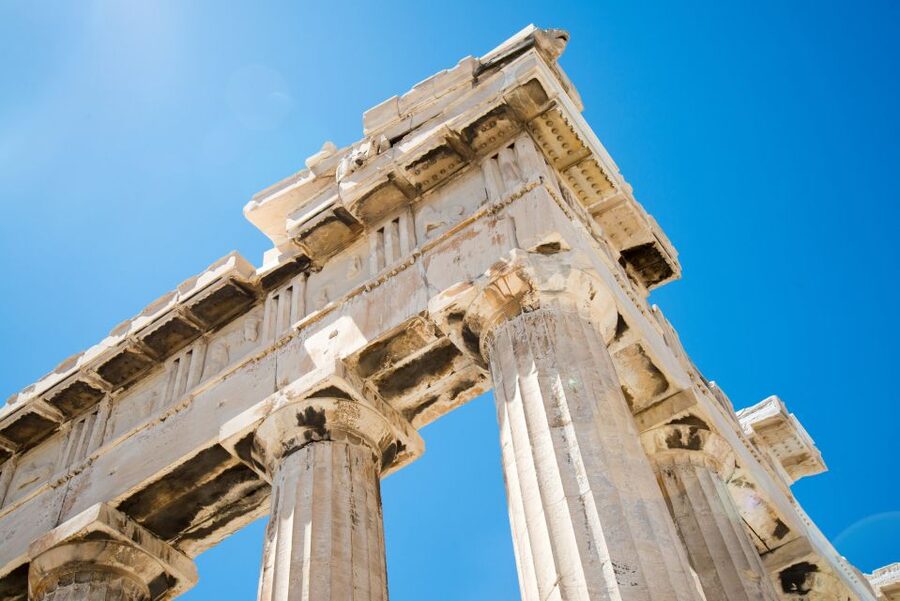
- The Parthenon is only part of the story: The route also includes the Propylaea, Temple of Nike, Erechtheion, Odeon of Herodes Atticus, and sanctuary of Asclepius.
- The museum completes the visit: Original Caryatids, Parthenon sculpture, excavations beneath glass, and a full-size Parthenon recreation help fill in what the hill has lost.
- Guides are the main value: Jason, Sotos, Chrysa, Giota, Ioannis, and Julia have earned praise for lively explanations and good pacing.
- Expect a real walk: Comfortable shoes, water, a hat, and light clothing matter more here than fancy sightseeing clothes.
- Read the ticket option carefully: Some choices include the Acropolis and museum tickets, while others require you to arrange admission in advance.
Starting on the Acropolis Hill
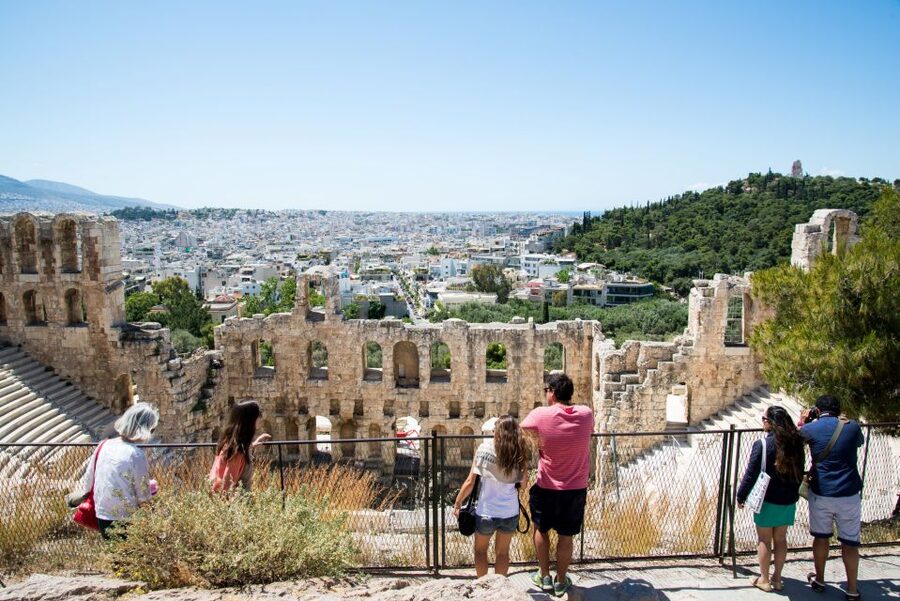
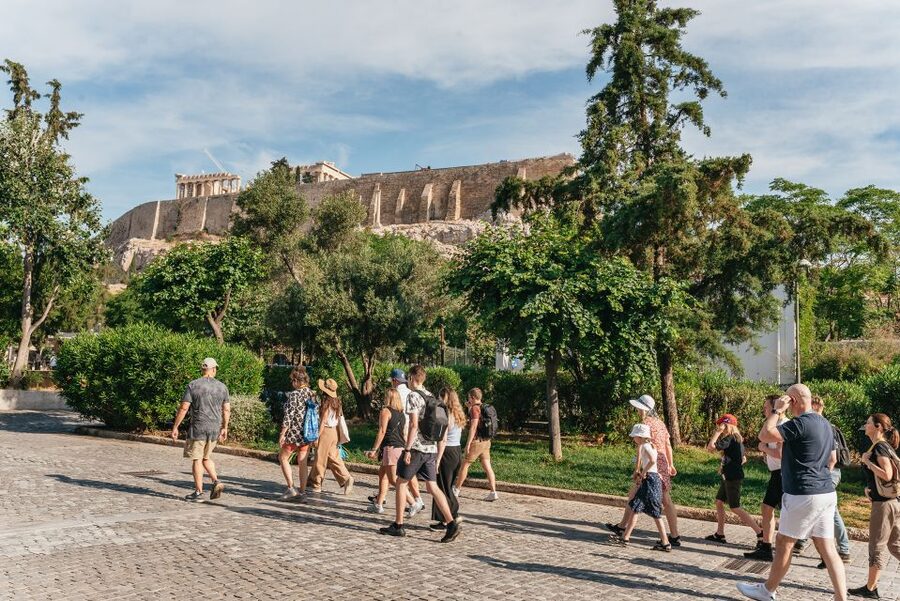
This is not a quick photo stop. You spend roughly three to four hours moving between major monuments, listening to stories, pausing for photographs, and then visiting the museum. The exact order may change because of weather, crowd levels, or the pace of the group.
The opening stretch takes you through one of the most important archaeological places in Europe. Your guide explains the site through history, mythology, and everyday life rather than leaving you to guess which pile of marble once served what purpose. That help matters. At the Acropolis, several structures share the same pale stone, and without context they can blur together.
The hill is exposed, so the experience changes with the weather. A warm, clear day gives you better views, but it also makes the climb and open stone surfaces harder. Poor weather does not cancel the value of the monuments, but it can slow the group and make the ground more awkward.
You will have time for photographs and personal looking around. Still, this is a guided group visit, not a free-roaming morning. If you like to linger over every carved detail, a private option or separate museum visit may suit you better.
More Museums in Athens
- Athens: Mythology of Delphi, Museum and Arachova Guided Tour
★ 4.6 · 4,008 reviews - Athens: Acropolis, Parthenon & Acropolis Museum Guided Tour
★ 4.8 · 3,579 reviews - Acropolis monuments & Parthenon Walking Tour with Optional Acropolis Museum
★ 5.0 · 2,678 reviews
Theater of Dionysus: where the drama began
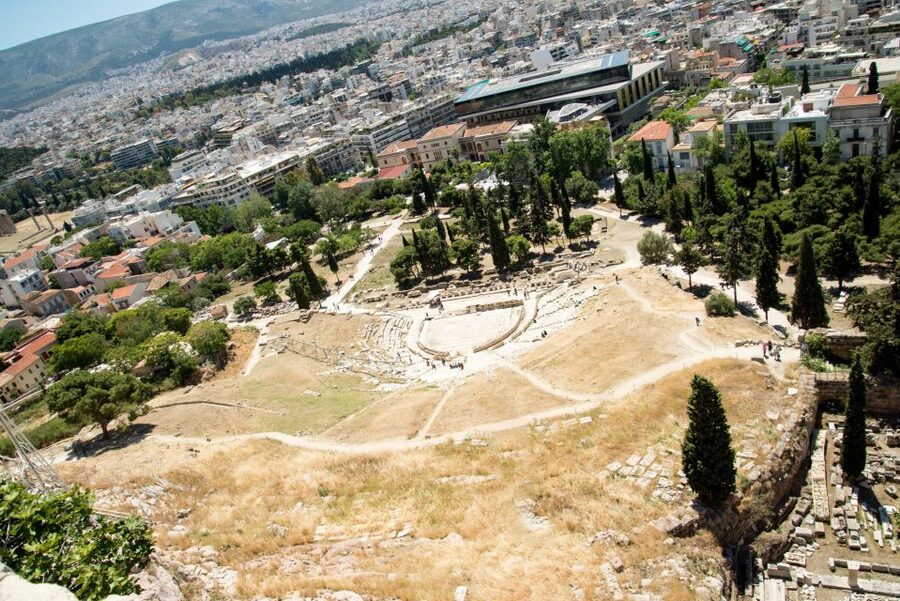
The Theater of Dionysus gives the tour a memorable opening chapter. Ancient Greek tragedies and dramas were first performed here, so the site connects the Acropolis to performance, politics, religion, and the public life of Athens.
Your guide can make this stop more than a semicircle of old stone seats. You begin to picture an audience gathering for a serious play, with stories that examined war, family, pride, justice, and the behavior of the gods. The phrase first theater of humanity can sound grand, but this is the place where the foundations of Western theater are presented in physical form.
It is also a useful pause before the higher monuments. You are still on uneven ground, but the stop gives you a sense of how the Acropolis functioned as a sacred and civic center, not merely as a hill crowned by the Parthenon.
Herodes Atticus and the healing sanctuary
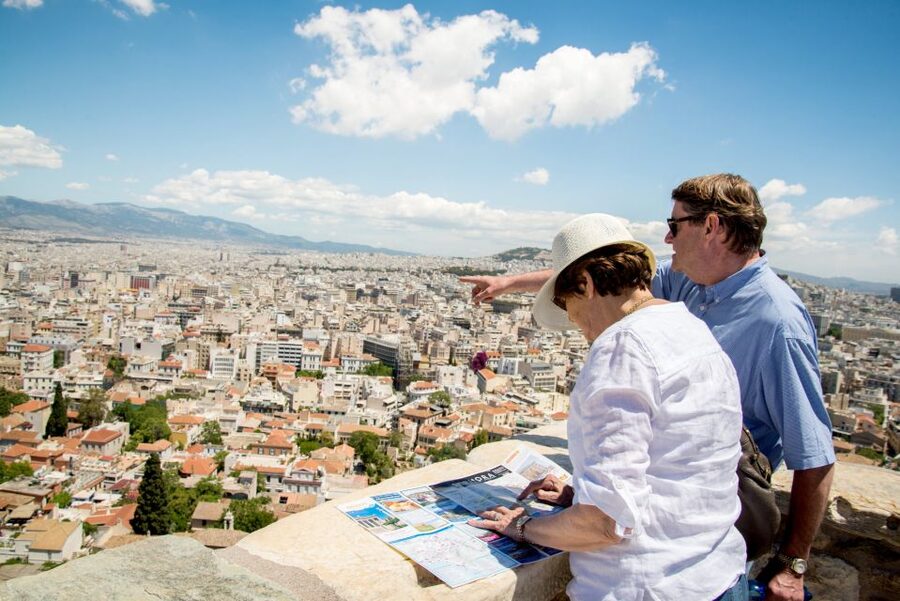
As you continue upward, the Odeon of Herodes Atticus offers a striking contrast. This large Roman-era theater is still an impressive architectural space, with a curved performance area and tall stone backdrop. The tour normally gives you a view rather than a full theater performance, but the scale is easy to appreciate from the path.
The sanctuary of Asclepius adds another layer. Asclepius was associated with healing, and this part of the hill reminds you that ancient religious life involved more than worshipping distant gods. People also came to sacred places seeking relief from illness and help with the body.
This is where a good guide earns the fee. The ruins do not explain themselves. A short account of what people did here, and why the place mattered, helps you read the remains as part of a working religious center.
The Propylaea and Temple of Nike
The Propylaea serves as the grand gateway to the upper Acropolis. Even in partial ruin, it gives you a strong sense of arrival. You pass through an entrance designed to make the sacred summit feel important, controlled, and worthy of ceremony.
Nearby, the Temple of Nike is small compared with the Parthenon, but it has an elegant presence. Its position and size make more sense when your guide explains how Athenians used small temples, gateways, and monuments together to shape the approach.
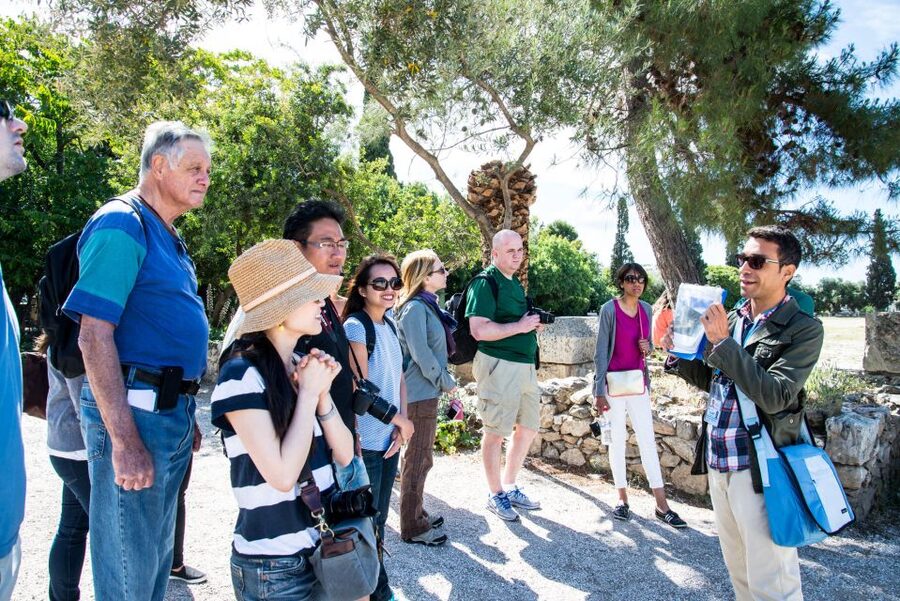
The route can be crowded here. Other groups may gather around the same points, and the supplied disposable earphones are used for groups larger than eight. Audio quality can suffer when nearby groups use their own equipment, so stay close enough to your guide to see gestures and hear transitions.
More ways to see the Acropolis:
- Athens: Acropolis & up to 5 Archaeological Sites Combo Pass
★ 4.4 · 12,619 reviews - Athens: Acropolis Ticket with Optional Audio or Live Guide
★ 4.2 · 11,055 reviews - Athens: Acropolis and Parthenon Guided Walking Tour
★ 4.6 · 5,882 reviews - Athens: Acropolis Ticket with Audio Guide
★ 4.0 · 3,575 reviews
The Erechtheion and its famous Caryatids
The Erechtheion is one of the most fascinating stops because it does not have the simple, balanced shape most people expect from a classical temple. Its unusual design reflects the complex sacred traditions of the Acropolis.
The most famous feature is the porch supported by female figures, called Caryatids. At the museum, you see five original Caryatids. The sixth is in the British Museum, a detail that gives the museum visit an international and sometimes politically charged edge.
The outdoor monument and the museum display work well together. On the hill, you see the building in its setting. Inside, you can inspect the sculptural work more closely and understand why even incomplete fragments matter.
The Parthenon and the Golden Age of Pericles
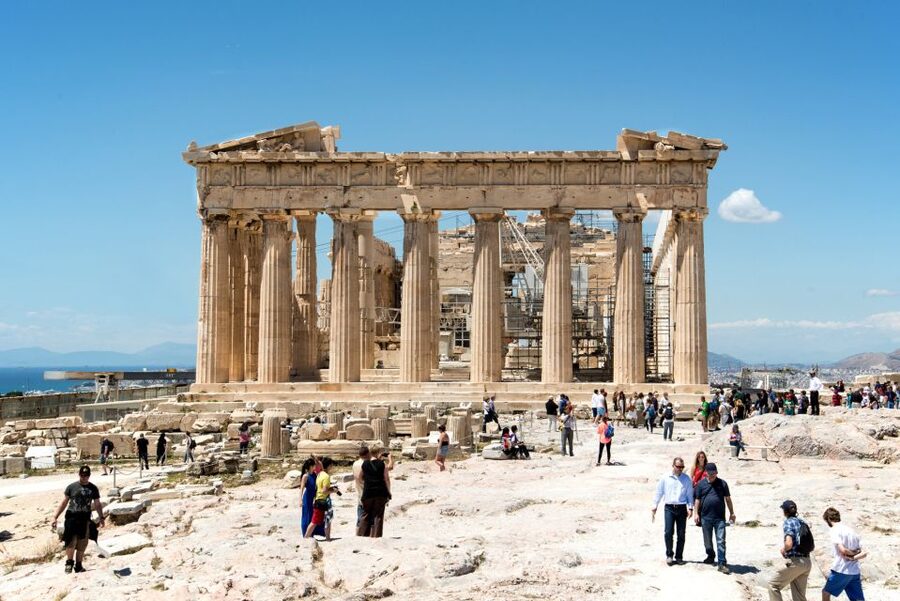
The Parthenon is the visual center of the visit, but the guide helps you place it in a wider setting. Built in the fifth century BCE during the Golden Age of Pericles, it has come to represent democracy and Western civilization.
You will not see the building as it looked in ancient Athens. Time, war, explosions, removal of sculpture, and exposure have changed it. What remains is still powerful, but the best experience comes from combining the visible columns and foundations with the museum’s sculptures and explanations.
A guide can also help you avoid treating the Parthenon as a single, isolated monument. The surrounding temples, gateways, sanctuaries, theaters, and views formed a connected public and religious center. That larger picture is one of the main reasons to choose a guided visit.
The hill is the busiest and most physically demanding portion. You will walk over uneven stone and may need to wait as groups move around narrow areas. If you have only enough energy for one part of the tour, give the Acropolis your freshest hours and save the museum for a calmer, separate visit.
The short break before the museum
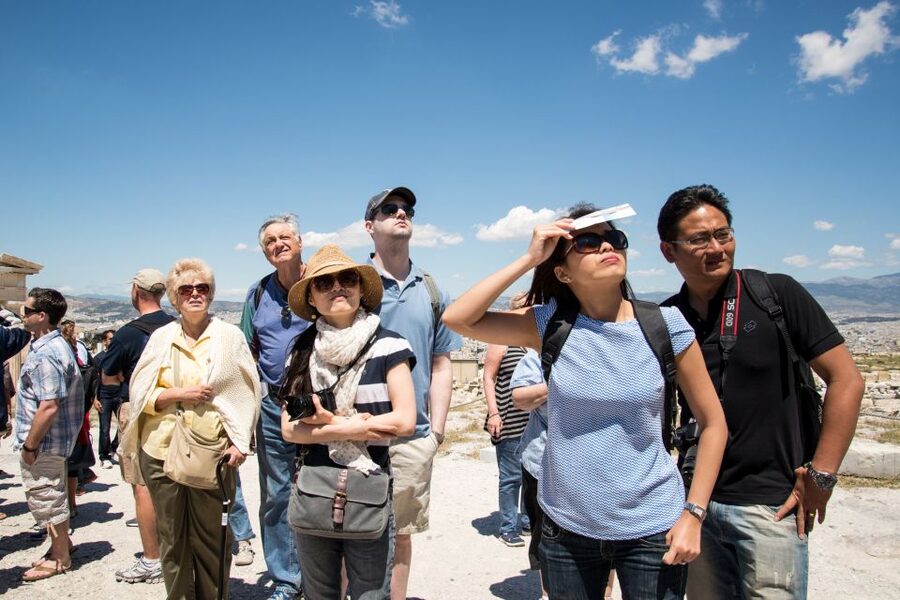
The experience includes a brief pause before you continue to the Acropolis Museum. This is useful after the outdoor section, especially because you can use the bathroom and catch your breath.
The pause is not a full meal break. Food and drinks are not included, so bring water and plan accordingly. The museum is only a short walk from the Acropolis site, which keeps the transition simple and avoids adding transport time.
This small reset can make the combined itinerary manageable. Still, the whole outing may feel dense. One direct suggestion from the tour itself is worth taking seriously: if you have plenty of time in Athens, consider visiting the Acropolis and museum on separate tours or separate blocks of the day.
The New Acropolis Museum
The modern Acropolis Museum changes the tone completely. After open ruins, hard sunlight, and uneven stone, you enter a carefully designed building made to display ancient objects with plenty of natural light.
The ground floor offers glimpses into daily life and archaeological discoveries. Excavations beneath glass floors and walkways let you look down at remains below the museum, adding an unusual sense of physical connection between the modern building and earlier Athens.
The first floor is home to the original Caryatids, with five displayed here and the sixth in the British Museum. Seeing the figures indoors allows you to study their forms more carefully than you can from the outdoor monument.
The top floor is the museum’s grand finish. You see the Parthenon frieze and a recreation of the Parthenon arranged beside views of the actual Acropolis. This pairing is one of the most useful features of the visit. You can compare the surviving sculpture, the reconstructed building, and the hill where the original temple still rises.
The museum is not just a storage room for objects removed from the Acropolis. It helps explain how the monuments were decorated, what they represented, and how much has been damaged or lost. That makes the museum essential, not an optional add-on for serious museum fans.
How the guides shape the experience
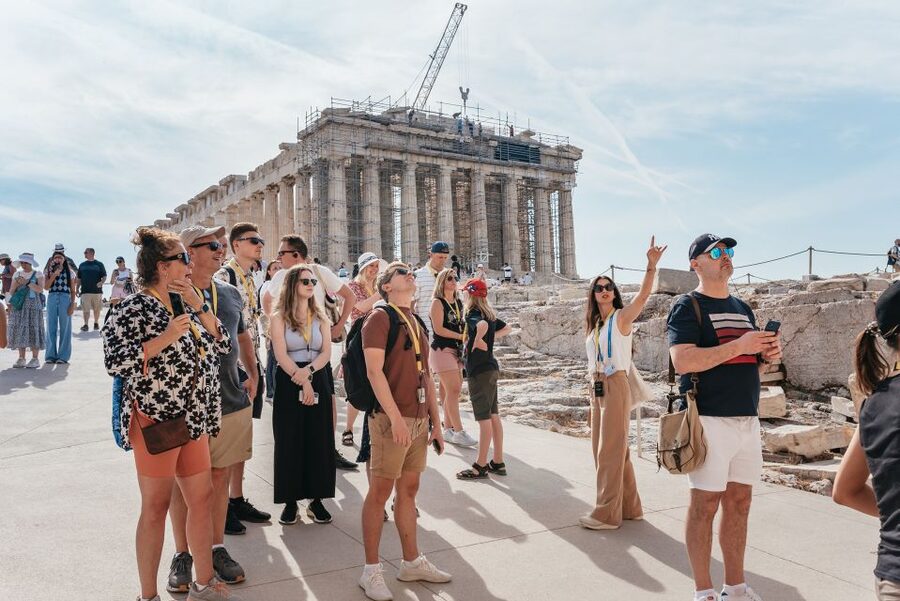
The strongest part of this tour is the human explanation. Sotos has been praised for excellent English and broad knowledge of Greece. Jason appears repeatedly as an engaging guide who keeps the ancient material lively and holds attention during a long walk.
Chrysa is described as friendly, organized, and especially good at storytelling. Giota’s Athens timeline helps put different periods in order, which is valuable when the site spans centuries. Ioannis brings energy and clear explanations, while Julia kept a difficult-weather visit enjoyable.
The descriptions point to a useful pattern: the best guides give you enough information to understand the place without burying you in dates. You get mythology, architectural purpose, political background, and a little breathing room for photographs.
Guide quality can vary from one departure to another, of course. The tour is conducted in English, and the private option gives you a better chance to ask questions and adjust the pace. A shared group costs less, but your experience depends more on the group’s walking speed and attention.
Is $40 a good value?
At around $40 per person, the tour is reasonably priced for a guided Acropolis and museum visit, particularly when the selected option includes both admission tickets. You are paying for access, a licensed guide, organization, and a clear route through two major Athens sights.
The value is highest if you would otherwise spend time trying to identify monuments or understand their connections. The Acropolis ticket alone gets you onto the hill, but it does not explain why the Theater of Dionysus, Asclepius sanctuary, Erechtheion, and Parthenon belong in one story.
Check the booking choice carefully. Some options include skip-the-line access at the ticket offices for the Acropolis and museum. There is no separate skip-the-line entrance at the Acropolis itself, so this wording does not mean you bypass every queue on the hill.
If you choose an option without tickets, purchase both admissions at least one day before the tour and contact the provider to confirm suitable time slots. If tickets are arranged at the meeting point, full-price adult tickets may be supplied for cash, and advance notice is required if you want the provider to buy them.
On free-entry days, tour prices are adjusted so you are not charged for complimentary tickets. Bring a passport or ID if you use a reduced or free ticket.
Who should book this Acropolis tour?
I would choose this for a first visit to Athens, especially if you want the major monuments explained without spending a full day on a private guide. It suits adults, older children over six, and anyone who enjoys history presented through stories rather than a wall of dates.
It is also a good choice if you want to see both the outdoor site and the museum in one organized outing. The combined route gives you a useful before-and-after view: ruins on the hill, original art and reconstruction inside.
I would think twice if you have mobility limitations, heart problems, or trouble with steep and uneven walking. Wheelchair users, children under six, and people bringing baby strollers are not suited to this activity. Large bags and luggage are not allowed, and the Acropolis elevator is not included.
Wear comfortable shoes, bring water and a hat, and choose comfortable clothing. You do not need special equipment, but you do need to be ready for several hours on your feet.
Should you book it?
Book this tour if you want the Acropolis to make sense, not just look impressive in a photograph. The combination of the Theater of Dionysus, major hill monuments, Parthenon, and Acropolis Museum gives you the clearest overall introduction to ancient Athens.
Choose the private option if questions, quiet pacing, or personal attention matter most. Choose the shared tour for the better price, but allow three to four hours and accept that crowds, weather, and group pace can change the order.
My practical advice is to book the ticket-included option, wear sturdy shoes, and treat the museum as an important part of the visit rather than an afterthought. If your schedule allows, split the hill and museum into separate outings. If your time is short and your mobility is good, this guided combination offers a lot of Athens in one well-organized morning or afternoon.
FAQ
How long does the Acropolis and museum tour last?
The stated duration is two to four hours, but the tour generally lasts three to four hours depending on the group’s pace and weather.
Is the tour available in English?
Yes. The live tour guide language is English.
Does the tour include Acropolis tickets?
Some booking options include the Acropolis ticket. If you choose an option without tickets, you must arrange admission in advance or follow the provider’s cash-ticket instructions at the meeting point.
Does the tour include Acropolis Museum tickets?
Some options include the museum ticket and a separate museum entrance. Check the option you select before booking.
Is there a skip-the-line entrance to the Acropolis?
There is no separate skip-the-line entrance to the Acropolis itself. The skip-the-line arrangement applies to ticket-office queues when included in your selected option.
Is there a separate entrance to the Acropolis Museum?
Yes. The experience includes entry through a separate entrance when the relevant ticket option is selected.
Are hotel pickup and drop-off included?
No. Hotel pickup and drop-off are not included.
Can I take a wheelchair or baby stroller?
No. The activity is not suitable for wheelchair users, and baby strollers are not allowed.
What should I bring?
Bring comfortable shoes, a hat, water, and comfortable clothing. Large bags and luggage are not allowed.
Do I need identification for a reduced or free ticket?
Yes. A passport or ID is required for reduced or free tickets. Children using a child ticket may also be asked to show identification for verification.
Just added around Athens
- Delphi One Day Trip from Athens★ 4.0 · 98 reviews
- Mercedes Private Tour to Delphi and Arachova★ 5.0 · 30 reviews
- Private Delphi and Hosios Loukas Monastery – Great Lunch and Drinks Included★ 5.0 · 36 reviews
- Day tour to Ancient Olympia,Ancient Sparta Mycenae Including Meal★ 5.0 · 54 reviews
- Athens: Half Day Trip To Cape Sounio/Poseidon Temple Semi Private★ 5.0 · 131 reviews
- Athens Half-Day Private Tour Acropolis, Parthenon City Highlights★ 5.0 · 35 reviews
- From Athens: Day Tour to Mykonos★ 5.0 · 64 reviews
- Culinary Secrets of Downtown Athens★ 5.0 · 103 reviews
Acropolis Tours, compared.
Acropolis & up to 5 Archaeological Sites Combo Pass
Read our review →
Acropolis, Parthenon & Acropolis Museum Guided Tour
Read our review →
Acropolis: Acropolis and Parthenon Guided Walking Tour
Read our review →
Acropolis monuments & Parthenon Walking Tour with Optional Acropolis Museum
Read our review →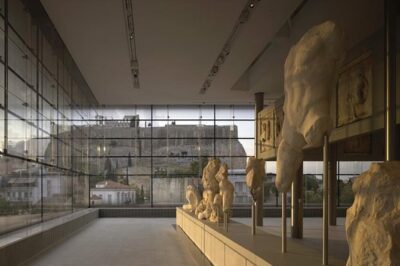
Athens All Included: Acropolis and Museum Guided Tour with Ticket
Read our review →Browse the lists this tour appears in