
Reviewed · AUDIO TOURS
Athens: Ancient Agora E-Ticket and Audio Tour
Democracy began with a walk through Athens. This self-guided Ancient Agora tour combines a pre-booked entry ticket with an audio program that explains how Athenian democracy took shape, from Solon’s reforms to the work of the city assembly. I like the freedom to pause for photos and explore at my own pace, and I like that the route connects the Agora with nearby sites tied to Socrates, public debate, and classical drama. The main drawback is that the walking directions can be vague, and the ticket process requires careful attention to the separate e-ticket email.
At $30 per person, this is not the cheapest way into an archaeological site, but the audio content adds real value if you want more than a quiet walk among ruins. You should bring a charged phone and headphones, download everything before arriving, and plan your visit for the morning or late afternoon, especially during Athens’ hot months.
In This Review
- Key points at a glance
- What you are actually buying for $30
- Entering the Ancient Agora without a ticket-office stop
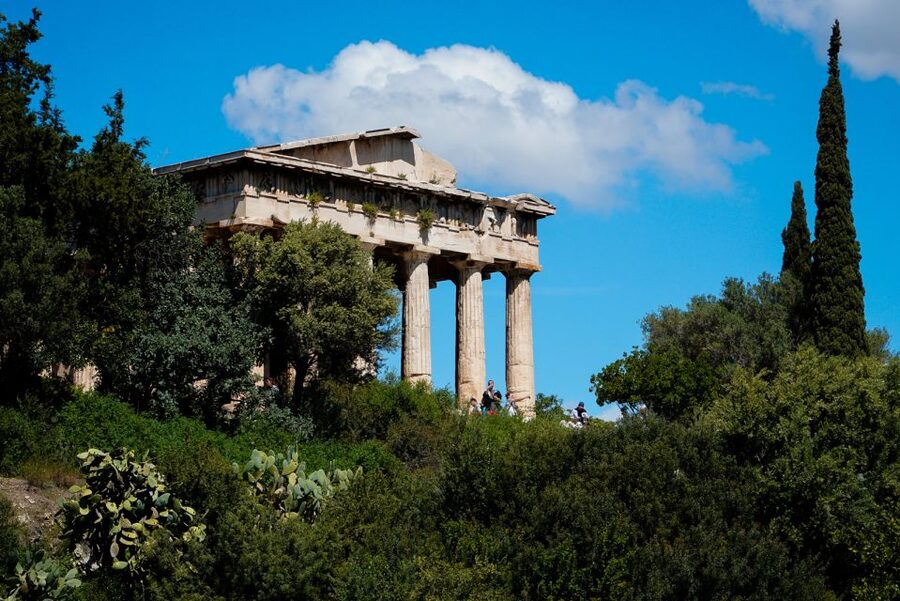
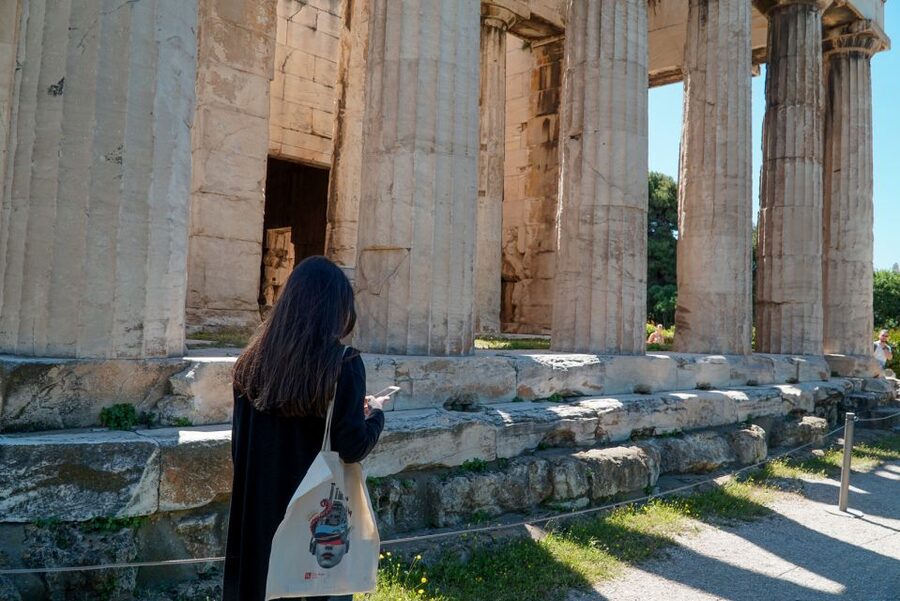
- Beginning beside the Temple of Hephaestus
- The Bouleuterion and the mechanics of Athenian government
- The Agora Museum, where the small objects tell the big story
- The Pnyx, Mars Hill, and the wider democratic setting
- The Prison of Socrates and the human side of the route
- Ending near the Theatre of Dionysus
- Timing, heat, and how to use the audio well
- Who will enjoy this tour most
- My verdict on the Ancient Agora audio tour
- FAQ
- How long does the Ancient Agora audio tour take?
- Is a live guide included?
- Which languages are available?
- Do I need internet access at the Ancient Agora?
- Can I use the GetYourGuide voucher at the entrance?
- What should I bring?
- Is the tour suitable for wheelchair users?
- Which phones support the audio tour?
Key points at a glance
- Follow democracy from Solon to Pericles: The audio explains the political reforms and public institutions that shaped early Athenian civic life.
- Visit the Temple of Hephaestus and Agora Museum: These are the strongest parts of the central archaeological site, with the museum adding useful objects and political context.
- Use the offline map carefully: The app works without mobile data, but some route directions and stop locations can be unclear.
- Look for the museum’s second floor: It gives a different view over the Panathenaic Way and is easy to overlook.
- Expect more than a simple Agora loop: The route includes or points toward the Pnyx, Mars Hill, the Prison of Socrates, and the Theatre of Dionysus.
- Bring your own equipment: There is no live guide, phone, or headset supplied, and the audio app does not work with Windows phones or several older Apple devices.
What you are actually buying for $30
The package includes an adult ticket for the Ancient Agora and a self-guided audio tour for an Android or iOS phone. The tour lasts about 90 minutes to two hours, depending on how long you spend at the exhibits, take photographs, and follow the route beyond the Agora.
The value depends on how you normally sightsee. If you are happy with a guidebook and wall labels, the ticket alone may feel expensive. If you want the ruins explained as part of a political story, the audio adds a useful layer. It turns scattered foundations into places where real decisions were made.
There is no live guide and no group to follow. That means no fixed pace, no questions answered on the spot, and no need to keep up with anyone else. I see this as a good fit for independent visitors who like to stop often, listen in short sections, and choose their own rhythm.
The tour is available in English, Italian, Greek, German, Spanish, and French. The content is presented as an engaging account of the evolution of Athenian democracy, with stories connected to figures such as Aristides the Just and Pericles.
One practical warning matters more than the price. Your GetYourGuide voucher is not accepted at the entrance. You need the separate e-ticket sent by the local partner, either printed or downloaded to your phone. Check your spam folder before leaving your hotel, then download the ticket and audio content while you still have internet access.
A few more Athens half-days to weigh up
- Athens: Acropolis Ticket with Optional Audio or Live Guide
★ 4.2 · 11,055 reviews - Athens: Cape Sounio & Poseidon Temple Trip with Audio Guide
★ 4.4 · 4,521 reviews - Athens: Acropolis Ticket with Audio Guide
★ 4.0 · 3,575 reviews
Entering the Ancient Agora without a ticket-office stop
The pre-booked ticket is meant to make entry easier. You proceed to the validating machines with the proper e-ticket rather than presenting the booking voucher. This can save time, but only if you have the correct document ready.
The site has no internet access, so do not wait until the gate to install the app or download the audio. A charged smartphone is essential. Headphones are also on your packing list because neither a phone nor headphones is included.
The entrance experience may not be perfectly smooth for everyone. One booking included a complaint about unfriendly staff, although the ticket process itself was otherwise described as quick and trouble-free. Give yourself a few extra minutes to find the right entrance and validate the ticket, rather than arriving with only the confirmation screen open.
Large bags and luggage are not allowed. Leave suitcases elsewhere and carry only what you need for the walk, water, phone, and headphones.
Beginning beside the Temple of Hephaestus
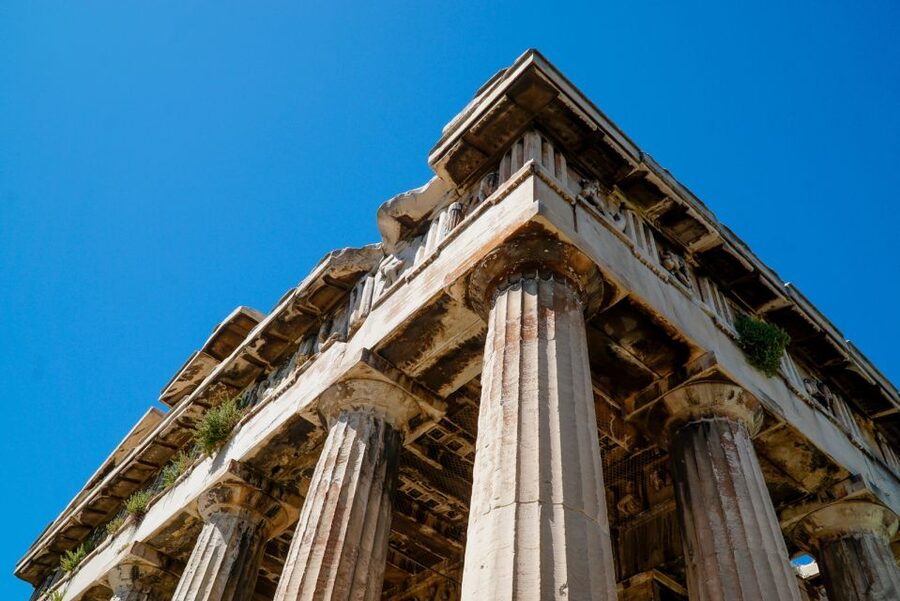
The audio starts with the political changes that allowed Athenian democracy to develop. Solon receives early attention, particularly his legal reforms and their role in forming a more structured civic society.
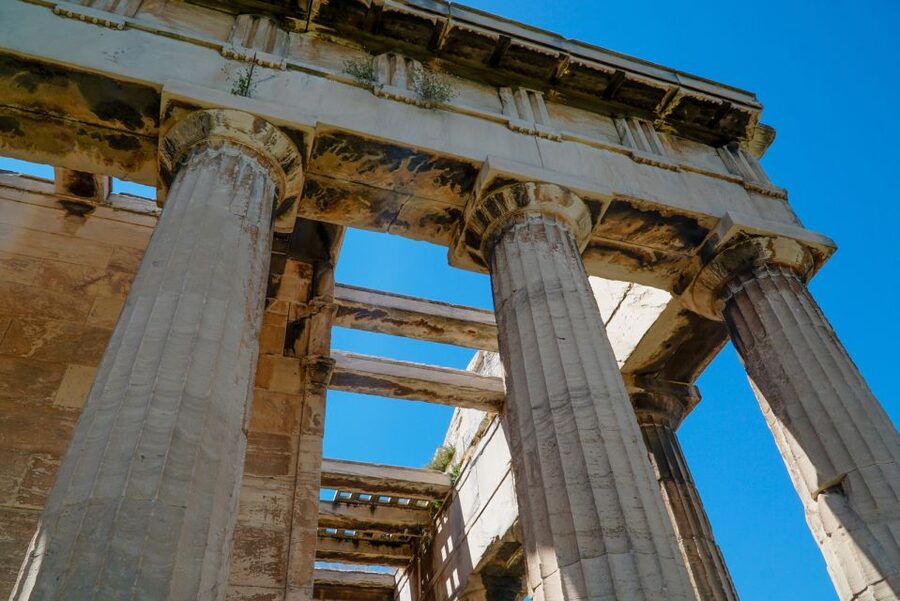
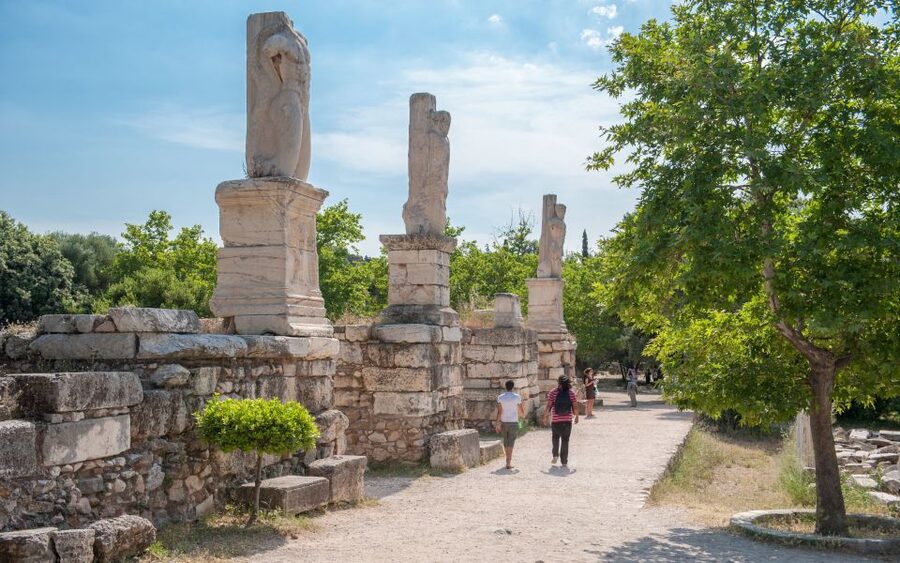
This introduction works because the Agora is not simply a collection of stones. It was a public center where politics, law, trade, religion, and everyday business met. The Temple of Hephaestus gives you a strong visual starting point, with its remarkably complete form making it easier to picture the ancient setting.
The temple is also a useful place to pause and get your bearings. Rather than rushing directly from one ruin to the next, let the opening section establish the main idea: democracy grew through institutions, arguments, rules, and repeated public participation. That is a more useful frame than memorizing dates.
The ground is uneven in places, so comfortable shoes matter. Some points are not wheelchair accessible, and the activity is specifically not suitable for wheelchair users.
The Bouleuterion and the mechanics of Athenian government
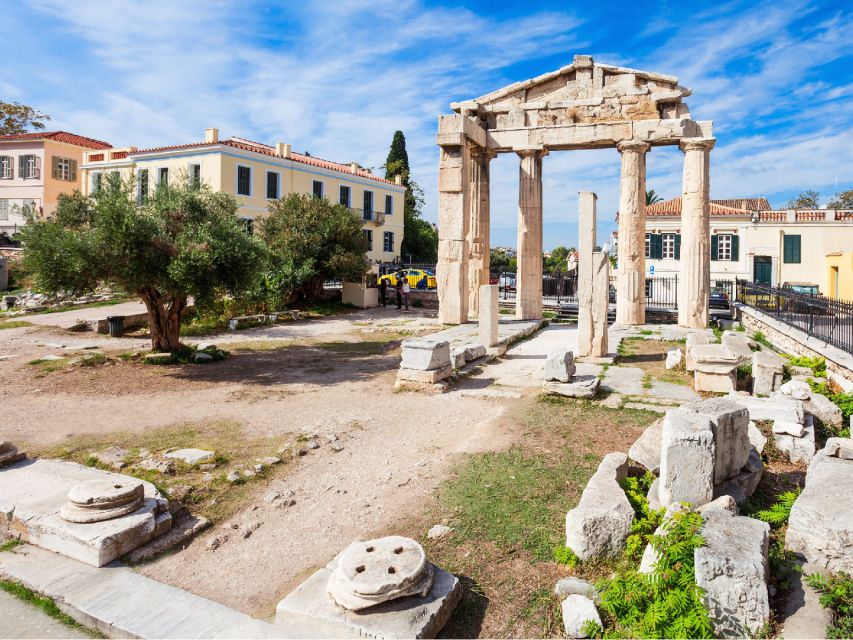
Near the Tholos, the route takes you toward the remains of the Bouleuterion. This is where the Council of 500 met to prepare laws and proposals for the city’s popular assembly.
The ruins are not visually grand. That is exactly why the audio matters here. Without explanation, the foundations can be easy to pass by. With context, they become evidence of a working political system, one that depended on daily meetings and practical administration.
I like this part of the route because it explains democracy as a process rather than a slogan. You hear about the people who prepared proposals, the assembly that considered them, and the public systems that helped Athens make decisions.
The audio also uses short stories about Athenian personalities. Aristides the Just and Pericles help put human faces on a system that can otherwise feel dry. The content is detailed enough for an educated audience, and one user felt that it assumed something close to a college-level background. If ancient Greek history is new to you, listen slowly and use the pause button freely.
Same stretch of coastline, a completely different day out:
- Athens: Acropolis & up to 5 Archaeological Sites Combo Pass
★ 4.4 · 12,619 reviews - Athens: Acropolis, Parthenon & Acropolis Museum Guided Tour
★ 4.8 · 9,316 reviews - Athens: Cape Sounion & Poseidon Temple Sunset Half-Day Trip
★ 4.8 · 8,241 reviews - Athens: Acropolis and Parthenon Guided Walking Tour
★ 4.6 · 5,882 reviews
The Agora Museum, where the small objects tell the big story
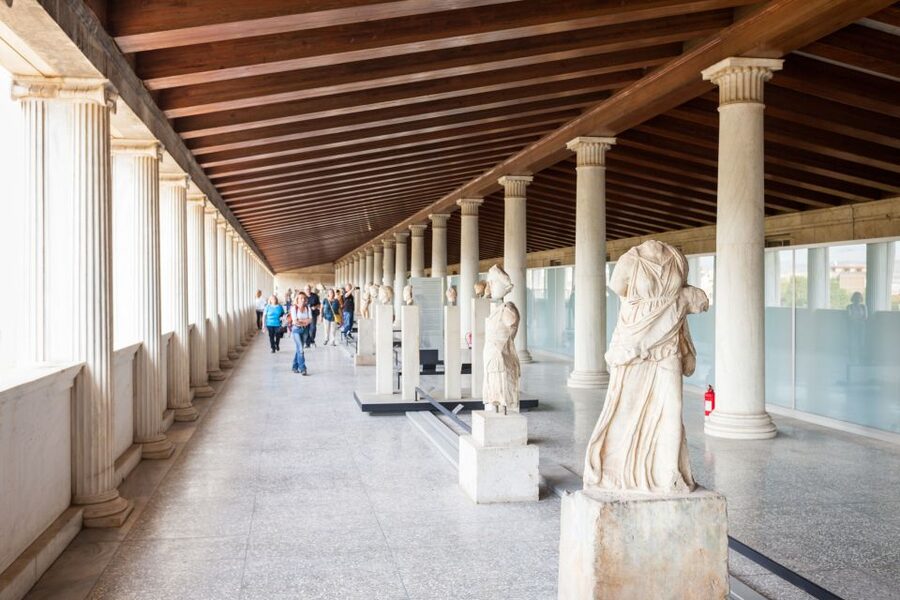
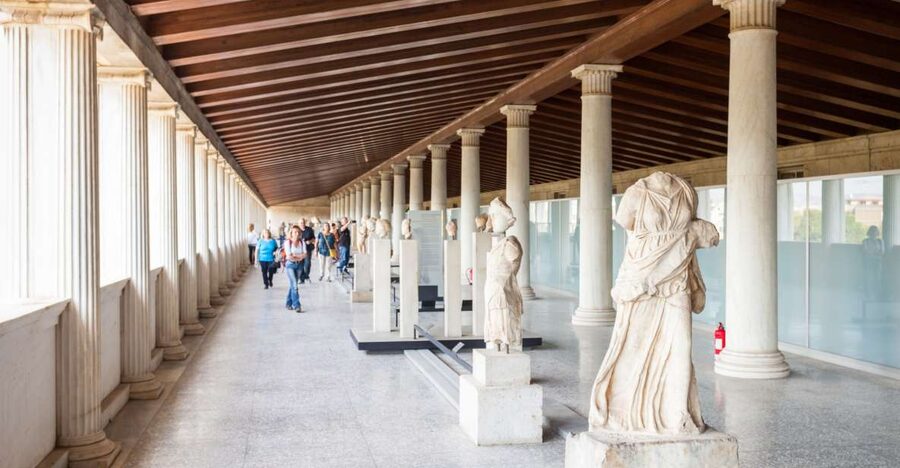
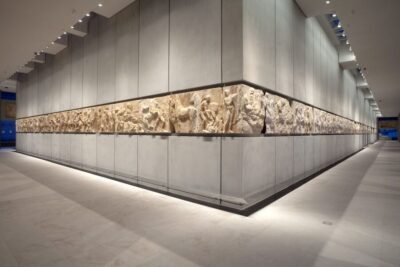
The Museum of the Ancient Agora is one of the best parts of this experience. Housed in the reconstructed Stoa of Attalos, it gives you objects and displays that make the surrounding ruins easier to understand.
The museum is not just a shelter from the sun. Its exhibits explain civic life and the sometimes harsh methods Athenians used to protect their political system from people they considered dangerous to democracy. This includes material connected to ostracism and other forms of public control.
You will want time here. A rushed pass through the museum weakens the whole tour because the objects provide the detail that the large ruins cannot.
Do not skip the second floor. It offers a different view over the Panathenaic Way and gives you a useful look back across the site. This higher viewpoint is easy to miss, yet it can be one of the most rewarding final stops inside the museum.
The museum is also air-conditioned, making it a sensible place to spend extra time during the hottest part of the day. If you plan to visit in summer, an early start or late afternoon visit will make the open-air sections far more comfortable.
The Pnyx, Mars Hill, and the wider democratic setting
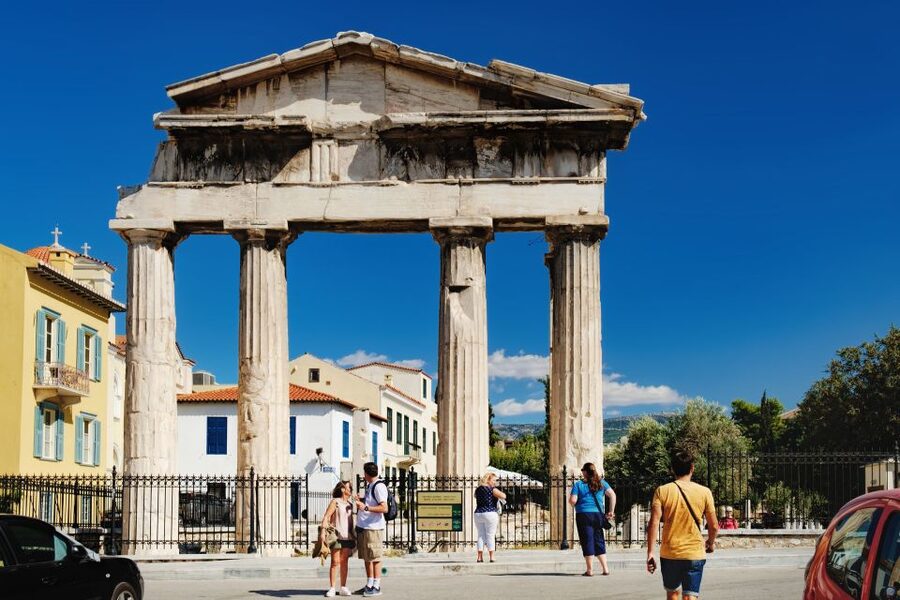
The experience reaches beyond the main cluster of Agora ruins. The audio connects the Agora with the Pnyx and Mars Hill, places that help explain how public speech and civic debate shaped Athens.
The Pnyx is especially important to the story of democracy. From its hilltop position, you get a picture of the physical setting where citizens gathered and listened to political arguments. The view toward the Acropolis helps tie the civic center to the rest of ancient Athens.
Mars Hill, also called the Rock of Ares, offers another strong viewpoint toward the Acropolis. These outlooks are among the visual rewards of the route, but they also involve uphill walking and uneven surfaces.
The directions are the weak point here. Parallel paths can be confusing, and the names of some locations are not clearly marked. The audio may not always make it obvious which turn or foundation you should be looking at. I recommend checking the offline interactive map before you start each section, rather than relying only on spoken instructions.
The app itself generally works well offline, which is important because you cannot count on a data connection inside the archaeological area. One technical nuisance is that the recording may stop if you zoom in to take a photograph. Pause, take the picture, and check that the audio has resumed before continuing.
The Prison of Socrates and the human side of the route
The route also points you toward the Prison of Socrates on Philopappos Hill. This part adds a more personal note after the earlier focus on laws and institutions.
The audio uses stories linked to Socrates and his circle, including an account involving Samuel the Cobbler. That kind of anecdote gives the tour a warmer, more human quality. You are no longer hearing only about councils and reforms. You are hearing about people, friendships, ideas, and the consequences of challenging accepted authority.
Treat the Prison of Socrates as a historical point connected with tradition and interpretation, rather than expecting a fully preserved prison building. The value lies in the story and the setting, not in dramatic architecture.
The hill route takes effort, and heat can make it tiring. You may prefer to split your attention between the audio and the surroundings instead of listening continuously. This is a walking tour, not a seated lecture, so short pauses improve the experience.
Ending near the Theatre of Dionysus

The audio route ends within easy reach of the Acropolis archaeological area, near the Theatre of Dionysus. The theatre is a fitting final stop because it shifts the story from political speech to dramatic performance.
This is the place associated with performances of tragedies by Aeschylus, Sophocles, and Euripides. Even if you know only a little about Greek drama, the setting helps you understand that theatre was part of public life, not merely private entertainment.
The route’s ending is useful if you are continuing toward the Acropolis area. It places you near another major site instead of returning you to the exact starting point. That can save backtracking, but you should remember that the Ancient Agora ticket does not automatically mean you have entry to every nearby attraction.
The description of the experience includes the Theatre of Dionysus, the Pnyx, Mars Hill, and the Prison of Socrates as part of the audio journey or its connected route. Check the exact option and meeting details you book, since the meeting point can vary.
Timing, heat, and how to use the audio well
The advertised duration is 90 minutes to two hours. That is enough for a purposeful visit, but not necessarily enough for a slow examination of every object, viewpoint, and museum display.
I would allow the full two hours if you want to listen carefully and take photographs. Add extra time if you plan to linger in the museum or follow every section toward the surrounding hills.
The best timing advice is simple: go early in the morning or late in the afternoon. The open-air ruins offer limited shade, and the walking can feel slow in strong sun. The museum provides a cool break, but it does not remove the need for sensible shoes, water, and sun protection.
Use the audio selectively. You do not need to play every second while walking. Pause at major views, look closely at the ruins, then resume when you reach the next point. This also reduces the chance of missing a turn while staring at your screen.
Who will enjoy this tour most
This experience suits you if you enjoy history but do not want to join a fixed group. It is also useful for first-time visitors who want a clear explanation of why the Agora matters, rather than a list of building names.
It works well for:
- Independent adults who want to set their own pace
- Visitors interested in democracy, philosophy, and public life
- People comfortable using a phone app and offline map
- Couples or families who prefer stopping for photos without holding up a group
- Anyone combining the Agora with nearby Acropolis-area sights
It may not suit you if you need a live guide, have an older unsupported device, dislike navigating with a phone, or want a short, flat walk. It is also a poor choice if you expect staff to solve technical problems at the gate.
EU students and minors can enter free with suitable identification, but they must queue for a zero-value pass. Non-EU students and people over 65 can receive reduced admission, but they need to queue at the ticket office. In those cases, the $30 package may offer less value than it does for a standard adult.
My verdict on the Ancient Agora audio tour
I like this experience because it gives the Ancient Agora a strong central idea: democracy was built through daily work, debate, law, and conflict. The museum, Temple of Hephaestus, Bouleuterion, Pnyx, and Socrates-related stops create a fuller visit than a quick walk through the ruins.
The audio is the main reason to book it. The content is clear, informative, and generally relaxed in pace. The app works offline, and the multilingual choice is helpful. The main weaknesses are the uneven directions, the lack of a live guide, the need to manage your own phone, and the non-refundable booking.
At $30, I would book it if you want historical explanation and value the freedom to explore alone. I would skip it if you already have a strong guidebook, qualify for reduced or free admission, or prefer a human guide who can point out exactly where to look.
If you do book, download both the e-ticket and audio tour before leaving your accommodation, bring headphones, start early or late, and make time for the second floor of the museum. Those small choices will make this thoughtful but occasionally imperfect tour much easier to enjoy.
FAQ
How long does the Ancient Agora audio tour take?
The activity lasts about 90 minutes to two hours. Your actual visit may be longer if you spend extra time in the museum, stop for photographs, or follow the route toward nearby sites.
Is a live guide included?
No. This is a self-guided audio tour for your smartphone, so there is no live guide accompanying you.
Which languages are available?
The audio guide is available in English, Italian, Greek, German, Spanish, and French.
Do I need internet access at the Ancient Agora?
No internet access is available inside the archaeological site. Download the e-ticket, audio tour, and offline map before your visit.
Can I use the GetYourGuide voucher at the entrance?
No. The entrance requires the separate e-ticket sent by the local partner. Print it or download it to your phone before arriving.
What should I bring?
Bring comfortable shoes, headphones, and a fully charged smartphone. Large bags and luggage are not allowed.
Is the tour suitable for wheelchair users?
No. Some points of interest are not wheelchair accessible, and the activity is not suitable for wheelchair users.
Which phones support the audio tour?
The audio tour works on Android and iOS devices, but not on Windows phones, iPhone 5 or 5C and older models, iPod Touch fifth generation or older, iPad fourth generation or older, or the first iPad Mini.
Just added around Athens
- Delphi One Day Trip from Athens★ 4.0 · 98 reviews
- Mercedes Private Tour to Delphi and Arachova★ 5.0 · 30 reviews
- Private Delphi and Hosios Loukas Monastery – Great Lunch and Drinks Included★ 5.0 · 36 reviews
- Day tour to Ancient Olympia,Ancient Sparta Mycenae Including Meal★ 5.0 · 54 reviews
- Athens: Half Day Trip To Cape Sounio/Poseidon Temple Semi Private★ 5.0 · 131 reviews
- Athens Half-Day Private Tour Acropolis, Parthenon City Highlights★ 5.0 · 35 reviews
- From Athens: Day Tour to Mykonos★ 5.0 · 64 reviews
- Culinary Secrets of Downtown Athens★ 5.0 · 103 reviews
Audio Tours, compared.


Cape Sounio & Poseidon Temple Trip with Audio Guide
Read our review →
Acropolis Museum Ticket with optional Audio Guide
Read our review →
Acropolis Ticket & Optional Self-Guided Audio Tours
Read our review →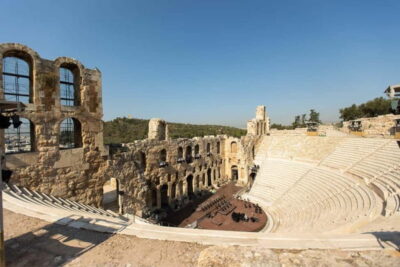
Parthenon & Acropolis Museum with Audio or Live Tour Option
Read our review →
Knossos Palace Entry Ticket with Optional Audio Guide
Read our review →Browse the lists this tour appears in