
Reviewed · COOKING CLASSES
Athens: Classic Cooking Class with Market Visit and Wine
Come hungry, leave with recipes. This four-hour Athens experience combines a short walk through Central Market with a hands-on Greek cooking class, shared meal, and wine. I especially like the chance to see where Athenians shop before preparing dishes such as dolmades, spanakopita, stuffed eggplant, tzatziki, and portokalopita.
I also like the friendly, social format. Hosts such as Vasia, Adoniya, Thanos, Thanassius, and Antonia are praised for humor, clear instruction, and making solo participants feel part of the group. The main consideration is pace: with up to 16 people and several dishes to prepare, parts of the class can feel rushed.
In This Review
- Key points to know before booking
- Why this Athens cooking class is worth your afternoon
- Starting at Athinas 36
- The 30-minute walk through Athens Central Market
- Preparing tzatziki, spanakopita, and dolmades
- Imam baidi and portokalopita
- Bread, olives, market snacks, and wine
- The family-style meal at the end
- The instructors make the difference
- How useful are the recipes at home?
- Who should book this class?
- Is the Athens Greek Kitchen class a good buy?
- FAQ
- How long does the Athens cooking class last?
- Where does the activity begin and end?
- Is the Central Market visit a shopping trip for the class ingredients?
- What food will I prepare?
- Is wine included?
- How far in advance can I cancel for a full refund?
Key points to know before booking
- Central Market comes first: A 30-minute walk gives you a look at Athens food culture before you cook.
- You prepare a full Greek spread: The menu includes tzatziki, spanakopita, dolmades, imam baidi, and portokalopita.
- The meal is family-style: You cook as a group, then sit down together to eat everything with 250 milliliters of local wine.
- The class is social and hands-on: You should expect conversation, shared tasks, and a group of up to 16 people.
- The recipes are meant for home use: Recipes for the prepared dishes are provided, though you may want to confirm whether you receive them online or in book form.
- Wear practical shoes: The market walk includes outdoor walking and sun exposure, and the cooking space is up two short flights of stairs.
Why this Athens cooking class is worth your afternoon
Athens has no shortage of food tours, but cooking gives you something a restaurant meal cannot: a working sense of how Greek dishes come together. You are not only tasting feta, herbs, olive oil, phyllo, and eggplant. You are handling them, seasoning them, and learning the small choices that make familiar dishes taste right.
I like the balance here. The market visit connects food to daily life, while the class gives you recipes you can try later. You also eat what the group prepares, so the four hours end with a substantial meal rather than a few token samples.
The experience costs about $83.44 per person. That is not the cheapest way to eat in Athens, but the price covers the market walk, instruction, ingredients, snacks, water, wine, and a large shared meal. If you would otherwise pay for lunch and a separate food tour, the value becomes stronger.
The class is also a good use of time during a hot Athens afternoon. You spend part of the outing indoors, with the market visit kept to about 30 minutes. Still, you should not book it as a quiet, private lesson. This is a group activity built around cooperation and conversation.
More Cooking Classes in Athens
- Athens: Food Market Visit and Cooking Class with Wine
★ 4.9 · 1,087 reviews - Greek Cooking Class in Athens Including Rooftop Dinner with Acropolis View
★ 5.0 · 826 reviews - Greek Small-Group Athens Cooking Class & Dinner
★ 5.0 · 574 reviews
Starting at Athinas 36
The class begins at Athinas 36, Athens 105 51, close to public transportation and within the central Athens market area. The activity ends back at the same meeting point, so you do not need to arrange a ride between the market, cooking space, and meal.
The Greek Kitchen is located up two short flights of stairs. The information describes the stairs as short, but the space may not suit everyone who has trouble with stairs. Since no hotel pickup or drop-off is included, plan your own route to Athinas 36 and allow enough time to arrive without hurrying.
The group can contain as many as 16 people. That is large enough for a lively international table and small enough for the instructor to move between participants, but it is not an intimate one-on-one lesson. If you like meeting people from different countries, this setup works well. If you want complete control over every step of every dish, you may find the shared format less satisfying.
The 30-minute walk through Athens Central Market
The first stop is Athens Central Market, reached on foot from the cooking venue. The walk lasts about 30 minutes and is intended as a look around rather than a shopping mission.
That distinction matters. You are not expected to buy the ingredients for your own meal. Instead, the market visit gives you a view of the food culture behind the recipes. You might see the types of produce, meat, herbs, and other staples that shape everyday Greek cooking.
The market is especially useful at the start because it gives context to the meal. When you later work with eggplant, greens, herbs, yogurt, and phyllo, these ingredients feel less like a list on a recipe card and more like part of the local food system.
Wear comfortable shoes and bring sun protection. The market section involves walking outdoors, and Athens sun can be strong even when the stop is fairly short. This part is not a formal historical tour, so keep your expectations focused on food, shopping customs, and local atmosphere.
Preparing tzatziki, spanakopita, and dolmades
Back at The Greek Kitchen, the class turns to the main work. The menu is broad for a four-hour session, so you prepare several dishes at once with guidance from the instructor and help from the staff.
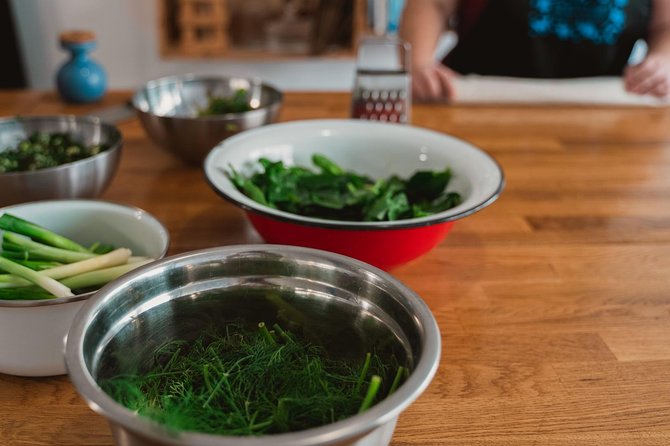
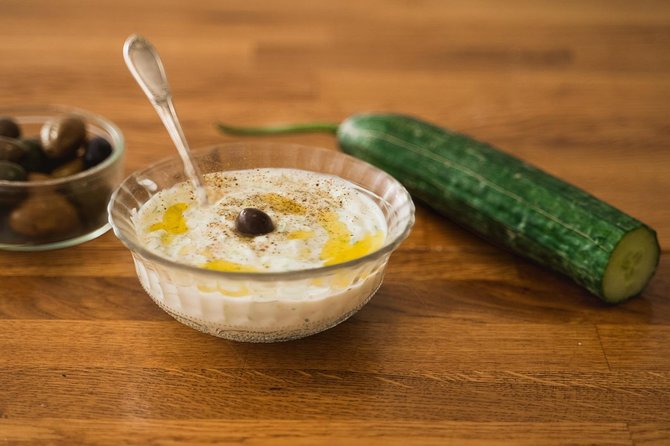
Tzatziki is the simplest dish on the menu, but it is a useful lesson in balance. Thick Greek yogurt is combined with fresh cucumber and garlic. You can adjust the garlic to taste, which makes this a practical recipe to recreate at home. It is also a good snack while the other dishes are underway.
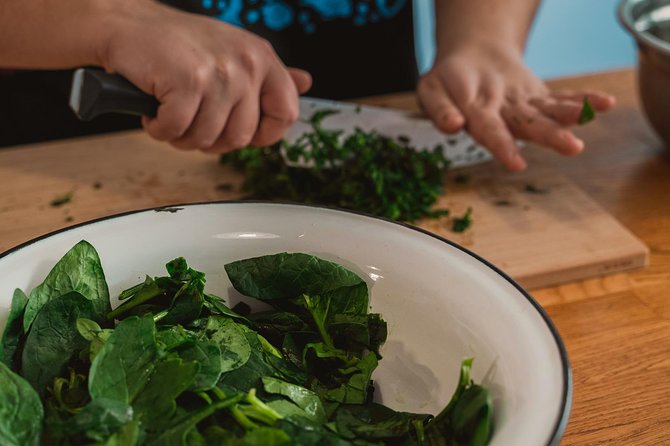
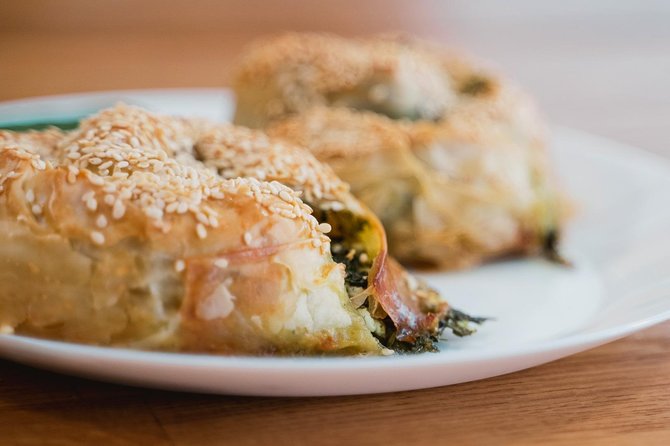
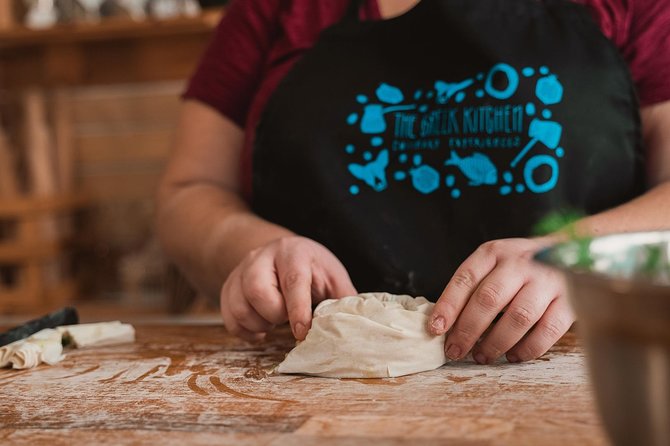
Spanakopita brings in one of Greece’s signature ingredients: phyllo. The pie is filled with spinach, feta, and herbs, with the thin pastry formed into coils. The technique is less about complicated equipment and more about handling delicate pastry without tearing it. If you want one dish that feels especially tied to Greek home cooking, this is a strong candidate.
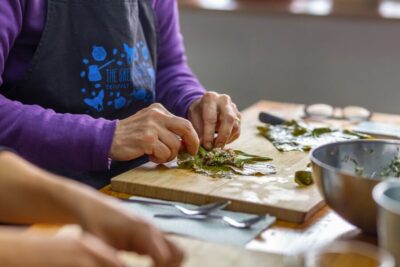
Dolmades require more patience. You roll vine leaves around a fragrant filling of rice and beef, learning how to keep the parcels compact without making them too tight. This is one of the more technical parts of the menu, and it gives the class a real hands-on task rather than only simple chopping.
The instructors make a point of giving everyone a job. Some participants may work in small groups on different dishes, then rotate or assist with other preparations. You may not personally make every part from start to finish, but the structure is designed so that each person takes part.
One detail is worth knowing: the class is mainly about preparation and teamwork. A participant described preparing the dishes while they were cooked in another room, rather than standing over each pot or oven for the whole process. If you expect a chef-school lesson with constant control of the stove, adjust that expectation.
Same stretch of coastline, a completely different day out:
- Athens: Acropolis & up to 5 Archaeological Sites Combo Pass
★ 4.4 · 12,619 reviews - Athens: Acropolis Ticket with Optional Audio or Live Guide
★ 4.2 · 11,055 reviews - Athens: Acropolis, Parthenon & Acropolis Museum Guided Tour
★ 4.8 · 9,316 reviews - Athens: Cape Sounion & Poseidon Temple Sunset Half-Day Trip
★ 4.8 · 8,241 reviews
Imam baidi and portokalopita
The menu includes two dishes with a strong story and a bit of theatrical appeal.
Imam baidi uses roasted eggplant topped with sauce and feta. The name connects the dish to a famous tale, and your cook explains the background while you assemble it. The recipe is hearty and practical, with ingredients that are easy to find in many countries.
The dish also shows why a cooking class can be more memorable than a standard tasting. You are not just told that eggplant is common in Greek cooking. You see how it becomes a complete dish through roasting, sauce, and finishing touches.
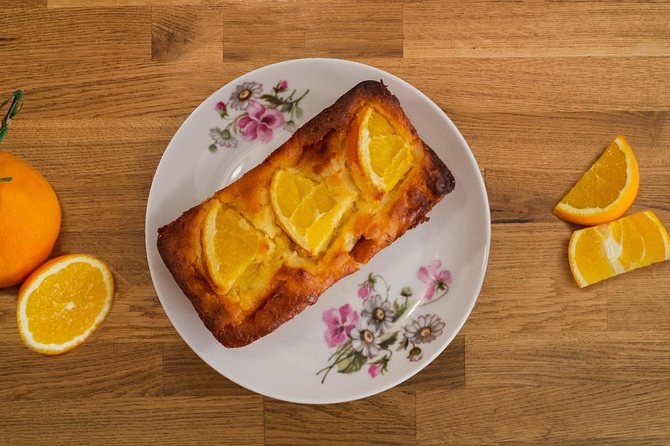
For dessert, you prepare portokalopita, a Greek orange and cinnamon dessert made with shredded phyllo soaked in syrup. It is often described as a pie, though its texture is closer to cake. The orange flavor gives the meal a bright finish, while the cinnamon syrup makes it unmistakably dessert rather than breakfast pastry.
Several dishes can be prepared within the four-hour schedule, but the pace is brisk. You may move quickly from one task to the next, especially when the group is full. I see this as a fair trade for the variety of food, though people who prefer slow, detailed instruction may want a smaller private class.
Bread, olives, market snacks, and wine
You do not wait until the final meal to eat. Bread and olives are available throughout the class, along with seasonal snacks from the market. These small additions matter because cooking several dishes can take time, and a little food keeps the class relaxed rather than turning it into a long wait for lunch.
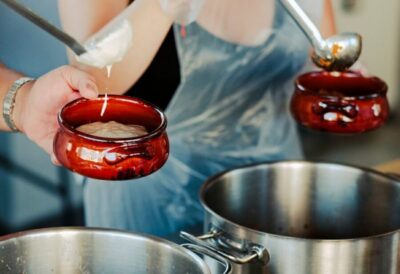
The included wine is 250 milliliters of locally produced red or white wine. It is served with the meal and adds to the family-table feeling. Drinking water is also included.
The wine portion is modest, not a tasting session. If you are interested in Greek wine as a subject, this class will not replace a dedicated wine tour. Here, it is part of the meal and social setting.
The food itself is the main value. The menu offers variety in texture and flavor: cool yogurt and cucumber, savory greens and feta, stuffed vine leaves, roasted eggplant, and sweet orange pastry. You get enough range to understand why Greek cooking is so appealing without spending another evening choosing a restaurant.
The family-style meal at the end
Once the dishes are ready, everyone sits down to eat together. The meal is served family-style, so plates are shared and the group enjoys the full spread rather than eating only the one item each person prepared.
That format creates the class’s strongest social moment. You cook beside people from different countries, then share a meal with them. Solo participants can make connections without needing to arrange anything in advance, while couples and friend groups get an easy activity that does not require one person to plan every detail.
The atmosphere depends partly on the group. A large family with young children, a group of friends, or a table of solo participants will each give the class a different feel. The hosts are praised for handling varied groups with patience and humor, including children and people with different cooking skills.
You should also understand that your individual portions may not remain separate. The group prepares the food together, and the finished dishes are shared. Marking which pieces you worked on may help with the activity, but it does not mean you receive a private serving of your own work.
Some people may have leftovers to take away, but that is not presented as a standard inclusion. Treat the meal as your main food experience for the afternoon, not as a guaranteed packed dinner.
The instructors make the difference
The cooking itself is only half the experience. The instructor sets the tone, and the teaching team receives especially strong praise for being funny, energetic, encouraging, and clear.
Vasia is known for a dry sense of humor and a relaxed way of keeping the group involved. Adoniya is praised for combining professional instruction with stories about Greek food and culture. Thanos and Thanassius are described as lively hosts who keep the class moving while explaining traditional methods. Antonia and her team are noted for organization and friendly support.
The names matter because this is not a silent demonstration. You spend several hours listening, asking questions, preparing food, and sharing a table. A warm instructor can turn a busy group class into a highlight of your Athens visit.
The class is offered in English. Instructions are intended to be easy to follow, and the staff helps participants stay involved even when the group includes different cooking abilities. Still, the pace means you should speak up if you need a step repeated.
How useful are the recipes at home?
The menu is well chosen for home cooks. Tzatziki is quick and forgiving. Spanakopita takes more care but uses familiar ingredients. Dolmades are more of a project, while imam baidi and portokalopita offer memorable dishes for a dinner with friends.
I like that the recipes are provided rather than leaving you with only a pleasant memory. Before booking, confirm how you will receive them. Information associated with the class refers to recipes being supplied, while some participants have described an online format and others have referred to purchasing a book. The practical point is simple: make sure you know how to access the recipes before you leave Athens.
You should also take notes on techniques, not only quantities. Ask how much garlic feels right, how tightly to roll the vine leaves, and how to handle the phyllo. Those small instructions are often more useful at home than a list of measurements.
Who should book this class?
I would recommend it to food-focused visitors, solo participants, couples, families, and friend groups who enjoy being active during a meal. It is especially good for someone who wants more than a restaurant table but does not want an intense professional cooking course.
Families can take part, and the instructors are accustomed to working with younger children. Solo visitors are also likely to fit in well because the class naturally creates conversation around shared tasks.
You may want to skip it if you dislike group activities, cannot manage two short flights of stairs, or want a private kitchen lesson. The market walk is short, the class can feel quick, and the food is prepared cooperatively rather than individually.
Free cancellation is available up to 24 hours before the start time for a full refund. Changes or cancellations made less than 24 hours before the start time are not accepted, so check your plans before the cutoff.
Is the Athens Greek Kitchen class a good buy?
Book this class if you want a social, food-centered afternoon with real cooking tasks and a generous meal. The market walk adds local context, the menu gives you several useful recipes, and the instructors bring enough humor to keep the work lively.
I would not choose it for a quiet or highly technical lesson. The group can reach 16 people, the pace may be brisk, and some cooking happens as a shared preparation rather than a personal stove session.
For most people, though, the combination is strong. At about $83.44, you receive a market visit, snacks, wine, instruction, recipes, and a full Greek feast. If you want to bring home more than souvenirs from Athens, this is a practical and cheerful choice.
FAQ
How long does the Athens cooking class last?
The experience lasts approximately four hours, including the market walk, cooking class, and shared meal.
Where does the activity begin and end?
It begins at Athinas 36, Athens 105 51, Greece, and ends back at the same meeting point.
Is the Central Market visit a shopping trip for the class ingredients?
No. The 30-minute market visit is a guided look around the market and local food culture. You are not required to purchase the ingredients you will cook.
What food will I prepare?
The menu includes tzatziki, spanakopita, dolmades, imam baidi, and portokalopita. Bread, olives, and seasonal market snacks are also included during the class.
Is wine included?
Yes. The experience includes 250 milliliters of locally produced red or white wine, along with drinking water.
How far in advance can I cancel for a full refund?
You can cancel at least 24 hours before the experience start time for a full refund. Cancellations or changes made less than 24 hours before the start time are not accepted.
More Shopping Tours in Athens
- Crete: Knossos Palace, Heraklion City, Market Guided Tour
★ 4.2 · 164 reviews - Thessaloniki: Walking Open Market Food Tour and Tasting
★ 5.0 · 75 reviews - Crete: Heraklion Center, Local Market and Creta Aquarium
★ 3.9 · 61 reviews - Knossos Palace guided tour – Heraklion City tour + market
★ 3.6 · 51 reviews
More Markets in Athens
- Athens, Greek food tour including market visit
★ 5.0 · 618 reviews - Athens: Cooking Class, Market Visit & Lunch at Local Tavern
★ 4.9 · 27 reviews - Day Trip To Heraklion City Center & Market & CretAquarium
★ 4.5 · 205 reviews - Thessaloniki: Open Market Food Tour with Tasting
★ 4.8 · 186 reviews
Just added around Athens
- Delphi One Day Trip from Athens★ 4.0 · 98 reviews
- Mercedes Private Tour to Delphi and Arachova★ 5.0 · 30 reviews
- Private Delphi and Hosios Loukas Monastery – Great Lunch and Drinks Included★ 5.0 · 36 reviews
- Day tour to Ancient Olympia,Ancient Sparta Mycenae Including Meal★ 5.0 · 54 reviews
- Athens: Half Day Trip To Cape Sounio/Poseidon Temple Semi Private★ 5.0 · 131 reviews
- Athens Half-Day Private Tour Acropolis, Parthenon City Highlights★ 5.0 · 35 reviews
- From Athens: Day Tour to Mykonos★ 5.0 · 64 reviews
- Culinary Secrets of Downtown Athens★ 5.0 · 103 reviews
Cooking Classes, compared.
Food Market Visit and Cooking Class with Wine
Read our review →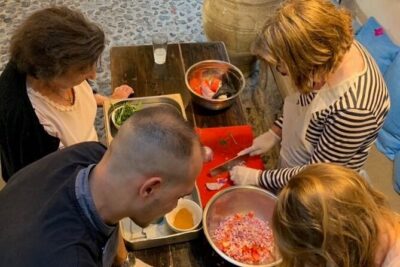
Greek Cuisine Cooking Class in Santorini with Recipes and Wine
Read our review →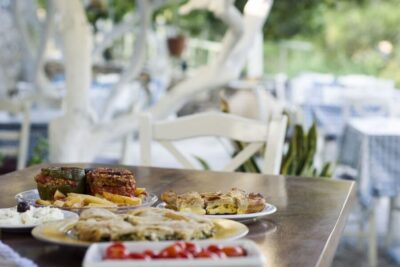
Half-Day Cooking Class at Basiliko Family Tavern
Read our review →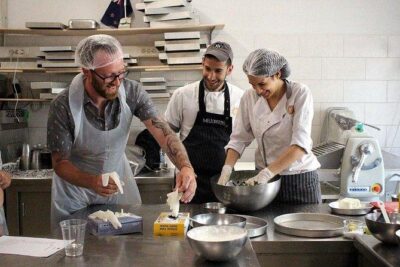
Greek Cooking Class in Athens Including Rooftop Dinner with Acropolis View
Read our review →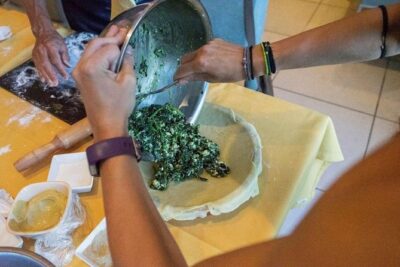
Greek Small-Group Athens Cooking Class & Dinner
Read our review →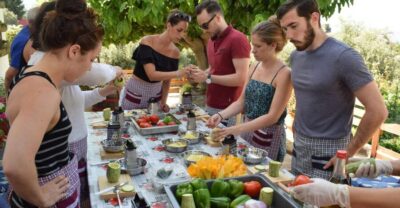
Authentic Cooking Class in the White Mountains
Read our review →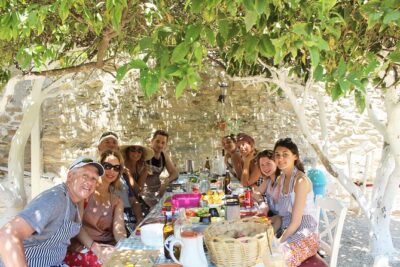
Browse the lists this tour appears in