
Reviewed · FOOD & DRINK
Athens: Greek Food Discovery Small Group Walking Tour
Come hungry, leave with a new Athens map. This 3.5-hour walk links Greek coffee, market stalls, old bakeries, souvlaki, sweets, and meze in the parts of central Athens where daily food culture takes center stage. I especially like the excellent variety of tastings and the chance to visit places you might miss while sightseeing around the Acropolis. I also like the small maximum of 12 people, which gives the guide room to answer questions and keep the group together. One consideration: you eat a great deal, including several sweet courses, so this is not the best choice if you prefer light grazing.
The route moves from Syntagma Square through Plaka, Monastiraki, Psyri, and the Central Municipal Athens Market before finishing in Monastiraki Square. Guides such as Antigone, Andreas, Katerina, Elisabeth, Joseph, and Elena have been praised for mixing food with stories about Athens, Greek society, and local customs. Sunday departures are less complete because they do not include the olive oil tasting or market visits.
In This Review
- Key points to know before booking
- Why this food walk adds something different to Athens
- Starting with coffee near Syntagma Square
- Specialty shops and the first serious tastings
- Plaka brings traditional sweets and narrow streets
- Monastiraki, souvlaki, and the city’s food rhythm
- Varvakios Market: the working center of the route
- Spice Street and a second look at Greek flavor
- Bougatsa, loukoumades, and the sugar rush
- Finishing with Greek meze in Psyri
- The guides make the difference
- Who should book this Athens food tour?
- Is $81 a fair price?
- Should you book it?
- FAQ
- How long does the Athens food tour last?
- How many food tastings are included?
- Where does the tour start and finish?
- Does the tour visit the Athens central market?
- Is Greek coffee included?
- What languages are available?
Key points to know before booking
- Eight to ten tastings equal lunch: Coffee, savory bites, pastries, sweets, and a final meze spread make this a substantial meal.
- The route shows everyday Athens: You walk through shopping districts, food streets, old neighborhoods, and the city market rather than visiting monuments alone.
- Greek coffee starts the morning: The tour begins with an essential local ritual at a landmark coffee house.
- The market is a major stop: Varvakios Market offers a look at the meat, fish, and vegetable trade at the center of Athenian food life.
- Small groups matter: With no more than 12 participants, the pace is easier to manage and conversation with the guide feels more natural.
- Sunday has limits: Olive oil tastings and market visits are left out on Sunday tours.
Why this food walk adds something different to Athens
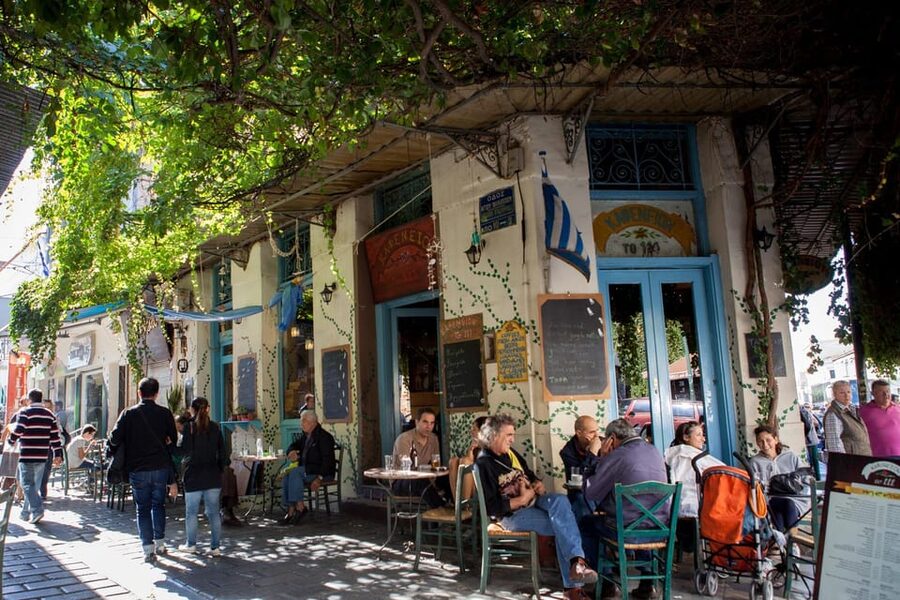
Athens is easy to experience as a city of ancient stones. You can spend a full morning at the Acropolis, walk past Roman ruins, and still know little about how people eat, shop, and meet for coffee today.
This tour changes the emphasis. It uses food as your guide to central Athens. You move between specialty shops, bakeries, grill counters, pastry stores, markets, and a traditional tavern. Along the way, the guide explains what you are tasting and places it within Greek culture.
That mix is the tour’s greatest strength. You are not simply handed a plate and told its name. You learn why olive oil matters, how Greek coffee fits into daily life, what makes a good bougatsa, and how a market functions as the city’s food storehouse.
The tour also gives you a useful sense of direction. Syntagma, Plaka, Monastiraki, Psyri, and the central market are all important parts of central Athens, but they feel different on foot. Taking them in one connected route helps you understand how the tourist center meets the working city.
More Food Tours in Athens
- Greek Food Walking Tour in Athens
★ 5.0 · 4,740 reviews - Athens: Street Food Tasting Tour
★ 4.9 · 2,557 reviews - Small Group Greek Traditional Food Tour in Athens 20+ Tastings
★ 5.0 · 1,759 reviews
Starting with coffee near Syntagma Square
The meeting point may be at the Public Café Restaurant in Syntagma Square, Public Syntagma, or Starbucks, depending on the booking option. Check your exact meeting place carefully before setting out.
The first food experience is Greek coffee at one of Athens’s landmark coffee houses. This is a smart opening because Greek coffee is more than a caffeine stop. It gives you a first taste of a local habit and sets the tone for the rest of the morning.
You then begin walking around Syntagma Square. The scheduled time here is about an hour, including guided exploration and food tastings. Since this is the opening section, the guide can also help you place the city’s central districts before the route becomes more food-focused.
Some guides bring extra depth to this part through stories about Athens and their own backgrounds. Antigone, for example, has been praised for making the tour work for both children and adults. Elaine, who has a master’s degree in ancient history, was especially effective at connecting food and landmarks for a family group.
Specialty shops and the first serious tastings
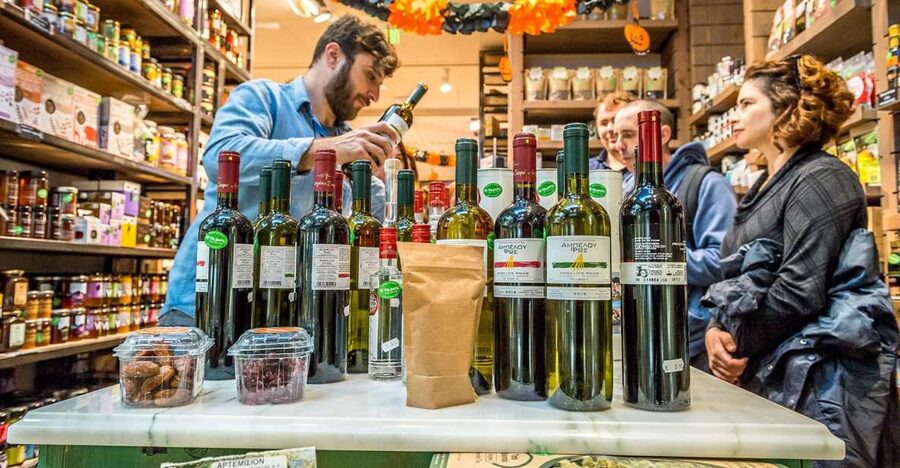
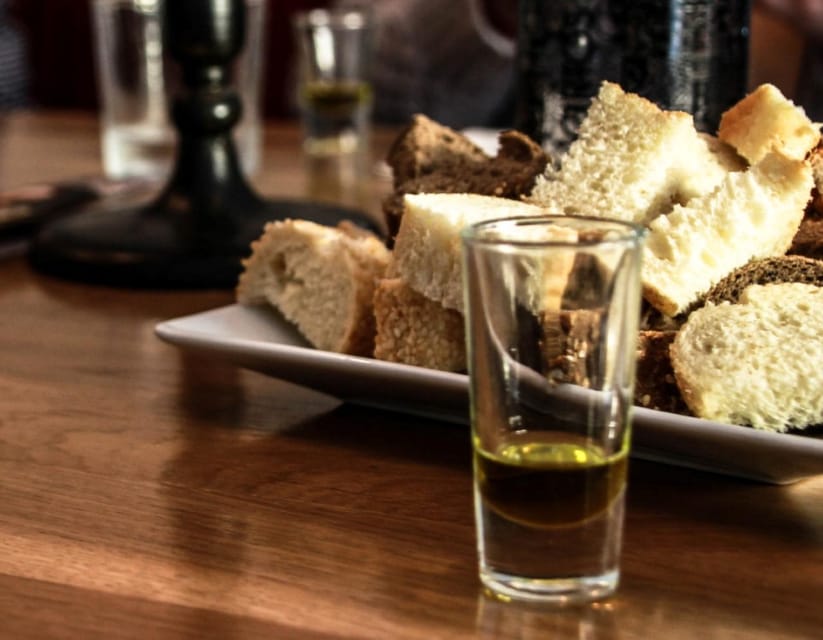
One of the most useful stops is a carefully selected Greek food shop. Here you taste different olive oils, cheeses, spreads, and other local products. The value is not just the quantity. It is the comparison.
Olive oil can be hard to judge when you only use it as a dip in a restaurant. Tasting several varieties with guidance helps you notice differences in flavor and texture. You may also find yourself rethinking Greek food as something broader than feta, olives, and grilled meat.
This is the point to ask questions. If you like a particular oil, cheese, or spread, ask where you can buy it later. The tour includes tastings, but extra food and drinks are not included, so any bottles or packaged goods you purchase are additional.
On Sunday, this section changes because olive oil tastings are not included. If that tasting is important to you, select another day.
Plaka brings traditional sweets and narrow streets
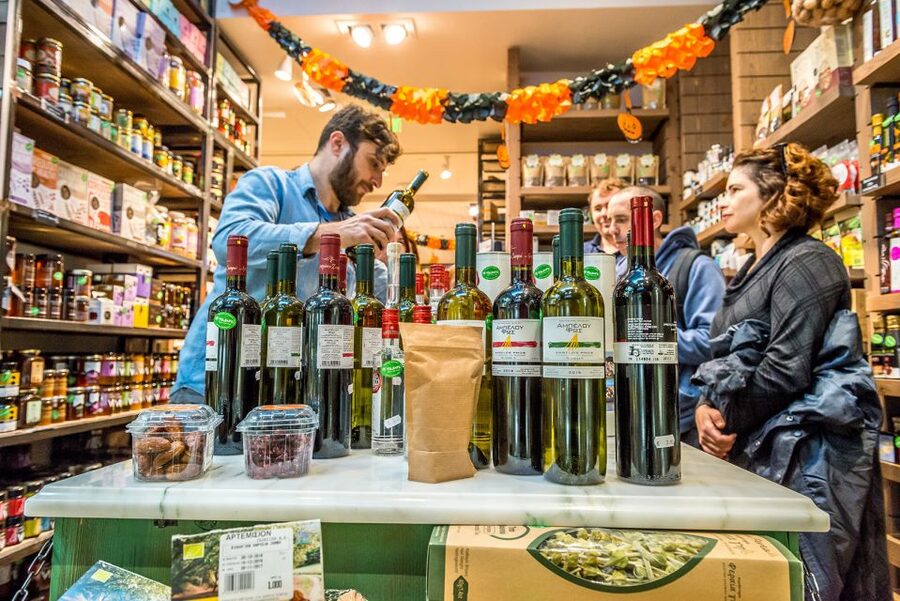
The route continues through Plaka, with about 30 minutes set aside for food and guided walking. Plaka is one of Athens’s best-known central neighborhoods, but the food stops help you see it as more than a souvenir-shopping area.
A highlight here is a bakery with a long history, known for award-winning bread. Bread is an essential part of Greek eating, and this stop gives the tour a welcome focus on a basic daily food rather than only famous dishes.
You may also visit a baklava bakery and sample syrup-soaked Greek sweets. Baklava is familiar to many people, but tasting it in a shop with a long local tradition adds context. The pastries are rich, so pace yourself. This tour does not save all the food for one final meal. The eating begins early and keeps going.
The sweet stops are delicious, but they are also the main drawback for some people. One past participant felt there were slightly too many sweet items, even while rating the food highly. If you prefer savory food, keep that in mind.
More Walking Tours in Athens
- Athens: Acropolis and Parthenon Guided Walking Tour
★ 4.6 · 5,882 reviews - Acropolis: Acropolis and Parthenon Guided Walking Tour
★ 4.7 · 3,442 reviews - Acropolis monuments & Parthenon Walking Tour with Optional Acropolis Museum
★ 5.0 · 2,678 reviews - Athens Acropolis and Parthenon Walking Tour
★ 4.5 · 1,355 reviews
Monastiraki, souvlaki, and the city’s food rhythm
Monastiraki receives about an hour of the route, with more guided walking and tastings. This is where the food may shift toward one of Greece’s best-known street foods: souvlaki.
A proper souvlaki stop gives you a chance to taste a simple dish at a grill spot rather than treating it as a generic fast-food item. Guides explain the food, its place in local eating, and how it fits the rhythm of the neighborhood.
Souvlaki was singled out as a favorite by several participants, and it makes sense as a centerpiece. After coffee, oils, cheese, bread, and pastries, a hot savory bite brings balance.
Monastiraki is also a practical area for learning your bearings. The walk eventually ends nearby, so you can return to places you liked or follow up on the guide’s suggestions. Several guides have given recommendations for later meals and places to visit, which makes the tour useful beyond its official three and a half hours.
Varvakios Market: the working center of the route
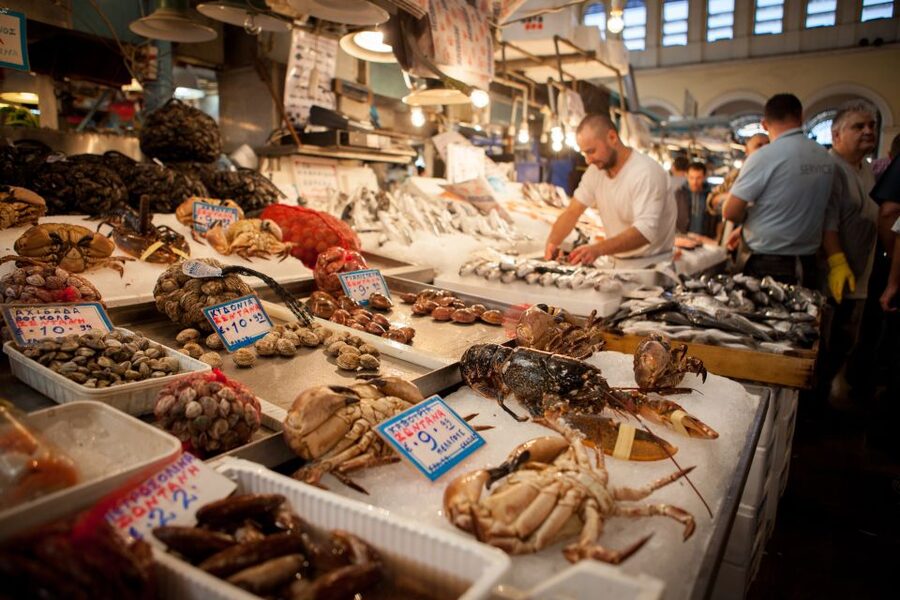
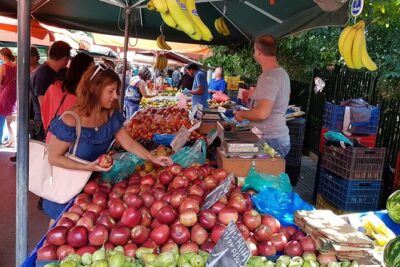
The Central Municipal Athens Market, often called Varvakios Market, is the most revealing part of the walk for anyone interested in ordinary Athenian life. It is described as the traditional belly of the city, and the phrase fits. This is Athens’s largest and most popular market for fish, meat, and vegetables.
Here you are not looking at a polished cooking demonstration. You are seeing food as a working trade. The market can feel busy and intense, especially compared with the quiet of a museum or the open views from the Acropolis.
That contrast is exactly why the stop matters. You see where ingredients are handled and sold, and you get a clearer idea of the connection between Greek cooking and fresh produce, seafood, meat, herbs, and olive oil.
The market visit lasts about 30 minutes. That is enough time for an introduction without turning the tour into a long shopping expedition. Sunday tours do not include the market, another reason to avoid Sunday if this is a priority.
Spice Street and a second look at Greek flavor
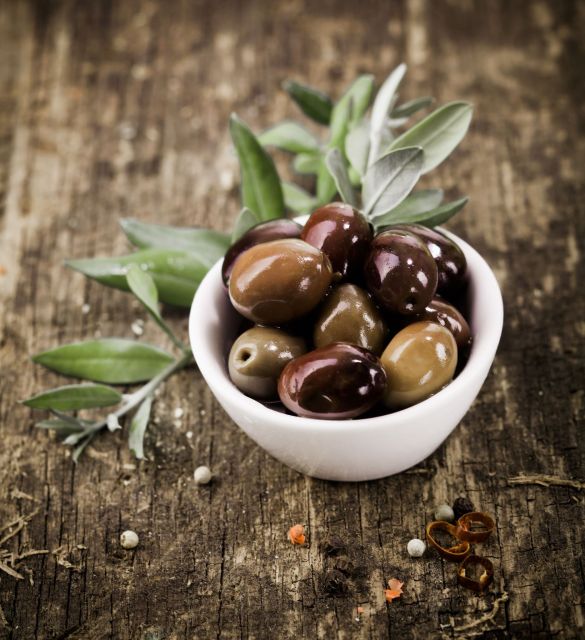
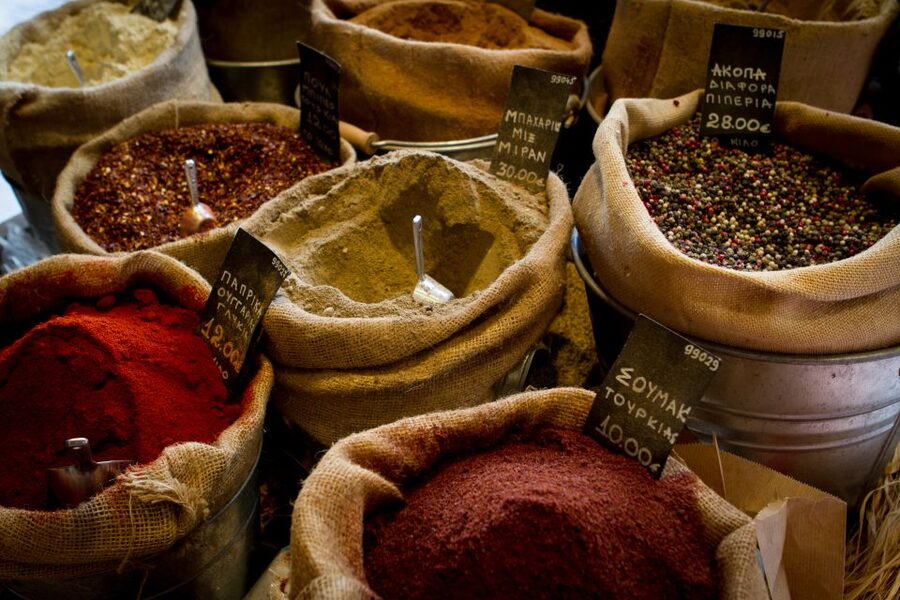
The route continues along Athens’s Spice Street to a shop with a broad selection of local herbs and condiments. Greek oregano is one of the expected tastes, along with Krokos Kozanis, or Greek red saffron.
This stop gives you a better sense of how Greek cooks build flavor. Oregano may be familiar, but hearing about how it is used alongside oil, lemon, vegetables, grilled meats, and cheese makes it easier to recognize its role in the food you eat later.
Greek red saffron is a more unusual discovery. The chance to smell or taste a regional ingredient gives the walk a stronger connection to producers and traditional food practices.
I would treat this as a learning stop as much as a tasting stop. You may not leave full from spices, but you can leave with ideas for what to look for in Greek food shops and markets.
Bougatsa, loukoumades, and the sugar rush
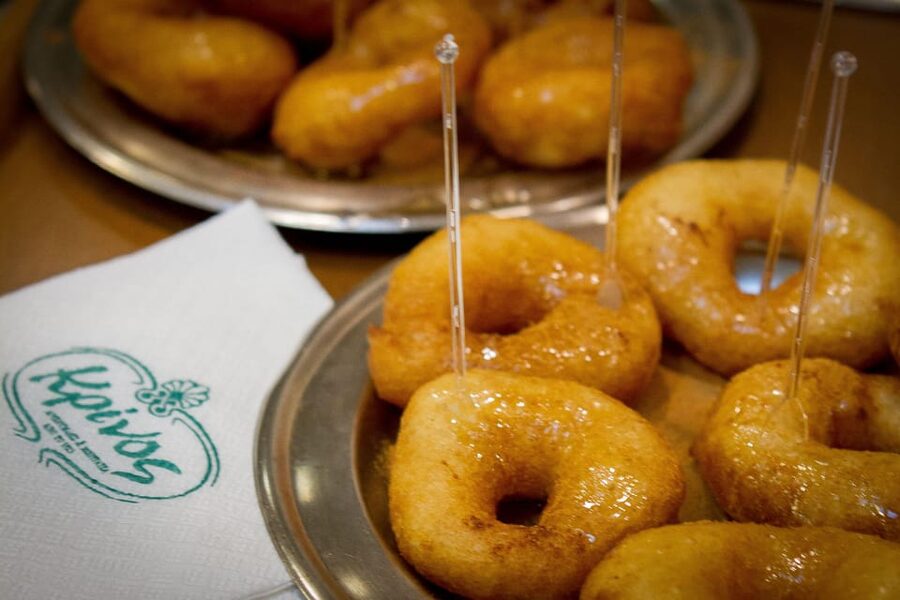
A local pastry shop supplies another major tasting. Depending on the day and arrangements, you may try bougatsa, a cream-filled phyllo pastry, or loukoumades, Greek-style doughnuts.
Bougatsa is particularly useful for first-time visitors because it shows how Greek pastry can be delicate, crisp, creamy, and filling at once. Loukoumades offer a different experience, with small fried dough pieces and a clear connection to the wider Eastern Mediterranean pastry tradition.
This is a generous route, not a nibble-only experience. Past participants have repeatedly advised eating little or nothing before meeting, and that is good advice. A coffee beforehand is sensible, but a full breakfast will make the later stops uncomfortable.
Families can enjoy the pastry section, and guides have been praised for keeping children involved. Antigone and Elaine, in particular, were noted for engaging children and teenagers while still giving adults plenty of historical and cultural detail.
Finishing with Greek meze in Psyri
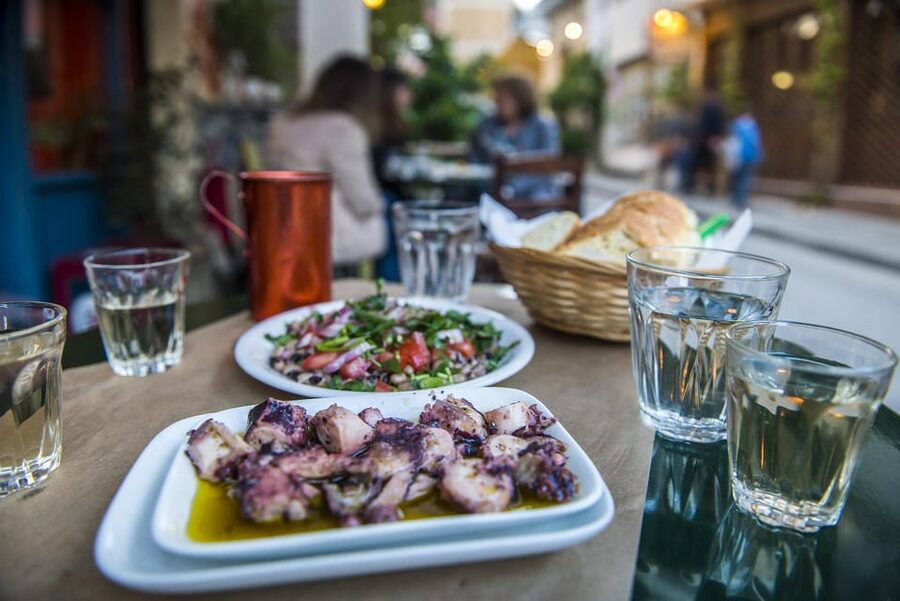
The last food stop is a traditional tavern in Psyri for Greek meze. Think of meze as a shared table of small dishes, somewhat like tapas, though the flavors and customs are distinctly Greek.
This is an excellent finish because it turns a string of tastings into a proper social meal. You can compare what you have eaten during the day, ask final questions, and settle into the idea that Greek food is often best shared.
The plates are substantial. People regularly finish the tour too full for dinner, sometimes not eating again until late at night. That makes the $81 price easier to assess. If the tour included only a few samples, the cost would feel high. With eight to ten premium tastings that amount to lunch, plus a guide and market access, it offers solid value for someone who wants food and local orientation in one booking.
The tour finishes at Monastiraki Square rather than returning to the original meeting point. That is not a problem, but it matters for planning. You should not expect a circular route back to Syntagma.
The guides make the difference
The food is the reason to book, but the guide determines how much you get from it. The strongest guide feedback centers on warmth, clear explanations, good pacing, and the ability to answer questions beyond the menu.
Antigone has been praised for mixing stories about Athens, food, and personal experience while staying attentive to children. Andreas is repeatedly described as well prepared and informative, with some participants appreciating recipes he sent after the tour. Katerina has been praised for explaining the origins of dishes and for giving useful historical context.
Other named guides, including Elisabeth, Elena, Joseph, Klelia, Simos, Socrates, and Maria Katerina, have also been recognized for friendliness, organization, and cultural insight. That consistency is encouraging, though your exact guide will depend on the departure.
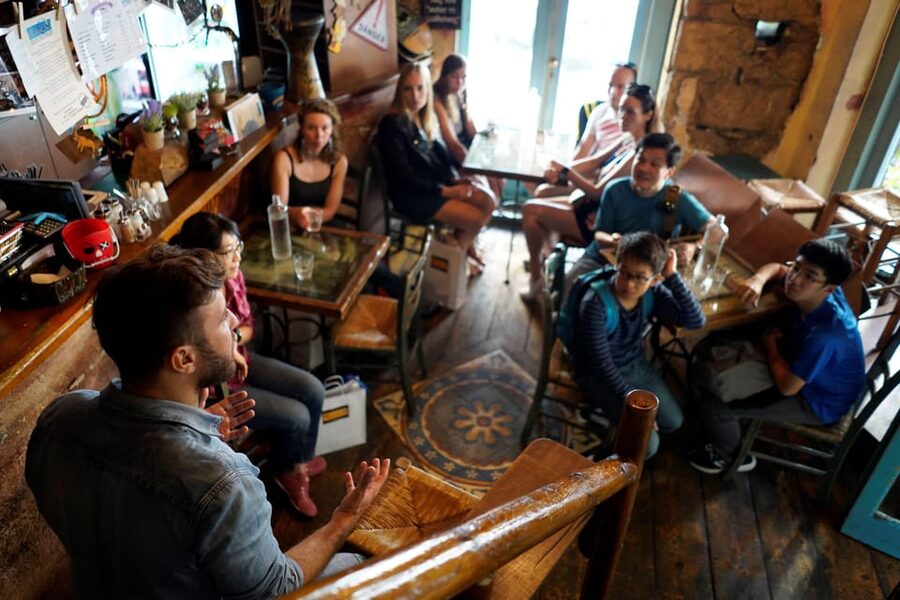
The pace is easy, and one guide was specifically praised for keeping the group together. The small group limit of 12 helps. You can hear the explanations, move through shops without a huge crowd, and ask for clarification when an ingredient is unfamiliar.
Who should book this Athens food tour?
I would choose this tour early in an Athens visit, ideally on your first full day after the major ancient sites. It helps you understand the city’s central districts and gives you a list of food shops, taverns, and dishes to revisit.
It suits you especially well if you:
- Want a full meal while walking through central Athens
- Prefer local shops and markets to a formal cooking class
- Enjoy history and cultural context with your food
- Are traveling with children or teenagers who need variety
- Want a small group rather than a large coach-style tour
- Like trying unfamiliar ingredients and regional specialties
It may suit you less if you have a very restrictive diet, dislike sweet foods, or want a quiet, sit-down dining experience. The supplied details do not specify dietary accommodations, so ask before booking if you have allergies or strict food requirements.
The walking pace is easy, but you are still on your feet across several neighborhoods. Hot weather can make a difference. A group of older women appreciated the considerate pace and the guide’s care during very hot conditions, but comfortable shoes and water remain sensible choices.
Is $81 a fair price?
At $81 per person, this is not a cheap breakfast. It is a three-and-a-half-hour guided food outing with eight to ten premium tastings, market visits, and enough food to replace lunch.
The price works best if you would otherwise spend money on breakfast, coffee, a snack, souvlaki, pastries, and lunch. You also receive interpretation that would be hard to get by walking into each shop alone. For food-focused visitors, the cost is reasonable.
The value is weaker if you mainly want a quick introduction to Greek cuisine or do not eat much. You may also spend more if you buy olive oil, spices, sweets, or other products along the way.
The rating of 4.9 from 336 reviews points to unusually strong satisfaction, with praise concentrated on the guides, food quality, variety, pacing, and generous portions. The one recurring practical warning is simple: do not eat a full meal before you arrive.
Should you book it?
Book this tour if you want Athens beyond ancient monuments and restaurant menus. The best parts are the market, the specialty shops, the Greek coffee, the souvlaki, and the final meze meal, all connected by guides who explain what you are eating and why it matters.
Choose a weekday rather than Sunday if the olive oil tasting and Varvakios Market are important to you. Arrive hungry, wear comfortable shoes, and plan a light evening meal. For most visitors, this is a useful, tasty introduction to the city’s everyday food culture and a strong value at $81.
FAQ
How long does the Athens food tour last?
The tour lasts 3.5 hours and includes walking, guided neighborhood visits, market time, and eight to ten food tastings.
How many food tastings are included?
The tour includes eight to ten premium food tastings. The tastings are described as substantial enough to equal lunch.
Where does the tour start and finish?
Starting options include the Public Café Restaurant in Syntagma Square, Public Syntagma, and Starbucks, depending on the option booked. The tour finishes at Monastiraki Square.
Does the tour visit the Athens central market?
Yes. The route includes the Central Municipal Athens Market, also known as Varvakios Market. Sunday tours do not include market visits.
Is Greek coffee included?
Yes. Greek coffee is included as one of the tour experiences at a landmark coffee house in Athens.
What languages are available?
The live tour is available in English and French. A private group option is also available.
Just added around Athens
- Delphi One Day Trip from Athens★ 4.0 · 98 reviews
- Private Delphi and Hosios Loukas Monastery – Great Lunch and Drinks Included★ 5.0 · 36 reviews
- Mercedes Private Tour to Delphi and Arachova★ 5.0 · 30 reviews
- Day tour to Ancient Olympia,Ancient Sparta Mycenae Including Meal★ 5.0 · 54 reviews
- Athens: Half Day Trip To Cape Sounio/Poseidon Temple Semi Private★ 5.0 · 131 reviews
- Athens Half-Day Private Tour Acropolis, Parthenon City Highlights★ 5.0 · 35 reviews
- From Athens: Day Tour to Mykonos★ 5.0 · 64 reviews
- Culinary Secrets of Downtown Athens★ 5.0 · 103 reviews
Food & Drink, compared.

Small Group Greek Traditional Food Tour in Athens 20+ Tastings
Read our review →
Santorini Wine Stories: Sunset Tour with Tasting & Dinner
Read our review →
Food Market Visit and Cooking Class with Wine
Read our review →
Browse the lists this tour appears in