

Reviewed · ACROPOLIS TOURS
Acropolis: Acropolis and Parthenon Guided Walking Tour
Ancient Athens rewards a closer look. This Acropolis and Parthenon walking tour gives you a clear route through the Theatre of Dionysus, Propylaea, Erechtheion, and Parthenon, with an archaeologist guide adding meaning to the stones. I especially like the well-organized meeting point near the Acropolis metro station and the wireless hearing devices, which help you follow the commentary in a crowded setting. The main drawback is the climb, heat, and heavy foot traffic, particularly at popular morning times.
I also like the choice of adding the Acropolis Museum, where available, and the guide’s focus on myths, architecture, theater, and daily life rather than a quick photo stop. Guides such as John, Hermes, Alexia, Anastasia, Artemis, Anna, and Margarita have earned especially warm praise for their humor and storytelling. Still, you should check exactly which ticket option you select, since buying entry separately can leave you without a usable time slot.
In This Review
- Key points to know before you book
- What this Acropolis tour actually covers
- Starting at the Theatre of Dionysus
- The Asklepieion and Odeon of Herodes Atticus
- The Temple of Athena Nike and the Propylaea
- The Erechtheion and its famous Caryatids
- The Parthenon, the tour’s main event
- Adding the Acropolis Museum
- Price, tickets, and what you receive
- Heat, crowds, and accessibility
- Who will get the most from this tour
- Should you book the Acropolis and Parthenon tour?
- FAQ
- Where does the Acropolis tour start?
- How long does the tour last?
- Which languages are available?
- Is the Acropolis entrance ticket included?
- Is the Acropolis Museum included?
- Does the tour include skip-the-line access?
- What should I bring?
- Are food and drinks included?
- Can I bring luggage or a pet?
- Is the tour suitable for wheelchair users?
Key points to know before you book
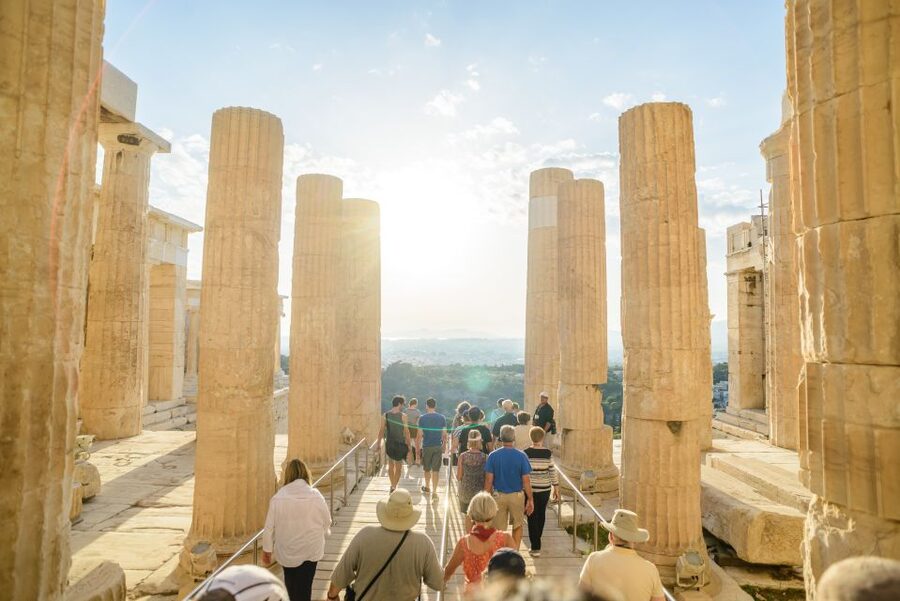
- The tour begins near the Acropolis metro station: Meet at the Athens Walks office at Porinou 5, about a two-minute walk from the station.
- You see more than the Parthenon: The route includes the Theatre of Dionysus, Asklepieion, Odeon of Herodes Atticus, Temple of Athena Nike, Propylaea, Erechtheion, and Parthenon.
- The Parthenon visit lasts about 30 minutes: That gives your guide time to explain its purpose, design, and place in Athenian power.
- A guide can make the crowded hill easier: Wireless audio devices help you hear, while an experienced guide can keep the group together and find workable positions near the monuments.
- Museum entry is an option, not always included: Select the English tour with the Acropolis Museum if you want the indoor collection added.
- Bring sun protection and your passport: Comfortable shoes, a hat, sunscreen, and identification are practical essentials.
What this Acropolis tour actually covers

The advertised duration is two to four hours, depending on the chosen option and schedule. The main walk through the Acropolis monuments is built around a series of short guided stops, with the Parthenon receiving the longest explanation.
You meet at Porinou 5, in a convenient spot close to the Acropolis metro station. That is useful in Athens, where a simple meeting point can save time and confusion before a timed monument visit. The office also gives the operator a place to organize tickets and divide people into groups before the climb.
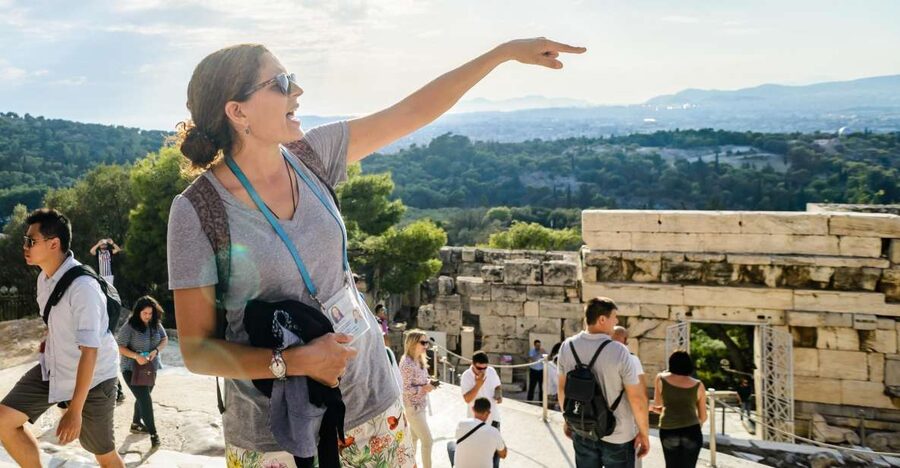
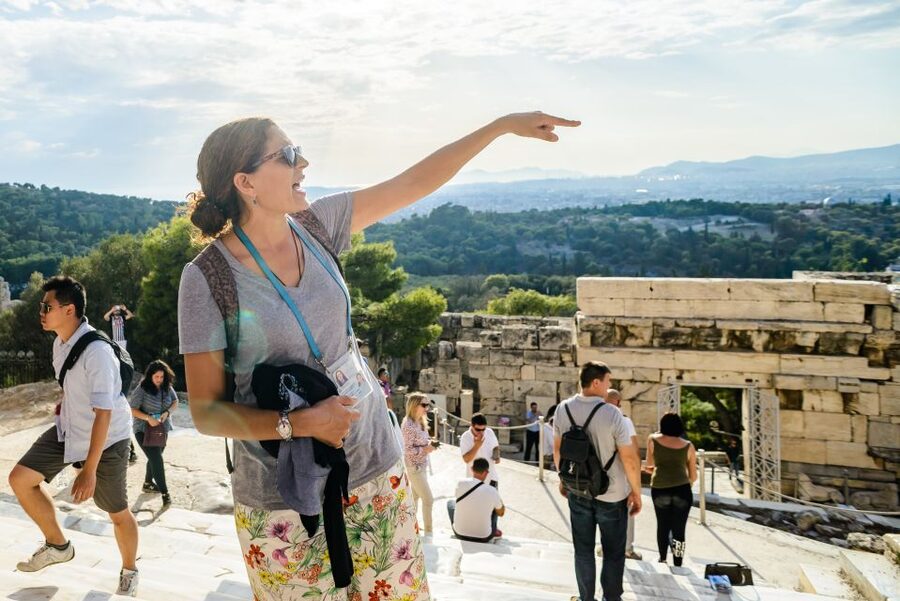
The tour is offered in English, French, and German. An expert licensed guide leads the walk, and wireless hearing equipment is included. That equipment matters here. The Acropolis is open, exposed, and often crowded, so you may be standing several steps away from the guide while looking at a temple or waiting for a clear view.
Do not expect a quiet stroll. The Acropolis is one of Athens’ busiest sights, and several tour groups can gather around the same monuments. The best guides handle this by stopping in sensible places, speaking clearly, and making sure the group stays together. That practical skill came through particularly strongly in the praise for Hermes, Artemis, Anastasia, Anna, and Alexia.
More Walking Tours in Athens
- Athens: Acropolis and Parthenon Guided Walking Tour
★ 4.6 · 5,882 reviews - Greek Food Walking Tour in Athens
★ 5.0 · 4,740 reviews - Acropolis monuments & Parthenon Walking Tour with Optional Acropolis Museum
★ 5.0 · 2,678 reviews
Starting at the Theatre of Dionysus
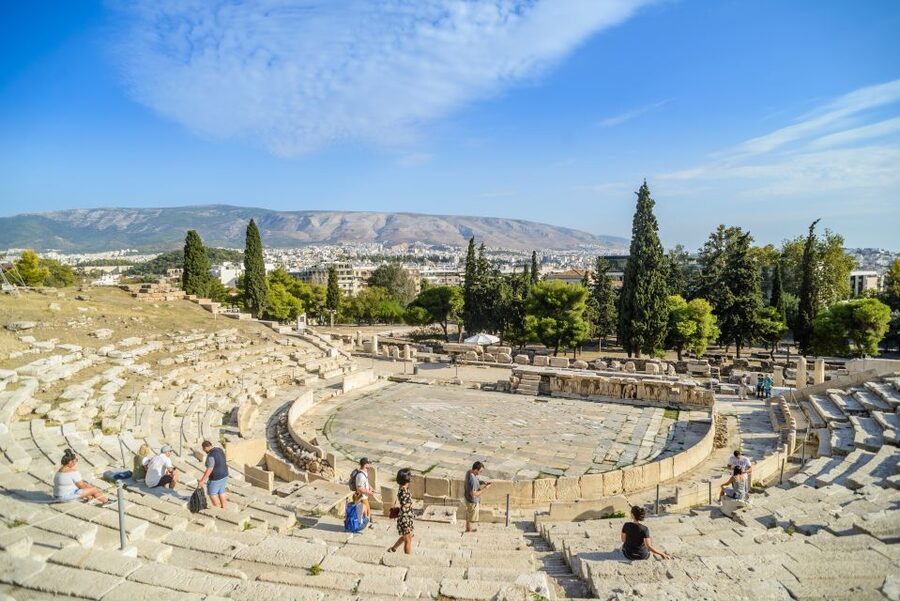
The first major stop is the Theatre of Dionysus, reached after about a 15-minute walk. This is a fine opening because it puts ancient Greek culture into a human setting before you reach the grand temples.
The theater is linked with the birth of drama and is described as the oldest Greek theater still in existence. From its stone seating, your guide explains how performances fit into ancient society and how Greek theater shaped drama long after Athens’ great age.
I like this part of the route because it gives you something to picture. The Parthenon can feel distant and formal, but a theater invites you to think about people gathering, watching actors, and responding to stories. If your guide is especially good at storytelling, this is where the tour can shift from a list of ruins into a picture of ancient life.
The walk upward begins here, so take the pace seriously. The route is not described as a difficult hike, and one guide was praised for stopping along the way so the climb felt manageable. Still, uneven surfaces, exposed sun, and stone steps require steady footwear.
The Asklepieion and Odeon of Herodes Atticus

The next stop is the Asklepieion of Athens, with about 10 minutes of guided explanation. This ancient sanctuary was connected with healing, giving the tour a useful reminder that the Acropolis was not simply a collection of government symbols or temples.
The short stop means you will not receive the same amount of detail as at the Parthenon. That is a fair trade on a compact tour, but you should listen closely and ask questions if this part interests you. Guides have been praised for answering questions and explaining how each site functioned, not just naming it.
You then reach the Odeon of Herodes Atticus, where the planned explanation lasts about 15 minutes. This large ancient performance building remains one of the most recognizable structures on the southern slope of the Acropolis. Its connection to music and performance pairs neatly with the earlier Theatre of Dionysus.
The Odeon is also a good place to appreciate the contrast between ancient and modern Athens. You are looking at a surviving monument built for public performances, while the present-day city spreads around and below the hill. Your guide’s role here is important because the remains can be easier to appreciate once you understand what the building was for.
The Temple of Athena Nike and the Propylaea
The route continues to the Temple of Athena Nike, with roughly 10 minutes of guided commentary. This compact temple sits near the entrance area and is associated with Athena in her role as a bringer of victory.
It is smaller than the Parthenon, so it can be overlooked by people rushing toward the summit. A guide helps you notice its position and purpose. This is one reason I prefer a guided walk over simply entering with a map and trying to identify every ruin while managing the climb.
Next comes the Propylaea, the monumental entrance gateway to the Acropolis. The scheduled stop lasts about 15 minutes. Its scale and symmetry prepare you for the major temples ahead, and the entrance itself gives the hill a sense of ceremony.
In ancient times, entering through this gateway meant passing into a sacred area filled with temples, statues, and religious meaning. Your guide can also connect the gateway to the movement of worshippers and public figures through the site. The stop is not only about architecture. It helps you understand how the Acropolis was approached and experienced.
The approach can become crowded, and the stone underfoot is not the place for flip-flops or slippery soles. Wear shoes with a secure grip. Keep your passport with you as well, especially if you may qualify for a reduced ticket based on age.
More ways to see the Acropolis:
- Athens: Acropolis & up to 5 Archaeological Sites Combo Pass
★ 4.4 · 12,619 reviews - Athens: Acropolis Ticket with Optional Audio or Live Guide
★ 4.2 · 11,055 reviews - Athens: Acropolis, Parthenon & Acropolis Museum Guided Tour
★ 4.8 · 9,316 reviews - Athens: Acropolis, Parthenon & Acropolis Museum Guided Tour
★ 4.8 · 3,579 reviews
The Erechtheion and its famous Caryatids
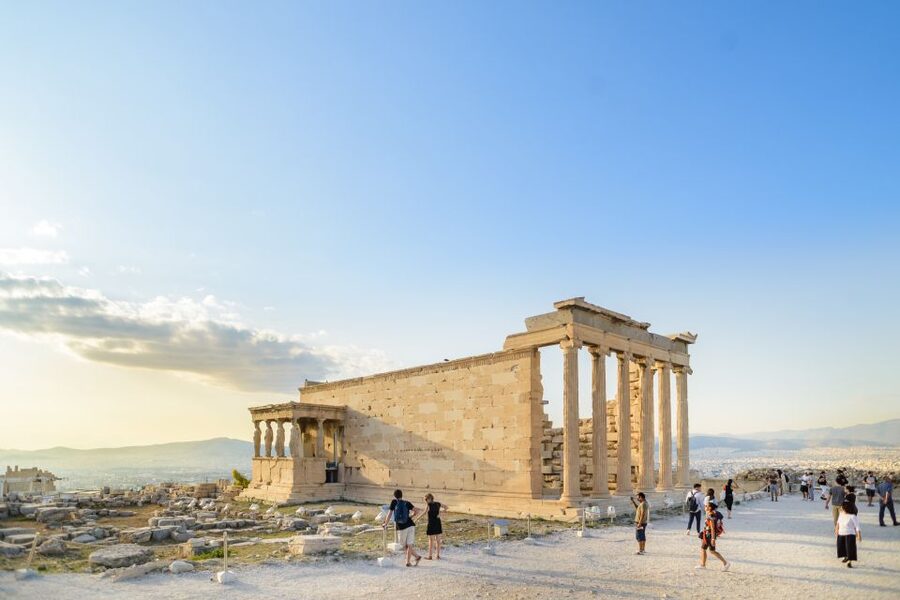
The Erechtheion receives about 15 minutes of guided attention. It is one of the most memorable buildings on the Acropolis because of its unusual plan and the famous Caryatids, the sculpted female figures used as supporting columns.
Your guide explains the myths connected with the sanctuary, including the contest between Athena and Poseidon for the patronage of Athens. That story adds a human edge to the building. Ancient Greek temples were not isolated monuments. They were tied to rival gods, local legends, civic identity, and the daily religious life of the city.
The Caryatids are a major reason to slow down here. Each figure has a slightly different pose and character, even though they work together as a group. The originals connected with the monument are not all in place, and the Acropolis Museum offers a better indoor setting for seeing related sculpture, which is one reason the museum option can add real value.
This is also a good stop for families and first-time visitors. Mythological stories make the architecture easier to remember, and several guides have been praised for explaining Greek myths in an entertaining, easy-to-follow way. The quality of the experience depends heavily on the individual guide, but the strongest guides turn this stop into one of the tour’s most engaging moments.
The Parthenon, the tour’s main event

At the Parthenon, the planned guided visit lasts about 30 minutes. This is the longest stop and rightly so. The temple is the visual reason many people come to Athens, but its size and fame can make it hard to know what to look at once you arrive.
The guide explains the Parthenon’s role as a sanctuary for Athena and its importance as a symbol of Athenian strength. You learn about the precision of the ancient builders and the ideas behind the temple’s design.
The Parthenon is not a complete building, and you should arrive with realistic expectations. You will see a powerful ruin under conservation work, not an untouched temple with all its sculpture and decoration in place. A good guide helps you understand what has disappeared, what remains, and why the structure still matters.
This is where the wireless audio device earns its keep. You may be trying to take in the columns, listen to the explanation, and avoid drifting into another group at the same time. One past participant found the earpiece worked best when staying within a few meters of the guide. That is sensible advice. Keep close enough to hear clearly, especially when the hill is crowded.
After the explanation, take time to look outward. The Acropolis gives you broad views over Athens, and the contrast is the point: ancient temples on the summit, modern streets below, and the city extending in every direction. The views are not an extra feature tacked onto the tour. They help explain why this hill became such a powerful civic and religious center.
Adding the Acropolis Museum
Some versions of the experience include a guided visit to the Acropolis Museum, while others cover only the outdoor monuments. Read the option details carefully before paying. The museum addition is specifically connected with the English-language version, and skip-the-line museum entry is included only when that option is selected.
The museum is a strong follow-up because it gives you a chance to see sculpture and archaeological material in a controlled indoor setting after standing in the sun on the hill. It can also help you picture details that are difficult to understand from the weathered buildings alone.
One group chose to continue with the same guide for the museum and found the combination especially satisfying. That makes sense. The outdoor visit shows you the setting and architecture, while the museum can supply more context for the art and objects connected with the Acropolis.
Do not assume every booking includes the museum just because the tour description discusses it. Confirm the exact package, language, and ticket arrangement. The tour ends at the Acropolis Museum when that option is included. The meeting information also describes the activity as ending back at the meeting point, so check your selected departure details if your plans depend on the final location.
Price, tickets, and what you receive
The listed starting price is $36.14 per person. That is a reasonable price for a licensed guide, organized meeting point, wireless audio equipment, and a structured visit to several major monuments. The value is strongest if you have only one or two days in Athens and want a useful overview without spending time working out the Acropolis on your own.
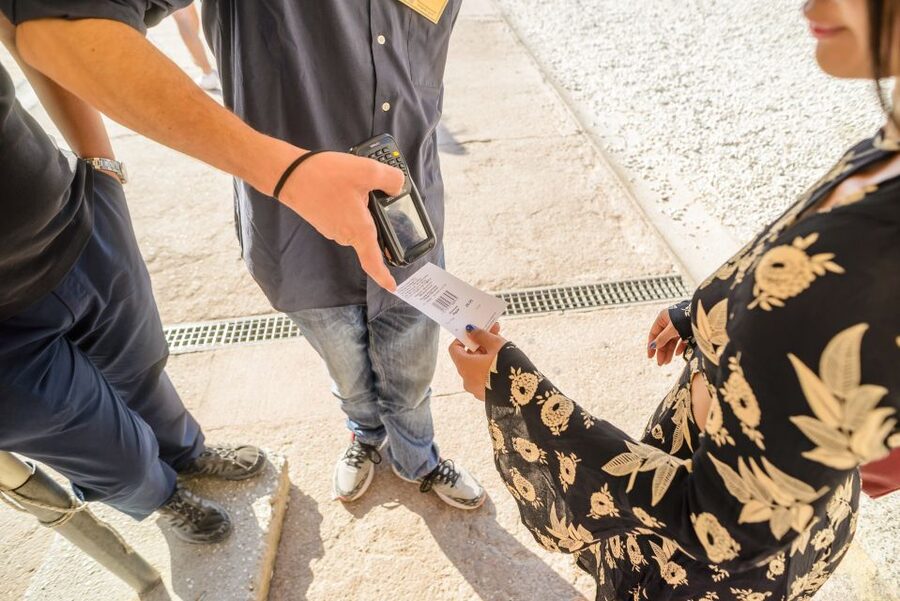
The ticket question is the important catch. You can choose an option where entry tickets are arranged for you, or you can buy an official ticket online yourself. The safer choice for most people is the package with tickets included, because available entrance times can sell out.
The included ticket may vary by the option you choose. Confirm that your selection includes the Acropolis entry, rather than assuming the base price covers every admission. The museum requires particular care because it is an optional addition.
Bring your passport or identification card. Visitors under 25 may need a photo of their passport to qualify for reduced fees. Holders of the EU Disability Card can enter the Acropolis free of charge and should select the option without an entry ticket.
Free cancellation is available up to 24 hours before the activity for a full refund, and you can reserve now and pay later. Those terms are useful when your Athens schedule is still shifting, but they do not remove the need to choose the correct ticket option.
Heat, crowds, and accessibility
Plan for sun exposure. A hat, sunscreen, and water are sensible, and the supplied information specifically recommends comfortable shoes and a sunhat. Food and drinks are not included, so organize refreshments before or after the tour rather than expecting a stop during the monument visit.
Large bags and luggage are not allowed, and pets and smoking are also prohibited. Hotel pickup and drop-off are not included, so you need to reach Porinou 5 yourself.
The tour is not suitable for wheelchair users. The hill includes uneven ancient surfaces, steps, and sloping routes, so anyone with limited mobility should consider this restriction carefully before booking.
Timing matters. Morning and afternoon departures are offered, but availability changes. An early 8:30 start was praised as a smart choice because the Acropolis became busier as the day went on. That is not a guarantee of empty paths, but an early time can help you get ahead of some crowds and the strongest heat.
The tour can take two hours, though some visits may run longer, especially when the museum is included. One participant felt the main route could be completed in about an hour and a half, while others appreciated the full explanation. I would treat the two-hour estimate as a useful planning guide and leave extra time if you have a fixed lunch, museum, or transport reservation afterward.
Who will get the most from this tour
I would choose this tour if you are visiting Athens for the first time, have limited time, or want the ancient sites explained instead of simply photographed. It suits couples, families, solo visitors, and anyone who likes myths, architecture, and clear historical storytelling.
It is especially useful for a short Athens stay. A strong guide can cover the main monuments in a compact visit and help you understand how they fit together. The repeated praise for John the archaeologist, Hermes, Alexia, Anastasia, Artemis, Anna, and Margarita shows how much the guide can shape the day. Names are not guaranteed, but the best guides are friendly, funny, and careful about keeping everyone together.
I would hesitate if you want a quiet, self-paced visit or dislike organized groups. You may have to wait while the guide explains a site, stay close to the group, and work around other tour parties. The audio equipment helps, but it is not perfect at a distance.
Should you book the Acropolis and Parthenon tour?
Book it if you want the essential Acropolis sights in a sensible order, with a guide who can explain the myths, buildings, and civic meaning behind the ruins. The $36.14 starting price offers good value when it includes entry and you take advantage of the professional guide and audio system.
Choose the ticket-included option unless you already have a confirmed official entry time. Add the museum if you want a fuller day and more time with the art connected to the hill. Pick an early departure when possible, wear solid shoes, and keep your group close to the guide.
Skip it only if you strongly prefer exploring alone, need wheelchair access, or already have expert knowledge of the Acropolis. For most first-time visits, this is a practical and worthwhile introduction to Athens’ greatest ancient site.
FAQ
Where does the Acropolis tour start?
Meet your guide at the Athens Walks tour office at Porinou 5, 11742. It is about a two-minute walk from the Acropolis metro station.
How long does the tour last?
The stated duration is two to four hours. The exact length depends on the selected option and starting time, with the museum addition requiring extra time.
Which languages are available?
The live guide is available in English, French, and German.
Is the Acropolis entrance ticket included?
Entry is included only when you select the option with tickets. You can also buy an official ticket online yourself, but advance availability is not guaranteed.
Is the Acropolis Museum included?
The museum is included only with the option that specifically adds it. Skip-the-line museum entry is available with the English museum tour option.
Does the tour include skip-the-line access?
Skip-the-line entry through a separate entrance is available when you select the ticket option. Skip-the-line entry to the Acropolis Museum applies only when the museum option is selected.
What should I bring?
Bring your passport or identification card, comfortable shoes, a sun hat, and sunscreen. Your passport may be needed to confirm reduced ticket eligibility for visitors under 25.
Are food and drinks included?
No. Food and drinks are not included in the tour price.
Can I bring luggage or a pet?
Pets, smoking, luggage, and large bags are not allowed during the activity.
Is the tour suitable for wheelchair users?
No. The activity is listed as unsuitable for wheelchair users because the Acropolis route includes uneven and difficult surfaces.
Just added around Athens
- Delphi One Day Trip from Athens★ 4.0 · 98 reviews
- Mercedes Private Tour to Delphi and Arachova★ 5.0 · 30 reviews
- Private Delphi and Hosios Loukas Monastery – Great Lunch and Drinks Included★ 5.0 · 36 reviews
- Day tour to Ancient Olympia,Ancient Sparta Mycenae Including Meal★ 5.0 · 54 reviews
- Athens: Half Day Trip To Cape Sounio/Poseidon Temple Semi Private★ 5.0 · 131 reviews
- Athens Half-Day Private Tour Acropolis, Parthenon City Highlights★ 5.0 · 35 reviews
- From Athens: Day Tour to Mykonos★ 5.0 · 64 reviews
- Culinary Secrets of Downtown Athens★ 5.0 · 103 reviews
Acropolis Tours, compared.
Acropolis & up to 5 Archaeological Sites Combo Pass
Read our review →

Acropolis, Parthenon & Acropolis Museum Guided Tour
Read our review →
Acropolis, Parthenon & Acropolis Museum Guided Tour
Read our review →

Acropolis monuments & Parthenon Walking Tour with Optional Acropolis Museum
Read our review →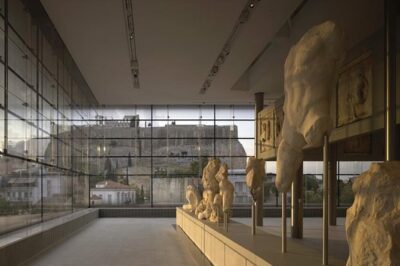
Athens All Included: Acropolis and Museum Guided Tour with Ticket
Read our review →Browse the lists this tour appears in