Reviewed · ATHENS TOURS
Athens: Mythology Tour for Families
Myth makes the Acropolis easier to love. This three-hour walking tour turns Athens’ famous stones into stories about Zeus, Athena, Poseidon, Theseus, and the Minotaur, with a guide who knows how to keep children involved. I especially like the small groups of no more than 15 people and the way the tour connects mythology to the actual buildings, rather than treating Greek legends as a separate classroom lesson.
I also like the final activity at the ancient Pnyx, where your family gets to use its imagination in the place where Athenians once gathered to discuss public matters. Guides such as Christina, Chrysa, Maria, Demi, Sophia, and Marika have earned warm praise for their patience and storytelling. The main drawback is the length in hot weather: three hours on the Acropolis can feel long, especially with young children, and there are few places to stop for water.
In This Review
- Key points at a glance
- Why mythology works so well at the Acropolis
- Starting at the Theater of Dionysus
- Climbing through the Propylaea
- Athena Nike and the Erechtheion
- Seventy minutes at the Parthenon
- Walking to the Pnyx
- The Pnyx activity and the final stories
- How the guides handle children and adults
- The $79 price and what it buys you
- Who should book this family tour
- Should you book it?
- FAQ
- How long does the Athens mythology tour last?
- What age group is this tour best for?
- Which Acropolis sites are included?
- Does the tour include Acropolis entrance tickets?
- What languages are available?
- Is a private group possible?
- What should I bring?
- Are strollers or backpacks allowed?
Key points at a glance
- Mythology gives the Acropolis a storyline: You learn why Athena, Poseidon, Zeus, Dionysus, and other gods matter to the monuments around you.
- The tour is built for children ages 5 to 11: Games, questions, and stories help younger minds stay with the subject.
- The Parthenon gets the most time: Expect about 70 minutes at Athens’ best-known monument.
- The Pnyx adds something different: The tour leaves the Acropolis for a family activity at the birthplace of democracy.
- Small groups make questions easier: The limit is 15 people, and private group bookings are available.
- Plan for sun and stairs: Bring water, a hat, sunglasses, and sturdy shoes. Strollers and backpacks are not allowed.
Why mythology works so well at the Acropolis
A family visit to the Acropolis can go in two directions. You can walk from monument to monument, admire the columns, and hope the children remember a few names. Or you can give the hill a cast of characters and a plot.
This tour takes the second approach. Zeus is not just a statue or a name from a schoolbook. He becomes the powerful ruler of the gods. Athena represents wisdom and the city of Athens. Poseidon brings the sea into the story. Dionysus helps explain why the nearby theater mattered. These connections give children a reason to look closely at the buildings.
I like this method because the mythology is tied to what you see. The guide does not simply tell a long list of ancient tales. The stories help explain the city’s identity, the buildings’ names, and the ideas behind the art and architecture.
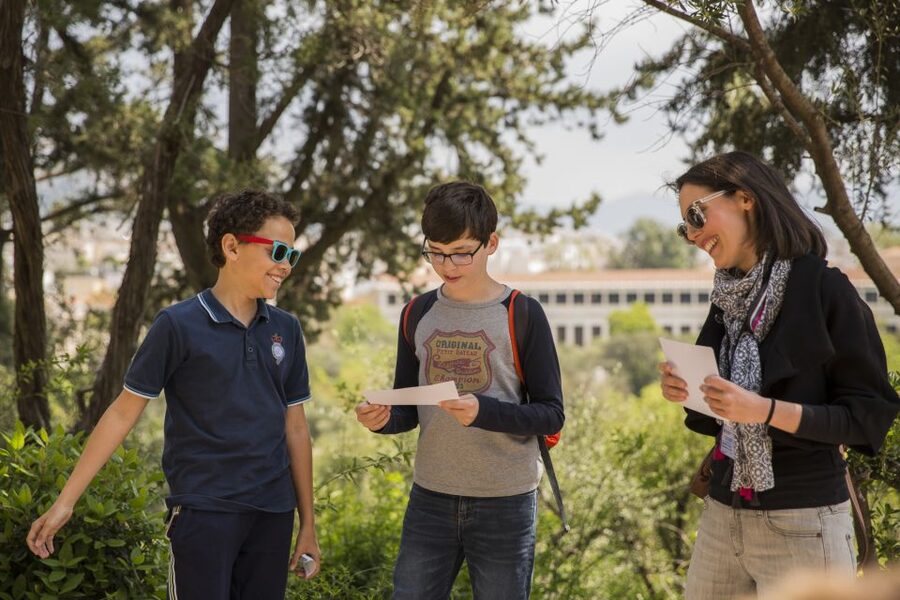
The approach also works for adults. Parents who already know the basic myths can ask questions about the history, philosophy, and culture behind them. Several guides are praised for speaking to both generations at once, adjusting the detail when children lose focus or adults want more background.
The intended age range is about 5 to 11, though older children can enjoy it too. One family with children aged 10 and 12 found that the private format gave them room for questions, while another family with children aged 3 and 8 found the stories and games appealing. The younger the child, the more useful it is to book privately or go with a small group.
A few more Athens half-days to weigh up
- Athens: Acropolis & up to 5 Archaeological Sites Combo Pass
★ 4.4 · 12,619 reviews - Athens: Acropolis Ticket with Optional Audio or Live Guide
★ 4.2 · 11,055 reviews - Athens: Acropolis, Parthenon & Acropolis Museum Guided Tour
★ 4.8 · 9,316 reviews
Starting at the Theater of Dionysus
The tour begins at or near the Acropolis, depending on the booking option. Confirm the exact meeting point carefully. At least two families had trouble with incorrect or confusing directions, including one group that walked to the Acropolis metro station, backtracked, and then returned again.
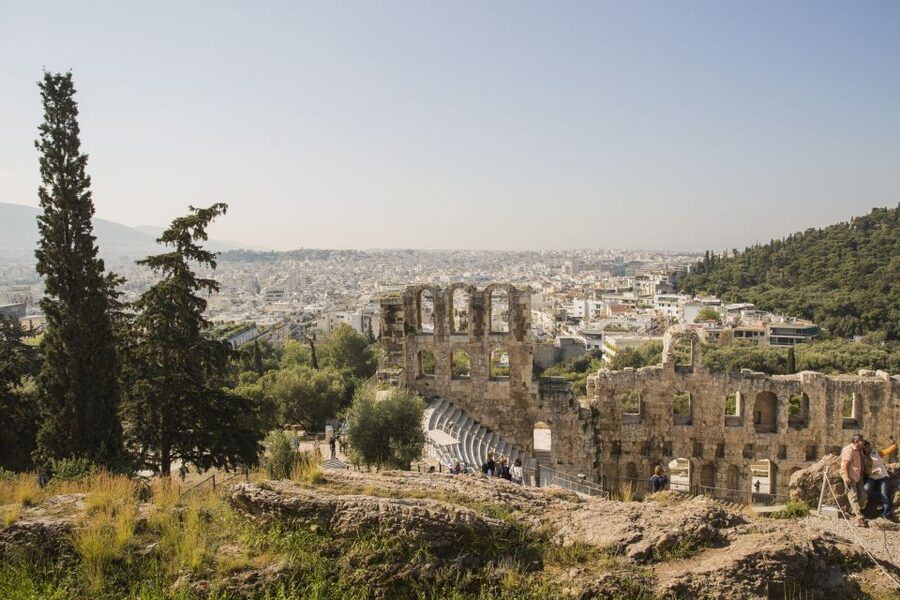
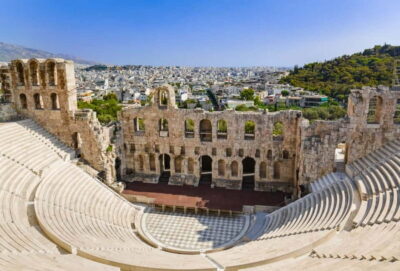
Once you meet the guide, the first major stop is the Theater of Dionysus. You get about 15 minutes here, which is enough for an introduction rather than a full study of ancient theater.
This is a smart first stop. Dionysus was the god of wine and theater, and his name helps children connect the monument to a familiar idea: this was a place for performances. The guide can use the theater to explain how drama began and why storytelling mattered to ancient Athenians.
The short visit also protects the tour’s pace. Children are not asked to sit through a long lecture before reaching the Acropolis monuments. If your family loves theater, mythology, or ancient drama, you may wish this part lasted longer. For most children, though, the brief introduction is probably the right amount.
Climbing through the Propylaea

The Propylaea is the grand entrance to the Acropolis. Your guide spends about 10 minutes here, explaining how this gateway prepared visitors for the sacred area above.
It is an important pause because the Acropolis is not just a cluster of ruins. You are moving through a carefully planned approach, from the theater below to the monuments on the summit. The Propylaea helps you see that the ancient visitor’s arrival was part of the experience.
For children, this is a good moment to frame the hill as a special place connected to the gods. Guides who use questions and short stories can make the approach feel like the beginning of an adventure rather than a slow walk uphill.
The practical side is less romantic. The route requires walking on uneven ancient surfaces, and you should wear comfortable shoes. Strollers, backpacks, and large bags are not allowed at the Acropolis, so pack lightly and keep your hands free.
Athena Nike and the Erechtheion

The Temple of Athena Nike receives about 15 minutes. It is a small monument compared with the Parthenon, but its connection to Athena gives the guide another chance to explain the goddess’s role in Athens.
This is where the tour’s focus on mythology pays off. Instead of seeing a compact temple as just another pile of old stone, your children can connect it to Athena as a protector and symbol of victory. The guide can also show how different buildings on the hill relate to the same city and its religious beliefs.
The next stop is the Erechtheion, with about 10 minutes of guided time. Its unusual form and sacred associations make it especially useful for storytelling. The guide discusses Athena and Poseidon, helping your family understand the rivalry between the two gods and the city’s choice of patron.
You may find the time at both monuments a little tight if you want detailed architectural discussion. That is a fair trade for a family tour, since the goal is to keep the whole group moving and interested. If your child is already fascinated by ancient architecture, ask questions as you go. The guides are praised for taking time with curious children.
Same stretch of coastline, a completely different day out:
- Athens: Cape Sounion & Poseidon Temple Sunset Half-Day Trip
★ 4.8 · 8,241 reviews - Athens: Acropolis and Parthenon Guided Walking Tour
★ 4.6 · 5,882 reviews - All Day Cruise -3 Islands to Agistri,Moni, Aegina with lunch and drinks included
★ 5.0 · 4,958 reviews - Athens, Piraeus, and Coastline: Blue Hop-On Hop-Off Bus
★ 3.9 · 4,849 reviews
Seventy minutes at the Parthenon
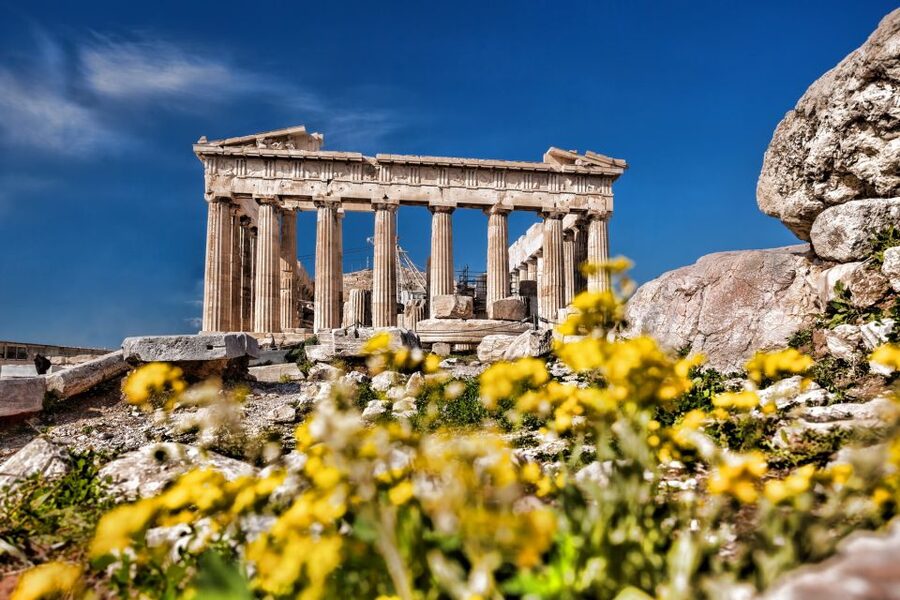
The Parthenon is the centerpiece of the tour, and the schedule allows about 70 minutes here. That is enough time for the guide to talk about the building, the sculptures, Athena, and the larger meaning of the Acropolis.
You will not get the same experience as a quiet visit alone. The hill can be crowded, and the sun can be intense, especially in summer. Still, having a guide gives you a much better chance of understanding what you are looking at. The Parthenon is so famous that it is easy to admire the view, take a few pictures, and miss the ideas behind the monument.
I value the way the guides connect the building’s design and decoration to mythology. Stories about gods and heroes give children visual clues to watch for. Adults can follow the conversation into questions about religion, civic pride, art, and the role of Athens in the ancient Greek world.
The best guides do not force a speech on a tired group. They read the children, shorten an explanation when needed, and bring them back with a question or a game. Sophia was praised for engaging a group that included young children and grandparents, while another guide kept going with children who were tired and not very responsive. That patience matters on a hot stone hill.
Give yourself a realistic expectation: the tour is educational, not a quick photo stop. The Parthenon portion is long because it is the place where the major themes come together. If your children tire easily, an early start is likely more comfortable than the hottest part of the day, though starting times depend on availability.
Walking to the Pnyx
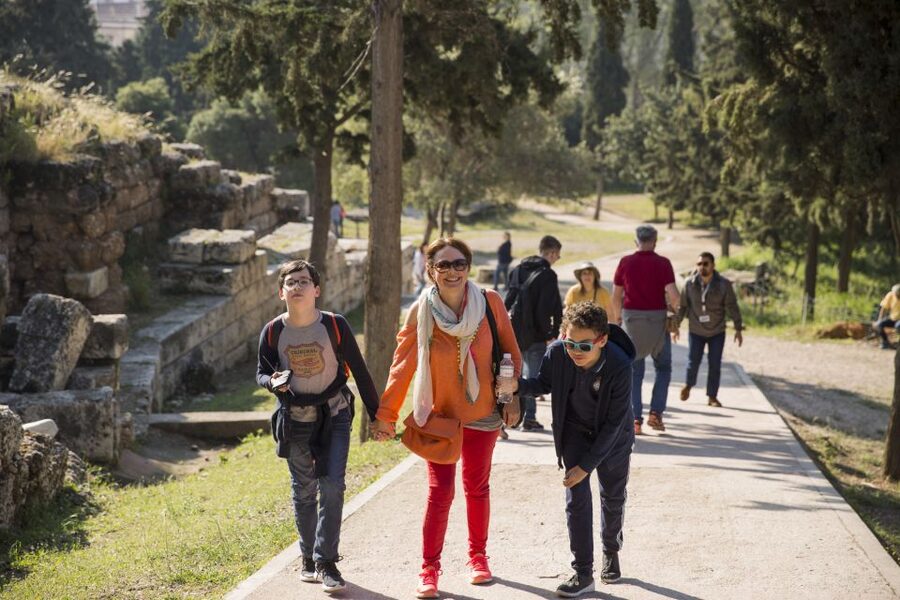
After the Acropolis, you walk for about 15 minutes to the ancient Pnyx. This change of setting is one of the tour’s strongest features.
The Pnyx was a gathering place where Athenians discussed public affairs. It gives the guide a chance to move from gods and temples to the beginnings of civic life. Children can begin to see that ancient Athens was not only about heroic battles and dramatic myths. It was also a city where people met, argued, and made decisions.
The walk provides a useful break from the main monuments, but it is still part of a three-hour outing. In hot weather, you will want water before leaving the Acropolis. One parent found the overall tour too long in summer and noted that there were not many water stops.
The Pnyx activity and the final stories
The tour ends with about 45 minutes at the Pnyx. Here the guide returns to stories about Theseus and the Minotaur, Hera’s jealousy, and Aphrodite, the goddess of love and beauty.
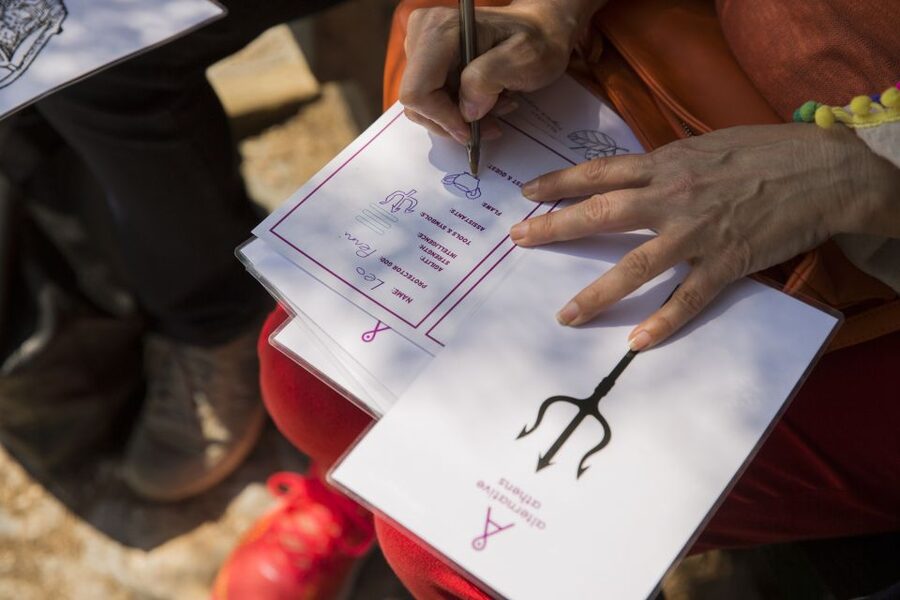
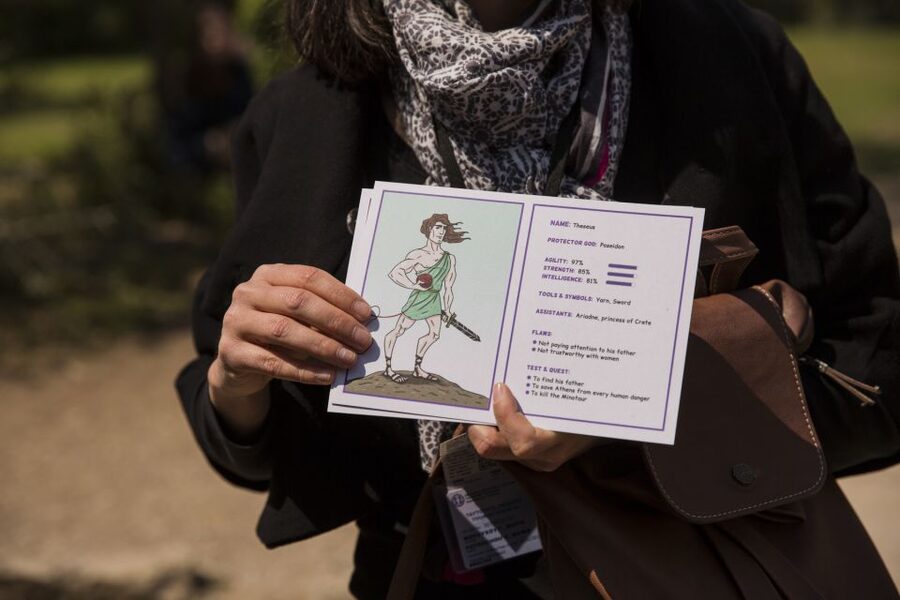
The family activity is inspired by the gods and heroes introduced earlier. The exact format can depend on the guide and group, but the purpose is clear: your children are not only listening. They are asked to respond imaginatively to the surroundings and create something together.
That final activity gives the tour a satisfying shape. The Acropolis provides the monuments and the big names. The Pnyx gives your family room to use the stories. You leave with more than photographs, and your children may be more likely to remember the myths because they took part in the final exercise.
This section also helps younger children who have reached their limit with formal explanations. Guides have used games and lively questions to bring tired children back into the group. It is a practical touch, not decoration.
The tour finishes at Pnyx Hill rather than returning you to the original meeting point. Plan your next step from there, and make sure everyone has enough energy for the walk onward.
How the guides handle children and adults
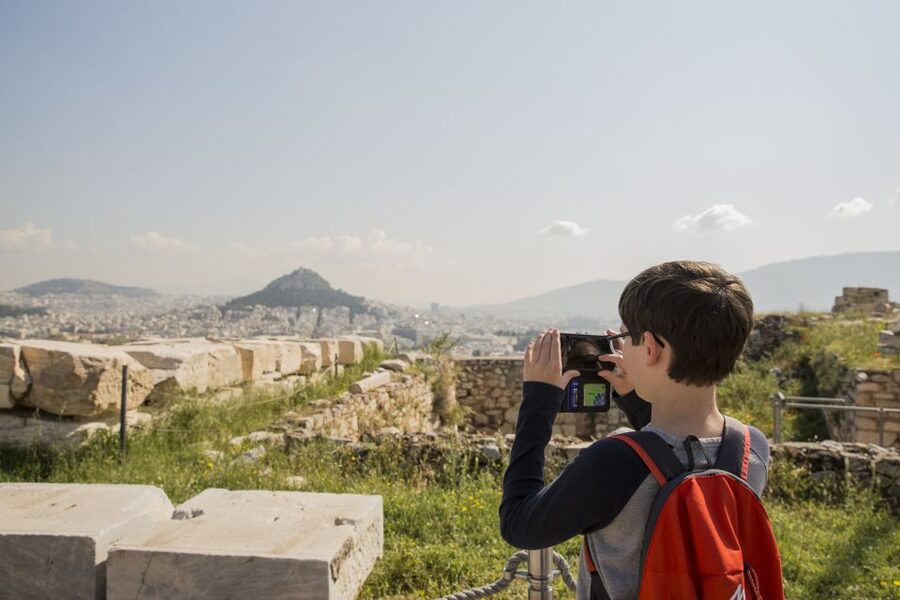
The guide is the most important part of this experience. The monuments are remarkable, but you can see them without a tour. The value here comes from having someone turn the stones into a story your family can follow.
The strongest guide qualities are patience, humor, clear storytelling, and the ability to answer questions without losing the group. Christina was praised for working well with children aged 10 and 12. Chrysa took time with children aged 8 and 11, while Maria balanced the interests of children and adults.
Demi received especially warm praise for keeping children engaged, including a group whose children were tired. Sophia handled a multi-generation family with young children and grandparents. Other praised guides include Kelli, Viki, Marika, Dani, Angelica, Amarylis, and Heleni.
That list matters because guide quality can vary on any live tour. The repeated pattern is encouraging: the guides are selected for family communication, not just their command of facts. A guide who can change pace and explain a difficult idea in simple words is more useful here than someone who delivers a perfect but stiff lecture.
English and French are available. Private groups can also be booked, which is worth considering if your children are shy, easily distracted, or far apart in age.
The $79 price and what it buys you
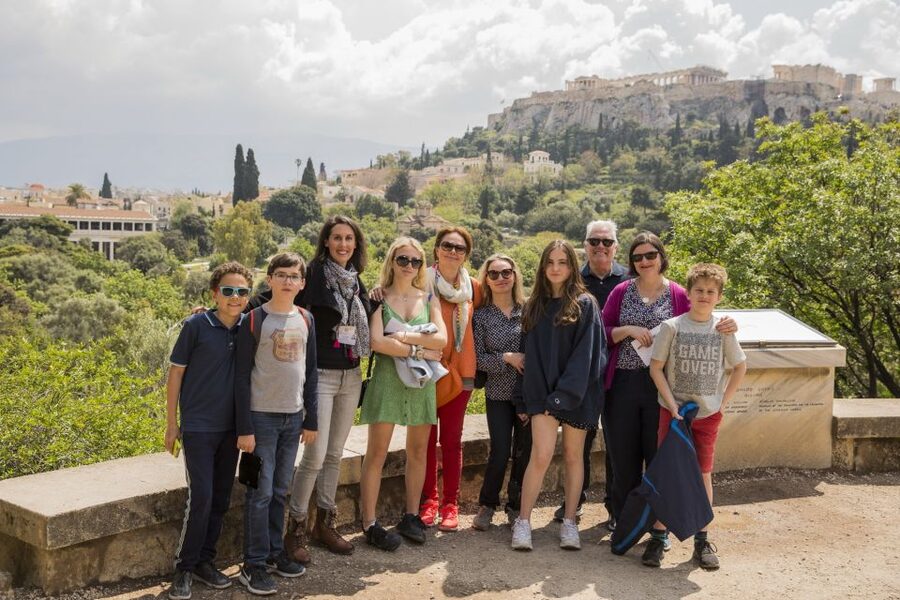
At $79 per person, this is not the cheapest way to see the Acropolis. The price makes better sense if you want a structured family experience, a guide who can handle children, and a planned activity at the Pnyx.
The key detail is the ticket arrangement. Acropolis entry tickets are included only if you choose the option that includes them. Otherwise, entrance fees are separate, though the provider can pre-purchase tickets if you ask. Entry fees are non-refundable and cannot be exchanged, so confirm exactly what your booking covers before paying.
This can be useful for late planners. One family booked close to the visit date and appreciated that the provider arranged a 9:30 a.m. entry time that they did not think they could secure alone. That convenience has real value during busy periods.
Some visitors can enter free or at a reduced cost under the stated rules. European Union citizens under 25 can enter free with valid identification, and from April 1, 2025, citizens of the European Union and other countries under 18 can enter free with valid identification. Check your eligibility and bring a passport or ID card.
If you are happy to read about Greek mythology in advance and guide your own family around, $79 may feel high. If you want the children engaged, the history explained, and the visit organized around a clear theme, the fee is easier to justify.
Who should book this family tour
I would choose this tour for families with children around 5 to 11 who want more than a quick look at the Parthenon. It is also a good fit for parents who know they will have questions but do not want to prepare a full history lesson before the trip.
It suits children who enjoy stories, role-play, heroes, gods, or asking why. It can work for a mixed-age group too, especially if you book privately and want the guide to adjust the pace.
I would hesitate if your children dislike walking, tire quickly in the sun, or have no interest in stories. The tour lasts three hours, includes the Acropolis hill and a walk to the Pnyx, and does not provide food or drinks. Bring water, a sun hat, sunglasses, and good shoes.
The tour is not suitable for wheelchair users. Strollers, backpacks, and large bags are not allowed at the Acropolis, so families with babies or toddlers should think carefully about the carrying arrangements before booking.
Cancellation is free up to 24 hours before the start time, and you can reserve now and pay later. That gives you some flexibility, but it does not change the rule that entry fees cannot be refunded or exchanged.
Should you book it?
Book this tour if you want your children to remember the Acropolis as a place of people, gods, arguments, and stories, not just columns in the sun. The small group size, family-focused guides, and Pnyx activity give it a clear purpose that a standard sightseeing walk may lack.
I would book early if you need a particular entry time or want a private group. I would also confirm the meeting point in writing, pack water, and choose a cooler time of day when possible.
Skip it if your family prefers a fast independent visit or if the $79 fee does not fit your budget. For families who value storytelling and shared activities, though, this is a thoughtful way to meet Athens’ ancient world together.
FAQ
How long does the Athens mythology tour last?
The tour lasts three hours. It includes the Acropolis, a walk to the Pnyx, and a guided activity at Pnyx Hill.
What age group is this tour best for?
The tour is most suitable for children ages 5 to 11. Older children can also enjoy it, especially if they have an interest in Greek mythology or Classics.
Which Acropolis sites are included?
The route includes the Theater of Dionysus, the Propylaea, the Temple of Athena Nike, the Erechtheion, and the Parthenon.
Does the tour include Acropolis entrance tickets?
Tickets are included if you select the option that includes them. Otherwise, entrance fees are separate. The provider can pre-purchase tickets if you request this.
What languages are available?
The live tour is available in English and French.
Is a private group possible?
Yes. A private group option is available.
What should I bring?
Bring your passport or ID card, comfortable shoes, sunglasses, and a sun hat. You should also bring water because there are few water stops during the route.
Are strollers or backpacks allowed?
No. Strollers, backpacks, and large bags are not allowed at the Acropolis and should not be brought on the tour.
Just added around Athens
- Delphi One Day Trip from Athens★ 4.0 · 98 reviews
- Mercedes Private Tour to Delphi and Arachova★ 5.0 · 30 reviews
- Private Delphi and Hosios Loukas Monastery – Great Lunch and Drinks Included★ 5.0 · 36 reviews
- Day tour to Ancient Olympia,Ancient Sparta Mycenae Including Meal★ 5.0 · 54 reviews
- Athens: Half Day Trip To Cape Sounio/Poseidon Temple Semi Private★ 5.0 · 131 reviews
- Athens Half-Day Private Tour Acropolis, Parthenon City Highlights★ 5.0 · 35 reviews
- From Athens: Day Tour to Mykonos★ 5.0 · 64 reviews
- Culinary Secrets of Downtown Athens★ 5.0 · 103 reviews
Athens Tours, compared.
Acropolis & up to 5 Archaeological Sites Combo Pass
Read our review →
Acropolis, Parthenon & Acropolis Museum Guided Tour
Read our review →
Cape Sounion & Poseidon Temple Sunset Half-Day Trip
Read our review →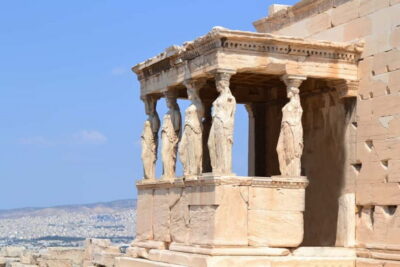

All Day Cruise -3 Islands to Agistri,Moni, Aegina with lunch and drinks included
Read our review →
Athens, Piraeus, and Coastline: Blue Hop-On Hop-Off Bus
Read our review →