
Reviewed · AUDIO TOURS
Athens: Roman Agora E-Ticket and Audio Guide
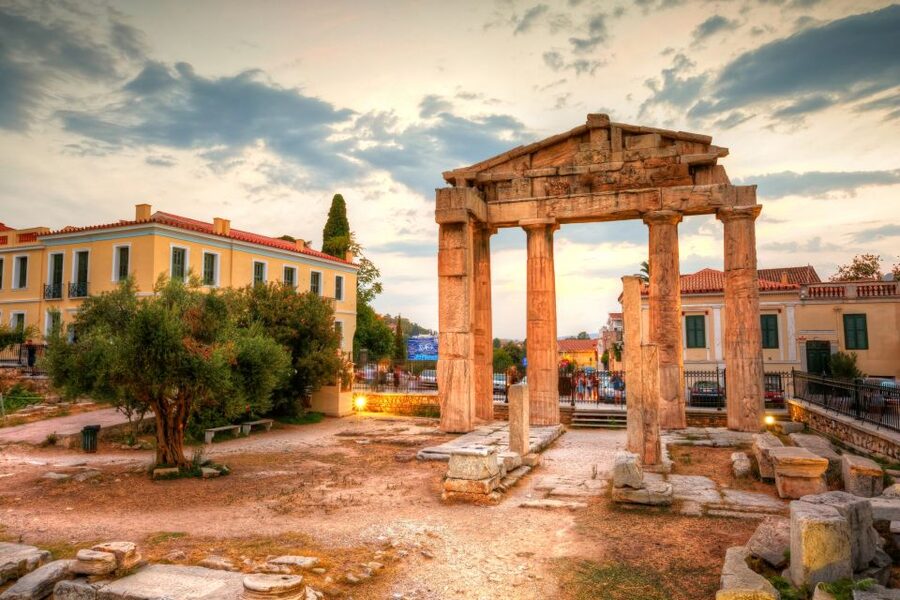
Two thousand years fit inside one small site. The Roman Agora gives you a compact look at daily life in ancient Athens, with the Gate of Athena Archegetis and the unusual Tower of the Winds leading the story. I like the skip-the-ticket-line entry and the freedom to explore without keeping pace with a group.
I also like that the audio tour works offline and can be heard in English, Spanish, German, French, Italian, or Greek. The main caution is value: at $18 per person for 45 minutes to one hour, the ticket may feel expensive if you only want a quick look, especially since one recent booking found it easy to buy admission on-site.
In This Review
- Key points to know before you book
- What the Roman Agora tells you about Athens
- Entering through the Gate of Athena Archegetis
- Meeting the Winds at the Tower of the Winds
- Finding the mosque and the later layers
- Shops, fountain house, and the Vespasianae
- How the self-guided audio tour works
- Is the skip-the-line ticket worth $18?
- Who will enjoy this format most?
- A practical one-hour plan
- Should you book the Roman Agora audio guide?
- FAQ
- How long does the Roman Agora experience take?
- Is a live guide included?
- Which languages are available?
- Do I need my own smartphone and headphones?
- Can I use the audio guide offline?
- Is the Roman Agora accessible for people with disabilities?
Key points to know before you book

- The Tower of the Winds is the star sight: This ancient structure gives the site its most memorable view and connects astronomy, weather, and everyday life.
- The Roman Agora is compact: You can see the main remains in 45 minutes to one hour, making it a useful short stop in central Athens.
- The audio guide adds the history the ruins cannot show: It explains shops, public conveniences, water systems, and changing rule under Rome.
- You need your own working phone and headphones: The ticket includes the digital tour, not the equipment needed to hear it.
- The content works offline: Downloading the narration, text, and maps in advance helps you avoid roaming charges.
- Orientation can be the weak point: The audio tour is self-guided, and you are responsible for matching each story to the correct place.
What the Roman Agora tells you about Athens
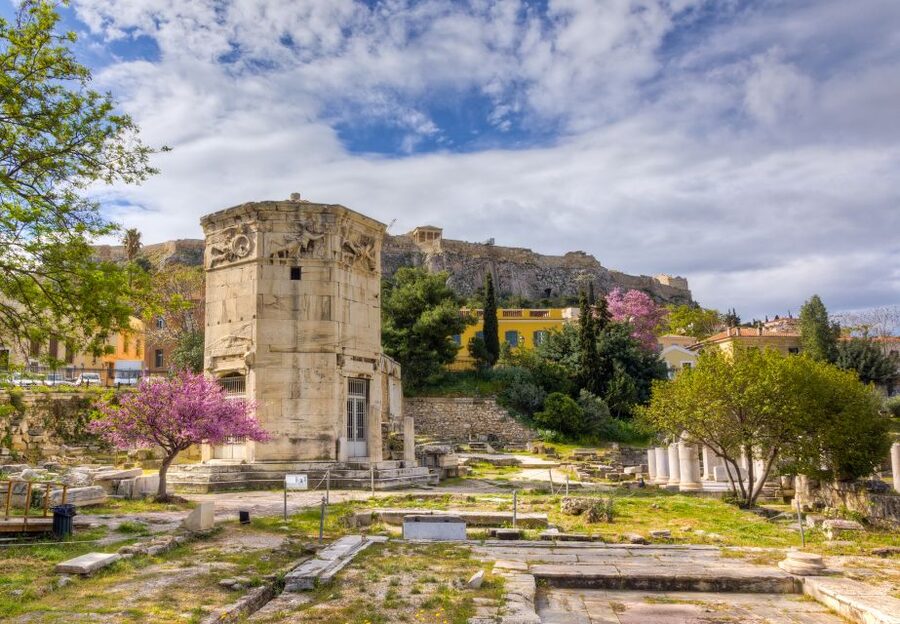
The Roman Agora is smaller than the nearby Acropolis complex, but that is part of its appeal. You are not signing up for a long archaeological march. Instead, you get a short, focused visit centered on the practical side of ancient city life.
Athens is often presented through temples, philosophers, and grand civic buildings. The Roman Agora offers another view. Here, you can consider how people shopped, found water, managed public needs, checked the weather, and moved through a city shaped first by Greek traditions and later by Roman rule.
That makes the audio guide useful. Bare stones rarely explain themselves, and this site has enough partial remains to leave you guessing. The narration fills in the gaps with short stories, historical facts, and anecdotes about everyday habits during the Roman conquest.
I would not treat this as a full morning attraction. The stated visit time is 45 minutes to one hour, and the compact size supports that estimate. It works well before or after another central Athens sight, especially if you want a manageable stop rather than another major museum or hilltop complex.
A few more Athens half-days to weigh up
- Athens: Acropolis Ticket with Optional Audio or Live Guide
★ 4.2 · 11,055 reviews - Athens: Cape Sounio & Poseidon Temple Trip with Audio Guide
★ 4.4 · 4,521 reviews - Athens: Acropolis Ticket with Audio Guide
★ 4.0 · 3,575 reviews
Entering through the Gate of Athena Archegetis
The Gate of Athena Archegetis is one of the first features to look for. This monumental entrance gives the Roman Agora a formal sense of arrival, even though the site itself is relatively small.
The gate is also a good reminder that the Agora was not just an open patch of ruins. It marked an organized public space with commercial and civic functions. As you listen, pay attention to the way the audio guide connects the remains to movement through the city.
This is where the self-guided format can work well. You can stop, look closely, and replay a section if a name or date goes by too quickly. You are not waiting for a guide to finish speaking before moving on.
The downside is simple: you need to orient yourself. One user found the audio tour difficult to follow because it was not always clear where to stand or what feature to match with the narration. Before pressing play, take a moment to identify the main structures and check the app map. A little preparation can prevent a lot of wandering.
Meeting the Winds at the Tower of the Winds
The Tower of the Winds is the Roman Agora’s most distinctive sight. Its purpose gives the visit a playful edge. This was not merely decoration. The tower connected the passage of time and the direction of the winds with the practical concerns of city life.
The audio guide helps turn the building from an attractive stone tower into a working part of ancient Athens. Listen for the explanations of its design and function, then look closely at the exterior details as you move around it.
You may find that this is the point where the audio tour earns its price. Without context, the tower is easy to admire and move past. With narration, you have a reason to study it and understand why it mattered.
The site also gives you a view toward the Acropolis. It is not the same sweeping outlook you get from the Acropolis itself, but it creates a useful connection between the city’s monuments. You can see how the Roman Agora fits into the wider historic center instead of treating it as an isolated ruin.
Finding the mosque and the later layers
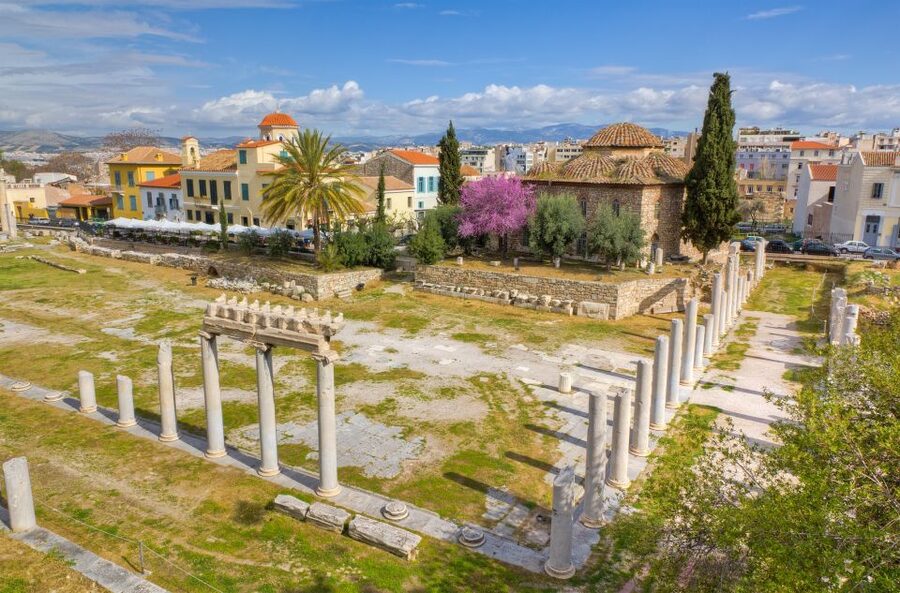
The Mosque of the Conqueror adds another period to the visit. Its presence shows that the site did not freeze in classical Athens. Buildings and uses changed as different powers controlled the city.
That later layer is valuable because Athens was not simply a Greek city followed by a Roman city and nothing else. The remains reflect several chapters of use, adaptation, and decline. The mosque helps broaden the story beyond the familiar classical era.
The audio guide is especially useful here because the building may not immediately explain its place in the site. Listen for the account of its purpose and date, then compare that information with what remains in front of you.
This is also a good reason to avoid rushing through the Roman Agora just to photograph the Tower of the Winds. The site’s interest comes from the combination of ancient civic life and later reuse. You do not need a long visit, but you do need to look beyond the most famous structure.
Same stretch of coastline, a completely different day out:
- Athens: Acropolis & up to 5 Archaeological Sites Combo Pass
★ 4.4 · 12,619 reviews - Athens: Acropolis, Parthenon & Acropolis Museum Guided Tour
★ 4.8 · 9,316 reviews - Athens: Cape Sounion & Poseidon Temple Sunset Half-Day Trip
★ 4.8 · 8,241 reviews - Athens: Acropolis and Parthenon Guided Walking Tour
★ 4.6 · 5,882 reviews
Shops, fountain house, and the Vespasianae
The Roman Agora becomes more relatable when the narration turns to ordinary facilities. The shops suggest the commercial life of the area, while the fountain house points to the importance of water in a dense ancient settlement.
The Vespasianae, or public toilets, may sound like a small detail, but it is exactly the sort of feature that makes an archaeological site feel human. Ancient cities needed practical systems just as modern cities do. These remains help you picture the people who used the area for errands, business, and daily routines.
I like this part of the experience because it moves away from famous names and monumental stone. You are encouraged to think about how the place functioned, not only how it looked.
The audio guide’s short format suits these features. You receive a brief explanation, examine the remains, and move on. Still, do not expect a long lecture at every stop. The content is designed as concise storytelling, so visitors who want academic detail may find it light.
How the self-guided audio tour works
After booking, you receive an email with instructions and an activation link. You need to download the app and the audio content before arriving. Check your spam folder if the message does not appear.
The offline package includes text, audio narration, and maps. It uses roughly 100 to 150 MB of storage. That is modest, but you should still check your phone before your visit, particularly if storage is nearly full.
You also need:
- A charged Android phone running version 5.0 or later, or a compatible iPhone
- Headphones
- Enough storage space for the download
- The activation link and ticket email
The app is not compatible with Windows phones, iPhone 5 or 5C, older iPod Touch models, iPad 4th generation or older, or first-generation iPad Mini. That equipment list matters more than it might seem. This is not a ticket you can use independently of a phone.
You can listen before or after your visit, and the audio tour can be used repeatedly. That gives you a useful option if you want to preview the site at your hotel, then replay certain sections among the ruins.
The format also means there is no live guide and no fixed meeting point. Your meeting instructions can vary depending on the option booked, but the key point is that you are not joining a person or a group at a set gathering spot. You enter with your ticket and follow the digital material at your own pace.
Is the skip-the-line ticket worth $18?
The price is easiest to defend if convenience matters to you. You receive an adult entry ticket, skip-the-ticket-line service, and a self-guided audio tour in one purchase. On a busy day, avoiding the ticket queue can save more irritation than time.
The value is less clear if the Roman Agora is quiet. A recent booking in September found the site nearly deserted and said buying a ticket on-site was easy. That same person still praised the audio guide for bringing the past to life. This neatly captures the tradeoff: the digital storytelling may be the stronger part of the package, while the ticket convenience depends on crowd conditions.
At $18, you are paying for more than admission. You are paying for advance planning, digital access, multiple languages, offline maps, and the chance to skip the ticket line. If you already prefer reading a guidebook or using your own free information, the price may feel high for a site that takes less than an hour.
The duration matters. A one-hour visit costs more per minute than a large museum or full-day tour, but a short attraction can still be worthwhile when you are building a busy Athens itinerary. I would consider it better value for a first-time visitor who wants context without hiring a private guide.
Free and reduced admission tickets cannot use the skip-the-line privilege and must be obtained at the ticket booth. If you qualify for one of those categories, this product may not be the right choice.
Who will enjoy this format most?
I would recommend the experience to independent visitors who like to set their own pace. You can pause at the Tower of the Winds, replay a story, or move quickly through a feature that interests you less.
It also suits history buffs. One recent booking described the site as small but interesting for anyone drawn to history. That is fair. The Roman Agora does not offer endless ruins, but it packs several different themes into a short walk.
The audio tour is a good fit for visitors who want more than labels but less than a live group. It provides explanations without requiring a meeting time, group etiquette, or a guide’s schedule.
Families may appreciate the short duration, though each person needs to share the audio or listen from the same device unless you purchase according to the devices being used. The booking guidance says to book per device, not per participant, so read that condition carefully before ordering several tickets.
I would be cautious if you dislike smartphone tours or find maps hard to follow. The orientation problem is real enough to plan around. Download everything early, bring headphones, and use the map before you start walking.
The site is partially accessible for people with disabilities. Since the information does not specify which areas are accessible, contact the provider or site before booking if you need detailed access information.
A practical one-hour plan
Give yourself a few minutes before entering to confirm the ticket and open the app. Make sure the narration is downloaded, your phone is charged, and your headphones work.
Start with the Gate of Athena Archegetis. Use it to understand the layout and the formal entrance into the Agora. Then move toward the Tower of the Winds, which deserves the most careful look.
Next, follow the stories about the mosque and the site’s later use. After that, seek out the fountain house, Vespasianae, and shops. These smaller features give the visit its everyday character.
Save a few minutes for the Acropolis view. It helps you place the Roman Agora within central Athens and provides a natural pause after the more detailed audio stops.
If you have extra time, replay the sections that were difficult to match with the ruins. Since the content remains available after the visit, you can also listen later and recall the site with a clearer picture.
Should you book the Roman Agora audio guide?
Book it if you want a short, independent history stop with a skip-the-line ticket and narration in your preferred language. The Tower of the Winds, Gate of Athena Archegetis, mosque, shops, fountain house, and Vespasianae offer enough variety for a focused visit.
Skip it if you only want admission, if the $18 price feels high for an hour, or if you already have a reliable way to understand the ruins. Buying on-site may be easy when the area is quiet, and the ticket is non-refundable, so last-minute flexibility is limited.
My practical verdict: the audio content is the main reason to choose this package. It gives meaning to a compact site and lets you explore without a guide. Just prepare your phone carefully and expect to do some of the navigating yourself.
FAQ
How long does the Roman Agora experience take?
The visit takes approximately 45 minutes to one hour.
Is a live guide included?
No. The experience includes a self-guided audio tour on your smartphone, with no live guide.
Which languages are available?
The audio guide is available in English, Spanish, German, French, Italian, and Greek.
Do I need my own smartphone and headphones?
Yes. You need a compatible, charged Android or iOS smartphone and your own headphones. The phone and headphones are not included.
Can I use the audio guide offline?
Yes. You can download offline text, audio narration, and maps before the visit, which helps avoid roaming charges.
Is the Roman Agora accessible for people with disabilities?
The site is partially accessible. The provided information does not specify which areas have access limitations, so you should check before booking if you need detailed accessibility information.
Just added around Athens
- Delphi One Day Trip from Athens★ 4.0 · 98 reviews
- Private Delphi and Hosios Loukas Monastery – Great Lunch and Drinks Included★ 5.0 · 36 reviews
- Mercedes Private Tour to Delphi and Arachova★ 5.0 · 30 reviews
- Day tour to Ancient Olympia,Ancient Sparta Mycenae Including Meal★ 5.0 · 54 reviews
- Athens: Half Day Trip To Cape Sounio/Poseidon Temple Semi Private★ 5.0 · 131 reviews
- Athens Half-Day Private Tour Acropolis, Parthenon City Highlights★ 5.0 · 35 reviews
- From Athens: Day Tour to Mykonos★ 5.0 · 64 reviews
- Culinary Secrets of Downtown Athens★ 5.0 · 103 reviews
Audio Tours, compared.


Cape Sounio & Poseidon Temple Trip with Audio Guide
Read our review →
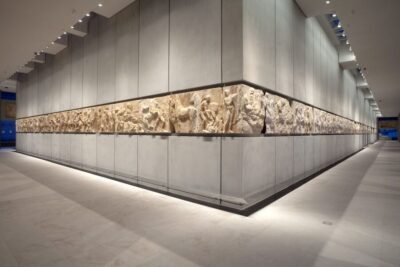
Acropolis Museum Ticket with optional Audio Guide
Read our review →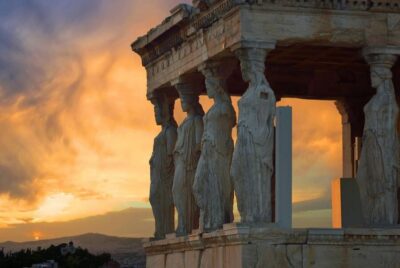
Acropolis Ticket & Optional Self-Guided Audio Tours
Read our review →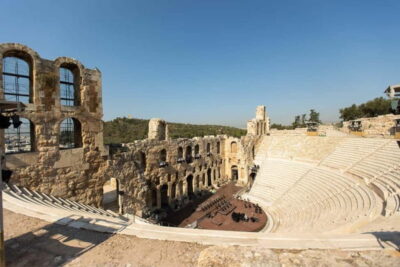
Parthenon & Acropolis Museum with Audio or Live Tour Option
Read our review →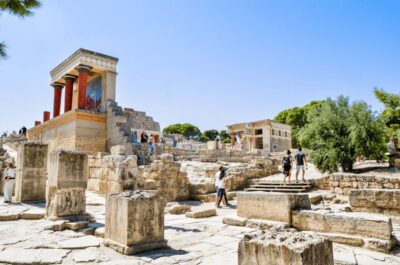
Knossos Palace Entry Ticket with Optional Audio Guide
Read our review →Browse the lists this tour appears in