Reviewed · ATHENS TOURS
Athens: Unique & Interactive Greek Small Group Warrior Experience
History gets physical here. This two-hour Athens activity turns ancient Greek warfare into an outdoor team game, with replica shields, spears, and swords replacing another quiet museum visit. I like the hands-on phalanx training and the chance to learn from Gregory, whose enthusiasm for Greek martial history comes through in both the teaching and the exercises.
I also like the small group size, capped at 10 people, which gives the instructor room to adjust the activity for different ages and fitness levels. The main drawback is clear: this is not a guided archaeological tour, and it includes no museum or site admission. You come for movement, role play, and practical history, not a long lecture beside ancient ruins.
In This Review
- Key points to know before booking
- What kind of Athens experience is this?
- Meeting at Voutie Park near the Acropolis
- The opening history lesson: Greeks, Persians, and citizen-soldiers
- Holding the shield and learning the phalanx
- Beyond the shield: swords, wrestling, and boxing
- Why Gregory makes a difference
- Is it suitable for children and mixed fitness levels?
- The outdoor setting and what to bring
- Price and value at $35.68
- Booking, weather, and practical details
- Who should book this Greek warrior activity?
- Should you book it?
- FAQ
- Where does the Greek warrior experience meet?
- Where does the activity end?
- Is this a guided archaeological tour?
- What equipment is included?
- Is the activity suitable for children?
- What happens if the weather is poor?
Key points to know before booking
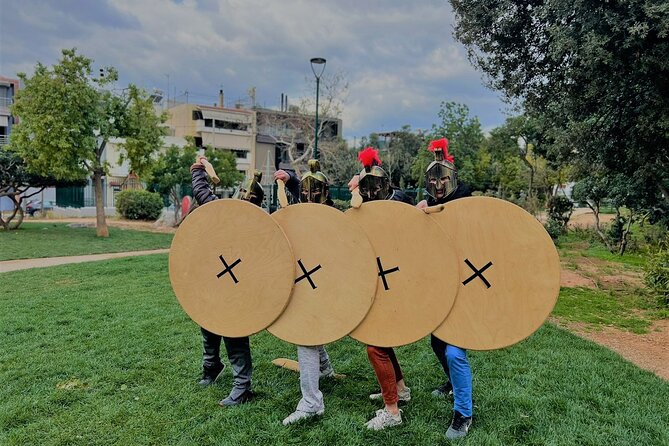
- You train as a Greek hoplite: Use replica shields, spears, and swords while learning the basics of the phalanx.
- The history comes through action: The session covers the Persian Wars, armor, battle formations, and changes in Greek tactics.
- It takes place outdoors: Expect athletic exercises, running, and the normal risks of fatigue or injury.
- Gregory is central to the experience: He mixes short talks with practical instruction and answers questions about ancient Greece.
- Families can take part: Children have enjoyed the activity, and the instructor can adapt equipment and instructions.
- It is near the Acropolis area: The meeting point is Voutie Park, close to central Athens and public transportation.
What kind of Athens experience is this?
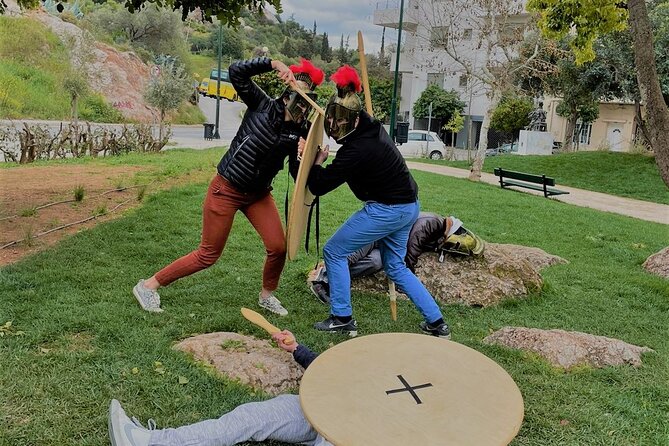
Think of this as a history lesson with wooden weapons and a fair amount of movement. You meet at Voutie Park in central Athens, then take part in an outdoor activity based on the ancient art of the phalanx, the tightly organized infantry formation used by Greek citizen-soldiers.
The focus is participation. You are not simply told how a hoplite fought. You hold the equipment, practice movements, and work with the group. The aim is to give you a physical sense of how a shield, spear, and formation worked together.
That makes this a good change of pace after the Acropolis, the Acropolis Museum, or a day spent looking at marble statues. Athens has no shortage of ancient sites, but many visitors experience Greek warfare only through labels and reconstructed images. Here, you get to test the basic movements for yourself.
The activity is also designed as a group game. You will meet other people interested in ancient history, and the small group format makes it easier to ask questions or get individual help. The experience can be social and playful, but it is still built around real historical ideas.
A few more Athens half-days to weigh up
- Athens: Acropolis & up to 5 Archaeological Sites Combo Pass
★ 4.4 · 12,619 reviews - Athens: Acropolis Ticket with Optional Audio or Live Guide
★ 4.2 · 11,055 reviews - Athens: Acropolis, Parthenon & Acropolis Museum Guided Tour
★ 4.8 · 9,316 reviews
Meeting at Voutie Park near the Acropolis
The listed meeting point is Voutie Park, Athens 118 52, and the activity ends back there. It is in central Athens, near the Acropolis metro station and within the broader area of the Temple of Hephaestus and Philopappos Hill.
One practical tip is to check the meeting point carefully before setting out. A family once went to the wrong location on the other side of Athens, and Gregory kindly helped arrange a new booking. That story offers a useful lesson: do not assume every Athens history activity starts directly at the Acropolis entrance.
Some sessions include a walk toward Philopappos Hill, with views of the Acropolis along the way. The exact movement between the meeting point and the exercise area can depend on the group and conditions, but you should expect to be outdoors rather than inside a museum or archaeological site.
Wear clothes you can move in and shoes suitable for an outdoor workout. Bottled water is not included, so bring your own. Athens can be hot, and two hours of running, lifting, and repeated drills will feel different from a normal sightseeing walk.
The opening history lesson: Greeks, Persians, and citizen-soldiers
The session begins with context about ancient Greek warfare. You learn about the Persian Wars and the Greek citizen-soldiers who fought in them. The teaching also covers armor, formations, and the way Greek tactics changed over time.
This part is not meant to be a full academic lecture. It gives you enough background to understand what you are about to practice. The phalanx was not just a row of men holding shields. It depended on order, spacing, cooperation, and trust between soldiers.
Gregory brings visual aids and is willing to answer questions about Greek history. His teaching combines the military side of the subject with wider context about Athens and its importance in the ancient world. That blend helps keep the history connected to the place around you.
The lesson works especially well for people who have already visited the Acropolis or a museum. You may recognize names and battles from earlier sightseeing, then see how the weapons and formations would have been used. For a child, the activity can make a difficult subject easier to grasp because the history is tied to something physical.
Still, set your expectations correctly. You will not receive a long chronological history of Athens, and there are no archaeological objects to examine. The information is there to support the activity, not replace a specialist museum tour.
Holding the shield and learning the phalanx
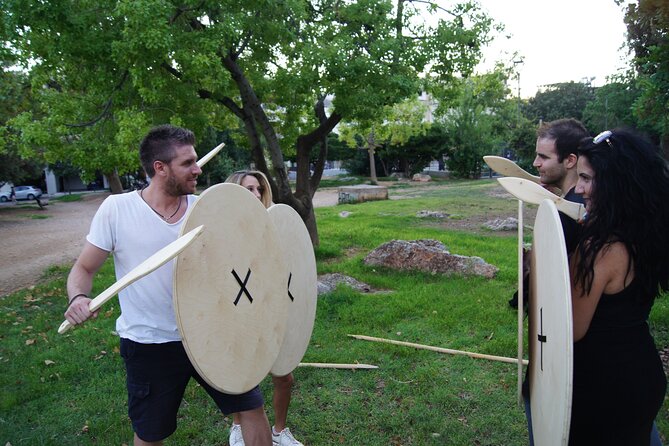
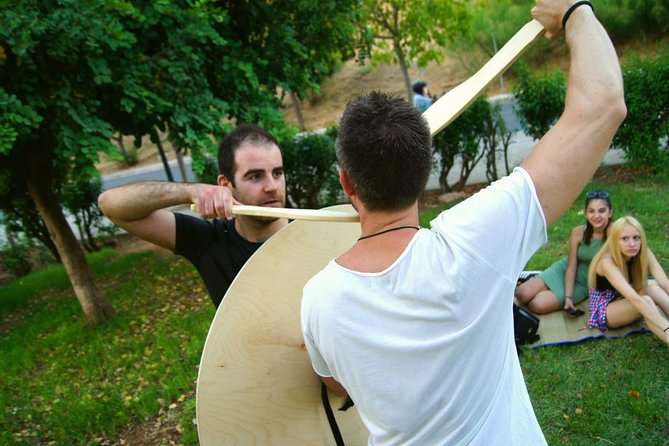
The main event is the practical training. You work with replica ancient Greek equipment, including shields and spears. Swords are also used, and the activity can include an introduction to wrestling and boxing.
The phalanx lesson is the heart of the session. You learn how individual actions fit into a group formation, rather than treating the hoplite as a lone warrior from a modern action film. That distinction matters. Ancient Greek warfare depended heavily on disciplined group movement.
The replica equipment helps you understand the physical demands of the system. A shield was not simply defensive gear carried for personal protection. In a formation, it also helped protect the person beside you. A spear required control and spacing. Even a basic drill can show why keeping position mattered.
You should expect the activity to be energetic, but the instructor adapts instructions and equipment for different physical abilities. Gregory has adjusted the session for people with different learning and fitness levels, which is helpful in a mixed group.
This is not combat training in the modern military sense. It is a supervised athletic activity using replicas and role play. You may practice movements with other participants, but the experience is presented as an educational outdoor exercise rather than a dangerous weapons class.
Same stretch of coastline, a completely different day out:
- Athens: Cape Sounion & Poseidon Temple Sunset Half-Day Trip
★ 4.8 · 8,241 reviews - Athens: Acropolis and Parthenon Guided Walking Tour
★ 4.6 · 5,882 reviews - All Day Cruise -3 Islands to Agistri,Moni, Aegina with lunch and drinks included
★ 5.0 · 4,958 reviews - Athens, Piraeus, and Coastline: Blue Hop-On Hop-Off Bus
★ 3.9 · 4,849 reviews
Beyond the shield: swords, wrestling, and boxing
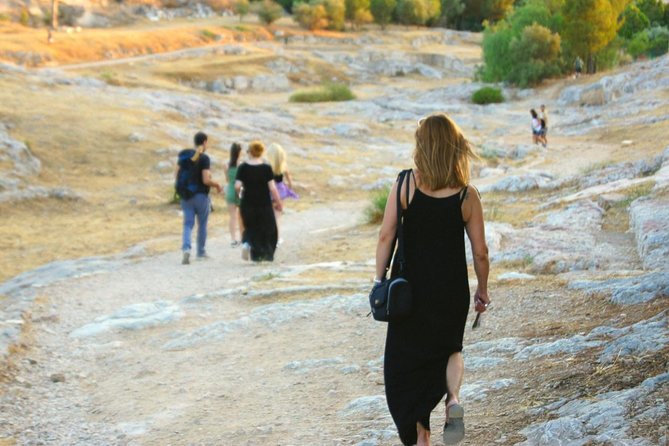
The activity can move beyond the phalanx into other forms of ancient Greek fighting. Participants may receive an introduction to swords, wrestling, and boxing, giving you a wider picture of how Greek martial culture extended beyond organized infantry battles.
This variety keeps the two hours moving. If the whole session consisted of one formation drill, younger children or people less interested in military history might lose focus. Switching between equipment and techniques gives the instructor more ways to involve the group.
It also shows that ancient Greek fighting was not one single method. The heavily equipped hoplite was important, but Greek athletic and military traditions included close combat and physical contests too. The wrestling and boxing portion provides a useful contrast with the controlled group movements of the phalanx.
The activity is best approached with a cooperative attitude. You are there to learn and have fun, not prove that you are the strongest person in the park. The instructor’s role is to keep the exercises accessible and help everyone stay involved, including children who arrive with little interest in Greek warriors.
Why Gregory makes a difference
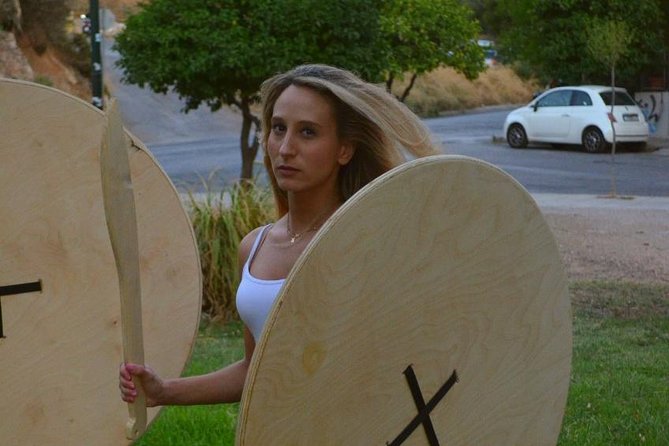
The instructor, identified as Gregory or Gregorios, is repeatedly praised for combining history with combat instruction. His background and interest in both Greek history and martial arts give the activity its character.
I like this teaching style because it avoids two common problems. A history activity can become a dry speech, while a role-playing activity can lose its historical grounding. Gregory keeps the two parts together: he explains why a technique mattered, then gives you a chance to try it.
He also answers questions rather than rushing through a fixed script. That is valuable if you want to ask about Greek wars, armor, the Persian Empire, or the way tactics changed. The visual aids help make the explanations easier to follow, especially for children.
The small group limit of 10 supports this approach. A group of that size is large enough for formation exercises but small enough for personal correction. One booking even became a one-to-one session when no other person had signed up, though you should not assume that will happen on your date.
For families, the instructor’s flexibility is a major plus. Children ranging from young school-age participants to older kids have taken part, and the equipment or instructions can be adjusted as needed. A parent and 9-year-old enjoyed the activity as an add-on to an Acropolis and museum visit, while another family with three young children found it both affordable and easy to enjoy.
Is it suitable for children and mixed fitness levels?
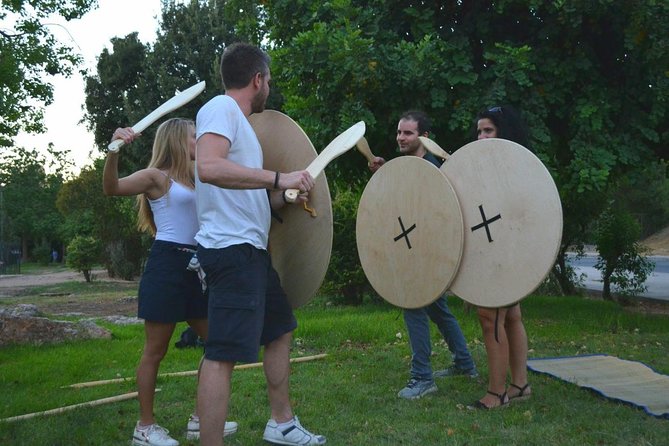
The strongest audience is families, couples, and adults who like history but also want to move. You do not need to be a trained athlete to join, since the equipment and instructions can be adapted. Still, this is an athletic experience, not a gentle craft workshop.
Most participants can take part, and service animals are allowed. The important issue is your own comfort with outdoor exercise. The activity may involve running and repeated movements, and the provider warns about possible injury and extreme fatigue. Participants accept responsibility for the risks of running outdoors.
Parents should use their judgment. Children have enjoyed the role-playing aspect, and the instructor works to keep even reluctant youngsters involved. But a child who strongly dislikes physical activity may not suddenly become a Spartan after two hours in the park.
For adults, the same rule applies. If you want a calm historical talk, choose a conventional walking tour or museum visit. If you like the idea of learning by doing, the physical side is exactly what makes this activity different.
The outdoor setting and what to bring

The park setting gives the experience a more informal feel than a classroom. You can take pictures, enjoy the open air, and see the Acropolis area from a different angle. A walk near Philopappos Hill may add views of the Acropolis before or during the session.
Outdoor conditions also bring limits. Weather can affect the activity, and poor weather may lead to cancellation, a new date, or a full refund. Athens heat can make the exercises harder, so bring water even though it is not included.
There are also ordinary outdoor risks. Watch your footing, listen to the instructor, and avoid treating the replica weapons as toys. The provider specifically warns about injuries and fatigue, so sensible footwear, sun protection, and a realistic view of your fitness will improve the experience.
Because this is not inside an archaeological site, you do not need to plan around museum entry rules or timed monument admission. You do, however, need to be ready for an activity that may be more tiring than the two-hour duration suggests.
Price and value at $35.68
At about $35.68 per person, this is a reasonably priced Athens add-on, especially for families or people who want something beyond standard sightseeing. You receive two hours of instruction, replica equipment, an organized athletic activity, and a chance to ask questions directly.
The value depends on what you want from a history experience. If you are comparing it with a site tour, remember that the fee does not include entry to the Acropolis, a museum, or any archaeological location. You are paying for the activity itself.
For a family, the price can work well because several people can participate together and children get a memorable way to connect with the subject. For a solo visitor, the small group setting may be worth the cost if you enjoy meeting people and joining a team exercise.
Group discounts are available, which may improve the value for larger bookings. The experience is also popular enough that it is booked about 27 days ahead on average. I would reserve early if your Athens schedule is tight, especially if you need a particular date.
Booking, weather, and practical details
Confirmation is provided when you book. The activity is offered in English, uses mobile tickets, and operates near public transportation in central Athens.
Free cancellation is available if you cancel at least 24 hours before the start time. Changes or cancellations made inside that period are not accepted for a refund. If bad weather cancels the session, you can receive another date or a full refund. The same choice applies if the minimum number of participants is not reached.
The experience ends at the meeting point, which makes it easy to pair with nearby sightseeing afterward. You might schedule it before or after the Acropolis area, but leave enough time for finding Voutie Park and changing out of exercise clothes if needed.
Who should book this Greek warrior activity?
I would recommend it to:
- Families looking for an active history experience
- Adults who enjoy ancient Greece and martial arts
- People who have already seen the major Athens sites
- Visitors who prefer participation to a long guided speech
- Small groups that want a social outdoor activity
- Children who enjoy role play, physical games, or ancient history
I would be more cautious if you have limited mobility, dislike exercise, or want a formal archaeological tour. The activity is outdoors, and most people can participate, but it still includes physical exertion and unpredictable outdoor risks.
The strongest praise centers on Gregory’s enthusiasm, the mix of history and training, and the way he includes both adults and children. Those are the qualities that make the experience more than a simple costumed photo opportunity.
Should you book it?
Book this if you want to hold a shield, practice phalanx tactics, and learn about Greek warfare by taking part. The combination of short historical talks, replica weapons, group drills, and optional wrestling or boxing gives you a memorable break from Athens’ museums and ruins.
Skip it if you expect a guided tour of archaeological sites or a detailed lecture without physical activity. For everyone else, the modest price, central location, small group size, and adaptable instruction make this a smart addition to an Athens itinerary. Bring water, wear comfortable shoes, check the meeting point twice, and arrive ready to move.
FAQ
Where does the Greek warrior experience meet?
The activity starts at Voutie Park in Athens, Greece, in the central Athens area near the Acropolis metro station.
Where does the activity end?
The experience ends back at the meeting point.
Is this a guided archaeological tour?
No. It is an outdoor team activity and group game. It does not include visits inside or outside archaeological sites, museums, or formal historical speeches.
What equipment is included?
Replica ancient Greek equipment is included. The activities can use shields, spears, and swords, with an introduction to wrestling and boxing.
Is the activity suitable for children?
Most people can participate, and children have taken part successfully. The instructor can adapt instructions and equipment for different learning and physical abilities.
What happens if the weather is poor?
The activity requires good weather. If it is canceled because of poor weather, you will be offered a different date or a full refund.
Just added around Athens
- Delphi One Day Trip from Athens★ 4.0 · 98 reviews
- Private Delphi and Hosios Loukas Monastery – Great Lunch and Drinks Included★ 5.0 · 36 reviews
- Mercedes Private Tour to Delphi and Arachova★ 5.0 · 30 reviews
- Day tour to Ancient Olympia,Ancient Sparta Mycenae Including Meal★ 5.0 · 54 reviews
- Athens: Half Day Trip To Cape Sounio/Poseidon Temple Semi Private★ 5.0 · 131 reviews
- Athens Half-Day Private Tour Acropolis, Parthenon City Highlights★ 5.0 · 35 reviews
- From Athens: Day Tour to Mykonos★ 5.0 · 64 reviews
- Culinary Secrets of Downtown Athens★ 5.0 · 103 reviews
Athens Tours, compared.
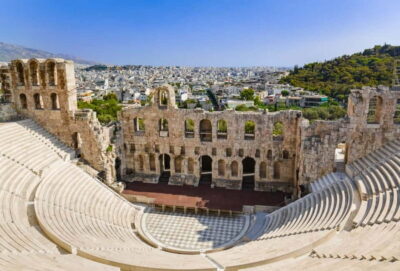
Acropolis & up to 5 Archaeological Sites Combo Pass
Read our review →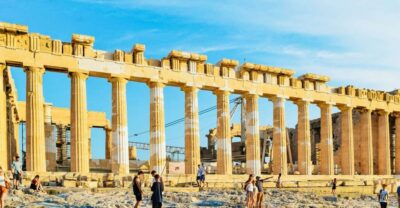
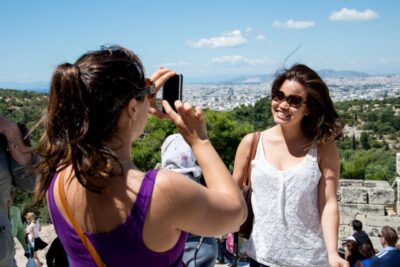
Acropolis, Parthenon & Acropolis Museum Guided Tour
Read our review →
Cape Sounion & Poseidon Temple Sunset Half-Day Trip
Read our review →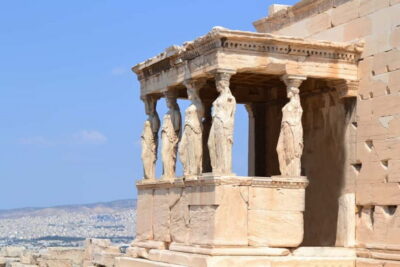

All Day Cruise -3 Islands to Agistri,Moni, Aegina with lunch and drinks included
Read our review →
Athens, Piraeus, and Coastline: Blue Hop-On Hop-Off Bus
Read our review →