Reviewed · STREET ART
Awesome Street Art Tour in Athens with a Local Expert Small-Group
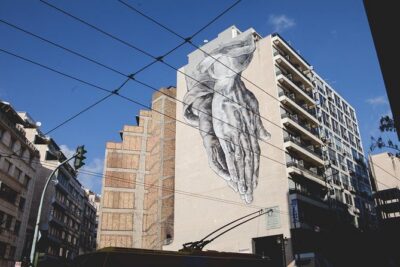
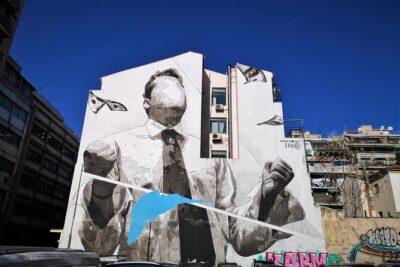
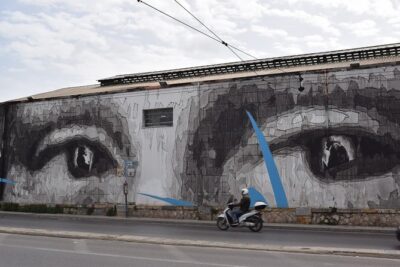
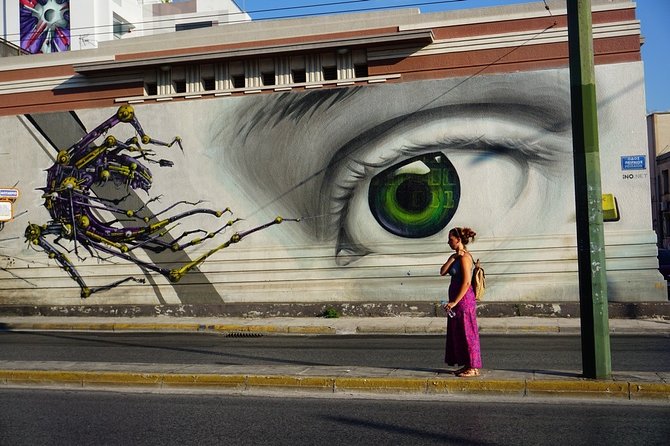
Athens wears its arguments on walls. This three-hour walk introduces you to street art in Gazi, Psirri, Monastiraki, Omonia Square, and Kerameikos, with an artist’s eye for style, meaning, and local context. I like the small group of eight and the way the tour connects murals with Greek culture, politics, and everyday city life.
I also like the choice of morning or evening departures, plus practical recommendations for food, coffee, cocktails, and less-touristed places. The main consideration is stamina: this is a real city walk, and an evening tour may finish after dark, when some artwork is harder to see.
In This Review
- Five things to know before you book
- Why street art is a smart way to read Athens
- Starting in Gazi near Persefonis Street
- Psirri brings the longest art stop
- Monastiraki shows art beside the city’s famous core
- Omonia Square adds social and political context
- Finishing in Kerameikos at Giatrakou Street
- What the guides add beyond the murals
- The walking pace, timing, and comfort level
- Morning or evening: which departure makes sense?
- Is the $59.28 price fair?
- Who will enjoy this tour most?
- Helpful booking and cancellation details
- Should you book the Athens street art walk?
- FAQ
- How long does the Athens street art tour last?
- How large is the group?
- Where does the tour start and end?
- Which Athens neighborhoods are included?
- Are food and public transportation included?
- What happens if the tour is canceled because of bad weather?
Five things to know before you book
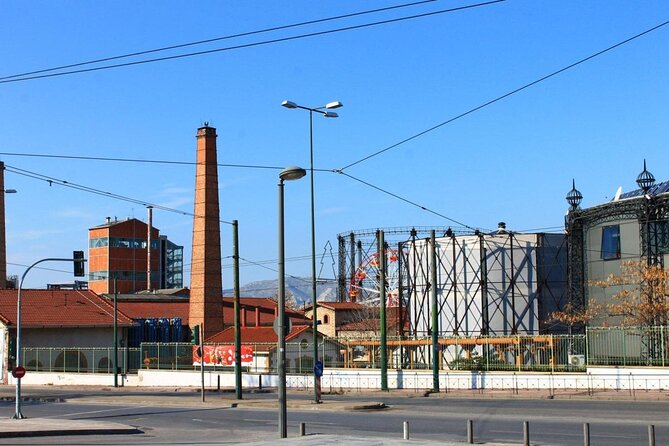
- Small groups make a difference: Numbers are capped at eight, so you can ask questions and keep close to the guide.
- You see several sides of Athens: The route links Gazi, Psirri, Monastiraki, Omonia Square, and Kerameikos.
- The art comes with context: Guides explain artists, styles, techniques, symbols, and political or cultural meaning.
- The route is longer than a quick mural stop: Plan on about three hours of walking, with the timing adjusted to the group.
- You receive useful extras: Bottled water, mural photos, local tips, and optional help taking group pictures are included.
Why street art is a smart way to read Athens
The Acropolis gives you one powerful view of Athens. Street art gives you another, often less polished and more immediate. Murals, tags, political images, and large painted walls show how the city deals with public space, social issues, identity, and change.
That does not mean every painted wall is a masterpiece. Part of the value here is learning to tell the difference between a quick graffiti mark, a commissioned mural, and a carefully planned piece of public art. The guide helps you notice the choices that are easy to miss when you walk past alone.
You may see more than 30 works during the walk, though the exact selection can change. New pieces appear, older ones fade, and some are painted over. That changing quality is part of the subject. This is not a museum where the exhibits stay fixed.
The route also helps you understand Athens as a city of neighborhoods rather than a collection of famous monuments. You pass through areas with different moods and histories, and the guide adds food, culture, and alternative-spot suggestions along the way.
A few more Athens half-days to weigh up
- Athens Street Art Walk
★ 5.0 · 309 reviews - Athens: Guided Street Art Walking Tour
★ 4.9 · 182 reviews - Athens Urban Street Art Tour
★ 5.0 · 98 reviews
Starting in Gazi near Persefonis Street
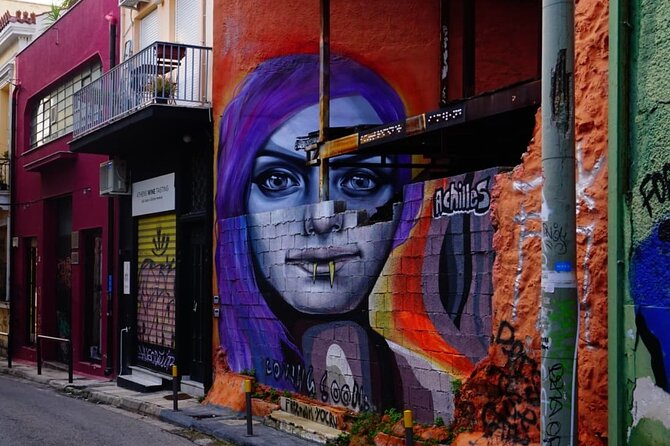
The meeting point is Persefonis 41, Athens 118 54. The first scheduled stop is Gazi, with about 30 minutes set aside for looking at street art and getting oriented.
Gazi is a useful starting point because the tour begins away from the most familiar Acropolis views. You can expect large-scale pieces, painted walls, and a neighborhood setting where old and new Athens sit close together. The guide may also use this first section to explain basic street-art terms, how artists work, and what to look for in a mural.
This is where a small group helps. You are not simply following a flag through a crowded monument. You can stop in front of a work, ask why a particular color or figure appears, and hear the answer without shouting over a large crowd.
The opening section is short, so do not expect an extended lecture at every wall. The aim is to give you a working set of ideas before the walk moves into the next neighborhoods.
Psirri brings the longest art stop
The tour allows about one hour in Psirri, the longest scheduled stop. That extra time matters because this is where the route can show a wider range of works and styles.
Your guide may compare pieces by different artists, explain recurring techniques, or point out how the work fits the building and street around it. The best part of this section is the chance to look beyond the image itself. You may hear about the artist’s motivation, the reason a work was placed in a particular location, or the cultural and political ideas behind it.
Kalliopi, one of the guides associated with the experience, has been praised for explaining artistic styles, symbolism, techniques, and the stories behind individual works. Thomas has also been described as both informative and entertaining. Guide quality can vary from one departure to another, but the strongest reports point to guides who treat the art as more than decoration.
Psirri also gives you a taste of daily Athens. The walk passes shops, bakeries, and local businesses, and the guide can suggest places to eat or stop for coffee. Food is not included, so any purchase is your responsibility, but the advice can be useful if you are still deciding where to eat in central Athens.
Monastiraki shows art beside the city’s famous core
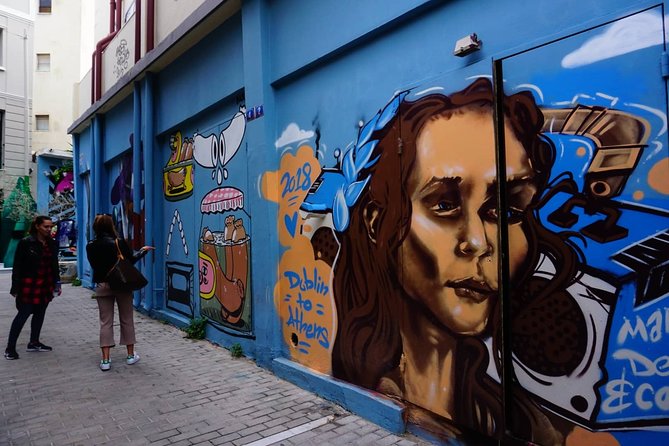
The route continues to Monastiraki for about 30 minutes. This is a good reminder that you do not need to leave central Athens to find serious street art.
Monastiraki is one of the city’s best-known areas, so you may already be planning to visit it for its market streets and access to major sights. The tour gives you a different reason to pause. Instead of only looking ahead toward a landmark or browsing shops, you start studying the walls around you.
This section may feel more crowded and less quiet than the opening stops. That is not necessarily a flaw. Street art makes more sense when you see how it shares space with shops, traffic, pedestrians, and the ordinary movement of the city.
Because the stop lasts about half an hour, the guide needs to choose carefully. You will not examine every painted surface. The benefit is a focused selection with explanations rather than a rushed attempt to cover everything.
Same stretch of coastline, a completely different day out:
- Athens: Acropolis & up to 5 Archaeological Sites Combo Pass
★ 4.4 · 12,619 reviews - Athens: Acropolis Ticket with Optional Audio or Live Guide
★ 4.2 · 11,055 reviews - Athens: Acropolis, Parthenon & Acropolis Museum Guided Tour
★ 4.8 · 9,316 reviews - Athens: Cape Sounion & Poseidon Temple Sunset Half-Day Trip
★ 4.8 · 8,241 reviews
Omonia Square adds social and political context
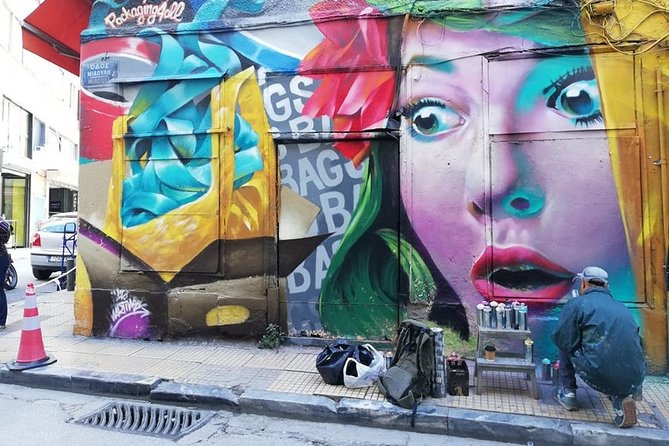
Omonia Square receives another 30-minute section. This part of the walk can feel different from the more fashionable or visitor-heavy streets, and that contrast is one of the tour’s strengths.
The guides have been praised for connecting street art with Athens history, politics, and social life. That context is especially useful at works that are not immediately pretty or easy to interpret. A mural may refer to a political event, a local concern, migration, economic pressure, or a broader debate in Greek society.
You should expect discussion rather than a simple list of artist names. The best guide experience here is one where you are encouraged to form your own view. Katerina, for example, has been praised for handling political and cultural subjects in a thoughtful, objective way while still offering personal insight into the local art scene.
Omonia can also be a useful orientation point for the rest of your stay. Ask for advice about nearby food, drinks, and cultural places. Several guides have sent additional recommendations after the tour, including lists of favorite places in Athens.
Finishing in Kerameikos at Giatrakou Street
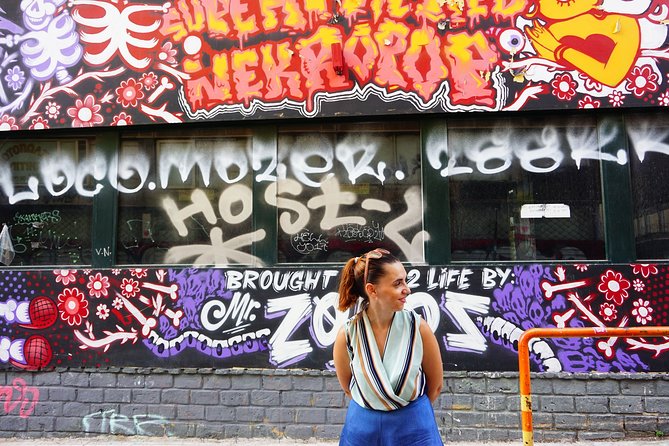
The final scheduled stop is Kerameikos, with about 30 minutes devoted to its street art. The tour ends at Giatrakou 9, Athens 104 36, in the Kerameikos neighborhood.
This ending is practical. You finish in an area that can easily become part of your evening plans, especially if you want to continue exploring Athens on foot. You are not returned to the original meeting point, so plan your next move from Kerameikos rather than assuming you will end where you started.
The final section also gives the walk a clear sense of place. After seeing art in several central areas, you can compare how different neighborhoods use walls and public space. By this point, you may notice pieces you would have ignored before booking the tour.
One point deserves attention: if you choose an evening departure in winter or start late, darkness may affect the last stop. One person specifically found it difficult to see the art by the end and suggested starting earlier. A morning tour is the safer choice if viewing every detail matters most.
What the guides add beyond the murals

The guide is the heart of this experience. Athens has plenty of street art, but finding a worthwhile route and understanding the work are separate problems.
A strong guide can tell you who made a piece, how it was produced, what style it uses, and what it may be saying. The better guides also explain what they know without pretending that every artwork has one fixed meaning. That makes the walk more useful than simply photographing colorful walls.
Kalliopi has received especially strong praise for her clear explanations and warm manner. She has helped participants understand the neighborhoods as well as the art, and she has offered suggestions for meals, coffee, cocktails, and other places to visit. Thomas has been praised for his humor and willingness to show favorite works. Katerina has been noted for combining art, Greek culture, history, and political background.
There is one caution. One departure was judged disappointing because the guide seemed less engaged and offered little beyond artist names. That experience appears to be the exception, given the overall rating of 4.9 from 150 reviews and a 98 percent recommendation rate, but it is still a fair reminder that the guide shapes the day.
The small group gives you the best chance to improve the experience yourself. Ask about a work that catches your eye. Ask why a mural is in that location. Ask for a food recommendation near your hotel. The format gives you room to do that.
The walking pace, timing, and comfort level

The advertised duration is about three hours, but the exact length can shift. A fast group may finish sooner, while a slower group or a hot day can stretch the walk. Guides may also include a rest stop, and some departures have lasted longer than three hours.
You should wear comfortable shoes and be prepared to spend much of the time standing outdoors. Bottled water is included, which is helpful, especially in warm weather, but snacks are not. If you need food during the walk, ask the guide about a nearby bakery or cafe.
The route passes through several neighborhoods rather than following a single compact loop. Public transportation tickets are not included, so budget separately for getting to the meeting point or leaving the endpoint if you do not want to continue on foot.
Most people can participate, and service animals are allowed. Still, the experience is best suited to anyone comfortable with a three-hour urban walk. If heat, long standing periods, or a quick pace are concerns, choose your departure time carefully and tell the guide about your needs.
Morning or evening: which departure makes sense?
The choice of timing is one of the tour’s useful features.
A morning tour gives you better daylight for examining colors, fine lines, and small details. It also leaves the rest of the day open for museums, the Acropolis, markets, or a long lunch. If this is your first day in Athens, a morning walk can help you get oriented before exploring alone.
An evening tour fits well if you want to spend the morning at major sights or avoid the strongest daytime heat. It may also give the neighborhoods a different feel. The tradeoff is clear: late in the day, some artwork can be difficult to see, particularly in seasons when darkness arrives early.
I would choose morning if street art is the main reason you are booking. I would choose evening if the walk is part of a fuller sightseeing day and you are comfortable with the possibility of reduced light near the end.
Is the $59.28 price fair?
At $59.28 per person, this is not a bargain-priced stroll. The value depends on how much you want interpretation rather than a self-guided list of walls.
You are paying for a three-hour route through four or five neighborhoods, a guide focused on street art, a group limited to eight, bottled water, photos of murals, local recommendations, and optional help taking pictures of your party. A private tour would normally offer more control, but this small-group format gives you much of the conversation without the usual large-group distance.
The price makes the most sense for first-time visitors, repeat visitors who want a different side of Athens, and anyone genuinely interested in urban art. It is less appealing if you only want a quick photo walk or if you would be satisfied wandering through Psirri and Kerameikos on your own.
The extra recommendations add real value. A guide who can suggest where to eat, drink coffee, find cocktails, or seek out alternative cultural spots may save you time later. For a short Athens visit, that practical advice can be worth nearly as much as another mural.
Who will enjoy this tour most?
I would recommend this walk to curious visitors who want Athens beyond the main archaeological stops. It works well for adults, groups of friends, couples, and families with teenagers. Two teenage girls were especially happy with the unusual neighborhoods and art-focused approach, which suggests the tour can be a good change of pace for families tired of formal sightseeing.
It also suits repeat visitors. Even people who already know Athens have found unfamiliar streets and artists during the walk. You may return to the same neighborhoods later and see walls that previously blended into the background.
The tour is a good fit if you like asking questions and discussing art. It is less suitable if you need a tightly timed itinerary, dislike walking, or want every stop to be a major landmark.
You should also keep your expectations realistic. Street art changes, and not every piece will appeal to you. The guide can explain meaning and technique, but cannot guarantee that you will like every work.
Helpful booking and cancellation details
Confirmation is provided when you book, and the experience is offered in English. Group discounts may be available, and the mobile ticket makes the booking easy to carry on your phone.
You can cancel for a full refund up to 24 hours before the start time. Changes or cancellations inside that 24-hour window are not accepted for a refund. Since the walk requires good weather, a cancellation by the operator for poor conditions results in a choice of another date or a full refund.
The tour is often booked about 24 days ahead, so I would not leave it until the last minute if the morning or evening choice matters to you.
Should you book the Athens street art walk?
Book it if you want a thoughtful, local view of Athens, not just a checklist of famous sights. The route covers a lot of ground, the eight-person limit supports real conversation, and the best guides explain how art connects with Greek culture, politics, and neighborhood life.
Choose a morning departure for better light, wear good walking shoes, and allow extra time if you move slowly or stop for a rest. If your interest is only casual photography, the price may feel high. If you want to understand what you are seeing and leave with useful Athens recommendations, the cost is reasonable.
FAQ
How long does the Athens street art tour last?
The tour lasts approximately three hours. The exact duration can change depending on the group’s walking pace, weather, and whether a rest stop is included.
How large is the group?
The group has a maximum of eight participants. This keeps the walk small enough for questions and direct interaction with the guide.
Where does the tour start and end?
The tour starts at Persefonis 41, Athens 118 54, Greece. It ends at Giatrakou 9, Athens 104 36, Greece, in the Kerameikos neighborhood.
Which Athens neighborhoods are included?
The route includes Gazi, Psirri, Monastiraki, Omonia Square, and Kerameikos. The schedule allows about 30 minutes in Gazi, 1 hour in Psirri, and about 30 minutes at each of the other listed stops.
Are food and public transportation included?
Bottled water is included, but snacks and food are not. Public transportation tickets needed before or after the walk are also not included.
What happens if the tour is canceled because of bad weather?
If poor weather causes the tour to be canceled, you can choose a different date or receive a full refund. You can also cancel for a full refund up to 24 hours before the scheduled start time.
Just added around Athens
- Traditional Greek Show in Plaka with Dinner★ 3.6 · 178 reviews
- Santorini Wine Roads Tour with Wine Tastings Morning & Sunset★ 5.0 · 106 reviews
- Private Sunset Wine Tour with 3 Wineries and Tapas★ 5.0 · 34 reviews
- Insightful Pistachio Orchard and Factory Tour★ 4.5 · 27 reviews
- Traditional Villages Full day Tour in Santorini★ 4.0 · 84 reviews
- Half Day Tour★ 5.0 · 63 reviews
- Half-Day Shared Fishing Experience in Hydra★ 5.0 · 35 reviews
- Athens Old City Private Photoshoot Tour / 2 hrs★ 5.0 · 109 reviews