Reviewed · ATHENS TOURS
Biblical Tour Letters ToThe Corinthians St Paul’s Footsteps 6Hour
Paul’s story becomes clearer on the ground. This six-hour Athens excursion follows the apostle from Areopagus Hill to Corinth, combining New Testament locations with Greek ruins, temples, ports, and the Corinth Canal. I especially like the private vehicle with hotel, apartment, or cruise-port pickup, and I appreciate the bottled water, Wi-Fi, and flexible pace.
The strongest part is the human touch from drivers such as Chris, Yiannis, Panos, Alex, Christos, and Yannis. Their storytelling turns a long drive into useful context. The main caution is important: drivers cannot guide you inside archaeological sites under Greek law, so you may want to add a licensed guide for €160 per booking.
The tour costs $170.50 per person and lasts about 6 hours 15 minutes. That is fair value if you are a small group splitting the vehicle cost and want Corinth without arranging transport yourself. Site admissions and lunch cost extra, so the final bill will be higher than the headline price.
In This Review
- Key points at a glance
- Why this Athens to Corinth trip works
- Areopagus Hill and Paul’s Athenian speech
- Daphni Monastery and a change of era
- The Corinth Canal and the price of a shortcut
- Isthmia, Poseidon, and the ancient games
- The Archaeological Museum of Isthmia
- Ancient Corinth and the Bema of Paul
- Kenchreai and Paul’s voyage east
- Apollo’s columns and the Corinthian church
- Timing, meals, and what the price really covers
- Who will enjoy this tour most
- Should you book the Footsteps of Paul tour?
- FAQ
- How long does the tour last?
- Where can pickup and drop-off take place?
- Is this a private tour?
- Is transportation included?
- Are entrance fees included?
- Can the driver guide inside archaeological sites?
- Is lunch included?
- What is the cancellation policy?
Key points at a glance
- Areopagus Hill connects directly to Acts 17, where Paul spoke about the Unknown God to the Athenians.
- The Corinth Canal gives you a dramatic modern engineering stop before the ancient sites begin.
- Ancient Corinth brings First and Second Corinthians into physical focus, especially the Bema associated with Paul’s hearing before Gallio.
- Kenchreai links the tour to Paul’s travels and Phoebe, a woman named in his letter to the Romans.
- Private transport makes the day practical from Athens, with pickup and return to a hotel, apartment, or cruise port.
- The itinerary is packed, so confirm which archaeological sites you want to enter and consider adding a licensed guide.
Why this Athens to Corinth trip works
Corinth lies beyond Athens, and reaching it independently takes more planning than simply visiting the Acropolis. This tour solves the basic problem with a private, air-conditioned minivan, pickup at your lodging or cruise ship, and a return to the same place or another agreed point.
The vehicle includes Wi-Fi and bottled water. Those are modest extras, but they matter during the roughly hour-long drive toward Corinth. Several drivers also provided chocolates, umbrellas, and extra care with timing. One driver even offered a jacket when rain arrived. That kind of practical attention can make a full day feel less tiring.
The group is described as intimate, with two to four people in one part of the booking information and up to six in another. The minivan can hold up to eight passengers. I would confirm the exact size before booking, especially if you are traveling alone or as a couple and care about having a truly private ride.
The day is not a church pilgrimage in the narrow sense. It is a blend of biblical geography, classical archaeology, Byzantine art, Roman history, and modern Greece. You will spend much of the time moving between places, but the driver’s commentary fills the road time with background on Paul, Corinth, Athens, and the ancient Greek world.
A few more Athens half-days to weigh up
- Athens: Acropolis & up to 5 Archaeological Sites Combo Pass
★ 4.4 · 12,619 reviews - Athens: Acropolis Ticket with Optional Audio or Live Guide
★ 4.2 · 11,055 reviews - Athens: Acropolis, Parthenon & Acropolis Museum Guided Tour
★ 4.8 · 9,316 reviews
Areopagus Hill and Paul’s Athenian speech
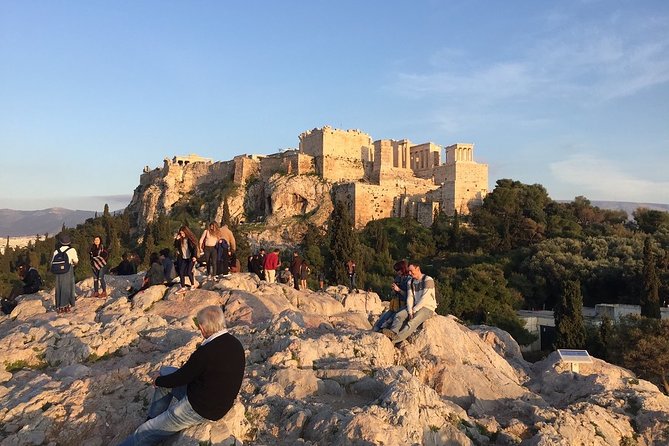
The first stop is Areopagus Hill, also called Mars Hill, on the Acropolis rock. You have about 15 minutes here, enough to look across Athens and consider the setting of Paul’s speech in Acts 17.
According to the biblical account, Paul addressed the Athenians by referring to an altar dedicated to an Unknown God. Rather than beginning with a hostile attack on Greek beliefs, he used something familiar to his audience as a starting point for his message. Standing on the rocky hill gives that story a real location instead of leaving it as a distant passage on a page.
This is a short stop, not an Acropolis tour. The experience includes admission to the hill, but the schedule does not provide time for the Parthenon or the wider Acropolis complex. If the Acropolis is a priority, plan a separate visit. Here, the value is the biblical connection and the view, not a long archaeological inspection.
Some drivers have made a special effort to include Mars Hill even when the day became complicated. Ask early if this stop matters greatly to you, since traffic and parking can sometimes force changes to the route.
Daphni Monastery and a change of era
The Monastery of Daphni offers a useful contrast to the classical sites ahead. Located on the slopes of Mount Aigaleo, this Byzantine monument occupies a place associated with an ancient sanctuary of Apollo.
The monastery is enclosed by fortified walls and towers, giving it a more defensive appearance than many religious buildings. Its past also reflects Greece’s shifting political and religious history. Cistercian monks used it during the Frankish period, and it later returned to Orthodox control after the Ottoman conquest.
Earthquakes badly damaged the site, but restoration continues, especially on its mosaics. You have about 20 minutes, so this is a quick look rather than a full study of Byzantine art. If mosaics and medieval Greece interest you, this stop adds welcome variety. If your only goal is tracing Paul, it may feel less central than Corinth itself.
The stop also reminds you that the religious history of Greece did not end with the ancient world. Classical temples, Roman cities, Byzantine monasteries, and modern churches all sit within the same broad story.
The Corinth Canal and the price of a shortcut
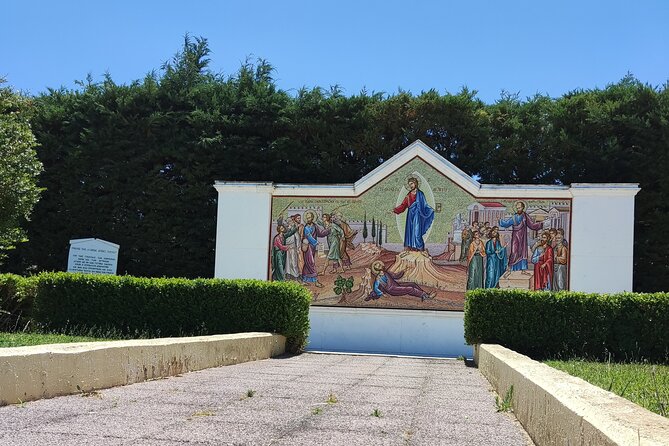
The Corinth Canal is a 20-minute stop and one of the clearest visual breaks in the day. The narrow waterway cuts across the Isthmus of Corinth, separating mainland Greece from the Peloponnese and saving ships the long voyage around the peninsula.
The canal opened in the late 19th century, but the idea is much older. Periander, the ruler of Corinth in the 7th century BC, is credited with first considering a canal. The ancient solution was the diolkos, a stone route that allowed ships to be moved overland on wheeled platforms.
You can look down into the steep-sided canal and understand why this strip of land mattered so much. Corinth controlled movement between the Aegean and Adriatic seas, making the area valuable for trade, travel, and military power.
The stop is free and easy to fit into a tight schedule. It is also a good place for photographs, although the visit is brief. Do not expect a boat ride or a long walk along the water. The appeal is the scale of the cut and the explanation of why Corinth became so important.
Same stretch of coastline, a completely different day out:
- Athens: Cape Sounion & Poseidon Temple Sunset Half-Day Trip
★ 4.8 · 8,241 reviews - Athens: Acropolis and Parthenon Guided Walking Tour
★ 4.6 · 5,882 reviews - All Day Cruise -3 Islands to Agistri,Moni, Aegina with lunch and drinks included
★ 5.0 · 4,958 reviews - Athens, Piraeus, and Coastline: Blue Hop-On Hop-Off Bus
★ 3.9 · 4,849 reviews
Isthmia, Poseidon, and the ancient games
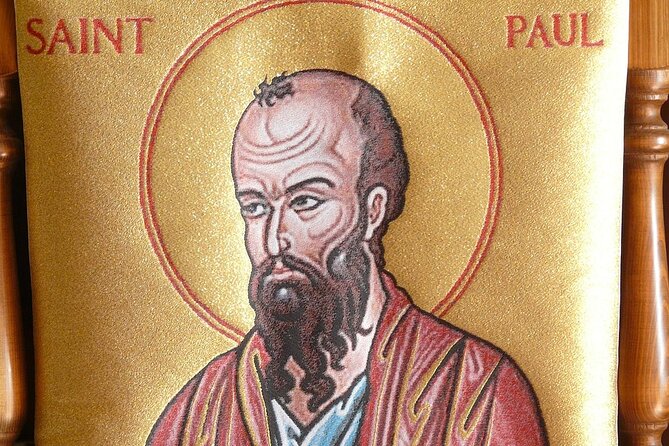
The Isthmia area connects the canal with the older sanctuary and athletic contests held nearby. The Isthmian Games were among the most important competitions in the Greek world, second only to the Olympic Games in prestige.
The tour presents an intriguing connection between Paul and this setting. Paul is associated with working as a tentmaker in the Isthmian region, helping provide accommodation for athletes and visitors. The site offers a way to imagine the social world around the games: competitors, merchants, pilgrims, craftsmen, and religious visitors all passing through a major meeting point.
You have about an hour in Isthmia, including the archaeological areas. The Sanctuary of Poseidon, the stadium, the theater, and the Sanctuary of Palaimon help explain the place’s wider role.
The Temple of Poseidon was built and rebuilt over several centuries. Fires, war, Roman changes, and later destruction altered the sanctuary repeatedly. The stadium preserves an ancient starting mechanism called the ysplex, a rare feature that helped launch competitors fairly.
The Sanctuary of Palaimon honored Melikertis-Palaimon, a figure linked with sailors. During the Roman period, nighttime ceremonies and bull sacrifices took place here. These details make Isthmia more than a collection of broken stones. It was a religious center, sports venue, and meeting place.
The Archaeological Museum of Isthmia
The museum visit lasts about 20 minutes, and admission is not included. The €5 entry fee is modest, but the short visit means you should keep your expectations realistic. This is a compact stop to sharpen your understanding of what you saw outdoors, not a major museum afternoon.
Objects include an Archaic marble pediment from the first Temple of Poseidon, dating to the end of the 7th century BC. There are also colored glass pieces from Alexandria, Egypt, found in the Temple of Isis at the ancient harbor of Kenchreai. Their scenes include ships, plants, animals, philosophers, and harbor views.
Other displays include a statue in the type of Zeus, an athletic victory inscription, animal figurines, commercial amphorae, religious offerings, weapons, and material from Mycenaean and Roman cemeteries.
I would enter if you enjoy artifacts and want more than a quick photograph at each ruin. If you prefer extra time at Ancient Corinth, ask how the schedule can be adjusted. The day has many stops, and the museum competes with the larger archaeological sites for your attention.
Ancient Corinth and the Bema of Paul
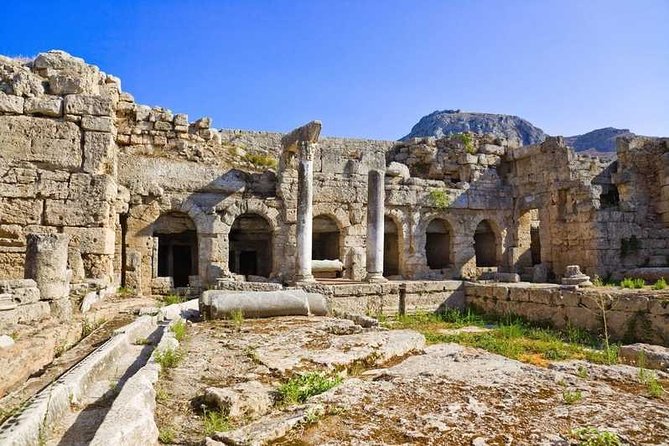
Ancient Corinth is the heart of the excursion. You have about an hour to explore the archaeological site, with admission listed at €15 per person. The city was one of Greece’s major city-states, helped by its position on the isthmus between central Greece and the Peloponnese.
Corinth was destroyed by the Romans in 146 BC and rebuilt in 44 BC. The Roman city later became the provincial capital of Greece. That mixture of Greek foundations and Roman rebuilding helps explain the setting Paul encountered in the first century AD.
For anyone reading First and Second Corinthians, this is the place where the letters gain physical weight. Paul’s work in Corinth is also recorded in Acts, and the city’s commercial and social life helps explain why it became a significant early Christian center.
The Agora was a large public space, about 160 meters long and 70 meters wide, lined with shops, temples, altars, and public buildings. The Bema, a raised platform in the forum, is traditionally identified as the place where Paul faced judgment before the Roman proconsul Gallio.
The account is striking because Gallio treated the matter as an internal religious dispute rather than a case for Roman punishment. The Bema’s later connection with Paul helped give the monument a special Christian meaning, and it was eventually transformed into a church during the Byzantine period.
Here, a licensed guide can make a major difference. Your driver can explain the site from outside and provide commentary during the drive, but Greek law reserves inside-site guiding to officially licensed guides. If you want close explanations of the forum, temples, and inscriptions, the optional €160 guide may be worth splitting among several people.
The site is uneven and exposed, so sensible shoes, water, and sun protection are useful. The route is not a passive drive-by. You will get out and walk among ruins, though the exact pace depends on your group and the driver’s schedule.
Kenchreai and Paul’s voyage east
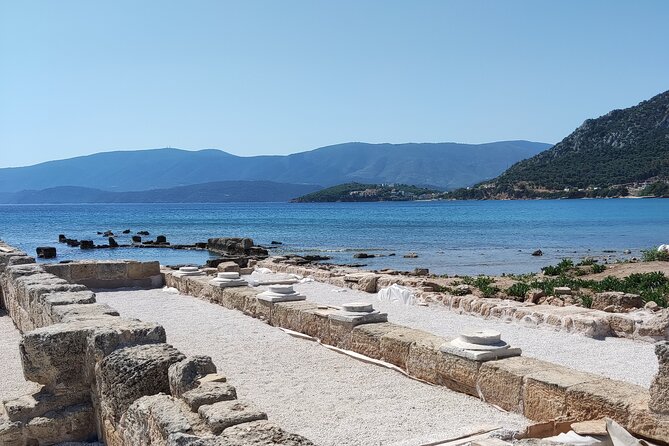
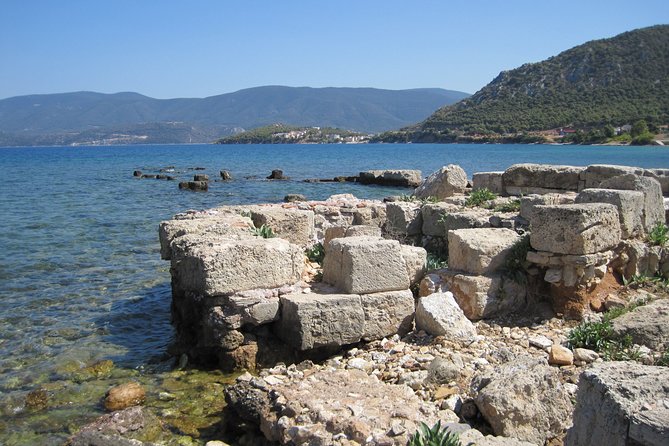
Kenchreai, now called Kechries, was Corinth’s eastern harbor on the Saronic Gulf. The stop lasts about 30 minutes and is free.
Acts 18 places Paul here during his second missionary journey. He stopped at Kenchreai and cut his hair after making a vow. The letter to the Romans also refers to Phoebe, associated with the local Christian assembly. That makes Kenchreai valuable for both its harbor history and its connection with early Christian communities.
The site is less imposing than Ancient Corinth, but that is part of its appeal. You are looking at a working port settlement tied to travel by sea. Paul’s movements were not abstract lines on a map. They depended on harbors, ships, roads, trade, and the people who lived along those routes.
The visit is short, so you should not expect a long archaeological walk. It works best as a pause that connects the larger Corinthian city to Paul’s wider missionary movement.
Apollo’s columns and the Corinthian church
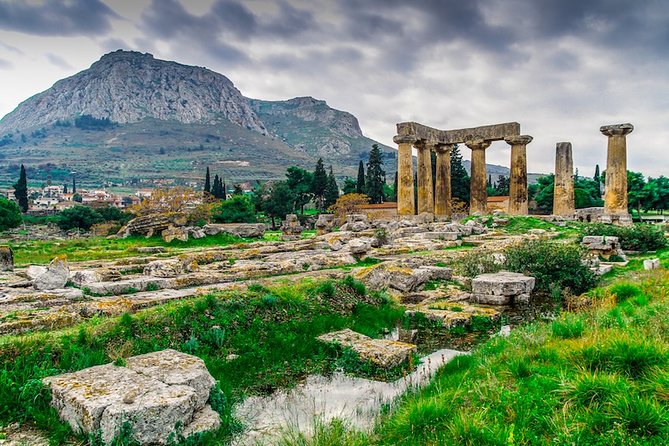
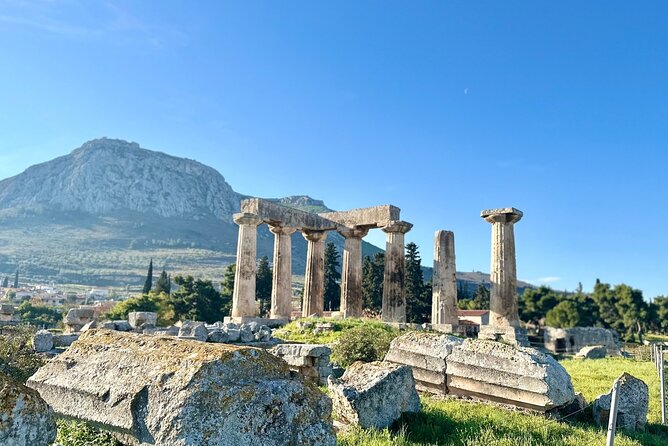
The Temple of Apollo in Ancient Corinth dates to about 550 BC and is one of the earliest Doric temples in the Peloponnese and mainland Greece. Its monolithic columns are especially notable because each column was carved from a single piece of stone.
The scheduled visit is only about 10 minutes, and the archaeological admission is not included in the stated price. The temple is close to the main Ancient Corinth site, so the stop adds context without requiring a major detour.
The final religious stop is the Church of St. Paul on Apostolou Pavlou Street in Corinth. Paul is associated with an 18-month stay in Corinth around AD 51 to 52, and the church honors his role in forming the early Christian community there.
This modern church helps bring the day back to the present. After temples, forums, stadiums, and harbor ruins, you end with a living place of worship connected to the same apostolic story.
Timing, meals, and what the price really covers
At $170.50 per person, this tour is not the cheapest way to see Corinth. It becomes better value when two to six people share the private vehicle, especially if you are arriving from a cruise ship or want pickup at an Athens apartment.
You are paying for transport, planning, hotel or port pickup, Wi-Fi, bottled water, and a private or semi-private arrangement. You are also buying time. A driver who knows the route can connect several sites in one day without making you work out every transfer yourself.
The extra costs are clear:
- Ancient Corinth admission: €15 per person
- Archaeological Site of Isthmia: €5 per person
- Licensed guide, if requested: €160 per booking
- Airport pickup: an additional €60 per booking
- Lunch: not included
- Tips: optional and not included
Lunch stops are scheduled, but the food bill is yours. Ask the driver about timing if you have dietary needs or a strict return deadline.
Cruise passengers should pay special attention to the return plan. The tour is designed to bring you back to the port on time, and drivers have accommodated port returns for evening departures. Still, no excursion can remove every traffic risk. Give the operator your ship schedule and agree clearly on pickup and return details.
Who will enjoy this tour most
I would choose this for readers who want biblical context but also care about Greek archaeology. It suits first-time visitors, Christian pilgrims, history fans, cruise passengers, and small groups that prefer a private vehicle over a large coach.
It is especially useful if you want a relaxed ride from Athens and do not want to rent a car. The drivers are repeatedly praised for patience, humor, clear communication, and personal attention. Chris, in particular, has been praised for explaining the full hour-long drive to Corinth, answering questions, waiting patiently at stops, and adding small comforts such as water, chocolates, and umbrellas. Yiannis, Panos, Alex, Christos, and Yannis have also received warm praise for their friendliness and strong command of the subject.
I would hesitate if you want long, scholarly visits inside every site. The schedule is ambitious, and several stops last only 10 to 30 minutes. I would also reconsider if you dislike paying entrance fees separately or if your main goal is the Acropolis, since Areopagus Hill is only one short part of the day.
The tour has a 4.9 rating from 1,065 reviews, with 98 percent recommending it. That matches the consistent strengths: punctual pickup, clean vehicles, kind drivers, strong biblical storytelling, and a day that feels personal rather than hurried from inside a large bus.
Free cancellation is available until 24 hours before the start time. Changes made inside that window are not accepted, and poor weather may lead to a new date or a full refund.
Should you book the Footsteps of Paul tour?
Book it if you want to connect Acts and the Corinthian letters with real places, and if private transport will make your Athens schedule easier. The best value comes with a small group, especially when you divide the vehicle cost and optional licensed guide fee.
Before confirming, ask three things: the final group size, which site admissions are included, and whether a licensed guide is available for the archaeological areas. If your priority is Paul, Ancient Corinth, the Bema, Kenchreai, and Areopagus Hill deserve your attention. If your priority is archaeology, plan for the €20 combined admission to Corinth and Isthmia, plus the museum fee.
For a full day of temples, ports, ruins, Christian history, and practical door-to-door service, this is a strong choice from Athens. It gives you far more than a quick look at Corinth, while keeping the day manageable for a cruise departure or a short stay in Greece.
FAQ
How long does the tour last?
The tour lasts approximately 6 hours and 15 minutes.
Where can pickup and drop-off take place?
Pickup and return are offered from an Athens hotel, Airbnb apartment, or cruise port. Airport pickup is available for an additional €60 per booking.
Is this a private tour?
Yes. Only your group participates. The tour information describes an intimate group of two to four people in one section and up to six in another, so confirm the final group size when booking.
Is transportation included?
Yes. Transportation is provided in a modern, air-conditioned private vehicle or luxury minivan. Wi-Fi and bottled water are included.
Are entrance fees included?
Some stops are free or include admission, but Ancient Corinth costs €15 per person and the Archaeological Site of Isthmia costs €5 per person. The Archaeological Museum of Isthmia also requires a separate admission fee.
Can the driver guide inside archaeological sites?
No. Greek law allows only officially licensed guides to accompany visitors inside archaeological sites. A licensed guide can be arranged upon request for €160 per booking, subject to availability.
Is lunch included?
No. Lunch stops are scheduled, but meals are not included in the tour price.
What is the cancellation policy?
You can cancel at least 24 hours before the start time for a full refund. Cancellations or changes made less than 24 hours before the tour are not accepted, and poor weather may result in a new date or full refund.
Just added around Athens
- Delphi One Day Trip from Athens★ 4.0 · 98 reviews
- Private Delphi and Hosios Loukas Monastery – Great Lunch and Drinks Included★ 5.0 · 36 reviews
- Mercedes Private Tour to Delphi and Arachova★ 5.0 · 30 reviews
- Day tour to Ancient Olympia,Ancient Sparta Mycenae Including Meal★ 5.0 · 54 reviews
- Athens: Half Day Trip To Cape Sounio/Poseidon Temple Semi Private★ 5.0 · 131 reviews
- Athens Half-Day Private Tour Acropolis, Parthenon City Highlights★ 5.0 · 35 reviews
- From Athens: Day Tour to Mykonos★ 5.0 · 64 reviews
- Culinary Secrets of Downtown Athens★ 5.0 · 103 reviews
Athens Tours, compared.
Acropolis & up to 5 Archaeological Sites Combo Pass
Read our review →
Acropolis, Parthenon & Acropolis Museum Guided Tour
Read our review →
Cape Sounion & Poseidon Temple Sunset Half-Day Trip
Read our review →
All Day Cruise -3 Islands to Agistri,Moni, Aegina with lunch and drinks included
Read our review →
Athens, Piraeus, and Coastline: Blue Hop-On Hop-Off Bus
Read our review →