
Reviewed · COOKING CLASSES
Cretan Cooking Class and Dinner: Evening in a Rethymno Home
Come hungry, leave with recipes. This four-hour evening in Androniki’s hilltop home near Rethymno gives you a hands-on introduction to Cretan cooking, from wild-green pies to wood-oven dishes. I especially like the small group of 10 or fewer and the chance to work with produce, herbs, olive oil, and cheese connected to the household itself.
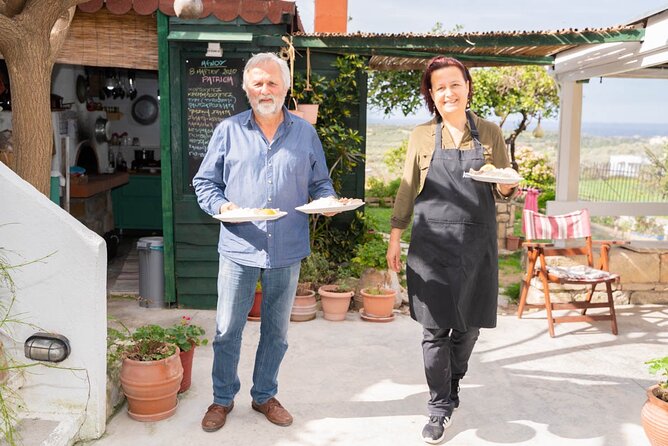
I also like the warmth of the setting. You are not simply watching a chef perform in a studio. You may pick herbs, help prepare several dishes, and sit down with Androniki and her husband, Pantelis, for a long Greek meal. The main drawback is the location information: the experience is described as being near Rethymno in Crete, but the listing also labels the location as the Cyclades Islands, so check your voucher carefully before setting out.
In This Review
- Key points to know before booking
- Why this Cretan evening feels different
- Arriving at Loutra for a 6 p.m. start
- Picking herbs and preparing the first pies
- Making cheese at home
- Greek salad, dolmadakia, and a table of starters
- Moussaka and giouvetsi from the wood oven
- Raki, wine, and the dessert course
- Is $126.50 a fair price?
- Who will enjoy this evening most?
- Practical details that matter
- Should you book this Cretan cooking class?
- FAQ
- Where does the cooking class begin?
- What time does the experience start?
- Where does the activity end?
- How many people can join the class?
- Is the class offered in English?
- Can I cancel for a full refund?
Key points to know before booking
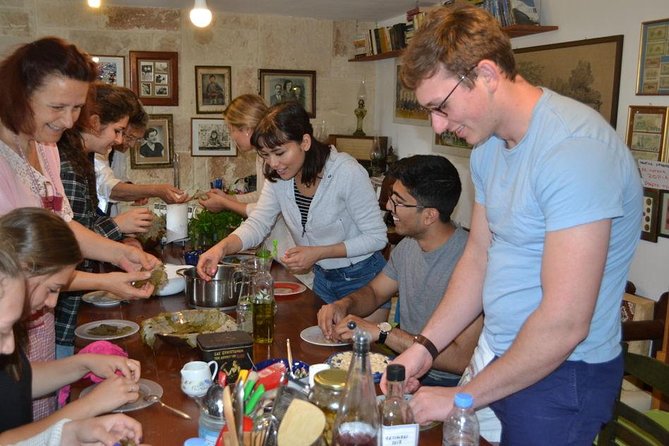
- A home kitchen in the hills near Rethymno: You cook in Androniki and Pantelis’s home and garden rather than in a formal cooking school.
- Cretan pies are the star: You may prepare kremidokalitsouna with onions, chortopites with many wild greens, and Sfakianes pites with homemade cheese.
- A wood oven shapes the dinner: Moussaka and rooster with orzo, known as giouvetsi, are part of the generous evening meal.
- Hands-on work, not just a demonstration: The class can include picking herbs and vegetables, making cheese, and helping with the preparation.
- Dinner comes with local drinks: Greek wine, raki, Greek coffee, yogurt, and a local sweet are included in the food experience.
- Small numbers make a difference: With a maximum of 10 people, you have a better chance to ask questions and get useful help at the worktable.
Why this Cretan evening feels different
A standard cooking class often gives you a recipe, a cutting board, and a seat at a long counter. This experience offers something more personal: an evening in a working home, with food tied to the garden, the oven, and the habits of one Cretan family.
Androniki is the host and cooking teacher. Pantelis helps create the welcoming dinner atmosphere. The tone is informal and social, with time for conversation as well as cooking. That matters in Crete, where a meal is rarely treated as a quick task between sightseeing stops.
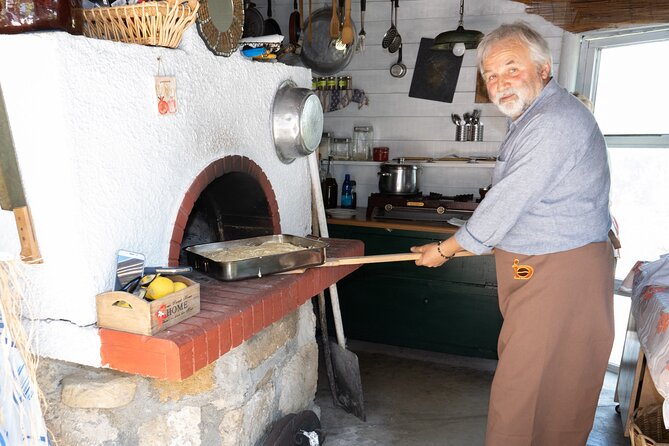
You should expect to spend much of the evening outdoors, using the home’s wood oven and working with homegrown produce. The setting is part of the lesson. You can see how vegetables, herbs, olive oil, pastry, and slow cooking fit together instead of learning each dish as an isolated recipe.
The class is offered in English, and the small group size keeps it from feeling like a cooking show. Ten people is still enough for a sociable table, but it is small enough for direct help. If you want a quiet, private lesson, this may feel busy. If you like meeting people over food, the group format is a strength.
More cooking classes in Greece:
- Athens: Classic Cooking Class with Market Visit and Wine
★ 5.0 · 1,101 reviews - Athens: Food Market Visit and Cooking Class with Wine
★ 4.9 · 1,087 reviews - Greek Cuisine Cooking Class in Santorini with Recipes and Wine
★ 5.0 · 969 reviews
Arriving at Loutra for a 6 p.m. start
The meeting point is listed as Loutra 741 50, Greece, with a 6 p.m. start. The activity ends back at the same meeting point after roughly four hours.
Pay close attention to the full address on your confirmation voucher. It appears under the Before You Go section, and the general meeting-point information is not a substitute for the exact home address. The location description also contains a geographical mismatch, naming the Cyclades Islands while describing a home in the hills near Rethymno, Crete. I would confirm the island and address before booking transport.
An early evening start works well for this type of meal. You can arrive while there is still time for garden work and preparation, then move toward dinner as the light fades. Since the experience takes place in a home, allow yourself enough time to find the address rather than planning a rushed arrival.
The area is near public transportation, though specific pickup or transfer arrangements are not provided. The safest plan is to check the voucher and ask the provider for clarification if you need help reaching Loutra.
Picking herbs and preparing the first pies
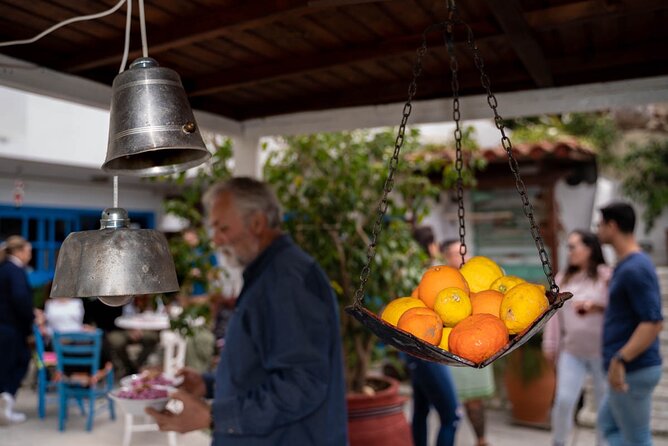
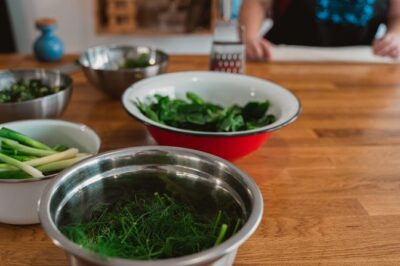
The evening begins with the raw materials of Cretan cooking. You may walk through the herb garden and help gather fresh vegetables and herbs before returning to the work area.
This is one of the most useful parts of the class because it shows you how much flavor can come from simple ingredients. Cretan cooking does not need a long list of complicated sauces. Fresh greens, good olive oil, homemade cheese, onions, herbs, and careful pastry work do much of the heavy lifting.
The first dishes are small pies, but they teach several important techniques. Kremidokalitsouna are onion pies. Chortopites use a mixture of wild greens, with as many as 10 to 12 kinds named for the recipe. Sfakianes pites are filled with homemade cheese.
You will likely find the pastry work more practical than glamorous. Folding and sealing small pies takes patience, and the shape may not look perfect on your first attempt. That is fine. The value is in learning the texture of the dough, the amount of filling, and how the pies are cooked.
The garden also gives the evening a strong sense of place. You are not just being told that herbs matter in Cretan food. You are smelling them, handling them, and seeing how they are used. One especially appealing part of the experience is learning what different plants can do in the kitchen and noticing their fragrance as you move through the garden.
Making cheese at home
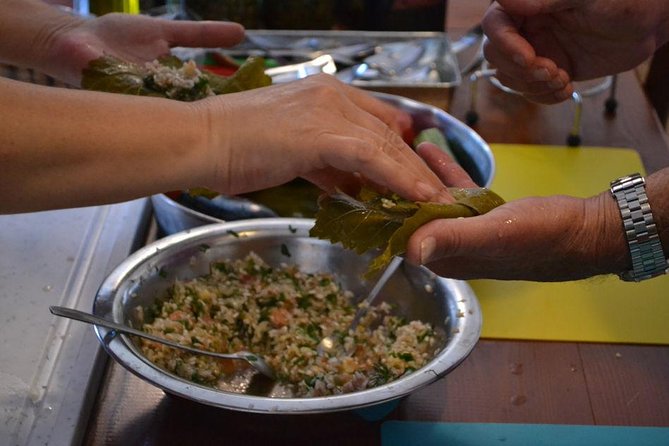
The homemade cheese is a memorable feature of the class. You may help make fresh cheese, and the process is presented as much simpler than many people expect.
That lesson is worth more than a novelty. Cheese is central to many Greek dishes, and making it yourself helps explain the soft filling used in pies such as Sfakianes pites. It also gives you a practical recipe idea to take home, even if your own kitchen lacks a Cretan garden or wood oven.
The cheese-making portion can be especially appealing if you enjoy food traditions that rely on basic ingredients and household skill. It is also a good reminder that the evening is not limited to assembling a meal. You are learning small building blocks that can be used in other dishes.
You should keep your expectations sensible. The supplied details do not promise that every part of the menu will be prepared entirely by each person. Androniki demonstrates techniques and guides the work, while the group helps with the cooking. That shared approach lets you learn without turning four hours into a stressful kitchen exam.
A few more Greece half-days to weigh up
- Santorini Wine Stories: Sunset Tour with Tasting & Dinner
★ 5.0 · 1,285 reviews - Heraklion: Finikia Horse Riding Tour with Lunch or Dinner
★ 4.9 · 1,231 reviews - Greek Cooking Class in Athens Including Rooftop Dinner with Acropolis View
★ 5.0 · 826 reviews - Crete: Off-Road Quad Safari with Lunch/Dinner
★ 4.9 · 664 reviews
Greek salad, dolmadakia, and a table of starters
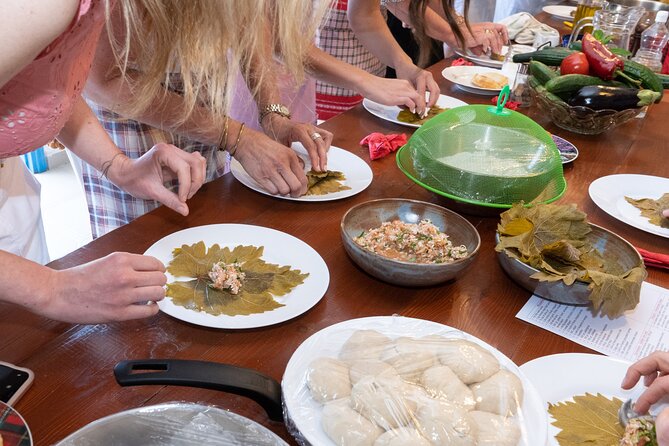
The starter spread is generous and varied. Greek salad comes with tomatoes, cucumber, green pepper, onion, capers, kritamo, olives, homemade barley rusk, and plenty of olive oil.
The barley rusk is a particularly Cretan touch. It adds crunch and turns a simple salad into something more filling. Kritamo, a coastal plant often used in Greek cooking, gives the plate a local accent, though the exact ingredients can vary with availability.
You may also prepare dolmadakia, stuffed vine leaves, and zucchini flowers filled with rice, vegetables, herbs, and olive oil. These dishes require more assembly than the pies, but they reward a careful hand. The filling must be balanced, and the leaves or flowers need to hold together during cooking.
Do not expect a small tasting menu. The format is closer to a family feast, with plates arriving while you are still preparing the next dish. A wood-fired oven may continue sending out samples during the class, so pace yourself. It is easy to fill up before the main courses appear.
This is where the experience works best for people who enjoy a long, social meal. If you prefer a tightly timed class with one dish and a quick tasting, the steady parade of food may feel excessive. If you want to understand Greek hospitality, the abundance is part of the lesson.
Moussaka and giouvetsi from the wood oven
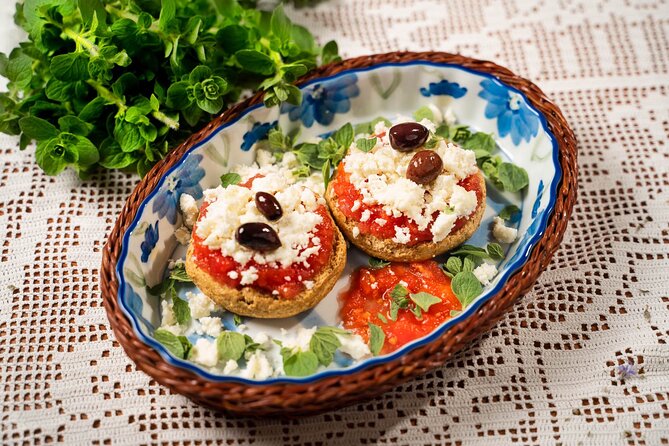
The main courses bring familiar Greek dishes to the table. Moussaka includes potatoes, zucchini, aubergines, minced meat in tomato sauce, and béchamel. It is a layered dish, and the home setting gives you a chance to see how the separate parts come together.
Moussaka can be labor-intensive, so it is useful to watch the preparation rather than simply receive a finished square on a plate. The class shows why the dish takes time and why the creamy top matters. You should not expect a restaurant-style individual portion. This is home cooking, prepared for a shared table.
The second main course is giouvetsi, made with rooster and orzo in the wood oven. It is described as a traditional Sunday dish, which tells you something about its role. This is not a quick weekday plate. It is the kind of food made for a household meal, with time built into the cooking.
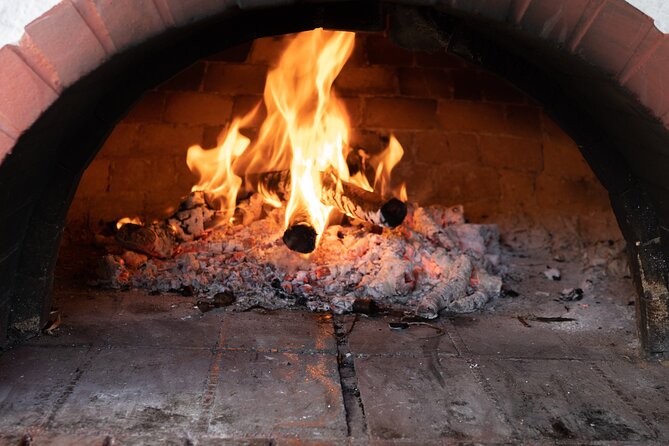
The wood oven is a major benefit here. It provides more than atmosphere. It connects the meal to an older home-cooking method and gives the evening a clear center. Still, not every visitor will be actively involved in every oven step. Some cooking must be handled by the hosts for timing and safety, so think of the oven as both a teaching tool and part of the hosts’ kitchen.
Raki, wine, and the dessert course
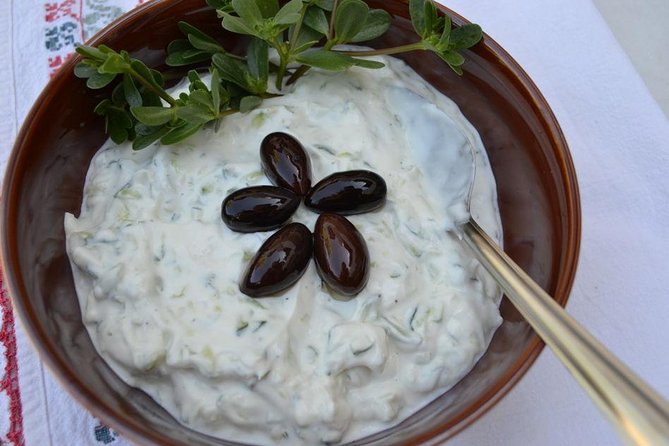
The evening may begin with raki or Greek coffee. Raki is a strong local spirit made by Androniki and Pantelis at home, and it packs a punch. If you are not used to fiery spirits, take a small sip and do not treat it like a casual welcome drink.
Greek wine accompanies the meal, adding to the relaxed dinner-party feel. Alcohol is part of the experience, so you should take that into account when planning your return from Loutra. The supplied details do not specify nonalcoholic alternatives, so ask in advance if that matters to you.
Dessert may be Greek yogurt or homemade ice cream with a spoon sweet or another local sweet. Spoon sweets are served in small portions and are designed to add concentrated sweetness rather than finish the meal with a large pastry.
By dessert, you will have tasted a broad range of Greek and Cretan food: pastry, greens, cheese, vegetables, stuffed leaves, layered casserole, roasted meat, and orzo. That makes the price easier to assess than it would be for a short class with one final dish.
Is $126.50 a fair price?
At $126.50 per person, this is not a budget dinner. You are paying for about four hours, instruction, a full meal, wine, after-dinner drinks, the home setting, and a small group capped at 10 people.
The value depends on what you want from a night in Crete. If you only want dinner, you can spend less elsewhere. If you want a class, a cultural exchange, several courses, and recipes you can use at home, the price is more reasonable.
I especially like that the experience includes more than the headline dishes. You may pick ingredients, make cheese, prepare several types of pies, and learn how a traditional Sunday dish fits into local food culture. The homemade produce and wood oven also add something you cannot easily reproduce in a commercial cooking school.
The class is booked, on average, 49 days ahead, so you should not treat it as a last-minute option during a busy holiday. Its five-star rating from 24 reviews and a 100 percent recommendation record suggest very strong satisfaction, though the sample is small. I would still book it for the setting and personal contact, not simply for a rating.
Who will enjoy this evening most?
I would recommend it to you if you:
- Enjoy eating slowly and talking with hosts and other people.
- Want practical recipes rather than a polished restaurant demonstration.
- Like trying unfamiliar greens, homemade cheese, raki, and local sweets.
- Are curious about the connection between a garden, a home oven, and a family meal.
- Want to bring Cretan cooking ideas back to your own kitchen.
Families and mixed-age groups may also enjoy the shared preparation, though the supplied information does not give a minimum age. Ask the provider if you are booking with children.
This is less suitable if you have a very restricted diet and do not contact the host first. The menu includes dairy, meat, wheat-based pies, and alcohol, so state allergies or special dietary needs when you book. The hosts can then tell you what adjustments are possible.
The experience is also not ideal if you need a highly structured lesson with exact individual portions. Home cooking is more fluid. You may help with some dishes while others are being prepared in the background, and plates can appear before you are ready for them.
Practical details that matter
The tour is offered in English and uses a mobile ticket. Confirmation is provided at booking. Service animals are allowed, and the meeting area is near public transportation.
The maximum group size is 10 people, which is small enough for a personal feel but not necessarily private. The activity lasts approximately four hours and begins at 6 p.m., ending back at the meeting point.
Free cancellation is available if you cancel at least 24 hours before the local start time. Cancellations or changes made inside that window are not accepted for a refund. Food restrictions should be communicated before arrival, not once the table is set.
I would save the confirmation on your phone, read the Before You Go section, and verify the full address. The mismatch between the Cyclades label and the Rethymno, Crete description makes this the one detail you should clarify early.
Should you book this Cretan cooking class?
Book it if you want an evening built around people, food, and household traditions rather than a quick cooking lesson. The strongest parts are the garden, the handmade cheese, the range of pies, the wood oven, and the generous meal shared with Androniki and Pantelis.
I would be comfortable paying the $126.50 when you value the whole evening, not just the food on the plate. You will get the most from it if you arrive hungry, enjoy a relaxed pace, and are willing to try dishes that may be new to you.
Before paying, confirm that the address is in the part of Crete you plan to visit and tell the hosts about any dietary needs. With those points settled, this is a warm, food-focused choice for an evening near Rethymno, and the recipes may keep the memory going after you return home.
FAQ
Where does the cooking class begin?
It begins at Loutra 741 50, Greece. The full address appears on the confirmation voucher under the Before You Go section.
What time does the experience start?
The class begins at 6 p.m. and lasts approximately four hours.
Where does the activity end?
The experience ends back at the meeting point.
How many people can join the class?
The maximum group size is 10 people.
Is the class offered in English?
Yes. The experience is offered in English.
Can I cancel for a full refund?
Yes, if you cancel at least 24 hours before the local start time. Cancellations or changes made less than 24 hours before the start are not refunded or accepted.
More Workshops in Greece
- Naxos: Half-Day Cooking Class at Basiliko Family Tavern
★ 5.0 · 887 reviews - Chania: Authentic Cooking Class in the White Mountains
★ 4.9 · 529 reviews - Naxos:Half-day cooking class at Basiliko
★ 5.0 · 457 reviews - Athens: Greek Cooking Class & Dinner on a Rooftop
★ 5.0 · 383 reviews
More Dining Experiences in Greece
- Rhodes: Sunset Catamaran Cruise with Dinner Buffet & Drinks
★ 4.8 · 644 reviews - Enjoy Cape Sounio Private Majestic Sunset With Seaside Dinner
★ 5.0 · 613 reviews - Greek Small-Group Athens Cooking Class & Dinner
★ 5.0 · 574 reviews - Kamari: Greek Show, Buffet Dinner, and Drinks at Dimitris
★ 4.6 · 474 reviews
Just added around Greece
- Zante Private Cruise Turtle Island, Keri Caves & Mizithres★ 4.8 · 30 reviews
- Zakynthos: Vineyard & Winery Tour with Local Winemaker★ 4.5 · 53 reviews
- Zakynthos: Xigia, Navagio Shipwreck and Blue Caves Boat Tour★ 4.5 · 197 reviews
- Zakynthos: West Coast & Navagio Bay Cruise with 2 Swim Stops★ 4.3 · 79 reviews
- Zakynthos: Sunset Cruise to Myzithres with Wine★ 4.3 · 52 reviews
- Zakynthos Water Park Entrance Ticket★ 4.5 · 145 reviews
- Zakynthos: Shipwreck Beach by Land & Sea Blue Caves Day Tour★ 4.5 · 35 reviews
- Zakynthos: Scuba Diving Experience with Underwater Photos★ 4.5 · 31 reviews
Cooking Classes, compared.
Classic Cooking Class with Market Visit and Wine
Read our review →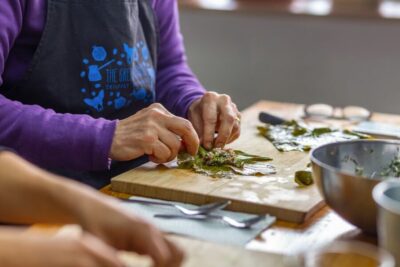
Food Market Visit and Cooking Class with Wine
Read our review →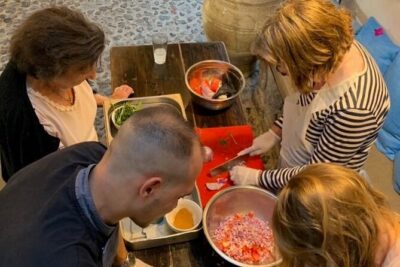
Greek Cuisine Cooking Class in Santorini with Recipes and Wine
Read our review →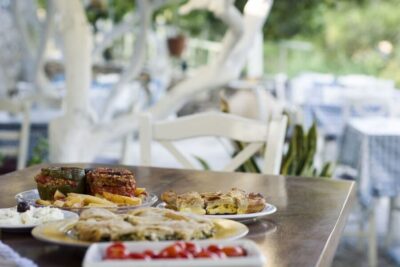
Half-Day Cooking Class at Basiliko Family Tavern
Read our review →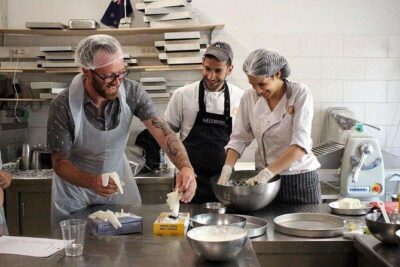
Greek Cooking Class in Athens Including Rooftop Dinner with Acropolis View
Read our review →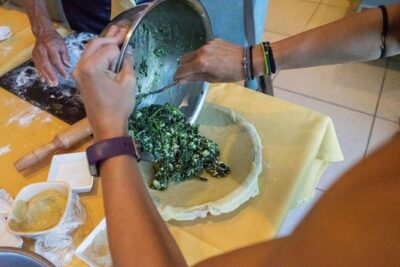
Greek Small-Group Athens Cooking Class & Dinner
Read our review →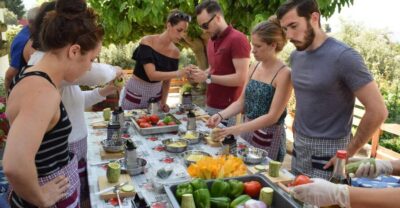
Authentic Cooking Class in the White Mountains
Read our review →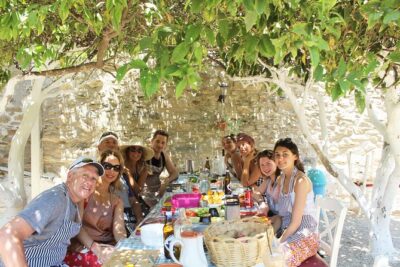
Browse the lists this tour appears in