
Reviewed · SELF-GUIDED TOURS
Delphi: Audiovisual self-guided tour with 3D models
The oracle still has a story to tell. This self-guided Delphi tour brings the ancient sanctuary to life with 3D models, 360-degree views, videos, and audio narration, letting you explore at your own pace instead of following a guide with a flag. I especially like the detailed coverage of major monuments and the freedom to use the content before, during, or after your visit. The low $7.89 price also makes it a useful add-on to your admission ticket.
The main catch is simple: this is digital content, not a guided visit. You must buy your archaeological-site entrance separately, bring your own smartphone and headphones, and download the material with a reliable internet connection. If you want lively conversation or personal answers on the spot, you may find a human guide more satisfying.
In This Review
- Key points to know before visiting Delphi
- What this Delphi tour actually provides
- Beginning with Delphi, the navel of the ancient world
- Meeting Apollo and the priestess Pythia
- Seeing the Charioteer and the Sphinx of Naxos
- Understanding the Pythian Games at Delphi
- How the 3D and 360-degree features help
- Planning your visit around five days of access
- What you need on the day
- Is $7.89 good value?
- Who should choose this self-guided format?
- Should you book the Delphi audiovisual tour?
- FAQ
- Is the archaeological entrance ticket included?
- How long can I use the self-guided tour?
- Which languages are available?
- Do I need internet access?
- What phone requirements apply?
- Can I cancel the booking?
Key points to know before visiting Delphi
- The oracle comes alive through Pythia’s story: Learn how the priestess served Apollo and delivered predictions from the sanctuary.
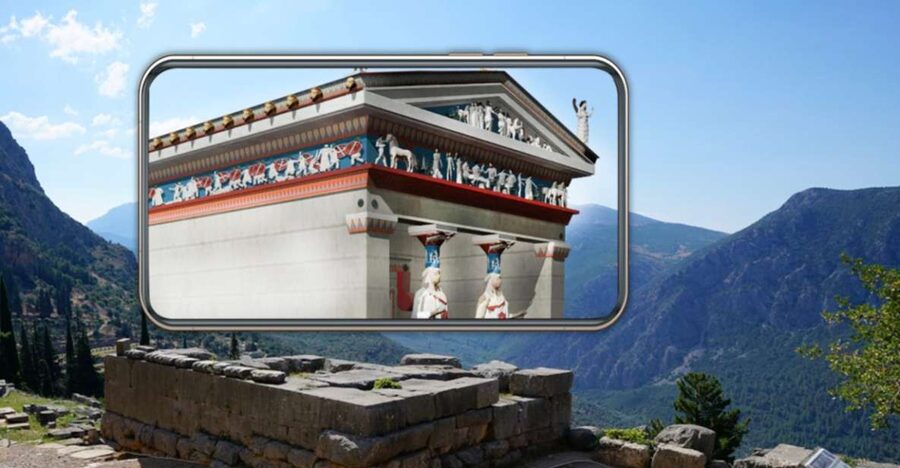
- Ancient monuments receive visual help: Fourteen monuments include 3D models, 360-degree views, videos, and audio information.
- The Charioteer and Sphinx get proper context: The app helps connect famous works of art with the religious center around them.
- You get five days of access: This is not a five-day walking tour. It is digital access that gives you flexibility around your visit.
- The Pythian Games add a sporting side: Delphi was more than a place for prophecy. It also hosted one of antiquity’s major panhellenic festivals.
- The price is modest, but preparation matters: Download the content on Wi-Fi, charge your phone, and remember that site admission is extra.
What this Delphi tour actually provides
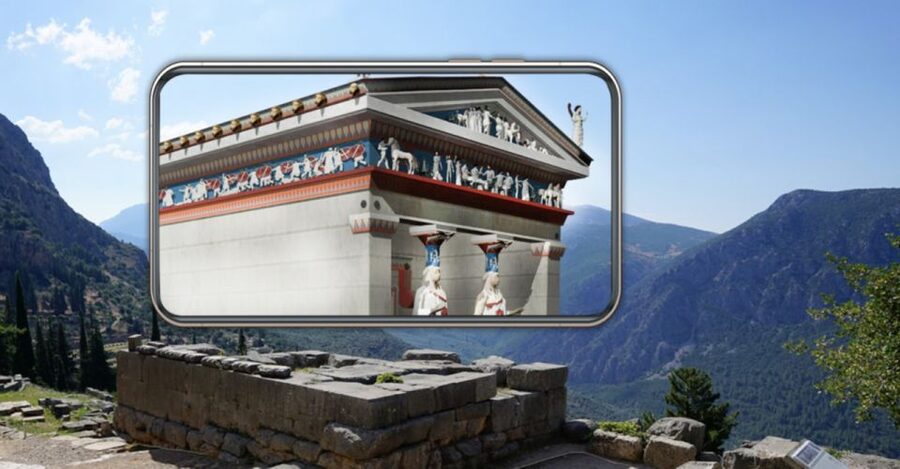
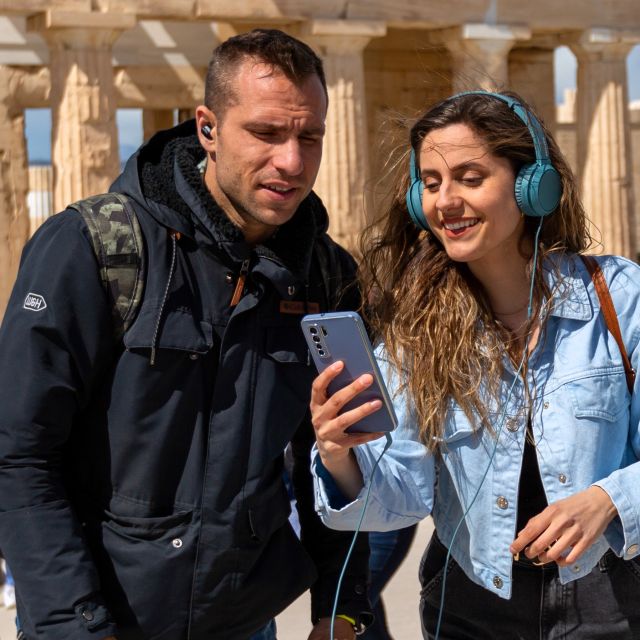
This experience is best understood as a digital companion for the archaeological site. You walk through Delphi independently while using the Culture App to identify monuments, hear explanations, view reconstructions, and follow related stories.
The content covers 16 monuments in written form. Fourteen of those also include audio narration, 3D models, 360-degree panoramic views, and videos. Twelve monuments have extra related stories, which can help connect individual ruins to wider Greek customs, myths, and events.
That distinction matters. You are not signing up for a fixed walking route with a guide waiting at each stop. You receive a set of tools and decide how to use them. You can study the material before arriving, listen beside the monuments, or review it afterward when your legs are tired and your attention is no longer competing with the Greek sun.
The tour works in English, Spanish, Greek, German, Italian, Dutch, French, and Chinese. That language range is one of its practical strengths, especially at a site where the meaning of the ruins is not always clear from what remains on the ground.
A few more Greece half-days to weigh up
- Athens: Acropolis Ticket with Optional Audio or Live Guide
★ 4.2 · 11,055 reviews - Athens: Cape Sounio & Poseidon Temple Trip with Audio Guide
★ 4.4 · 4,521 reviews - Athens: Acropolis Ticket with Audio Guide
★ 4.0 · 3,575 reviews
Beginning with Delphi, the navel of the ancient world
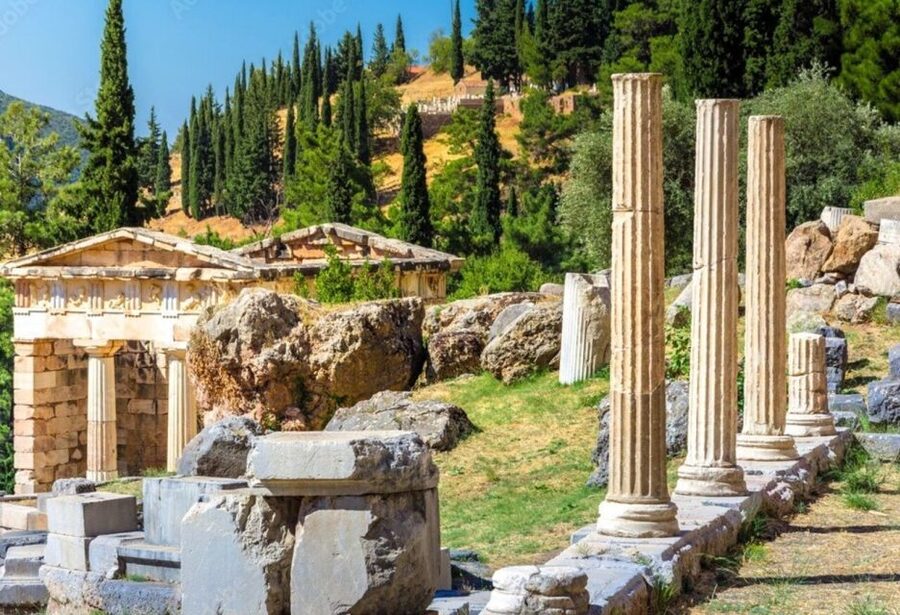
The story of Delphi begins with Zeus and two eagles. According to legend, the birds flew from opposite ends of the universe and met at the foot of Mount Parnassos. The Greeks then viewed Delphi as the navel of the world, a symbolic center where divine knowledge and human questions met.
The app uses this kind of story to give the site a clear starting point. Without context, Delphi can look like a steep collection of stones, columns, terraces, and broken walls. With the larger idea in place, you begin to see why people crossed long distances to reach this mountain sanctuary.
The site was dedicated to Apollo, god of the sun and music, and served as one of the ancient Greek world’s most important religious centers. The oracle continued for more than 1,000 years, drawing people who wanted guidance on private matters, politics, war, and major decisions.
I like that the tour does not limit Delphi to architecture. The religious purpose is central. You are encouraged to think about what it meant to approach a sanctuary believed to speak for the gods, rather than simply checking off a temple from a sightseeing list.
Meeting Apollo and the priestess Pythia
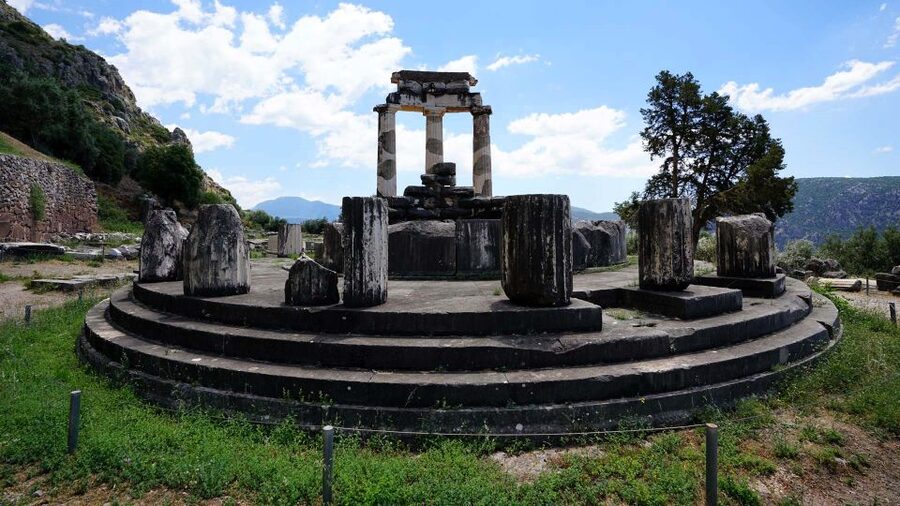
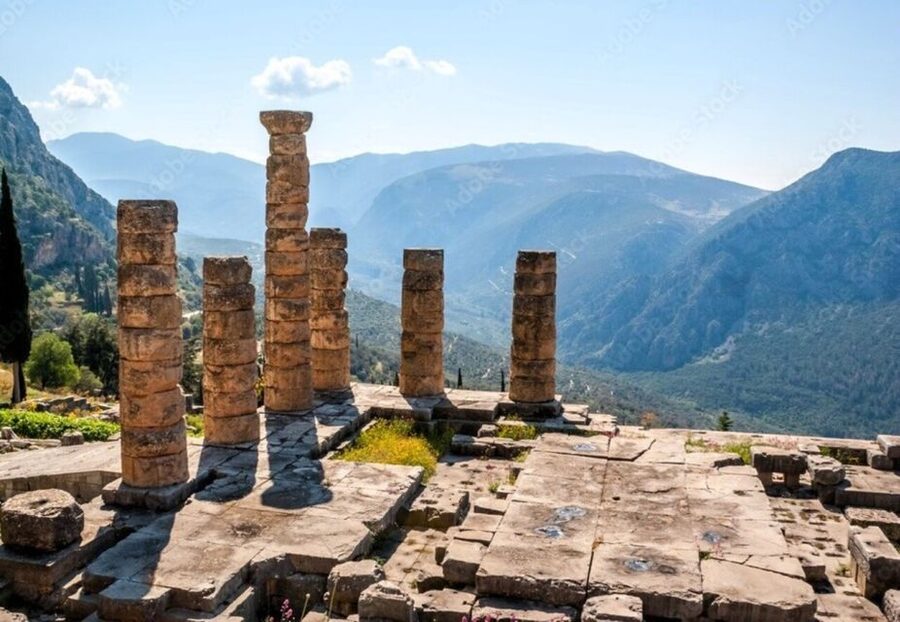
Apollo’s temple is the emotional center of the visit. Much of the building is now ruined, but its importance is easier to grasp when the visual material shows how the sanctuary once functioned and why worshippers came here.
The tour also introduces Pythia, the priestess who delivered Apollo’s prophecies. Her role gives Delphi a human face. She was not simply a name attached to a myth. She was the seeress consulted by people who believed that her words could shape the future.
The material explains the tradition of Pythia foretelling through bay leaves, adding an unusual detail to the story. It helps you picture the ritual side of the sanctuary, where ceremony, belief, and political power were closely linked.
This is one of the places where audio is especially useful. You can look at the temple remains while listening to the explanation, then pause and inspect the site without being hurried along. You control the pace, which is helpful if you want a quiet moment at an important ruin or need time to take photographs.
The limitation is that an app cannot react to your questions. If you want to ask why a particular stone is placed where it is, or how scholars interpret a disputed feature, you will need to do that research separately.
Seeing the Charioteer and the Sphinx of Naxos
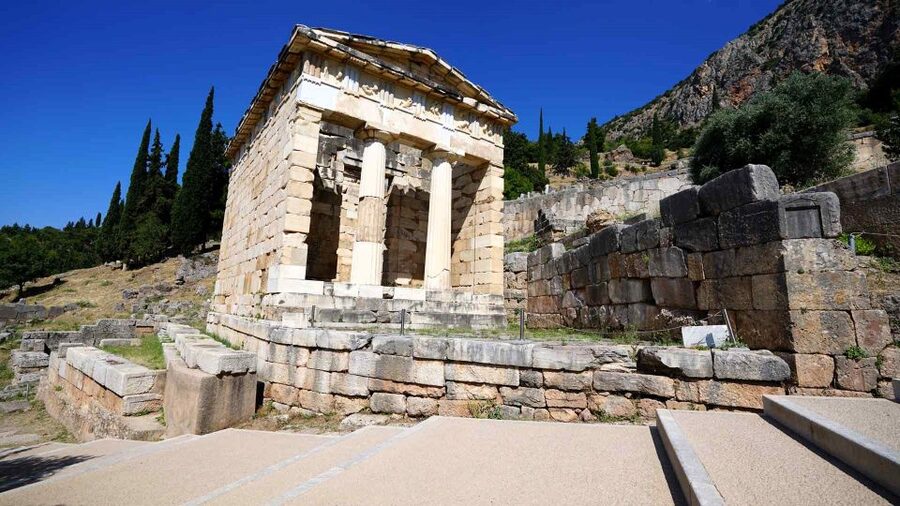
Delphi is not only about ruins. Its art collection includes famous works such as the Charioteer of Delphi and the Sphinx of Naxos. These pieces give the sanctuary a more personal and artistic dimension.
The Charioteer is especially important because it is easy to rush through a museum and remember only that it is famous. The audiovisual material helps place the sculpture in the setting of ancient Delphi, where offerings, monuments, and displays of wealth expressed devotion and civic pride.
The Sphinx of Naxos points to another part of the sanctuary’s identity. Greek city-states and islands placed monuments at Delphi, creating a public display of religious loyalty and political presence. Seeing the works in that context makes them more than isolated museum objects.
The 3D models are useful here because they help you understand form and proportion. A model can show how an object or monument was viewed from different angles, while a 360-degree view gives you a better sense of how the sanctuary’s structures related to one another.
The app does not replace seeing the original works in person. It does, however, give you more to look for. You can notice posture, scale, placement, and visual details instead of moving through the museum with only a name and date in mind.
Same stretch of coastline, a completely different day out:
- Athens: Acropolis & up to 5 Archaeological Sites Combo Pass
★ 4.4 · 12,619 reviews - Athens: Acropolis, Parthenon & Acropolis Museum Guided Tour
★ 4.8 · 9,316 reviews - Athens: Cape Sounion & Poseidon Temple Sunset Half-Day Trip
★ 4.8 · 8,241 reviews - From Kissamos Port: Boat Cruise to Balos Lagoon & Gramvousa
★ 4.2 · 6,755 reviews
Understanding the Pythian Games at Delphi
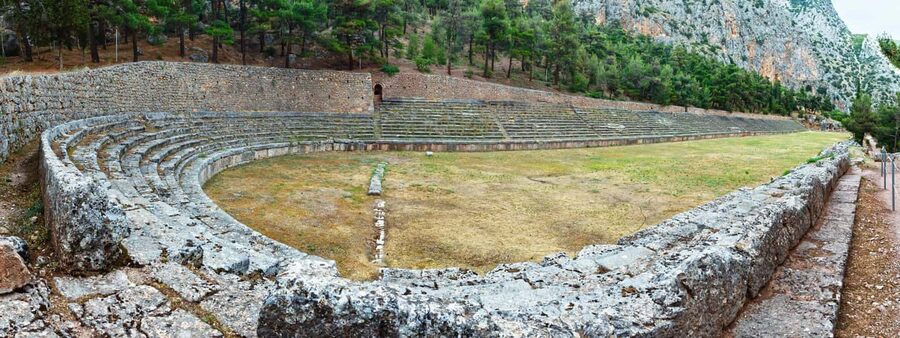
The Pythian Games add an important surprise to the visit. Delphi was known for prophecy, but it also hosted one of the biggest panhellenic festivals in antiquity.
The games honored Apollo and formed part of the shared religious culture that brought Greek communities together. Athletic and cultural contests helped turn Delphi into a meeting place, not just a sanctuary visited by individuals seeking advice.
This section is valuable because it broadens your picture of ancient Greek life. Religion, athletics, music, art, politics, and public celebration were not separate worlds. At Delphi, they worked together.
The tour’s related stories can help you connect the games with the rest of the sanctuary. This extra material is most useful when you want more than a short label beside a ruin. It gives you a reason to pause and consider how the site functioned during festivals and major gatherings.
You should not expect the app to recreate the noise of an ancient competition or provide a full academic study of the games. Its role is to make the subject understandable during a site visit, then point you toward the larger importance of Delphi.
How the 3D and 360-degree features help
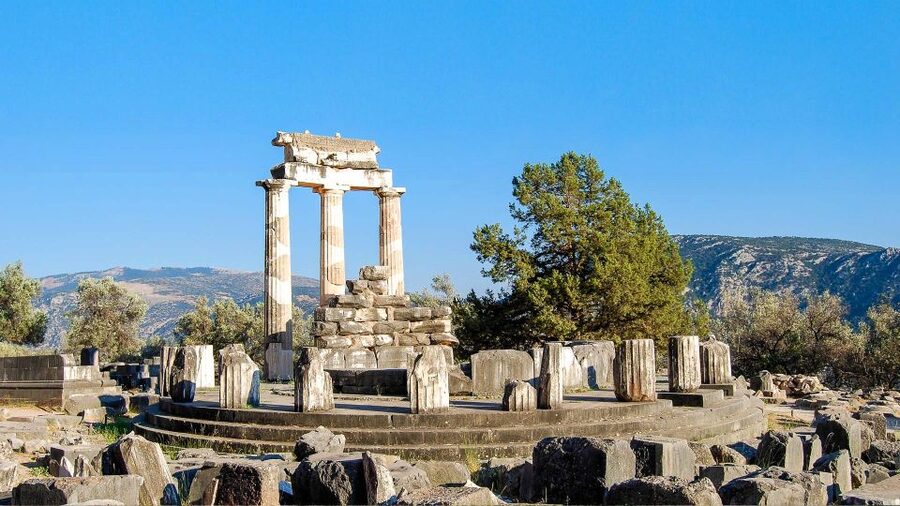
The strongest part of this experience is the combination of written explanations with visual tools. Ruins rarely explain themselves. A column base may be clear to an archaeologist, but to you it can look like another piece of weathered stone.
A 3D model can show the missing structure. You may see how a building was arranged, how a monument was proportioned, or how a surviving fragment fits into a larger design. The 360-degree views provide another kind of help by showing the surrounding area from the position of a particular monument.
The videos add movement and narration. They are useful when the site feels fragmented, especially if you are trying to understand how separate terraces, buildings, and religious spaces fit into the sanctuary.
These features also make the tour worth using before your visit. You can preview the monuments, learn the basic names, and arrive with a simple plan. Afterward, you can return to the material and review details you missed on site.
Do not expect every feature to be equally useful at every stop. Audio may be best for history, 3D models for ruined buildings, and panoramic views for orientation. The value comes from having all three available rather than relying on one format.
Planning your visit around five days of access
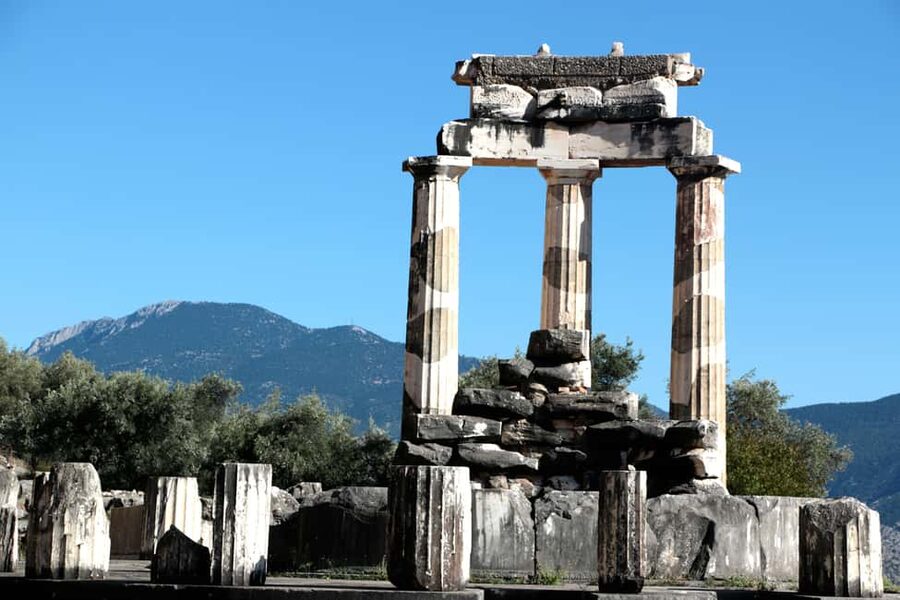
The stated duration is five days, but this does not mean you spend five days at Delphi. It means you have a five-day period in which to use the digital tour. Starting times depend on availability, so check the booking details before you plan your day.
That flexible window is helpful if Delphi is part of a wider trip through Central Greece. You can download the content in advance, use it during your visit, and listen again later from your accommodation or while planning the next day.
The easiest way to reach the archaeological site is by car or taxi. The route follows the Athens to Thessaloniki motorway before the exit toward Livadia. Public transport by bus is also possible, and maps or GPS can help you choose the best approach.
No pickup or drop-off service is included. The activity begins and ends at the meeting point, so you need to arrange your own transport and allow time for arrival.
Give yourself enough time to use the app without rushing. Delphi contains many monuments, and the site setting requires attention to both the ruins and the information on your phone. Comfortable shoes, water, and a sun hat are sensible choices.
What you need on the day
You need a charged smartphone and your own headphones. The app requires approximately 200MB of storage, works with iOS 11.0 or later and Android 5.1 or later, and needs internet access to function effectively.
Download the tour on Wi-Fi before you arrive unless you have enough mobile data. This is one of the most important practical tips. A weak connection, low battery, or a last-minute download can turn a simple self-guided visit into a frustrating one.
You receive instructions by email after booking. Check your spam folder if the message does not appear quickly. The content can be used anywhere and anytime before, during, or after your visit, and you can delete or retrieve it from your device later.
The paid content becomes nonrefundable after downloading. That makes it wise to confirm your phone’s compatibility and your plans before pressing the download button.
The archaeological entrance fee is not included. Food and drinks are also your responsibility, as are transportation and any headphones you use. The $7.89 cost is therefore best viewed as a low-priced interpretation tool, not the total cost of visiting Delphi.
Is $7.89 good value?
For the price of a casual snack, you receive written information for 16 monuments, audio for 14, 14 3D models, 14 panoramic views, 14 videos, and 12 sets of related stories. You also receive 68 written and audio items about ancient Greek culture and facts.
That is a strong amount of material for an independent visit. I find the value particularly good if you are curious about ancient history but do not want to commit to a private guide or a scheduled group. You can use only the sections that interest you and skip the rest.
The value is weaker if you already have a guidebook, have hired a professional guide, or prefer to walk without looking at a screen. You also need to remember that the app cannot answer follow-up questions or adjust its explanation to your interests.
Still, the flexible five-day access makes the price easier to justify. You are not forced to consume everything in one visit. You can use the content as a preview, a site companion, and a refresher later.
The experience has a 4 out of 5 rating from 45 reviews, which suggests a generally positive response but not universal approval. That fits the product itself: the content is broad and practical, while the quality of your visit depends heavily on your phone, preparation, and preference for self-guided sightseeing.
Who should choose this self-guided format?
I would recommend it most strongly to independent visitors who want more context than the stone signs provide. It suits couples, families with older children, solo visitors, and anyone comfortable using a phone while sightseeing.
It is also a good fit if you speak one of the eight available languages or want to hear the information rather than read everything. The audio option lets you keep your eyes on the ruins, although headphones are not supplied.
You may prefer a live guide if you want conversation, a fixed route, or help interpreting details as you go. The same is true if you find mobile apps distracting or if your phone battery and data access are uncertain.
For a first visit, I would use the app selectively. Start with the overview of Delphi, then focus on Apollo’s temple, Pythia, the Charioteer, the Sphinx of Naxos, and the Pythian Games. That gives you the religious, artistic, political, and sporting sides of the site without turning the visit into a long screen session.
Should you book the Delphi audiovisual tour?
Book it if you want an affordable and flexible way to understand Delphi on your own. The 3D models, panoramic views, and audio explanations are especially helpful when the ruins seem difficult to read, and the five-day access period gives you room to prepare and review.
Skip it if you expect transportation, admission, a live guide, or personal answers. Those are not included. You must bring the right phone, download the content in advance, and handle the visit independently.
For $7.89, I think it is a sensible companion to the archaeological site, provided you treat it as an interpretation tool rather than a full tour. Bring water, charge your phone, wear good shoes, and let the app explain why Delphi mattered long after the last oracle fell silent.
FAQ
Is the archaeological entrance ticket included?
No. The entrance fee to the archaeological site is separate from the audiovisual tour price.
How long can I use the self-guided tour?
The digital access period is five days. You can use the content before, during, or after your visit within that period.
Which languages are available?
The audio guide is available in English, Spanish, Greek, German, Italian, Dutch, French, and Chinese.
Do I need internet access?
Yes. Internet access is required for effective use. You should download the tour content over Wi-Fi before visiting unless you have enough mobile data.
What phone requirements apply?
The tour requires iOS 11.0 or later or Android 5.1 or later. You need about 200MB of storage space and a fully charged smartphone.
Can I cancel the booking?
You can cancel up to 24 hours in advance for a full refund. After downloading the paid content, it becomes nonrefundable.
Just added around Greece
- Delphi One Day Trip from Athens★ 4.0 · 98 reviews
- Mercedes Private Tour to Delphi and Arachova★ 5.0 · 30 reviews
- Private Delphi and Hosios Loukas Monastery – Great Lunch and Drinks Included★ 5.0 · 36 reviews
- Day tour to Ancient Olympia,Ancient Sparta Mycenae Including Meal★ 5.0 · 54 reviews
- Athens: Half Day Trip To Cape Sounio/Poseidon Temple Semi Private★ 5.0 · 131 reviews
- Athens Half-Day Private Tour Acropolis, Parthenon City Highlights★ 5.0 · 35 reviews
- From Athens: Day Tour to Mykonos★ 5.0 · 64 reviews
- Culinary Secrets of Downtown Athens★ 5.0 · 103 reviews
Self-Guided Tours, compared.


Cape Sounio & Poseidon Temple Trip with Audio Guide
Read our review →

Acropolis Museum Ticket with optional Audio Guide
Read our review →
Acropolis Ticket & Optional Self-Guided Audio Tours
Read our review →
Parthenon & Acropolis Museum with Audio or Live Tour Option
Read our review →
Knossos Palace Entry Ticket with Optional Audio Guide
Read our review →Browse the lists this tour appears in