
Reviewed · THESSALONIKI TOURS
Discover Vergina and Pella: Day Trip to Macedonian Kingdom
Macedonia’s greatest stories begin outside Thessaloniki. This $59.65 day trip takes you to Pella, the ancient capital linked with Philip II and Alexander the Great, then to Vergina, where royal tombs hold some of Greece’s most remarkable finds. I especially like the combination of open-air archaeological sites and superb modern museums, plus the freedom to explore each stop at your own pace.
I also like the practical setup: transportation, an English-speaking trip attendant, and basic travel insurance are included. Guides such as Eva, Lazarus, Eleni, Tina, Konstantina, and Stavros have been praised for making the history clear and lively. The main drawback is time. The schedule is full, and anyone who reads every label may feel rushed. Lunch can also come late, around 3 p.m. on some departures.
In This Review
- Key points to know before booking
- Why Pella and Vergina belong on your Thessaloniki plans
- Pella’s mosaics make the ancient city feel close
- Vergina’s Royal Tombs are the day’s powerful centerpiece
- The New Museum of Aigai adds scale and context
- Lunch in Vergina is simple, local, and late
- What the guide does, and what the guide does not do
- Is $59.65 good value?
- Who should take this Macedonian history day trip?
- Should you book the Pella and Vergina day trip?
- FAQ
- Where does the tour depart from?
- How long does the experience last?
- Are entrance fees included?
- Is lunch included in the price?
- Is the tour fully guided inside the museums?
- Can I cancel for a full refund?
Key points to know before booking
- Pella’s ancient mosaics are the first major highlight: Look for the Abduction of Helen and Amazonomachy scenes in the old marketplace.
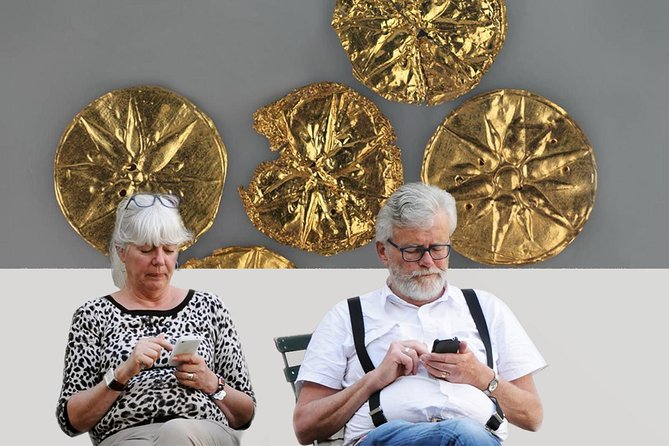
- Vergina’s royal tombs are the emotional center of the day: The Golden Larnax, Philip II’s burial objects, armor, and golden oak wreath are unforgettable.
- You explore mostly on your own: The attendant gives historical context and sets return times, but this is not a room-by-room museum tour.
- The three admission fees add up: Budget another €28 per person for Pella, the Royal Tombs of Aigai, and the Polycentric Museum of Aigai.
- The day begins early and runs long: Meet at 7:50 a.m. for the 8:00 departure at the Eleftherios Venizelos Statue.
- Lunch is not included: A traditional Greek meal is arranged in Vergina, but you pay for it separately.
Why Pella and Vergina belong on your Thessaloniki plans
Thessaloniki gives you an excellent base for exploring northern Greece, but the story of ancient Macedonia is easier to understand once you leave the city. Pella was the political center of the Macedonian kingdom, while Vergina, ancient Aigai, served as its earlier royal capital and burial place.
That connection gives this trip a clear purpose. You are not simply ticking off two distant museums. You are following the rise of the Macedonian court, from daily life and public spaces at Pella to the royal family and funeral customs at Vergina.
The tour lasts about eight and a half hours. That sounds generous, but the sites are substantial, and the day includes driving, lunch, three museum visits, and time outdoors. I would treat this as an introduction rather than a slow archaeological study. You will see the major treasures, understand the main story, and leave with plenty to read about later.
The tour departs at 8:00 a.m. from Aristotelous Square and Egnatia Street, by the white Statue of Venizelos at Egnatia 78. Be there ten minutes early. The bus cannot wait at the pickup point beyond the boarding time, so this is not the morning to linger over coffee.
A few more Thessaloniki half-days to weigh up
- From Thessaloniki: Pozar Thermal Baths and Edessa Day Trip
★ 4.7 · 1,243 reviews - From Thessaloniki: Day Trip to Dion and Mount Olympus Park
★ 4.7 · 1,046 reviews - Thessaloniki: Vergina and Pella Day Trip
★ 4.8 · 673 reviews
Pella’s mosaics make the ancient city feel close
The drive to Pella covers about 50 kilometers and takes roughly 45 minutes. The countryside gives you a useful change of pace from Thessaloniki, and the trip attendant begins laying out the political and family connections that can otherwise make Macedonian history hard to follow.
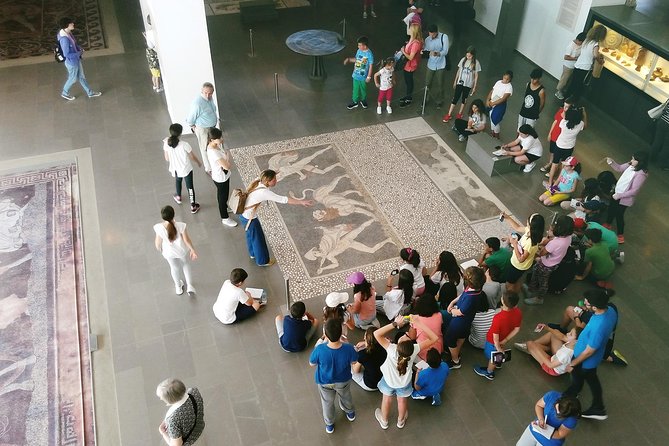
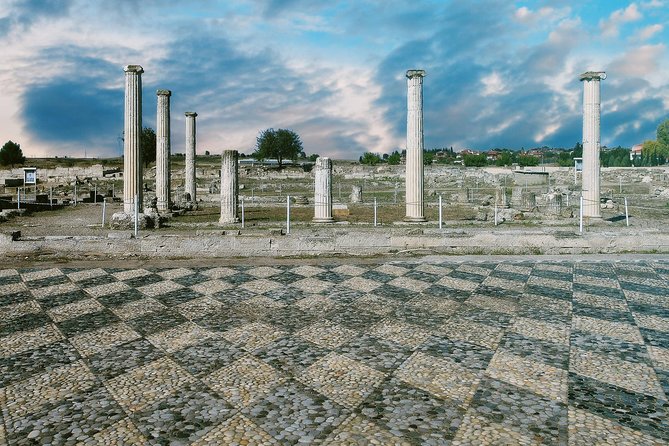
At Pella, you visit both the archaeological site and the newer museum. The site spreads across the remains of the ancient marketplace and public buildings. Much of what you see is architectural foundation rather than complete monuments, so the mosaics are especially important. They add color, movement, and human stories to the stones.
Two scenes deserve special attention:
- The Abduction of Helen, a mythological scene with figures arranged in motion.
- Amazonomachy, showing the mythical battle between Greeks and Amazons.
These floor mosaics are not just decorative leftovers. They show the wealth, artistic taste, and cultural interests of the people who lived in Pella. You can also see objects from ordinary domestic life, which helps balance the focus on kings and generals. Pottery, tools, household items, and other artifacts give you a sense of how people lived beyond the palace.
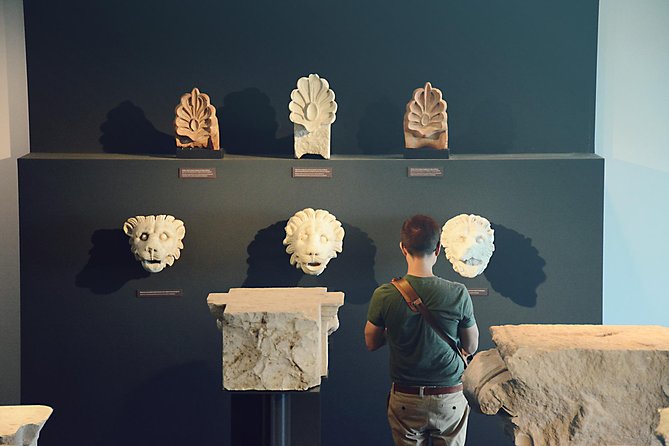
The Pella museum is modern and clearly arranged, though two hours can pass quickly. If you like to examine every object, decide early what deserves your close attention. The outdoor ruins are broad, and the museum adds a large amount of material.
One important detail: the attendant does not provide a guided tour inside the museum or archaeological site. You receive background information and instructions, then explore independently before returning to the bus at the agreed time. I consider this a plus if you dislike being herded from display to display. It is less ideal if you want detailed explanations beside every exhibit.
Admission to the Archaeological Museum and site of Pella is not included. The stated cost is €8 per person, with free entry available to university students from EU countries and to young people up to age 18 who show identification.
Vergina’s Royal Tombs are the day’s powerful centerpiece
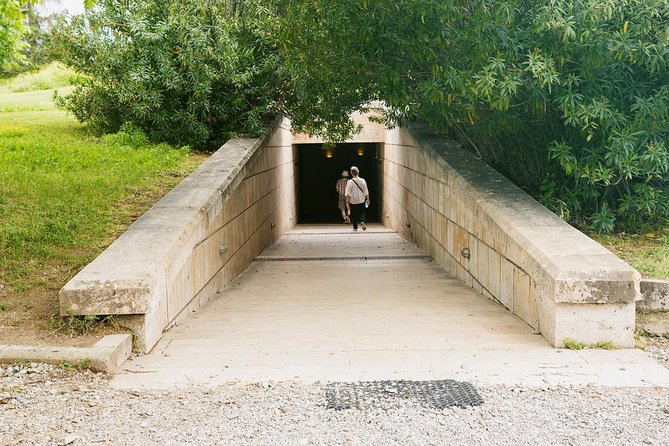
After Pella, the bus continues to Vergina, the modern village near ancient Aigai. The Museum of the Royal Tombs of Aigai is built around the royal burial complex, creating a dark, carefully controlled setting for the finds.
This is the place where Macedonian history becomes personal. Instead of only seeing the remains of buildings, you stand near objects created for royal burials. The displays include weapons, armor, funeral goods, and gold ornaments connected with the Macedonian dynasty.
The most famous object is the Golden Larnax, the funerary casket associated with Philip II. Its sixteen-rayed sun links it to the Argead dynasty, the royal family of Philip II and Alexander the Great. The same symbol is commonly called the Sun of Vergina or Star of Vergina.
You will also see the golden oak wreath associated with Philip II’s funeral pyre. It is delicate, finely made, and surprisingly intimate for an object tied to a major ruler. The military armor offers a different impression. It reminds you that this was a warrior kingdom, not only a court of ceremony and display.
The museum’s design makes the tombs feel solemn. You are viewing objects in the setting where they were found, rather than in a bright gallery detached from the burial site. Photography rules and lighting may affect how easily you can study some details, so take your time where you can.
This visit is allocated about two and a half hours along with the Vergina portion of the day. The Royal Tombs are the main focus, followed by lunch and a visit to the New Museum of Aigai. If you are particularly interested in Philip II, allow your attention to settle here. Many people consider the tombs the best part of the entire trip.
Admission is separate and costs €10 per person. EU university students and young people up to age 19 can enter free with the required identification. EU citizens over 65 pay the reduced fee of €6, and students from outside the EU also receive the reduced rate stated for the museum.
The New Museum of Aigai adds scale and context
The final museum visit is the New Museum of Aigai, also called the Polycentric Museum of Aigai. It houses objects found in and around the old capital, giving you a wider view of royal life, public buildings, ceremonies, and the people who supported the court.
The Royal Tombs are intimate and concentrated. The New Museum is broader in scope. Together, the two visits work well: first you see the extraordinary burial treasures, then you place those treasures within the larger setting of Aigai.
The museum is modern, and the displays include artifacts and presentation materials that help explain the excavations. Some sections may feel information-heavy, especially after a full morning at Pella. The trip attendant’s introduction is useful here because it helps you choose where to spend your limited time.
The entrance fee is €10 per person. Students and young people may qualify for free or reduced entry under the stated rules, so bring the appropriate identification if that applies to you.
One limitation deserves clear mention. The day does not include a full visit to every part of the wider Aigai archaeological area. The Royal Tombs are covered, but you may not have time to see all the ruins, including the palace and theatre. If those remains are your main reason for coming, check the exact schedule on your departure date and be prepared for a compact visit.
Same stretch of coastline, a completely different day out:
- Thessaloniki: Full-Day Bus Trip to Meteora
★ 4.8 · 3,471 reviews - Thessaloniki: OTE Tower Rotating Experience with Light Meal
★ 4.6 · 857 reviews - Mount Athos Glassbottom Cruise with Ammouliani Island visit
★ 4.3 · 592 reviews - Full-Day Trip to Meteora from Thessaloniki
★ 4.5 · 542 reviews
Lunch in Vergina is simple, local, and late
A traditional Greek lunch is planned in Vergina, with homemade-style dishes and local flavors. The meal is at your own expense, and the timing can be later than many people expect. Some departures have reached lunch around 3 p.m.
Eat a solid breakfast before leaving Thessaloniki. It is also sensible to carry water and a small snack, particularly if you are used to eating at noon. The late meal can work well because you will have finished the principal museum visits, but it may be uncomfortable if you arrive hungry.
The lunch stop adds something useful to the day. It gives you a chance to sit down after several hours of walking and to eat something more substantial than a quick roadside snack. Just remember that the $59.65 price does not cover the meal.
What the guide does, and what the guide does not do
The English-speaking attendant is central to the experience, but you should understand the format before booking. This is not a continuously guided museum tour. The attendant explains the historical setting, provides practical instructions, answers questions, and tells you when to return to the bus.
That arrangement has been a strong point for people who want control over their time. You can linger over a mosaic, skip a display that does not interest you, or move quickly through familiar material. The cost is that you may need to read labels and build your own understanding once inside.
Several guides have received particularly warm praise. Eva has been described as friendly and able to answer a wide range of questions. Lazarus is known for humor as well as clear explanations. Eleni, Elenni, Tina, and Konstantina have also been praised for their preparation and warmth. Stavros, who has worked as an archaeologist, has brought personal experience from archaeological sites to his explanations.
The exact guide varies by departure, so do not book on the assumption that one particular person will lead your day. The consistent advantage is the format: historical explanation on the road, then independent time at the sites.
Is $59.65 good value?
At $59.65 per person, the tour offers solid value for a long day outside Thessaloniki. Transport to two locations, an English-speaking attendant, and basic insurance during transportation are included. Organizing the same route yourself would require arranging transport, checking opening times, buying admissions, and managing the return journey.
The extra costs matter. Admission totals €28 per person:
- Pella archaeological site and museum: €8
- Museum of the Royal Tombs of Aigai: €10
- Polycentric Museum of Aigai: €10
You also pay for lunch and any tips. Once those costs are added, the day is not a bargain-basement outing, but it remains reasonable for three important museums and two major archaeological locations.
The value is strongest if you want an efficient overview and do not have a rental car. It is weaker if you prefer to spend half a day at one museum or stop for detailed photography and close reading. The group can reach up to 50 people, although some departures may not be full. Traffic leaving and returning to Thessaloniki can also add frustration, especially at busy times.
Who should take this Macedonian history day trip?
I would recommend it most strongly to first-time visitors to northern Greece, history fans, and anyone curious about Alexander the Great but unsure how to find the important sites. You do not need a specialist background. The guide’s bus commentary gives you the basic family tree, political setting, and historical sequence.
It also suits people who prefer a planned day but want independence at each stop. You get the structure of a group excursion without having to follow a guide through every room.
You may want a different arrangement if you need long, quiet museum visits, have mobility concerns that make a full day of site walking difficult, or care most about seeing every ruin at Aigai. The provided information says most people can participate, but it does not promise a specialized accessibility service.
Book at least several weeks ahead if your dates are fixed. The experience is booked an average of 26 days in advance, suggesting that popular travel periods may fill early. Free cancellation is available up to 24 hours before the 8:00 a.m. start, while changes or cancellations inside that window are not accepted. If the minimum group size is not reached, the operator offers another date or experience, or a full refund.
Should you book the Pella and Vergina day trip?
Book it if you want the essential Macedonian story in one well-planned day. Pella gives you city life, mythology, and beautiful mosaics. Vergina gives you royal tombs, Philip II’s burial treasures, and the wider world of Aigai. The combination is far more rewarding than visiting either site alone.
Go in with realistic expectations. You will not have unlimited time, lunch is extra and may be late, and the museums are largely self-guided. Still, the transport, strong historical commentary, excellent museums, and rare royal tombs make this one of the best history-focused day trips from Thessaloniki. Bring breakfast, comfortable shoes, €28 for admissions, and a willingness to keep an eye on the clock.
FAQ
Where does the tour depart from?
The tour departs at 8:00 a.m. from the Eleftherios Venizelos Statue at Egnatia 78, near Aristotelous Square in Thessaloniki. You should arrive ten minutes early.
How long does the experience last?
The day trip lasts approximately 8 hours and 30 minutes and returns to the original meeting point in Thessaloniki.
Are entrance fees included?
No. Admission costs are €8 for Pella, €10 for the Museum of the Royal Tombs of Aigai, and €10 for the Polycentric Museum of Aigai.
Is lunch included in the price?
No. A traditional Greek lunch stop is arranged in Vergina, but you pay for the meal yourself.
Is the tour fully guided inside the museums?
No. An English-speaking trip attendant provides historical information and practical instructions, but guided tours inside the museums and archaeological sites are not included.
Can I cancel for a full refund?
Yes. You can cancel at least 24 hours before the experience starts for a full refund. Cancellations or changes made less than 24 hours before the start time are not accepted for a refund.
Just added around Thessaloniki
- Wine Tasting Experience from Thessaloniki★ 5.0 · 25 reviews
- Thessaloniki city from or to SKG airport transfer★ 5.0 · 25 reviews
- Traditional Greek Food Tour With A Local★ 5.0 · 43 reviews
- Thessaloniki Private Walking Tour with a Local★ 4.5 · 30 reviews
- Upper Town Historical Tour Experience at Greece★ 5.0 · 44 reviews
- Thessaloniki Jewish Heritage – Private Experience – 4 hrs★ 5.0 · 41 reviews
- Thessaloniki Street Food Tour with a Local Guide★ 5.0 · 43 reviews
- Thessaloniki Bike Tour, the best way to explore the city★ 5.0 · 28 reviews
Thessaloniki Tours, compared.

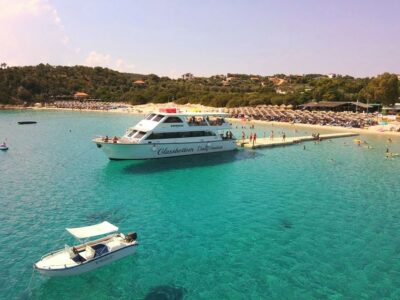
Mount Athos Glassbottom Cruise with Ammouliani Island visit
Read our review →
Thessaloniki Hop-on Hop-off Sightseeing Bus Tour
Read our review →Browse the lists this tour appears in