Reviewed · ATHENS TOURS
From Athens: 4-Days Classical Tour with Meteora
Ancient Greece in four busy days. This $711 tour from Athens links the Corinth Canal, Mycenae, Olympia, Delphi, and Meteora, giving you a broad look at Greece from the Bronze Age through Byzantine times. I like the smart route and the included entrance fees, and I especially like that the long drives are broken into major historic stops. The drawback is simple: you cover a great deal of ground, so this is an efficient introduction rather than a slow, relaxed holiday.
I also like the professional guide and comfortable air-conditioned coach, with free Wi-Fi on board. Guides named in past departures include Georgia Dova, Evie, and Anthony, while drivers John and Socrates earned strong praise for safe, capable service. The main caution is hotel quality. The upgrade option appears worthwhile, since the upgraded four-star hotels were praised while the standard accommodation received less generous comments.
In This Review
- Key points to know before booking
- Why this four-day Greek history route works
- Day one: Corinth Canal, Epidaurus, and Mycenae
- Day two: Olympia and the Corinthian Gulf
- Day three: Delphi, the ancient oracle, and Kalambaka
- Day four: Meteora monasteries above the rocks
- Hotels, meals, and the real value of $711
- The coach, guides, and pace
- Who should book this tour
- Should you book the four-day circuit?
- FAQ
- How long is the tour?
- Where does the tour start?
- Where does the tour end?
- Which languages are available?
- What sites are visited?
- Are entrance fees included?
- Are hotels included?
- Are meals included?
- Is hotel tax included?
Key points to know before booking
- Five major archaeological sites in four days: You visit Epidaurus, Mycenae, Olympia, Delphi, and Meteora, with entrance fees included.
- The route crosses much of mainland Greece: Expect scenic coastal roads, mountain passes, central Peloponnese, and the Corinthian Gulf.
- Meteora is the visual high point: Byzantine monasteries sit on huge rock pillars above Kalambaka.
- The coach keeps the trip practical: Air conditioning, free Wi-Fi, and a professional driver make the long transfers easier.
- Three overnight stops break up the route: You sleep in Olympia, Delphi, and Kalambaka rather than returning to Athens each night.
- Budget for lunches, drinks, and hotel tax: Breakfast and dinner are included, but lunch is not, and accommodation tax is paid at the hotel.
Why this four-day Greek history route works
This tour is built for you if you want the major classical sights without arranging several hotels, trains, buses, and admission tickets yourself. It also gives you something many Athens day trips cannot: a look at the Greek mainland beyond the capital.
The route is ambitious. You travel from Athens through the Peloponnese, across the Corinthian Gulf, north to Delphi and Meteora, then back to Athens by way of Thermopylae. That means plenty of time on the coach, but the journey is broken into meaningful stops rather than long stretches with nothing to see.
I like the historical range. Mycenae takes you into the Bronze Age world associated with Agamemnon. Olympia explains the ancient Olympic tradition. Delphi brings you to the most famous oracle of the ancient Greek world. Meteora then shifts the story into Byzantine art and monastic life.
The tour has a rating of 4.4 from 50 reviews, with particularly strong praise for organization, the coach, the drivers, and the guides. That matters on a four-day circuit. Good timing and a calm driver can make the difference between an enjoyable history trip and four tiring days of transfers.
A few more Athens half-days to weigh up
- Athens: Acropolis & up to 5 Archaeological Sites Combo Pass
★ 4.4 · 12,619 reviews - Athens: Acropolis Ticket with Optional Audio or Live Guide
★ 4.2 · 11,055 reviews - Athens: Acropolis, Parthenon & Acropolis Museum Guided Tour
★ 4.8 · 9,316 reviews
Day one: Corinth Canal, Epidaurus, and Mycenae
The first morning takes you along the coastal road from Athens toward the Corinth Canal. The stop is short, but the canal is a worthwhile opening scene. It cuts through the narrow Isthmus of Corinth and connects the Gulf of Corinth with the Saronic Gulf.
You should think of this as a photo stop, not a full visit. The canal is impressive because of its steep cut and strategic importance, but you will not have time for a long walk or a leisurely meal here.
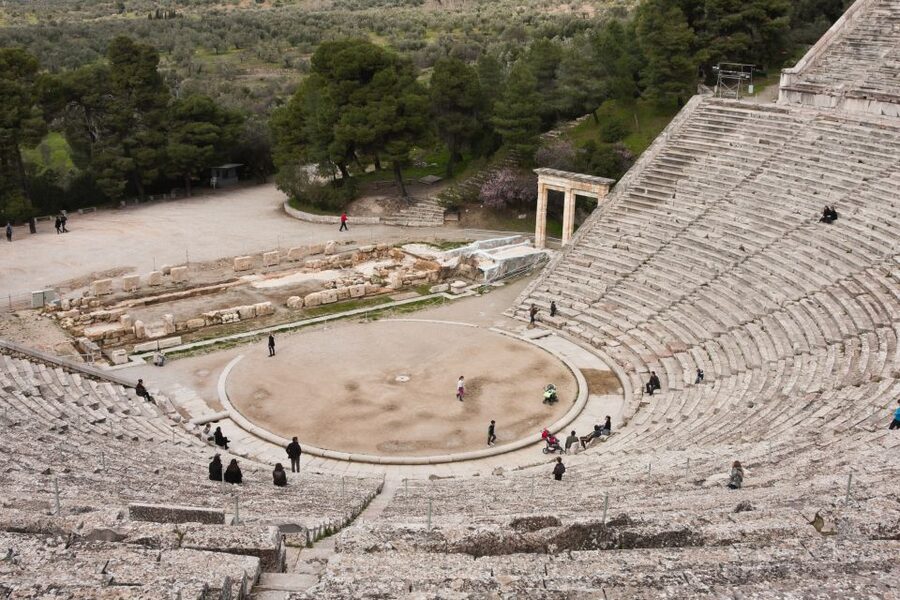
The route continues to Epidaurus, home to one of Greece’s most famous ancient theaters. Its acoustics are the star attraction. From the stage area, even a quiet voice can carry remarkably well to the upper seats, making the theater easier to appreciate than many ruined classical sites.
I like that Epidaurus appears early in the trip. It gives you a clear, memorable example of Greek architectural skill before the schedule becomes more crowded. The stop is focused, though, so listen carefully to the guide and make good use of the time allowed for photographs.
You then pass through Nafplio for a short photo stop. This attractive town is one of the Peloponnese’s best-known historic ports, but the schedule does not allow a full exploration. Treat it as a brief glimpse rather than a chance to wander the waterfront or visit its monuments.
Mycenae is the day’s major archaeological stop. The site connects you with the Bronze Age civilization that inspired later Greek legends, including the story of Agamemnon. You visit the archaeological site and the Tomb of Agamemnon, also known as the Treasury of Atreus.
The massive stone entrance and beehive-shaped tomb are memorable because they feel older and more imposing than the familiar marble ruins of classical Athens. Mycenae is also a place where sturdy shoes and attention to uneven ground help, although the supplied details do not specify accessibility arrangements.
After Mycenae, the coach crosses the central Peloponnese through Tripolis and Megalopolis before reaching Olympia. This is a substantial transfer, but it completes the first leg of the circuit without sending you back toward Athens.
You spend the night in Olympia, with dinner included. Since the day combines several sites and a long drive, do not expect a leisurely evening for independent sightseeing.
Day two: Olympia and the Corinthian Gulf
Olympia receives the morning, which is the right choice. The site is the cradle of the Olympic Games and includes the Sanctuary of Olympian Zeus, the ancient stadium, and the spot where the torch for the modern Olympic Games is lit.
The ancient stadium helps turn the history into something physical. You can picture the scale of the athletic contests more easily when you see the running ground and surrounding seating area in person.
The Archaeological Museum of Olympia is also included. It gives context to the ruins and allows you to see important objects connected with the sanctuary. Having both the site and museum in the same morning is useful, since the museum helps explain what you have just seen outdoors.
This visit is one of the strongest parts of the tour for anyone interested in sport, religion, or classical Greece. The limitation is time. Olympia is a large archaeological area, and a scheduled group visit cannot cover every corner at a slow pace.
After Olympia, the coach crosses the plains of Ilia and Achaia toward the impressive bridge over the Corinthian Gulf, linking Rion and Antirion. You then pass the picturesque town of Nafpaktos, also called Lepanto, and continue through Itea.
These drives add variety to the tour. The route is not simply a string of ruins. You see towns, farmland, water, and mountain country while moving from the western Peloponnese toward central Greece.
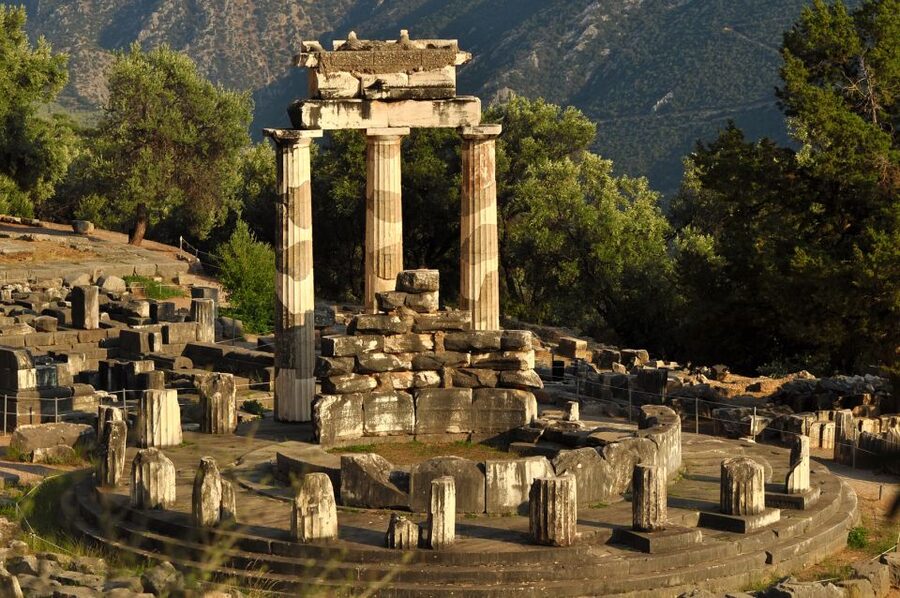
You arrive in Delphi for dinner and an overnight stay. Delphi’s location gives the town a strong sense of arrival, but the main archaeological visit comes the next morning.
Day three: Delphi, the ancient oracle, and Kalambaka
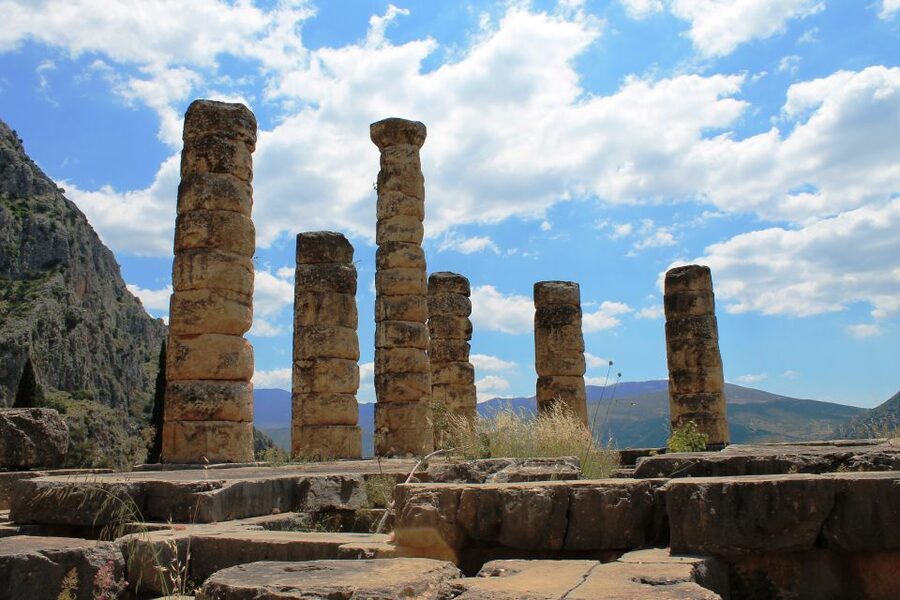
Delphi was considered the most famous oracle of the ancient world. In ancient Greek religion, people came here for guidance from Apollo through the priestess known as the Pythia. The site’s importance came not only from its religious role, but also from its influence over Greek cities and political decisions.
The morning visit includes both the archaeological site and the Museum of Delphi. That combination is essential. The ruins show the sanctuary’s position and layout, while the museum lets you examine objects removed from the site.
I would pay close attention to the guide here. Delphi can otherwise become a line of columns and foundations without enough explanation. Guides such as Georgia Dova, Evie, and Anthony have been praised for making the historical stops clear and informative, though the guide assigned to your departure depends on the language and date you book.
After Delphi, the coach heads north toward Kalambaka. This is another long transfer, but it carries you into a very different part of Greece. Kalambaka sits at the foot of the Meteora rock formations and serves as the overnight base.
Dinner and the hotel night are included. By this point, you will have completed several formal archaeological visits, so the changing scenery and the anticipation of Meteora help keep the third day from feeling like a repeat of the first two.
Same stretch of coastline, a completely different day out:
- Athens: Cape Sounion & Poseidon Temple Sunset Half-Day Trip
★ 4.8 · 8,241 reviews - Athens: Acropolis and Parthenon Guided Walking Tour
★ 4.6 · 5,882 reviews - All Day Cruise -3 Islands to Agistri,Moni, Aegina with lunch and drinks included
★ 5.0 · 4,958 reviews - Athens, Piraeus, and Coastline: Blue Hop-On Hop-Off Bus
★ 3.9 · 4,849 reviews
Day four: Meteora monasteries above the rocks
Meteora is the tour’s most striking visual change. Huge rock pillars rise above Kalambaka, and monasteries perch on top of them in a setting that seems almost impossible from the road below.
The visit focuses on the monasteries and their Byzantine art. The tour information does not name a specific monastery, so the exact buildings you enter may depend on the operating schedule and the day of your visit. The important point is that you see the remarkable setting and examples of religious art preserved in these old monastic complexes.
Meteora rewards careful attention to the guide’s explanation. The buildings are not simply scenic viewpoints. They reflect centuries of Orthodox monastic life and the effort required to build religious communities on high rock formations.
You should also expect this morning to involve more walking and possibly steps at the monastery visit, but the supplied information does not provide specific accessibility details. Ask the operator about current conditions if mobility is a concern.
After Meteora, you return to Athens by way of Trikala, Lamia, and Thermopylae. The stop at Thermopylae is short and lets you see across the road to the monument of Leonidas, linked with the famous battle between the Spartans and the Persian army.
It is a fitting final stop. The tour begins with Bronze Age legends and classical theaters, then moves through Olympia, Delphi, Byzantine Meteora, and finally reaches one of the best-known military stories of ancient Greece.
You arrive back in Athens early in the evening at the meeting point. The return time is useful if you have an evening plan, but allow some flexibility since road conditions can affect any long coach journey.
Hotels, meals, and the real value of $711
At $711 per person, the price is not just paying for transport. It includes three overnight stays, a professional guide, a luxury air-conditioned coach, breakfast and dinner as listed, entrance fees, and Wi-Fi on the bus.
That can be good value if you would otherwise pay separately for hotels, intercity transport, site admissions, and a guide. The entrance fees matter especially because five major historic areas are included across the four days.
Lunch and drinks are not included. You should plan for those costs each day, particularly because the schedule moves between sites and towns rather than returning to one central dining area.
The overnight accommodation deserves careful attention when you book. An upgrade option appears to be a sensible choice based on the differing hotel feedback. The four-star upgrade was praised, while people in the standard selection were less pleased with their hotels.
There is also an accommodation tax payable at the hotel before check-out. The supplied rates list €4 per overnight per room for a five-star hotel, €3 for a four-star hotel, and €1.50 for a three-star hotel. The general information also gives a broader range of €1.50 to €10 per night per room, so confirm the current amount and hotel category before departure.
Dinner is included on the first three nights, and breakfast is included as part of the meal plan. The food is not the reason to choose this tour. Past feedback described dinners as safe buffet-style meals rather than especially local or Greek in character. If authentic regional cooking is a top priority, you may find the meals less exciting than the archaeological stops.
The coach, guides, and pace
A coach circuit is the practical way to connect this many sites. The air conditioning matters during a four-day route, and free Wi-Fi gives you a useful way to check messages during transfers.
The drivers receive some of the strongest praise. John and Socrates were specifically recognized for their work, and that is important on roads connecting the Peloponnese, Delphi, Meteora, and Athens.
The pace is brisk but organized. You make short stops at the Corinth Canal, Nafplio, and Thermopylae, then spend more time at the core archaeological sites. You will not have the freedom to change the order or linger wherever you wish, but you also avoid the stress of navigating several regions on your own.
Live guiding is available in English, French, and Italian. Check the language option when booking, since the quality of an archaeological visit depends greatly on how well the explanations suit you.
Who should book this tour
I would choose this tour if you want a broad first look at mainland Greece and prefer one organized booking to a complicated self-drive plan. It suits history-focused visitors who want the main classical sites plus Meteora in one trip.
It is also a good match for you if you enjoy scenic coach travel and do not mind changing hotels. The route gives you a strong sense of how different regions connect, from the Peloponnese to central Greece.
I would hesitate if you want long meals, free afternoons, or detailed exploration of each town. Nafplio, Nafpaktos, Itea, and Thermopylae are brief stops, and even the major sites follow a fixed timetable.
The tour is less ideal for anyone seeking a food-centered trip. Breakfast and dinner are convenient, but the included meals may be more practical than memorable.
Cancellation is flexible up to 24 hours before departure for a full refund, and you can reserve now and pay later. The meeting point may vary by booking option, although the listed starting location options are at Zappeio, and the tour ends back at the meeting point.
Should you book the four-day circuit?
Book it if you want the most efficient route through Mycenae, Olympia, Delphi, and Meteora without arranging the transport yourself. The guides, drivers, included entry fees, and broad historical coverage make the $711 price reasonable, especially if you choose the better hotel option.
Skip it if you prefer independent travel, local restaurants, or several quiet days in one place. For everyone else, this is a well-planned history circuit with long drives, strong headline sights, and enough structure to make mainland Greece manageable in just four days.
FAQ
How long is the tour?
The tour lasts four days and returns to Athens in the early evening on day four.
Where does the tour start?
The meeting point may vary depending on the option booked. The listed starting location options are at Zappeio in Athens.
Where does the tour end?
The activity ends back at the meeting point in Athens.
Which languages are available?
Live tour guiding is available in English, French, and Italian.
What sites are visited?
The route includes the Corinth Canal, Epidaurus, Nafplio, Mycenae, Olympia, Delphi, Meteora, and Thermopylae.
Are entrance fees included?
Yes. Entrance fees are included for the sites and museums covered by the tour.
Are hotels included?
Yes. Overnight accommodation is included, with nights in Olympia, Delphi, and Kalambaka.
Are meals included?
Breakfast and dinner are included according to the itinerary. Lunch and drinks are not included.
Is hotel tax included?
No. The accommodation tax must be paid at the hotel before check-out. Listed rates vary by hotel category, from €1.50 per night per room for a three-star hotel to €4 for a five-star hotel, while general information gives a possible range up to €10.
Just added around Athens
- Delphi One Day Trip from Athens★ 4.0 · 98 reviews
- Mercedes Private Tour to Delphi and Arachova★ 5.0 · 30 reviews
- Private Delphi and Hosios Loukas Monastery – Great Lunch and Drinks Included★ 5.0 · 36 reviews
- Athens: Half Day Trip To Cape Sounio/Poseidon Temple Semi Private★ 5.0 · 131 reviews
- Day tour to Ancient Olympia,Ancient Sparta Mycenae Including Meal★ 5.0 · 54 reviews
- Athens Half-Day Private Tour Acropolis, Parthenon City Highlights★ 5.0 · 35 reviews
- From Athens: Day Tour to Mykonos★ 5.0 · 64 reviews
- Culinary Secrets of Downtown Athens★ 5.0 · 103 reviews
Athens Tours, compared.
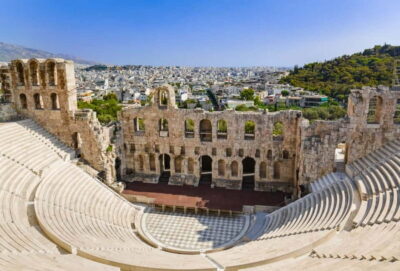
Acropolis & up to 5 Archaeological Sites Combo Pass
Read our review →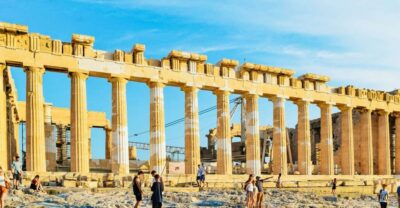
Acropolis, Parthenon & Acropolis Museum Guided Tour
Read our review →
Cape Sounion & Poseidon Temple Sunset Half-Day Trip
Read our review →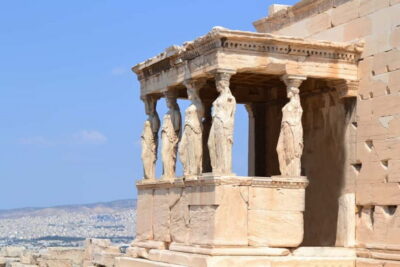
All Day Cruise -3 Islands to Agistri,Moni, Aegina with lunch and drinks included
Read our review →
Athens, Piraeus, and Coastline: Blue Hop-On Hop-Off Bus
Read our review →