
Reviewed · 2-DAY EXPERIENCES
From Athens: Delphi and Meteora 2-Day Guided Tour
Ancient gods, Olympic games, and monasteries in the sky. This two-day trip links Delphi’s Temple of Apollo with Meteora’s extraordinary cliff-top monasteries, while a comfortable coach handles the long distances from Athens. I like the strong mix of archaeology and scenery, and I like that dinner, breakfast, hotel accommodation, site tickets, and guiding are included. The tradeoff is clear: Delphi can feel rushed, and much of the tour is spent on the road.
The journey is well planned, with reliable drivers and guides who add stories to the passing countryside. Guides such as Marianna, Angelike, Haroula, Dosia, and Mariana have earned praise for making long drives interesting, while drivers including Theodore, Jorgos, and George are noted for smooth, careful driving. You should also expect fixed meal stops, group timing, and a hotel tax paid separately.
In This Review
- Key points to know before you go
- Why this two-day route works from Athens
- From Athens through Thebes, Levadia, and Arachova
- Delphi and the voice of the Oracle
- The long ride to Kalambaka
- Meteora’s monasteries above the valley
- Thermopylae and the return to Athens
- Guides, buses, and group rhythm
- Who should book this trip?
- Practical tips for getting more from the $271 price
- Should you book the Delphi and Meteora tour?
- FAQ
- How long does the tour last?
- Is hotel pickup included?
- What language is the tour offered in?
- Which meals are included?
- Which attractions are included in the price?
- Is the hotel included?
- What clothing is required at the Meteora monasteries?
- Is the tour suitable for wheelchair users?
Key points to know before you go
- Two major Greek sights in one trip: See Delphi’s sanctuary, theater, and stadium, then visit two monasteries at Meteora the next morning.
- Meteora is the visual high point: The towering rock formations and painted Orthodox interiors are the moments you are most likely to remember.
- Delphi time is limited: You get a guided visit and some free time, but the museum may not fit into the schedule.
- The coach saves serious planning: Transport, admissions, a guide, one hotel night, dinner, and breakfast are arranged for you.
- Modest dress is required: Women need long sleeves and skirts below the knee, while men cannot wear shorts inside the monasteries.
- Budget for extras: Lunches, drinks, snacks, and the hotel accommodation tax are not included.
Why this two-day route works from Athens
Delphi and Meteora are not quick side trips from Athens. They sit in different parts of central Greece, and reaching both independently means arranging trains, buses, hotels, taxis, and timed admissions. At $271 per person, this tour is not the cheapest way to see either place, but it bundles the hard parts into a single two-day plan.
You get transport in a luxury, air-conditioned, non-smoking bus, a professional guide, entry to Delphi, entry to two Meteora monasteries, one hotel night, dinner, and breakfast. That makes the price reasonable if you value convenience and want to avoid renting a car for mountain roads.
The trip also includes a carbon-offsetting program. It will not change the long hours on the coach, but it is a useful feature if you want the operator to address part of the journey’s environmental cost.
The main question is not Can I see enough? You can. The better question is Am I happy with a broad look at two famous places rather than a slow visit to one? If you want museum time, long walks, or quiet photography, you may prefer separate trips. If you have two days and want the major sights handled efficiently, this route makes good sense.
A few more Athens half-days to weigh up
- 2-Day Tour to Delphi & Meteora with Guide and Tickets From Athens
★ 4.0 · 692 reviews - From Athens: Delphi and Meteora 2-Day Tour with Hotel
★ 4.4 · 392 reviews - Athens: 2 Days in Meteora with 2 Guided Tours and Hotel Stay
★ 4.7 · 376 reviews
From Athens through Thebes, Levadia, and Arachova
Pickup usually begins about an hour before departure from a central Athens hotel. Several tour vehicles may use the same hotel, so listen for your name and confirm that you are joining the Delphi and Meteora group. You can also meet at the operator’s Athens office 15 minutes before departure, if that is more convenient.
Once you leave Athens, the coach heads through central Greece, passing Thebes, Levadia, and Arachova. The drive is part of the experience, not simply dead time. You pass olive-growing country, valleys, mountain roads, and towns that give you a better sense of Greece beyond the capital.
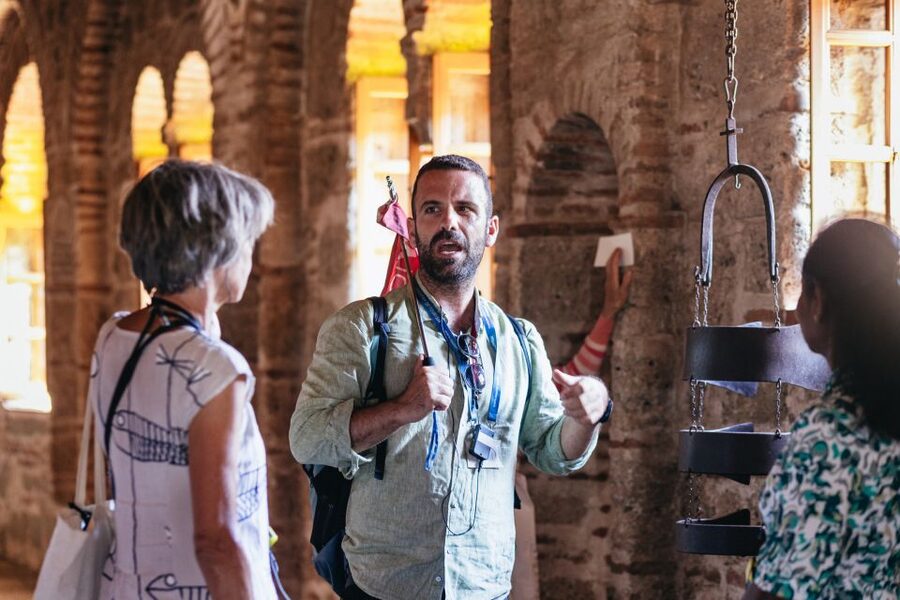
The guide often explains places along the route, as well as Greek mythology, ancient politics, religion, and Orthodox Christianity. This is where a good guide matters. Several guides have been praised for keeping the ride engaging, and for sharing useful context before you reach the sites.
Restroom and meal stops are built into both days. They are helpful on a long journey, though the timing can feel generous. If you would rather spend every possible minute at Delphi or Meteora, the repeated stops may test your patience.
Delphi and the voice of the Oracle
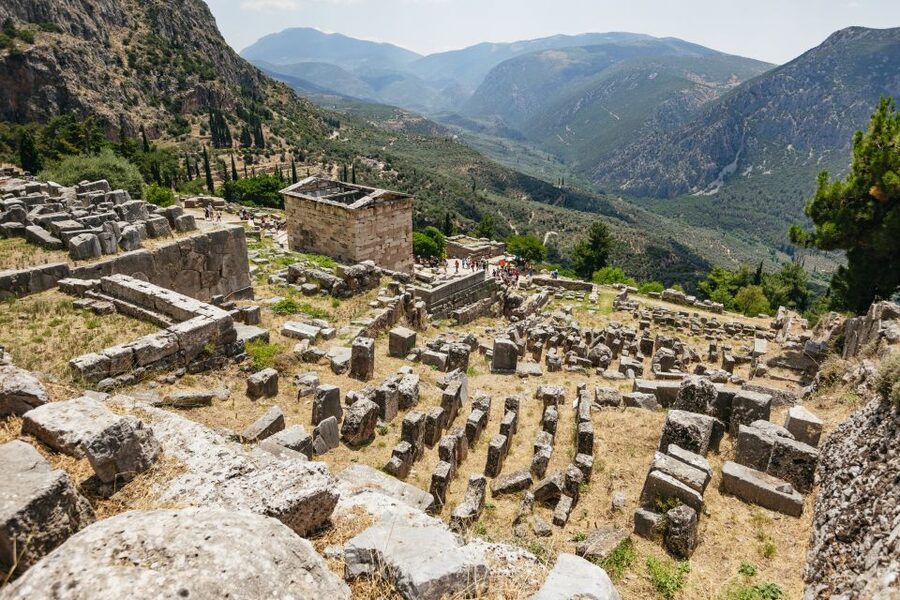
Delphi was one of the ancient Greek world’s most important sacred sites. The sanctuary sits on the slopes of Mount Parnassus, with views reaching across the surrounding hills toward the Gulf of Corinth. The setting explains much of its power. This was not a temple placed in an ordinary city square. It was a dramatic mountain sanctuary reached through winding country.
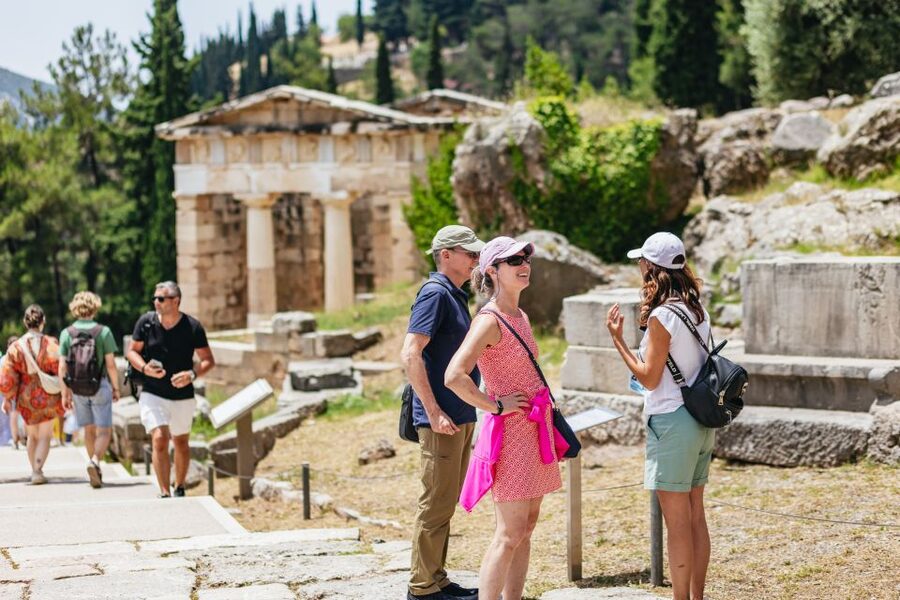
At the center of the visit are the remains of the Temple of Apollo, built in the fourth century B.C. The temple once housed the Oracle of Delphi, where the priestess Pythia delivered predictions believed to come from Apollo. Your guide gives the stones a human story, explaining why rulers and ordinary people came seeking answers.
The archaeological area also includes the ancient theater. It held about 5,000 spectators and hosted plays, poetry readings, and festivals. From the upper seats, you can take in the sanctuary and the hills beyond. It is one of those places where the view is part of the architecture.
Higher up is the stadium, where the Pythian Games took place every four years. These games were a predecessor to the modern Olympic tradition, though the Delphi festival also honored Apollo through music, poetry, and athletic contests.
The guided visit usually covers the main parts of the site, followed by some free time. That balance works well if you want orientation first and independent photographs afterward. The limitation is time. Many people wish for a longer stop at Delphi, especially if they want to visit the archaeological museum.
The museum is important because it contains objects found at the sanctuary, including sculpture and architectural pieces. On this schedule, you may have to choose between staying longer among the ruins and entering the museum. Ask your guide early how much free time is available so you can make that choice without losing minutes.
Wear comfortable shoes. The site involves uneven ground, slopes, and outdoor walking, and summer heat can be intense. One practical advantage of a guided visit is that you learn the purpose of each area instead of wandering among broken columns with no sense of the original plan.
The long ride to Kalambaka
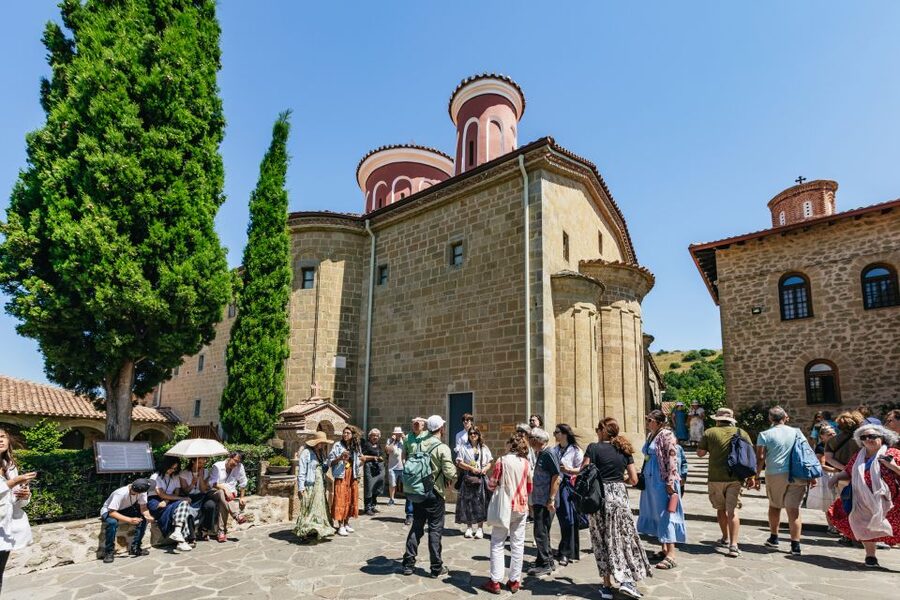
After Delphi, the coach continues toward Kalambaka, the town beside Meteora. This is the longest stretch of the first day, so plan for a substantial amount of seated time. The reward is a gradual change from Delphi’s mountain sanctuary to the huge rock towers around Kalambaka.
The town provides the overnight base, with gardens, views, and access to Meteora. Hotel quality depends on the option you select. The three-star choice is generally described as clean and simple, while the four-star option offers a more comfortable stay. The point of this overnight is location and rest, not a long resort experience.
Dinner and breakfast are included at the hotel. Food quality can vary by property, but many people find the buffet meals convenient and satisfying. Lunch on the first day is extra, and the stop may be more expensive than a simple local meal. You can bring snacks or buy supplies in Kalambaka if you want more control over costs.
If you arrive with enough energy, the town gives you a chance to walk after dinner. An optional taxi outing to a sunset viewpoint has also been used by people staying overnight, but that is not part of the tour and must be paid for separately.
A hotel accommodation tax is also extra. It is €5 per room per night at a three-star hotel or €10 per room per night at a four-star hotel, paid directly to the hotel. Bookings generally use a double or triple room. A single room requires a separate booking for one person.
Same stretch of coastline, a completely different day out:
- Athens: Acropolis & up to 5 Archaeological Sites Combo Pass
★ 4.4 · 12,619 reviews - Athens: Acropolis Ticket with Optional Audio or Live Guide
★ 4.2 · 11,055 reviews - Athens: Acropolis, Parthenon & Acropolis Museum Guided Tour
★ 4.8 · 9,316 reviews - Athens: Cape Sounion & Poseidon Temple Sunset Half-Day Trip
★ 4.8 · 8,241 reviews
Meteora’s monasteries above the valley
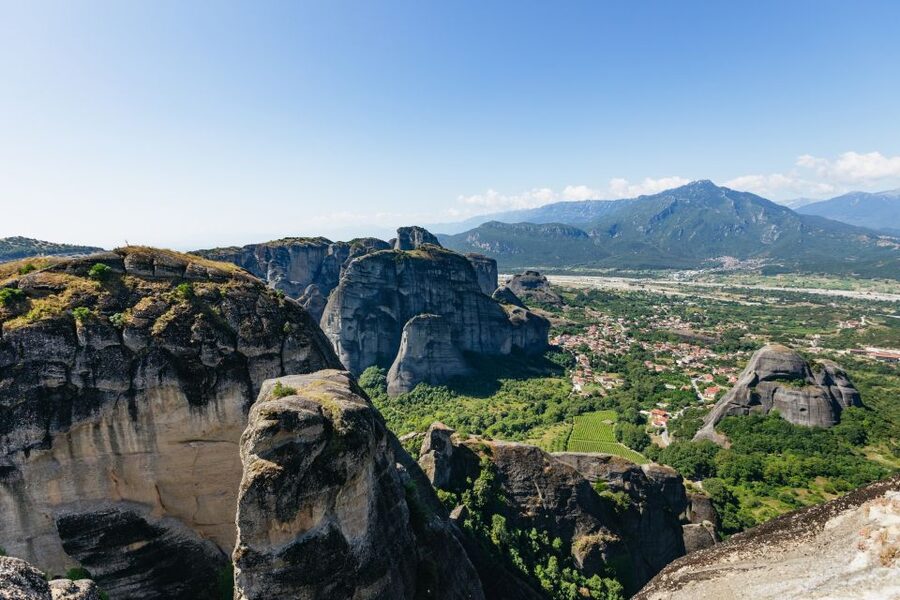
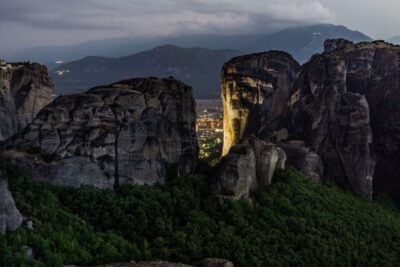
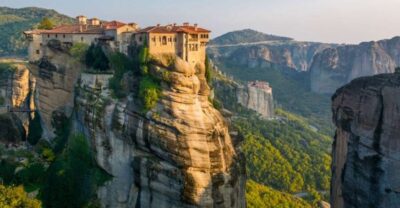
Meteora is the reason I would choose the two-day tour instead of a Delphi-only day trip. The name is linked to things suspended in the air, and the sight lives up to that idea: tall rock pillars rise from the valley, with monasteries built high above the ground.
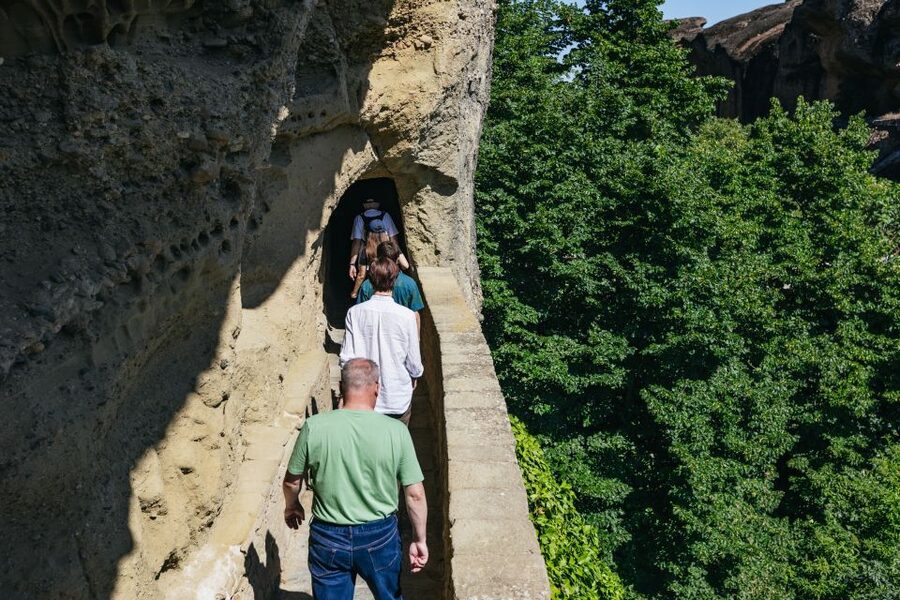
The morning visit includes two monasteries. Which two you enter can depend on the day’s operating schedule, but the format gives you a useful look at both the buildings and the setting. You see stone paths, religious art, chapels, courtyards, and wide views over the valley.
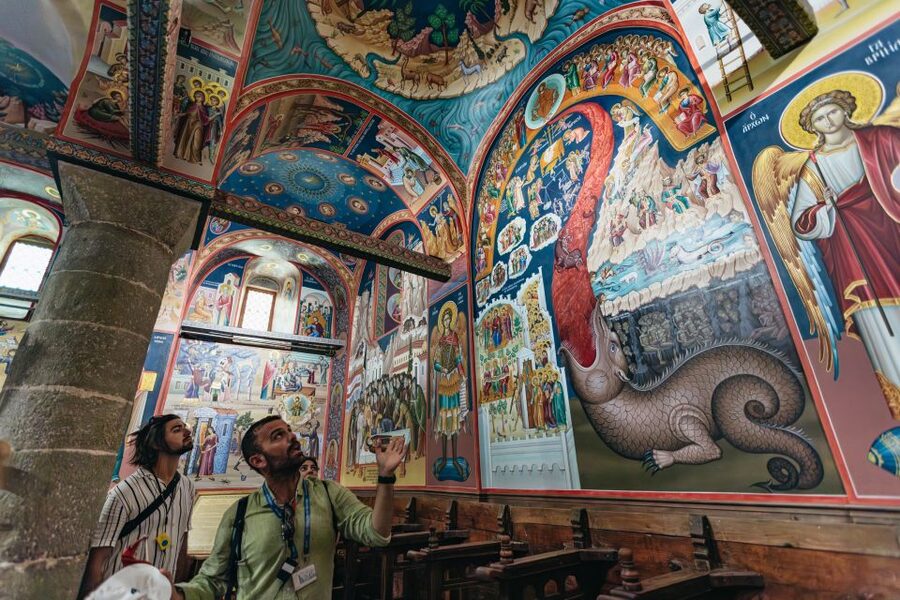
The interiors are as important as the cliffs. Orthodox paintings cover the walls in places, and the monasteries preserve a working religious tradition rather than serving only as historic monuments. Your guide helps explain the role of monastic life and the meaning of what you are seeing.
The approach roads are narrow and steep in places. This is where the driver’s skill matters. Several drivers have been praised for handling the large bus carefully on the mountain roads and tight approaches. The coach remains comfortable, but you should still expect steps and walking once you reach the monasteries.
Modest dress is compulsory. Women should wear long sleeves and a skirt below the knee. Men may not wear shorts. Trousers may not always be accepted for women without an extra covering, and scarves or wraparound garments may be provided at the entrance. The safest choice is to arrive dressed conservatively rather than rely on borrowed fabric.
The views can change quickly with the weather. Clear skies give you the full sweep of the valley and rock towers. Rain, fog, and low cloud can hide some formations, but they can also give Meteora a solemn, almost otherworldly mood. You cannot control the weather, so allow time for the site itself to carry the day even if photographs are less dramatic.
Crowds are another factor. The tour tries to arrive early, which can make the monastery visit more pleasant. Still, several buses may reach the same entrance together, producing queues. Follow the guide closely and keep your time at each monastery in mind, since the group must stay on schedule for the return to Athens.
Thermopylae and the return to Athens
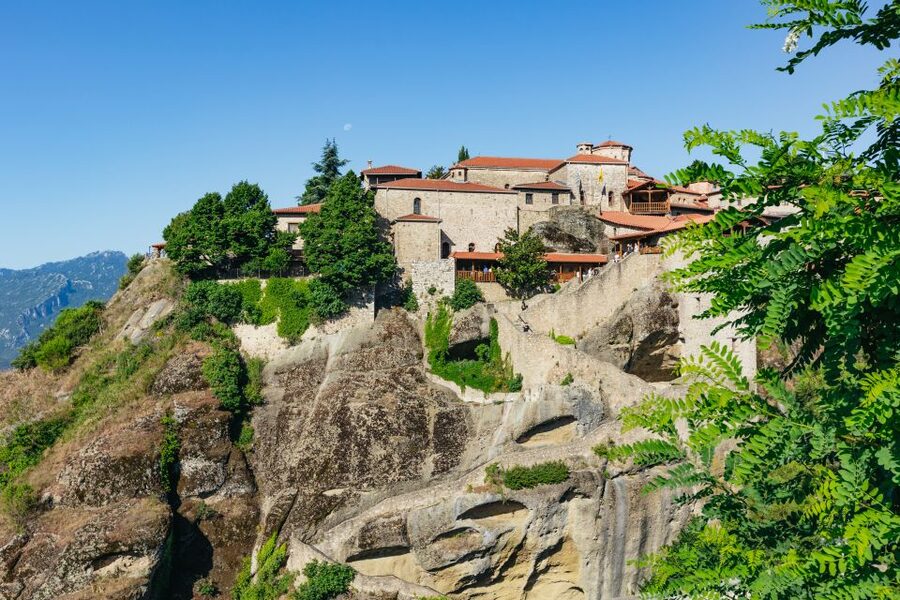
On the second day, the route back includes a short stop at Thermopylae. The monument honors Leonidas, King of Sparta, who died in 480 B.C. during the famous battle against the Persian army.
This is a brief historical pause, not a full archaeological visit. You will see the monument and hear the story, but there is not much time for a long walk to the battlefield area. If Thermopylae is a major interest, treat this stop as an introduction rather than a complete exploration.
The return to Athens is long, though rest stops break it up. Lunch is not included, and the second-day meal stop may feel more crowded and less appealing than the first day’s restaurant. Some food stops are described as organized and good, while others can be chaotic, with queues and limited choices.
That uneven meal experience is worth noting when you calculate the real cost. Bring snacks, carry water, and keep some cash or a payment card ready for lunch and drinks. You are paying for the transport and major sights, not a fully catered trip.
Drop-off is in central Athens, commonly around the early evening, though traffic can affect the exact arrival time. Do not plan a tight evening appointment or flight connection after the tour.
Guides, buses, and group rhythm
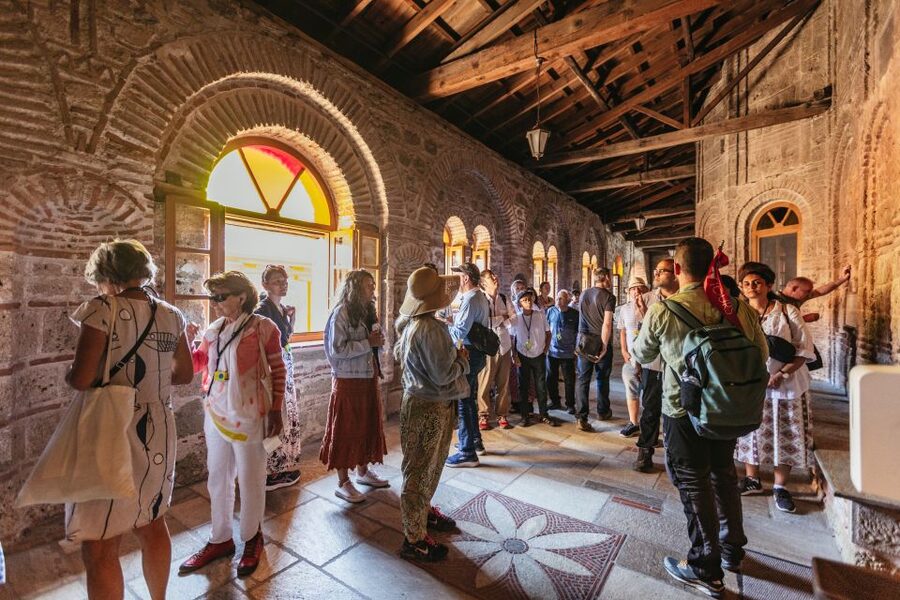
The strongest part of the operation is the human side. Guides such as Haroula and Marianna are praised for combining facts with humor and stories, while Angelike, Dosia, Mariana, Angela, and others have been described as warm, organized, and clear.
The guide’s role matters most on the coach. Delphi and Meteora are easier to understand when someone connects mythology, ancient Greek competition, Orthodox faith, and the towns you pass. Radio devices may be used at the sites, helping you hear explanations without standing shoulder to shoulder with the guide.
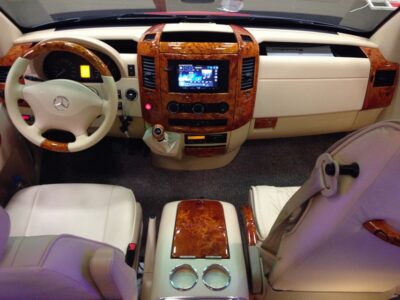
The bus is air-conditioned and generally comfortable. Drivers are often singled out for safe, calm handling, especially on the steep roads near Meteora. Group size can vary. Some departures may feel small, while others can approach 40 people, so expect less flexibility than you would have with a private guide.
The trip also involves a group rhythm: fixed departure times, shared meal stops, guided walks, and scheduled returns to the bus. I see that as a fair exchange for covering so much ground in two days, but it is not ideal if you dislike organized travel.
Who should book this trip?
I would recommend it to first-time visitors who want Delphi and Meteora without hiring a car or piecing together public transport. It suits couples, families, and solo visitors who value a guide, predictable transport, and a hotel night close to Meteora.
It is also a strong choice if Meteora is high on your list. The single-day Athens to Delphi trip cannot provide the same time among the rock monasteries. The overnight stay gives you a less frantic visit and lets you see the area in morning light.
You may want another plan if you use a wheelchair, need extensive free time, or care most about museums. The activity is not suitable for wheelchair users, and Delphi’s museum may be missed because of the schedule. People who prefer slow meals and independent wandering may also find the structure restrictive.
Practical tips for getting more from the $271 price
- Wear shoes with good grip and support.
- Pack a long-sleeved top and a knee-covering skirt or wrap for the monasteries.
- Bring a passport or ID card, which may be required for entry.
- Carry snacks and water for the long coach rides.
- Ask about Delphi free time before the guided portion ends.
- Keep room for the hotel tax, lunches, drinks, and snacks.
- If you want a single room, make the required separate single-person booking.
- Use the first evening in Kalambaka for a short walk if you still have energy.
Free cancellation is available up to 24 hours before departure, and you can reserve now and pay later. Pickup is offered from most central Athens hotels, but confirm the exact meeting point and time with Key Tours before the day of departure. Spanish and English guiding are available.
Should you book the Delphi and Meteora tour?
Book it if you want maximum sightseeing with minimum planning. The two great rewards are Delphi’s sacred ruins and Meteora’s cliff monasteries, with the latter likely to be the lasting memory. The guides and drivers add real value, and the included hotel, dinner, breakfast, admissions, and transport make the $271 fare easier to justify.
Do not book it expecting leisurely museum time or quiet, independent visits. Delphi is commonly the rushed portion, meal stops are uneven, and the second day includes a long ride back. For most people with only two days, though, this is a smart and memorable way to reach two of Greece’s most remarkable sites.
FAQ
How long does the tour last?
The experience lasts two days and includes one overnight stay in Kalambaka.
Is hotel pickup included?
Yes. Pickup and drop-off are available from most central Athens hotels. Pickup usually takes place about one hour before departure, and you should confirm the exact point and time with Key Tours.
What language is the tour offered in?
Live guiding is available in English and Spanish.
Which meals are included?
Breakfast and dinner are included with the hotel stay. Lunches, drinks, snacks, and other meals are not included unless specifically stated.
Which attractions are included in the price?
Admission to the Delphi archaeological site and two Meteora monasteries is included.
Is the hotel included?
Yes. Accommodation in a three-star or four-star hotel is included, depending on the option selected.
What clothing is required at the Meteora monasteries?
Women should wear long sleeves and skirts below the knee. Men are not allowed to wear shorts.
Is the tour suitable for wheelchair users?
No. The activity is not suitable for wheelchair users.
Just added around Athens
- Delphi One Day Trip from Athens★ 4.0 · 98 reviews
- Mercedes Private Tour to Delphi and Arachova★ 5.0 · 30 reviews
- Private Delphi and Hosios Loukas Monastery – Great Lunch and Drinks Included★ 5.0 · 36 reviews
- Day tour to Ancient Olympia,Ancient Sparta Mycenae Including Meal★ 5.0 · 54 reviews
- Athens: Half Day Trip To Cape Sounio/Poseidon Temple Semi Private★ 5.0 · 131 reviews
- Athens Half-Day Private Tour Acropolis, Parthenon City Highlights★ 5.0 · 35 reviews
- From Athens: Day Tour to Mykonos★ 5.0 · 64 reviews
- Culinary Secrets of Downtown Athens★ 5.0 · 103 reviews
2-Day Experiences, compared.
2-Day Tour to Delphi & Meteora with Guide and Tickets From Athens
Read our review →
2 Days in Meteora with 2 Guided Tours and Hotel Stay
Read our review →
2-Day Meteora Tour with Local Guides and Hotel Stay
Read our review →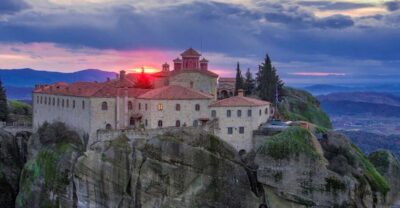
Meteora 2-Day Trip with Hotel, Sunset & Morning tour
Read our review →
Browse the lists this tour appears in