
Reviewed · ANCIENT CORINTH TOURS
Full Day Biblical Ancient Corinth Canal Mycenae Epidauvro Nafplio
Ancient stones, sea views, and one long day. This private Peloponnese excursion packs the Corinth Canal, Ancient Corinth, Mycenae, Palamidi Castle, and Nafplio into roughly nine to ten hours. I like the door-to-door pickup and the freedom to shape the day with your driver, especially when you are staying in Athens or arriving by ship.
I also like the personal service. Drivers such as Chris, Michael, Costas, Yiannes, Ioannis, Dimitrios, and Gianny have been praised for careful driving, useful historical explanations, patience, and thoughtful restaurant advice. The main drawback is the pace: entrance fees, lunch, and a licensed guide are extra, and the advertised itinerary does not clearly include a stop at Epidaurus despite the tour title.
In This Review
- Key things to know before booking
- A full day beyond Athens
- The Corinth Canal and the old crossing of the isthmus
- Cenchreae and the biblical thread
- Ancient Corinth, where Saint Paul faced Gallio
- Mycenae and the world of Agamemnon
- Palamidi Castle and the famous 999 steps
- Nafplio old town, lunch, and the sea
- How the driver service affects the day
- Is $277.09 per person good value?
- Who should choose this Peloponnese day trip?
- Final booking advice
- FAQ
- How long does the tour last?
- Is hotel pickup included?
- Is this a private tour?
- Is a licensed archaeological guide included?
- Are entrance fees included?
- Is lunch included?
- Does the itinerary include Epidaurus?
Key things to know before booking
- The Corinth Canal is a quick but worthwhile opening stop, with about 15 minutes for photos and the story of the ancient ship-hauling road called the diolkos.
- Ancient Corinth receives the strongest biblical connection, including the Bema associated with Saint Paul and the remains of the Roman forum.
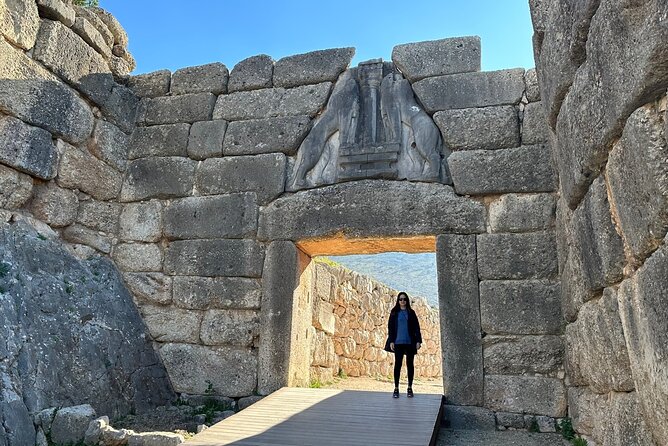
- Mycenae brings Bronze Age Greece to life, with the Lion Gate, Cyclopean walls, museum, and Treasury of Atreus.
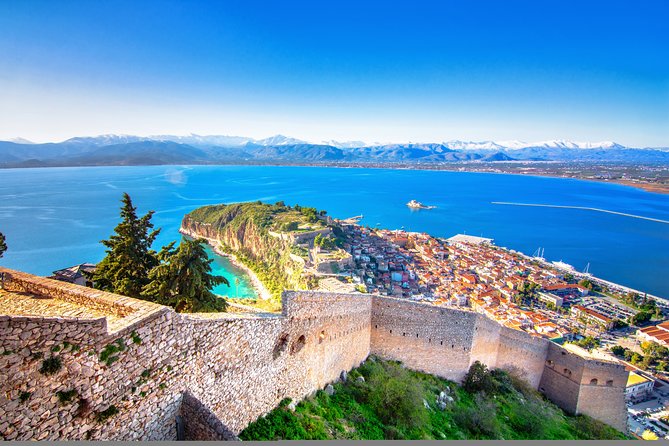
- Palamidi Castle means steep steps, with 913 steps from town and a local tradition that counts 999 to the top.
- Nafplio gives the day breathing room, with a two-hour old-town visit, lunch by the sea, and time around Syntagma Square.
- This is a private car service, not a standard guided group tour, so the driver can explain the region and help with choices, but is not a licensed guide inside the archaeological sites.
A full day beyond Athens
The appeal here is simple: you see several important places in the northeastern Peloponnese without changing hotels or figuring out regional buses. Your driver collects you from an Athens hotel, apartment, port, or another agreed location, then returns you to the same place or a point you choose.
Groups of one to three use a luxury sedan, while groups of four to seven travel in a minivan. The vehicles have air-conditioning, Wi-Fi, and bottled water. Pickup is offered at hotels, apartment entrances, ports, and the airport for an extra charge.
I would think of the experience as a private transfer with serious sightseeing built in. Your driver should know the roads, keep the day moving, and provide context along the way. But you should not expect a museum guide leading a lecture through every ruin. A licensed guide is not included, and admission costs are separate.
The day works best for people who value comfort and flexibility over the lowest possible price. At $277.09 per person, the cost is easier to justify for a small group splitting the vehicle than for one person traveling alone. You are paying for private transport, pickup and drop-off, a long route, and the ability to adjust the timing. You are not paying for meals, site tickets, or a full-time archaeologist.
More Ancient Corinth and canal trips:
- From Athens: Ancient Corinth Day Trip with Canal & VR Guide
★ 4.6 · 1,073 reviews - Private Biblical Tour Ancient Corinth & Isthmus Canal from Athens
★ 5.0 · 762 reviews - Athens: Ancient Corinth & Nafplio Full Day Trip with Swim
★ 4.8 · 523 reviews
The Corinth Canal and the old crossing of the isthmus
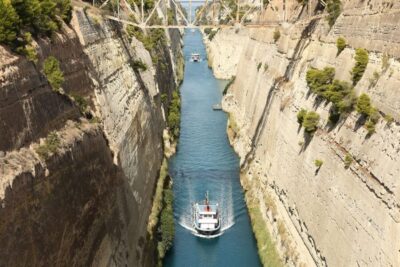
The Corinth Canal is the first major photo stop, usually lasting about 15 minutes. It cuts through the narrow isthmus and links the Gulf of Corinth with the Saronic Gulf, separating the mainland from the Peloponnese in practical geographic terms.
The canal itself was completed in the late 19th century, but the idea is far older. Ships once had to sail around the Peloponnese, adding about 185 nautical miles to the journey. Periander, the ruler of Corinth in the sixth century BC, is credited with considering a canal, though the engineering challenge was too great at the time.
Instead, ships could be moved across the isthmus on wheeled platforms using the diolkos, a stone route that served as an early form of portage. That detail helps you see the canal as more than a modern cut in the rock. It is the latest solution to an old transportation problem.
The stop is short, and admission is free. You will have time for photographs and a quick look, not a long walk or a full museum visit. If you enjoy engineering, ancient trade, or geography, this opening stop gives the rest of the day a useful frame.
Cenchreae and the biblical thread
The visit to the Corinthia region includes Kechries, the modern village associated with the ancient port of Cenchreae. The stop lasts about 15 minutes and is also free.
Its main importance is biblical. In Acts 18:18, Saint Paul is associated with Cenchreae during his second missionary journey. Paul also refers to the local Christian assembly and Phoebe in his letter to the Romans.
This is not a long archaeological visit, so the value depends on your interest in early Christianity and Saint Paul. If that subject matters to you, the stop gives the Corinth portion of the day a personal connection. If you mainly want monumental ruins, you may find the time more limited than the other stops.
Ask your driver how much time is available and what you will actually see at the modern village. The schedule describes a brief visit, so keep your expectations modest.
Ancient Corinth, where Saint Paul faced Gallio
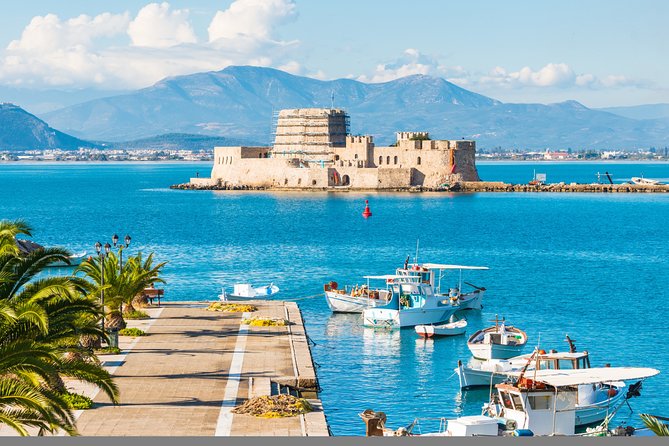
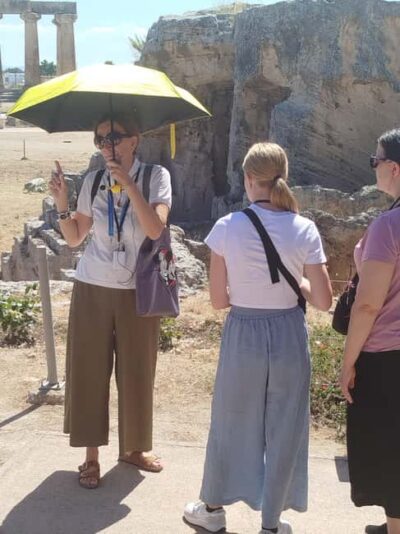
Ancient Corinth is the main archaeological visit in this part of the route. The planned time at the site is about 45 minutes, followed by 30 minutes in the archaeological museum, then shorter stops for the Temple of Apollo, the Agora, and Acrocorinth.
The Roman forum gives you the clearest sense of Corinth as a working city. Shops, public buildings, fountains, roads, and religious structures once filled this center. The Bema, a raised platform in the forum, is traditionally linked to the hearing involving Saint Paul and the Roman proconsul Gallio.
According to Acts 18, Gallio declined to treat Paul’s case as a criminal matter, considering it a dispute within Judaism. In later centuries, the Bema was turned into a Christian church, likely because of its connection to Paul.
That blend of Roman civic life and early Christian history makes Corinth especially useful for first-time visitors. You are not looking at isolated columns. You are seeing the public center of a city where law, trade, religion, and politics met.
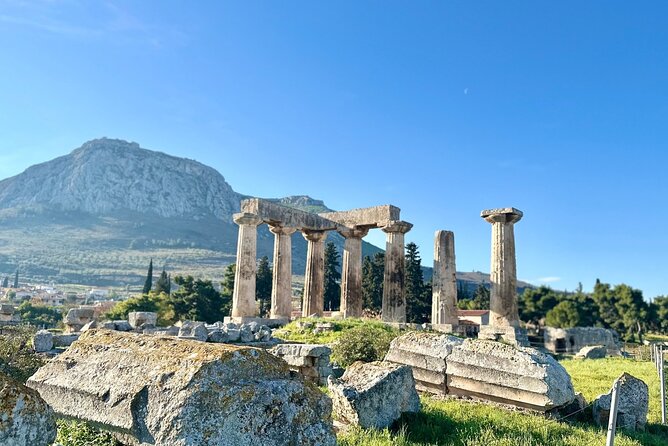
The Temple of Apollo is one of the site’s most memorable structures. Built around 550 BC, it is among the earliest Doric temples in the Peloponnese and the Greek mainland. Its large monolithic columns are a reminder of how much engineering and labor went into even the oldest surviving monuments.
The museum adds smaller objects and everyday context. It sits within the archaeological site and presents material found during excavations, including items connected with the Agora, Lechaion Road, the Peirene Fountain, the basilica, the stoa, and the odeon.
Entrance to both the archaeological site and museum is not included. You will need to budget for those tickets, and the 45-minute site visit is fairly brisk if you want to read signs, take photographs, and see every section.
Acrocorinth is listed as a 15-minute stop. This huge rock above Ancient Corinth served as the city’s acropolis and a defensive position controlling access to the isthmus. Its water supply helped it remain useful as a final stronghold for centuries.
A short stop lets you appreciate the position and the views, but it is not enough for a complete fortress visit. If walking through the walls is a priority, discuss the schedule in advance. The route already covers a lot of ground, and extra time here will have to come from another stop.
A few more Athens half-days to weigh up
- All Day Cruise -3 Islands to Agistri,Moni, Aegina with lunch and drinks included
★ 5.0 · 4,958 reviews - From Athens: Delphi Full Day V.R. Audio Guided Tour
★ 4.6 · 3,028 reviews - Athens Full Day Private Tour
★ 5.0 · 2,903 reviews - From Athens: Mycenae, Epidaurus & Nafplio Full Day Trip
★ 4.8 · 2,438 reviews
Mycenae and the world of Agamemnon
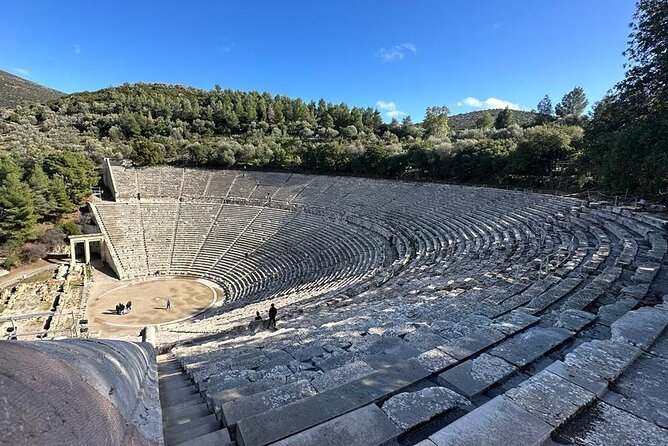
Mycenae is the day’s great Bronze Age site. The fortified citadel gave its name to the Mycenaean civilization, which flourished roughly from 1600 to 1100 BC. At its height around 1350 BC, the citadel and lower town may have held about 30,000 people across a large area.
The first impression comes from the Cyclopean walls. The blocks are so large that later Greeks believed only the Cyclopes could have moved them. You can see why the old story took hold. These walls were designed to protect a powerful center, not merely to decorate it.
The Lion Gate is the famous entrance. Built around 1250 BC, it carries a relief of two lions or lionesses above the doorway. It is the only surviving monumental example of Mycenaean sculpture and one of the best-known images from prehistoric Greece.
The approach through the gate is more powerful than a photograph suggests. You pass through an entrance built for ceremony and defense, then enter the citadel associated with King Agamemnon in Greek myth. The historical site and the epic stories do not line up perfectly, but the combination gives Mycenae much of its pull.
The archaeological museum takes about 15 minutes in the scheduled plan. It helps explain the site’s buildings, burials, objects, and long period of occupation. You can see how the citadel connected to nearby funerary and residential areas, rather than treating the Lion Gate as a complete story by itself.
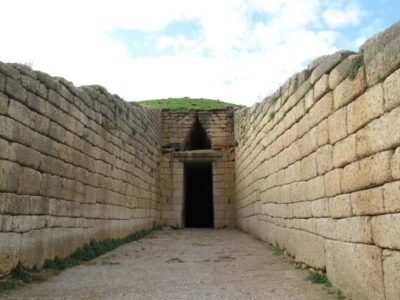
The Treasury of Atreus, also called the Tomb of Agamemnon, is another essential stop. This tholos tomb has a beehive-shaped interior and dates to about 1250 BC. The enormous stone lintel above the entrance weighs roughly 120 tons, an astonishing piece of Bronze Age construction.
The tomb is not just a dramatic chamber. It shows the wealth and authority of the people buried at Mycenae. The site was known in antiquity, and the Roman writer Pausanias described it centuries before modern archaeology reached the citadel.
The planned time at Mycenae is about one hour, with separate short visits for the Lion Gate, museum, and tomb. That is enough for a strong first look, but not a slow archaeological study. The ground includes uneven surfaces and uphill walking, so practical shoes will help.
One important note: the title includes Epidauvro, but the detailed schedule supplied for this experience does not list a stop at Epidaurus or its theater. A separate review refers to Corinth, Mycenae, Epidaurus, and Nafplio, but the listed route focuses on Corinth, Mycenae, and Nafplio. Ask for written confirmation before booking if Epidaurus is a must-see.
Palamidi Castle and the famous 999 steps
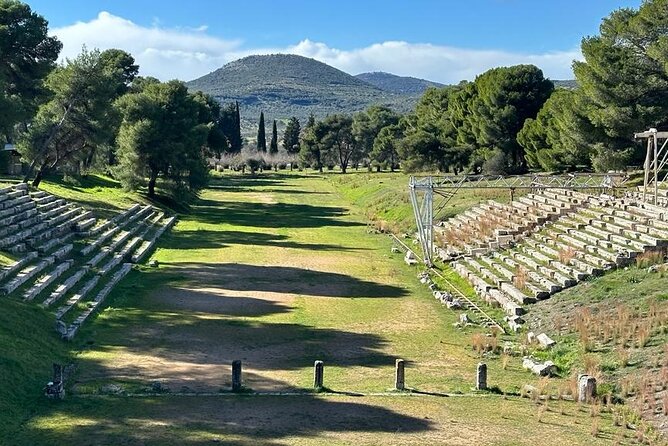
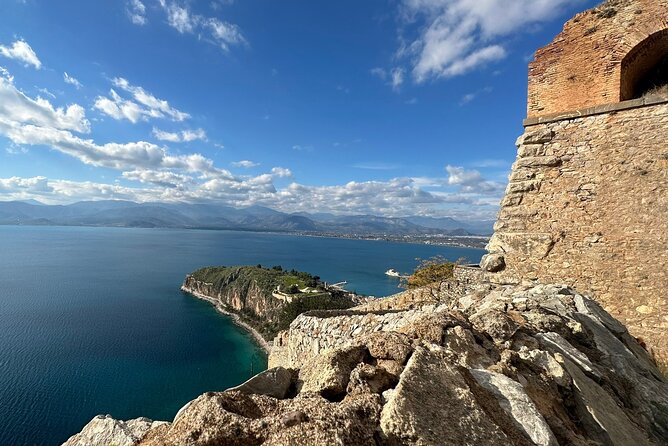
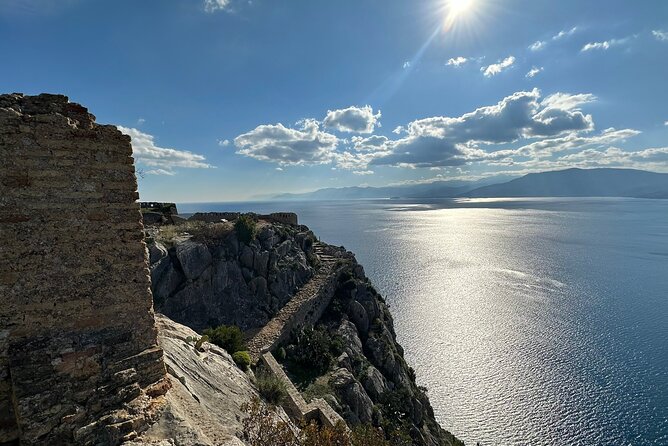
Palamidi Castle rises above Nafplio on a 216-meter hill. The Venetians built the fortress during their second period of rule, from 1686 to 1715. Its position gives you wide views over Nafplio, the Argolic Gulf, and the surrounding country.
The climb from town is commonly described as 913 steps, while local tradition counts 999 steps to the top. The itinerary gives you about 30 minutes here, so you should decide how much of the fortress you want to tackle before you start climbing.
The steps are the main challenge. A fast visit may mean reaching a viewpoint, taking photographs, and seeing part of the fort rather than inspecting every bastion. The fortress also includes routes through the walls and the prison connected with Kolokotronis.
I would not treat the 999 steps as a casual add-on. Wear firm shoes, carry water, and be realistic about your pace. The driver provides bottled water, but you should still arrive prepared for heat and exertion. If stairs are difficult for you, ask how the stop can be adjusted.
The reward is not only the fortress itself. From above, Nafplio’s position becomes clear: a compact historic town, a broad harbor, and a coastline that made the area valuable to Venetian, Ottoman, and Greek rulers.
Nafplio old town, lunch, and the sea
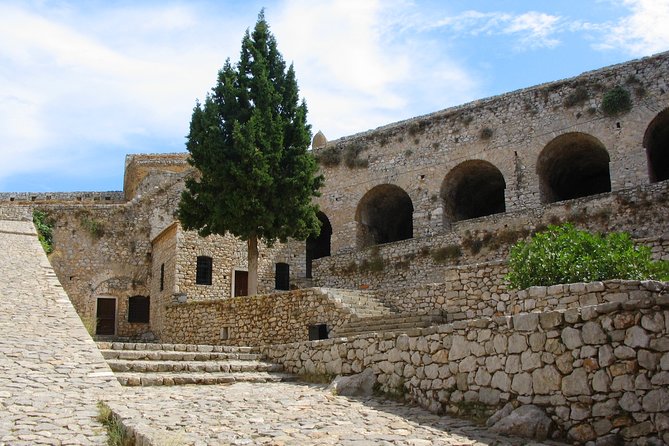
Nafplio is where the schedule slows down. You receive about two hours for the old town, with lunch planned at a traditional seaside taverna. The meal is not included, so check prices and menu choices before ordering.
The old town centers on Syntagma Square, a broad historic space surrounded by important buildings. Cobbled streets, neoclassical houses, Venetian touches, balconies, and stone stairways give the town a different feel from the archaeological sites earlier in the day.
Nafplio served as the capital of the newly formed Greek state until 1834. That recent political history adds another layer to the visit. You are moving from Bronze Age kings and Roman officials into the early years of modern Greece.
Bourtzi, the small fortress on the islet of Agioi Theodoroi, is one of the town’s best-known views. The Venetians built it in 1473 and called it Castello dello Soglio. The Ottoman name Bourtzi means fortress.
The schedule allows about an hour for Bourtzi, and the crossing takes less than ten minutes by boat. The boat ride and fortress admission are not included, so confirm the day’s operating details and ticket costs with your driver. The islet has served as a prison and later as a luxury hotel. Today, its chief appeal is the view back toward Nafplio and the harbor.
Syntagma Square receives another 30-minute stop. The former Parliament building dates from the period of Ioannis Kapodistrias, the first governor of the modern Greek state. The Municipal Gallery occupies the ground floor today.
You can also see Akronafplia, the oldest part of Nafplio. It was once a separate settlement before Frankish and Venetian rulers folded it into the town’s defenses. Later, part of the area served as a prison, and a hotel complex was built there to make use of its impressive position.
The Lion of the Bavarians provides a final historical stop. Carved into the rock, it honors Bavarian soldiers who died in Nafplio in 1833 during a typhoid epidemic. The sleeping lion is the work of Christian Ziegel and was commissioned by King Louis, father of King Otto.
These short Nafplio visits work best as a walking introduction. You will not have time to explore every side street, museum, fortress, and waterfront café. Still, the town is a welcome change after the ruins and gives you a chance to eat, stretch your legs, and enjoy the coast.
How the driver service affects the day
The strongest part of this experience is the human side of the transport. Gianny is praised for professional service, a comfortable car, and careful driving. Chris receives particular praise for adjusting the day around priorities and making the long route feel personal.
Michael is described as patient when the schedule changed, while Costas is praised for arrival texts, early pickup, water, solid English, historical stories, and a well-chosen restaurant with a fine view. Yiannes, Ioannis, and Dimitrios are also singled out for courtesy, good explanations, careful driving, and useful choices.
That pattern matters. A route this long can feel like a race if the driver simply follows a timetable. A good driver helps you decide where to spend your limited time, tells you what you are seeing, and keeps the ride comfortable.
Still, the driver’s role has limits. The tour does not include a licensed guide inside the archaeological sites. If you want detailed interpretation at every monument, you may need to arrange that separately.
Is $277.09 per person good value?
The price is reasonable for a small private group that wants a full day without public transport. You receive a luxury sedan for up to three people or a minivan for four to seven, plus pickup, drop-off, air-conditioning, Wi-Fi, water, and a driver who can help shape the day.
The value falls if you are traveling alone and mainly want admission to the sites. Tickets are extra, lunch is extra, Bourtzi costs are extra, and a licensed archaeological guide is not part of the price.
For two or three people, the private vehicle and flexible timing make more sense. You can avoid coordinating several buses and keep your luggage or personal items with you. For a larger family or small group, the per-person cost becomes easier to defend.
The tour is also useful after a cruise if you want to see the Peloponnese before returning to Athens. Airport pickup is available for an additional charge, but the standard service covers Athens hotels, apartments, and ports.
Who should choose this Peloponnese day trip?
I would recommend it to you if you want to combine major ancient sites with a beautiful historic town and prefer a private car. It is a particularly good fit for couples, families, and small groups who value a driver’s local advice.
It suits people with a strong interest in Saint Paul, Bronze Age archaeology, Greek fortresses, and the early modern Greek state. The range is unusually broad, though that range also creates the day’s main weakness: you cannot linger everywhere.
You should think twice if you want a slow, specialist archaeological tour, if climbing Palamidi would be difficult, or if Epidaurus is essential and cannot be confirmed. You should also budget for admissions and lunch before deciding the total cost.
Free cancellation is available up to 24 hours before the start time. Poor weather can lead to a different date or a full refund, according to the stated policy.
Final booking advice
I would book this tour for comfortable private transport, strong driver service, and a big overview of Corinth, Mycenae, and Nafplio. The combination of Saint Paul’s Corinth, Agamemnon’s citadel, Palamidi’s views, and Nafplio’s waterfront gives you a memorable day outside Athens.
Before paying, confirm three details: the exact entrance fees, the time available at each site, and whether Epidaurus is actually included. If you accept the quick pace and extra costs, this is a very practical way to cover a demanding stretch of the Peloponnese in one day.
FAQ
How long does the tour last?
The experience lasts approximately nine to ten hours and ends back at the meeting point or another agreed location.
Is hotel pickup included?
Yes. Pickup and drop-off are offered from an Athens hotel, Airbnb residence, or port. Airport pickup and drop-off are available at an additional cost.
Is this a private tour?
Yes. Only your group participates. Groups of one to three use a luxury sedan, and groups of four to seven use a minivan.
Is a licensed archaeological guide included?
No. The tour includes an English-speaking driver with historical knowledge, but a licensed guide for the archaeological sites is not included.
Are entrance fees included?
No. Admission fees for the attractions are not included in the tour price.
Is lunch included?
No. A lunch stop at a traditional seaside taverna in Nafplio is scheduled, but you pay for your own meal.
Does the itinerary include Epidaurus?
The detailed schedule provided does not list a stop at Epidaurus, although the tour title refers to Epidauvro and one description mentions it. Confirm this directly before booking if you want to visit the ancient theater.
Just added around Athens
- Traditional Greek Show in Plaka with Dinner★ 3.6 · 178 reviews
- Santorini Wine Roads Tour with Wine Tastings Morning & Sunset★ 5.0 · 106 reviews
- Private Sunset Wine Tour with 3 Wineries and Tapas★ 5.0 · 34 reviews
- Insightful Pistachio Orchard and Factory Tour★ 4.5 · 27 reviews
- Traditional Villages Full day Tour in Santorini★ 4.0 · 84 reviews
- Half Day Tour★ 5.0 · 63 reviews
- Half-Day Shared Fishing Experience in Hydra★ 5.0 · 35 reviews
- Athens Old City Private Photoshoot Tour / 2 hrs★ 5.0 · 109 reviews
Ancient Corinth Tours, compared.
Ancient Corinth Day Trip with Canal & VR Guide
Read our review →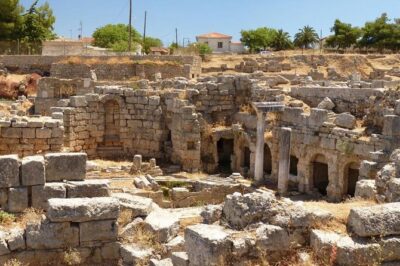
Private Biblical Tour Ancient Corinth & Isthmus Canal from Athens
Read our review →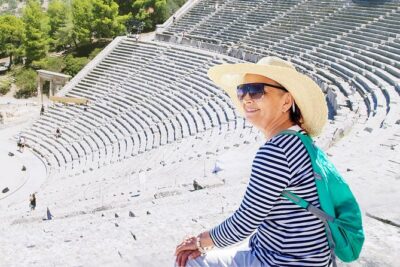
Ancient Corinth & Nafplio Full Day Trip with Swim
Read our review →
Private Tour of Apostle Paul’s Footsteps in Ancient Corinth
Read our review →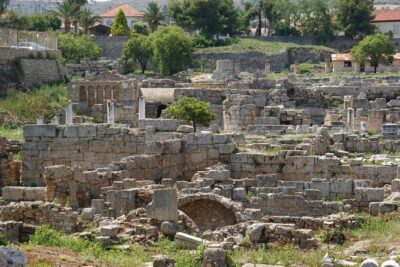
Corinth Half-Day Trip from Athens with Entrance Tickets
Read our review →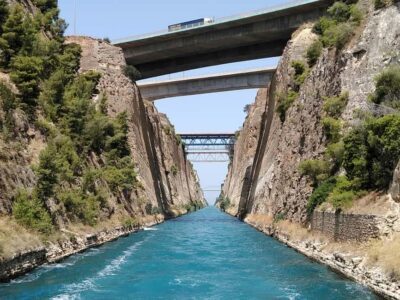
Browse the lists this tour appears in