
Reviewed · ANCIENT CORINTH TOURS
Private Biblical Tour Ancient Corinth & Isthmus Canal from Athens
Paul’s Corinth is closer than you think. This eight-hour private trip from Athens connects the Corinth Canal, ancient ship routes, Acrocorinth, and the places linked with Paul’s ministry. I like the door-to-door pickup and the freedom to shape the day around your interests. I also like the air-conditioned vehicle, Wi-Fi, bottled water, and the chance to ask questions as you go.
The main point to understand is that your driver is not automatically a licensed guide inside the archaeological site and museum. Most drivers, including Yannis, Tas, Peter, and Giannis, are praised for their local and biblical knowledge, but an optional licensed guide costs €190 per booking. If you want detailed archaeological interpretation, add that service before you go.
In This Review
- The key points at a glance
- Leaving Athens for the Corinth Canal
- Seeing the Corinth Canal from the Isthmus
- Walking beside the ancient Diolkos
- Climbing Acrocorinth for the widest views
- Connecting ancient Corinth with Paul’s letters
- Exploring the Temple of Apollo and the Roman Forum
- Lunch in Ancient Corinth or by the sea
- Following Paul to the port of Kenchreai
- What private transport adds to the day
- Who should book this Corinth day trip?
- Should you book it?
- FAQ
- How long does the private Corinth tour last?
- Where can pickup and drop-off take place?
- Is the tour private?
- Is transportation included?
- Is the Ancient Corinth entrance fee included?
- Is lunch included?
- Can I add a licensed guide?
- Is Acrocorinth difficult to walk?
- Is the tour offered in English?
- What is the cancellation policy?
- What does the tour cost?
The key points at a glance
- Paul’s Corinth in context: You connect Acts 18 with the city’s trade routes, Roman court, ports, and social life.
- The Canal is more than a photo stop: The modern cut makes sense only after you learn how difficult it once was to move ships across the isthmus.
- Acrocorinth brings the big views: The steep, rocky climb leads to a fortress site high above the Corinthian and Saronic seas.
- Private means flexible: Your driver can adjust the order, pace, stops, and meal location for your group.
- The archaeological site costs extra: Ancient Corinth and its museum charge €15 per person, paid at the site.
- A licensed guide is optional: Add one for €190 per booking if biblical or archaeological detail is your top priority.
Leaving Athens for the Corinth Canal
Your driver collects you from your Athens hotel, Airbnb, apartment, or port pickup point. For an airport transfer, you can arrange pickup for an added charge. The vehicle is private, air-conditioned, and equipped with Wi-Fi, and bottled water is included.
The drive gives you useful context before the first major stop. Corinth sits at the narrow isthmus joining mainland Greece with the Peloponnese. In ancient times, that strip of land was the key to moving people, cargo, and ships between the Corinthian Gulf and the Saronic Gulf.
I like starting here because the geography explains nearly everything that follows. Corinth was not important by accident. Its position made it a commercial power, a military prize, and a natural place for Paul to build a Christian community.
The tour is offered in English. Previous guests have praised drivers such as Yannis, Tas, Peter, and Giannis for clear explanations, friendly service, and willingness to answer questions. Tas and Peter are also praised for small touches such as chilled water, fresh cookies, photographs, and local restaurant suggestions.
More Ancient Corinth and canal trips:
- From Athens: Ancient Corinth Day Trip with Canal & VR Guide
★ 4.6 · 1,073 reviews - Athens: Ancient Corinth & Nafplio Full Day Trip with Swim
★ 4.8 · 523 reviews - Private Tour of Apostle Paul’s Footsteps in Ancient Corinth
★ 5.0 · 275 reviews
Seeing the Corinth Canal from the Isthmus
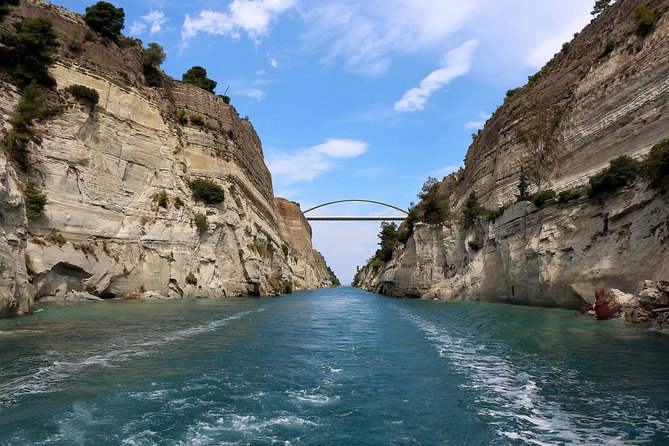
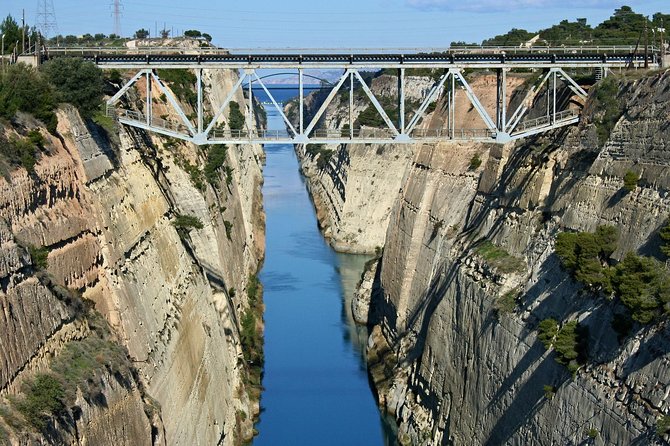
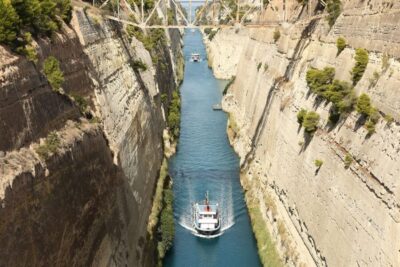
The Corinth Canal is scheduled for about 50 minutes. Admission is free, and the stop gives you time to see the narrow waterway and understand its role in modern Mediterranean shipping.
The canal was one of the major engineering projects of the 19th century. It cuts through the isthmus and saves ships from sailing around the Peloponnese. From above, the steep walls and thin strip of water make the scale easy to grasp.
The stop is short enough to keep the day moving, but it is not merely a quick photograph. Your driver can explain why this route mattered long before the canal existed. One past guest was especially pleased that the guide showed how the canal worked and explained its local story.
If you are hoping to see a boat passing through, timing matters. The tour includes the canal area, but it does not promise a scheduled vessel passage. One driver, Pete, sent photographs and videos of boats moving through the canal, so you can ask your driver about current conditions and the best viewpoint.
Walking beside the ancient Diolkos
The Diolkos is one of the most unusual stops. Here, you see the ancient limestone route used to move boats overland across the isthmus. Before the modern canal, ships and cargo could be dragged from one gulf to the other with the help of people, oxen, and other animals.
The system was hard labor, but it gave Corinth control over a vital crossing. The route helped the city influence a large network of Greek colonies and coastal trading centers. It also explains why Corinth offered Paul a strong base for his work.
This is where the biblical story benefits from geography. Paul did not choose Corinth only because it was another city on the map. It was a major meeting point for merchants, sailors, officials, and workers. An 18-month stay made sense in a place where people arrived from many directions.
The Diolkos stop lasts about 30 minutes. You will not spend hours walking a long trail, but the exposed stone route adds something the canal alone cannot provide. The modern canal shows the solution. The Diolkos shows the older problem.
Climbing Acrocorinth for the widest views
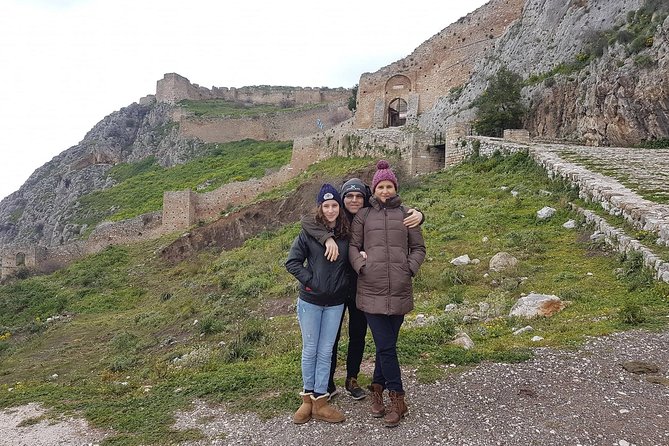
Acrocorinth is the most physically demanding part of the day. The ancient acropolis rises about 1,886 feet above sea level and is protected by roughly 4.9 miles of walls, with three gates. It is a huge natural fortress, not a gentle hilltop stroll.
You can see remains connected with several periods of Corinthian history, including churches, mosques, houses, cisterns, and the site associated with the Temple of Aphrodite. The hill also carries links to the myth of Pegasus, the winged horse.
The rewards are the views. From the high rock, you can look across the valley and toward both the Corinthian and Saronic seas. You also see the Frankish tower and the broad defensive walls that made this position so powerful.
One important warning: the climb is steep and rocky, and there are no handrails in the areas described by past visitors. Wear sturdy shoes with good grip. Wet stone can be slick, and this is not the place for smooth sandals. You can discuss how far to climb with your driver, since the private format allows more flexibility than a fixed group schedule.
The tour also visits Hadgimoustafa Spring, a fountain built during the Ottoman period in 1555. Water from the Upper Peirene spring still flows there. Local mythology connects the spring with Pegasus and the goddess Athena, giving the stop a pleasant mix of legend, engineering, and later history.
A few more Athens half-days to weigh up
- Athens: Acropolis & up to 5 Archaeological Sites Combo Pass
★ 4.4 · 12,619 reviews - Athens: Acropolis Ticket with Optional Audio or Live Guide
★ 4.2 · 11,055 reviews - Athens: Acropolis, Parthenon & Acropolis Museum Guided Tour
★ 4.8 · 9,316 reviews - Athens: Cape Sounion & Poseidon Temple Sunset Half-Day Trip
★ 4.8 · 8,241 reviews
Connecting ancient Corinth with Paul’s letters
The next part of the day brings you to Ancient Corinth, also called Archaia Korinthos. The setting helps connect Paul’s letters with a real city of markets, roads, courts, temples, ports, and ordinary homes.
The tour includes visits to Neo-Byzantine churches, including one dedicated to the Virgin Mary and another connected with the apostle Paul. At the Virgin Mary church, you can see marble references to First Corinthians 13, including the familiar message that love is the greatest.
The church dedicated to Paul includes a mosaic by Vlasis Tsotsonis showing Saul on the road to Damascus. The discussion then moves through Paul’s baptism, his conversion, and the difficulties he faced in Corinth. Acts 18 becomes more concrete when you stand in the same general setting associated with his preaching and legal challenge.
The tour also covers Gallio’s judgment of Paul in Acts 18:12 to 17. That episode matters because it places Paul’s ministry within Roman law and civic authority, rather than treating it as an isolated religious story.
Your driver may be able to enter churches and explain local details, but the depth can vary by driver. That is one reason to consider the optional licensed guide for the archaeological site and museum. The driver-led experience is personal and flexible, but the professional guide is the better choice if you want formal interpretation at each exhibit.
Exploring the Temple of Apollo and the Roman Forum
The archaeological site and museum receive about one hour and 40 minutes. The €15 entrance fee is not included and can only be purchased at the site. Give yourself time for this portion, since it is the main place where the city’s ancient and Roman remains come together.
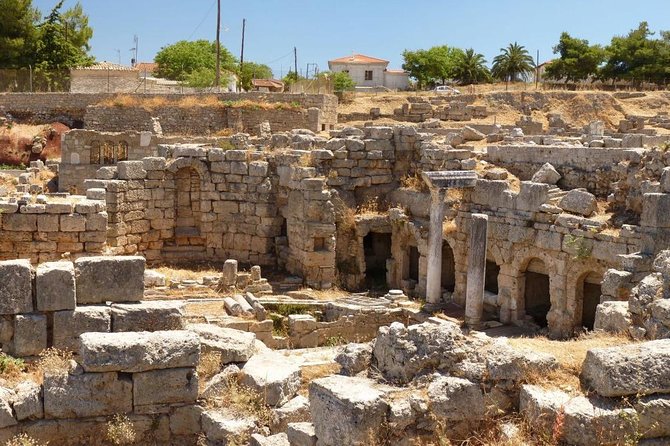
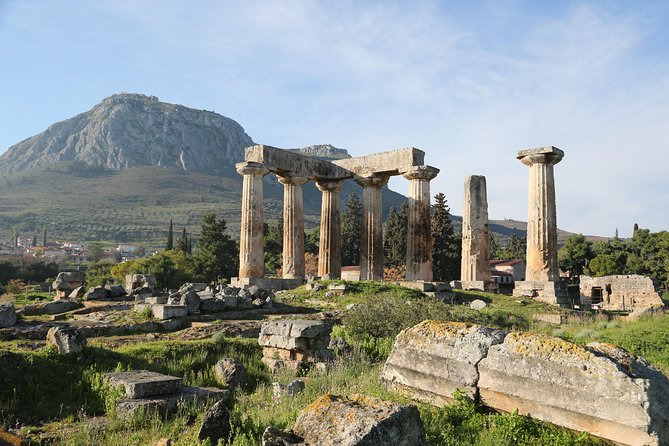
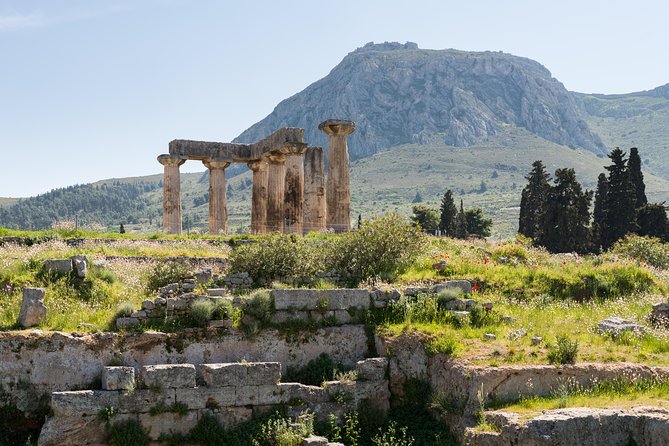
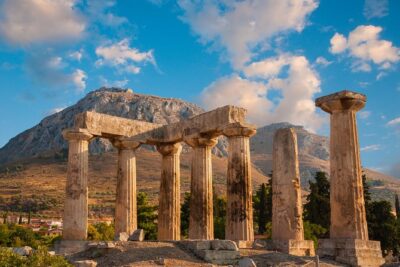
The Temple of Apollo is an early Doric temple, built around 560 BCE. Its monolithic Doric columns are a striking feature. They help you picture Corinth as a Greek city before its later Roman rebuilding.
The Roman Agora gives you a different view. This was a central market area with shops, small temples, altars, Roman buildings, baths, and public spaces. You can also see the ancient amphitheater, Roman Odeon, Lechaion Road, Glaukus Fountain, and the Bema.
The Bema is especially important for a biblical tour. It was the raised platform where Paul was brought before Gallio. Here, the story of Acts 18 connects with a physical civic setting. The point is not simply that Paul stood somewhere in Corinth. He stood before Roman authority in a public center of city life.
Several people who added a private guide inside the site and museum found that the experience gained more detail. Christina and Lana are praised for using biblical passages at key exhibits, including reading verses connected with the Bema. If you have studied Corinthians or Acts closely, this upgrade may be worth the extra €190.
Without the licensed guide, your driver generally remains your driver and may not walk through every museum display with you. One positive feature of the arrangement is that you still have freedom to explore at your own pace. The tradeoff is less formal explanation inside the ruins.
Lunch in Ancient Corinth or by the sea
Lunch takes about one hour and 20 minutes and is not included in the price. The planned choices are a village-style meal in Ancient Corinth or a seaside meal near the Baths of Helen of Troy.
This is a useful pause after the museum and ruins. The private format gives your group more say in the setting and timing. Several guests describe memorable meals with views over the ruins, including a rooftop restaurant in the hills above Ancient Corinth.
You should treat the restaurant as part of the day’s local experience, not as a fixed menu attraction. Food and drinks are paid separately, and the final choice can depend on the route, weather, and your group’s preferences.
Following Paul to the port of Kenchreai
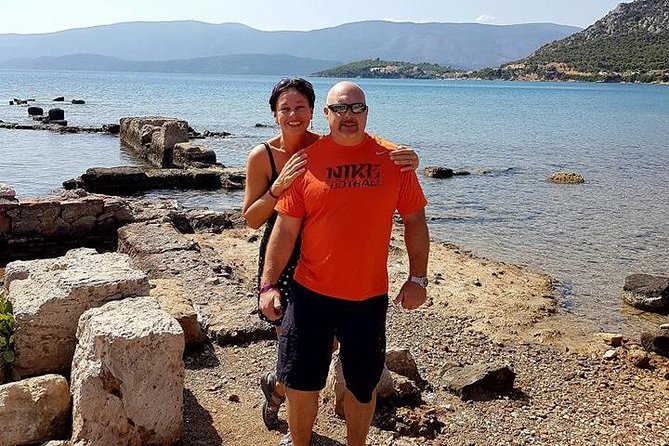
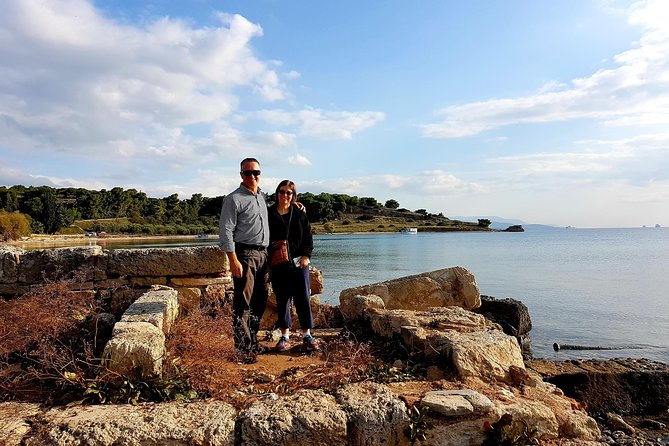
The final major stop is Kenchreai, or Cenchreae, one of Corinth’s two ancient ports. It sits on the Saronic Gulf and gives the tour a fitting ending: you leave the inland city and reach the coast where Paul departed for Ephesus with Aquila and Priscilla.
The visit connects with Acts 18:18 and the account of Paul’s hair-cutting vow. It also brings the earlier discussions of trade and shipping full circle. Corinth’s power came from controlling movement between seas, and Kenchreai was one of the ports that made that possible.
The stop lasts about 30 minutes. It is not as extensive as the archaeological site, but it adds a clear sense of place to Paul’s journey. The return drive to Athens takes about 70 minutes, though the full day can run close to eight hours depending on traffic and how much time you spend at the stops.
What private transport adds to the day
At $301.72 per person, this is not a bargain bus excursion. The value comes from having a private vehicle, hotel pickup and drop-off, a flexible pace, and a driver focused only on your group.
For a couple, the per-person price may feel high, especially after adding the €15 site fee, lunch, and possibly the €190 licensed guide. For a family or small group, the private format becomes easier to justify because the cost is attached to the booking structure and the day can be shared.
I also see value in avoiding the work of arranging transport between scattered locations. The canal, Diolkos, Acrocorinth, Ancient Corinth, lunch, and Kenchreai are easier to combine with a private car than by trying to connect them independently.
The strongest service theme is care. Drivers are repeatedly praised for clean, comfortable vehicles, water, cookies, restroom stops, photos, local advice, and a relaxed pace. Peter adjusted the order of stops during rain, and several people said they never felt rushed.
The one point I would clarify before booking is the guide arrangement. Ask for a driver with strong biblical knowledge if Paul is your main reason for coming. If you want verse-by-verse commentary and detailed museum interpretation, reserve the licensed guide as well.
Who should book this Corinth day trip?
I would choose this tour if you want to connect biblical passages with physical places, prefer private transport, and value conversation over a fixed group schedule. It suits couples, families, cruise passengers, and small groups staying in Athens or Corinth.
It is also a strong choice if you want to see more than the canal and main ruins. The Diolkos, Acrocorinth, churches, spring, port, and meal stop give the day a wider view of Corinth.
You may want another option if you dislike steep, uneven walking or want a purely archaeological tour led by a licensed expert from start to finish. You should also allow for a long day and extra costs beyond the advertised price.
Free cancellation is available up to 24 hours before the start time. Changes or cancellations made inside that window are not refunded.
Should you book it?
Book this tour if Paul, Corinthian trade, and a personal day with a local driver are central to your Greece plans. The best parts are the flexible transport, Acrocorinth’s views, the Diolkos, and the chance to place Acts 18 beside the Bema and Roman Forum.
Before paying, decide how much interpretation you need. For a relaxed, personal biblical sightseeing day, the driver-led format can be excellent. For serious study, add the licensed guide and budget for the extra entrance, meal, and guide fees. That small decision will determine whether the tour feels simply good or truly suited to your purpose.
FAQ
How long does the private Corinth tour last?
The experience lasts approximately eight hours, including the return journey to Athens.
Where can pickup and drop-off take place?
Pickup and drop-off are available at hotels, Airbnbs, apartments, and ports in Athens or Corinth. Airport pickup and drop-off can be arranged for an additional cost.
Is the tour private?
Yes. Only your group participates in the activity.
Is transportation included?
Yes. The tour includes a private, air-conditioned vehicle with Wi-Fi and bottled water.
Is the Ancient Corinth entrance fee included?
No. Entrance to Ancient Corinth and the Archaeological Museum costs €15 per person and is paid at the site.
Is lunch included?
No. Food and drinks are not included. Lunch may be arranged in Ancient Corinth or near the Baths of Helen of Troy.
Can I add a licensed guide?
Yes. An optional licensed guide can accompany you inside the archaeological site and museum for €190 per booking, paid directly to the guide.
Is Acrocorinth difficult to walk?
The tour information describes Acrocorinth as a steep and rocky climb with no handrails in some areas. Sturdy shoes with gripping soles are recommended.
Is the tour offered in English?
Yes. The tour is offered in English.
What is the cancellation policy?
You can cancel up to 24 hours before the start time for a full refund. Cancellations or changes made less than 24 hours before the start time are not refunded.
What does the tour cost?
The listed price is $301.72 per person. Entrance fees, lunch, gratuities, and an optional licensed guide cost extra.
Just added around Athens
- Delphi One Day Trip from Athens★ 4.0 · 98 reviews
- Private Delphi and Hosios Loukas Monastery – Great Lunch and Drinks Included★ 5.0 · 36 reviews
- Mercedes Private Tour to Delphi and Arachova★ 5.0 · 30 reviews
- Day tour to Ancient Olympia,Ancient Sparta Mycenae Including Meal★ 5.0 · 54 reviews
- Athens: Half Day Trip To Cape Sounio/Poseidon Temple Semi Private★ 5.0 · 131 reviews
- Athens Half-Day Private Tour Acropolis, Parthenon City Highlights★ 5.0 · 35 reviews
- From Athens: Day Tour to Mykonos★ 5.0 · 64 reviews
- Culinary Secrets of Downtown Athens★ 5.0 · 103 reviews
Ancient Corinth Tours, compared.
Ancient Corinth Day Trip with Canal & VR Guide
Read our review →
Ancient Corinth & Nafplio Full Day Trip with Swim
Read our review →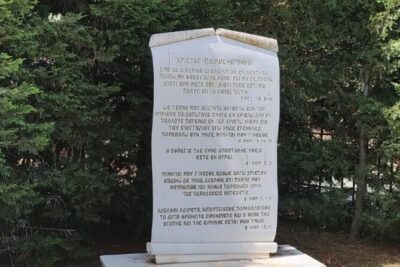
Private Tour of Apostle Paul’s Footsteps in Ancient Corinth
Read our review →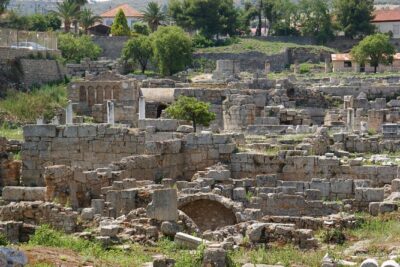
Corinth Half-Day Trip from Athens with Entrance Tickets
Read our review →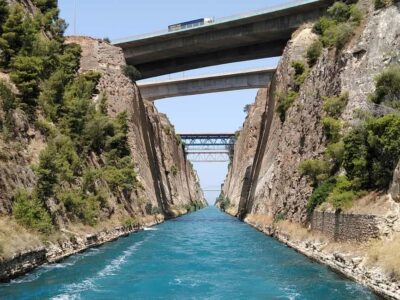
Ancient Corinth, Epidaurus, Nafplio full day private tour from Athens
Read our review →Browse the lists this tour appears in