Reviewed · ATHENS TOURS
Philosophy and Democracy tour of Athens
Athens makes more sense when you question it. I like how this walking tour links the Ancient Agora, Kerameikos, and Pnyx into one clear story about philosophy and democracy. I also like the personal touch from Panos, whose humor and strong command of the subject help make difficult ideas easy to follow. The main drawback is simple: this is a three-and-a-half-hour walk, with admission fees to several archaeological sites not included.
You get much more than a roll call of ruins. The route compares ancient Athenian democracy with modern political life, then adds useful tips on places to eat, drink, and explore. A small group of no more than 15 people gives you a better chance to ask questions, though you should bring water and wear shoes suited to uneven streets and archaeological ground.
In This Review
- Key points to know before booking
- Why this Athens walk feels different
- Kerameikos, where pottery and public life meet
- A short walk through the Athens Flea Market
- Hadrian’s Library and the Roman layer
- The Roman Agora and the Tower of the Winds
- The Ancient Agora, Athens’ public meeting place
- A brief tribute at the Prison of Socrates
- Pnyx Hill, the strongest finish
- Panos makes the ideas easier to follow
- Walking comfort, timing, and group size
- What the $50.81 price really buys you
- Who should book this philosophy walk?
- Should you book it?
- FAQ
- How long does the Philosophy and Democracy tour of Athens last?
- How much does the tour cost?
- What language is the tour offered in?
- How large is the tour group?
- Where does the tour begin?
- Where does the tour finish?
- Are archaeological admission fees included?
- Is the tour suitable for most people?
- Are service animals allowed?
- What happens if the weather is poor?
- Can I cancel for a full refund?
Key points to know before booking
- Kerameikos opens the story away from the crowds: This former cemetery and pottery district connects directly to Pericles and the ideals of Athenian democracy.
- Pnyx offers the tour’s strongest setting: The hill is linked to the birth of democracy and gives you fine views toward the Acropolis and Athens.
- Panos is a major part of the appeal: His clear explanations, humor, and enthusiasm receive repeated praise in the feedback.
- The walk fills about three and a half hours: You move through several central districts and ancient sites, with time for discussion rather than a quick photo stop.
- Site entrance fees are not included: Several stops list admission separately, so allow extra money if you want to enter them.
- The price is modest for a history-focused walk: At $50.81 per person, the value comes from the guide’s interpretation and the number of important places tied together.
Why this Athens walk feels different
Many Athens tours begin and end with the Acropolis. This one takes a different route. The Acropolis remains part of the visual backdrop, but the main subject is how Athenians thought, argued, governed, and explained the world around them.
I like that approach because Athens can otherwise become a parade of marble columns and famous names. Here, Socrates, Plato, Solon, Pericles, Themistocles, Thucydides, Sophocles, and Aristophanes are placed within the streets and public spaces where civic life unfolded.
The tour also asks you to compare ancient democracy with modern democracy. That gives the walk a present-day purpose without turning it into a lecture on politics. You are not only looking at where people met. You are considering who had a voice, how decisions were made, and why the Athenian model still matters.
The experience is offered in English and uses a mobile ticket. It begins near the Statue of Theseus and ends on Theorias Street, near the Acropolis area. That ending is useful if you want to continue sightseeing afterward, though the tour itself should not be treated as an Acropolis admission visit.
A few more Athens half-days to weigh up
- Athens: Acropolis & up to 5 Archaeological Sites Combo Pass
★ 4.4 · 12,619 reviews - Athens: Acropolis Ticket with Optional Audio or Live Guide
★ 4.2 · 11,055 reviews - Athens: Acropolis, Parthenon & Acropolis Museum Guided Tour
★ 4.8 · 9,316 reviews
Kerameikos, where pottery and public life meet
The first stop is Kerameikos Archaeological Site, a place many visitors skip. That is a shame, since it helps set up the whole tour.
The name Kerameikos comes from keramos, meaning ceramic or pottery. Pottery workshops once operated here, while the area also served as Athens’ cemetery for centuries. The site therefore brings together everyday work, burial customs, civic memory, and major political events.
The connection to democracy is especially important. Pericles gave his famous funeral speech here for the first Athenian casualties of the Peloponnesian War. The speech praised the virtues of Athens and its political system, making this more than a cemetery visit.
You have about 15 minutes at the stop, and admission is not included. That is not much time for a large archaeological area, so Panos’s explanation matters. The value is less about wandering every corner and more about understanding why Kerameikos belongs in a story about Athens’ public ideals.
A short walk through the Athens Flea Market
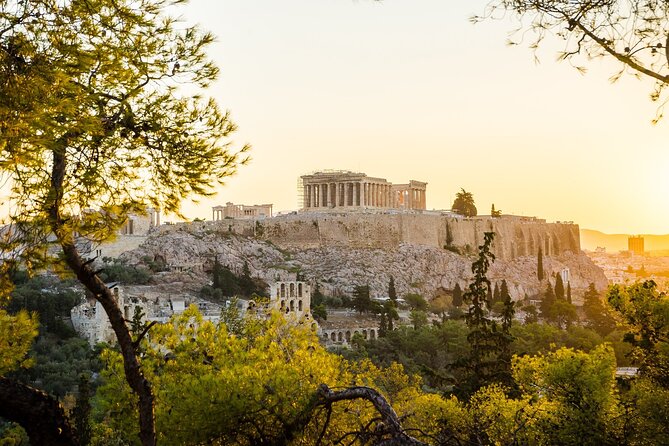
The route then passes through the Athens Flea Market at an easy pace. The listed stop lasts around 15 minutes and is free.
This section gives the tour a change of rhythm. After cemeteries and ancient politics, you see a living part of central Athens. The market helps connect the archaeological city with the modern one, and the guide can point out where you might eat, drink, or continue exploring.
Do not expect a long shopping session. This is a brief walk-through, not a dedicated market tour. Its strength is location and atmosphere, with practical tips folded into the route.
Hadrian’s Library and the Roman layer
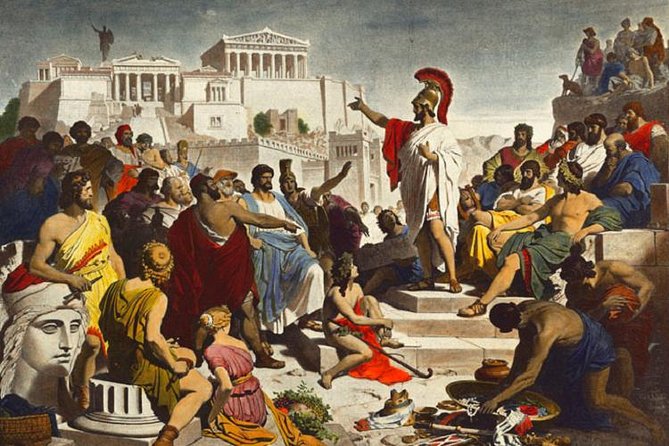
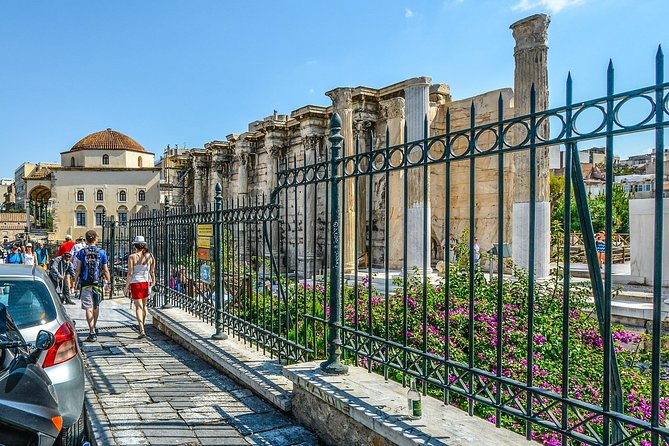
Hadrian’s Library was built by the Roman emperor Hadrian in AD 132, on the north side of the Acropolis. The 15-minute stop shows how Athens continued to matter after its classical age.
This is a useful reminder that ancient Athens was not one fixed period. Roman rulers admired and reshaped the Greek city, adding their own buildings while borrowing from its intellectual reputation.
Admission is not included. You should also expect the guide to keep the visit focused, since the itinerary moves through several sites in a single morning. If you want a slow architectural study of each monument, a dedicated archaeological tour would suit you better. If you want the larger story, this short stop does its job.
Same stretch of coastline, a completely different day out:
- Athens: Cape Sounion & Poseidon Temple Sunset Half-Day Trip
★ 4.8 · 8,241 reviews - Athens: Acropolis and Parthenon Guided Walking Tour
★ 4.6 · 5,882 reviews - All Day Cruise -3 Islands to Agistri,Moni, Aegina with lunch and drinks included
★ 5.0 · 4,958 reviews - Athens, Piraeus, and Coastline: Blue Hop-On Hop-Off Bus
★ 3.9 · 4,849 reviews
The Roman Agora and the Tower of the Winds
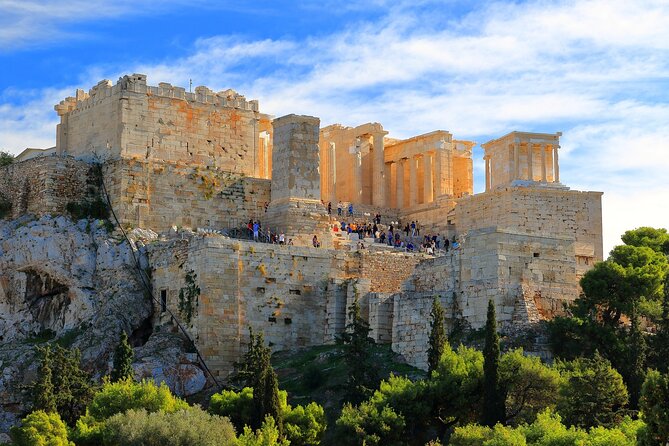
The Roman Agora sits north of the Acropolis and east of the Ancient Agora. It was a public commercial and civic space during the Roman period, and it helps show how Athens changed over time.
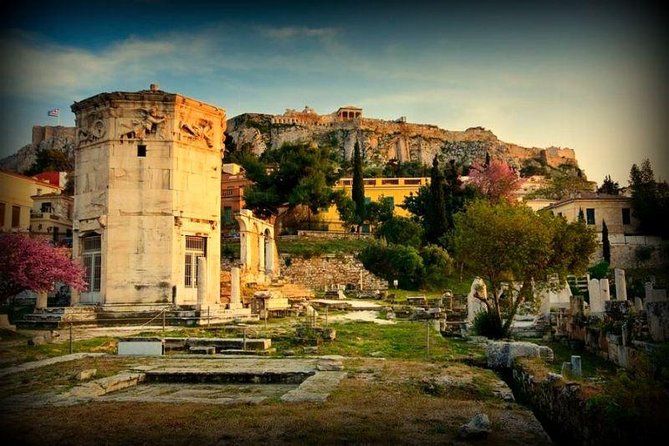
Nearby, the Tower of the Winds is one of the most interesting small monuments on the route. This octagonal building was created in the first century BC by Andronicus of Kyrristos, an astronomer. It functioned as a wind indicator, a sundial, and a water-powered clock.
That makes it an early weather station and timekeeper. On sunny days, the solar clock marked the hours. In cloudy weather, a hydraulic system could produce a sound every hour. The guide describes it as the Big Ben of Athens, a comparison that makes the building’s practical purpose easy to grasp.
You spend only about five minutes at the tower, and admission is not included. Treat this as a sharp, memorable explanation rather than a long visit. The surrounding Plaka area adds a scenic contrast, with narrow streets and small houses that feel far removed from the scale of the nearby monuments.
The Ancient Agora, Athens’ public meeting place
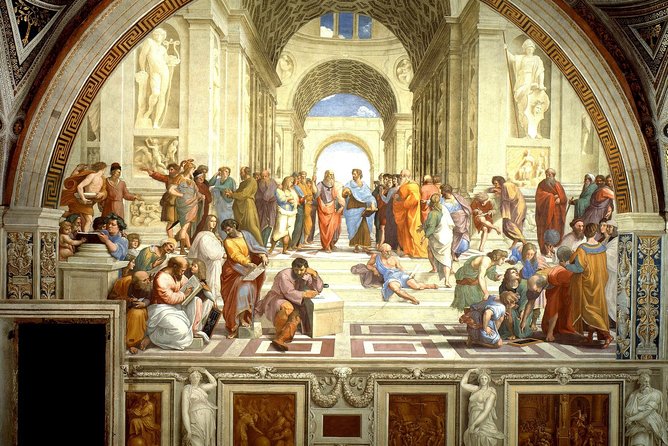
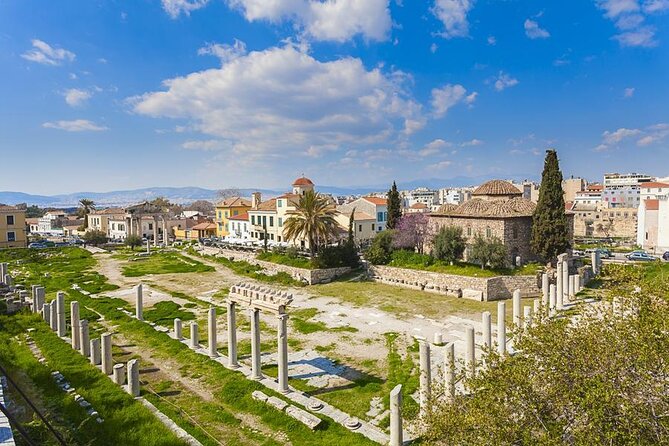
The Ancient Agora is the intellectual center of the tour. This was the heart of Athens, where citizens, politicians, philosophers, and ordinary residents met and debated public matters.
Socrates and Plato are strongly connected with the world of ideas represented here. Solon, Themistocles, Pericles, Thucydides, Sophocles, and Aristophanes also belong to the wider civic culture that developed around Athenian public life.
The important point is that philosophy did not happen in isolation. Ideas were tested through conversation, argument, politics, drama, and daily contact between citizens. That is why this stop helps explain the connection between philosophy and democracy. You see how public debate could shape both government and thought.
The visit lasts about 20 minutes, with admission not included. The time is enough for orientation and commentary, but not for a full independent visit to every part of the site. If you plan to return later, ask Panos for suggestions. Several people praised his ability to place separate monuments into one understandable story, and the Agora is where that skill is most useful.
One review specifically praised the tour for covering important sites beyond the Parthenon, including the Agora and the Temple of Hephaestus. That is a key point for planning. This walk works well as a companion to an Acropolis visit, not a substitute for it.
A brief tribute at the Prison of Socrates

The Prison of Socrates is a short stop of about 10 minutes and is free to visit.
The site is treated as a place to remember one of Greece’s best-known philosophers. The stop is not designed as a long archaeological presentation. Instead, it gives the tour a human moment and returns the discussion to Socrates, questioning, moral choice, and the role of the individual in public life.
Some visitors may find the physical remains less impressive than the idea attached to them. That is part of the point. The meaning here comes from the conversation and the historical associations, not from a grand monument.
Pnyx Hill, the strongest finish
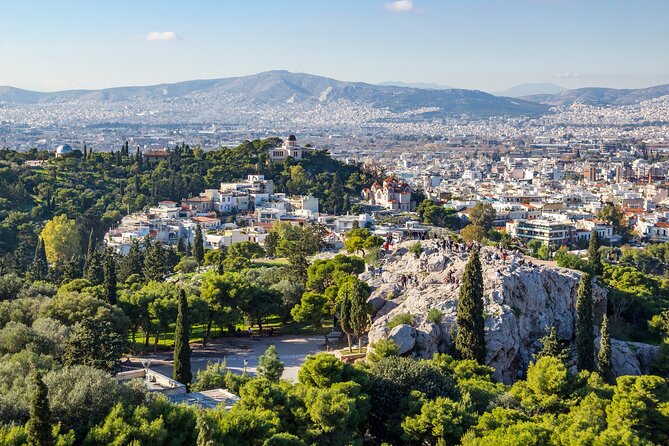
The final major stop is Pnyx Hill, often described as the cradle of democracy. This is where citizens gathered to discuss and decide matters affecting their future.
Pnyx is the place where the tour’s main themes come together. You have seen burial grounds connected with civic memory, public spaces used for commerce and administration, and sites tied to philosophy. Here, the focus turns directly to participation and collective decision-making.
The stop lasts about 30 minutes and is free. It also offers excellent views toward the Acropolis and across Athens. That view gives you a chance to pause after the steady walking and think about how much of the modern city has grown around these ancient meeting places.
Pnyx is also a good setting for the comparison between ancient and modern democracy. The guide can explain what the Athenian system offered and how it differed from political systems today. You should expect discussion rather than a simple list of dates and names.
Panos makes the ideas easier to follow
The strongest praise is directed at Panos. His style combines clear teaching, humor, patience, and obvious enthusiasm for the subject.
That matters on a philosophy tour. Terms and theories can become heavy if they are delivered as a string of definitions. Panos is repeatedly praised for explaining complex ideas in a way that adults and children could follow. One family found the tour enjoyable for both an 11-year-old and a 15-year-old, while other comments describe the experience as intellectually stimulating for adults.
The guide also appears willing to take questions. You are encouraged to participate rather than simply trail behind a speaker. One useful detail is that Panos reportedly spoke loudly and clearly enough that earphones were not needed.
The tour can become moving as well as educational. The subject is not only ancient stone. It concerns freedom, citizenship, public duty, political power, and the habit of asking why. That personal quality is a major reason the walk receives a 5 out of 5 rating from 285 reviews, with 100 percent recommending it.
Walking comfort, timing, and group size
The tour lasts approximately three hours and 30 minutes. A morning schedule is possible, since one participant described starting at 9:30 a.m. and finishing around 1 p.m., with a break in the middle for refreshments and toilet facilities at a kiosk.
Bring a bottle of water. This advice appears more than once in the feedback, and it makes sense given the walking, open archaeological areas, and Athens sun. Comfortable shoes are also a wise choice, especially since the route includes archaeological ground, hills, narrow streets, and uneven surfaces.
The group can have up to 15 people. That is small enough for better contact with the guide, but it is not a private tour. If you want a very quiet, personal pace, check the group size on your chosen date.
Most people can take part, and service animals are allowed. The route is near public transportation, which helps with reaching the starting point at the Statue of Theseus. The end point on Theorias Street makes it easy to continue near the Acropolis area.
What the $50.81 price really buys you
At $50.81 per person, this is a reasonable price for a specialized walking tour, especially if you value explanation over transport or luxury extras.
You are paying for a carefully connected route and a guide who can move between archaeology, philosophy, politics, and everyday Athens. Several major central sites appear in a single walk, and the small group keeps the experience more personal than a large coach tour.
The price does not include admission to Kerameikos, Hadrian’s Library, the Roman Agora, the Tower of the Winds, or the Ancient Agora, as noted in the itinerary. That means you should budget extra if you want to enter those sites. Some stops are viewed or discussed briefly, while others are free.
For the best value, take the tour early in your Athens visit. It can give you a useful framework for later visits to the Acropolis and other monuments. One participant specifically felt that later tours made more sense after hearing how Athens developed and changed through the centuries.
Free cancellation is available up to 24 hours before the start time for a full refund. The activity depends on good weather and a minimum number of participants. If it is canceled for either reason, you are offered another date or experience, or a full refund.
Who should book this philosophy walk?
I would choose this tour if you enjoy history, political ideas, old cities, or guided walks that ask more than where a building was constructed.
It is especially good for:
- First-time visitors who want context before visiting more monuments
- History lovers who want sites beyond the Acropolis
- Adults who enjoy discussion and questions
- Families with older children and teenagers
- People who prefer a small group and a human guide
- Anyone curious about how ancient ideas still shape modern public life
You may want another kind of tour if you mainly want interior access, a slow visit to each archaeological site, or a full Acropolis presentation. This route is about connections and interpretation. It moves at a steady pace and covers a lot of ground.
Should you book it?
Yes, if you want Athens to become more than a collection of famous ruins. The walk gives you Kerameikos, the Agora, Pnyx, Roman monuments, Plaka, and the Prison of Socrates, then ties them to questions about citizenship, reason, and power.
The best reason to book is Panos’s teaching style. His humor and enthusiasm help the subject stay lively, while the small group allows space for questions. Just plan for a long walk, bring water, and remember that several archaeological admissions cost extra.
At $50.81, this is one of the better choices for a thoughtful introduction to Athens. Book it near the start of your stay if you want the rest of the city to make more sense.
FAQ
How long does the Philosophy and Democracy tour of Athens last?
The tour lasts approximately three hours and 30 minutes.
How much does the tour cost?
The listed price is $50.81 per person.
What language is the tour offered in?
The tour is offered in English.
How large is the tour group?
The group has a maximum of 15 participants.
Where does the tour begin?
The meeting point is the Statue of Theseus, Athens 105 55, Greece.
Where does the tour finish?
The tour ends at Theorias 21, Athina 105 58, Greece.
Are archaeological admission fees included?
Admission is not included for Kerameikos Archaeological Site, Hadrian’s Library, the Roman Agora, the Tower of the Winds, and the Ancient Agora.
Is the tour suitable for most people?
Most people can participate. The tour is a walking experience, so you should be prepared for several hours on foot.
Are service animals allowed?
Yes, service animals are allowed.
What happens if the weather is poor?
If poor weather causes cancellation, you are offered another date or experience, or a full refund.
Can I cancel for a full refund?
Yes. You can cancel at least 24 hours before the start time for a full refund. Cancellations or changes made less than 24 hours before the start time are not accepted for a refund.
Just added around Athens
- Traditional Greek Show in Plaka with Dinner★ 3.6 · 178 reviews
- Santorini Wine Roads Tour with Wine Tastings Morning & Sunset★ 5.0 · 106 reviews
- Private Sunset Wine Tour with 3 Wineries and Tapas★ 5.0 · 34 reviews
- Insightful Pistachio Orchard and Factory Tour★ 4.5 · 27 reviews
- Traditional Villages Full day Tour in Santorini★ 4.0 · 84 reviews
- Half Day Tour★ 5.0 · 63 reviews
- Half-Day Shared Fishing Experience in Hydra★ 5.0 · 35 reviews
- Athens Old City Private Photoshoot Tour / 2 hrs★ 5.0 · 109 reviews
Athens Tours, compared.
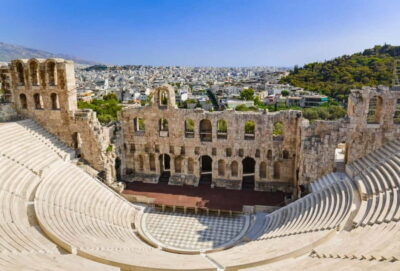
Acropolis & up to 5 Archaeological Sites Combo Pass
Read our review →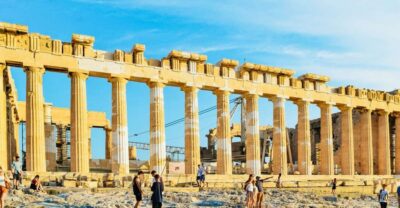
Acropolis, Parthenon & Acropolis Museum Guided Tour
Read our review →
Cape Sounion & Poseidon Temple Sunset Half-Day Trip
Read our review →

All Day Cruise -3 Islands to Agistri,Moni, Aegina with lunch and drinks included
Read our review →
Athens, Piraeus, and Coastline: Blue Hop-On Hop-Off Bus
Read our review →