
Reviewed · WORKSHOPS
Playing and Creating with Clay 3 Hours Pottery Class
Clay turns a holiday into something you can hold. This three-hour workshop in Pounta, Paros, gives you a friendly introduction to hand-building and the pottery wheel, with plenty of room to make your own choices. I like the small-group setting and the relaxed teaching style associated with Ria, also called Sotiria. I also like that beginners can try several techniques instead of spending the whole session on one exercise.
The main point to plan for is the finished pottery. Your pieces need two firings in a ceramic kiln, and completion takes about 15 days. Shipping is available for an extra charge, including postage and a 20 percent packing cost, so this is not a simple make-it-and-carry-it-home activity.
The mood matters as much as the clay. You pause for coffee, fruit juice, or dessert, then return to the work with fresh hands and a calmer mind. The class costs $84.10 per person, which is fair if you value personal instruction and a creative afternoon, though less appealing if you only want a cheap souvenir.
In This Review
- Key points to know before booking
- A creative afternoon in Pounta
- Starting with pinch-pots, coils, and slabs
- Taking a calm break between clay sessions
- Trying the pottery wheel for the first time
- Why the teaching style earns so much praise
- What happens to your pottery after class
- Is $84.10 a fair price?
- Who will enjoy this Paros activity?
- Practical details for planning your afternoon
- Should you book the pottery class?
- FAQ
- Where does the pottery class meet?
- How long does the class last?
- How much does the experience cost?
- Is the class private?
- Is the pottery class offered in English?
- What pottery techniques will I learn?
- Can I make a mug or bowl?
- Can I take my pottery home after class?
- Can I cancel for a refund?
Key points to know before booking
- You learn three hand-building methods: Pinch-pot, coiling, and slab work help you make bowls, mugs, and other simple forms.
- The pottery wheel is part of the session: You get a chance to make circular objects and alter their shape to suit your taste.
- Ria creates a gentle beginner-friendly class: She gives you freedom to try, then steps in with patient help when needed.
- A break is built into the three hours: Coffee, fruit juice, and perhaps dessert add a social pause between clay activities.
- Your pottery needs two kiln firings: Pieces take around 15 days to complete, and shipping costs extra.
- This is a private activity: Only your group participates, and the meeting point is in Pounta.
A creative afternoon in Pounta
The class begins at the meeting point listed as 24Q6+C9 Pounta, Greece. It ends at the same place, so you do not need to arrange a separate return transfer. Since the activity is private, the pace can feel more personal than a large craft demonstration, especially if you come as a couple or family.
The location is near public transportation, and service animals are allowed. Confirmation arrives when you book. Most people can take part, but you should expect to work directly with clay for much of the session, so practical clothing makes sense.
The three-hour length is well judged. A shorter class would force you to rush through the basic forms and wheel work. A much longer session might be tiring for someone who has never handled clay. Here, you get enough time to learn, experiment, pause, and try again.
A few more Paros half-days to weigh up
- Paros: Cooking Class with Greek Meal & Wine
★ 5.0 · 116 reviews - 3-Hour Marble Workshop Creating your own Souvenir out of ( Paros ) Marble
★ 5.0 · 91 reviews - 1 Hour Watercolor Workshop in Parikia Paros!
★ 5.0 · 55 reviews
Starting with pinch-pots, coils, and slabs
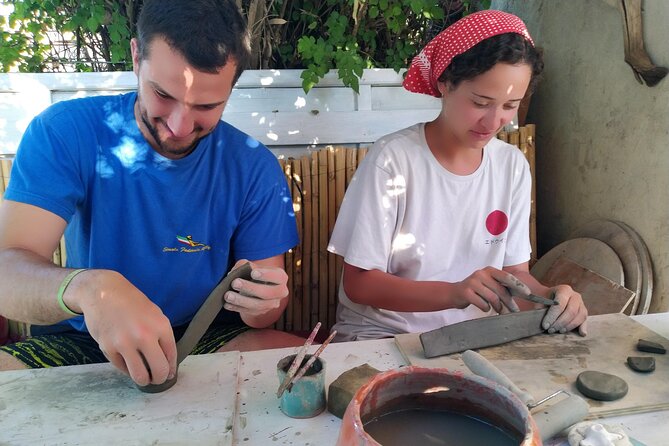
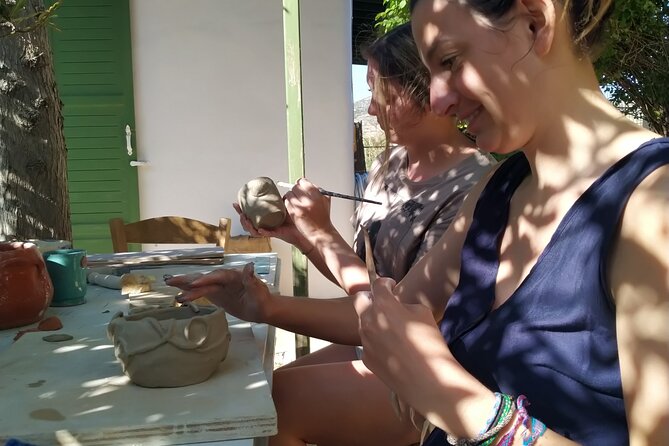
The first part introduces the basic stages of making ceramics. You talk about forms and decide what you would like to create. The stated options include a bowl or mug, but the class leaves room for other ideas when practical.
You then learn three simple hand-building approaches:
- Pinch-pot shaping, where you form clay by pressing and refining it with your fingers.
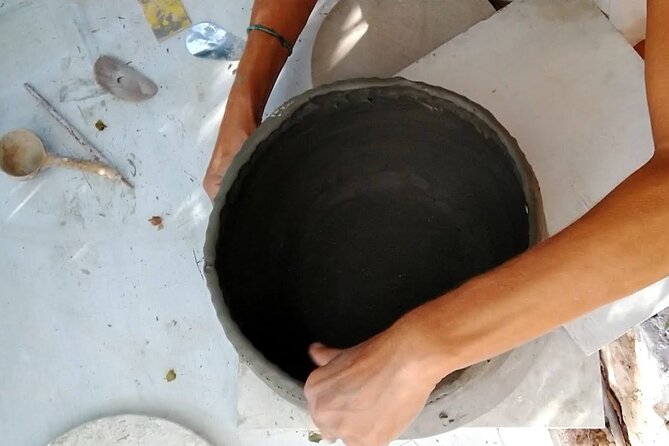
- Coiling, where rolled lengths of clay are built upward to create a vessel.
- Slab work, where flattened sheets of clay become the walls or parts of an object.
These methods are useful because they give you different ways to think about shape. Pinching feels direct and tactile. Coiling lets you build upward. Slabs offer cleaner planes and a more constructed look.
I like this part for first-time potters because it does not demand perfect control at the start. The clay is forgiving, and the class treats mistakes as part of the process rather than as failure. If a rim goes uneven or a wall begins to collapse, you can usually reshape it while the clay is still workable.
The instructor’s role is important here. Ria is described as patient, encouraging, and happy to let you try on your own before offering help. That balance is better than having someone take over your piece. You learn more when your hands do the work, even if the first bowl looks cheerfully lopsided.
Taking a calm break between clay sessions
At some point, you pause for coffee, fruit juice, or dessert. This is a small detail, but it changes the rhythm of the class. Working clay requires attention, and a short break gives you time to look at your pieces without constantly touching them.
The pause also makes the experience feel social rather than strictly instructional. Families, couples, and friends can compare ideas, talk with the host, and enjoy a quiet stretch before returning to the worktable.
Several comments about the class point to its relaxing quality. That makes sense: clay requires you to slow down, focus on pressure and shape, and accept that the material will not always do exactly what you expect. The session has a hands-on, meditative side, but you should not mistake relaxed teaching for a passive activity. You will be shaping, adjusting, and cleaning your hands throughout.
Trying the pottery wheel for the first time
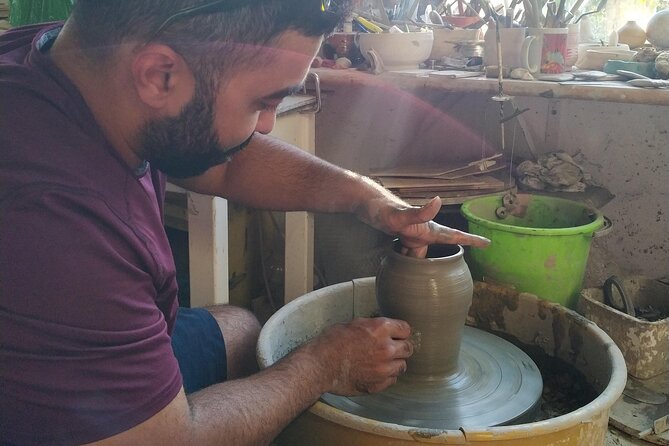
The wheel is the most distinctive part of the session. After hand-building, you get to try creating a circular form on the pottery wheel. The goal is not to produce a professional vessel in one attempt. It is to understand how centered clay responds as the wheel turns.
The class allows you to modify the basic circular shape according to your own taste. You might aim for a small cup, bowl, or another rounded object, depending on what you choose and what the instructor can guide you through during the session.
For many beginners, the wheel is both the funniest and most difficult part. Clay can wobble, spread, or lose its shape quickly. That is normal. Ria’s patient approach matters here, since a good teacher can help you correct the pressure of your hands without making you feel clumsy.
I would set modest expectations. You may make something you are proud of, but the point is the process, not a polished studio piece. One of the best features of the class is that it lets you try both hand-building and wheel work. You leave with a better sense of which method suits your hands and your imagination.
Same stretch of coastline, a completely different day out:
- From Paros: Antiparos and Despotiko Full-Day Swim Cruise
★ 4.6 · 509 reviews - From Paros: Delos and Mykonos Full-Day Boat Trip
★ 4.3 · 340 reviews - BL | A boat Trip To Blue Lagoon
★ 5.0 · 211 reviews - Catamaran Semi Cruise Paros Antiparos includes Food and Drinks
★ 5.0 · 208 reviews
Why the teaching style earns so much praise
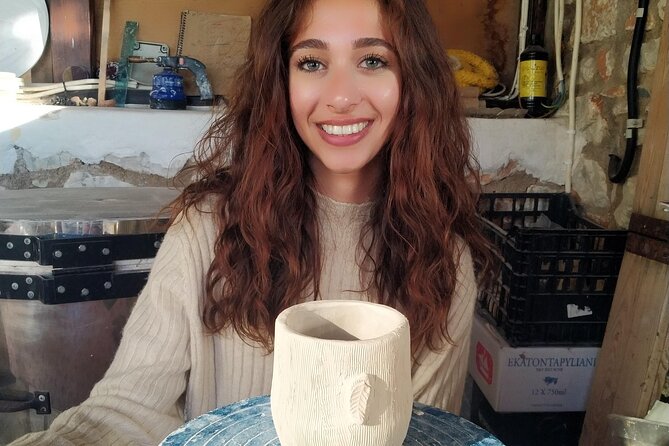
The strongest part of this experience is the human tone. Ria is repeatedly described as friendly, welcoming, passionate, and encouraging. One account also names Sotiria and her partner Vasilis as warm hosts, while another mentions a cat with plenty of personality. These details suggest an informal studio atmosphere, though you should not book expecting a specific host or animal to be present every time.
Ria appears to give people room to experiment without leaving them on their own. That is exactly what a beginner needs. Too much correction can make pottery stressful. Too little instruction leaves you confused. The class seems to aim for a middle path: try first, ask questions, then receive hands-on guidance.
The private format helps. Only your group participates, so you can ask for help without competing with a large crowd. A couple may receive a very personal lesson, while a family or group of four can enjoy a shared activity without splitting up.
The class also works across ages. The activity is described as suitable for most people, and the feedback includes families and first-time participants. Still, clay work is hands-on and seated work may not suit everyone equally. If anyone in your group has a specific mobility concern, contact the operator before booking rather than relying only on the general participation note.
What happens to your pottery after class
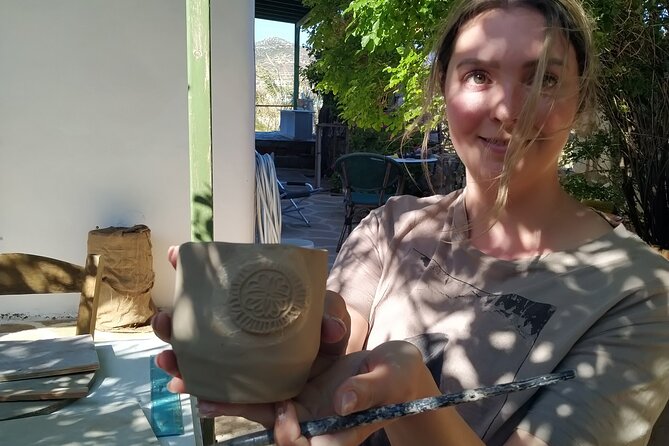
This is the detail most likely to affect your decision. Your clay pieces are not finished when the three hours end. Ceramics require two firings in a kiln, and the process takes about 15 days to complete.
Shipping is possible, with the price based on Greek Post Office rates plus an additional 20 percent packing cost. The final amount will depend on where you live and the size or weight of the parcel. For someone flying home to the United States, shipping can feel expensive, and one participant decided not to pay roughly $60 to send pieces home.
You should ask about the expected shipping price before you begin if taking your pottery home matters to you. The workshop fee does not appear to include delivery. Also, do not assume you will leave with a finished mug or bowl in your suitcase. The clay still needs its firings, glazing or finishing steps as applicable, and safe packing.
There is another way to view this. Shipping turns the class into a delayed souvenir. A handmade piece arriving after your holiday can be more meaningful than a mass-produced item bought in a shop. But if you want an object immediately, this class may disappoint.
Is $84.10 a fair price?
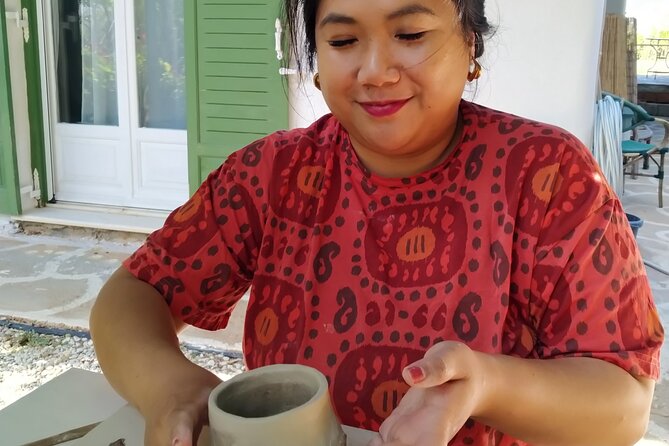
At $84.10 per person, the class is not the cheapest activity in Paros. Its value depends on what you want from an afternoon.
You are paying for about three hours of instruction, a private group format, access to hand-building techniques, time on the wheel, and a break with refreshments. You also get the chance to make something personal rather than simply watch an artist work. For a couple, family, or small group that wants a shared activity, the price can be reasonable.
The cost feels stronger if you care about the teaching. Ria’s patience and passion are central to the experience. You are not just borrowing tools for three hours. You are being guided through the basics of a craft that can be difficult to understand from a short video or casual attempt.
The value is weaker if your main goal is a finished souvenir. Shipping costs extra, and the pieces take around 15 days to complete. Budget for postage and packing before you decide that the class fits your trip.
Who will enjoy this Paros activity?
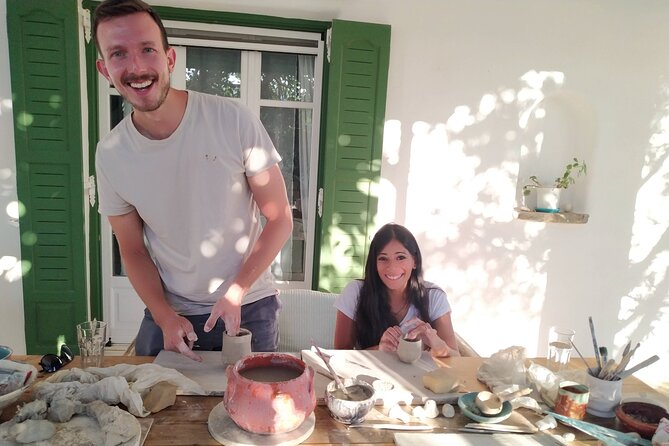
I would recommend it most strongly to:
- First-time potters who want patient guidance.
- Couples looking for a quiet shared activity.
- Families who enjoy making things together.
- Anyone who wants a break from sightseeing and beach time.
- Creative people who like trying several methods in one session.
- Visitors who are happy to receive their pottery later by post.
It may be less suitable if you dislike messy hands-on activities or need to take your finished item home the same day. It is also not the right choice if you want a formal art course with advanced technical training. This is an introduction, designed around play, experimentation, and personal expression.
The class suits people who can enjoy an imperfect result. Your mug may lean. Your bowl may have a thick rim. Your wheel piece may look more abstract than planned. That is part of the charm, provided you accept it before you book.
Practical details for planning your afternoon
The experience is offered in English and uses a mobile ticket. It starts and finishes at the Pounta meeting point, with no separate end location. Since the activity is private, your booking is limited to your own group.
The activity is booked, on average, about 20 days ahead. That does not guarantee every date sells out, but it is a useful reason to reserve early if your Paros schedule is fixed.
Free cancellation is available if you cancel at least 24 hours before the local start time. Cancellations or changes made within 24 hours are not accepted for a refund. Keep the local time in mind if you are arranging plans from another country.
I would also leave enough room around the class rather than scheduling a rushed connection immediately afterward. Although the activity lasts about three hours, creative work can run close to its stated time, and you may want a few minutes to wash up and talk about shipping.
Should you book the pottery class?
Book it if you want an intimate, low-pressure activity where you can make things with your hands and learn from a genuinely warm instructor. The combination of pinch-pots, coils, slabs, refreshments, and wheel work gives you more variety than a basic one-technique workshop.
Skip it if you need a ready-to-carry souvenir or want advanced pottery instruction. The $84.10 fee is easiest to justify when you value the calm process, personal teaching, and shared time more than the finished object.
For most first-timers, I think the class makes a memorable change of pace in Paros. Just confirm the shipping cost before you start, accept that your pieces need two firings, and go in ready to enjoy the clay rather than chase perfection.
FAQ
Where does the pottery class meet?
The meeting point is 24Q6+C9 Pounta, Greece. The activity ends back at the same meeting point.
How long does the class last?
The class lasts approximately three hours.
How much does the experience cost?
The listed price is $84.10 per person.
Is the class private?
Yes. Only your group participates in this private activity.
Is the pottery class offered in English?
Yes. The experience is offered in English.
What pottery techniques will I learn?
You will be shown pinch-pot, coiling, and slab techniques. You will also have an opportunity to try the pottery wheel.
Can I make a mug or bowl?
Yes. The class discusses the forms you would like to create, and a bowl or mug are among the suggested possibilities. Other forms may also be possible depending on your idea and the session.
Can I take my pottery home after class?
The pottery requires two firings in a ceramic kiln and takes about 15 days to complete. Shipping is possible, but postage and a 20 percent packing cost are extra.
Can I cancel for a refund?
Yes, if you cancel at least 24 hours before the experience start time. Cancellations or changes made less than 24 hours before the local start time are not accepted for a refund.
Just added around Paros
- 1 Hour Watercolor Workshop in Parikia Paros!★ 5.0 · 55 reviews
- Small Group Kaiki Cruise & Greek Gastronomy Experience★ 5.0 · 128 reviews
- Rent a Boat Licence-Free to Discover Paros★ 5.0 · 26 reviews
- Daily Boat Trip Antiparos & Despotico★ 5.0 · 32 reviews
- Paros Half Day Boat Tour from Naoussa port and Bay .★ 5.0 · 48 reviews
- Private Tour on Paros Island★ 4.5 · 46 reviews
- Round of Antiparos & Despotiko with Traditional Boat★ 4.5 · 52 reviews
- Paros & Antiparos Full-Day Discovery Guided Tour in English★ 4.0 · 90 reviews
Workshops, compared.
Classic Cooking Class with Market Visit and Wine
Read our review →
Food Market Visit and Cooking Class with Wine
Read our review →
Greek Cuisine Cooking Class in Santorini with Recipes and Wine
Read our review →
Half-Day Cooking Class at Basiliko Family Tavern
Read our review →
Greek Cooking Class in Athens Including Rooftop Dinner with Acropolis View
Read our review →
Greek Small-Group Athens Cooking Class & Dinner
Read our review →
Authentic Cooking Class in the White Mountains
Read our review →
Browse the lists this tour appears in