Reviewed · ATHENS TOURS
Steps to tradition: Greek Traditional Dances in Athens
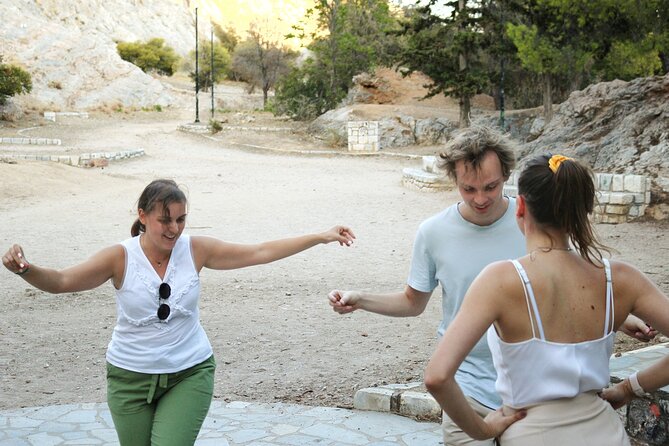
Dance beside ancient ruins. This 2.5-hour Greek dance class brings you to Philopappou Hill, where Tania and Kostas teach traditional dances with the Acropolis in view. I like the setting, which turns a lesson into a memorable Athens outing, and I like the warm, patient teaching style that helps beginners feel at ease. The main drawback is the early 6:00 am start listed for the activity, so check your booking carefully and be ready for a walk uphill.
I also like the cultural context. You do not simply copy footwork. Tania explains where the dances come from, how they connect to different parts of Greece, and why people dance in a circle, hand in hand. The class is limited to 12 people, though smaller bookings may sometimes feel almost private. Good shoes, water, and a willingness to look a little foolish will serve you well.
In This Review
- Key points to know before booking
- Starting at the Philopappou Hill entrance
- Why Philopappou Hill makes the class special
- Tania and Kostas make beginners feel welcome
- Learning five to seven dances from Greece
- Greek circle dances and the meaning of the circle
- Music, stories, and the lesson beyond the steps
- How the two and a half hours are likely to feel
- Is $41.52 a good value in Athens?
- Who should book this Greek dance class?
- Practical tips for a smoother morning
- Should you book Steps to Tradition?
- FAQ
- Where does the Greek dance class meet?
- How long does the activity last?
- What time does the experience start?
- How many people can join the class?
- Do I need previous dance experience?
- What happens if the weather is poor?
Key points to know before booking
- Acropolis views from Philopappou Hill: The class takes place in a quiet natural setting near ancient ruins, with striking views toward the Acropolis.
- Tania and Kostas teach with patience: Instructions are repeated, broken into simple steps, and adjusted to the group’s level.
- You learn several regional dances: Classes may include five to seven dances from places such as Crete and the Greek islands.
- A small group makes a difference: The maximum is 12 people, and some bookings have been private or nearly private.
- It is culture through movement: Stories about music, regions, families, festivals, and community give the steps meaning.
- The $41.52 price is fair: For a small-group class lasting about two and a half hours in a memorable location, the cost offers good value.
Starting at the Philopappou Hill entrance
The meeting point is at the junction of Dionysiou Areopagitou and Apostolou Pavlou, Athens 117 41. You meet Tania at the main entrance to Philopappou Hill, then walk for about 10 minutes to the place where the class begins.
That short walk matters. This is not a studio hidden in a modern building. You move through one of Athens’ historic hilltop areas, with ancient remains and views of the Acropolis along the way. The walk also gives Tania a chance to point out nearby sights and explain some of the traditions connected with Greek dance festivals.
The route is short, but it is still an uphill walk on a historic hill. If your knees or balance are not great, take your time and wear shoes with a firm sole. The activity is considered suitable for most people, and service animals are allowed, but you should still think about the uneven outdoor setting before booking.
The published start time is 6:00 am. That is unusually early for a leisure activity in Athens, so I would confirm the exact time on your booking confirmation. If the early hour is correct, you will get cooler conditions and quieter paths, but you will also need to plan around it.
A few more Athens half-days to weigh up
- Athens: Acropolis & up to 5 Archaeological Sites Combo Pass
★ 4.4 · 12,619 reviews - Athens: Acropolis Ticket with Optional Audio or Live Guide
★ 4.2 · 11,055 reviews - Athens: Acropolis, Parthenon & Acropolis Museum Guided Tour
★ 4.8 · 9,316 reviews
Why Philopappou Hill makes the class special
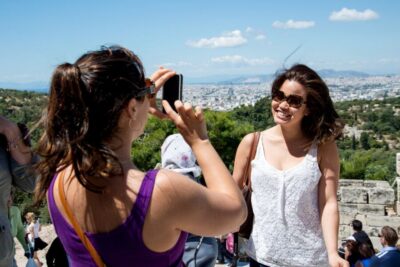
The setting is one of the strongest reasons to choose this activity. You learn steps in nature rather than in a hotel function room, with the Acropolis nearby and ancient Athens all around you.
The class has also taken place near a quiet church and park area, where there is room for the group to form a circle. That calm setting helps the teaching. You can hear the instructors, see the footwork, and focus without the noise of a busy city street.
The view gives the lesson a strong sense of place. You are not only learning a dance from Greece. You are learning it in Athens, with one of the city’s most famous monuments in front of you. It is the sort of setting that makes even a basic beginner step feel connected to the country around you.
Keep your expectations sensible, though. Philopappou Hill is an outdoor public area, not a private performance venue. Conditions may depend on weather, the ground, and the available space. The activity requires good weather, and poor conditions can lead to a different date or a full refund.
Tania and Kostas make beginners feel welcome
The instructors are central to the quality of this class. Tania is an experienced traditional dance teacher, and Kostas often teaches alongside her. Their approach appears to be friendly rather than formal or intimidating.
That matters because Greek circle dances can look effortless when performed by people who grew up with them. For a first-timer, the repeated steps, changes of direction, hand positions, and quicker movements can feel confusing. Tania breaks the dances into manageable parts and gives you time to repeat them.
I especially like the emphasis on encouragement. You are not expected to arrive with dance training. Families with children aged 11 and 13 have taken part, and the class has worked for people with different levels of confidence. Tania and Kostas adjust the difficulty when needed, which is useful if one person in your group is more coordinated than another.
You will probably laugh at yourself at some point. That is part of the charm. The instructors create a relaxed mood, so a missed step becomes a small joke rather than a reason to quit.
Learning five to seven dances from Greece
The exact selection can vary, but you may learn five or six dances, and some classes have covered six or seven. The dances represent different regions of Greece, including island traditions and Cretan styles.
The class can move from simple patterns to faster dances with kicks and quick steps. That progression gives you an early success before asking for more coordination. You are not thrown straight into the most difficult material.
Cretan dances can be especially lively, with sharper footwork and more demanding changes. You might find those steps challenging, but they also show how varied Greek dance can be. Greece is not represented by one single style. Regional music, geography, village customs, and local celebrations all shape the way people move.
The instructors also explain where each dance is commonly performed. That information is useful if you plan to visit other parts of Greece later in your trip. You may recognize a dance at a local festival, in a village square, or at a taverna.
The class is not designed to make you an expert in one morning or afternoon. It gives you enough confidence to join in. That is a better travel goal. After the lesson, you may be able to take part in a circle dance instead of watching from the edge.
Same stretch of coastline, a completely different day out:
- Athens: Cape Sounion & Poseidon Temple Sunset Half-Day Trip
★ 4.8 · 8,241 reviews - Athens: Acropolis and Parthenon Guided Walking Tour
★ 4.6 · 5,882 reviews - All Day Cruise -3 Islands to Agistri,Moni, Aegina with lunch and drinks included
★ 5.0 · 4,958 reviews - Athens, Piraeus, and Coastline: Blue Hop-On Hop-Off Bus
★ 3.9 · 4,849 reviews
Greek circle dances and the meaning of the circle
The class places Greek circle dancing in a long cultural story. Circular dances are linked to ancient Greece and are said to date back around 2,000 years before Christ, with roots in Minoan civilization on Crete.
You do not need to treat that historical background as a lecture. It helps explain why the circle matters. Greek traditional dances have been passed from families to villages and across whole regions. They have changed over time while keeping their social purpose.
The circle brings people together. You hold hands, follow a shared rhythm, and depend on the person beside you. It is not only a display by one skilled dancer. It is a group activity, which makes the class feel social even when nobody knows anyone at the start.
That shared rhythm is one of the best parts for visitors. You learn a small piece of Greek community life by taking part, not by simply reading about it. The lesson gives you a practical connection to music, celebrations, and local identity.
Music, stories, and the lesson beyond the steps
The teaching includes more than footwork. Tania explains the stories behind the music and the regions where the dances come from. This gives your memory something to hold onto. A sequence is easier to remember when it is attached to a place or a story.
The class engages your body, but it also asks you to listen and watch closely. You follow the beat, remember the pattern, and pay attention to the person next to you. It is a light workout as well as a cultural lesson.
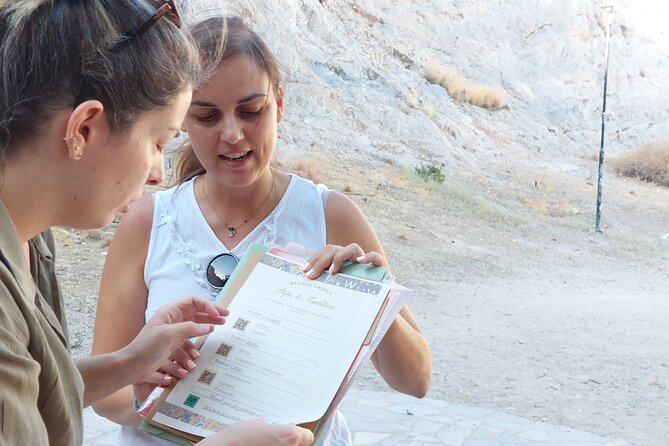
Some participants have received photos or videos of the dancing, and one detailed account also describes a certificate of participation with QR codes for a Greek traditional playlist and information about the dances learned. These extras may vary, so I would not book solely for them, but they can help you continue the experience after you leave Athens.
The music is important even if you are not a dancer. It gives the class its mood and helps explain how traditional dance remains part of social life in Greece. If you later attend a folk performance, such as one at the Dora Stratou Theatre, the class may help you understand what you are seeing.
How the two and a half hours are likely to feel
The activity lasts about two hours and 30 minutes, including the short walk to and from the lesson area. That is enough time to learn several dances without rushing through them.
At first, you will likely spend time getting into a circle and learning the basic rhythm. Tania demonstrates, then the group repeats. The instructors can slow down, repeat a sequence, or make it more difficult as the group improves.
Later, the dances become more varied. You might work through simple island patterns before trying a faster Cretan sequence. The class is physical, but it is not presented as a serious fitness session. Still, you should expect to move continuously enough that water and comfortable clothing are sensible.
The final part often feels less like instruction and more like a shared celebration. By then, the group has made enough mistakes together to relax. That small change in mood is part of the value. You begin as separate people meeting at a hill entrance and finish as a temporary dance group.
The activity returns to the original meeting point. Plan your next sightseeing stop with that in mind, since the tour does not end at a separate neighborhood.
Is $41.52 a good value in Athens?
At $41.52 per person, this is not the cheapest way to spend a few hours in Athens. It is also more than simply watching a dance performance. You receive guided instruction, regional background, a scenic historic setting, and a small-group activity lasting roughly two and a half hours.
I consider that a fair price if you want participation rather than another passive sightseeing stop. The group maximum of 12 is important. A small class gives you more room to ask questions and more chances to receive corrections from Tania or Kostas.
The value is strongest for visitors who plan to eat at a taverna or continue around Greece after Athens. The class can give you enough familiarity to recognize common dances and perhaps join a circle later.
The value is weaker if you are looking for a formal historical tour, a polished stage show, or a full meal. Food and ouzo have been included on some occasions, but they are not listed as a guaranteed feature in the main details, so treat them as a possible extra rather than part of the price calculation.
The activity is currently rated 5 out of 5 from 28 ratings, with 100 percent recommending it. That is a strong record, though the total number of ratings is still modest. I would read the score as a useful sign of consistent satisfaction, not as proof that every person will love dancing outdoors.
Who should book this Greek dance class?
I would recommend it most strongly to:
- Couples who want a shared activity with a local cultural focus
- Families with older children and teenagers
- Solo visitors who enjoy joining a small group
- People visiting Greece for the first time
- Anyone planning to visit Crete or the Greek islands
- Travelers who prefer hands-on activities to standard sightseeing
You do not need to be a good dancer. In fact, beginners may get the most from the class because the instructions are designed to build confidence from the first steps.
You should think twice if you dislike group activities, have difficulty walking uphill, or want a fully indoor program. The setting is a major part of the appeal, but outdoor conditions are also a real consideration.
The activity is not only for young and athletic people. The class has welcomed families and adjusted the pace to suit participants. Still, Greek dancing can involve repeated stepping, quick footwork, and kicks, so you should judge your own comfort honestly.
Practical tips for a smoother morning
Wear shoes that stay secure on your feet. Open sandals or loose footwear may make the steps harder, especially during faster dances.
Bring water and dress for the weather. You will be outside on a hill, and the class requires good conditions. Sun protection may also be useful, depending on the time and season.
Arrive at the stated meeting point with enough time to find the entrance. The meeting point is near public transportation, but the activity itself includes a 10-minute walk uphill.
If you are visiting several Greek islands after Athens, tell Tania where you are going. The instructors may be able to focus on dances you are likely to encounter later.
Use the mobile ticket and keep the booking confirmation easy to access. Confirmation is sent within 48 hours, subject to availability.
Free cancellation is available up to 24 hours before the start time for a full refund. Changes or cancellations inside that 24-hour window are not accepted, and the amount paid is not refunded. If weather or the minimum group size causes cancellation, you are offered another date, another activity, or a full refund.
Should you book Steps to Tradition?
Book it if you want to feel part of Athens for a few hours instead of simply looking at it. The Acropolis view is memorable, but the real strength is the combination of clear teaching, regional stories, music, and the shared circle.
I would place this early in a Greece trip, especially if you plan to eat at local tavernas or visit islands afterward. You may leave with enough confidence to recognize the rhythm and step into a dance later.
Check the unusual 6:00 am start before paying, and be realistic about the outdoor hill setting. If those details suit you, $41.52 buys a personal, active introduction to Greek culture, led by Tania and Kostas rather than delivered from behind a museum display case.
FAQ
Where does the Greek dance class meet?
You meet at the main entrance of Philopappou Hill, at Dionysiou Areopagitou and Apostolou Pavlou in Athens.
How long does the activity last?
The activity lasts approximately two hours and 30 minutes, including the walking portion.
What time does the experience start?
The listed start time is 6:00 am. Check your booking confirmation to make sure the time is correct for your selected date.
How many people can join the class?
The maximum group size is 12 participants.
Do I need previous dance experience?
No specific dance experience is required. The class is suitable for most people, and the instructors teach the steps gradually and adjust the difficulty to the group.
What happens if the weather is poor?
The activity requires good weather. If it is canceled because of poor conditions, you are offered a different date or a full refund.
Just added around Athens
- Traditional Greek Show in Plaka with Dinner★ 3.6 · 178 reviews
- Santorini Wine Roads Tour with Wine Tastings Morning & Sunset★ 5.0 · 106 reviews
- Private Sunset Wine Tour with 3 Wineries and Tapas★ 5.0 · 34 reviews
- Insightful Pistachio Orchard and Factory Tour★ 4.5 · 27 reviews
- Traditional Villages Full day Tour in Santorini★ 4.0 · 84 reviews
- Half Day Tour★ 5.0 · 63 reviews
- Half-Day Shared Fishing Experience in Hydra★ 5.0 · 35 reviews
- Athens Old City Private Photoshoot Tour / 2 hrs★ 5.0 · 109 reviews
Athens Tours, compared.
Acropolis & up to 5 Archaeological Sites Combo Pass
Read our review →
Acropolis, Parthenon & Acropolis Museum Guided Tour
Read our review →
Cape Sounion & Poseidon Temple Sunset Half-Day Trip
Read our review →

All Day Cruise -3 Islands to Agistri,Moni, Aegina with lunch and drinks included
Read our review →
Athens, Piraeus, and Coastline: Blue Hop-On Hop-Off Bus
Read our review →