

Reviewed · THESSALONIKI TOURS
Thessaloniki: Full-Day Meteora Monasteries Tour
Meteora rises from the plain like a natural fortress. This long day trip lets you see all six monasteries, ancient hermit caves, and some of Greece’s finest mountain views without arranging an overnight stay. I like the local guide, the photo stops, and the chance to enter three monasteries. The main catch is the transport: you use public buses, change in Trikala, and manage the connections without a tour escort.
The $104 price includes round-trip bus tickets, the guided Meteora visit, a bottle of water, and audio guides in Spanish, French, and Italian. It does not include monastery admission, which costs €5 per monastery, or transport to Thessaloniki’s KTEL Macedonia bus station. If you want a direct coach and a slower visit, this may feel too rushed. If Meteora is high on your list and your time in Greece is short, it gives you a lot in one day.
In This Review
- Key points to know before booking
- Why Meteora is worth the long ride
- The 9:30 bus from Thessaloniki
- Four and a half hours among the monasteries
- What makes the six monasteries different
- St. Nicholas Anapavsa
- Rousanou
- Great Meteor Monastery
- Varlaam
- Holy Trinity
- St. Stephen
- Entering three monasteries, and what to wear
- The guide and language options
- Photo stops and the best use of your camera
- One hour in Kalambaka
- The return journey to Thessaloniki
- Is $104 a fair price?
- Who should book this Meteora day trip?
- Should you book it?
- FAQ
- How long is the Thessaloniki to Meteora tour?
- Where does the bus leave from in Thessaloniki?
- Do I need to change buses?
- What time do I arrive at Meteora?
- Can I enter the monasteries?
- Do the monasteries require a dress code?
- What languages are available?
- Is food included?
- What should I bring?
Key points to know before booking
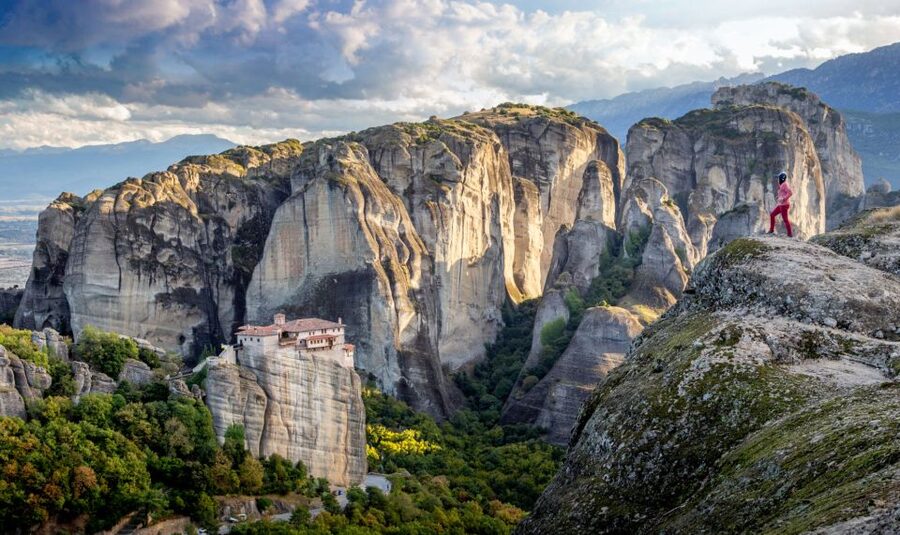
- Six monasteries from the outside: You’ll see St. Nicholas Anapavsa, Rousanou, Great Meteor, Varlaam, Holy Trinity, and St. Stephen during the sightseeing route.
- Three monastery interiors: You get free time to enter three monasteries, but admission costs €5 per monastery in cash.
- Public bus connections: You travel from Thessaloniki to Trikala, change buses, then continue to Kalambaka. No escort accompanies you through every connection.
- A proper Meteora guide: The English-speaking guide explains the hermits, monks, caves, legends, and religious life of the cliffs.
- A long but worthwhile day: You leave Thessaloniki at 9:30 and return around 22:30, with about four and a half hours at Meteora.
- One hour in Kalambaka: After the guided visit, you have time for food, coffee, shops, or a short walk through town.
Why Meteora is worth the long ride
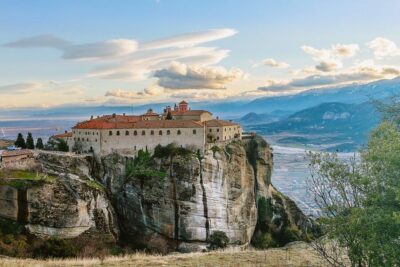
Meteora is not just a group of old churches perched on rocks. It is a place where geology and religious history meet in a dramatic way. Tall stone pillars rise above the Thessalian plain, and monasteries sit on ledges that once could only be reached by ladders, ropes, or steep paths.
The first Christian hermits settled in caves around the cliffs roughly a thousand years ago. Later, monks built monasteries high above the valley, seeking quiet and separation from ordinary life. Your guide adds meaning to what you see, explaining why people chose such difficult places to live and how the monasteries survived over the centuries.
I especially like that the visit includes more than the famous monastery buildings. You also stop to see old hermit caves and St. George Mandilas cave. These places help you understand that Meteora was a living religious community long before it became a major sightseeing stop.
The views are a major part of the day. The bus route and guided circuit include several panoramic stops, giving you time to photograph the cliffs from different angles. Bring a camera, but do not spend every stop staring at a screen. The scale of the rocks is easier to grasp when you simply look across the valley.
A few more Thessaloniki half-days to weigh up
- Thessaloniki: Full-Day Bus Trip to Meteora
★ 4.8 · 3,471 reviews - Full-Day Trip to Meteora from Thessaloniki
★ 4.5 · 542 reviews - From Thessaloniki: Full Day Trip to Meteora
★ 4.3 · 184 reviews
The 9:30 bus from Thessaloniki
Your day begins at the KTEL Macedonia intercity bus station in Thessaloniki. You need to reach the station on your own, so allow enough time to find the correct departure area and get settled before the 9:30 bus leaves.
The first ride goes to Trikala and takes about two hours and fifty minutes. You pass through mainland Greek countryside, with views that make the ride feel like part of the trip rather than dead time. Still, this is public transportation, not a private sightseeing coach. You should expect an ordinary bus journey and plan accordingly.
At 12:20, you arrive at Trikala bus station. Your connecting bus to Kalambaka leaves at 12:30, giving you only about ten minutes to change. This is the part that requires the most attention. Your bus tickets and directions are sent by email 24 hours before departure, so check your inbox and spam folder before the trip.
The change in Trikala is not handled like a traditional escorted tour connection. You may need to ask at the station, read the bus information, and move promptly. The directions could be clearer, so save the instructions on your phone and keep your ticket easy to reach.
The next bus takes you to Kalambaka, the town below Meteora. You arrive around 13:30, where the local guide meets you. The schedule works, but it leaves little room for confusion. I would not plan a slow breakfast at the station or arrive at Trikala without knowing your next departure.
Four and a half hours among the monasteries
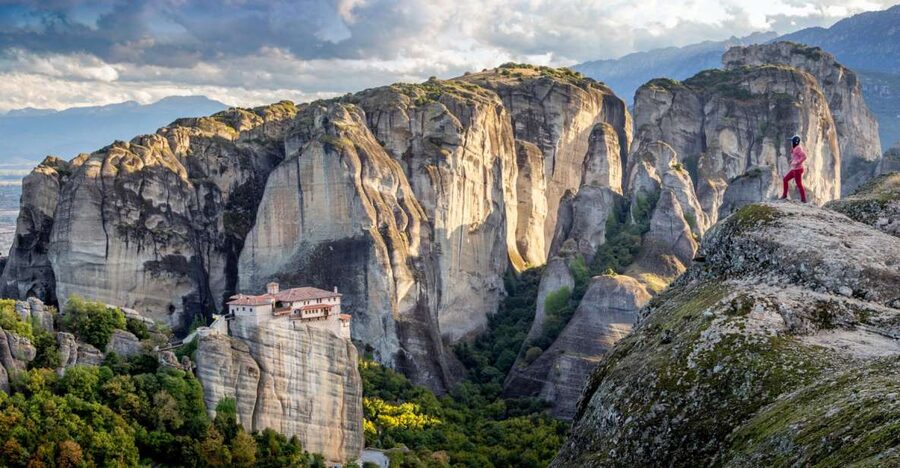
The Meteora portion lasts about four and a half hours. That sounds generous until you consider the size of the area, the winding roads, the monastery visits, the photo stops, and the crowds that can gather at popular sites.
Your guide takes you around the rock formations and points out all six monasteries:
- St. Nicholas Anapavsa
- Rousanou
- Great Meteor
- Varlaam
- Holy Trinity
- St. Stephen
You see each one during the circuit, though you do not have unlimited time at every stop. The value here is coverage. In one afternoon, you get a clear sense of how the monasteries relate to one another and how dramatic their positions are.
The drawback is pace. If you want to linger over every fresco, sit quietly in each courtyard, or study every chapel, this schedule will feel tight. The experience is designed to show you the full site and give you entry to three monasteries, not to offer a slow retreat at each one.
What makes the six monasteries different
Same stretch of coastline, a completely different day out:
- From Thessaloniki: Pozar Thermal Baths and Edessa Day Trip
★ 4.7 · 1,243 reviews - From Thessaloniki: Day Trip to Dion and Mount Olympus Park
★ 4.7 · 1,046 reviews - Thessaloniki: OTE Tower Rotating Experience with Light Meal
★ 4.6 · 857 reviews - Thessaloniki: Vergina and Pella Day Trip
★ 4.8 · 673 reviews
St. Nicholas Anapavsa
St. Nicholas Anapavsa is one of the monasteries included in the circuit. Its compact position on the rock makes it a good example of how builders adapted religious spaces to narrow, steep ground.
You see it as part of the wider Meteora view and may enter it depending on the three interiors selected during the visit. Admission is not included, so keep cash ready.
Rousanou
Rousanou is another striking stop, set on a rock pillar and reached by a bridge. Its position gives you a strong sense of the cliffs’ height and the engineering needed to create access.
It is also one of the places where the surrounding rock matters as much as the building. Look beyond the monastery itself and notice how the stone walls frame the valley.
Great Meteor Monastery
Great Meteor is the largest and most famous monastery in the group. Its size and position explain why it often becomes the main focus of a Meteora visit.
If you enter, expect religious art, historic spaces, and a better feel for monastic life than you can get from the road. You may also find the approach physically demanding, since Meteora monasteries involve steps and uneven ground. Comfortable shoes are essential.
Varlaam
Varlaam gives you another look at the scale of the monastic settlement. The monastery sits high above the plain, with broad views over the surrounding rock formations.
The guide’s explanations are useful here. Without context, it is easy to see only a beautiful building on a cliff. With the story of the monks, construction, and isolation, the setting becomes far more striking.
Holy Trinity
Holy Trinity is among the most dramatic sights at Meteora. Its position on an isolated rock has made it one of the best-known images of the area.
The approach includes a substantial stair climb. If you are entering, take your time and use the visit to look back at the valley. The climb is part of the experience, but it can be tiring after a full morning on buses.
St. Stephen
St. Stephen is especially approachable compared with some of the other monasteries because access is by bridge rather than a long stairway. It also gives you excellent views across the plain.
Many people find the interior visit here particularly rewarding. The monastery’s setting feels open, and the views help you understand the relationship between the religious buildings and the countryside below.
Entering three monasteries, and what to wear
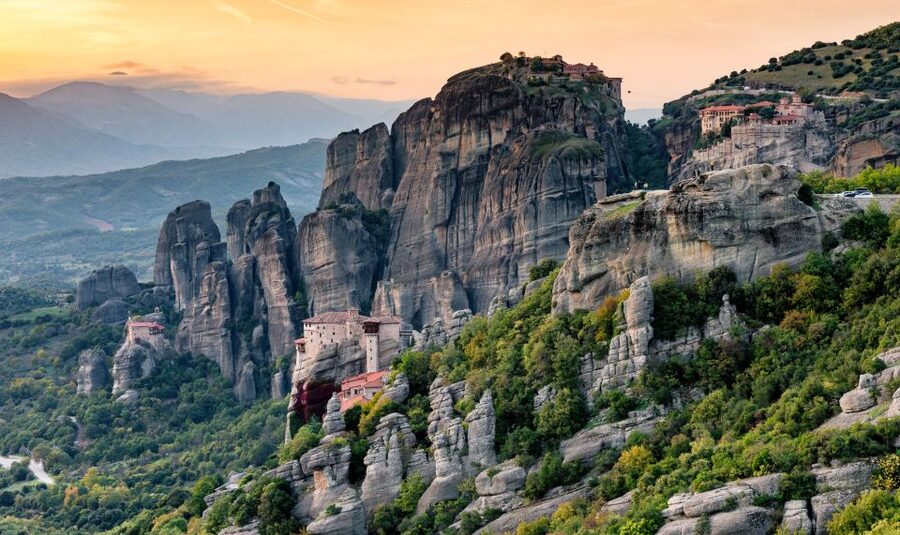
The tour allows free time to visit the interior of three monasteries. The exact choice can depend on the day’s opening arrangements and the guide’s plan, so do not assume you will spend equal time inside all six.
Each monastery charges €5 for entry, and the fees must be paid in cash. If you plan to enter three, budget at least €15 per person. Bring extra cash if you might choose additional interiors or need food and drinks in Kalambaka.
Meteora has a strict dress code. Men need long trousers. Women need long skirts and covered shoulders. A long scarf wrapped around the waist is accepted as a skirt, which is a useful space-saving tip.
Do not wait until the monastery entrance to think about clothing. Wear respectful, practical clothes from the start. You will be walking, climbing, and getting on and off buses, so comfort matters as much as appearance.
The guide and language options
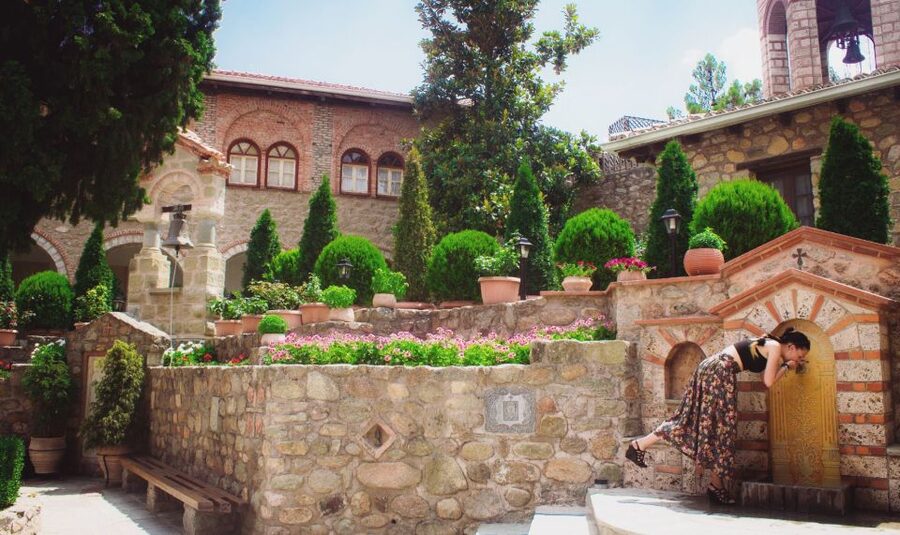
The local English-speaking guide is one of the strongest parts of the experience. A good guide makes the cliffs easier to read, explains why hermits chose caves, and connects the monasteries to the monks who built and maintained them.
The guide also points out lesser-known sights, including the hermit caves and St. George Mandilas cave. These stops add variety and prevent the afternoon from becoming a simple parade of monastery entrances.
Spanish, French, and Italian audio guides are available at no extra charge. The live tour itself is in English, so the audio option is useful if you prefer explanations in one of those languages. It is worth confirming how to access the audio guide before leaving Thessaloniki, since your time at Meteora is limited.
Photo stops and the best use of your camera
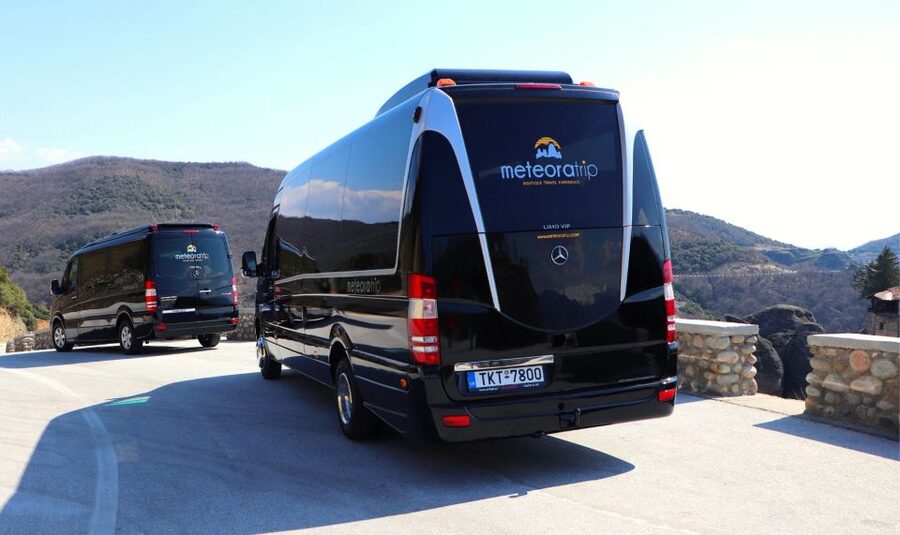
The tour includes several panoramic stops. This is important because the best Meteora views are not always from inside a monastery. From the road and viewpoints, you can see the cliffs as a group, with the buildings perched above the valley.
Use the stops to photograph the full setting rather than only close-up details. Include the plain, the rock pillars, and the monastery roofs in the same frame when possible.
The photo opportunities also give you a short pause between visits. The afternoon can feel busy, especially at popular monasteries, so these stops help you slow down for a few minutes.
One hour in Kalambaka
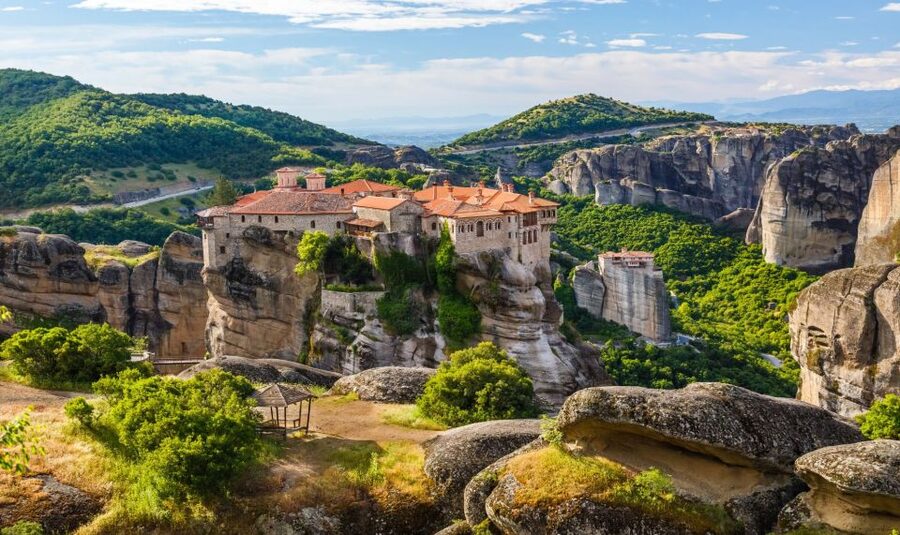
After the Meteora circuit, you have about one hour in Kalambaka. This is enough for a simple meal, coffee, a look at local shops, or a short walk toward the center of town.
Do not expect a full town tour. The hour is best treated as a practical break before the return journey. Bring snacks or a packed lunch because the guided visit begins soon after your arrival, and the meal break comes later.
Kalambaka is also where you can take a breath after the steep paths and packed schedule. If you prefer to eat quickly, you may have time for a short look at the town before returning to the bus.
The return journey to Thessaloniki

At 19:15, you board the bus from Kalambaka to Trikala. You reach Trikala at about 19:50 and change buses again, this time for the 20:00 departure to Thessaloniki.
The final ride takes around two and a half hours, bringing you back to KTEL Macedonia at approximately 22:30. Add the time needed to get from the station to your accommodation. This is a very long day, so do not schedule an early morning activity for the following day.
The return connections are part of the tour’s practical weakness. There is no private transfer carrying you straight back to Thessaloniki, and the connection process may feel unclear if you are not used to Greek intercity bus stations.
The operator states that the bus route has around 50 seats per day. If those seats sell out, train and bus transportation may be provided instead. Check the final instructions carefully before you go.
Is $104 a fair price?
At $104 per person, the price is reasonable if you value convenience and a guided visit but do not have time to stay overnight in Kalambaka. You receive the two-way bus tickets, the local Meteora tour, the English guide, audio guides in three additional languages, the monastery circuit, and a bottle of water.
The price feels less generous because the main transport is public bus service and the connections are not fully escorted. You are paying for access to the guided Meteora experience, not a private coach from Thessaloniki.
Add monastery admission to your budget. Entering three monasteries adds €15 per person, and food in Kalambaka is extra. The total remains workable for a one-day visit, but you should compare it with any direct private coach option available for your dates if comfort and simplicity matter more than price.
Who should book this Meteora day trip?
I would choose this tour if you are staying in Thessaloniki, have only one available day, and want to see Meteora without planning separate buses and a local guide yourself.
It suits visitors who enjoy a full schedule, scenic rides, historic sites, and photo stops. It also works well if you want a guide to explain the religious background rather than simply arrive at the monasteries and walk around alone.
I would hesitate if you dislike public transportation, find tight connections stressful, or want hours of quiet inside each monastery. Families with young children should also consider the 13-hour duration, stair climbing, and limited meal time.
Wear comfortable shoes, bring snacks, carry cash, and keep your bus instructions available offline. Those four simple steps will make the day much easier.
Should you book it?
Book this Meteora tour if your priority is seeing the full site from Thessaloniki in one ambitious day. The cliffs are extraordinary, the guide adds useful context, and the chance to enter three monasteries gives the visit real substance.
Skip it in favor of a slower or more direct option if the bus changes worry you or if you want to explore each monastery at leisure. The tour’s great strength is coverage and access. Its cost is time, energy, and a bit of transport uncertainty.
FAQ
How long is the Thessaloniki to Meteora tour?
The full experience lasts about 13 hours. You leave Thessaloniki at 9:30 and return to KTEL Macedonia at approximately 22:30.
Where does the bus leave from in Thessaloniki?
The departure point is the KTEL Macedonia intercity bus station, listed as Υπεραστικός Σταθμός Κ.Τ.Ε.Λ. Μακεδονία.
Do I need to change buses?
Yes. You travel from Thessaloniki to Trikala, change there for Kalambaka, and repeat the change on the return journey.
What time do I arrive at Meteora?
The bus reaches Kalambaka, the town below Meteora, at about 13:30. A local guide meets you there for the guided visit.
Can I enter the monasteries?
Yes. The tour provides free time to visit the interior of three monasteries. Entry fees are not included and cost €5 per monastery.
Do the monasteries require a dress code?
Yes. Men must wear long trousers. Women must wear long skirts and cover their shoulders. A long scarf wrapped around the waist is also accepted for women.
What languages are available?
The live tour guide speaks English. Free audio guides are available in Spanish, French, and Italian.
Is food included?
No. Food is not included. You are advised to bring snacks or a packed lunch, and you have about one hour of free time in Kalambaka after the Meteora visit.
What should I bring?
Bring comfortable shoes, snacks, and cash. Cash is needed for the monastery entrance fees, which the monasteries only accept in cash.
Just added around Thessaloniki
- Thessaloniki: Aristotle’s Birthplace and Mt. Athos Cruise★ 4.4 · 52 reviews
- Thessaloniki: Walking Tour★ 4.9 · 27 reviews
- Thessaloniki: Self-Guided Audio Walking Tour & Narrative★ 3.5 · 28 reviews
- Thessaloniki: Small-Group Wine Tasting Tour with Appetizers★ 4.8 · 31 reviews
- Thessaloniki: City Sightseeing Hop-On Hop-Off Bus Tour★ 4.2 · 285 reviews
- Thessaloniki: Museum of Illusions Admission Ticket★ 4.3 · 147 reviews
- Thessaloniki:Selfie Museum, a 60-minute immersive experience★ 4.8 · 33 reviews
- Thessaloniki: Halkidiki Beach-Hopping with Swimming★ 4.9 · 52 reviews
Thessaloniki Tours, compared.
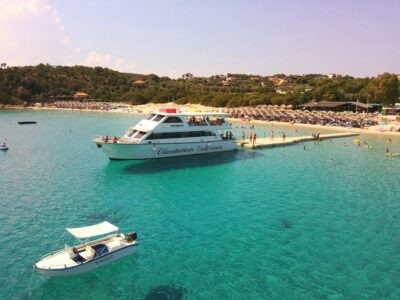
Mount Athos Glassbottom Cruise with Ammouliani Island visit
Read our review →
Thessaloniki Hop-on Hop-off Sightseeing Bus Tour
Read our review →Browse the lists this tour appears in