
Reviewed · ATHENS TOURS
Unexpected Athens Orientation Tour
Athens has more than ancient stones. This four-hour walk connects royal palaces, Ottoman streets, WWII history, and modern city life in a way that gives Athens a human scale. I especially like the route through Kolonaki, Exarcheia, Psyri, and Monastiraki, since it shows how sharply the city changes from one neighborhood to the next. I also like the included map, which tracks the city’s changes across 2,500 years.
The main drawback is that this is a long urban walk with no food, drinks, or major indoor attraction included. The notorious World War II prison is closed on Mondays and Tuesdays, so your day of the week matters. Still, with a price of $62 per person and a 4.8 rating from 43 bookings, this looks like a strong choice for visitors who want context rather than a quick checklist of famous sights.
In This Review
- Key things to know before booking
- Why this Athens walk feels different
- Syntagma Square and the making of modern Athens
- Kolonaki and the city’s grand public face
- Exarcheia and the less polished Athens
- The prison, rivers, and tombs of an older Athens
- Omonia, Kotzia, and the central markets
- Psyri and the Ottoman imprint
- Monastiraki and the final half hour
- Guides, languages, and group feel
- Is $62 a fair price?
- Who should book this Athens experience?
- Should you book the Unexpected Athens Orientation Tour?
- FAQ
- Where does the Unexpected Athens Orientation Tour start?
- Where does the tour finish?
- How long does the tour last?
- Which neighborhoods does the tour visit?
- Is the World War II prison open every day?
- What languages are available?
- Is a private group option available?
- What is included in the price?
- Are food and drinks included?
- Can I cancel for a refund?
Key things to know before booking
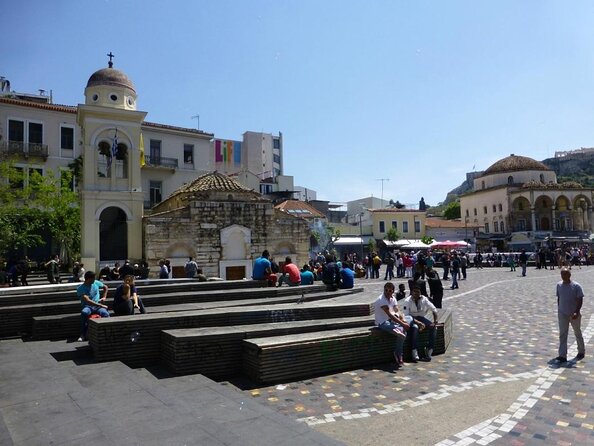
- The route begins at Syntagma Square and finishes at Monastiraki Square, making it useful for getting oriented in central Athens.
- Kolonaki, Exarcheia, Psyri, and Monastiraki each show a different Athens, from grand civic buildings to preserved Ottoman streets and lively local districts.
- The tour includes lesser-seen history, including a notorious WWII prison, old tombs, ancient rivers, and 19th-century buildings linked to the industrial age and Greek royalty.
- Your guide is central to the experience, with English and French tours available. Guides named in past bookings include Andreas, Antigoni, Simos, and Christina.
- It is a four-hour walking tour, so comfortable shoes are essential and a little stamina helps.
- The $62 price is most worthwhile for first-time visitors and repeat visitors alike, especially if you want a clear explanation of how modern Athens grew around its ancient core.
Why this Athens walk feels different
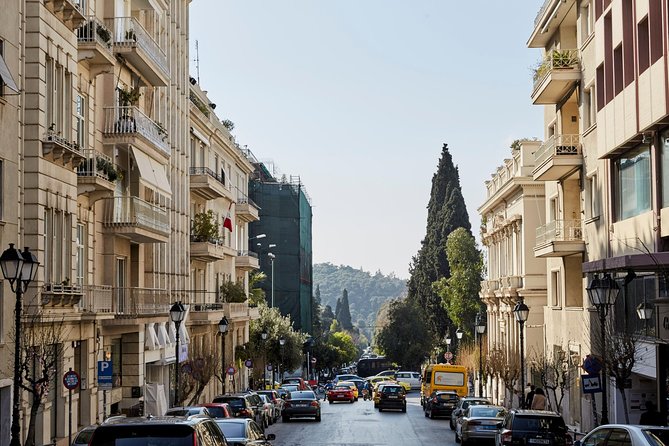
Many Athens tours point you toward the Acropolis, the Agora, and the major museums. This one takes another route. It uses streets, squares, public buildings, neighborhoods, and uncomfortable chapters of the past to explain how Athens became a contemporary European capital.
That approach matters because Athens can seem confusing at first. Ancient remains sit beside neoclassical buildings, modern apartment blocks, market streets, and districts shaped by Ottoman rule. The contrasts are not always tidy, and that is part of the point. You get a city formed by several eras that never fully replaced one another.
I like that the tour does not treat Athens as an ancient city frozen in place. You will look at the Parliament, Academy, University, and National Library, then move into areas where daily life, politics, migration, trade, and older customs are easier to see. The guide helps connect those pieces instead of leaving you with a string of disconnected facts.
The tour is also useful early in a visit. Starting at Syntagma and ending at Monastiraki gives you a basic mental map of central Athens. After four hours, you should have a better sense of where the grand civic center ends, where the older commercial quarters begin, and which neighborhoods deserve a return visit.
A few more Athens half-days to weigh up
- Athens: Acropolis & up to 5 Archaeological Sites Combo Pass
★ 4.4 · 12,619 reviews - Athens: Acropolis Ticket with Optional Audio or Live Guide
★ 4.2 · 11,055 reviews - Athens: Acropolis, Parthenon & Acropolis Museum Guided Tour
★ 4.8 · 9,316 reviews
Syntagma Square and the making of modern Athens
The walk starts at Syntagma Square, also called Constitution Square. This is a fitting place to begin because the square represents modern Greece as a state, not just ancient Athens as a city of ruins.
From here, the route introduces the 19th-century landmarks connected with the formation of the capital. You can expect attention to the Parliament and the former royal world around it, along with the civic buildings that helped give Athens a European appearance after independence.
This is where the tour’s historical method becomes clear. Rather than treating grand buildings as pretty façades, the guide explains their role in shaping the new capital. The Parliament, Academy, University, and National Library are not simply photo stops. Together, they reveal the ambitions of a young state trying to present itself as modern, educated, and connected to Western Europe.
The included city map should be particularly helpful here. It highlights how Athens changed over roughly 2,500 years, giving you something practical to consult after the walk. I would keep it handy for the rest of your stay because the route covers several areas that can otherwise feel like separate parts of town.
Kolonaki and the city’s grand public face
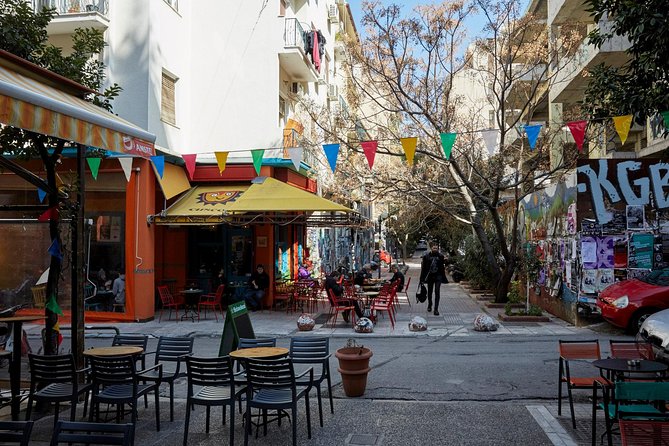
The first guided neighborhood is Kolonaki, with about an hour devoted to the area. Its place in the tour makes sense: it helps explain the more polished, official side of Athens before the route moves into rougher and more alternative districts.
The focus here is on landmark architecture and the 19th-century development of the capital. You will see how royal power, public institutions, and international architectural ideas helped shape central Athens. The exact balance of walking and standing may depend on your guide, but expect the hour to be about urban history rather than shopping or restaurant stops.
I appreciate this part because it gives meaning to the city center. Without context, the neoclassical buildings can blur together. With a guide, you can better understand why certain institutions were placed where they were and how their design helped communicate the character Greece wanted for its capital.
There is also a useful contrast ahead. Kolonaki presents one version of Athens, while Exarcheia offers another. Moving between them on foot lets you notice the change instead of simply hearing about it in a vehicle.
Exarcheia and the less polished Athens
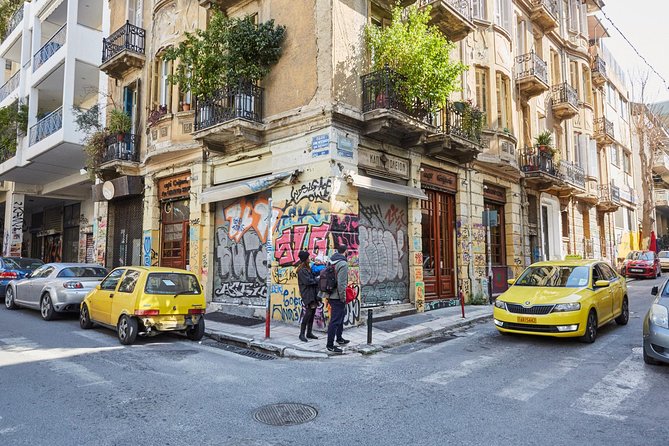
The route then spends about an hour in Exarcheia. This neighborhood is important to the tour because it helps you see Athens as a living city with disagreements, pressures, and strong local character.
The experience is not limited to famous monuments. The guide discusses the city’s modern challenges and the way citizens have experienced change. That broader view was one of the strongest themes in the comments about Antigoni’s guiding. Her tour was praised for explaining both Greek culture and the difficulties faced by people living in Athens.
This is valuable if you want more than a historical outline. A city is not only its celebrated buildings. Exarcheia adds a present-day layer to the older story, showing that Athens is still being argued over, shaped, and redefined.
You should also know that neighborhood walks can feel less predictable than monument tours. You may spend time looking at streets, public spaces, and buildings rather than entering a major attraction. If your priority is famous sites with long interior visits, this tour may feel too diffuse. If you want to understand how different parts of Athens function and feel, Exarcheia is one of the reasons to book.
Same stretch of coastline, a completely different day out:
- Athens: Cape Sounion & Poseidon Temple Sunset Half-Day Trip
★ 4.8 · 8,241 reviews - Athens: Acropolis and Parthenon Guided Walking Tour
★ 4.6 · 5,882 reviews - All Day Cruise -3 Islands to Agistri,Moni, Aegina with lunch and drinks included
★ 5.0 · 4,958 reviews - Athens, Piraeus, and Coastline: Blue Hop-On Hop-Off Bus
★ 3.9 · 4,849 reviews
The prison, rivers, and tombs of an older Athens
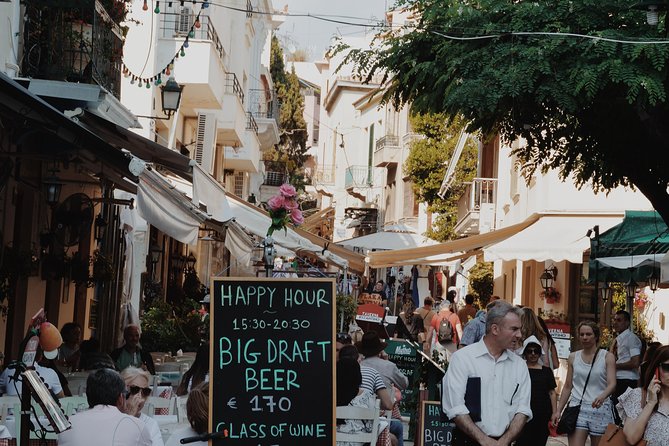
One of the tour’s most unusual promises is a descent to a notorious prison connected with World War II. This is the kind of stop that gives the walk its title. It brings a difficult period of Athens history into the route and moves the experience away from the familiar ancient and neoclassical subjects.
The prison is closed on Mondays and Tuesdays. Check the operating day before you reserve, since this is not a minor detail if that stop is a main reason you are interested in the tour.
The walk also points out ancient rivers that still flow and tombs from an earlier era. These details help show that old Athens is not confined to fenced archaeological sites. Traces of the past can survive beneath ordinary streets or alongside modern buildings.
The wording here is important: this is an orientation walk, not a full archaeological excavation tour. You should expect explanation and observation rather than a long museum-style visit at every point. The reward is the connection between what is visible now and what once shaped the city.
For me, that is one of the better reasons to choose this experience over a standard introduction. It encourages you to notice small clues after the tour. A street, watercourse, wall, or tomb can seem more meaningful once someone has explained its place in the city’s long development.
Omonia, Kotzia, and the central markets
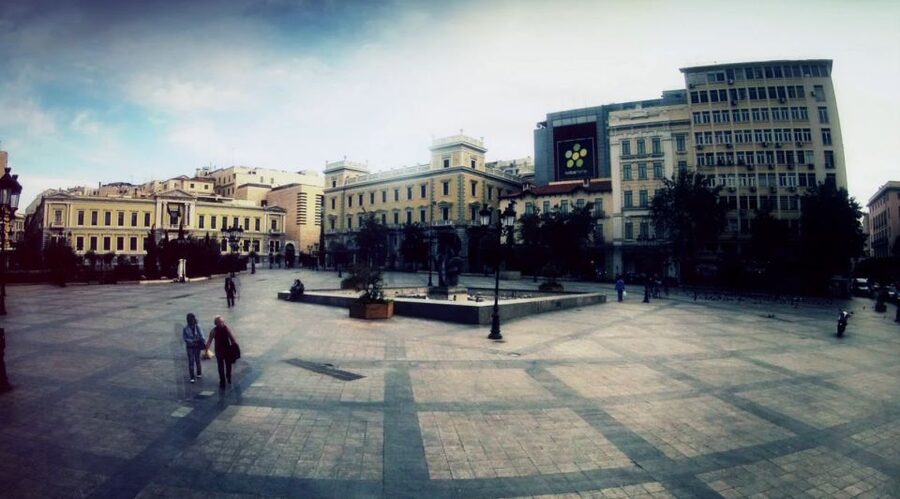
The route also passes through Omonia Square, Kotzia Square, the central markets, and other central sites. These places help bridge the gap between official Athens and the older commercial city.
Omonia and Kotzia are useful stops for understanding movement, trade, and the changing face of central Athens. The markets add a more immediate sense of city life than the monumental buildings do. You may not spend a long time shopping or eating, since food and drinks are not included, but the setting helps ground the history in ordinary activity.
This is also where the tour’s East-West theme becomes easier to grasp. Athens absorbed outside ideas, architectural styles, imperial influence, and new institutions, but older customs did not simply disappear. Some traditions adapted. Others remained separate. The guide’s job is to explain those overlaps without pretending the city developed in a straight line.
I would not book this tour expecting a food tour. You pass through the market area, but the experience is built around history and city orientation. Plan to eat separately if you need lunch or a snack during the four-hour outing.
Psyri and the Ottoman imprint

Psyri, also written Psiri, receives about an hour of guided attention. This is one of the most useful sections for seeing the mixture of old Athens and later influences.
The neighborhood retains signs of a city shaped by Ottoman rule, local traditions, and later European ideas. The guide explains where those influences met and where they did not. That distinction is important. Athens is not a single blended culture with every layer neatly combined. Its streets show cooperation, replacement, resistance, and adaptation.
This is also a good section for repeat visitors. Stephanie from the United Kingdom had already visited Athens several times yet found parts of the city she had not seen before. Daniel from Canada also found new insight after visiting Athens previously. That suggests the tour is not only for someone arriving with no background.
Psyri can be especially rewarding if you have already seen the Acropolis and want a different kind of Athens. You are not simply looking upward at ancient temples. You are reading the city through neighborhoods and the ways people have used them over time.
Monastiraki and the final half hour
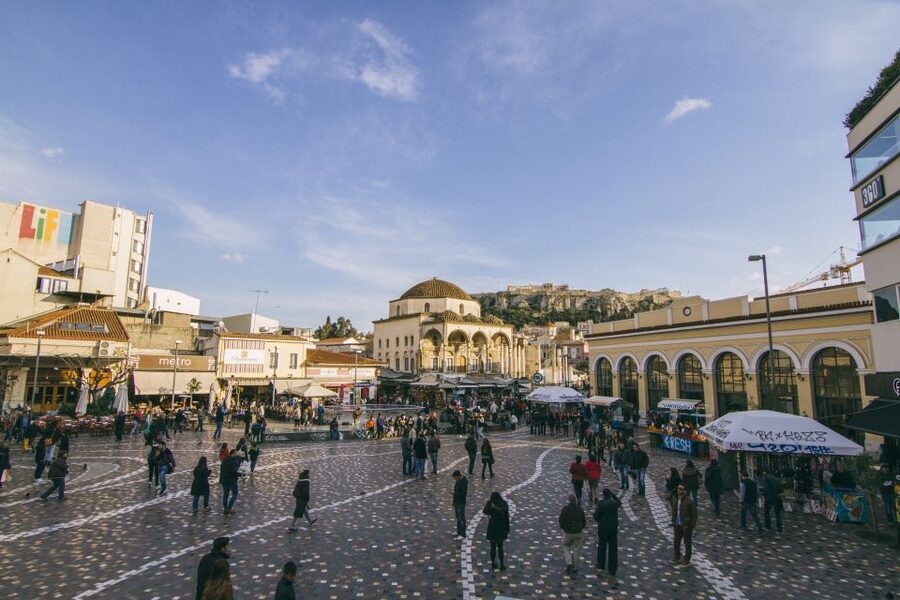
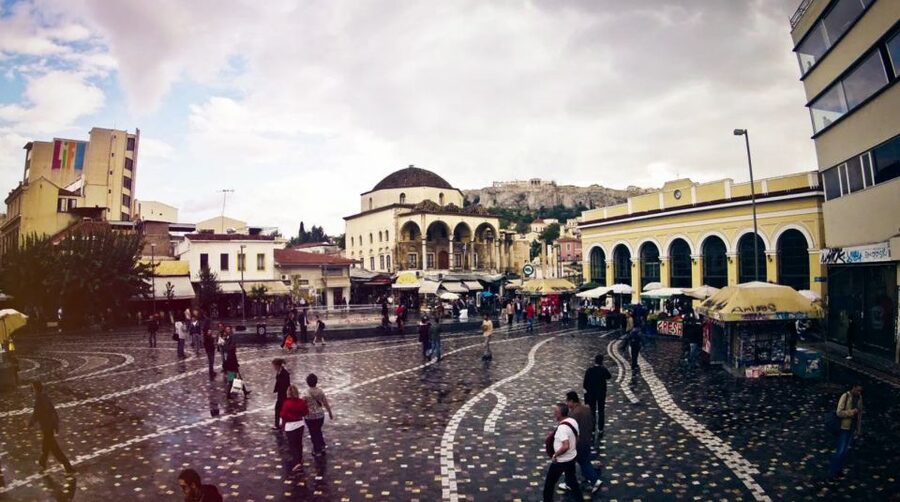
The last guided section is Monastiraki, with about 30 minutes before the tour ends at Monastiraki Square. This is a practical finish because the square is one of the most recognizable meeting points in central Athens.
By this point, the neighborhood should make more sense within the larger story. Monastiraki is not just a convenient place for cafés, shops, and foot traffic. It sits at the meeting point of old commercial routes, Ottoman-era traces, archaeological remains, and modern tourism.
The shorter timing here is sensible. Monastiraki is easy to revisit on your own, and the earlier parts of the route require more explanation. Still, do not expect an extended market visit or a long stop at each sight. The aim is to bring the city’s layers together, not to provide free time for shopping.
Ending here also gives you options. You can continue exploring central Athens, find food nearby, or use the square as a reference point for the rest of your day.
Guides, languages, and group feel
The quality of this tour depends heavily on the guide. The strongest praise has centered on clear explanations, friendly delivery, good pacing, and the ability to connect different neighborhoods.
Andreas received especially warm comments for making the walk useful to both first-time and repeat visitors. He was described as clear, friendly, and professional, with a strong grasp of Athens from ancient times to modern concerns. Simos was praised for being attentive and for keeping a comfortable pace. Antigoni was remembered for combining history and culture with an honest look at challenges facing local citizens.
Christina was also praised for taking the group to places it might not otherwise have found. One booking specifically appreciated being in a small group, and private groups are available. The standard group size is not specified, so check the option you select if group atmosphere matters to you.
Tours are offered in English or French. A French-language booking in 2022 was praised for its guide and for showing another side of Athens. If you choose French, confirm that the selected departure is offered in that language.
Is $62 a fair price?
At $62 per person, this is not the cheapest way to walk around Athens. You can certainly explore many central streets without paying for a guide. The value comes from the interpretation, route planning, and access to a version of Athens that is easy to miss on your own.
You are paying for four hours of focused walking, a live English or French guide, and a map that explains the city’s changes through time. The route covers several neighborhoods and historical periods, so the guide saves you from having to research how they fit together.
I think the price is fair for first-time visitors who want a strong orientation at the start of a trip. It is also reasonable for repeat visitors, since the route avoids relying only on the major sights they may already know.
The value drops if you dislike long walks, want substantial time inside attractions, or prefer a food-focused experience. Food, drinks, and gratuity are not included. You should also wear comfortable shoes and plan around the prison’s Monday and Tuesday closure.
You can cancel up to 24 hours before the tour for a full refund, and the reserve-now, pay-later option keeps your plans flexible. Those policies are useful when your Athens schedule depends on flights, ferries, or changing weather.
Who should book this Athens experience?
I would recommend this tour to first-time visitors who want to understand central Athens before exploring it independently. The route gives you useful bearings and introduces the city’s official, commercial, Ottoman, and modern sides in one outing.
It also suits repeat visitors. The comments from Stephanie and Daniel show why: even people who had already visited Athens found unfamiliar areas and new ways to read the city.
History-minded walkers will get the most from it, especially those interested in architecture, urban change, WWII history, Ottoman influence, and the relationship between ancient remains and modern life. The tour also suits people who prefer a small-group feel or want the option of a private group.
I would be more cautious if you have limited mobility or strongly dislike city walking. The tour lasts four hours and includes several neighborhoods, so it is not a brief stroll between major monuments. Specific accessibility details are not provided, so ask before booking if you have mobility concerns.
Should you book the Unexpected Athens Orientation Tour?
Book it if you want Athens explained as a city people built, changed, argued over, and continued to live in. The best parts are the neighborhood contrasts, the older traces tucked into ordinary streets, and the guides’ ability to connect ancient history with modern Athens.
Skip it if your main goal is the Acropolis, major museums, or a food tasting. Those are not the focus here.
For most visitors, I would schedule it early in an Athens stay, preferably on a day when the WWII prison is open. Arrive ready to walk, bring comfortable shoes, and keep the map. At $62, it offers a useful framework for the rest of your time in the city.
FAQ
Where does the Unexpected Athens Orientation Tour start?
The tour has two listed starting options, both at Syntagma, or Constitution, Square. The exact meeting point may vary depending on the option booked.
Where does the tour finish?
The tour finishes at Monastiraki Square.
How long does the tour last?
The experience lasts four hours.
Which neighborhoods does the tour visit?
The guided route includes Kolonaki, Exarcheia, Psyri, and Monastiraki. It also passes through Omonia Square, Kotzia Square, the central markets, and other central Athens sites.
Is the World War II prison open every day?
No. The prison is closed on Mondays and Tuesdays.
What languages are available?
The tour is offered with a live guide in English or French.
Is a private group option available?
Yes. A private group is available as a booking option.
What is included in the price?
The price includes an English or French-speaking guide and a city map showing changes through 2,500 years of Athens history.
Are food and drinks included?
No. Food and drinks are not included.
Can I cancel for a refund?
Yes. You can cancel up to 24 hours in advance for a full refund. A reserve-now, pay-later option is also available.
Just added around Athens
- Delphi One Day Trip from Athens★ 4.0 · 98 reviews
- Private Delphi and Hosios Loukas Monastery – Great Lunch and Drinks Included★ 5.0 · 36 reviews
- Mercedes Private Tour to Delphi and Arachova★ 5.0 · 30 reviews
- Day tour to Ancient Olympia,Ancient Sparta Mycenae Including Meal★ 5.0 · 54 reviews
- Athens: Half Day Trip To Cape Sounio/Poseidon Temple Semi Private★ 5.0 · 131 reviews
- Athens Half-Day Private Tour Acropolis, Parthenon City Highlights★ 5.0 · 35 reviews
- From Athens: Day Tour to Mykonos★ 5.0 · 64 reviews
- Culinary Secrets of Downtown Athens★ 5.0 · 103 reviews
Athens Tours, compared.
Acropolis & up to 5 Archaeological Sites Combo Pass
Read our review →

Acropolis, Parthenon & Acropolis Museum Guided Tour
Read our review →
Cape Sounion & Poseidon Temple Sunset Half-Day Trip
Read our review →

All Day Cruise -3 Islands to Agistri,Moni, Aegina with lunch and drinks included
Read our review →
Athens, Piraeus, and Coastline: Blue Hop-On Hop-Off Bus
Read our review →