Reviewed · CRETE TOURS
WWII – The Battle of Crete Day Tour
History feels different when you walk the ground. This six-hour tour from Chania follows the Battle of Crete through Maleme, Tavronitis, wartime cemeteries, and lesser-known sites that are hard to reach without local help. I like the small minivan group, which keeps the day friendly and leaves room for questions, and I like the guides’ clear, personal storytelling. The main drawback is that six hours is a tight window for such a large subject, so the battle’s movement can feel hard to follow if you arrive without some prior reading.
This is much more than a drive past monuments. Guides such as Yannis, Giannis, Babis, Ioannis, and Stelios bring different strengths, but the praise is consistent: strong English, real enthusiasm, and a willingness to explain both military events and Cretan life. I would especially recommend it to anyone tracing a relative’s service, though the pace and subject matter may be too focused for someone seeking a general sightseeing outing.
In This Review
- Key points to know before booking
- Why the Battle of Crete still matters
- Starting at Maleme after a 9:00 pickup
- Tavronitis Bridge and the value of a precise location
- German Military Cemetery: a quiet change of tone
- Souda Bay War Cemetery and the Commonwealth story
- The private WWII collection may be the day’s surprise
- The guides make or break this six-hour tour
- What the minivan format adds
- Is $114.89 a fair price?
- Who should book it?
- Final verdict: a strong choice for serious history
- FAQ
- Where does the WWII Battle of Crete tour take place?
- How long does the tour last?
- What time does the tour start?
- Is hotel pickup included?
- What transport is used?
- Is the tour offered in English?
- What is the maximum group size?
- Are entrance fees included?
- Are food and drinks provided?
- Can the tour be canceled for bad weather?
Key points to know before booking
- Maleme puts you at the center of the opening German airborne assault, one of the most important areas in the Battle of Crete.
- Tavronitis Bridge adds a specific tactical location, helping connect broad military events with a real piece of ground.
- The German and Commonwealth cemeteries offer two different, quiet perspectives on the cost of the fighting.
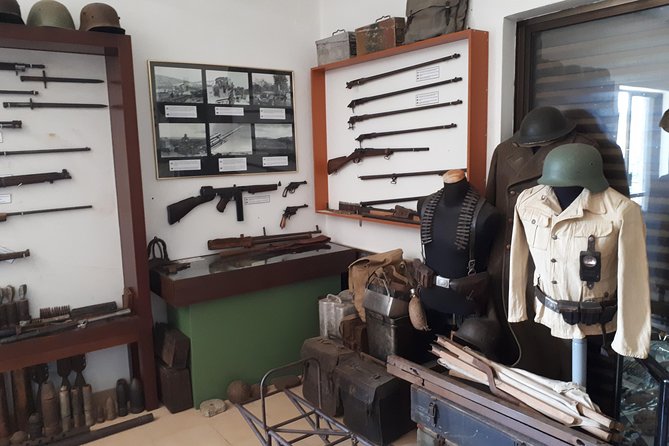
- A private collection of WWII artifacts may be part of the day, including a memorable visit described by several people as a highlight.
- Small groups make this personal, with a maximum of 15 people and, at times, only a few participants.
- Hotel pickup, air conditioning, water, snacks, and entrance fees are included, making the $114.89 price easier to justify.
Why the Battle of Crete still matters
The Battle of Crete took place in 1941, but the tour presents it as more than a clash between German and Allied forces. You learn about the role of Cretan civilians and resistance groups, the British Commonwealth troops, Greek forces, German units, and the wider effect of the battle on the island.
That broader view is one of the tour’s strengths. The guides explain the invasion, the fighting, the evacuation, and the human cost without reducing Crete to a simple battlefield diagram. You also hear about the island itself, including the way wartime events affected local communities.
I would not treat this as a basic introduction to every part of the Second World War. It is focused on Crete, especially the Chania area and the western part of the battle. If you have read a book about the campaign first, the stops will likely make much more sense.
One useful preparation choice is Anthony Beevor’s book on the Battle of Crete, which one participant had read before the tour. You do not need to become a military historian, but knowing the names of Maleme, Galatas, Souda Bay, and the German airborne attack will help you keep track of the story.
A few more Crete half-days to weigh up
- From Kissamos Port: Boat Cruise to Balos Lagoon & Gramvousa
★ 4.2 · 6,755 reviews - Crete: Day Trip to Agios Nikolaos and Spinalonga Island
★ 4.6 · 4,416 reviews - From Chania: Full-Day Samaria Gorge Trek Excursion & Guide
★ 4.6 · 3,191 reviews
Starting at Maleme after a 9:00 pickup
The day begins at 9:00 am, with pickup and return available from specific places in the Chania region. Transport is by air-conditioned minivan or minibus, and the group can include up to 15 people.
Maleme is the first listed stop and the main starting point for the story. You spend about 50 minutes here, with no admission charge. That time matters because Maleme was central to the opening German attack and the struggle for control of the airfield area.
Expect the guide to set the scene before moving on. This is where maps, explanations of positions, and accounts of the first fighting help you understand why this part of Crete mattered so much. Guides have been praised for explaining the battle to people with very different levels of background knowledge, from first-time military history readers to serious WWII students.
The possible weakness is also clear here. You may be looking across open ground and using maps to follow the action rather than walking through a preserved battlefield with extensive signs. The physical setting alone will not explain the battle. Your experience depends heavily on listening to the guide and asking questions.
That is not necessarily a problem. The tour’s value lies in having someone connect the visible place with events that are no longer obvious on the ground. Still, I would keep your expectations realistic: this is an interpreted battlefield visit, not a museum-style exhibit at every stop.
Tavronitis Bridge and the value of a precise location
The stop at Tavronitis Bridge lasts about 40 minutes, and admission is included. It is a more focused visit than the broad opening at Maleme, giving the guide a chance to explain how a particular crossing and nearby area fit into the fighting.
This kind of stop is useful because military history can become a blur of dates and names. A bridge gives you something concrete to look at. You can better understand how roads, crossings, and access routes shaped the battle.
The guide may use the location to explain movement and tactical choices. Exact details can be difficult to absorb in a short tour, so do not hesitate to ask for the simplest version of the story: who needed to control the bridge, what happened nearby, and why did it matter?
The tour includes entrance fees, but Tavronitis Bridge itself is not presented as a large formal attraction. You visit for the historical setting and the explanation. If you prefer grand museums with extensive displays, this stop may feel modest. If you like standing at a specific site and asking how the battle unfolded, it earns its place.
German Military Cemetery: a quiet change of tone
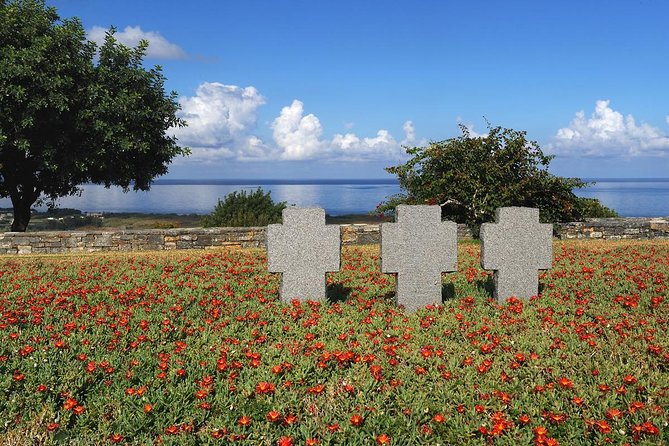
The German Military Cemetery is another included stop, with about 30 minutes set aside. The tone here is likely more subdued than at the battlefield sites. You are not simply collecting another photograph. You are entering a place of remembrance for German servicemen who died during the campaign.
This stop helps keep the tour balanced. The story is not told only from the Allied side, and the guides place German forces within the wider military and human context. That approach is especially useful if you want to understand the battle rather than hear a one-sided victory story.
Thirty minutes is enough for a meaningful visit, but it is not a long period for extended reflection or detailed research. If you have family connections to the German side, or if cemetery visits are particularly important to you, you may wish you had more time.
The cemetery also gives the day a needed pause. After explanations of airborne attacks, resistance, and military decisions, a quiet memorial setting makes the cost of those decisions plain.
Same stretch of coastline, a completely different day out:
- Agios Nikolaos: Boat Trip to Spinalonga with Swim Stop
★ 4.4 · 3,031 reviews - Heraklion: Dia Island Sailboat Cruise with Swimming and Meal
★ 4.8 · 2,579 reviews - Crete: Knossos Palace Entry Ticket with Optional Audio Guide
★ 3.9 · 2,251 reviews - Heraklion Area: CRETAquarium Admission Ticket
★ 4.4 · 2,055 reviews
Souda Bay War Cemetery and the Commonwealth story
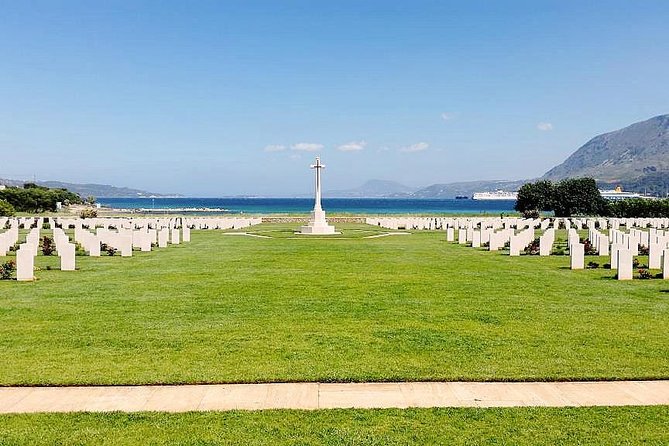
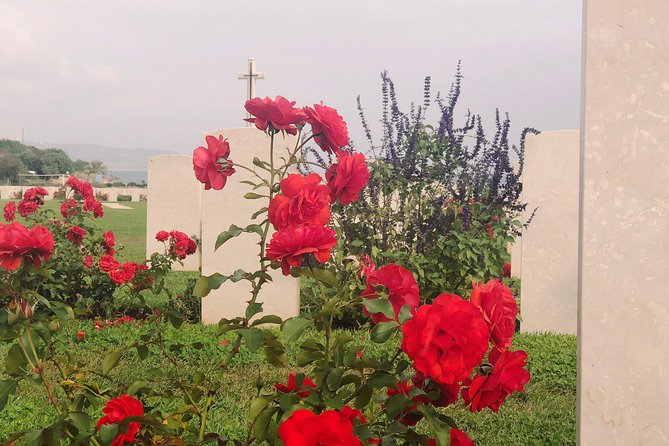
The visit to Souda Bay War Cemetery lasts around 30 minutes and focuses on the British Commonwealth forces. This is one of the most moving parts of the day for people with family or regimental connections.
Several participants used the tour to trace relatives who served in Crete. One person learned more about a father who had been captured, while another visited the area connected with a grandfather who reached a ship at Souda Bay and survived evacuation. These personal links show why the tour can matter far beyond general interest in WWII.
The cemetery also helps explain the role of evacuation and the fate of Allied troops after the main fighting. Your guide can connect the names and graves with the larger campaign, while giving you time to take in the setting.
A reported Greek air force flypast added an unexpected moment to one visit, but you should not book the tour expecting that to happen. It was a fortunate occurrence, not a listed feature.
Souda Bay is a strong closing point for the main wartime route because it brings the story toward the Allied withdrawal. The visit does not turn the battle into a neat ending, though. The guides also discuss Cretan resistance and the punishment suffered by local communities, which gives the final part of the day more weight.
The private WWII collection may be the day’s surprise
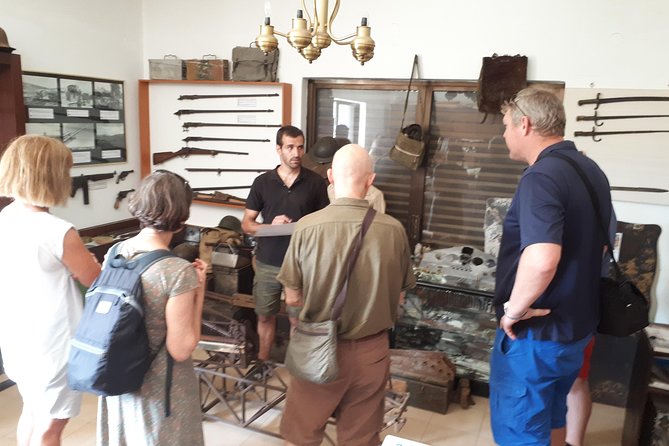
A visit to a private collector’s home or museum is mentioned repeatedly as a major highlight. It is not listed in the basic four-stop itinerary, so I would treat it as an additional element that may depend on the day’s arrangement.
This personal collection gives the tour a different feel from a standard battlefield route. You may see weapons and military artifacts connected with the Battle of Crete, and one account describes being handed Lee Enfield rifles with bayonets and Tommy guns. That is a memorable way to connect the campaign with the equipment used by the people involved.
The collection also adds a human voice. A private collector can share stories and details that do not always appear on official plaques. One guide’s friend, Stelios, was praised for his knowledge of the objects and the period.
There are limits. A private collection is not the same as a large public museum, and the exact visit may not be guaranteed by the main tour description. Ask your operator at booking if this stop is part of your planned day. If it is available, it can be especially valuable for anyone interested in weapons, field equipment, or personal artifacts.
The guides make or break this six-hour tour
The strongest part of the experience is the guiding. Yannis and Giannis are praised for their command of the subject, easy manner, and ability to answer questions about both the battle and modern Crete. Babis is described as an engaging storyteller who makes 1941 easier to follow. Ioannis is noted for warmth and clear explanations, while Stelios and Nikos have also guided or supported the experience.
Names appear in several spellings, including Yannis, Yiannis, Giannis, and Ioannis. That reflects Greek name transliteration rather than a promise that you will receive one particular guide. The operator is GS Tours Chania LTD, and the listed service is in English with a local driver or escort.
The best guides do more than recite dates. They explain the thinking of commanders, the position of Cretan civilians, the actions of resistance groups, and the experience of Allied troops. They also invite questions, which matters in a small group.
That said, the tour covers a lot in six hours. You may hear more information than you can retain, especially at the start. I would use your phone or a small notebook for names and dates, but do not let note-taking keep you from watching the sites.
What the minivan format adds
The air-conditioned minivan is a practical choice in Crete, especially on a warm day. Water and snacks are included for each person, and some descriptions also mention lunch. The formal inclusions specify snacks and bottled water, so confirm the lunch arrangement if that matters to you.
Pickup and drop-off from specific Chania region locations remove the need to organize a rental car or navigate between scattered sites. That is a real benefit because the tour covers places that are not all clustered around central Chania.
The maximum group size is 15, though some departures have been much smaller. A group of three or four allows an easy exchange with the guide and plenty of time for questions and photos. A full minivan will feel less personal, but it remains more manageable than a large coach tour.
You should expect time in and around the vehicle, as well as short visits at cemeteries and historical sites. Wear sensible shoes and bring sun protection, since several stops are outdoors. Those are practical suggestions rather than listed requirements, but they fit the nature of the day.
Is $114.89 a fair price?
At $114.89 per person, this is not the cheapest way to spend six hours in Crete. The price becomes easier to defend when you count the air-conditioned transport, Chania-area pickup and return, entrance fees, English-speaking escort, snacks, bottled water, taxes, and the local interpretation.
You are also paying to connect sites that would be difficult to understand in isolation. A rental car could take you to Maleme, Tavronitis, and the cemeteries, but you would need to research the battle, plan the route, and work out how the sites fit together.
The value is strongest for you if WWII history is a main reason for visiting Crete, or if you are following a family member’s wartime story. It is also good value if you dislike driving and want a guided day without arranging several separate visits.
The value is weaker if you want a relaxed scenic drive, a broad overview of Cretan culture, or long museum visits. This is a focused history tour, and the schedule leaves little room for wandering.
Who should book it?
I would choose this tour if you have a serious interest in the Battle of Crete, family connections to the campaign, or a desire to understand how WWII affected the island. It suits both beginners and military history readers because the guides adjust their explanations and welcome questions.
It also works well for mixed groups. One person may know every detail of the campaign while another knows almost nothing. The guide’s role is to make the story understandable without turning the day into a lecture.
I would think twice if you dislike cemeteries, military subjects, or stops that depend on explanation rather than dramatic ruins. The tour is respectful and often moving, but it is not light entertainment.
If the battle’s sequence concerns you, read a short introduction first. The guide will provide context, but six hours cannot explain every unit, movement, and command decision from the beginning.
Final verdict: a strong choice for serious history
I would book the WWII Battle of Crete Day Tour if you want the island’s wartime story told with care and local feeling. The strongest reasons are the small-group format, the quality of the guides, the two military cemeteries, and the chance to see a private collection of battlefield artifacts.
The main caution is the compressed format. The battle is complex, and some of the action may remain difficult to picture from viewpoints and maps. Go prepared to listen, ask questions, and accept that the tour offers a thoughtful introduction rather than a complete military study.
For a focused, personal day from Chania, the price is reasonable. You leave with more than a list of sites: you gain a clearer sense of Cretan resistance, Allied sacrifice, German losses, and the human cost behind the campaign.
FAQ
Where does the WWII Battle of Crete tour take place?
The tour operates in Crete and begins from Chania region pickup points. The route includes Maleme, Tavronitis Bridge, the German Military Cemetery, and Souda Bay War Cemetery.
How long does the tour last?
The experience lasts approximately six hours.
What time does the tour start?
The scheduled start time is 9:00 am.
Is hotel pickup included?
Pickup and drop-off are included from specific places in the Chania region.
What transport is used?
Transport is provided by an air-conditioned minivan or minibus.
Is the tour offered in English?
Yes. The tour includes an English-speaking local driver or escort.
What is the maximum group size?
The tour has a maximum of 15 participants.
Are entrance fees included?
Yes. All entrance fees, taxes, handling charges, and listed tour fees are included.
Are food and drinks provided?
Snacks and bottled water are provided for each person. Some tour descriptions also refer to lunch, so you should confirm that detail when booking.
Can the tour be canceled for bad weather?
Yes. The experience requires good weather. If the operator cancels because of poor weather, you can choose another date or receive a full refund.
Just added around Crete
- From Chania: Crete World War II History Tour★ 4.9 · 65 reviews
- Traditional Olive Grove and Dragon Fruit Farm Tour★ 4.8 · 118 reviews
- Quad Safari Off-Road Evening Tour★ 5.0 · 69 reviews
- Heraklion – Walking city tour with food tasting★ 4.5 · 25 reviews
- Troy Dinner-Show★ 5.0 · 103 reviews
- Crete Shore Trip & Knossos Palace from Heraklion (Iraklion) Port★ 5.0 · 25 reviews
- Knossos & Lasithi Plateau: Zeus Cave,Villages, Olive Oil Tour★ 5.0 · 328 reviews
- Heraklion : Spinalonga, Agios Nikolaos , Elounda Boat Tour & BBQ★ 3.5 · 32 reviews
Crete Tours, compared.
From Kissamos Port: Boat Cruise to Balos Lagoon & Gramvousa
Read our review →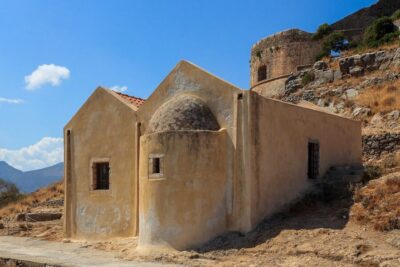
Day Trip to Agios Nikolaos and Spinalonga Island
Read our review →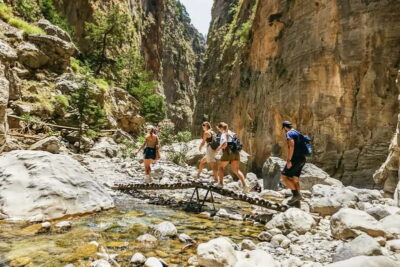
Full-Day Samaria Gorge Trek Excursion & Guide
Read our review →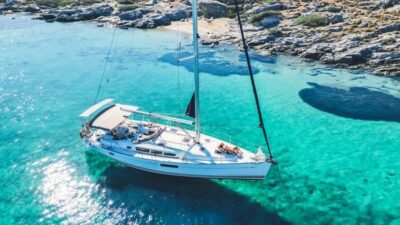
Dia Island Sailboat Cruise with Swimming and Meal
Read our review →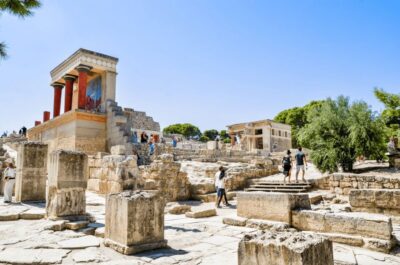
Knossos Palace Entry Ticket with Optional Audio Guide
Read our review →