
Reviewed · 4-DAY EXPERIENCES
4day Spanish tour in Epidaurus Mycenae Olympia Delphi and Meteora
Ancient Greece takes a long road. This four-day circuit links Mycenae, Olympia, Delphi, and Meteora in one sweeping journey from Athens, making it a strong choice if you want the major mainland sites without arranging several hotels, buses, and entrance tickets yourself. I especially like the Spanish-only guiding and the mix of ancient temples, theaters, museums, mountains, and Byzantine monasteries. The main drawback is clear: several days involve long bus rides, and the schedule leaves limited time at each stop.
I also like the practical package, with three nights of hotels, breakfast, dinner, entrance fees, WiFi, headsets, and air-conditioned transport included. Guides such as Gogo, Magdalena, Fanery Aguirre, Elena, Zoe, and Estela have been praised for making history, art, mythology, and local geography easy to follow. You should still expect a large group of up to 55 people, plus extra costs for lunches, drinks, tips, and the hotel fee.
In This Review
- Key points to know before booking
- Why this route covers so much of mainland Greece
- Day one: the Corinth Canal, Mycenae, and Epidaurus
- Day two: Olympia and the bridge to Delphi
- Day three: Delphi, Arachova, and the road to Kalambaka
- Day four: Meteora monasteries and Thermopylae
- What the Spanish guiding adds
- Hotels, meals, transport, and group size
- The long bus rides deserve an honest warning
- Who should book this four-day circuit?
- Should you book it?
- FAQ
- Where does the tour start and end?
- Is the tour conducted in Spanish?
- How many people can join the tour?
- Are hotel stays and meals included?
- Are entrance fees included?
- How far in advance is this tour usually booked?
Key points to know before booking
- Four famous Greek sites in four days: Mycenae, Olympia, Delphi, and Meteora are the backbone of the route.
- Spanish is the tour language: The guide accompanies you throughout the circuit, with headsets used during explanations.
- Long coach journeys are part of the bargain: Some days can mean roughly six to seven hours on the bus.
- Dinner and breakfast are included: Lunches and drinks are not, so plan for those costs.
- A strong guide can make or break the experience: Gogo and Magdalena receive especially warm praise for clear, passionate explanations.
- The group may be large: The maximum is 55 people, though skip-the-line access helps keep the program moving.
Why this route covers so much of mainland Greece
This is not a gentle village-to-village holiday. It is a concentrated history route that crosses the Peloponnese, Central Greece, and Thessaly. In four days, you move from Bronze Age citadels to classical theater, from the birthplace of the Olympic Games to the sanctuary of Apollo, then north to monasteries perched above the Thessalian plain.
That range is the tour’s greatest strength. You are not seeing four versions of the same ruin. Each stop explains a different part of Greek civilization, and the changing scenery gives the coach rides a purpose. The road passes through fields, hills, mountain country, and the Corinth Strait.
The trade-off is pace. You spend only one night in each overnight location, and much of the day is scheduled around driving. I would choose this circuit for breadth, not relaxation. If you want long meals, slow museum visits, or free afternoons, four days will feel tight.
A few more Athens half-days to weigh up
- 4-Day Classical Greece Tour: Epidaurus, Mycenae, Olympia, Delphi, Meteora
★ 4.5 · 732 reviews - 4-Day Tour of Mycenae, Epidaurus, Olympia, Delphi & Meteora
★ 4.8 · 168 reviews - 4-Day Greece Highlights Tour: Epidaurus, Mycenae, Olympia, Delphi and Meteora
★ 5.0 · 79 reviews
Day one: the Corinth Canal, Mycenae, and Epidaurus
The morning begins at 8:00 a.m. at the Melina Mercouri Monument on Leof. Vasilisis Amalias 54 in Athens. The first stop is the Corinth Canal, where you get about 20 minutes for photographs. The canal links the Saronic Gulf with the Corinthian Gulf, and its narrow cut makes a quick stop worthwhile.
Do not expect a full visit here. This is a photo break and a chance to stretch your legs, not a guided activity. The short timing also gives you an early sense of the tour’s rhythm: get off the coach, see the main feature, and move on.
Mycenae brings you into the world of Bronze Age Greece. The archaeological area includes the Gate of the Lions, Cyclopean walls, royal tombs associated with excavations by Heinrich Schliemann, and the Treasury of Atreus, often connected with the legendary tomb of Agamemnon. You also visit the local museum.
The listed visit lasts about an hour. That is enough to see the major features, but not enough for an unhurried archaeological study. I would pay close attention to the guide here because the stones alone do not explain how Mycenae connects archaeology with the stories of Agamemnon and the Trojan War.
The terrain and ruins require attention to your footing. The schedule does not specify walking conditions in detail, so sensible shoes are a good idea. The site visit is brief, but the combination of the monumental gate, massive walls, tombs, and museum gives you a useful introduction to early Greek civilization.
The Ancient Theatre of Epidaurus follows. Built in the fourth century BC, the theater is famous for its balanced design and remarkable acoustics. The visit lasts about an hour, and the entrance fee is included.
Epidaurus is one of those places where the setting and the structure work together. Your guide can explain the theater’s role in classical Greek life, but you should also take a quiet moment to appreciate its shape from the seating area. This stop feels different from Mycenae: less fortress, more civic and artistic achievement.
After Epidaurus, the coach continues to Olympia for the first overnight. This is a long first day, with three major stops before the evening hotel arrival. Dinner and breakfast are included as part of the package, but lunch and drinks are your responsibility.
Day two: Olympia and the bridge to Delphi
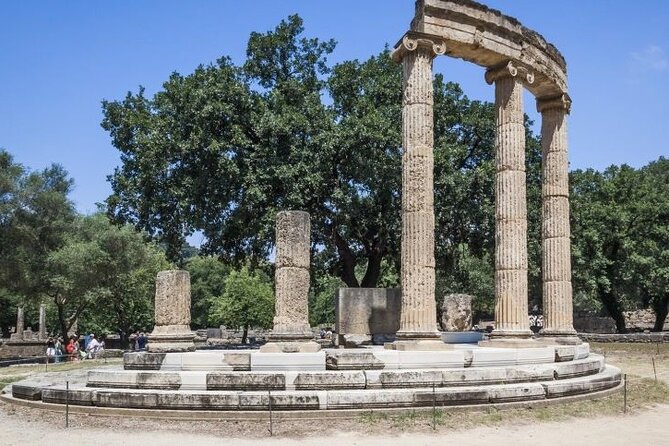
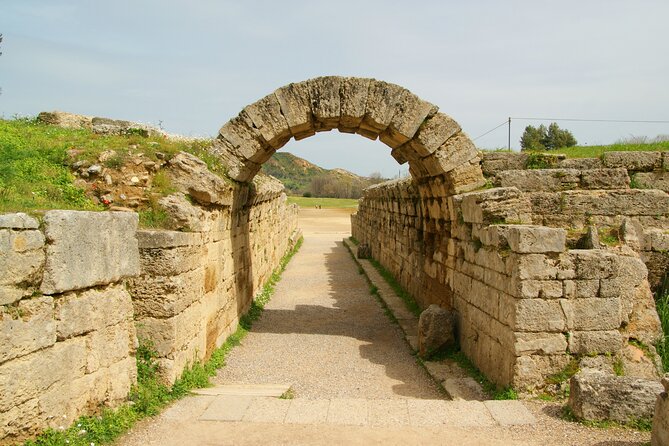
Olympia gets a proper morning visit. The archaeological site tour lasts about two hours, followed by one hour in the Archaeological Museum of Olympia. That is a sensible division because the ruins and the museum tell different parts of the story.
Olympia was the site of the ancient Olympic Games, and the visit helps place the games within the religious and civic life of the ancient world. You will see the remains of the sanctuary and athletic facilities while your Spanish guide explains what the buildings meant and how the site functioned.
The museum adds the objects that cannot be understood fully from foundations alone. One highlight is the Hermes of Praxiteles, a celebrated statue by the great sculptor Praxiteles. The museum visit gives the day more weight than a quick ruin stop would, especially if you enjoy sculpture and ancient art.
I appreciate the three-hour Olympia program. Compared with some of the shorter visits elsewhere, it gives you time to grasp the site rather than simply photograph it. Still, the schedule is guided and organized, so do not assume you will have extensive time to wander wherever you wish.
From Olympia, the route heads toward Delphi and crosses the Rio-Antirrio Bridge. At 2,883 meters, the bridge connects the Peloponnese with mainland Greece across the Corinth Strait. The coach crossing is more than a transport detail. It marks the geographical shift from the Peloponnese into Central Greece.
The rest of the day is mainly a transfer to Delphi. You arrive there for the overnight, with dinner included. This is one of the days when the tour’s efficiency becomes both useful and demanding. You cover a great distance without arranging the route yourself, but you also spend many hours seated.
Day three: Delphi, Arachova, and the road to Kalambaka
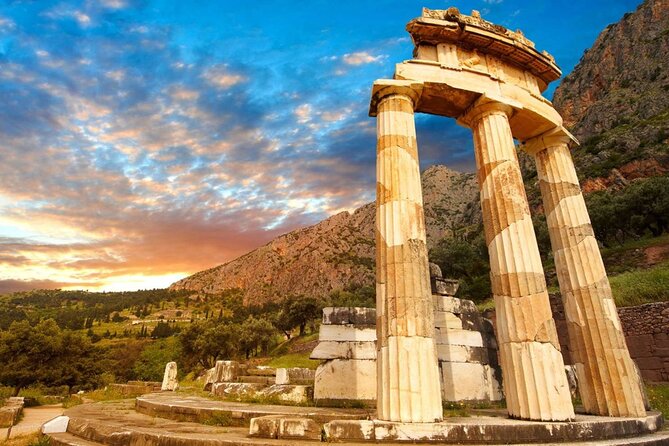
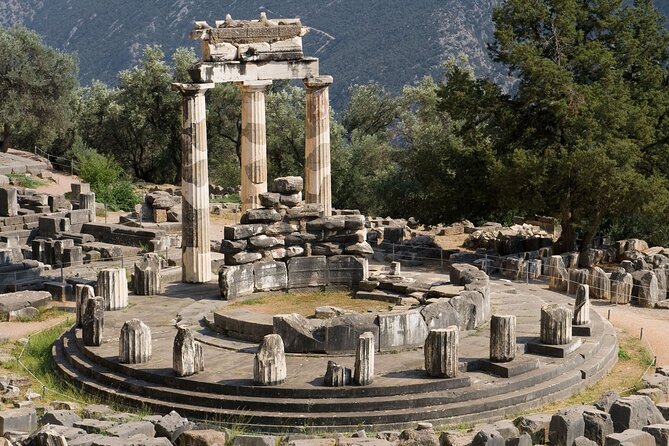
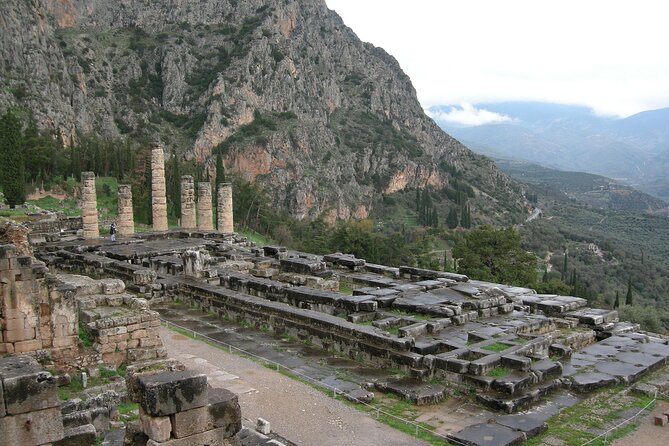
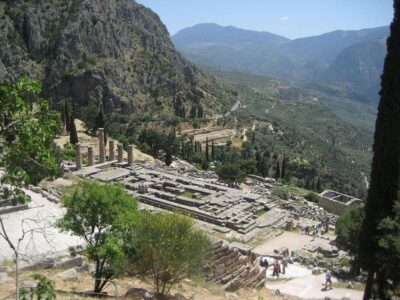
Delphi is the intellectual and spiritual center of the itinerary. The archaeological visit lasts about 90 minutes and includes the Sacred Way, the Treasury of the Athenians, the Temple of Apollo, and a panoramic view from the theater.
The site rises above the surrounding country, so the setting matters as much as the ruins. The Temple of Apollo is the main focus, but the Sacred Way and the treasuries help you picture how ancient visitors approached the sanctuary. The theater provides a high viewpoint over the site and surrounding scenery.
Delphi rewards a good guide. Its importance is not always obvious from scattered columns and foundations, and the tour’s Spanish explanations connect the architecture with mythology, politics, and religious practice. Several guides have been praised for explaining art and mythology in a lively, clear way, with Gogo and Magdalena receiving especially strong approval.
The Delphi Archaeological Museum follows for about 45 minutes. Its best-known object is the Charioteer of Delphi, a bronze figure representing a young athlete. The museum is compact compared with Olympia, but this stop helps you understand the quality of the objects found at the sanctuary.
You then pass through Arachova, a mountain town known for local crafts. The planned stop is only about 20 minutes, so think of it as a brief look rather than a shopping or town visit. If you want local products, the timing may feel too short for serious browsing.
The coach then continues to Kalambaka, the base for the next morning’s Meteora visit. This is another substantial transfer day. You will see more of mainland Greece from the road, but the program leaves little free time in Delphi or Arachova.
Same stretch of coastline, a completely different day out:
- Athens: Acropolis & up to 5 Archaeological Sites Combo Pass
★ 4.4 · 12,619 reviews - Athens: Acropolis Ticket with Optional Audio or Live Guide
★ 4.2 · 11,055 reviews - Athens: Acropolis, Parthenon & Acropolis Museum Guided Tour
★ 4.8 · 9,316 reviews - Athens: Cape Sounion & Poseidon Temple Sunset Half-Day Trip
★ 4.8 · 8,241 reviews
Day four: Meteora monasteries and Thermopylae
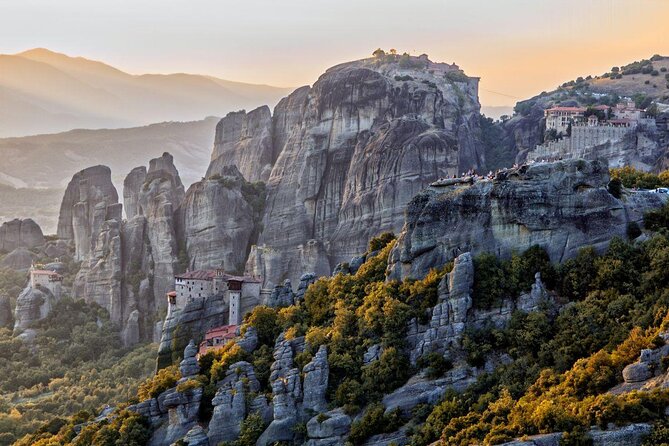
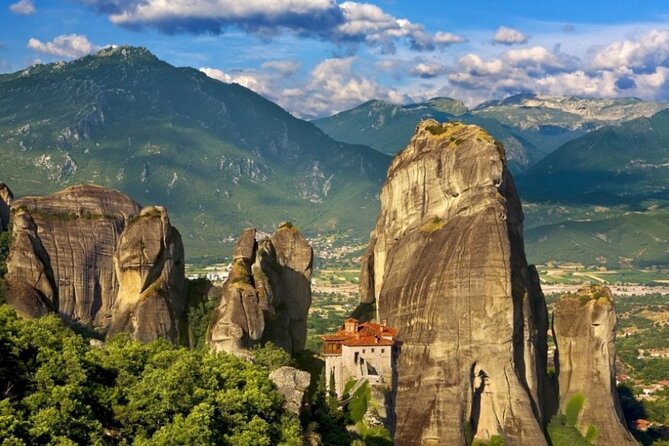
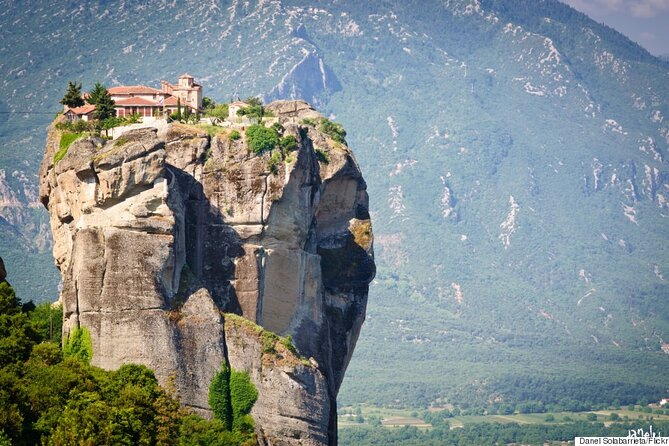
Meteora is the visual high point of the circuit. The monasteries sit on tall rock formations above the Thessalian plain and have been protected as a UNESCO World Heritage Site since 1988. The morning visit includes two monasteries and lasts about two hours.
The focus here is Byzantine art, so this is not simply a scenic viewpoint. Inside the monasteries, your guide explains the religious art and the setting that allowed these communities to develop in such difficult surroundings. The contrast with the temples and theaters of the previous days is striking.
Two monasteries in two hours makes for a focused visit. You should be ready to follow the group and keep an eye on the clock. The tour information does not give detailed stair or clothing guidance, so check practical requirements before departure if you have mobility concerns or want specific advice about monastery dress.
Meteora is also the place where the bus journey feels most justified. After several hours of ancient ruins, the rock formations and monasteries change the visual pace completely. You are seeing a major religious and artistic site rather than another classical archaeological area.
The final sightseeing stop is the Leonidas Monument at Thermopylae. The visit lasts about 20 minutes and marks the location of the famous battle of 480 BC. This is a short memorial stop, not a full archaeological tour, but it gives the final drive a clear historical focus.
The coach then returns to Athens and ends at the original meeting point. Since the tour covers a large section of mainland Greece, arrival time can depend on road conditions and the day’s schedule. You should avoid booking a flight or fixed evening appointment that leaves no margin.
What the Spanish guiding adds
The strongest feature of this tour is the guide. The program is exclusively in Spanish, and the guide remains with you through the journey. Headsets are provided so you can hear explanations, which matters in a large group or when standing among busy ruins.
The best guide reports emphasize more than factual information. Gogo is praised for explaining regions, geography, history, and art with enthusiasm. Magdalena receives high marks for art, culture, and mythology, along with a clear way of speaking. Fanery Aguirre is praised for kindness, professionalism, and the ability to make political and social history engaging.
Other guides named in the feedback include Elena, Zoe, and Estela. Their strengths are described in similar terms: strong preparation, clear diction, humor, and an obvious love for ancient Greece. Of course, the individual guide assigned to your departure cannot be guaranteed, but this repeated focus on guiding is a meaningful sign of the tour’s character.
If you speak Spanish comfortably, you gain a connected explanation from site to site. Mycenae is not treated as an isolated ruin, and Delphi is not just a temple with a view. The guide can link mythology, art, politics, and geography across the whole route.
If your Spanish is limited, this is not the right format. The guide service is not bilingual, and much of the value comes from the spoken commentary.
Hotels, meals, transport, and group size
The price is listed at $728.56 per person. For three nights, that covers accommodation in three or four-star hotels, breakfast, three dinners, transportation, guide service, entrance fees, WiFi, headsets, and skip-the-line access. I consider that a fair package for a route covering so much ground, especially since independent planning would require several intercity transfers and separate admissions.
Hotel quality can vary because the program uses different properties and categories. The three-star hotels named in the feedback include Neda in Olympia, Olympique in Delphi, and Orfeas in the Kalambaka area. The practical expectation is a decent overnight base, not a boutique stay or a destination hotel.
Breakfast and dinner simplify the evening routine. After a long day on the road, you do not need to search for a restaurant, and the included meals make the overall price easier to estimate. Lunches and drinks are not included, so keep money available for those daily expenses.
There is also a hotel fee per room per night. The listed amounts are:
- Three-star hotels: €1.50 in winter and €3 in summer
- Four-star hotels: €3 in winter and €7 in summer
Tips and personal expenses are also excluded. Group discounts are available, which may improve the price for families or friends booking together.
The coach is described as a luxury, air-conditioned vehicle with onboard WiFi. The maximum group size is 55. That is a large group, but headsets and skip-the-line access help reduce two common problems: not hearing the guide and losing time in queues.
The long bus rides deserve an honest warning
The main criticism of this circuit is the amount of time spent on the road. Some days can involve approximately six to seven hours on the bus, and that is not a minor detail. You cross much of mainland Greece in only four days, so the schedule has to use the coach heavily.
I would book this tour if you see the driving as the price of reaching distant sites. Meteora is far from Athens, and combining it with Olympia and Delphi requires long transfers. You save the work of arranging those connections, but you do not escape the geography.
I would not book it if you dislike fixed schedules or get uncomfortable after hours of sitting. The stops are meaningful, but several are short, especially Corinth, Arachova, and Thermopylae. The tour is best for someone who wants a first, efficient introduction to classical and Byzantine Greece.
Who should book this four-day circuit?
You are a good match if you:
- Want to see the major mainland sites in one organized trip
- Prefer Spanish guiding throughout the journey
- Enjoy archaeology, sculpture, mythology, and religious art
- Do not want to arrange several hotels and long-distance transfers
- Can handle a busy schedule and long coach rides
- Value included admissions, dinners, and guide service
You may prefer a slower trip if you want free time in small towns, long museum visits, or several nights in one place. You should also compare the route with a shorter Peloponnese tour if Meteora feels too far north for your plans.
The circuit is particularly useful after a stay in Athens. It gives you the wider setting for the ancient world beyond the Acropolis, while also adding Olympia, Delphi, and Meteora, three sites that are difficult to fit into ordinary day trips.
Should you book it?
Book this tour if your priority is seeing as much essential mainland Greece as possible with a Spanish-speaking guide. The route is unusually full, the included services provide solid value, and the guides can turn a rapid series of ruins into a connected story.
Skip it if long bus rides are likely to overshadow the sites for you. Four days is enough to see the highlights, but not enough to linger. For the right person, this is an efficient and well-supported introduction to Greece beyond Athens, with Mycenae, Olympia, Delphi, and Meteora providing four very different reasons to go.
You can cancel for a full refund up to three full days before the start time. The experience may also be rescheduled or refunded if poor weather or an insufficient number of bookings causes cancellation.
FAQ
Where does the tour start and end?
It starts at 8:00 a.m. at the Melina Mercouri Monument, Leof. Vasilisis Amalias 54, Athens. It ends back at the same meeting point in Athens.
Is the tour conducted in Spanish?
Yes. The professional guide service is exclusively in Spanish, and the guide accompanies the group throughout the journey.
How many people can join the tour?
The maximum group size is 55 people.
Are hotel stays and meals included?
Accommodation in three or four-star hotels is included, along with three breakfasts and three dinners. Lunches and drinks are not included.
Are entrance fees included?
Yes. Entrance fees to the listed places of interest are included, along with skip-the-line access.
How far in advance is this tour usually booked?
On average, bookings are made 67 days before the tour date.
Just added around Athens
- Traditional Greek Show in Plaka with Dinner★ 3.6 · 178 reviews
- Santorini Wine Roads Tour with Wine Tastings Morning & Sunset★ 5.0 · 106 reviews
- Private Sunset Wine Tour with 3 Wineries and Tapas★ 5.0 · 34 reviews
- Insightful Pistachio Orchard and Factory Tour★ 4.5 · 27 reviews
- Traditional Villages Full day Tour in Santorini★ 4.0 · 84 reviews
- Half Day Tour★ 5.0 · 63 reviews
- Half-Day Shared Fishing Experience in Hydra★ 5.0 · 35 reviews
- Athens Old City Private Photoshoot Tour / 2 hrs★ 5.0 · 109 reviews
4-Day Experiences, compared.
4-Day Classical Greece Tour: Epidaurus, Mycenae, Olympia, Delphi, Meteora
Read our review →
4-Day Tour of Mycenae, Epidaurus, Olympia, Delphi & Meteora
Read our review →
4-Day Greece Highlights Tour: Epidaurus, Mycenae, Olympia, Delphi and Meteora
Read our review →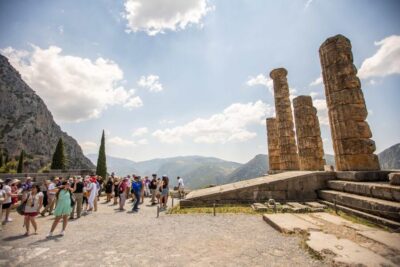
Browse the lists this tour appears in