
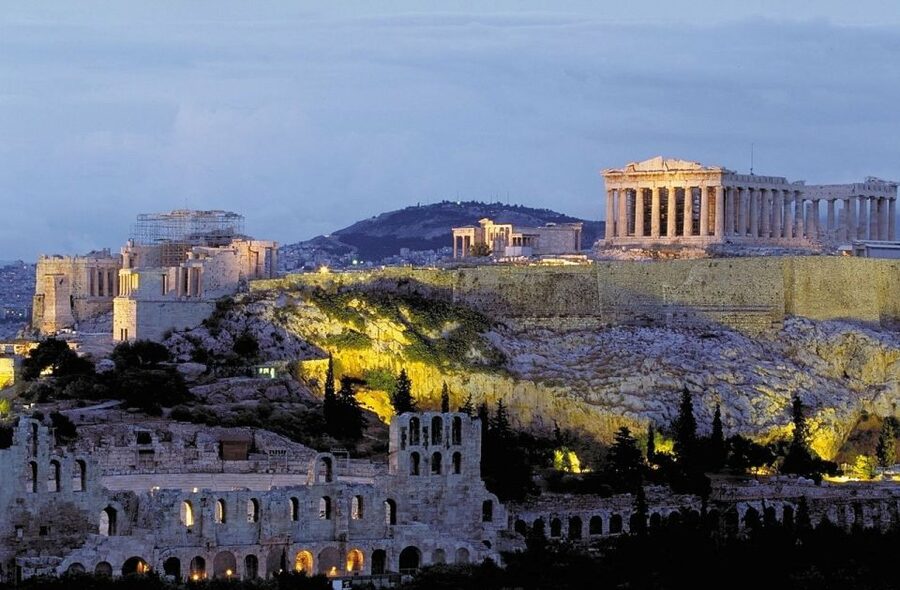
Reviewed · WALKING TOURS
Athens: Guided Mythological Walking Tour & Creation Stories
Greek myths feel different in Athens. Athena is not just a character from a textbook here: her name is tied to the city, while gods, heroes, and old religious ideas still appear in street names, building decoration, and everyday language. This two-hour walking tour uses those connections to tell Athens through its creation stories and legends.
I like the clear theme and the small-group format. I also like the mix of mythology, ancient culture, and visible city details, rather than a walk focused only on dates and ruins. The main consideration is simple: this is a Spanish-language tour, so it will not suit you if you need English commentary or want a full archaeological tour of Athens.
The walk begins at the stairs in front of the Academy and costs $28 per person. That is a fair price for two hours with a heritage interpreter, especially if Greek mythology is new to you or you want a more memorable way to get oriented in central Athens. Guides praised in the feedback include Juan Pablo and Pablo, with special mention of their warmth, humor, strong preparation, and ability to make the subject interactive.
In This Review
- Key points to know before you book
- Starting at the Academy in central Athens
- Why Athena and Poseidon matter in Athens
- Following Theseus from hero to city symbol
- Reading mythology on streets and buildings
- Religion in ordinary Greek life
- What the two-hour format really gives you
- The Spanish-language guide makes the difference
- Is $28 a fair price?
- Who will enjoy this Athens walk most?
- My booking advice
- FAQ
- Where does the Athens mythology tour meet?
- How long does the walking tour last?
- What language is the tour conducted in?
- What does the price include?
- Which myths and figures are covered?
- Can I cancel the booking for a full refund?
Key points to know before you book
- The Academy is the meeting point: Find the stairs in front of the Academy in central Athens rather than heading to an archaeological entrance.
- Athena and Poseidon anchor the story: You will hear why these two gods are tied so closely to the city and its identity.
- Theseus gets his own place in the tale: The hero’s connection to Athens helps link myth with the city’s early civic story.
- The tour connects myth with daily life: Commerce, romance, religion, language, street names, and building decoration all enter the discussion.
- Spanish is the only stated tour language: The guide leads the experience live in Spanish.
- Two hours keeps the subject focused: You get a themed introduction to Athens without giving up half a day.
Starting at the Academy in central Athens
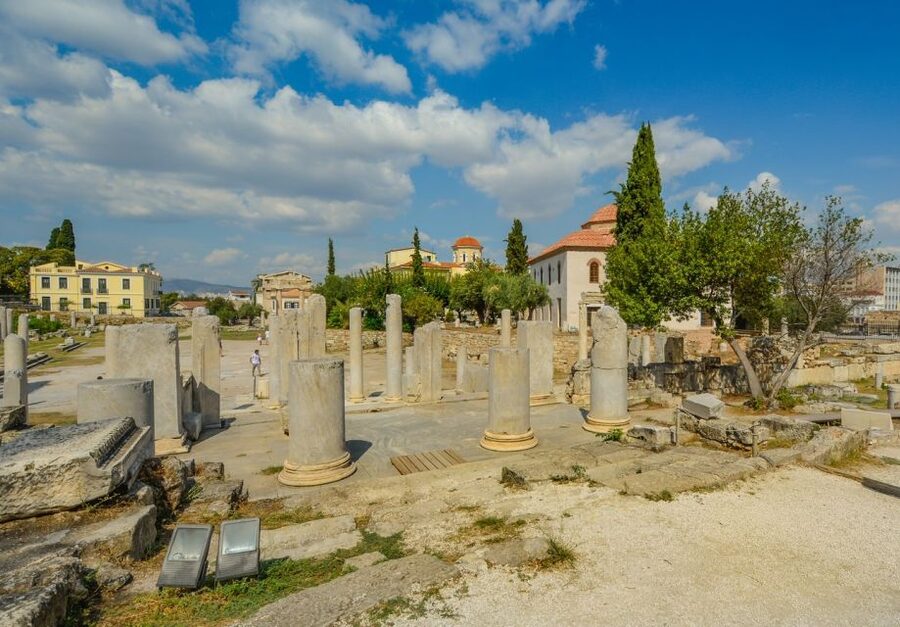
The stairs in front of the Academy give this walk a fitting launch point. You begin in a grand civic setting, then shift your attention from modern Athens to the stories that shaped the ancient city. It is a useful meeting location because the Academy is a clear landmark, but you should still allow time to find the exact stairs.
The opening matters. A mythology walk can easily turn into a string of disconnected names, so the guide’s first job is to give you a thread to follow. Here, that thread is Athens as the city of Athena. From there, the story broadens to the other gods and heroes who helped explain the city’s origins.
I would arrive a little early. The meeting instructions are brief, and the city center can feel confusing if you are rushing. Look for the stairs in front of the Academy, not a general point somewhere near the building.
More Walking Tours in Athens
- Athens: Acropolis and Parthenon Guided Walking Tour
★ 4.6 · 5,882 reviews - Greek Food Walking Tour in Athens
★ 5.0 · 4,740 reviews - Acropolis: Acropolis and Parthenon Guided Walking Tour
★ 4.7 · 3,442 reviews
Why Athena and Poseidon matter in Athens
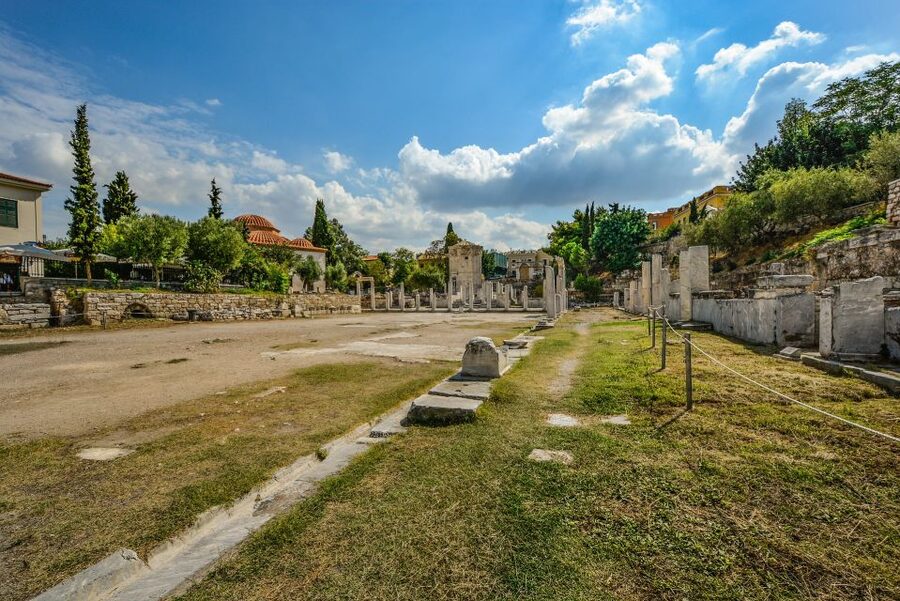
The central contest between Athena and Poseidon gives the tour its strongest story. It is not just a tale about two powerful gods competing for attention. It helps explain how the city understood its own character and why Athena became its defining divine figure.
The guide uses this episode to bring mythology closer to the streets around you. You are not simply hearing a story in a classroom. You are walking through the city associated with it, with the chance to notice how the old gods still appear in names, symbols, and decorative details.
That is the real value of this tour. Mythology becomes a way to read Athens. Instead of treating the gods as isolated figures, you see how they shaped the way people explained nature, power, love, work, trade, and the city itself.
For first-time visitors, this approach can make later sightseeing easier. Once you understand the basic roles of Athena, Poseidon, and other Olympians, references in museums and monuments become less mysterious. You may also find it easier to remember the stories because they are tied to places rather than presented as a list of facts.
Following Theseus from hero to city symbol
Theseus gives the walk a human figure to balance the gods. His connection with Athens shows how heroes were used to explain the city’s past and give local identity a dramatic shape.
The Theseus story also helps the guide move between mythology and early culture. You are not only asking what happened in a legend. You are considering why Athenians remembered that hero, what he represented, and how his name became linked with the city.
I especially like this part of the theme because Theseus is easier to follow than a long family tree of gods. His adventures give the tour movement, while Athena and Poseidon provide the larger setting. Together, they make the city feel like a place shaped by competing powers, brave figures, and stories passed down over generations.
Do not expect a detailed retelling of every Theseus episode in two hours. The tour has several subjects to cover, so the emphasis is on his connection to Athens rather than a complete biography of the hero.
Reading mythology on streets and buildings
One of the most practical features of this walk is its attention to the city around you. The gods of Olympus have left marks on the decoration of buildings and on street names, and the guide points out those links as you walk.
This turns the tour into a kind of visual scavenger hunt. You can look up from the pavement and start asking what a symbol means, why a name was chosen, or how an ancient idea survived in a modern setting. That makes the experience more active than simply standing still while someone tells stories.
The information about buildings and streets is also useful after the tour ends. You can continue noticing references as you explore central Athens on your own. I would keep your eyes open for names and images that you might normally pass without a thought.
The available details do not promise a fixed list of monuments or a detailed route. That is worth knowing before booking. The experience is built around stories and interpretation, not a guaranteed checklist of major archaeological sites. If you want to enter the Acropolis, see a particular temple, or study museum objects, you need a separate plan.
Same stretch of coastline, a completely different day out:
- Athens: Acropolis & up to 5 Archaeological Sites Combo Pass
★ 4.4 · 12,619 reviews - Athens: Acropolis Ticket with Optional Audio or Live Guide
★ 4.2 · 11,055 reviews - Athens: Acropolis, Parthenon & Acropolis Museum Guided Tour
★ 4.8 · 9,316 reviews - Athens: Cape Sounion & Poseidon Temple Sunset Half-Day Trip
★ 4.8 · 8,241 reviews
Religion in ordinary Greek life
The tour does more than cover famous gods. It explains how religion touched nearly every part of ancient Greek life, including commerce and love affairs. That wider frame is important because it stops mythology from feeling like a collection of entertaining fairy tales.
Ancient religious ideas influenced how people understood work, relationships, luck, conflict, and the natural world. Those ideas also shaped concepts and expressions that have lasted into the present. The guide uses these connections to show why mythology still matters, even when you are not studying ancient art or literature.
This is where the walk can be especially helpful for families and younger visitors. A child may not care about a long explanation of ancient institutions, but stories about gods, heroes, love, rivalry, and clever tricks offer an easy entry point. Adults get the cultural context beneath the drama.
The discussion also gives you a better sense of how ancient people made sense of life. You may not accept the stories as literal truth, but you can see how they helped organize a society’s values and fears. That is more useful than memorizing which god carried which weapon.
What the two-hour format really gives you
Two hours is long enough for a proper introduction but short enough to fit into a busy Athens itinerary. I would place this tour early in your stay if you want a cultural orientation, or midway through a visit if you already know the main monuments and want a different angle.
The pace should suit you if you like walking and listening in equal measure. The activity is described as a walking tour through central Athens, with several ancient and beautiful places included along the way. Since the exact route and number of stops are not specified, you should expect a connected city walk rather than a rigid monument-by-monument schedule.
The small-group format is another plus. A compact group usually makes it easier to hear the guide, ask questions, and join in when the story becomes interactive. That matters with mythology because the best explanations often come through conversation, not a long speech.
Still, small group does not mean private tour. The exact group size is not provided, so do not book expecting a one-to-one lesson. The format simply aims to keep the experience more personal than a large crowd.
The Spanish-language guide makes the difference
This experience is conducted in Spanish, with a live guide and an accompanying heritage interpreter. You should book only if you are comfortable following a full two-hour explanation in Spanish.
The strongest praise has focused on the guides’ preparation, friendliness, humor, and ability to involve the group. Juan Pablo was singled out as especially warm and well prepared, with a way of making the walk feel like a conversation between people who share a real interest in mythology. Pablo was also praised for giving a highly informative visit and showing clear enjoyment of the work.
Those details tell you what kind of guide to hope for: not a dry recital of names, but someone who can connect the stories to the city and invite you into the subject. That style matters here because Greek mythology has many similar names, family connections, and competing versions. A lively explanation helps keep the thread clear.
The language is still the key decision. A Spanish speaker who enjoys history, culture, and conversation should get much more from this than someone trying to follow along with only basic Spanish.
Is $28 a fair price?
At $28 per person, I see solid value if you want a focused cultural walk rather than a full-day sightseeing package. The price includes the live heritage interpreter and two hours of guiding. You are paying for explanation and context, not transportation, meals, or entry to a named monument.
That distinction helps set expectations. If you compare the tour with an expensive private guide, it is a budget-friendly choice. If you compare it with walking around central Athens alone, the extra cost buys you a story line, cultural interpretation, and a chance to notice details you could easily miss.
The value is highest for three types of visitors:
- You are curious about mythology but do not know where to begin.
- You want a break from standard ruin-by-ruin sightseeing.
- You speak Spanish and appreciate a guide who can explain ideas with humor and interaction.
The value is lower if you mainly want archaeological access or a long list of named monuments. The activity does not promise museum admission, Acropolis entry, or a complete history of Athens.
Free cancellation up to 24 hours before the start gives you some flexibility, and the reserve-now, pay-later option can help if your schedule is still shifting. Check the available starting times before you commit, since the duration is fixed at two hours but the start time is not.
Who will enjoy this Athens walk most?
I would recommend it to adults who want stories with their sightseeing, families looking for an engaging introduction to ancient culture, and Spanish-speaking visitors who prefer a smaller group. It is also a smart choice for anyone who has already seen the headline monuments and wants to understand the ideas behind the city’s identity.
You should be comfortable walking through central Athens for two hours and listening as the guide links different stories and places. The activity is not presented as a strenuous hike, but it is still a walking tour, so sensible shoes are a good idea.
You may want to skip it if your interest is limited to architecture, if you need English commentary, or if you prefer a highly specific archaeological itinerary. The tour’s strength is interpretation. It asks you to pay attention to meaning, symbols, names, and stories rather than simply count monuments.
My booking advice
I would book this tour if you speak Spanish and want Athens to feel more intelligible, not just more photogenic. The Athena and Poseidon story, the link with Theseus, and the discussion of religion in daily life give you a useful framework for the rest of your visit.
The best time to take it is near the start of your stay, when you can use its ideas as you continue exploring the city. Book it later if your schedule is already full of archaeological tours and you want something lighter and more story-driven.
At $28, it is a sensible buy for a two-hour, small-group introduction led by a live heritage interpreter. Just remember what you are purchasing: a Spanish mythology walk through central Athens, not admission to the city’s major archaeological sites or a complete tour of ancient Greece.
FAQ
Where does the Athens mythology tour meet?
The meeting point is at the stairs in front of the Academy in central Athens.
How long does the walking tour last?
The tour lasts two hours.
What language is the tour conducted in?
The live guided tour is conducted in Spanish.
What does the price include?
The $28 price includes an accompanying heritage interpreter and the guided tour in Spanish.
Which myths and figures are covered?
The tour covers the city’s connection with Athena, the story involving Athena and Poseidon, and the hero Theseus. It also discusses the gods of Olympus and the role of religion in ancient Greek life.
Can I cancel the booking for a full refund?
Yes. You can cancel up to 24 hours in advance for a full refund.
Just added around Athens
- Delphi One Day Trip from Athens★ 4.0 · 98 reviews
- Private Delphi and Hosios Loukas Monastery – Great Lunch and Drinks Included★ 5.0 · 36 reviews
- Mercedes Private Tour to Delphi and Arachova★ 5.0 · 30 reviews
- Day tour to Ancient Olympia,Ancient Sparta Mycenae Including Meal★ 5.0 · 54 reviews
- Athens: Half Day Trip To Cape Sounio/Poseidon Temple Semi Private★ 5.0 · 131 reviews
- Athens Half-Day Private Tour Acropolis, Parthenon City Highlights★ 5.0 · 35 reviews
- From Athens: Day Tour to Mykonos★ 5.0 · 64 reviews
- Culinary Secrets of Downtown Athens★ 5.0 · 103 reviews
Walking Tours, compared.

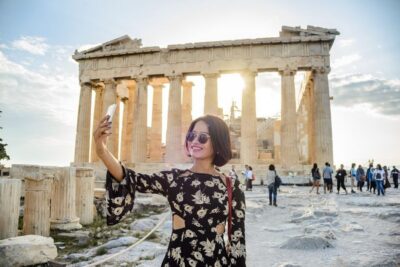
Acropolis: Acropolis and Parthenon Guided Walking Tour
Read our review →
Acropolis monuments & Parthenon Walking Tour with Optional Acropolis Museum
Read our review →
Knossos: Knossos Palace Skip-the-Line Guided Walking Tour
Read our review →

Athens Authentic Greek Food Walking Tour (Small Group)
Read our review →
Early Morning Acropolis & Old Athens Guided Walking Tour
Read our review →Browse the lists this tour appears in