

Reviewed · WALKING TOURS
Athens: Guided Mythological Walking Tour
Myths make Athens easier to read. This two-hour walk links gods, lovers, heroes, statues, buildings, and city streets in a way that gives Athens a fresh meaning. I especially like the story-led approach and the way the route includes places many people pass without noticing. I also like that the tour adds daily life and social customs to the mythology, rather than treating Greek legends as a pile of names.
The main thing to consider is the amount of information. Guide Penelope is praised for going well beyond a light tale or two, connecting myths with philosophy, architecture, history, and cultural change. That suits curious adults, older children, and anyone who wants substance. If you want only a short, breezy stroll with a few famous stories, this may feel quite in-depth.
In This Review
- Key points at a glance
- Why mythology is a smart way to see Athens
- Starting at Korai 4 and the Academy of Athens
- The Numismatic Museum and the details you might miss
- Akadimias to Syntagma Square
- Mitropoleos and Athens beyond the famous postcard
- Plaka: the strongest setting for the stories
- Finishing in Monastiraki
- What the guide adds to the experience
- How much mythology will you hear?
- Family appeal and the question of tone
- Is $47 a fair price?
- Walking conditions and practical preparation
- Who should book the Athens Mythological Walking Tour?
- FAQ
- How long is the Athens Mythological Walking Tour?
- Where does the tour start?
- Where does the walking tour finish?
- Is entrance to archaeological sites included?
- What language is the tour conducted in?
- What should I wear for the tour?
Key points at a glance
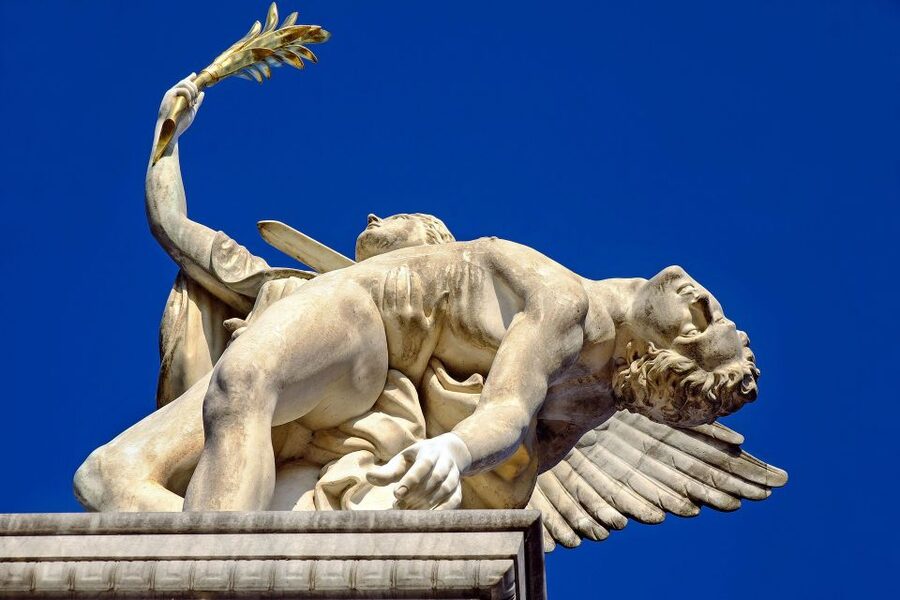
- Two hours from Korai 4 to Monastiraki: The route crosses central Athens, Syntagma, Mitropoleos, and Plaka without requiring entry to an archaeological site.
- Penelope is the guide most often named: Her warm delivery, humor, clear English, and strong command of mythology are major strengths of the experience.
- Myths connect to real city details: Statues, monuments, architecture, and overlooked corners become part of the stories.
- A useful family option: Children and teenagers have responded well to the storytelling, especially when gods, monsters, jealousy, and strange transformations enter the tale.
- Bring water, comfortable shoes, and sun protection: Summer accounts repeatedly stress shade, breaks, and the heat.
- Good value at $47 per person: You pay for two hours of expert storytelling and city orientation, not site admission, food, or transport.
Why mythology is a smart way to see Athens
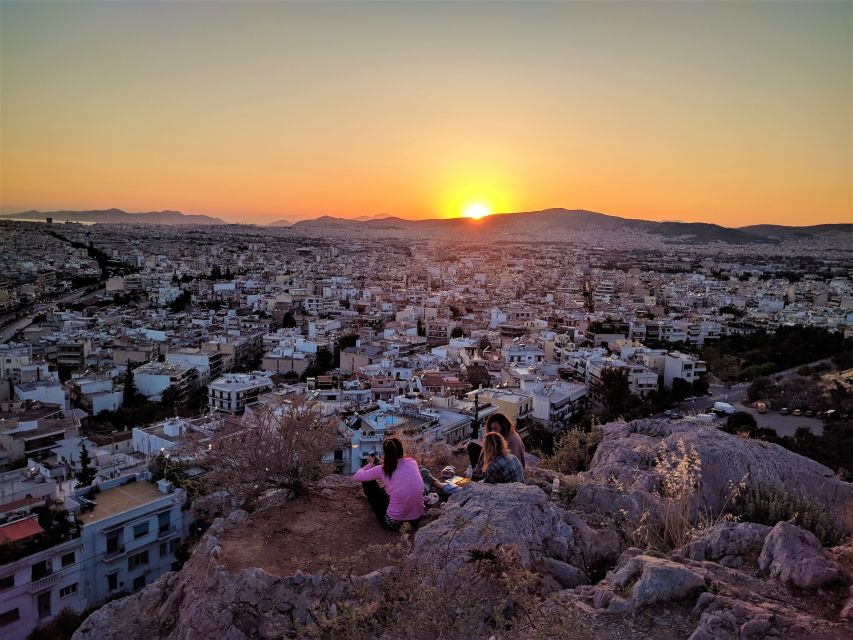
Athens can overwhelm you at first. Ancient stones, neoclassical buildings, crowded shopping lanes, Orthodox churches, statues, and modern traffic all sit close together. A standard sightseeing walk may point out what you are seeing. This tour asks why those images mattered, and why Greek gods still appear in the city’s art and public spaces.
That difference matters. Greek mythology is not only a collection of dramatic family arguments among Zeus, Hera, Athena, Apollo, and the rest. It also reflects ideas about power, desire, punishment, hospitality, family, war, nature, and the uneasy relationship between people and the divine.
You may hear about satyrs, nymphs, gods, heroes, and mythical creatures, but the tone is not limited to heroic adventure. The stories include seduction, deception, jealousy, affairs, wounded pride, and divine revenge. Those human emotions make the old tales easier to follow, even when the names begin to pile up.
I also like the way the tour treats mythology as part of everyday Greek culture. You learn about social customs and the daily lives of ancient Athenians, not just the exploits of the gods. That gives the walk more weight than a simple retelling of familiar stories.
More Walking Tours in Athens
- Athens: Acropolis and Parthenon Guided Walking Tour
★ 4.6 · 5,882 reviews - Greek Food Walking Tour in Athens
★ 5.0 · 4,740 reviews - Acropolis: Acropolis and Parthenon Guided Walking Tour
★ 4.7 · 3,442 reviews
Starting at Korai 4 and the Academy of Athens
The meeting point is in front of the Starbucks cafe at Korai 4. That is a useful detail in central Athens, where a clear landmark can save you from wandering around with your phone raised in the air. Check the starting time carefully and arrive ready to walk.
The first listed stop is the Academy of Athens, reached after about 20 minutes on foot. This part of the route helps set the tone: modern Athens becomes a frame for ancient ideas, symbols, and figures. The Academy and the surrounding area offer architecture and public art that can be read through the myths of the gods.
Your guide may use statues and decorative details as prompts for stories. The point is not simply to stop, name a figure, and move on. It is to connect the image with the larger story and explain how myth shaped Greek thought and visual culture.
Because the walk begins in a central urban setting, you get an early sense of Athens beyond the Acropolis. This is one of the tour’s useful features. You are not spending two hours in a single ancient site. You are learning how mythology appears across the city.
The Numismatic Museum and the details you might miss
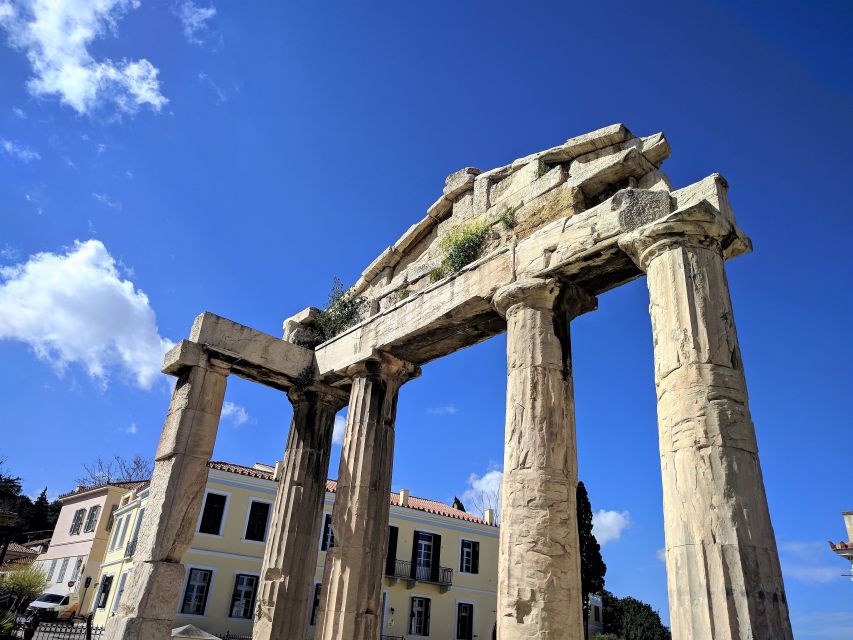
From the Academy, the walk continues for about 15 minutes to the Numismatic Museum. The museum itself is not listed as an included visit, and entrance to archaeological sites is not part of the price. Think of this stop as part of the route and the surrounding city experience rather than a museum admission.
The area gives the guide another chance to discuss symbols, public buildings, and the way ancient themes survive in later Athens. You might notice details that would otherwise blend into the background, especially on facades, statues, or monuments.
This is where the tour’s focus on overlooked corners becomes valuable. Several participants found that the guide pointed out things they had already walked past without seeing. That is a good test for a city walk: you should finish not only knowing more stories, but also looking at Athens differently.
Akadimias to Syntagma Square
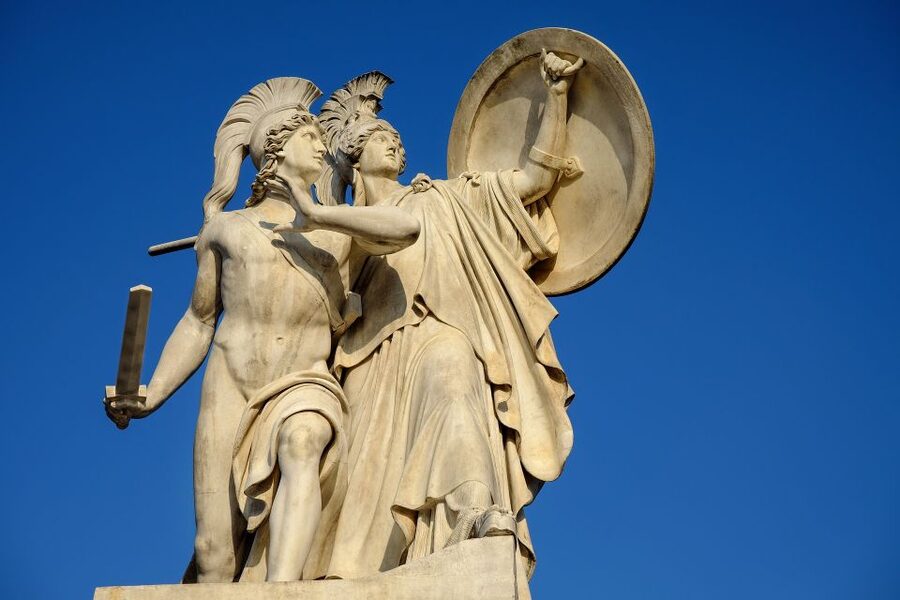
The next section moves along Akadimias, with roughly 20 minutes of walking before Syntagma Square. This stretch is less about entering a single landmark and more about building connections between the city’s modern streets and its ancient identity.
Syntagma is one of Athens’ major public spaces, and it gives the tour room to broaden its subject. The stories can move from individual gods and heroes toward the wider relationship between humans and divine forces in ancient Greek belief.
The walk also offers a practical orientation to central Athens. If this is early in your visit, you will begin to understand how the central districts connect. One past participant found the route useful as an overview of the city, and I can see why. It links several important areas without asking you to spend time inside a formal museum.
Still, you should not expect a long stop at every landmark. Two hours passes quickly, especially when the guide is explaining complicated family trees and several versions of a myth. If you want detailed archaeological information about each building, choose a dedicated architecture or ancient-sites tour instead.
Same stretch of coastline, a completely different day out:
- Athens: Acropolis & up to 5 Archaeological Sites Combo Pass
★ 4.4 · 12,619 reviews - Athens: Acropolis Ticket with Optional Audio or Live Guide
★ 4.2 · 11,055 reviews - Athens: Acropolis, Parthenon & Acropolis Museum Guided Tour
★ 4.8 · 9,316 reviews - Athens: Cape Sounion & Poseidon Temple Sunset Half-Day Trip
★ 4.8 · 8,241 reviews
Mitropoleos and Athens beyond the famous postcard
After Syntagma, the walk continues toward Mitropoleos, with about 15 minutes on foot. This section helps shift the experience from grand civic spaces into streets where Athens feels more personal and layered.
The value here is the connection between monuments and the city around them. Your guide may explain how images of gods and mythological figures appear in architecture, sculpture, and public decoration. These links can be easy to miss when you are focused on reaching the Acropolis or finding your next meal.
The tour does not promise entry into the city’s archaeological sites, so you should plan separate time for places such as the Acropolis or the Ancient Agora. That is not a flaw, but it is important when you compare prices. The $47 fee buys interpretation and guiding, not admission tickets.
I would place this walk after you have seen a few major Athens sights, or early in your stay if you want help finding your bearings. If you already know the city well, the mythological angle can still add something new.
Plaka: the strongest setting for the stories
The route then reaches Plaka, with about 30 minutes of walking before the finish at Monastiraki. This is likely the most atmospheric section of the tour. Plaka’s picturesque streets provide a more relaxed setting for stories about gods, lovers, humans, and divine punishment.
The walk through Plaka is not just a pretty neighborhood stroll. The guide uses the setting to connect myth with the city’s cultural evolution. You can hear how ancient stories shaped later ideas, images, and the way Athens presents itself.
Families may find this section especially effective. The myths contain enough action and odd turns to hold a child’s attention, while the guide adds context for adults. Children around 10 and 11 have enjoyed the experience, and teenagers have also been kept involved. The guide’s ability to adjust her pace and explain difficult material clearly is a real advantage.
Plaka is also a place where the tour can feel less like a lecture. Questions and conversation matter here. Small groups have sometimes made the walk feel almost private, with plenty of time to ask about a favorite god, an unfamiliar character, or a connection between mythology and literature.
Finishing in Monastiraki
The walk ends in Monastiraki. That is a practical finish because you are left in one of central Athens’ best-known areas, with the rest of the city close at hand.
A finish here makes it easy to continue exploring on your own. You can also use the guide’s local suggestions if they are offered during your tour. Earlier guides have shared restaurant, cafe, and bar ideas after the walk, though these recommendations should be treated as a helpful extra rather than a promised part of the formal service.
The final location also gives the route a satisfying shape. You begin near Korai 4, pass public buildings and monuments, move through Syntagma and Mitropoleos, then enter Plaka before ending in Monastiraki. It is a walking introduction to central Athens with mythology as the organizing thread.
What the guide adds to the experience
The guide makes or breaks a storytelling walk, and Penelope receives repeated praise for her delivery. She is described as funny, warm, patient, and highly informed, with a knack for holding the attention of both adults and children.
Her English is clear, and she encourages questions. That matters because Greek mythology can become confusing fast. Zeus has an enormous family, many characters have more than one name, and the same story can appear in different forms. A guide who can explain those links without losing the group is worth paying for.
Penelope also appears alert to practical needs. In hot weather, she has sought shade, allowed breaks, and managed the pace sensibly. That is important in Athens, particularly in July and August. You should still bring your own water, hat, and sunscreen. Comfortable shoes are essential.
Other guides have led the walk as well, including Christina and Cristina in earlier seasons. The consistent praise for the guiding style suggests that the experience depends on a strong personal connection rather than a recorded script. Still, your exact guide can vary, so booking should be based on the tour’s subject and route, not on a guarantee that one named person will lead every departure.
How much mythology will you hear?
You should expect more than the most familiar stories about Athena, Zeus, and the Olympian gods. The tour covers gods, heroes, satyrs, nymphs, mythical beasts, human beings, and the complicated interactions between them.
The guide also connects the myths with philosophy, anthropology, literature, and the development of Greek culture. That is why some people find the walk unexpectedly educational. It is not just a string of entertaining tales. You may be asked to think about what a myth says about power, family, social rules, fear, or the natural world.
This approach is a strength for adults who enjoy context. It can also appeal to a serious mythology fan who already knows the basic stories and wants new links between characters, images, and places.
The tradeoff is pace. Two hours is not long enough to explain every tale slowly, so you need to listen closely. If names and relationships confuse you, ask questions as you go. The small-group format, when numbers are low, can make that easier.
Family appeal and the question of tone
I would recommend this walk for families with school-age children and teenagers, especially if they already enjoy stories about gods, monsters, heroes, or magical transformations. The guide has a lively style and can make difficult material approachable.
The stories also include adult subjects such as affairs, seduction, jealousy, and punishment. The information provided does not set a specific age limit, so parents should decide how well those themes suit their children. The tone is educational and conversational, but the myths themselves are not always gentle.
For adults, the same material adds humor and drama. Greek mythology is full of flawed gods behaving badly, and the guide’s presentation makes use of that human side. You are unlikely to get a polished parade of perfect heroes. Expect messy family politics in divine clothing.
Is $47 a fair price?
At $47 per person, this is not the cheapest way to walk around Athens. You are paying for two hours with a live English-speaking guide, rather than for entry to a monument or a meal.
The value depends on what you want from a walking tour. If you want a city orientation, a themed route through central Athens, and clear explanations of myths tied to statues and architecture, the price is reasonable. You also avoid spending two hours trying to decode the city alone.
The price is less attractive if you mainly want photographs, a fast list of landmarks, or admission to ancient sites. Those are not included, and you will need separate tickets and time for them.
I think the tour offers its best value at the beginning of an Athens stay. It can show you districts you may return to later and give meaning to details you will notice during the rest of your visit. It also works well after a day at the Acropolis, when you are ready to see the city through a different lens.
You can reserve now and pay later, which helps if your plans are still shifting. Cancellation is free up to 24 hours before the activity for a full refund. Those terms add flexibility, but the real value still comes from whether you enjoy guided storytelling.
Walking conditions and practical preparation
The route involves repeated walks between stops, with the listed sections ranging from about 15 to 30 minutes. Wear comfortable clothes and shoes. This is a city walk, not a sit-down talk with a short photo stop.
Summer heat deserves serious attention. Bring water, wear a hat, and use sunscreen. Shade and breaks have been handled well on hot departures, but you should not rely on the weather being mild.
The meeting point is in front of Starbucks at Korai 4. The tour is in English, and entrance fees, meals, and hotel pickup or drop-off are not included. Plan your day around that: arrive at the meeting point independently and arrange your own way onward from Monastiraki.
Who should book the Athens Mythological Walking Tour?
Book it if you enjoy Greek mythology, ancient history, literature, anthropology, or city walks that reward close attention. It is particularly good for families, mythology fans, and first-time visitors who want an overview of central Athens with more meaning than a simple landmark checklist.
Think twice if you dislike long explanations, have limited walking time, or want to spend the entire two hours inside ancient ruins. The tour is story-heavy, and the guide may cover a lot of names, themes, and connections.
For me, the strongest reason to choose it is the way it changes ordinary city details. A statue or facade you might have ignored can become part of a tale about desire, rivalry, transformation, or divine power. At $47, that is a fair exchange if you want Athens to feel less like a collection of sights and more like a city still carrying its old stories.
FAQ
How long is the Athens Mythological Walking Tour?
The tour lasts two hours.
Where does the tour start?
It starts at Korai 4, in front of the Starbucks cafe.
Where does the walking tour finish?
The tour finishes in Monastiraki.
Is entrance to archaeological sites included?
No. Entrance to archaeological sites is not included in the tour price.
What language is the tour conducted in?
The live tour guide speaks English.
What should I wear for the tour?
Wear comfortable clothes and comfortable walking shoes. In warm weather, bring water and sun protection, including a hat.
Just added around Athens
- Delphi One Day Trip from Athens★ 4.0 · 98 reviews
- Mercedes Private Tour to Delphi and Arachova★ 5.0 · 30 reviews
- Private Delphi and Hosios Loukas Monastery – Great Lunch and Drinks Included★ 5.0 · 36 reviews
- Day tour to Ancient Olympia,Ancient Sparta Mycenae Including Meal★ 5.0 · 54 reviews
- Athens: Half Day Trip To Cape Sounio/Poseidon Temple Semi Private★ 5.0 · 131 reviews
- Athens Half-Day Private Tour Acropolis, Parthenon City Highlights★ 5.0 · 35 reviews
- From Athens: Day Tour to Mykonos★ 5.0 · 64 reviews
- Culinary Secrets of Downtown Athens★ 5.0 · 103 reviews
Walking Tours, compared.
Acropolis: Acropolis and Parthenon Guided Walking Tour
Read our review →
Acropolis monuments & Parthenon Walking Tour with Optional Acropolis Museum
Read our review →
Knossos: Knossos Palace Skip-the-Line Guided Walking Tour
Read our review →

Athens Authentic Greek Food Walking Tour (Small Group)
Read our review →
Early Morning Acropolis & Old Athens Guided Walking Tour
Read our review →Browse the lists this tour appears in