
Reviewed · WALKING TOURS
Athens Highlights: Myths & Philosophers Walking Tour
Think while you walk. This four-hour Athens tour links ancient philosophy with places you can actually see, from the Academy of Athens to the hill where the Acropolis fills your view. I especially like the private format, which lets you ask questions and shape the discussion, and the way myths, science, democracy, and ethics are tied to ordinary streets and public spaces. The main consideration is the length: four hours on foot, with no entrance fees included, may feel like a lot if you want a quick sightseeing outing.
Guides such as Bianca, John, Gianni, and Effrosyni have made a strong impression through their storytelling, warmth, and ability to adjust the conversation. Bianca is praised for making philosophy clear to mixed-age groups, including teenagers and people with very different levels of background. You also get coffee or tea and bottled water, a welcome touch during a long walk.
In This Review
- Key points at a glance
- Why this Athens walk feels different
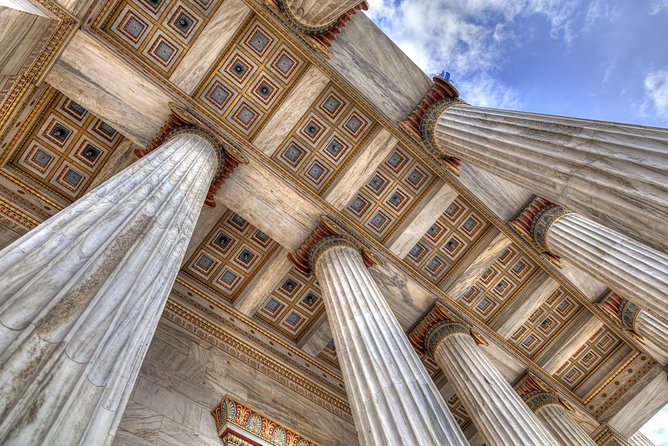
- Starting at the Academy of Athens
- The coin museum stop and Athens as a working city
- The Hellenic Parliament and the guard ceremony
- National Garden: science, ethics, and public life
- Ermou Street and the many faces of Hermes
- A square named for the Church of Pantanassa
- The Ancient Agora and the birth of Stoicism
- The Tower of the Winds and Aiolos
- Anafiotika and the Cynic philosophers
- Ending on Areopagus Hill
- How much value do you get for $102.80?
- Who will enjoy this most?
- Should you book Athens Highlights: Myths & Philosophers?
- FAQ
- How long is the Athens Highlights: Myths & Philosophers tour?
- Where does the tour begin?
- Where does the tour end?
- Is this a private tour?
- What language is the tour offered in?
- Are entrance fees included?
- Are food or drinks included?
- Can I cancel for a full refund?
- What happens if bad weather cancels the tour?
Key points at a glance
- A private four-hour walk from the Academy to Areopagus: Your group has the guide’s full attention rather than sharing the discussion with a large crowd.
- Philosophy tied to real Athens locations: Follow ideas linked with Plato, Socrates, Thales of Miletus, Stoicism, Cynicism, democracy, astronomy, and ethics.
- Modern and ancient Athens in one route: The walk passes the Hellenic Parliament, National Garden, Ermou Street, local squares, the Ancient Agora, Plaka, and Anafiotika.
- A strong choice for families: Guides have successfully engaged teenagers, young adults, beginners, and people already familiar with classical texts.
- Great final view: The tour ends on Areopagus Hill, with a clear look toward the Acropolis and stories about the Olympian gods.
- Plan for added costs: Admission fees are not included, so visits inside the Academy area, Ancient Agora, or Tower of the Winds may cost extra if entry is offered or desired.
Why this Athens walk feels different
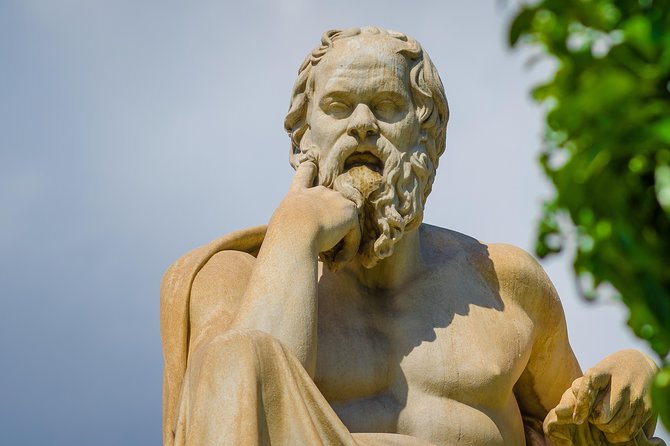
Many Athens tours move from monument to monument. This one uses the city as a classroom. You are not simply told that Socrates, Plato, or Aristotle mattered. You discuss the ideas connected with them while walking through places shaped by public debate, religion, trade, government, and daily life.
That distinction matters if you enjoy asking why rather than only what. The guide can pause to explain a philosophical school, connect an ancient idea to modern life, or let you test an argument yourself. Several guides have been praised for speaking with participants rather than lecturing at them. That makes the subject less dry and more personal.
The private setup is the biggest practical advantage. Your group alone takes part, so you can ask for more detail about pre-Socratic thinkers, spend longer on Socrates, or keep the discussion lighter if philosophy is new to you. A family with one serious classics student and one beginner can receive a more balanced experience than on a fixed large-group tour.
The route also gives you a useful first look at Athens beyond the Acropolis. You pass grand neoclassical buildings, public gardens, shopping streets, old squares, archaeological remains, and the small lanes of Anafiotika. The result is part walking tour, part history lesson, and part open conversation.
More Walking Tours in Athens
- Athens: Acropolis and Parthenon Guided Walking Tour
★ 4.6 · 5,882 reviews - Greek Food Walking Tour in Athens
★ 5.0 · 4,740 reviews - Acropolis: Acropolis and Parthenon Guided Walking Tour
★ 4.7 · 3,442 reviews
Starting at the Academy of Athens
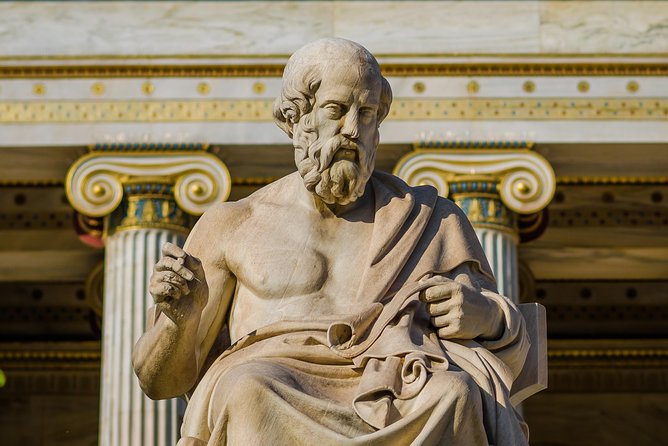
The meeting point is at Panepistimiou in central Athens, near the Academy of Athens. The opening stop focuses on the Trilogy of Athens and the intellectual movements of ancient Greece.
This is a fitting beginning. The Academy of Athens connects the modern city with the image of Athens as a center of learning. Here, the guide can set out the main ideas that shape the rest of the walk: how early thinkers tried to explain the world through reason, how ethics entered public life, and how philosophical schools developed different answers to the same human questions.
You should expect about 15 minutes at this stop. The admission ticket is not included, so the emphasis is likely on viewing the setting and discussing its meaning rather than spending a long time inside. If you are hoping for a museum visit at every stop, this tour may not suit you. Its strength is the conversation outdoors and the movement between sites.
The discussion includes the early thinkers often grouped as the pre-Socratics, including Thales of Miletus. That gives you a sense of the shift from myth-based explanations toward attempts to understand nature through observation and reason. The guide can then place Socrates, Plato, and later schools in that larger story.
The coin museum stop and Athens as a working city
The route includes a museum with one of the world’s greatest collections of coins, ancient and modern. The supplied details do not identify the museum by name or specify a visit length, so you should treat this as a passing point or possible stop rather than assume a full museum tour.
Coins are a useful subject on a philosophy walk because they connect ideas to daily life. They show how ancient societies represented power, religion, rulers, and civic identity. Even a short explanation can help you see Athens as a living city, not only a collection of temples and ruins.
Since admission fees are not included anywhere on the tour, ask your guide about the plan for this museum before paying for entry. The private format makes that question easy to handle, and it helps you avoid assuming that every building on the route is an included attraction.
The Hellenic Parliament and the guard ceremony
At the Hellenic Parliament, you pause for about 15 minutes and may witness the Changing of the Presidential Guard. Admission is free.
This is one of the tour’s strongest links between ancient civic life and modern Greece. The Parliament is a major symbol of the country’s present government, while the conversation around democracy reaches back to the political experiments of ancient Athens. The guide can help you separate the modern institution from the ancient system, rather than treating democracy as a single unchanged idea.
The guard ceremony adds a visual moment to what could otherwise be a talk-heavy morning. It also breaks up the philosophical discussion with a public tradition you can watch in person. Timing will matter, since the ceremony must coincide with the tour’s arrival, and the available information does not promise a particular schedule.
Same stretch of coastline, a completely different day out:
- Athens: Acropolis & up to 5 Archaeological Sites Combo Pass
★ 4.4 · 12,619 reviews - Athens: Acropolis Ticket with Optional Audio or Live Guide
★ 4.2 · 11,055 reviews - Athens: Acropolis, Parthenon & Acropolis Museum Guided Tour
★ 4.8 · 9,316 reviews - Athens: Cape Sounion & Poseidon Temple Sunset Half-Day Trip
★ 4.8 · 8,241 reviews
National Garden: science, ethics, and public life
The National Garden receives another 15-minute stop. Admission is free, and the setting offers shade and a quieter place for discussion.
Here the tour broadens beyond famous names. The guide connects Greek philosophy with democracy, physics, astronomy, ethics, and other applied sciences. That is important because ancient philosophy was not limited to abstract arguments. Early thinkers also asked how the natural world worked, how people should behave, and how a city should organize itself.
The garden setting may be especially welcome in warm weather. One guide is praised for finding shady places for explanations, a small practical detail that can make a four-hour walk far more comfortable. Still, you should wear supportive shoes and bring sun protection. The walk has several short stops, but it remains a substantial amount of time on foot.
Ermou Street and the many faces of Hermes

The stop on Ermou Street turns to Hermes, the mischievous god associated with travel, messages, trade, and cleverness. Admission is free, and the planned time is about 15 minutes.
This part helps keep the tour from becoming a procession of academic names. Myth gives you characters, motives, and memorable stories. The guide can use Hermes to show how Greek mythology explained human behavior and the unpredictable nature of life, while also connecting the god with the commercial activity of a modern shopping street.
The contrast is part of the fun. You are discussing an ancient deity in one of central Athens’s modern commercial areas. It is a reminder that the city’s old stories do not exist only behind museum glass. They continue to shape names, images, and the way Athens presents itself.
A square named for the Church of Pantanassa
The route also passes through an area named after the Church of the Pantanassa, located within the square. The supplied information does not give the square’s name or a separate duration, so you should see this as an additional orientation point rather than a major scheduled attraction.
This kind of stop can be valuable because it gives the guide room to explain how neighborhoods develop around churches, markets, and public gathering places. It also adds a local layer to the route between the grand government buildings and the archaeological sites.
Do not expect every pause to be a formal monument visit. Some of the most useful context may come while standing in an ordinary public space and hearing how the surrounding area acquired its identity.
The Ancient Agora and the birth of Stoicism
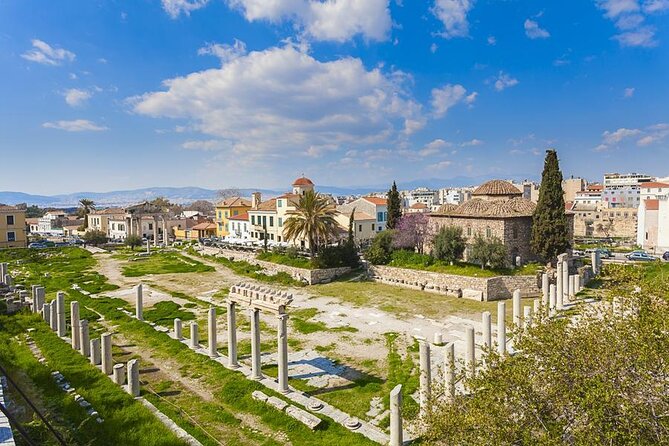
The Ancient Agora is one of the tour’s central historical stops. You spend about 15 minutes there, and admission is not included.
The Agora was a public center of civic, commercial, and intellectual life. On this walk, the key philosophical connection is the Poikile Stoa, associated with the birth of Stoic philosophy. The guide can explain how Stoicism developed around questions of self-control, resilience, responsibility, and the difference between what you can and cannot control.
This is where the private format can be most useful. Stoicism is often reduced to a slogan about suppressing emotion, but a good conversation can make the ideas more precise. You can ask how the school viewed hardship, public duty, reason, and personal conduct.
The short scheduled time means you will not explore the entire archaeological site in detail. If the Agora is high on your sightseeing list, plan a separate visit with enough time for the ruins and museum. On this tour, the Agora is a setting for philosophy rather than a full archaeological tour.
The Tower of the Winds and Aiolos
The route continues to the Tower of the Winds, with about 15 minutes scheduled and admission not included. The monument provides an excellent bridge between myth and early scientific thought.
The discussion centers on Aiolos, keeper of the winds. That mythological figure gives the guide a way to explain how ancient Greeks personified natural forces. The tower itself also points toward the effort to observe and measure the world, bringing together mythology, weather, astronomy, and timekeeping.
This is one of the more distinctive stops because it avoids the usual list of famous philosophers. You see how stories about gods could exist alongside practical attempts to understand natural patterns. If you like the meeting point between legend and science, this portion may be a highlight.
Again, confirm whether the plan includes entry. The listed admission is not included, and the tour price does not cover personal expenses or entrance fees at any point of interest.
Anafiotika and the Cynic philosophers
In Plaka, the walk reaches Anafiotika at the foot of the Acropolis. You spend about 20 minutes here, and admission is free.
The guide uses this atmospheric area to discuss the Cynic philosophers. The name can sound negative in modern English, but the ancient school raised sharp questions about social convention, material possessions, independence, and the way people choose to live.
Anafiotika is a good place for this topic because the surroundings feel removed from the formal avenues earlier in the route. The small neighborhood lanes create a change of pace before the final climb. You can expect a more intimate discussion here, perhaps with questions about what a simple life means today.
The area is not presented as a full Acropolis visit. You are near the Acropolis, not entering the monument as part of the stated tour. If you need an Acropolis ticket, that is a separate expense and plan.
Ending on Areopagus Hill
The tour finishes on Areopagus Hill, also called the Areopagus. The scheduled time is about 15 minutes, admission is free, and the endpoint offers a broad view of the Acropolis.
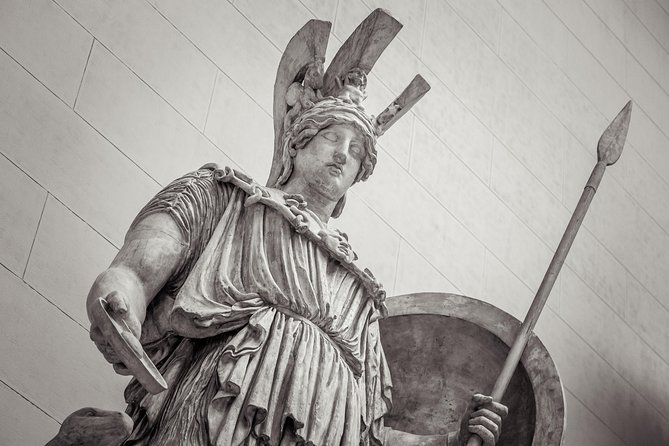
It is a strong finish. After discussing philosophers, myths, science, public life, and different ways of living, you end above the city with the ancient monument in front of you. The guide turns to the Olympian gods and the myths connected with them, giving the tour a final shift from human reasoning back to the divine stories that shaped Greek culture.
The hill is also a natural point to pause and reflect on the tour’s larger theme. Athens gave the Western intellectual tradition both mythic narratives and arguments that challenged inherited beliefs. Ending with a view rather than another indoor exhibit keeps the experience open-ended.
Because the route finishes at Areopagus Hill rather than returning to the start, plan your next move from there. The tour begins at Panepistimiou and ends near the Acropolis area, so it works well before another Plaka activity or an evening meal, provided you account for your own onward plans.
How much value do you get for $102.80?
At $102.80 per person, this is not a budget walking tour. The price makes the most sense if you value a private guide and active conversation more than admission-heavy sightseeing.
You are paying for roughly four hours of one-on-one attention to your group, a route that covers both famous and less expected locations, and a subject-specific guide rather than a general city overview. Group discounts may improve the per-person value for a larger party.
Coffee or tea and bottled water are included, which is helpful but not the main reason to book. Entrance fees are not covered, so budget separately if you want to enter the Ancient Agora, Tower of the Winds, or any other point of interest.
I would compare this experience with the cost of a private guide for a similar length of time. If you want a broad introduction to Athens monuments at the lowest possible price, a group tour will likely offer better value. If you want discussion, flexibility, and a guide who can adjust the level for your group, the price is easier to justify.
Who will enjoy this most?
This tour is a particularly good fit for:
- Philosophy students and curious beginners: You do not need prior study, and the guide can build from basic ideas.
- Families with older children or teenagers: Several guides have successfully held the attention of teens and young adults.
- Couples and small private groups: You can ask personal questions and set the pace of the discussion.
- Visitors who have already seen the main sights: The route adds meaning to places you might otherwise pass quickly.
- People interested in myths and science: The tour moves between gods, natural forces, democracy, ethics, and early theories of the universe.
It may be less suitable if you want a fast checklist of major monuments, extensive indoor visits, or a tour devoted only to archaeology. Four hours is a serious commitment, and the subject works best when you are willing to talk rather than simply listen.
The experience is offered in English. Confirmation comes at booking, service animals are allowed, public transportation is nearby, and most people can participate. Since the tour requires good weather, a cancellation caused by poor conditions brings the choice of another date or a full refund. You can cancel for a full refund up to 24 hours before the start time.
Should you book Athens Highlights: Myths & Philosophers?
Book it if you want Athens to make you think, not just pose for photographs. The strongest part is the guide-led conversation, especially with guides such as Bianca, who is praised for making philosophy accessible, asking thoughtful questions, and adapting to beginners and advanced participants alike.
Skip it if you want a short, low-cost route with included monument entry. The $102.80 price, extra admission fees, and four-hour walking time require a clear interest in the subject.
For the right group, this can be one of the most memorable ways to meet Athens. You leave with the Acropolis view, but also with new questions about democracy, happiness, nature, duty, and how to live well.
FAQ
How long is the Athens Highlights: Myths & Philosophers tour?
The tour lasts approximately four hours.
Where does the tour begin?
It begins at Panepistimiou, Athens 106 79, Greece.
Where does the tour end?
It ends at Areopagus Hill, Theorias 21, Athens 105 55, Greece.
Is this a private tour?
Yes. Only your group participates in the private activity.
What language is the tour offered in?
The experience is offered in English.
Are entrance fees included?
No. Entrance fees to points of interest are not included in the price.
Are food or drinks included?
Coffee or tea and bottled water are included.
Can I cancel for a full refund?
Yes. You must cancel at least 24 hours before the experience start time for a full refund.
What happens if bad weather cancels the tour?
If poor weather causes a cancellation, you will be offered a different date or a full refund.
Just added around Athens
- Delphi One Day Trip from Athens★ 4.0 · 98 reviews
- Private Delphi and Hosios Loukas Monastery – Great Lunch and Drinks Included★ 5.0 · 36 reviews
- Mercedes Private Tour to Delphi and Arachova★ 5.0 · 30 reviews
- Day tour to Ancient Olympia,Ancient Sparta Mycenae Including Meal★ 5.0 · 54 reviews
- Athens: Half Day Trip To Cape Sounio/Poseidon Temple Semi Private★ 5.0 · 131 reviews
- Athens Half-Day Private Tour Acropolis, Parthenon City Highlights★ 5.0 · 35 reviews
- From Athens: Day Tour to Mykonos★ 5.0 · 64 reviews
- Culinary Secrets of Downtown Athens★ 5.0 · 103 reviews
Walking Tours, compared.
Acropolis: Acropolis and Parthenon Guided Walking Tour
Read our review →
Acropolis monuments & Parthenon Walking Tour with Optional Acropolis Museum
Read our review →
Knossos: Knossos Palace Skip-the-Line Guided Walking Tour
Read our review →
Athens Authentic Greek Food Walking Tour (Small Group)
Read our review →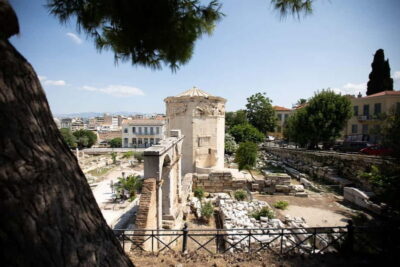
Early Morning Acropolis & Old Athens Guided Walking Tour
Read our review →Browse the lists this tour appears in