
Reviewed · WALKING TOURS
Athens Social and Political Walk
Politics gives Athens a sharper edge. This 2.5-hour walk links major civic sites with Greek history and current affairs, led by political scientist Isaac, whose clear explanations help you see beyond the postcard version of the city. I especially like the small group of no more than 15 and the chance to ask direct questions instead of listening to a fixed speech.
I also like the route’s focus on real institutions, from the prime minister’s office to the Parliament and Athens Polytechnic. The main consideration is its subject matter: this is a walking seminar about Greek politics, not a tour built around grand interiors or famous archaeological sights. You will need moderate fitness, and the experience depends on good weather.
In This Review
- Key points to know before booking
- Why this Athens walk feels different
- Starting at 2-4 Vasilissis Sofias Avenue
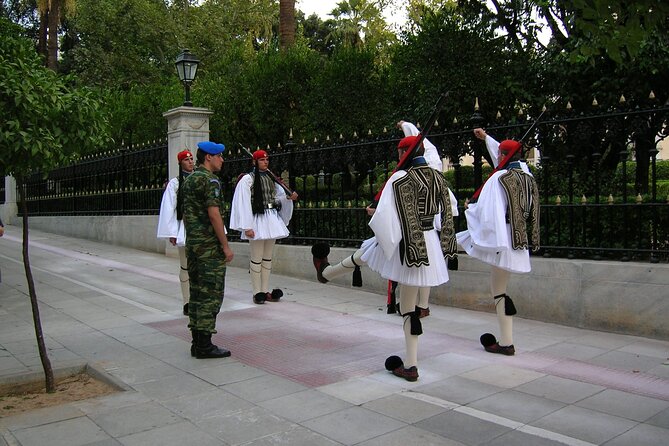
- The prime minister’s official seat
- The President’s official residence
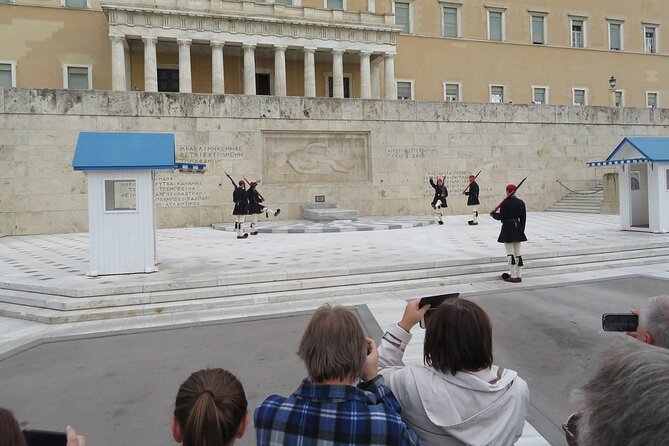
- Parliament and the symbols of Greek democracy
- Old Parliament House and the early modern state
- Athens Polytechnic and November 17, 1973
- A small group helps with difficult questions
- What $47.92 buys you
- Who will get the most from this walk
- Should you book the Athens Social and Political Walk?
- FAQ
- Where does the Athens Social and Political Walk begin?
- Where does the tour end?
- How long does the experience last?
- What language is the tour offered in?
- How large is the group?
- Can I cancel for a refund?
Key points to know before booking

- Isaac gives the walk a clear political point of view: He connects Greek independence, the military junta, democratic reform, economic crisis, and current affairs.
- The route uses Athens itself as the classroom: Government buildings, public squares, Parliament, and the Polytechnic all help explain how the country developed.
- It ends at Athens Polytechnic: The main entrance on Patision Avenue is tied to the November 17, 1973 uprising, one of the key events in modern Greek history.
- The group stays small: A maximum of 15 people makes it easier to ask about Greek politics, history, and comparisons with your own country.
- The tour costs $47.92 per person: That is fair value if you want interpretation and discussion, but less so if you mainly want sightseeing.
- Plan for an outdoor walk: The tour lasts about two hours and 30 minutes, requires moderate fitness, and may be moved or refunded if weather or minimum attendance causes cancellation.
Why this Athens walk feels different
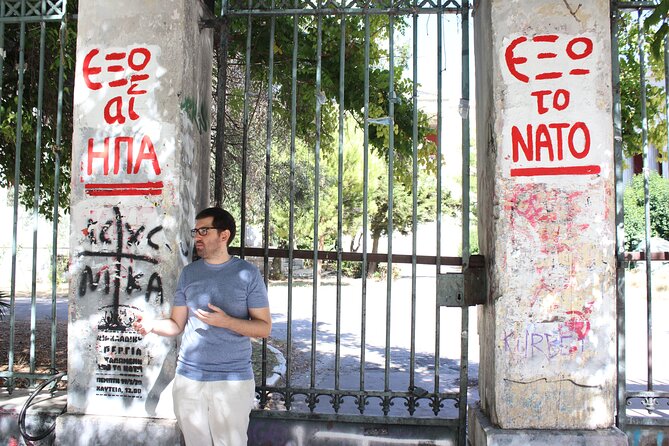
Most first visits to Athens follow a familiar path: ancient temples, museum galleries, and views from the Acropolis. Those places matter, but they do not explain why modern Greece feels the way it does. This walk takes a different route, using the city’s political buildings and public memory to explain the country beyond its ancient past.
That is the chief reason I find this experience useful. You are not simply shown a government building and told its name. You are given a framework for understanding how Greece moved from independence to monarchy, dictatorship, democratic reform, European integration, political division, and the recent economic crisis.
Isaac is described as a passionate guide with a wide command of Greek political history and present-day affairs. His background as someone living in Greece but not Greek also gives the discussions an outside perspective. That can be helpful when you are trying to understand customs or political arguments without already knowing the local shorthand.
The tone appears intended to be balanced rather than partisan. You do not need a degree in politics, and you do not need to agree with every interpretation to gain something from the walk. You need curiosity and a willingness to ask questions.
More Walking Tours in Athens
- Athens: Acropolis and Parthenon Guided Walking Tour
★ 4.6 · 5,882 reviews - Greek Food Walking Tour in Athens
★ 5.0 · 4,740 reviews - Acropolis: Acropolis and Parthenon Guided Walking Tour
★ 4.7 · 3,442 reviews
Starting at 2-4 Vasilissis Sofias Avenue
The tour begins at Leoforos Vasilissis Sofias 2-4, in central Athens. This puts you near the formal center of the Greek state, where government, ceremonial buildings, and national symbols gather close together.
The starting point is well suited to the subject. The walk begins not with a broad lecture in a classroom, but with the places where political power is represented. As you move through the area, you can expect the guide to place the buildings in a wider story about the Greek state.
Because the exact meeting instructions are limited to the street address, check your mobile ticket carefully before setting out. The experience is offered in English and uses a mobile ticket. It is also near public transportation, which makes the beginning practical for a day spent in central Athens.
Arrive ready to walk. The route lasts roughly two hours and 30 minutes, and the tour requires a moderate level of physical fitness. That does not mean an extreme hike, but you should be comfortable standing and walking outdoors for the length of the experience.
The prime minister’s official seat
One stop is the official seat of the Prime Minister of Greece. This is an important early lesson in the difference between seeing a political building and understanding its role.
The site gives the tour a chance to explain how executive power works in Greece and how the prime minister fits into the country’s political system. For someone arriving with a general idea of European government but little knowledge of Greece, this context can make later discussions easier to follow.
Do not expect a palace tour or an indoor visit simply because the route reaches an official residence or office. The value here is the explanation from outside, along with the chance to connect the building to elections, cabinets, political parties, and public debate.
I like this sort of stop because it helps you read the city after the tour ends. You may pass the same building again and understand that it is more than an impressive facade. It is part of a working political system with its own history and tensions.
The President’s official residence

The route also visits the official residence of the President of the Hellenic Republic. This stop offers a useful contrast with the prime minister’s seat, since the two offices do not play the same role.
That distinction matters. Visitors from countries with strong presidential systems can easily assume that a president holds the same kind of day-to-day power elsewhere. A guide who can compare political structures helps prevent that confusion.
The discussion here is likely to be most useful if you ask questions. The small group means you can request a plain explanation of the president’s duties, the office’s place in the state, and how it differs from the government led by the prime minister.
The route’s strength is this movement between institutions. Instead of treating politics as a list of names and dates, it places those ideas on real streets. That keeps the subject grounded, even when the discussion turns toward constitutional structure or modern political disputes.
Same stretch of coastline, a completely different day out:
- Athens: Acropolis & up to 5 Archaeological Sites Combo Pass
★ 4.4 · 12,619 reviews - Athens: Acropolis Ticket with Optional Audio or Live Guide
★ 4.2 · 11,055 reviews - Athens: Acropolis, Parthenon & Acropolis Museum Guided Tour
★ 4.8 · 9,316 reviews - Athens: Cape Sounion & Poseidon Temple Sunset Half-Day Trip
★ 4.8 · 8,241 reviews
Parliament and the symbols of Greek democracy
The Parliament of Greece is another central stop. Here, the story can turn toward elected government, political parties, public protest, and the difficult path from authoritarian rule to democracy.
The building itself is only part of the experience. The guide’s role is to explain what Parliament represents and how its meaning changed through different periods of Greek history. The walk covers the country’s development from the independence war through the modern era, including the military junta and the move toward democratic reform.
This historical range is one of the walk’s strongest features. You get a fast route through several centuries, but the focus remains on political development rather than a general history lecture. Isaac is also praised for using current news and recent examples to give the older story some bite.
That approach should suit you if you want help making sense of headlines about Greece. It can also be useful if you have read about the financial crisis but still find the political causes and social divisions hard to sort out.
The drawback is the speed. A two-and-a-half-hour walk cannot give equal attention to every period, institution, or party. You will receive a synthesis, not a university course. If you already have a strong background in Greek history, you may appreciate the connections but still wish for more time on certain subjects.
Old Parliament House and the early modern state
Old Parliament House adds an earlier layer to the route. It helps shift the story away from present-day politics and toward the formation of the modern Greek state.
This is where the walk can connect independence, the early structure of government, and the development of political life in Athens. The building gives the discussion a physical setting, so the past does not feel like a string of disconnected dates.
I find this especially valuable for anyone who has seen the ancient Agora and wondered how the modern capital grew around a much newer political story. Athens is not only a city of classical ruins. It is also a place shaped by independence, state-building, military rule, elections, protests, and arguments about national identity.
You should also expect a point of view. Any short explanation of a country’s political development involves choices about what to emphasize. The strongest part of this experience is that Isaac’s approach is described as nuanced and well documented, but you should still treat the walk as one informed interpretation rather than the final word on every Greek dispute.
Athens Polytechnic and November 17, 1973
The final stop is the main entrance of the National Technical University of Athens, often called Athens Polytechnic, on Patision Avenue. This is more than a convenient finishing point. The university is closely tied to the Athens Polytechnic uprising of November 17, 1973.
That uprising is one of the key events in modern Greek political memory. It belongs to the story of the junta, the student movement, opposition to military rule, and the later return to democracy.
Ending here gives the route a strong sense of direction. The walk begins with the institutions of government and finishes at a place associated with protest and democratic change. You can see how formal power and public resistance fit into the same national story.
This stop may be the most meaningful part of the experience if you want to understand why certain dates and places carry such weight in Greece. It also gives you a clearer sense of the country’s recent past than a standard ancient-history tour usually offers.
The end point is the university’s main entrance on Patision Avenue. Since the tour does not return to its starting point, check your plans for afterward. The central location and nearby public transportation should make it possible to continue sightseeing, but the practical choice depends on your next destination.
A small group helps with difficult questions
A maximum of 15 people is a real advantage here. Political history is not always easy to follow in a large crowd, especially when the guide moves from the independence war to the junta, then to modern elections and economic crisis.
With a small group, you can ask for comparisons with your own country, request a simpler explanation, or return to a point that went by quickly. Isaac is also described as making comparisons between countries to clarify Greek political ideas. That kind of exchange can turn an abstract topic into something you can grasp.
The walk appears to work best as a conversation with a strong structure. It is not a loose chat with no clear route, and it is not a memorized monologue that leaves no room for questions. The combination of a planned walk and focused attention is why the group limit matters.
You should know that politics can invite disagreement. That is not a flaw in itself, but you will enjoy this experience more if you are open to hearing a careful explanation rather than looking for a guide who confirms your existing opinions.
What $47.92 buys you
At $47.92 per person, the price is reasonable for a specialist walking tour of about two hours and 30 minutes, particularly with a maximum group size of 15 and a guide focused on one subject.
You are paying for interpretation rather than admission tickets. The stated itinerary does not promise entry into the prime minister’s seat, the president’s residence, Parliament, or Old Parliament House. The value rests in the guide’s explanation, the route, and the chance to discuss Greek history and current affairs on location.
I would call it good value for an independent-minded visitor who wants context. If you are mainly looking for photo stops, ancient monuments, or access to interiors, the cost may feel high because the experience is built around conversation and outdoor viewing.
The tour is often reserved about 14 days ahead, so it is sensible to plan early if your dates are fixed. Free cancellation is available up to 24 hours before the start time. If poor weather or insufficient attendance cancels the experience, you are offered another date or a full refund.
Who will get the most from this walk
I would recommend this experience most strongly to you if you enjoy history, current affairs, and the human side of politics. It suits visitors who want to understand the recent crisis, the legacy of military rule, and the forces behind present-day divisions.
It is also a good choice if you have already seen the Acropolis and want a second view of Athens. The route may help you notice the city as a national capital rather than only an archaeological site.
The walk can work for people with little prior knowledge. The explanations are designed to connect periods and ideas, and you can ask questions as you go. If you have a strong background in Greece, you may value Isaac’s synthesis and local anecdotes, though you should not expect exhaustive detail on every political event.
I would think twice if you dislike discussion of current politics, prefer a relaxed sightseeing pace, or have difficulty walking for 2.5 hours. The experience requires moderate fitness, takes place outdoors, and may be affected by weather.
Service animals are allowed, and the route is near public transportation. Those details are useful, but the key practical issue remains the walking time and the fact that the tour finishes at a different place from where it begins.
Should you book the Athens Social and Political Walk?
Book it if you want to understand the modern country behind the ancient monuments. The best reasons are the small group, Isaac’s apparent skill at linking past and present, and the route from official government buildings to the Polytechnic’s story of protest and democratic change.
Skip it if you want interiors, archaeology, or a broad introduction to every part of Athens. This is a focused political walk, and its value depends on your interest in the subject.
For the right person, $47.92 buys something a standard city tour often misses: a way to connect buildings, historic events, public arguments, and today’s Greece. I would place it early in an Athens stay, so you can use that context during the rest of your visit.
FAQ
Where does the Athens Social and Political Walk begin?
It begins at Leoforos Vasilissis Sofias 2-4, Athens 106 74, Greece. The location is near public transportation.
Where does the tour end?
The walk ends at the main entrance of the National Technical University of Athens, also called Athens Polytechnic, on Patision Avenue in Athens 106 82.
How long does the experience last?
The walk lasts approximately two hours and 30 minutes.
What language is the tour offered in?
The tour is offered in English.
How large is the group?
The experience has a maximum of 15 participants.
Can I cancel for a refund?
Yes. You can cancel at least 24 hours before the start time for a full refund. Changes or cancellations made less than 24 hours before the start time are not accepted for a refund.
Just added around Athens
- Traditional Greek Show in Plaka with Dinner★ 3.6 · 178 reviews
- Santorini Wine Roads Tour with Wine Tastings Morning & Sunset★ 5.0 · 106 reviews
- Private Sunset Wine Tour with 3 Wineries and Tapas★ 5.0 · 34 reviews
- Insightful Pistachio Orchard and Factory Tour★ 4.5 · 27 reviews
- Traditional Villages Full day Tour in Santorini★ 4.0 · 84 reviews
- Half Day Tour★ 5.0 · 63 reviews
- Half-Day Shared Fishing Experience in Hydra★ 5.0 · 35 reviews
- Athens Old City Private Photoshoot Tour / 2 hrs★ 5.0 · 109 reviews
Walking Tours, compared.
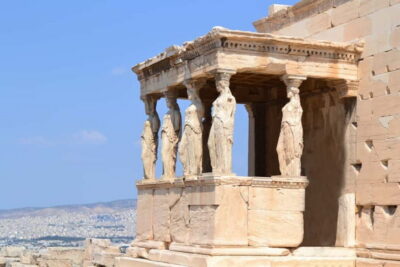


Acropolis: Acropolis and Parthenon Guided Walking Tour
Read our review →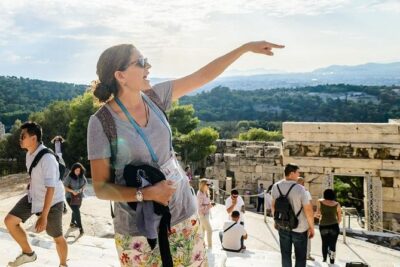
Acropolis monuments & Parthenon Walking Tour with Optional Acropolis Museum
Read our review →
Knossos: Knossos Palace Skip-the-Line Guided Walking Tour
Read our review →

Athens Authentic Greek Food Walking Tour (Small Group)
Read our review →
Early Morning Acropolis & Old Athens Guided Walking Tour
Read our review →Browse the lists this tour appears in