
Reviewed · WALKING TOURS
Athens Social and Political Walk
Athens makes more sense after you know its arguments. This 2.5-hour walk links government buildings, memorials, universities, and city streets to Greece’s political and social story. I like the way political scientist Isaac explains difficult subjects in plain language, and I like that the tour looks beyond ancient Athens to the modern country. The main consideration is its subject matter: if you want ruins, grand views, or a light sightseeing stroll, this may feel too serious.
I also like the documentary-style format, which uses street stops, stories, photographs, and extra information rather than a standard list of dates. The route is wheelchair accessible, and the guide speaks English or Spanish. At $47 per person, the price is fair for an expert-led small-group experience, though the value depends on your interest in politics, society, and recent history.
In This Review
- Key points at a glance
- Why this Athens walk is different
- Starting near the seat of government
- Maximos Mansion, the Presidential Palace, and the National Garden
- Parliament and the story behind public power
- The National Historical Museum and modern Greece
- Memorials, wartime memory, and the cost of history
- Panepistimiou and the city as a political document
- The National Technical University and student protest
- What the guide adds to the experience
- Is $47 a fair price?
- Who should book this walk?
- Final verdict: book it for modern Athens
- FAQ
- How long does the Athens Social and Political Walk last?
- How much does the experience cost?
- Where does the walk begin?
- Where does the walk finish?
- Which languages are available?
- Is the walk wheelchair accessible?
- What places are included along the route?
- Who leads the experience?
- Is cancellation available?
Key points at a glance

- From 1821 to today: The walk traces Greece from its independence struggle through World War II, postwar politics, the financial crisis, immigration, and gentrification.
- Government Athens in plain view: Maximos Mansion, the Presidential Palace, the National Garden, and Parliament provide a useful setting for discussing power and public life.
- A political scientist leads the way: Isaac is praised for explaining complex issues clearly, adding humor, and making space for questions.
- Modern history beyond the monuments: Korai 4, Panepistimiou, and the National Technical University bring wartime memory, protest, students, and social conflict into the story.
- Useful visual material: A slideshow with photographs and extra information supports the discussion during or after the walk.
- A strong fit for curious visitors: You do not need to be a politics expert, but you should enjoy listening, asking questions, and thinking about how a country works.
Why this Athens walk is different
Many Athens tours begin with Pericles and end with the Acropolis. This one begins with a harder question: how did the birthplace of democracy become known during the financial crisis as Europe’s economic problem child?
That question is deliberately blunt. The walk does not treat it as a simple story of national failure. Instead, it examines how Greece developed as a modern state, how religion and language shaped public life, how Europe affected the country, and why economic and political tensions remain sensitive topics.
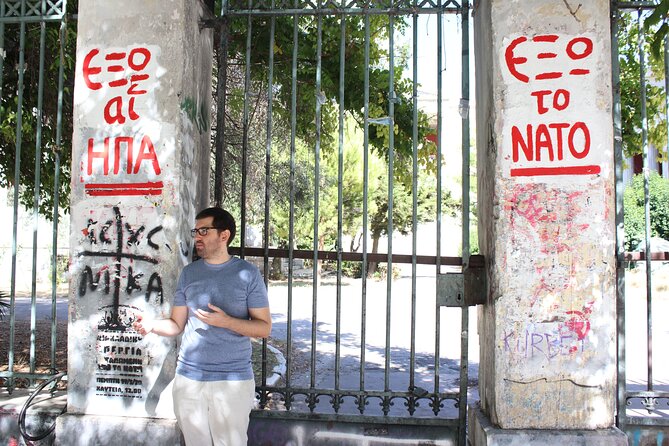
I find that useful because Greece can be easy to misunderstand from a short holiday visit. You may see protests, closed shops, memorials, political posters, or new construction and have no idea what they mean. A guide who can connect those sights to older events gives you a better frame for the rest of your stay.
This is not a tour built around memorizing rulers. Isaac’s approach, according to the experience details and visitor feedback, is conversational and analytical. He explains complex subjects in simple terms, uses comparisons with other countries, and keeps the tone human with well-placed humor.
More Walking Tours in Athens
- Athens: Acropolis and Parthenon Guided Walking Tour
★ 4.6 · 5,882 reviews - Greek Food Walking Tour in Athens
★ 5.0 · 4,740 reviews - Acropolis: Acropolis and Parthenon Guided Walking Tour
★ 4.7 · 3,442 reviews
Starting near the seat of government
The walk begins with Planetwonk Experiences in central Athens and heads toward Maximos Mansion, the official office of Greece’s prime minister. This is a strong opening because it puts present-day political power at the center of the story rather than treating modern Greece as an afterthought.
You can expect discussion about how the modern Greek state took shape after the independence war that began in 1821. That starting point matters. The country’s political institutions, national identity, relationship with religion, and ties to Europe all developed through a long process rather than appearing fully formed at independence.
The guide’s role is especially important here. A building can tell you where power sits, but it cannot explain how power is used or contested. That is where a political scientist adds value. You can ask questions as the discussion moves along, rather than saving every question for the end.
The exact amount of time spent at each stop can vary, so do not expect a formal interior visit to every building. This is an outdoor walking experience focused on explanation and context.
Maximos Mansion, the Presidential Palace, and the National Garden

From Maximos Mansion, the route continues to the Presidential Palace. These nearby sites help separate the roles of Greece’s prime minister and president, while opening wider questions about the country’s political system and public institutions.
You may not receive a technical lecture on constitutional law, but the location gives the guide a natural way to explain how government works. It also helps you connect national politics to the streets around you. Athens is not simply a museum of old stones. It is the capital where decisions about the economy, migration, education, and public services are made and argued over.
The National Garden offers a change of pace. After government offices and formal institutions, you walk through one of central Athens’s public green spaces. This is a useful setting for talking about everyday life and the relationship between citizens and the state.
One strength of this route is the contrast between official Athens and ordinary city life. The palace and government buildings represent authority. The garden is a public place used by people away from formal politics. That shift keeps the walk from becoming a string of speeches in front of office façades.
Parliament and the story behind public power
The Hellenic Parliament is one of the route’s natural anchors. It is visually important, but the real benefit comes from using it as a doorway into Greece’s political tensions.
The guide may connect Parliament to party politics, the financial crisis, public anger, and the choices imposed or debated during Greece’s years of severe economic pressure. The experience does not present the crisis as a single event with one cause. It places economic issues alongside social attitudes, European institutions, and domestic politics.
That broader approach is one of the tour’s strongest features. If you only hear that Greece suffered debt and austerity, you miss the effect on ordinary people and the way the crisis changed public trust. If you only hear that outside powers were responsible, you also miss the internal decisions and long-running problems that shaped events.
The discussion can be frank. Politics, religion, language, Europe, and immigration are not tidy subjects. The stated aim is an unbiased approach, allowing you to form your own view rather than pushing one party line. For me, that is a better reason to book than promises of easy answers.
Same stretch of coastline, a completely different day out:
- Athens: Acropolis & up to 5 Archaeological Sites Combo Pass
★ 4.4 · 12,619 reviews - Athens: Acropolis Ticket with Optional Audio or Live Guide
★ 4.2 · 11,055 reviews - Athens: Acropolis, Parthenon & Acropolis Museum Guided Tour
★ 4.8 · 9,316 reviews - Athens: Cape Sounion & Poseidon Temple Sunset Half-Day Trip
★ 4.8 · 8,241 reviews
The National Historical Museum and modern Greece
The National Historical Museum appears on the route, though the walk is not described as an extended museum visit. Its presence supports the move from political institutions to the creation of modern Greek identity.
The museum setting points back to the independence struggle and the development of the modern state. It also helps show why older periods remain important to current debates. Greece’s story includes Byzantine and Ottoman rule, independence, war, occupation, reconstruction, and political change. Those periods are not isolated boxes. They affect how people talk about national identity, religion, Europe, and language today.
You should treat this stop as a discussion point rather than assume you will receive a full museum tour. If you want to explore the museum in detail, plan separate time for it. The walk’s purpose is to use central Athens as a classroom, not to replace every major museum visit.
Memorials, wartime memory, and the cost of history
The route includes Korai 4, a memorial site connected with 1941 to 1944. This is one of the most significant stops because it brings World War II and the occupation into the city’s physical setting.
A memorial site can make history feel less distant than a date in a textbook. Here, the guide can connect wartime experience to postwar politics and the tensions that followed. Greece’s political story did not settle when the war ended. Conflict, division, and competing visions for the country continued to shape public life.
This is also where the walk’s tone may become more serious. The tour uses vivid stories and documentary-style material, so you should be ready for difficult subjects. The goal is not entertainment in the usual sightseeing sense. The humor helps keep the conversation accessible, but the content still asks you to pay attention.
Panepistimiou and the city as a political document
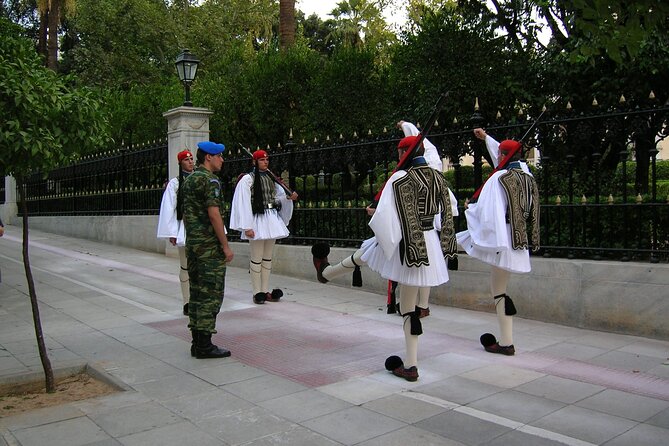
Panepistimiou gives the walk another urban setting for discussing modern Athens. Major streets often show layers of power more clearly than a single monument. You may notice institutions, commercial activity, public buildings, and signs of change in one view.
The guide uses street exploration to discuss society, not just architecture. Topics include the economy, immigration, gentrification, and the everyday effects of national decisions. This is valuable because political events are often discussed as if they happen only in Parliament. In reality, they affect housing, work, neighborhood identity, and who feels at home in a city.
The route includes several less obvious stops that are not fully named in the supplied details. That can be a plus, since the walk promises more than the standard Athens circuit. It also means you should not book expecting a fixed list of famous monuments at every turn. The point is the story attached to each place.
The National Technical University and student protest
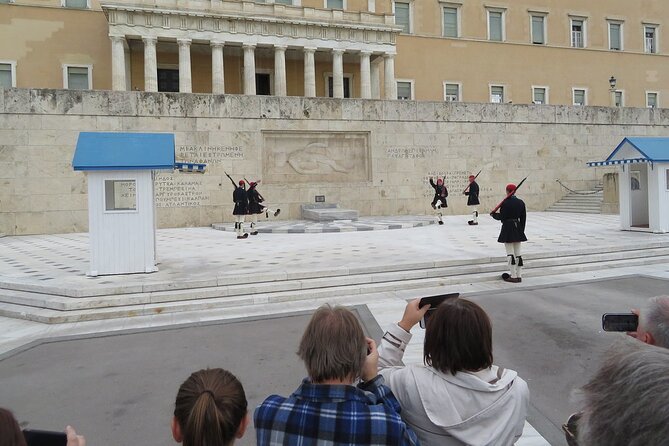
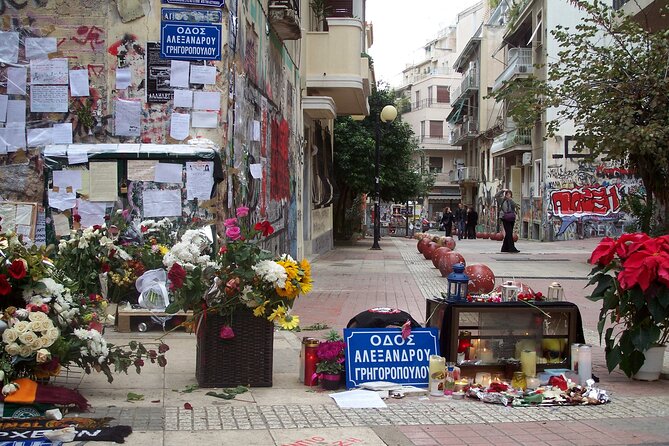
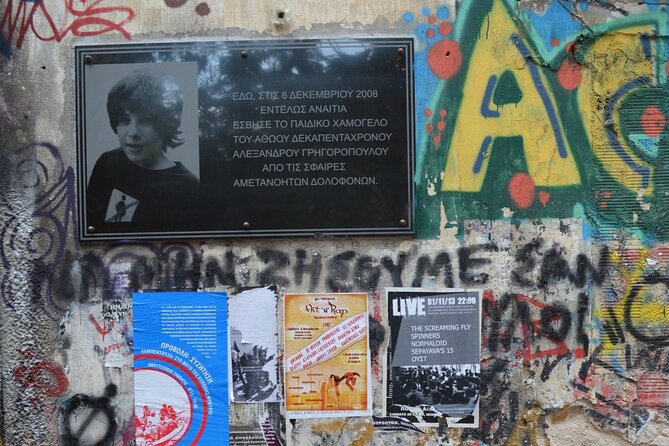
The National Technical University is another major stop, linked in the tour’s subject list to the student massacre and Greece’s modern political tensions. The university is an especially fitting place to discuss youth movements, protest, repression, and the role of students in political change.
This section gives the walk a human scale. Instead of talking only about governments and parties, it considers people who challenged authority and the ways memory of protest continues to shape Greek society.
You do not need prior knowledge to follow the discussion. Isaac is repeatedly praised for making complicated topics easy to understand and for answering questions carefully. That is important here, because student protest and political violence can involve several dates, groups, and competing interpretations.
The route finishes at 28is Oktovriou 42, near the National Technical University area. Finishing away from the opening government quarter creates a clear arc: the walk moves from official authority through public memory and social conflict to a place associated with students and protest.
What the guide adds to the experience
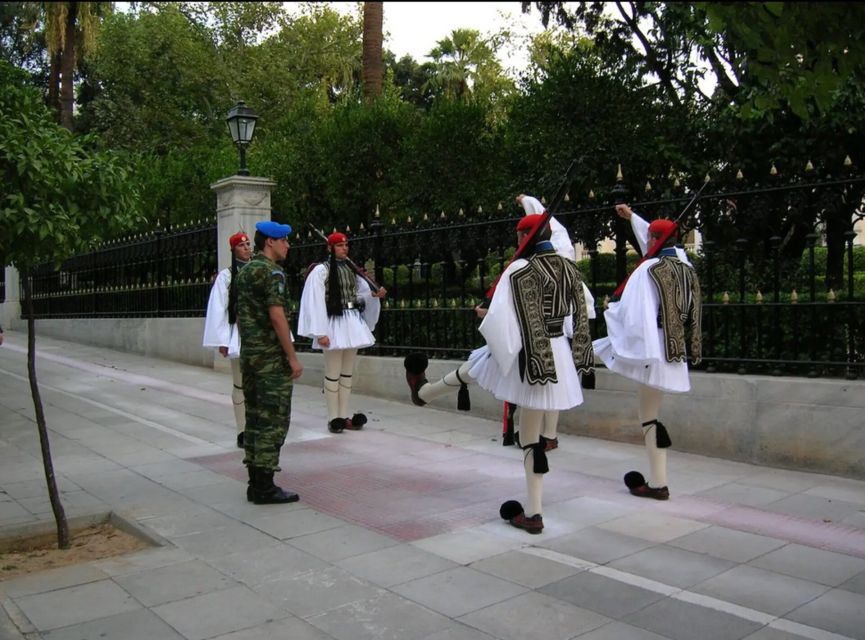
The guide can make or break a politics walk. Isaac is the central name associated with this experience, and his strengths are clear: strong subject knowledge, humor, patience with questions, and an ability to compare Greece with other countries.
That last point is useful for an international group. Greek politics can seem baffling if you lack a local reference point. Comparisons help you spot what is specific to Greece and what reflects wider European or global patterns.
The tone also appears flexible. One person described Isaac as both a political expert and an amusing host, while another appreciated the vivid stories and explanations of daily life in Greece. That combination matters. Facts alone can feel dry, while jokes without substance are quickly forgotten.
One comment praises Bianca for a great day in Athens, but the supplied details identify Isaac as the main political scientist and guide. If a particular guide matters to you, contact Planetwonk Experiences before booking and ask who will lead your date.
The experience is available in English and Spanish. A slideshow with photographs and extra information is included, which gives the discussion more structure and helps you remember the people, places, and events after the walk.
Is $47 a fair price?
At $47 per person, this costs more than a basic orientation walk but less than many private specialist experiences. The price makes sense if you want a focused lesson in modern Greece from someone trained in political science.
You are paying for interpretation, not entry tickets or a long list of attractions. The value lies in the connections between the stops: independence, religion, language, Europe, war, party politics, economics, immigration, and gentrification.
I would not choose it for a first hour in Athens if you have no idea where the major sights are. A general city walk may be more useful at the start of your trip. But once you have seen the Acropolis and central neighborhoods, this experience can add the context that standard sightseeing often leaves out.
The 2.5-hour length is another plus. It is long enough to build an argument without taking the whole day. Wear comfortable shoes and expect to spend the time moving between outdoor stops while listening and asking questions.
The small-group feel can also affect the value. One group had seven people, which allowed room for questions and conversation. Group size may change by date, so do not assume every departure will be that intimate.
Who should book this walk?
I would recommend it to you if you enjoy current affairs, modern European history, social questions, or thoughtful city walks. It also suits people who have lived in Greece for a while but still want a clearer explanation of the country’s politics and society.
It is a good choice for visitors who want more than ancient monuments. It can also work well early in a longer stay, since the ideas may help you understand news reports, conversations, protests, and neighborhoods you encounter later.
You may want to skip it if your Athens schedule is very tight or if you prefer relaxed sightseeing with little discussion. The tour covers serious material, including war, political conflict, economic hardship, immigration, and gentrification. It is accessible, but it is not shallow.
Planetwonk also offers experiences about the refugee crisis and a tour called Awful Athens. Those options may suit you if you want to continue examining present-day social issues from different angles.
Final verdict: book it for modern Athens
I would book the Athens Social and Political Walk if I wanted to understand the country behind the postcard. The route uses Maximos Mansion, Parliament, memorial sites, Panepistimiou, and the National Technical University to tell a connected story rather than offer isolated facts.
The strongest reason to go is the guide’s teaching style. Isaac appears able to handle complex subjects without making you feel lost, and his humor keeps the walk from becoming a lecture. The main tradeoff is simple: you give up time for more monuments in exchange for a better grasp of modern Greece.
At $47, that is good value for a curious visitor. Book it if you want context, questions, and a serious but approachable look at Athens. Contact Planetwonk Experiences if you need a particular date, time, language, or guide.
FAQ
How long does the Athens Social and Political Walk last?
The walk lasts 2.5 hours.
How much does the experience cost?
The price is $47 per person.
Where does the walk begin?
It begins at Athens Social and Political Walk, Planetwonk.
Where does the walk finish?
It finishes at 28is Oktovriou 42, Athina 106 82, Greece.
Which languages are available?
The live tour guide is available in English and Spanish.
Is the walk wheelchair accessible?
Yes, the experience is listed as wheelchair accessible.
What places are included along the route?
Stops include Maximos Mansion, the Presidential Palace, the National Garden, the Hellenic Parliament, the National Historical Museum, Korai 4 memorial site, Panepistimiou, and the National Technical University.
Who leads the experience?
Isaac is identified as the political scientist and guide associated with the walk. You can contact Planetwonk Experiences to ask about the guide for your chosen date.
Is cancellation available?
Yes. You can cancel up to 24 hours in advance for a full refund. You can also reserve now and pay later.
Just added around Athens
- Delphi One Day Trip from Athens★ 4.0 · 98 reviews
- Mercedes Private Tour to Delphi and Arachova★ 5.0 · 30 reviews
- Private Delphi and Hosios Loukas Monastery – Great Lunch and Drinks Included★ 5.0 · 36 reviews
- Day tour to Ancient Olympia,Ancient Sparta Mycenae Including Meal★ 5.0 · 54 reviews
- Athens: Half Day Trip To Cape Sounio/Poseidon Temple Semi Private★ 5.0 · 131 reviews
- Athens Half-Day Private Tour Acropolis, Parthenon City Highlights★ 5.0 · 35 reviews
- From Athens: Day Tour to Mykonos★ 5.0 · 64 reviews
- Culinary Secrets of Downtown Athens★ 5.0 · 103 reviews
Walking Tours, compared.
Acropolis: Acropolis and Parthenon Guided Walking Tour
Read our review →
Acropolis monuments & Parthenon Walking Tour with Optional Acropolis Museum
Read our review →
Knossos: Knossos Palace Skip-the-Line Guided Walking Tour
Read our review →

Athens Authentic Greek Food Walking Tour (Small Group)
Read our review →
Early Morning Acropolis & Old Athens Guided Walking Tour
Read our review →Browse the lists this tour appears in