
Reviewed · WALKING TOURS
Athens: Women in Ancient Greece Guided Walking Tour
Athens has a women’s history hiding in plain sight. This two-hour walk gives the Agora, Acropolis views, and Pnyx a fresh meaning by asking where women fit into ancient Athenian life. You hear about daily duties, social limits, religious customs, and the few women whose names survived the usual male-focused version of Greek history.
I especially like the way mythology connects to ordinary life, and I like the conversational style reported by people who toured with Maelle, a guide praised for her humor, preparation, and ability to answer questions. The main drawback is practical: the route includes steps and uneven uphill walking, so it is not suitable for wheelchair users or people with major mobility or heart concerns.
In This Review
- The key reasons to book this Athens walk
- Why this tour adds something missing from Athens sightseeing
- Starting at Pantanassa in Monastiraki
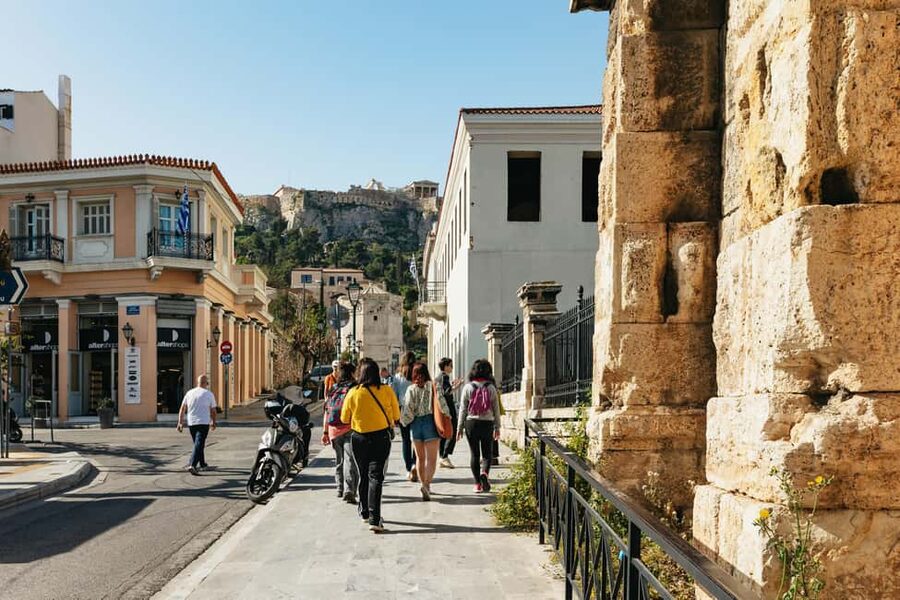
- Hadrian’s Library and the streets of Plaka
- Athena’s gate and the female meaning of mythology
- The Ancient Agora from outside the public world
- The Pnyx and the limits of Athenian democracy
- Acropolis views and Filopappou Hill
- What $44.04 buys you
- Who will enjoy this most
- Should you book the Women in Ancient Greece tour?
- FAQ
- How long does the tour last?
- Where does the tour begin?
- Where does the tour end?
- What languages are available?
- Are archaeological entrance tickets included?
- Is food or drink included?
- Is a private tour available?
- What should I bring?
- Is the tour suitable for wheelchair users?
The key reasons to book this Athens walk
- A female view of famous sites: Hadrian’s Library, the Ancient Agora, the Gate of Athena Archegetis, and the Pnyx take on a different meaning when you ask who could enter, speak, vote, work, or worship there.
- Stories beyond the usual names: Sappho, Aspasia, and Agnodice join Athena, Penelope, Demeter, and Pandora in a tour that links real women with myth.
- An interactive guide style: Maelle is praised for asking questions, inviting discussion, and adapting her explanations to the group rather than giving a fixed speech.
- A good mix of city and scenery: The walk begins in Monastiraki and ends around Filopappou Hill, with views toward the Acropolis along the way.
- No archaeological admission included: You see the ancient sites from outside, which keeps the price at $44.04 but makes this a companion to, not a replacement for, an Acropolis visit.
- A small-group feel is possible: You can select a private option, and a quiet departure may become nearly private if few people book.
Why this tour adds something missing from Athens sightseeing
Most first visits to Athens follow a familiar pattern: Acropolis, Agora, temple, museum, repeat. Those places matter, but the story can become a parade of male politicians, generals, philosophers, and gods. This tour asks a more useful question: what did the city look like to women who could not vote or take part in public life in the same way as men?
That question gives you a better sense of how incomplete ancient history can be. You hear about women from different social groups, not only famous poets or mythological figures. The focus includes household duties, rights, restrictions, religious roles, and the ways women shaped society even when official power was closed to them.
I also like that this is not simply a modern lecture placed beside old stones. The route uses the actual streets and monuments of Athens. A view of the Pnyx becomes a chance to discuss democracy and exclusion. The Agora becomes more than a market and civic center. A story about Athena can lead to questions about what qualities the culture expected women to represent.
The result should suit you if you enjoy history with room for discussion. It is less suitable if you want a fast checklist of monuments or a formal archaeological explanation with long periods of silent sightseeing.
More Walking Tours in Athens
- Athens: Acropolis and Parthenon Guided Walking Tour
★ 4.6 · 5,882 reviews - Greek Food Walking Tour in Athens
★ 5.0 · 4,740 reviews - Acropolis: Acropolis and Parthenon Guided Walking Tour
★ 4.7 · 3,442 reviews
Starting at Pantanassa in Monastiraki
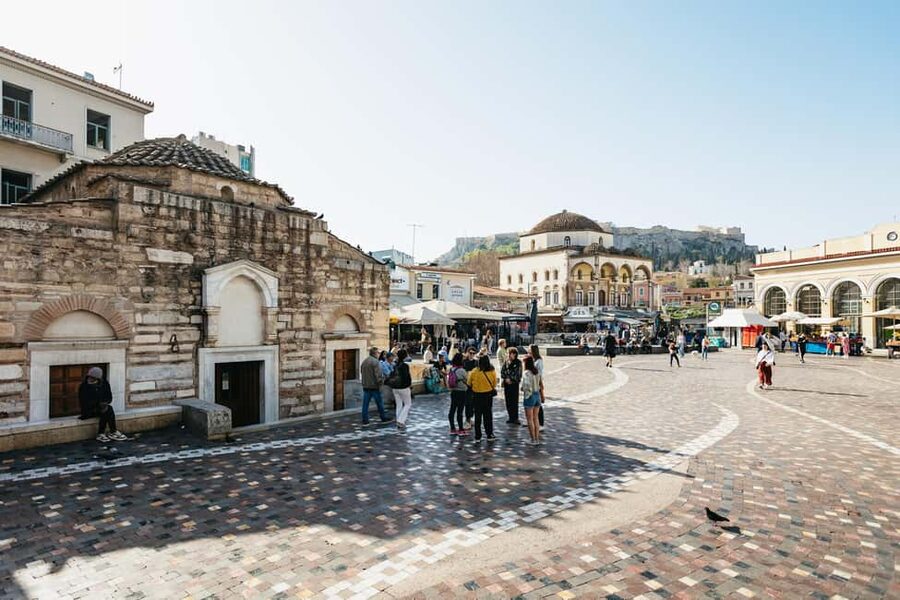
Meet your guide on Monastiraki Square, in front of the Holy Church of the Virgin Mary Pantanassa. Look for the guide holding a sign marked Women in Ancient Greece. This is a busy central area, so give yourself enough time to locate the church and guide without rushing.
Monastiraki is a useful starting point because it places you right in the middle of modern Athens. The square, surrounding streets, and market atmosphere make a sharp contrast with the ancient subjects you are about to discuss. That contrast is part of the charm. Women’s lives were not lived only in marble sanctuaries. They unfolded in homes, workshops, religious settings, markets, and public spaces that still shape central Athens.
The first stop is Monastiraki itself, with a short guided look at the area. You should not expect an extended visit here. Instead, it works as an introduction before the walk moves toward the ancient city.
Hadrian’s Library and the streets of Plaka
Hadrian’s Library receives another short stop. You view the site from outside because admission to archaeological areas is not included. That limitation matters if you expect to walk through every monument, but it also keeps the tour focused on explanation rather than ticket queues.
From here, the route continues through Plaka. The neighborhood is one of the most pleasant parts of central Athens for walking, but the value of this stop is not only visual. The guide uses the streets as a setting for stories about women, mythology, and social life.
You might hear about the kidnapped Spartan girls and the mysterious women’s festival in Athens. These are the sort of stories that make ancient customs feel less distant, while also showing how much of the surviving record comes through myth, drama, and male writers. A good guide needs to separate what is documented from what is legendary, and Maelle is repeatedly praised for weighing those distinctions instead of presenting every tale as simple fact.
The Plaka section lasts about ten minutes according to the planned route. Think of it as a moving conversation, not a long stop in one place.
Athena’s gate and the female meaning of mythology
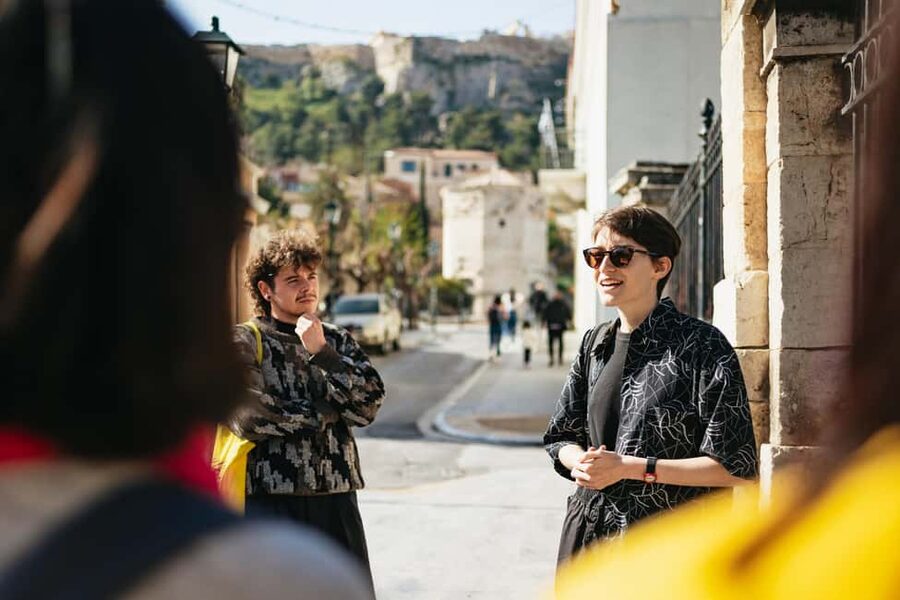
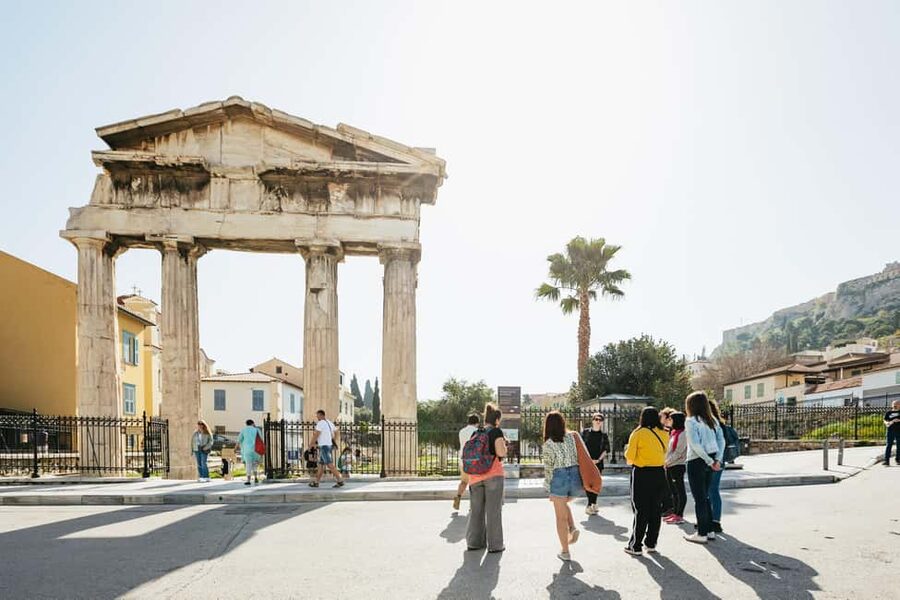
The Gate of Athena Archegetis offers one of the tour’s clearest links between monument and myth. Athena was not a minor decorative figure in Greek culture. Her image helped define ideals connected with wisdom, civic identity, warfare, and protection.
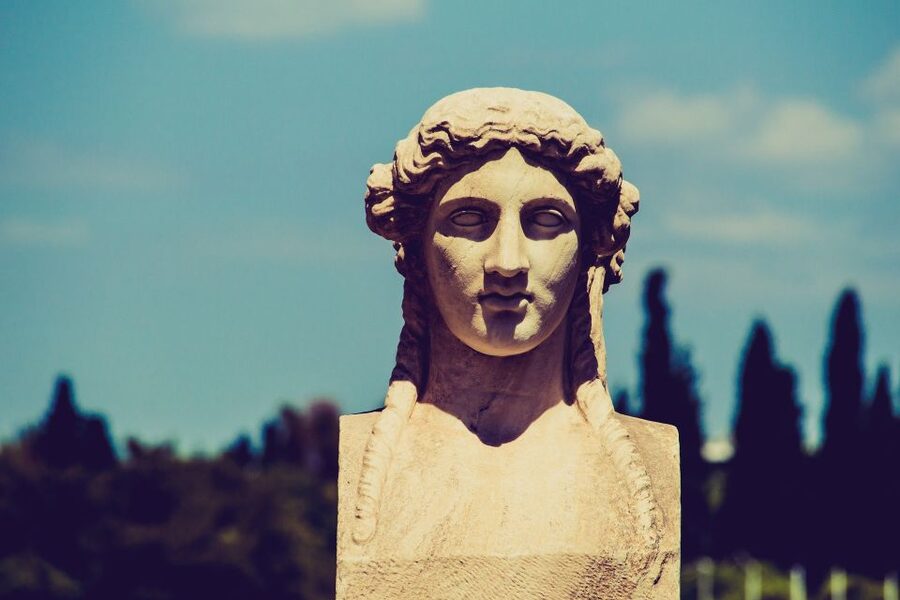
The tour also brings in Athena, Penelope, Demeter, and Pandora. These figures show that Greek mythology did not offer one single model of womanhood. Athena is associated with a powerful, publicly respected goddess who does not fit ordinary expectations of marriage and domestic life. Penelope represents patience, intelligence, and loyalty within a household story. Demeter links female power to fertility, harvest, family, and grief. Pandora raises questions about blame and the way women are portrayed in origin stories.
You do not need to know these myths in advance. The guide explains how they shaped ideas about women’s duties and social roles. I find this especially useful for anyone who has seen the statues and read the stories but has not stopped to ask what those stories taught ancient audiences about women.
There is also a secret stop on the route. No further detail is given, which is probably intentional, but you should expect a short guided sightseeing pause rather than a major museum visit.
Same stretch of coastline, a completely different day out:
- Athens: Acropolis & up to 5 Archaeological Sites Combo Pass
★ 4.4 · 12,619 reviews - Athens: Acropolis Ticket with Optional Audio or Live Guide
★ 4.2 · 11,055 reviews - Athens: Acropolis, Parthenon & Acropolis Museum Guided Tour
★ 4.8 · 9,316 reviews - Athens: Cape Sounion & Poseidon Temple Sunset Half-Day Trip
★ 4.8 · 8,241 reviews
The Ancient Agora from outside the public world
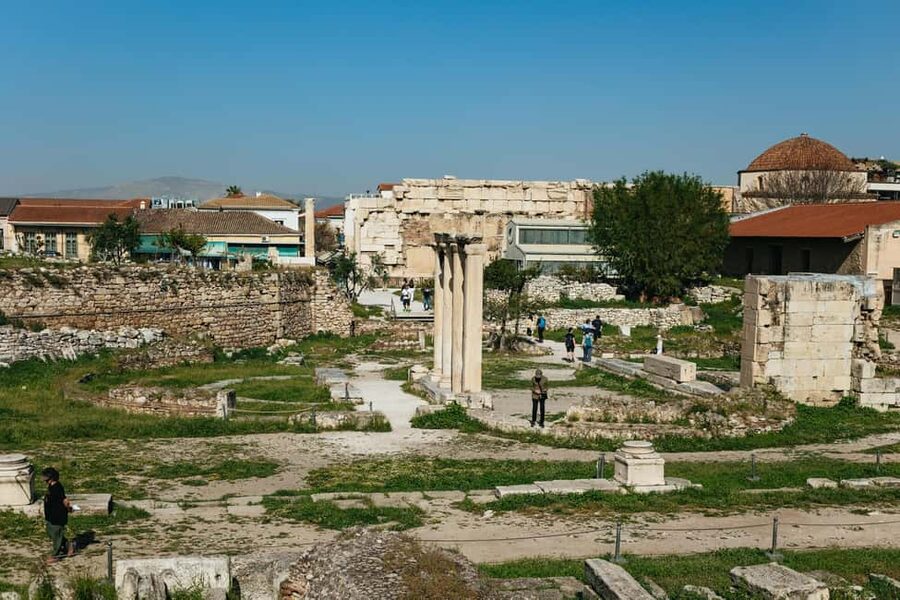
The Ancient Agora is one of the strongest parts of the walk because it makes the difference between public and private life easier to picture. This was a central area for civic, commercial, and social activity, yet women did not share the same public rights as male citizens.
The tour does not include entry tickets, so you view the Agora from outside. If you already plan to visit the site separately, this walking tour can prepare you for it. You will arrive with better questions: Which people used these spaces? Who made decisions here? Who worked behind the scenes? How did household labor support the public world of male citizens?
This is also where stories about Sappho, Aspasia, and Agnodice help widen the picture. Sappho is remembered as a poet from Lesbos. Aspasia became associated with intellectual and political circles in Athens. Agnodice is linked with medicine and the challenge of becoming a doctor in a society that restricted women’s choices.
The guide’s subject knowledge is a major part of the experience. Maelle is praised for giving detailed explanations without making the walk feel like a memorized speech. You can ask about the women on the route, but also about broader ancient Greek culture. That flexibility is valuable because one question often leads naturally to another.
The Pnyx and the limits of Athenian democracy
The route then reaches the Pnyx, where the first democratic votes were cast. This is a powerful stop for a women’s history tour because democracy sounds inclusive until you ask who counted as a citizen.
The Pnyx gives the guide a real place to explain the limits of Athenian democracy. Women were connected to the city, its religious life, families, and economy, yet they did not hold the same political role as male citizens. The physical setting helps the point land. You are looking at the place where public decisions were discussed while considering the people left outside that system.
The planned stop lasts about fifteen minutes, one of the longer pauses. That makes sense. This is less about seeing a monument and more about thinking through the contradiction between democratic ideals and restricted participation.
Several people who took this walk with Maelle particularly valued the questions she asked the group. You may find the conversation moving beyond ancient Athens toward how societies define citizenship, whose voices get recorded, and why some parts of history receive more attention than others. The tour does not present women only as victims. It also looks at creativity, influence, religious authority, work, and resistance.
Acropolis views and Filopappou Hill
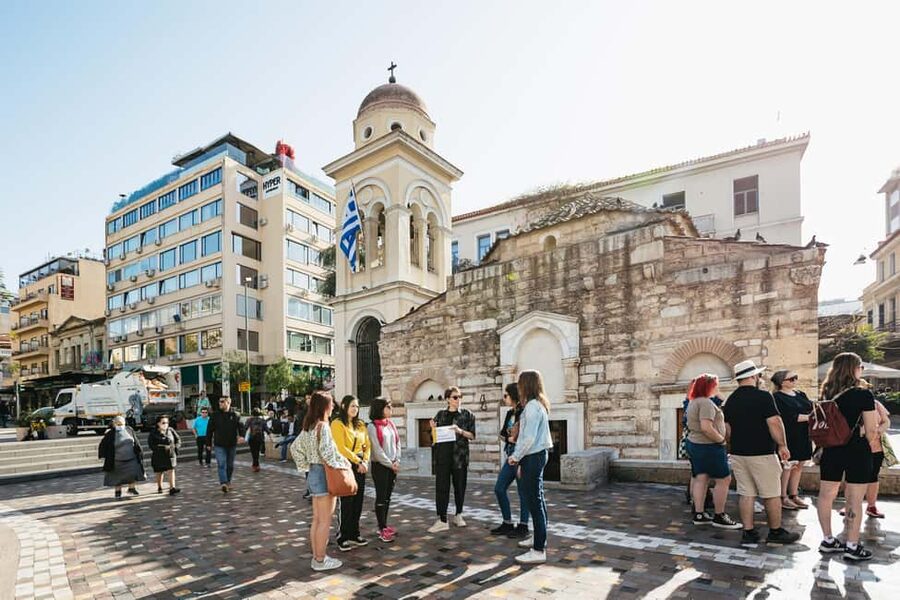
After the Pnyx, the route includes a scenic viewpoint before continuing to Filopappou Hill. You get an excellent visual connection between the places discussed earlier, including views toward the Acropolis. This is a welcome change of pace after the denser historical material.
Filopappou Hill is the final sightseeing area, with about ten minutes planned for the stop. The walk ends back at the meeting point, with the stated drop-off location at the Kiosk on Rovertou Galli 69 also associated with the route. Since the details describe the activity as ending at the original meeting point, confirm the exact finish with your guide on the day.
The hill section is also where the physical demands become most important. Steps and uphill walking are part of the route. Wear shoes with a good grip, bring water, and do not treat this as a flat city stroll. A sun hat and sunscreen are sensible, especially because guides may need to pause outdoors while explaining the sites.
One helpful detail from the guide’s approach is attention to heat. Maelle has been praised for finding shady places to stop on hot days. That cannot remove the heat or the hills, but it can make the two hours more comfortable.
What $44.04 buys you
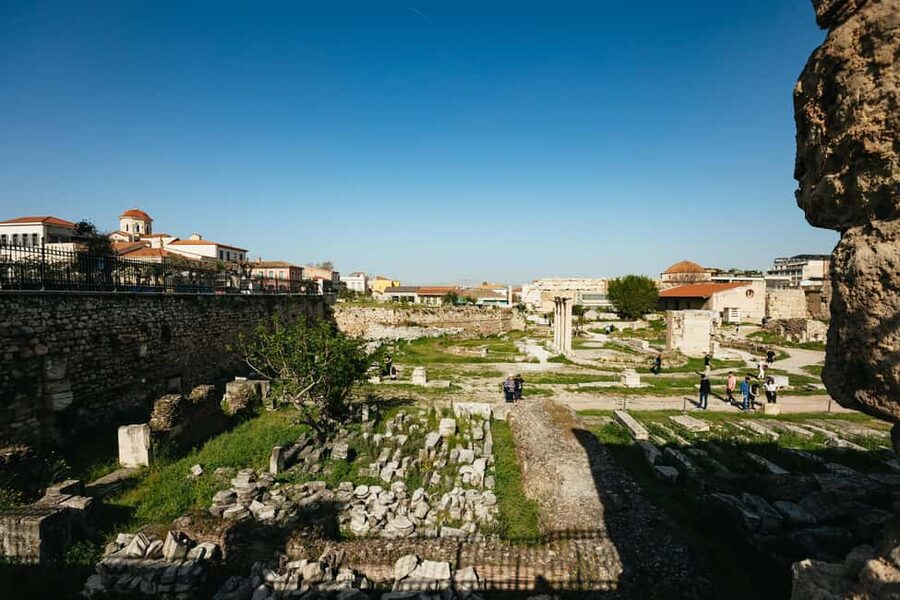
At $44.04 per person, this is not the cheapest way to walk around central Athens. You are paying for a focused subject, a live guide, and the work of connecting scattered places and stories into one clear theme.
The price looks fair if you value interpretation. You are not simply being taken to monuments for photographs. The tour gives you a lens that is rarely part of standard Athens sightseeing, and it can make a later visit to the Acropolis or Agora more meaningful.
The value is weaker if you mainly want entry to ancient sites. Archaeological tickets are not included, and the tour views the monuments from outside. You will need separate admission if you want to explore the Acropolis or Ancient Agora interiors.
A private option is available. That can make sense for a family, a group of friends, or anyone who wants more time for questions. Even the standard experience may feel personal when attendance is low. One February departure had only one participant, turning the walk into a private conversation.
The booking terms are also practical. You can reserve now and pay later, and cancellation is free up to 24 hours in advance. That helps if your Athens schedule depends on weather or changing arrival plans.
Who will enjoy this most

I would recommend this walk to you if you:
- Want a fresh angle on famous Athens sights
- Enjoy mythology linked to social history
- Prefer a guide who welcomes questions
- Are interested in women’s daily lives, not only famous queens and goddesses
- Plan to visit the Acropolis or Agora separately
- Can manage steps, slopes, and two hours of walking
- Want a thoughtful activity for a friends’ trip or a family with older children
It is not a good choice for wheelchair users or people with mobility impairments, heart problems, or difficulty with steps. The route also has limited value for someone who wants indoor shelter or a ticketed monument visit.
The tour is offered in English and French. If you have strong preferences about the guide’s language or want the private option, check availability before booking.
Should you book the Women in Ancient Greece tour?
Yes, if you want Athens to be more than temples and famous men. The strongest reason to book is the subject itself, but the guide’s warm, interactive style makes the difference. Maelle is praised for humor, careful explanations, and the ability to connect ancient customs with questions that still matter today.
Book it early in your Athens stay if possible. The walk can give you useful context before you visit the Acropolis and Agora on your own. Choose another activity if you need full archaeological access, a flat route, or a quick monument checklist.
For $44.04, this is a thoughtful two-hour introduction to a part of Greek history that is often pushed to the side. Bring water, protect yourself from the sun, and arrive ready to ask questions.
FAQ
How long does the tour last?
The walking tour lasts two hours. Starting times vary, so check availability when booking.
Where does the tour begin?
Meet your guide on Monastiraki Square, in front of the Holy Church of the Virgin Mary Pantanassa. The guide will hold a sign marked Women in Ancient Greece.
Where does the tour end?
The activity is described as ending back at the meeting point. The route also lists the Kiosk at Rovertou Galli 69 as a drop-off location.
What languages are available?
The tour is offered in English and French.
Are archaeological entrance tickets included?
No. Tickets to archaeological sites are not included, and the tour provides exterior views of the sites.
Is food or drink included?
No. Food and drink are not included.
Is a private tour available?
Yes. A private group option is available when selected.
What should I bring?
Bring water, a sun hat, and sunscreen. Comfortable shoes are also a sensible choice because the route includes steps.
Is the tour suitable for wheelchair users?
No. The route includes steps and is not suitable for wheelchair users or people with mobility impairments. It is also not suitable for people with heart problems.
Just added around Athens
- Delphi One Day Trip from Athens★ 4.0 · 98 reviews
- Private Delphi and Hosios Loukas Monastery – Great Lunch and Drinks Included★ 5.0 · 36 reviews
- Mercedes Private Tour to Delphi and Arachova★ 5.0 · 30 reviews
- Day tour to Ancient Olympia,Ancient Sparta Mycenae Including Meal★ 5.0 · 54 reviews
- Athens: Half Day Trip To Cape Sounio/Poseidon Temple Semi Private★ 5.0 · 131 reviews
- Athens Half-Day Private Tour Acropolis, Parthenon City Highlights★ 5.0 · 35 reviews
- From Athens: Day Tour to Mykonos★ 5.0 · 64 reviews
- Culinary Secrets of Downtown Athens★ 5.0 · 103 reviews
Walking Tours, compared.
Acropolis: Acropolis and Parthenon Guided Walking Tour
Read our review →
Acropolis monuments & Parthenon Walking Tour with Optional Acropolis Museum
Read our review →
Knossos: Knossos Palace Skip-the-Line Guided Walking Tour
Read our review →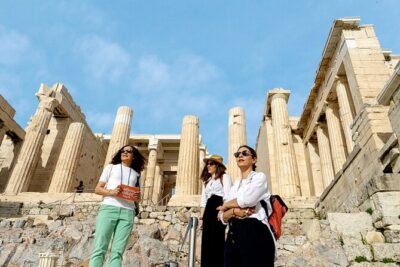

Athens Authentic Greek Food Walking Tour (Small Group)
Read our review →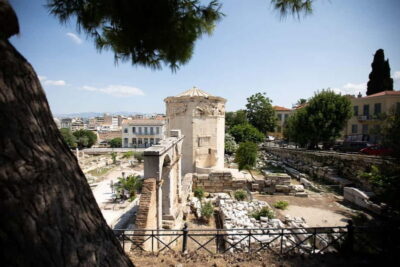
Early Morning Acropolis & Old Athens Guided Walking Tour
Read our review →Browse the lists this tour appears in