

Reviewed · ANCIENT CORINTH TOURS
Biblical Corinth: St. Paul and His Letters to the Corinthians
Paul’s Corinth feels close enough to touch. This private day trip combines Mars Hill in Athens with the Corinth Canal, Ancient Corinth, Cenchreae, and the fortress of Akrokorinthos, giving you a clear sense of the places connected with Paul’s ministry. I especially like the freedom to linger at the ruins and the personal service from drivers such as Alex, George, Spiros, and Stephanos.
The included hotel or port pickup, bottled water, air-conditioned vehicle, and onboard Wi-Fi make the long day comfortable. The main drawback is important: your driver is not a licensed site guide and normally will not enter the archaeological areas with you. If you want guided explanations inside the ruins, you must request a licensed guide separately.
In This Review
- Key points to know before booking
- Why this tour works for Bible-focused visitors
- Areopagus Hill gives the day its spiritual starting point
- The Corinth Canal explains the region’s importance
- Diolkos connects Paul’s world with ancient trade
- Isthmia shows the public world Paul faced
- Ancient Corinth brings the letters to life
- Cenchreae marks Paul’s departure by sea
- The churches add a living dimension
- Lunch is part of the experience, not just a pause
- Akrokorinthos is the big physical challenge
- What the private format is really worth
- Who should book this Corinth day trip?
- Practical details before you go
- Should you book Biblical Corinth?
- FAQ
- How long does the Biblical Corinth tour last?
- What is the price per person?
- Is this a private tour?
- Is hotel or port pickup available?
- Is a licensed tour guide included?
- What entrance fees are paid separately?
- Is lunch included?
- Does the tour include transportation amenities?
- Can I cancel for a full refund?
Key points to know before booking
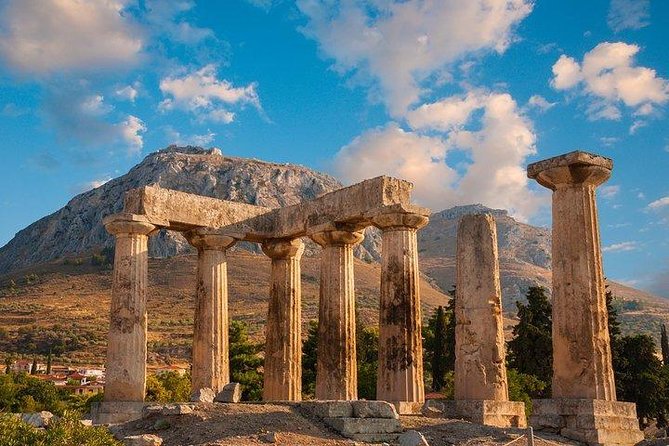
- Paul’s Athens connection: Begin at Areopagus Hill, where Paul addressed the Athenians about the unknown God.
- A private day at your pace: Only your group rides in the vehicle, and the pickup time can be adjusted.
- More than Ancient Corinth: The route includes the canal, ancient Diolkos, Isthmia, Cenchreae, two churches, lunch, and Akrokorinthos.
- Expect a self-guided visit inside ruins: The driver provides commentary in the vehicle and helps you understand what to look for, but does not accompany you inside archaeological sites.
- A serious climb at Akrokorinthos: The fortress rewards effort with wide views, but the ascent is more demanding than a casual sightseeing stop.
- Good value for families and small groups: At $218.43 per person, the price makes more sense when shared by several people who value a private car and a flexible schedule.
Why this tour works for Bible-focused visitors
This is not simply a drive from Athens to one set of ruins. It follows the broad setting of Paul’s time in Greece, beginning in Athens and then moving toward Corinth, the city where he spent about 18 months around AD 51 to 52.
You will see the places in a useful order. First comes Paul’s speech at Areopagus Hill. Then the route follows the narrow Corinthian isthmus, the trade corridor that linked the Aegean and Ionian Seas. Finally, you reach the city, ports, sanctuaries, and churches tied to Paul’s work.
I like this approach because it helps you understand why Corinth mattered. Its location made it a natural meeting point for merchants, sailors, athletes, officials, and religious pilgrims. Paul was preaching in a place where people were already moving between cultures and ideas.
The tour is particularly strong for Christian visitors who want more than a quick photo at Ancient Corinth. It connects Paul’s letters with actual places: the Bema, the port of Cenchreae, the pagan temples, and the public world of the Isthmian Games.
Still, keep your expectations clear. This is a private driver-led tour unless you add a licensed guide. Your driver may provide excellent historical and biblical context, but you will explore the paid sites independently.
More Ancient Corinth and canal trips:
- From Athens: Ancient Corinth Day Trip with Canal & VR Guide
★ 4.6 · 1,073 reviews - Private Biblical Tour Ancient Corinth & Isthmus Canal from Athens
★ 5.0 · 762 reviews - Athens: Ancient Corinth & Nafplio Full Day Trip with Swim
★ 4.8 · 523 reviews
Areopagus Hill gives the day its spiritual starting point

The first stop is Areopagus Hill, also called Mars Hill, near the Acropolis. You spend about 20 minutes here, with no admission fee.
This is the spot associated with Paul’s address to the council of Athens, where he spoke about the altar to an unknown god. For many people, this will be the most personally meaningful moment of the day because it links the New Testament account to a real location in central Athens.
The stop is short, so it is best understood as an opening reflection rather than a full Acropolis visit. You will walk through the sacred area around the Acropolis, but the tour does not promise a complete Acropolis tour with a guide inside every monument.
If Mars Hill is a priority, mention it when you book. The company has adjusted routes for people who especially wanted to stand there, and the private format makes that kind of personal focus possible.
The Corinth Canal explains the region’s importance
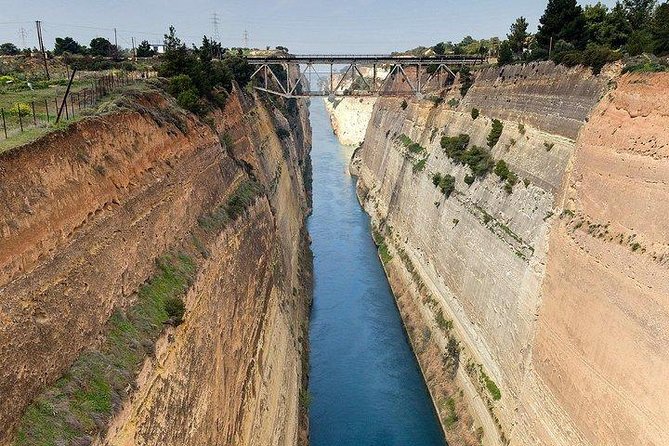
From Athens, the drive takes you to the Corinth Canal. You get about 30 minutes to view the canal from above, where the steep limestone walls make its scale easiest to grasp.
The canal is 6.4 kilometers long and only about 21.4 meters wide at its base. It has no locks and was cut at sea level through the isthmus. Modern ships are often too large to use it, but smaller vessels still pass below.
This is a worthwhile stop even if engineering is not your main interest. The canal shows why Corinth became so important. The route across the isthmus saved ships from sailing around the southern Peloponnese, and the area became a key link between two seas.
The view is the attraction here, not an extended walk or museum visit. If you have mobility concerns, this is also one of the easier stops because you can appreciate the canal without a long site visit.
Diolkos connects Paul’s world with ancient trade
Near the canal, you see remains of the Diolkos, the ancient roadway used to move ships and goods across the isthmus before the modern canal existed.
The stop lasts about 20 minutes and is simple but useful. The worn roadway gives physical form to the commercial world around Corinth. Sailors, merchants, cargo, and officials would have passed through this corridor for centuries.
The connection to Paul is indirect, so I would not book this tour solely for the Diolkos. Its value comes from placing Corinth in its wider setting. Paul’s church was not isolated from the ancient economy. It was part of a city tied to ports, shipping, commerce, and constant movement.
A few more Athens half-days to weigh up
- Athens: Acropolis & up to 5 Archaeological Sites Combo Pass
★ 4.4 · 12,619 reviews - Athens: Acropolis Ticket with Optional Audio or Live Guide
★ 4.2 · 11,055 reviews - Athens: Acropolis, Parthenon & Acropolis Museum Guided Tour
★ 4.8 · 9,316 reviews - Athens: Cape Sounion & Poseidon Temple Sunset Half-Day Trip
★ 4.8 · 8,241 reviews
Isthmia shows the public world Paul faced
The Isthmia section is one of the more unusual parts of the day. The sanctuary was linked to the Isthmian Games, athletic and cultural festivals held in honor of Poseidon. These games were second in importance only to the Olympics.
You have about an hour at Isthmia, followed by time at the archaeological museum and site. The setting helps explain the athletic images Paul used in his letters. Runners, contests, discipline, prizes, and public competition were part of everyday cultural life here.
The tour description connects Paul with tentmaking work near the games and suggests that he may have provided services for athletes and visitors. Treat that as a historical possibility rather than a proven event. The important point is that Paul worked in a busy public setting where people from many parts of the Greek world gathered.
The museum visit lasts about 30 minutes. It includes objects from the Sanctuary of Poseidon, statues, votive offerings, burial items, and glass panels from Kenchreai, the port associated with Paul’s departure for Syria.
The museum admission is not included. Along with Ancient Corinth, it is covered by the stated €15 entrance cost per person, purchased on site. Confirm the current arrangement when booking, since site fees and opening conditions can change.
The archaeological site adds the Temple of Poseidon, an ancient stadium, and the Sanctuary of Palaimon, a religious center associated with sailors. You also see the theater, which was used for musical contests and decorated with Roman mosaics showing sea creatures and Dionysian scenes.
There is also a political side to Isthmia. Its location made it a meeting place for leaders and city-states. That detail adds weight to Paul’s setting: his message was delivered in places where religion, sport, trade, and politics crossed paths.
Ancient Corinth brings the letters to life
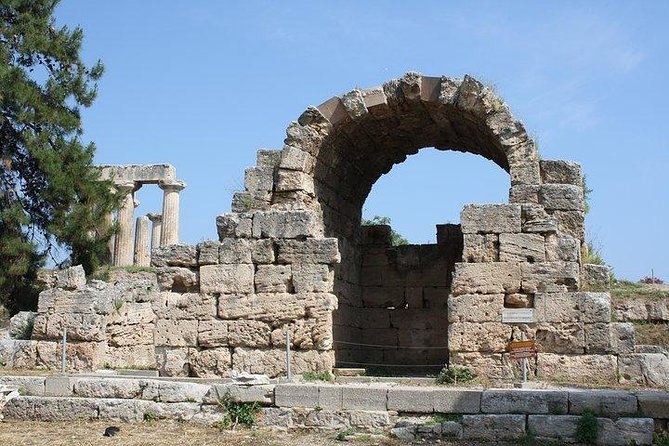
The main stop is Ancient Corinth, also called Archaia Korinthos. You have about an hour to explore the site, with admission not included.
Corinth was a major city on the isthmus, and Paul’s stay here is recorded in Acts. He spent about 18 months establishing a Christian community, and the later letters to the Corinthians address arguments, moral questions, worship, leadership, and life within that early church.
The ruins are larger and more impressive than a quick stop might suggest. You will see the Roman Forum, columns, streets, and the Temple of Apollo, along with the Bema, the stone platform linked to Paul’s appearance before Proconsul Gallio.
The Bema is the emotional center for many Christian visitors. Acts describes Gallio refusing to treat the accusation against Paul as a Roman legal matter. You can stand near the platform and consider how that decision allowed Paul to continue his work.
The Temple of Apollo is another powerful sight. Built around 560 BC, it is one of the oldest major temples in Greece, with massive Doric columns. When Paul arrived, the temple would have dominated the city. Its presence makes the religious challenge of his message easier to picture.
Here the lack of an included site guide matters most. A driver can explain the layout before you go in and tell you what to notice, but you will not have a person walking from monument to monument with you. Several highly praised drivers, including Alex and George, were credited with giving detailed explanations before the visits. That can work well if you enjoy exploring independently.
If you prefer a structured archaeological tour, pay for the optional licensed guide. At this site, the extra service may be worth it.
Cenchreae marks Paul’s departure by sea

Kechries is the modern name used for ancient Cenchreae, Corinth’s eastern port. The stop lasts about 30 minutes and is free.
Acts 18:18 links Paul with this port during his second missionary journey. Before sailing for Syria with Priscilla and Aquila, he cut his hair in connection with a vow. The exact nature of the vow is discussed by scholars, but the location itself is clearly tied to the account.
Cenchreae also appears in Romans through Phoebe, described as a servant or minister of the church there. That makes the stop important not only for Paul’s movements but also for the early Christian community and the role of women within it.
This is a quieter coastal stop than Ancient Corinth. You will not find a large, fully preserved harbor complex, so the experience depends on your interest in the biblical connection. I find its value comes from imagining Paul leaving Greece by ship and carrying the Christian message onward.
The churches add a living dimension
Apostolou Pavlou is a church dedicated to Paul in Corinth. You spend about 20 minutes here.
The church honors Paul’s long stay in Corinth and the Christian community he helped establish. After a day of ruins and sanctuaries, this stop shifts the focus from ancient remains to continuing religious practice.
The tour also includes another church connected with the Bema and Paul’s ministry. These brief visits give the day a more personal rhythm. You are not only looking at stones from antiquity. You are also seeing how Corinth remembers Paul today.
Allow for local customs at churches. The supplied information does not specify a dress code, but modest clothing is a sensible choice for any religious site in Greece.
Lunch is part of the experience, not just a pause
The day includes an hour for lunch at a traditional seaside Greek taverna. If you choose the traditional Greek food option, the meal is included in the price. If you choose another option, confirm exactly what is covered before paying.
Food was a frequent highlight of the day, with praise for generous meals and scenic settings. One driver helped with the menu, and another suggested a meat platter that became a favorite meal in Greece. The tour can also be adjusted for a packed lunch if you want to spend more time at the sites.
I would keep the lunch included if you want the easiest day. A Greek meal adds to the sense of place, and the break prevents the schedule from becoming one long string of ruins.
Akrokorinthos is the big physical challenge
Akrokorinthos is the fortress above Ancient Corinth, and the tour allows about an hour here. This is the stop that most needs honest preparation.
The road takes you high above the ancient city, and the fortress offers broad views over Corinth and the surrounding area. The ascent can involve uneven ground and a substantial climb. One visitor described the walk as more demanding than expected, but considered the view near the Temple of Aphrodite worth the effort.
Do not treat Akrokorinthos as a quick photo stop. Wear sturdy shoes, bring water, and tell your driver if your group needs more time or a slower pace. The private format helps because you are not forced to keep up with a large group.
The direct biblical connection is presented as a meaningful possibility rather than a documented fact. Paul may have looked across Corinth from this height, but the stronger value is the view itself. From above, you can understand the city’s position, the route across the isthmus, and the relationship between the city and its ports.
What the private format is really worth
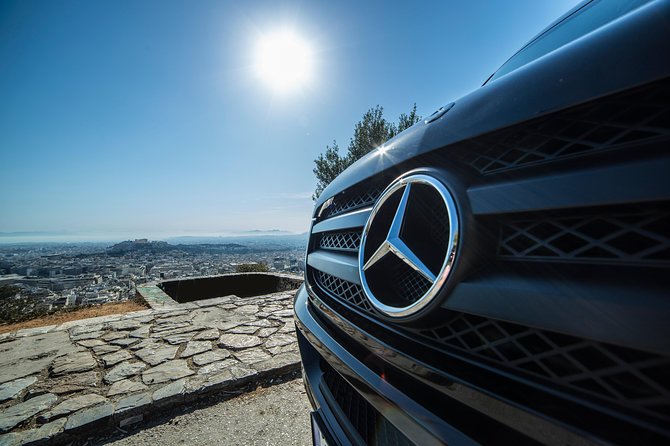
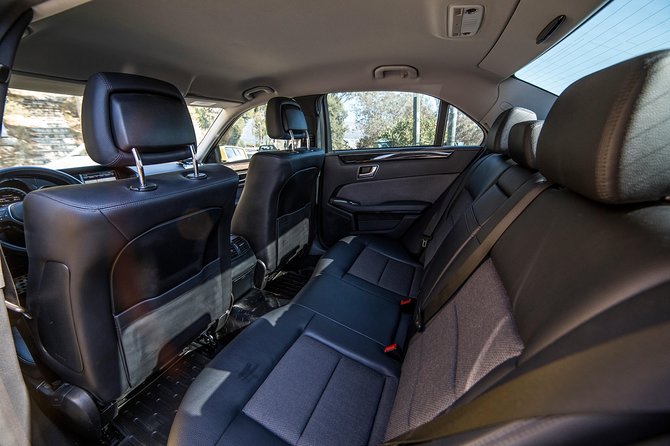
The price is $218.43 per person, and the tour lasts roughly eight to nine hours. That is a substantial day-trip cost, but it includes private transportation, hotel or port pickup and return, an air-conditioned vehicle, bottled water, Wi-Fi, and a driver who can provide historical commentary in English.
The value improves when several people share the vehicle. A family or small group can move at its own pace, stop for bathrooms or coffee, adjust the lunch plan, and spend longer at Akrokorinthos without waiting for strangers.
The flexible pickup is especially useful from a cruise ship or hotel. For port pickup, the driver waits at the gate with your name. If your ship schedule is tight, give the company your exact return deadline. One driver helped a group get back to its ship after a timing mistake, but you should not rely on that kind of rescue.
The biggest tradeoff is the guide arrangement. You get a private driver, not a licensed guide included inside the sites. The drivers have been praised for clear English, safe driving, patience, and strong knowledge of Greek history, but the distinction still matters.
Who should book this Corinth day trip?
I recommend it most strongly if you fit one of these profiles:
- You want a Christian-focused route connected to Paul’s ministry.
- You prefer private transportation to a fixed group coach.
- You want to combine Athens, Corinth, Isthmia, Cenchreae, and Akrokorinthos in one day.
- You are comfortable exploring major ruins independently.
- You value a relaxed pace and the ability to customize stops.
- You are visiting from a cruise ship and need hotel or port pickup.
I would hesitate if you want a formal archaeological lecture at every monument. In that case, request the optional licensed guide and confirm the additional price before booking.
The tour is also less suitable if your group dislikes long days, uneven ruins, or uphill walking. Akrokorinthos in particular demands more effort than the canal, churches, or coastal stops.
Practical details before you go
The tour is offered in English and includes mobile ticketing, group discounts, and free cancellation up to 24 hours before the start time. Changes or cancellations inside that 24-hour window are not accepted.
Pickup time is adjustable on request. Hotel pickup takes place in the lobby, apartment pickup takes place at the building entrance, and port pickup is arranged at the gate.
The archaeological entrance fee for Ancient Corinth and the Archaeological Museum of Isthmia is listed as €15 per person, paid separately. Bring comfortable shoes, water, sun protection, and a little patience for a full schedule.
Contact the company ahead of time with your preferred meeting point, lunch choice, cruise departure time, and whether you want a licensed guide. That one conversation can prevent the main disappointment associated with this experience.
Should you book Biblical Corinth?
Yes, if you want a private, flexible way to connect Paul’s letters with the places where his ministry unfolded. The combination of Mars Hill, Ancient Corinth, the Bema, Cenchreae, Isthmia, and Akrokorinthos gives you far more context than a basic Corinth transfer.
Book it with clear expectations. You are purchasing private transport and a driver with strong historical and biblical knowledge, not a fully guided archaeological tour. Add the licensed guide if that distinction bothers you.
For families, church groups, cruise passengers, and small parties who want personal attention, the tour offers good value. For independent history fans, it provides freedom and plenty to see. Just save energy for the fortress, keep lunch flexible, and make sure the guide arrangement matches what you want.
FAQ
How long does the Biblical Corinth tour last?
The experience lasts approximately eight to nine hours.
What is the price per person?
The listed price is $218.43 per person.
Is this a private tour?
Yes. Only your group participates, and the pickup time can be adjusted on request.
Is hotel or port pickup available?
Yes. Pickup and return are available from hotels, apartments, and the port. At the port, the driver waits at the gate with a sign showing your name.
Is a licensed tour guide included?
No. The standard service includes a professional driver who can provide historical commentary in fluent English. A licensed guide who enters the archaeological sites with you can be requested separately, depending on availability.
What entrance fees are paid separately?
The listed separate admission covers Ancient Corinth and the Archaeological Museum of Isthmia. The stated cost is €15 per person, purchased on site.
Is lunch included?
Lunch is included if you select the With Greek Traditional Food option. The tour also allows time for a meal at a traditional seaside Greek taverna.
Does the tour include transportation amenities?
Yes. Transportation is private and air-conditioned, with bottled water and onboard Wi-Fi.
Can I cancel for a full refund?
Yes, if you cancel at least 24 hours before the experience start time. Cancellations or changes made less than 24 hours in advance are not accepted for a refund.
Just added around Athens
- One Day Cruise to Hydra, Poros and Aegina from Athens★ 4.0 · 143 reviews
- Off Road Experience from the Mountain to the Sea★ 5.0 · 39 reviews
- Athens: National Archaeological Museum Ticket★ 3.5 · 44 reviews
- From Athens: Mycenae, Epidaurus & Nafplion Full-Day Tour★ 4.0 · 147 reviews
- Mercedes Private Tour Nafplio, Corinth Canal, Nemea Wine Tasting★ 5.0 · 142 reviews
- Epidaurus, Mycenae and Nafplio Small-Group Tour from Athens★ 4.5 · 168 reviews
- Corinth Canal, Mycenae, Nafplio and Epidaurus Private Tour from Athens★ 5.0 · 48 reviews
- Athens Riviera Sunset Cruise with Snacks and Drinks Included★ 4.5 · 75 reviews
Ancient Corinth Tours, compared.
Ancient Corinth Day Trip with Canal & VR Guide
Read our review →
Private Biblical Tour Ancient Corinth & Isthmus Canal from Athens
Read our review →
Ancient Corinth & Nafplio Full Day Trip with Swim
Read our review →
Private Tour of Apostle Paul’s Footsteps in Ancient Corinth
Read our review →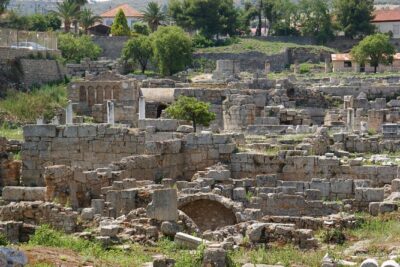
Corinth Half-Day Trip from Athens with Entrance Tickets
Read our review →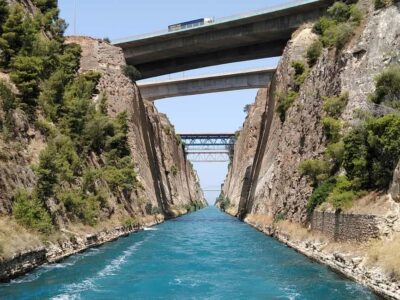
Browse the lists this tour appears in