
Reviewed · WALKING TOURS
Karpathos Valley Walk in Pigadia – easy guided walking tour
Slow down and let Karpathos speak. This gentle morning walk leaves Pigadia behind for goat paths, olive groves, old houses, wild plants, and a small chapel below Menetes. I like the easy, mostly flat route and the chance to taste locally made herbal tea in the shade. I also like the personal guiding from Renate and Thom, who bring in island customs, plants, and everyday life rather than offering only a scenic stroll. The main drawback is the early start, and the stated meeting time needs checking because the description gives 8:00am while the meeting details say 8:30am.
At roughly 7 kilometers and three to four hours, this is a good way to see the countryside without signing up for a hard mountain hike. The route can be especially pleasant in spring, when flowers fill the fields, though summer brings high grass and strong heat. Shade is limited, so you should carry water, wear sturdy walking shoes, and confirm the exact start time with Art and Walk Karpathos.
In This Review
- Key points to know before you book
- Leaving Pigadia for the olive fields
- Goat bells, wild plants, and abandoned homes
- A shaded chapel below Menetes
- Into the river bed and toward older Karpathos
- What the guides add to the walk
- Is $43.14 a fair price?
- Who should take this Pigadia walk?
- Practical advice for a comfortable morning
- Should you book the Valley Walk?
- FAQ
- Where does the Karpathos Valley Walk start?
- What time does the walk begin?
- How long is the walk?
- How far do you walk?
- Is herbal tea included?
- What happens if the weather is poor?
Key points to know before you book
- A calm 7-kilometer route: The walk follows goat paths, olive fields, and a slightly wet river bed, with little change in height.
- A chapel below Menetes: You pause in the shade, drink herbal tea, and step inside to see how local people pray.
- Plants are part of the story: Renate has spoken with great enthusiasm about the plants found along the route and how they are processed and used.
- A cooler start matters: The walk begins in the morning to avoid the summer heat, with the published times listed as either 8:00am or 8:30am.
- A local view of Karpathos: Abandoned Greek-American houses, goat bells, old olive trees, and island customs give the walk a strong sense of place.
- Small enough for conversation: Groups are capped at 20 people, and the guides are praised for their warmth, humor, and island insight.
Leaving Pigadia for the olive fields
You meet outside the AutoTour car rental office on the main street of Pigadia, also called Karpathos Town. The activity returns to this same meeting point, so you do not need to arrange a separate ride back from the countryside.
The start is designed for the cooler part of the day. The experience description says 8:00am, while the formal meeting information gives 8:30am. That difference is worth sorting out before you set your alarm. Arriving a little early is the sensible choice, especially if you are staying in Pigadia and can reach the office on foot.
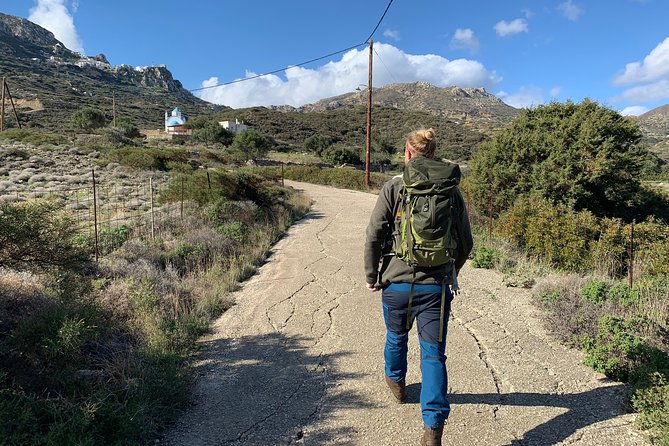
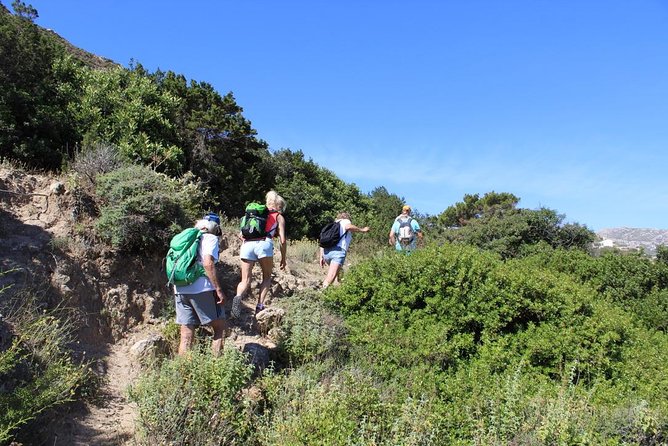
Once the group leaves town, the setting changes quickly. You follow rough goat paths and pass through olive fields outside Pigadia. This is not a polished promenade. The charm comes from walking across working countryside, where the route feels shaped by local use rather than made for sightseeing.
The walk is described as easy and relaxed, with a total distance of about 7 kilometers. There is not much height difference, and the ground is mainly flat. Still, easy does not mean fully smooth. Goat paths, grassy fields, and a river bed call for shoes with a firm sole. A walking stick is available on request.
More walking tours in Greece:
- Athens: Acropolis and Parthenon Guided Walking Tour
★ 4.6 · 5,882 reviews - Greek Food Walking Tour in Athens
★ 5.0 · 4,740 reviews - Acropolis: Acropolis and Parthenon Guided Walking Tour
★ 4.7 · 3,442 reviews
Goat bells, wild plants, and abandoned homes
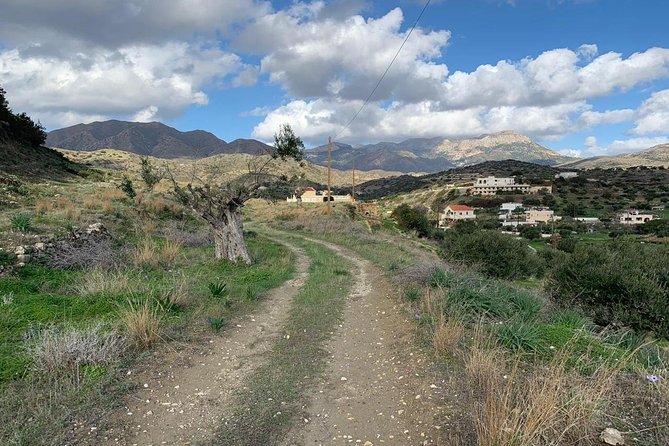
The first part of the walk gives you a quieter view of Karpathos. Instead of looking at Pigadia from a waterfront café, you see the fields and olive trees that have helped shape life on the island.
The sound of goat bells may guide you through the countryside. It is a small detail, but it helps explain why this route feels different from a standard town tour. You are not simply being led from one monument to another. You are moving through a place still connected to animals, farming, and seasonal growth.
Along the way, you pass abandoned houses linked to Greek-Americans. These buildings add a human story to the walk. They suggest the movement of island families abroad and the way homes can remain behind as lives change elsewhere. Your guide provides the background, so this is one of the sections where walking with someone familiar with local customs adds real value.
Plant life is another strong part of the experience. In spring, the fields may have many flowers. In summer, the grass is higher, and the colors and textures change. Renate has been praised for explaining the plants along the path, including how they are processed and used. This gives you a reason to pay attention to the plants underfoot instead of treating them as general scenery.
The route is most rewarding for people who enjoy small observations: the fragrance of herbs, the shade beneath an olive tree, the sound of bells, or the remains of an old house. If you want dramatic cliffs or a demanding summit, this is not that kind of outing.
A shaded chapel below Menetes
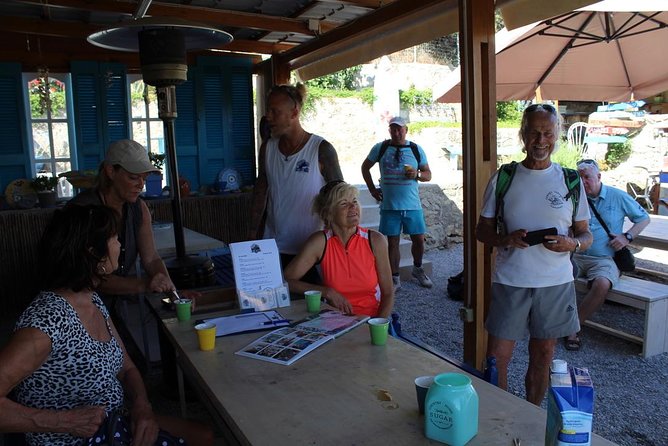
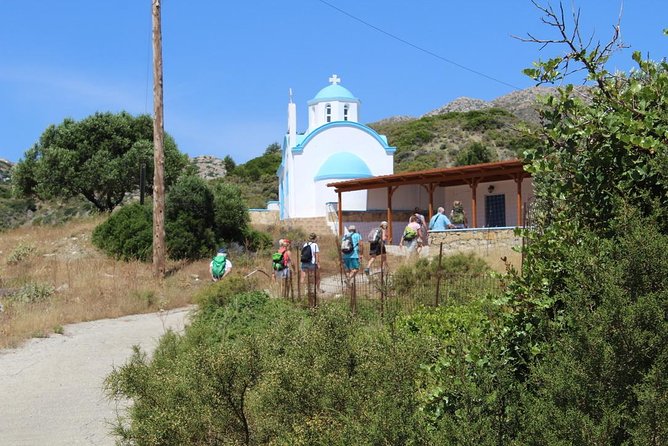
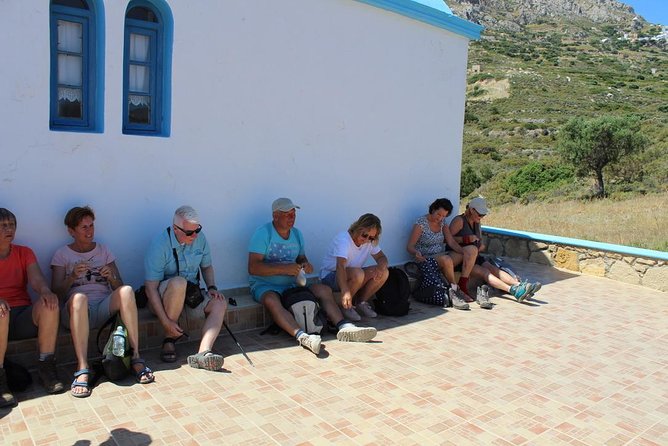
The walk reaches a chapel below Menetes, where you stop for a rest. This pause is practical as well as cultural. The shade gives you a break from the sun, and the herbal tea offers a taste of local plant traditions.
The included drink is one of the tour’s most appealing touches. The tea is locally made, and the guides have been praised specifically for the quality of the sage tea. It is not an elaborate tasting session. Instead, it is a simple refreshment that fits the setting and gives you time to talk.
You also enter the chapel to see how local people pray. That detail matters because it keeps the stop grounded in living practice. You are not only looking at an old building from the outside. You get a glimpse of how a small religious site functions for the local community.
The chapel stop also breaks up the walking distance. Three to four hours at a calm pace is manageable for most people, but a rest in the shade makes the experience more comfortable, especially during warmer months. I would still bring your own water. The included tea is a pleasant extra, not a substitute for personal supplies.
Into the river bed and toward older Karpathos
After leaving the chapel, the route enters a slightly wet river bed. This is one of the sections where conditions can vary. You should expect uneven or damp ground rather than a dry, paved path.
The river bed leads toward historical olive trees and fossilized shells. These details give the walk a different scale. The olive trees connect you to long-running agricultural traditions, while the shells point to the natural changes that shaped the island long before modern Pigadia.
One account of the route also mentions the Poseidon cave as one of the beautiful places reached during the walk. Since the main route description focuses on the chapel, river bed, old olive trees, and fossilized shells, I would treat the cave as a possible feature rather than a guaranteed stop on every departure. Ask the guide about the exact route on the morning of your walk.
This section is best approached with curiosity rather than a checklist. You may not find a major monument or formal archaeological site. Instead, the interest comes from the way natural and human traces appear together: an old olive tree, a fossil shell, a damp channel, and paths worn into the countryside.
A few more Greece half-days to weigh up
- Athens: Acropolis Ticket with Optional Audio or Live Guide
★ 4.2 · 11,055 reviews - Athens: Acropolis, Parthenon & Acropolis Museum Guided Tour
★ 4.8 · 9,316 reviews - Athens: Cape Sounio & Poseidon Temple Trip with Audio Guide
★ 4.4 · 4,521 reviews - Athens: Mythology of Delphi, Museum and Arachova Guided Tour
★ 4.6 · 4,008 reviews
What the guides add to the walk
The strongest part of this experience is the guiding. Renate and Thom are repeatedly praised for creating a friendly atmosphere and explaining Karpathos with warmth and humor.
Renate is especially associated with plants, herbal tea, island customs, and local life. Her style suits people who like to ask questions. The walk can become a conversation about how people live on Karpathos, how plants are used, and what you are seeing beside the path.
Thom brings strong knowledge of the island and its people, with a relaxed approach that helps keep the walk social. Jax, mentioned as part of one outing, may also be present, but you should not assume that every departure includes the same group of people.
The guide makes a real difference here because much of the route’s value is interpretive. Without context, abandoned houses are simply old buildings, fossilized shells are easy to miss, and a chapel can look like a short photo stop. With local explanation, those details become connected to migration, faith, agriculture, and island customs.
The maximum group size is 20 people. That is not a private walk, but it is small enough for questions if the group is not full. Anyone who prefers a silent, self-guided hike may find the commentary less appealing. For most people, the added information is the reason to pay for this rather than walking the valley alone.
Is $43.14 a fair price?
At $43.14 per person, the cost is reasonable if you want an organized introduction to the countryside around Pigadia. You are paying for a guide, a planned route, local interpretation, herbal tea or coffee, and the ease of returning to town on foot with the group.
The price is less attractive if you only want exercise. The route is easy, and you could prefer exploring independently if you already know the area and do not need background about plants, customs, or local history.
The value improves for a first visit to Karpathos. In three and a half hours, you see a side of the island that is easy to miss from the main streets and beaches. You also avoid the uncertainty of finding the goat paths, the chapel, and the river bed yourself.
The group format keeps the cost below that of a private guide, though it means the pace and conversation are shared with other participants. With 100 percent recommendation and a 4.9 rating from 38 evaluations, the experience has a strong record, but the route remains simple by design. The cost is paying for local understanding, not for luxury transport, a large meal, or a strenuous trek.
Who should take this Pigadia walk?
I would recommend it to you if you want a gentle outdoor morning and a better sense of ordinary Karpathos. It fits people who enjoy plants, local stories, old buildings, religious traditions, and countryside sounds more than polished attractions.
It is also a smart choice early in a holiday. The walk helps you get your bearings around Pigadia, and the guide can answer questions about island life. The morning schedule leaves much of the day free once you return around 11:30am.
Families and mixed-ability groups may find the route suitable because it is mainly flat and taken at a calm pace. The information says most people can participate, and service animals are allowed. You should still be comfortable walking 7 kilometers over natural paths and through a slightly wet river bed.
It may not suit you if you dislike early starts, warm weather, uneven ground, or guided commentary. The route offers limited height gain, so hikers seeking a physical challenge should consider a harder outing instead. Art and Walk Karpathos also offers other activities, including a Lastos hike and a wine tasting walk, which may suit different interests.
Practical advice for a comfortable morning
Wear walking shoes rather than sandals. The path includes goat tracks, fields, and a river bed, so a firm sole will make the walk easier.
Bring water, a hat, sunscreen, and a light layer for the early morning. Olive trees provide some shade, and the chapel offers a shaded break, but you should not count on continuous cover.
Spring may offer more flowers, while summer brings high grass and greater heat. The early departure helps in August, but it does not remove the need for sun protection.
Ask about the start time before the day of the tour. The information gives both 8:00am and 8:30am. The meeting place is the AutoTour car rental office on the main street of Pigadia, and the walk ends there.
Confirmation is provided when you book. Free cancellation is available up to 24 hours before the start time for a full refund. If poor weather cancels the outing, you can receive a different date or a full refund. A minimum number of participants is required, and the same options apply if that minimum is not reached.
Should you book the Valley Walk?
Book it if you want an easy, well-guided look at the countryside near Pigadia, especially if this is your first stay on Karpathos. The combination of olive fields, goat bells, old houses, plants, a chapel, herbal tea, and local stories gives the morning more meaning than a simple country walk.
I would choose it for the guides first and the scenery second. Renate and Thom make the route useful for understanding the island, not just photographing it. Just confirm the starting time, bring water, and remember that the experience is a relaxed cultural walk rather than a demanding hike.
FAQ
Where does the Karpathos Valley Walk start?
It starts at the AutoTour car rental office on the main street of Pigadia, Karpathos 857 00, Greece.
What time does the walk begin?
The meeting information gives an 8:30am start. The tour description says to meet at 8:00am, so confirm the exact time with the provider before you go.
How long is the walk?
The activity lasts about three and a half hours. The walking portion takes roughly three to four hours at a calm pace, and you return to Pigadia around 11:30am.
How far do you walk?
The route covers about 7 kilometers and has little height difference because it is mainly flat.
Is herbal tea included?
Yes. Coffee and/or tea is included, with the tour featuring locally made herbal tea during the break at the chapel.
What happens if the weather is poor?
The experience requires good weather. If it is canceled because of poor weather, you will be offered another date or a full refund.
Just added around Greece
- Zante Private Cruise Turtle Island, Keri Caves & Mizithres★ 4.8 · 30 reviews
- Zakynthos: Vineyard & Winery Tour with Local Winemaker★ 4.5 · 53 reviews
- Zakynthos: Xigia, Navagio Shipwreck and Blue Caves Boat Tour★ 4.5 · 197 reviews
- Zakynthos: West Coast & Navagio Bay Cruise with 2 Swim Stops★ 4.3 · 79 reviews
- Zakynthos: Sunset Cruise to Myzithres with Wine★ 4.3 · 52 reviews
- Zakynthos Water Park Entrance Ticket★ 4.5 · 145 reviews
- Zakynthos: Shipwreck Beach by Land & Sea Blue Caves Day Tour★ 4.5 · 35 reviews
- Zakynthos: Scuba Diving Experience with Underwater Photos★ 4.5 · 31 reviews
Walking Tours, compared.

Acropolis: Acropolis and Parthenon Guided Walking Tour
Read our review →
Acropolis monuments & Parthenon Walking Tour with Optional Acropolis Museum
Read our review →
Knossos: Knossos Palace Skip-the-Line Guided Walking Tour
Read our review →
Athens Authentic Greek Food Walking Tour (Small Group)
Read our review →
Early Morning Acropolis & Old Athens Guided Walking Tour
Read our review →Browse the lists this tour appears in