
Reviewed · OLYMPIA TOURS
Olympia Shore Ex: Olympic site, Honey Farm & Olive Oil Tasting
Ancient sports, sweet rewards. This shore excursion pairs the Olympic archaeological site with a family-run honey stop and Greek olive oil tasting, giving you both major history and a taste of rural life. I especially like the comfortable port pickup and the warm, personal welcome at Klio’s Honey Farm. The main catch is cost: the $119.48 tour price does not include the €20 Olympia entrance fee or the €12 honey farm admission.
The excursion lasts about four to five hours and is designed for a small group, with a maximum of 25 people. You should also know that the olive oil visit is held at an indoor market rather than an olive grove, and the honey cottage has no beehives on site. Those details matter if you expect a working farm visit instead of tastings and local storytelling.
In This Review
- Key points to know before you go
- From Katakolon Port to the birthplace of the Games
- Walking where the ancient Olympics began
- Klio’s Honey Farm beneath the chestnut trees
- What the olive oil stop really offers
- A closer look at the real price
- Guides, pacing, and the group experience
- Who should book this Olympia shore excursion
- FAQ
- Where does the tour begin?
- How long does the experience last?
- Is transportation included?
- Are the Olympia entrance fees included?
- What is the fee for Klio’s Honey Farm?
- Are there beehives at the honey cottage?
- Is the olive oil visit at a farm?
- Should you book it?
Key points to know before you go
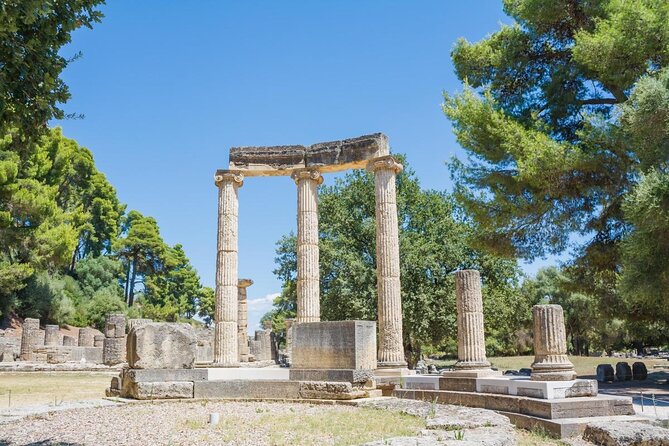
- The Olympic ruins are the clear centerpiece: You walk through the ancient gymnasium, palestra, temples, and original stadium with a local guide.
- Klio’s Honey Farm feels personal: Coffee or juice, homemade sweets, and family stories are served beneath chestnut trees.
- No beehives are kept at the cottage: The setup is designed to avoid problems for people and children with bee allergies.
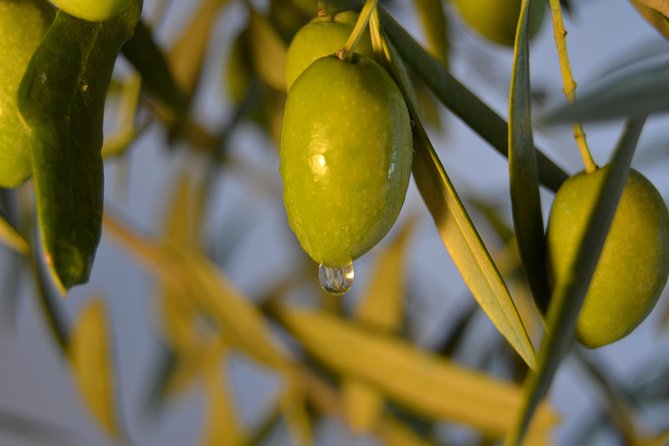
- The olive stop is a tasting market: Expect olives, oils, balsamic vinegar, honey, spices, and related products, not an olive oil mill.
- The extra fees add up: Plan for the $119.48 tour price plus €32 for the stated honey farm and archaeological site admissions.
- Port logistics are simple: Pickup and drop-off are at Katakolon Port, with the exact time sent to you by message.
From Katakolon Port to the birthplace of the Games
Your day begins at the central port gate in Katakolon, near the sign marked PORT OF KATAKOLON, JOHN LATSIS. Look for the agency sign reading THE TRAVEL INSIDERS. The exact pickup time is sent directly to you, so keep an eye on your messages before leaving the ship.
The air-conditioned vehicle is one of this tour’s practical strengths. Several accounts describe a clean, newer small bus or comfortable Mercedes van, and the drive gives you a look at the countryside around Olympia. You are not simply being dropped at the ruins and left to fend for yourself. A tour leader helps organize the stops and keeps the day moving.
The advertised group limit is 25 people. That is not the same as a private tour, but it is small enough to feel more manageable than a cruise ship coach. One account described a group closer to 30, so I would confirm the expected group size if that point is important to you.
The schedule runs roughly four to five hours. That makes it a sensible choice for a port day, but you will want to stay aware of time. The experience is built around several stops, not a long free period in Olympia town.
More olive oil tastings around Olympia:
- Katakolon Small Group Tour: Olympic site, Honey/Olive Oil Tasting
★ 5.0 · 59 reviews - Short Tour of Olympia, an Olive Oil Press & St. Andrew Beach
★ 4.5 · 27 reviews - Knossos-Zeus Cave -Old Traditional Villages-Olive Oil Factory
★ 5.0 · 694 reviews
Walking where the ancient Olympics began
The archaeological site of Olympia receives about an hour and a half. This is the part of the excursion that earns the trip to the Peloponnese.
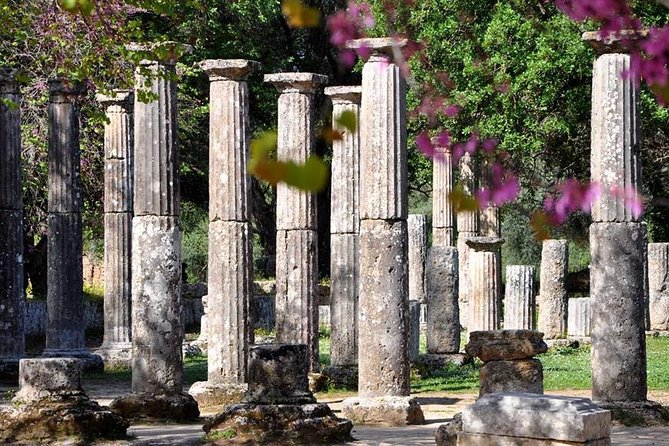
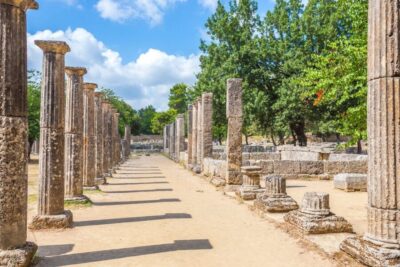
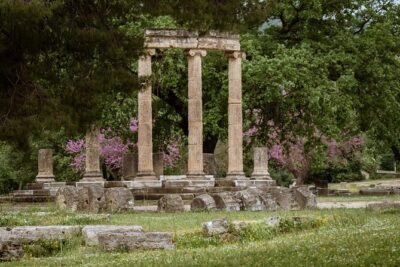
Ancient Olympia was the setting for the original Olympic Games, and the open-air grounds let you walk among the facilities once used by athletes and officials. The route includes the ancient gymnasium and palestra, where athletic training took place, along with the Temple of Hera and Temple of Zeus.
The Temple of Hera has a special modern connection. It is the location associated with the lighting of the Olympic torch for the modern Games. The Temple of Zeus was the largest temple in the sanctuary, and it once held the gold and ivory statue of Zeus, traditionally counted among the Seven Wonders of the Ancient World.
Then comes the stadium. Walking into the original racing ground gives the site its strongest visual moment. It is broad, simple, and surprisingly powerful. You can picture the athletes entering the field, even though the surviving stones and earthworks require some imagination.
The guides are a major part of the experience. Elena is repeatedly praised for making the ruins understandable and bringing the site to life. Other highly regarded guides include Taytothta and Alena. Their role matters because Olympia is extensive, and without context you can spend your time looking at scattered stones without understanding how the sanctuary worked.
The walking is generally described as manageable, but it is still walking through an open archaeological park. One account called the walking mild, while another found the amount of walking tiring. Both can be true, depending on the heat, your pace, and how long the guide spends at each feature. Wear sensible shoes, bring water, and expect sun even when parts of the route offer shade.
The official tourist guide inside the archaeological site is listed as optional, which creates an important point to clarify before booking. The strongest experiences described include a certified local guide, while the published inclusions do not clearly place that service in the base price. Ask exactly what is included on your date so you are not surprised at the meeting point.
Klio’s Honey Farm beneath the chestnut trees
After the ruins, Klio’s Honey Farm offers a very different mood. You leave the large archaeological grounds for a local cottage and meet a beekeeper who shares stories about the family business and local honey.
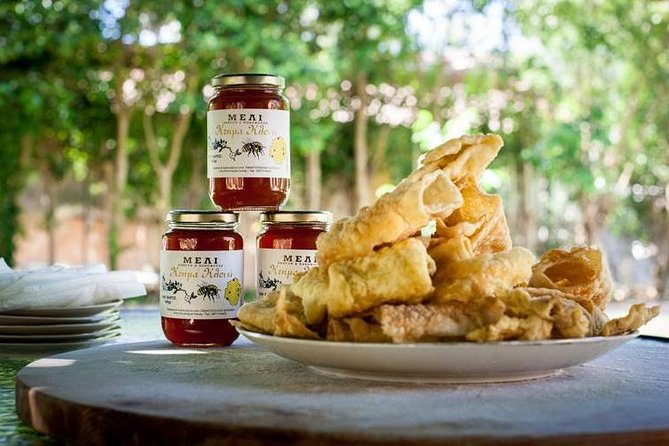
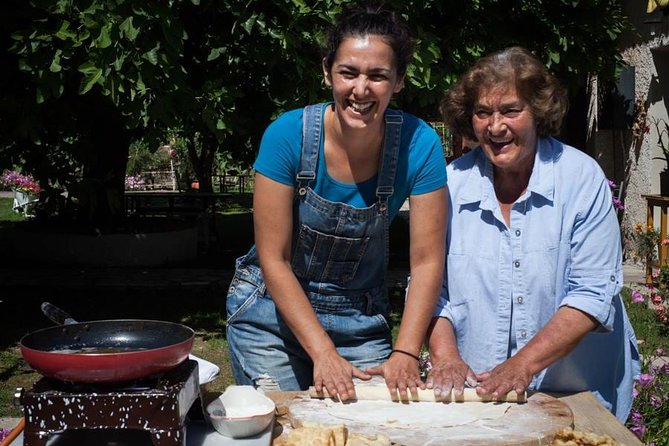
The setting is part of the appeal. You sit beneath chestnut trees with coffee or juice and sample homemade sweets and farm products. The menu may include diples, a Greek pastry fried in sunflower oil and covered with honey, along with pasteli, a bar made with local peanuts and honey or sesame and honey. Quince spoon sweet, a traditional fruit preserve in syrup, may also be served.
This is not a formal honey production tour with rows of hives and protective clothing. There are no beehives at the cottage. That is intentional, since the owners want people with bee allergies, including children, to enjoy the visit without being exposed to active hives.
I think this stop works best if you value conversation, food, and family hospitality. The warm welcome is a repeated strength, and the visit can feel like a relaxed introduction to Greek home cooking. Several accounts describe the family as especially kind, with different generations involved in the welcome.
If you want to watch honey being harvested, inspect working hives, or see a full production process, you may find the stop limited. The honey is the focus, but the actual experience is tasting and storytelling rather than hands-on beekeeping.
The stated admission fee is €12 per person. That is not included in the tour price. One account refers to a €10 charge, so the amount may have changed or varied by date. I would budget for the published €12 and confirm the current fee when you book.
What the olive oil stop really offers
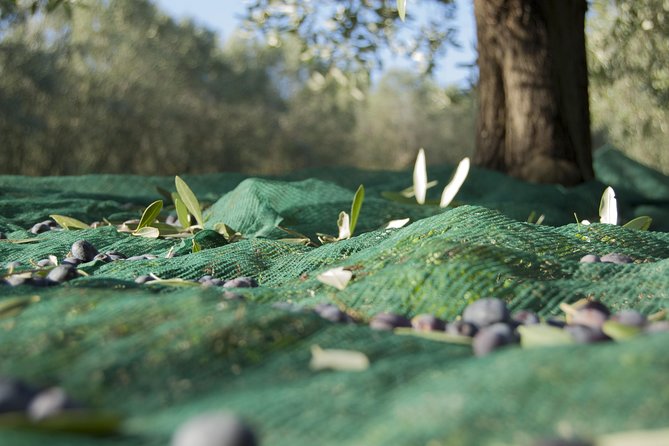
The Padelina Shopping Center is an indoor flea market with a section devoted to local products. This is where you sample Greek olive oils, different types of olives, balsamic vinegar, infused oils, spices, honey, and other regional foods.
The tasting itself can be generous. You may try Kalamata olives, extra virgin olive oil, flavored oils with herbs or spices, and even truffle-infused varieties. Some products made with olive oil, such as lotions and creams, may also be available for purchase.
This stop is useful if you want to compare Greek flavors before buying something to take home. It is also a comfortable break from the heat, and sampling is included. If you like food shopping, you may enjoy the chance to taste first rather than guessing at a bottle on a shelf.
The limitation is clear: this is not an olive farm, mill, or oil-making workshop. You are visiting a market. Some people find it too commercial and would rather have free time in Olympia town. If you already plan to buy olive oil elsewhere, or if retail stops make you restless, this is the least essential part of the day.
The order of the honey and olive stops may vary. The supplied schedule places both after the archaeological site, but local opening hours can affect the program. On one occasion, the market was closed and the schedule was changed to include the archaeological museum instead. That kind of substitute may be useful, but it is not the same as the advertised olive oil tasting.
More food tours in Olympia:
- Greek Food Walking Tour in Athens
★ 5.0 · 4,740 reviews - Athens: Street Food Tasting Tour
★ 4.9 · 2,557 reviews - Small Group Greek Traditional Food Tour in Athens 20+ Tastings
★ 5.0 · 1,759 reviews - Tour and Wine Tasting in Mykonian Land
★ 5.0 · 1,357 reviews
A closer look at the real price
The base price is $119.48 per person. It includes port pickup and return, air-conditioned transport, and the olive oil market tasting.
You should add the €20 admission fee for the Archaeological Site of Olympia and the published €12 entrance fee for Klio’s Honey Farm. That brings the known extra admissions to €32 per person, before considering any optional official guide service or purchases.
The price can be fair if you value easy transportation, a coordinated shore day, and a guide who explains the ruins. Getting from Katakolon to Olympia independently may look cheaper, but you would then need to arrange transport, admission, timing, and your own explanation of the site. The excursion also gives you two local food stops that a basic transfer would not provide.
The value is weaker if you only want Olympia. In that case, you are paying for the honey cottage and market visit even if those stops do not interest you. It is also less appealing if you expected entrance tickets to be bundled into the headline price.
Read the fee details carefully and carry a payment method for the admissions. The operator says tickets may be easier to purchase with help from the tour leader, but the money still comes from you.
Guides, pacing, and the group experience
The best part of the guiding is at Olympia. Elena receives especially warm praise for her clear explanations, friendly manner, and ability to make the site feel personal. Other guides are also described as strong storytellers who answered questions and kept the pace comfortable.
The tour’s tone is generally relaxed rather than rushed. You have time for photographs, and the honey farm gives you a chance to sit down after the open-air ruins. Still, the day has several fixed stops, so it is not a fully flexible private outing.
You may find the archaeological commentary longer than expected. Olympia has many layers and structures to explain, and some people appreciate the detail while others want a shorter visit. Tell the guide if you need a faster pace or more time for pictures.
The vehicle helps smooth out the day. Air conditioning matters in this part of Greece, especially after walking through the ruins. Pickup and return at the port also remove the worry of finding a taxi or watching the clock from a distant town.
Most people can participate, and service animals are allowed. The tour requires good weather and a minimum number of bookings. If poor weather or low enrollment cancels the excursion, you are offered another date or a full refund.
Who should book this Olympia shore excursion
I would choose this tour if you want the major archaeological sights without arranging transport yourself. It suits couples, families, and first-time visitors who like a guide at the historic site and a gentle food experience afterward.
Families may particularly appreciate the honey cottage because there are no active hives at the property. Teenagers who enjoy sports or ancient history should get a strong visual moment from the stadium, while adults may prefer the temples and the stories behind the Olympic torch ceremony.
You should think twice if you want a private, highly customized day. The group can reach 25 people, and the route is set around three planned stops. You may also prefer another option if you dislike shopping-oriented visits or want a working olive farm.
The tour is not a perfect match for anyone who expects every admission fee to be included. The extra €32 is not a minor detail, so include it in your budget from the start.
FAQ
Where does the tour begin?
Pickup is at the central gate of Katakolon Port, inside the port area, near the sign marked PORT OF KATAKOLON, JOHN LATSIS. Look for THE TRAVEL INSIDERS sign.
How long does the experience last?
The tour lasts approximately four to five hours.
Is transportation included?
Yes. Port pickup and drop-off are included, along with transportation in an air-conditioned vehicle.
Are the Olympia entrance fees included?
No. The Archaeological Site of Olympia admission is listed at €20 per person and is paid separately.
What is the fee for Klio’s Honey Farm?
The stated admission fee is €12 per person and is not included in the tour price.
Are there beehives at the honey cottage?
No. The cottage does not keep beehives on site to protect people and children with allergies. The visit focuses on honey, homemade sweets, refreshments, and the beekeeper’s stories.
Is the olive oil visit at a farm?
No. The olive oil experience takes place in a section of the Padelina Shopping Center devoted to local products. You can sample olives, olive oil, balsamic vinegar, and other Greek foods.
Should you book it?
Book this excursion if you want a simple port-day plan built around the essential Olympia ruins, a well-run vehicle, and local food tastings. The archaeological visit and Klio’s Honey Farm are the strongest reasons to go, especially when Elena or another capable local guide leads the site visit.
Skip it if you want only ancient history, a private guide, or a true farm-to-table olive oil experience. For the best value, confirm the group size, the current honey fee, and whether an official guide is included before paying. If those details suit you, this is a practical and personable way to reach Olympia from Katakolon without spending the day worrying about transport.
More Farms in Olympia
- Katakolon 7hour tour : Olympia-Honey Farm-Winery-Beach
★ 5.0 · 53 reviews - Private Excursion to Ancient Olympia – bee farm & winery
★ 4.5 · 49 reviews - Mykonos: Farm, Ano Mera Village, and Beaches Guided Tour
★ 4.4 · 1,283 reviews - Crete: Road-trip to Lasithi Plateau & Olive Mill Farm
★ 4.4 · 420 reviews
Just added around Olympia
- Private local tour of the archaeological site and museum of Olympia★ 5.0 · 55 reviews
- Private Olympia tour (4.5 hours)★ 5.0 · 54 reviews
- Private local tour of the Olympic Games site★ 5.0 · 36 reviews
- Olympia – Private Half Day Tour with Mini Bus★ 5.0 · 35 reviews
- Olympia – Half day Tour★ 5.0 · 130 reviews
- Olympia – Full day Tour★ 5.0 · 27 reviews
- 4 hour Katakolon shore excursion (Olympia – Winery – Beach)★ 5.0 · 88 reviews
- Katakolon 7hour tour : Olympia-Honey Farm-Winery-Beach★ 5.0 · 53 reviews
Olympia Tours, compared.
Katakolo Port: Transfer to Ancient Olympia and VR Audio Tour
Read our review →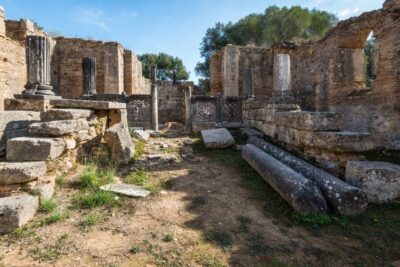
Archaeological Site & Museum E-Ticket & Audio Guide
Read our review →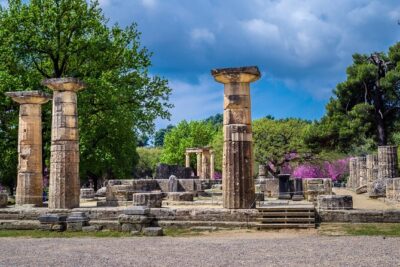
Ancient Olympia Half-Day Tour from Katakolo Cruise Port
Read our review →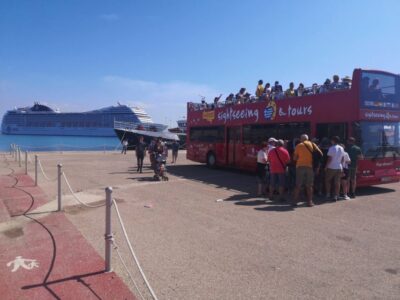

4 hour Katakolon shore excursion (Olympia – Winery – Beach)
Read our review →Browse the lists this tour appears in