
Reviewed · ANCIENT CORINTH TOURS
The Apostle Paul’s Missionary Journey in Athens and Corinth
Paul’s Greek itinerary still feels surprisingly close. This private day trip links the Athenian Agora, Areopagus, Corinth’s ancient port, and the ruins where Paul preached, giving you biblical places alongside the classical world that shaped them. I especially like the door-to-door pickup and the chance to travel in a private vehicle with an English-speaking driver. The free Wi-Fi, bottled water, and flexible pace are useful extras on a long day.
I also like the way the tour connects Paul’s story to real archaeological sites rather than treating the Bible as a separate subject. Guides and drivers such as Ruslan, Yannis, Katerina, George, Fortis, Karas, Giannis, and Costas have led versions of this experience, with Ruslan receiving especially warm praise for his care and local suggestions. The main catch is simple: site admission fees and a licensed guide inside the archaeological areas cost extra, and the day involves rough, uneven walking.
In This Review
- Key points to know before you go
- From Athens hotels to Paul’s first Greek audience
- Ancient Agora: where Paul met Athens
- Areopagus: a short climb with a big story
- Saint Dionysius and Athens’ early Christian story
- Corinth Canal: modern engineering between two ancient worlds
- Kenchreai: Paul’s eastern port of arrival
- Ancient Corinth: the day’s main archaeological stop
- The Corinth Museum: small details behind the ruins
- Acrocorinth: views, fortifications, and a strenuous finish
- What $200.25 buys you
- Practical advice for a smoother day
- Who will enjoy this private Paul tour?
- Should you book it?
- FAQ
- How long does the tour last?
- Where can pickup take place?
- Is airport pickup included?
- Is this a private tour?
- What vehicle is used for small groups?
- Are entrance fees included?
- Is a licensed guide included?
- What should I bring?
- Can I cancel for a refund?
Key points to know before you go
- Paul’s Athenian setting: The Ancient Agora and Areopagus help you picture Paul debating in the intellectual center of the ancient city.
- A private, full-day format: Your group travels alone, with hotel or port pickup and a vehicle suited to the group size.
- Corinth beyond the famous ruins: The route includes Kenchreai, the eastern port where Paul arrived, as well as Ancient Corinth and Acrocorinth.
- A driver rather than an included site guide: Your English-speaking driver provides historical commentary, but a licensed guide is not included inside the sites.
- A demanding but rewarding day: Expect roughly eight to nine hours, substantial driving, sun, and uneven surfaces.
- Good value for history-focused visitors: At $200.25 per person, the price makes more sense for a private group that values comfort and personal attention.
From Athens hotels to Paul’s first Greek audience
Pickup is offered from Athens hotels or apartments, with the driver waiting outside. Port pickup is also available, and the driver waits in the arrival area with a sign bearing your name. Airport pickup costs extra, so check that supplement before booking if you are flying in.
For groups of one to four people, the vehicle is a sedan. Larger groups may use a different air-conditioned vehicle, though the supplied details do not specify its size or seating arrangement. Wi-Fi on board and bottled water sound modest, but they matter when you are spending a full day on the road.
The timing usually calls for an early start. One full-day outing began at 7:30 a.m. and returned to Athens around 2 p.m., while the stated duration is about eight to nine hours. The exact length will depend on pickup location, traffic, time at the ruins, and any stops arranged with your driver.
Your driver is an English-speaking professional with a strong grounding in Greek history. The experience is private, so you can ask questions, pause for photographs, or spend more time at a site that matters to you. Keep in mind that the driver is not the same as a licensed archaeological guide. If you want formal guiding inside the monuments, that service needs to be arranged separately.
More Ancient Corinth and canal trips:
- From Athens: Ancient Corinth Day Trip with Canal & VR Guide
★ 4.6 · 1,073 reviews - Private Biblical Tour Ancient Corinth & Isthmus Canal from Athens
★ 5.0 · 762 reviews - Athens: Ancient Corinth & Nafplio Full Day Trip with Swim
★ 4.8 · 523 reviews
Ancient Agora: where Paul met Athens
The Ancient Agora gives you the best opening scene for Paul’s time in Athens. This was not simply a market. It was the city’s center for public affairs, trade, social life, and religion, a place where ideas moved along with goods.
You receive about an hour here, though admission is not included. The site requires walking, and the ground can be uneven. Comfortable shoes are essential, not optional.
The Agora helps put Paul’s message into its setting. He was not speaking to an isolated religious audience. He was addressing people shaped by philosophy, civic debate, traditional worship, and the daily business of an important city. A good explanation here can turn scattered columns and stones into a picture of public life.
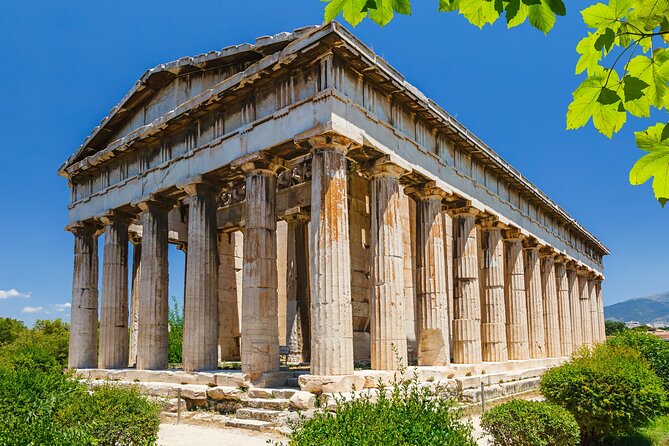
The Temple of Hephaistos is one of the major visual rewards in this part of Athens. You may also pass the Academy, University, and National Library, with time for quick photographs at the Olympic Stadium depending on the day’s schedule. Those extras are not listed as guaranteed stops, so think of them as possible additions rather than promises.
Areopagus: a short climb with a big story
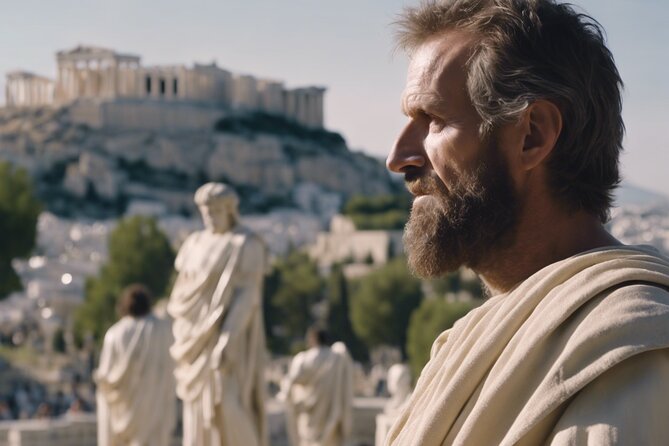
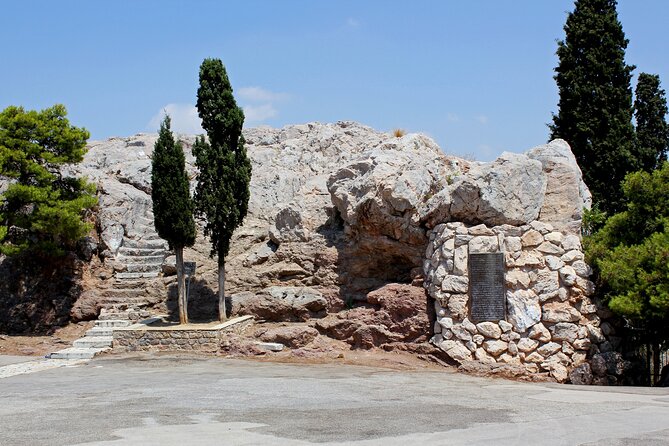
The Areopagus, or Mars Hill, lies just northwest of the Acropolis. This rocky marble outcrop served as a judicial and political meeting place, and it also became a setting for philosophical discussion.
The stop lasts about 30 minutes and is free. It is short, but the meaning is large. Here you can consider Paul addressing an audience familiar with Greek gods and philosophical argument, presenting Christianity in language that connected with the world around him.
The climb and stone surface deserve attention. The walk is not long, but the rock can be awkward underfoot. If your mobility is limited, ask the driver how much of the site you can comfortably reach before the day begins.
This is one of the tour’s strongest stops for anyone interested in Paul as a speaker and interpreter of culture. You are not only looking at an ancient viewpoint. You are thinking about how a new faith was presented in a city already full of competing ideas.
Saint Dionysius and Athens’ early Christian story
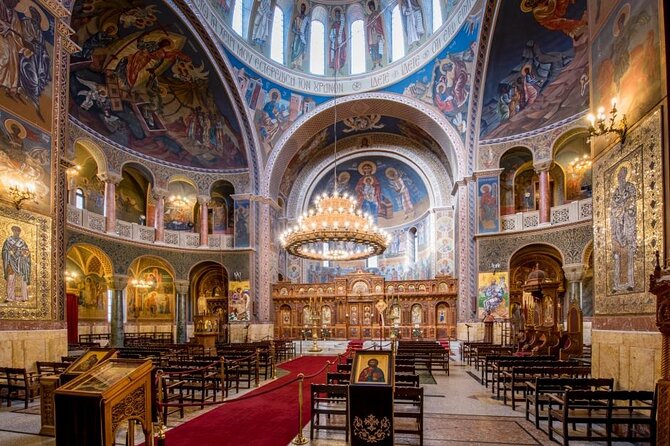
The Church of Saint Dionysius the Areopagite sits on Skoufa Street in the Kolonaki district. The stop lasts about 20 minutes and admission is free.
The church is connected with Dionysius, traditionally regarded as Athens’ patron saint and first bishop. According to the Christian tradition presented on this tour, he was converted by Paul after hearing him speak at the Areopagus.
This stop shifts the focus from Roman and Greek ruins to living Christian memory. It gives you a chance to consider what happened after Paul’s visit and how his message was carried forward in Athens.
The tour information does not promise attendance at a service. One outing included an Orthodox service as a welcome surprise, but you should not book this expecting that experience. The church is best treated as a brief, meaningful stop rather than a scheduled worship visit.
A few more Athens half-days to weigh up
- Athens: Acropolis & up to 5 Archaeological Sites Combo Pass
★ 4.4 · 12,619 reviews - Athens: Acropolis Ticket with Optional Audio or Live Guide
★ 4.2 · 11,055 reviews - Athens: Acropolis, Parthenon & Acropolis Museum Guided Tour
★ 4.8 · 9,316 reviews - Athens: Cape Sounion & Poseidon Temple Sunset Half-Day Trip
★ 4.8 · 8,241 reviews
Corinth Canal: modern engineering between two ancient worlds
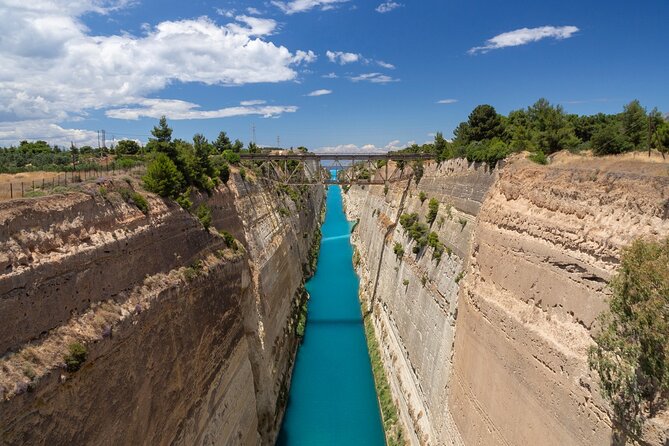
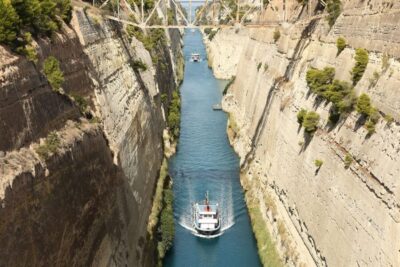
The drive west takes you toward the Corinth Canal, a narrow cut through the Isthmus of Corinth. The canal links the Gulf of Corinth with the Saronic Gulf and separates the Peloponnese from mainland Greece.
The stop lasts about 20 minutes and is free. The canal was constructed long after Paul’s time, so it is not a biblical site. Its value is geographic. It helps you understand why Corinth was so important, positioned between major routes by land and sea.
You will likely have time to look at the waterway and take photographs rather than explore a large monument. This is a useful pause during a long drive, and it gives the day a clear sense of place. Corinth was not important by accident. Its position made it a meeting point for commerce, travelers, military movement, and ideas.
Kenchreai: Paul’s eastern port of arrival
At ancient Kenchreai, also written Kechrees, you reach one of the most direct links to Paul’s journey. This was Corinth’s eastern port, and Paul is identified with arriving here in A.D. 51 before beginning his work in Corinth.
The stop lasts about 20 minutes and is free. Do not expect a fully restored harbor. Much of the ancient port is submerged or reduced to ruins, but visible remains include Roman engineering, storerooms, breakwaters, a nymphaeum, sanctuaries, and the remains of a fourth-century Christian basilica.
The appeal is partly imaginative. You are looking at a working port rather than a grand temple, which gives you a better sense of how people, cargo, and news moved through the ancient world. The commercial setting also fits Paul’s life, since his work was tied to roads, ports, households, and urban communities.
Because the ruins are limited, the driver’s explanation matters here. Without context, Kenchreai can seem like a quick roadside stop. With a clear account of the port’s role, it becomes one of the tour’s most personal connections to Paul.
Ancient Corinth: the day’s main archaeological stop
Ancient Corinth is the central event of the Corinth portion. You receive about an hour at the site, with admission charged separately.
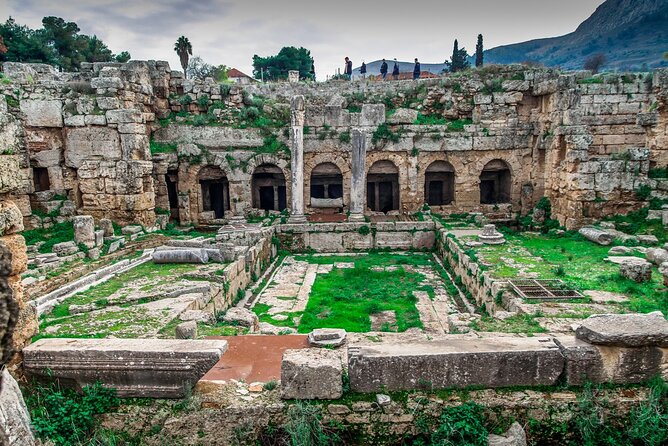
Corinth was one of the strongest and wealthiest cities of the classical world. At the Agora, you can picture the public and commercial life of the city Paul addressed in his letters. The remains also show the layered character of Corinth, where Greek traditions, Roman administration, local worship, and early Christianity met in one urban center.
The Bema is especially important for Christian visitors. This raised platform in the center of the city is associated with Paul’s appearance before the Roman proconsul. You can stand near the place connected with that legal episode and then look across the same civic setting where public decisions and disputes played out.
The Temple of Apollo provides the site’s most recognizable ancient view. Its surviving columns recall the religious world that surrounded the early Christian community. This contrast is one reason the tour works well: Paul’s story is not presented in isolation, but among the institutions and beliefs of Corinth.
One hour is enough for an introduction, but it is not an exhaustive study of the site. If you want time for every inscription, building, and display, you may feel rushed. The private format helps because you can tell your driver where your priorities lie.
The Corinth Museum: small details behind the ruins
The Archaeological Museum of Ancient Corinth follows the outdoor site and allows about 45 minutes. Admission is listed as free in the tour details, while the general inclusions also say archaeological entrance fees and museum fees are not included. Because those statements conflict, confirm the current charge before you go.
The museum protects objects found in the Corinth area, including prehistoric material and discoveries from the Sanctuary of Asklepios. Displays help explain ordinary life, religious practice, and artistic work, subjects that stone ruins alone cannot always make clear.
This is a valuable stop for you if you enjoy details. Statues, pottery, tools, and architectural pieces can show how people lived and worshipped, not just how monumental buildings looked. It also gives your feet a break after the outdoor ruins.
The museum is compact compared with major national museums, so 45 minutes is a sensible amount of time. A driver who can connect the objects to the Agora, Temple of Apollo, and Paul’s setting adds real value here.
Acrocorinth: views, fortifications, and a strenuous finish
The tour ends at Acrocorinth, the fortified hill above Ancient Corinth. The site served both military and religious purposes, with the Temple of Aphrodite associated with the summit.
The listed visit lasts about 30 minutes and admission is free, but this is the part where you should judge your own energy. The climb and surfaces can be rough, and the hill offers wide views over the surrounding area. One particularly enthusiastic account described hiking to the top as a highlight, but also warned that the height and climb are serious.
The story of up to 1,000 priestesses connected with the Temple of Aphrodite is part of the site’s traditional account, but the ruins themselves are the main reason to come. You see how a high fortress could control access to Corinth while also serving religious purposes.
Some outings have included lunch at Taverna Kastro near Acrocorinth. Lunch is not included in the tour price, and the restaurant stop is not guaranteed, but you can ask your driver about local food options. One driver helped arrange a Greek meal and recommended a place where the group could eat local dishes rather than settle for a tourist-focused restaurant.
What $200.25 buys you
The price is $200.25 per person. That is not a budget day trip, especially once you add admission fees and any meal, but this is a private experience with hotel or port transportation rather than a large coach excursion.
The value improves if you are traveling with a small group and want personal attention. A private group of two, three, or four can share the vehicle, ask questions freely, and avoid the fixed rhythm of a large tour. Door-to-door transport also saves you the trouble of arranging separate travel to Corinth.
The strongest value is convenience paired with subject focus. You are not paying only to see ruins. You are paying for a long route that connects Athens, Kenchreai, Ancient Corinth, and Acrocorinth in one day, with an English-speaking driver handling the road.
The value is weaker if you want a formal archaeological lecture at every site. Since a licensed guide is not included, you should ask what commentary your assigned driver provides and decide if you want to hire a guide separately.
Practical advice for a smoother day
Wear shoes with a firm sole. The Agora, Areopagus, Ancient Corinth, and Acrocorinth all involve walking, and several surfaces are uneven.
Bring a hat and sunscreen. Greek sun can be strong, especially during the open-air portions of the day. Bottled water is provided, but you should still prepare for heat.
Tell the operator about a child who needs a seat, since child seats are available on request. The tour has no stated health restrictions, but the physical demands make personal judgment important, particularly at Acrocorinth.
Ask about your exact pickup time, vehicle, admission costs, and meal plans before departure. The tour normally requires good weather. If poor weather cancels it, you are offered another date or a full refund.
Cancellation is free up to 24 hours before the start time. Changes or cancellations made less than 24 hours ahead are not accepted for a refund.
Who will enjoy this private Paul tour?
I would choose this for a Christian visitor who wants biblical locations placed within Greek political, commercial, and religious life. It also suits anyone interested in ancient Corinth, even if Paul is not the main reason for going.
Families and small groups may appreciate the private format, Wi-Fi, water, and hotel pickup. The day can also work well for cruise passengers arriving at the port, since pickup is arranged at the arrival area and the route covers far more than Athens alone.
I would hesitate to recommend it to anyone who dislikes long road days, open-air ruins, or uneven ground. It is also not the best choice if you want a slow, detailed archaeological study of every site. The schedule covers a lot of ground, and the main strength is the complete story rather than extended time at one monument.
Should you book it?
Book this tour if you want Paul’s Athens and Corinth in one carefully connected day, with private transport and room for personal questions. The most meaningful stops are the Areopagus, Kenchreai, the Bema at Ancient Corinth, and Acrocorinth, each offering a different view of Paul’s world.
Before paying, confirm the admission arrangements and ask whether you need a separate licensed guide. If you are prepared for heat, driving, and rough surfaces, the experience offers strong value for a small group seeking biblical history with real archaeological setting. If comfort and formal site interpretation matter more than flexibility, compare it with a tour that includes a licensed guide and entrance fees.
FAQ
How long does the tour last?
The experience lasts approximately eight to nine hours. The exact timing can vary with pickup location, traffic, time at the sites, and any agreed stops.
Where can pickup take place?
Pickup is offered from Athens hotels and apartments, as well as the port. For port pickup, the driver waits in the arrival area holding a sign with your name.
Is airport pickup included?
No. Airport pickup is optional and has an additional cost.
Is this a private tour?
Yes. Only your group participates in the activity.
What vehicle is used for small groups?
Groups of one to four people use a sedan. The vehicle is air-conditioned.
Are entrance fees included?
No. Entrance fees for archaeological sites and museums are not included. The details also identify some stops as free, so confirm current charges before departure.
Is a licensed guide included?
No. The tour includes an English-speaking professional driver with historical knowledge, but a licensed guide to accompany you inside archaeological sites is not included.
What should I bring?
Wear comfortable shoes and bring a hat and sunscreen. The tour includes walking on uneven surfaces, and Greek weather can be hot and sunny. Complimentary bottled water and Wi-Fi are provided.
Can I cancel for a refund?
You can cancel at least 24 hours before the experience starts for a full refund. Cancellations or changes made less than 24 hours before the start time are not accepted, and poor-weather cancellations offer a different date or a full refund.
Just added around Athens
- Traditional Greek Show in Plaka with Dinner★ 3.6 · 178 reviews
- Santorini Wine Roads Tour with Wine Tastings Morning & Sunset★ 5.0 · 106 reviews
- Private Sunset Wine Tour with 3 Wineries and Tapas★ 5.0 · 34 reviews
- Insightful Pistachio Orchard and Factory Tour★ 4.5 · 27 reviews
- Traditional Villages Full day Tour in Santorini★ 4.0 · 84 reviews
- Half Day Tour★ 5.0 · 63 reviews
- Half-Day Shared Fishing Experience in Hydra★ 5.0 · 35 reviews
- Athens Old City Private Photoshoot Tour / 2 hrs★ 5.0 · 109 reviews
Ancient Corinth Tours, compared.
Ancient Corinth Day Trip with Canal & VR Guide
Read our review →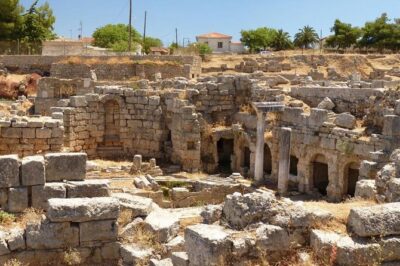
Private Biblical Tour Ancient Corinth & Isthmus Canal from Athens
Read our review →
Ancient Corinth & Nafplio Full Day Trip with Swim
Read our review →
Private Tour of Apostle Paul’s Footsteps in Ancient Corinth
Read our review →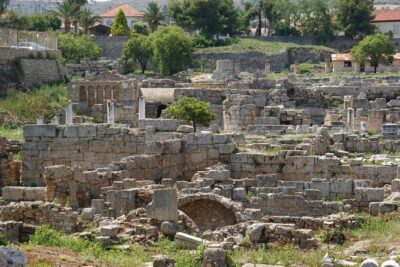
Corinth Half-Day Trip from Athens with Entrance Tickets
Read our review →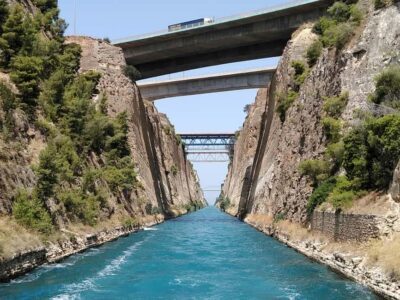
Browse the lists this tour appears in