
Reviewed · ACROPOLIS TOURS
Ancient Athens tour: Acropolis, Parthenon and Acropolis Museum
Ancient stones tell better stories with help. This four-hour Athens tour combines the Acropolis monuments with the Acropolis Museum, giving you both the ruins and the surviving sculpture. I like the licensed guides, who bring strong knowledge and humor to the walk, and I like the small-group limit of 20 people. The early 9:00 a.m. start is another smart choice in a city where the sun can turn pale marble into a frying pan.
The main tradeoff is time. Four hours covers a lot, but the Acropolis is busy and the uneven, slippery rock calls for care. You get explanations and photo stops, yet you may want extra time on your own, especially at the summit and inside the museum.
In This Review
- Key details before you book
- Why this four-hour Athens tour works
- Starting at Porinou 5 at 9:00 a.m.
- Climbing the Acropolis and meeting the Parthenon
- The Theater of Dionysus and ancient performance
- Herod Atticus Odeon and the living ancient city
- Propylaea, the ceremonial entrance
- The Erechtheion and the Caryatids
- One hour inside the Acropolis Museum
- What the $72.59 price really buys
- Who will enjoy this tour most
- Small details that improve the day
- Should you book this Acropolis tour?
- FAQ
- How long does the tour last?
- What time does the tour start?
- Where does the tour begin?
- Where does the tour end?
- Is the tour offered in English?
- Is the Acropolis entrance ticket included?
- Is the Acropolis Museum ticket included?
- Can I buy tickets at the meeting point?
- What documents do people under 25 need?
- Is the tour physically demanding?
Key details before you book
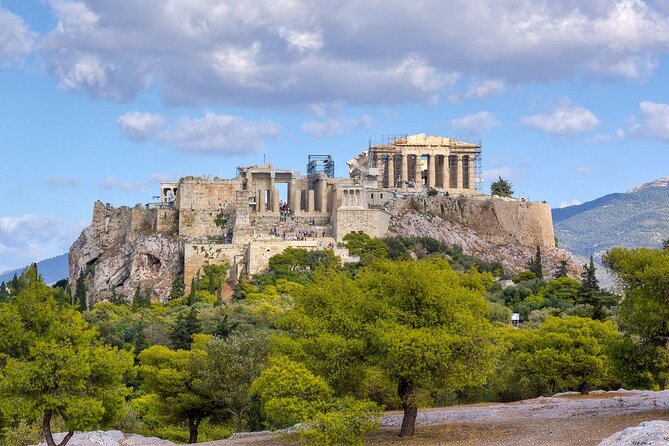
- The tour links the ruins to the artifacts: You see the Parthenon first, then examine preserved sculptures and architectural pieces at the Acropolis Museum.
- Licensed guides are the heart of the experience: Guides such as Giannas, Selena, Alexia, Lydia, John, Efie, and Bernardos have been praised for clear English, humor, patience, and strong archaeological knowledge.
- The 9:00 a.m. start helps with heat and crowds: Several guides work hard to find shade, water breaks, and good places to gather.
- The walking surface needs respect: Slippery stones and an uphill route make moderate fitness useful. Sunscreen, water, and sensible shoes matter.
- Ticket choices affect the real price: The advertised cost is $72.59 per person, but entrance fees may be extra unless you select the ticket-included option.
- The museum deserves its full hour: It is not filler at the end. It helps you understand details that are easy to miss on the Acropolis itself.
Why this four-hour Athens tour works
Athens can feel like a history book dropped onto a modern city. The Acropolis rises above busy streets, ancient theaters sit beside apartment blocks, and fragments of temples are scattered across the rock. A guide helps you connect those pieces instead of treating each column as a separate photo stop.
This tour follows a sensible order. You begin at the Acropolis, move through its major monuments, and finish at the Acropolis Museum. That sequence matters because you first see the setting, scale, and surviving structures, then encounter the objects that explain how the site looked and functioned.
The group can include up to 20 people. That is not private-tour intimacy, but it is small enough for a guide to keep people together and answer questions. Audio equipment or earpieces have been used on many departures, which helps when the site is crowded. One person still found it useful to bring wired headphones, since sound can be difficult in certain areas.
The strongest part of the experience is the guiding. John was praised as an archaeologist and teacher. Selena made a group of about 15 feel almost private through clear storytelling. Alexia was repeatedly praised for warmth, humor, and enthusiasm, while Lydia paid close attention to shade, water, and comfort. These details matter more here than a polished route map. The Acropolis is easier to appreciate when you can hear the story without chasing your guide through a crowd.
More Museums in Athens
- Athens: Acropolis, Parthenon & Acropolis Museum Guided Tour
★ 4.8 · 9,316 reviews - Athens: Mythology of Delphi, Museum and Arachova Guided Tour
★ 4.6 · 4,008 reviews - Athens: Acropolis, Parthenon & Acropolis Museum Guided Tour
★ 4.8 · 3,579 reviews
Starting at Porinou 5 at 9:00 a.m.
The meeting point is Porinou 5, Athens 117 42, near public transportation. The tour begins at 9:00 a.m. and ends back at the meeting point.
Arrive ready to walk. The route includes the Acropolis rock, its monuments, and the museum, so this is not a coach excursion with quick roadside stops. The stated fitness level is moderate. You should be comfortable walking uphill and over uneven ancient stone.
The morning time is one of the better features. Athens can be hot even outside midsummer, and the white stone offers less shade than you might hope. Guides have arranged water and shade breaks, but you should still use sunscreen and wear a hat. Bottled drinking water is provided, a small but welcome touch.
The early start does not guarantee solitude. The Acropolis remains one of Europe’s busiest ancient sites, and people have found it crowded even in September. Still, an early group generally has a better chance of moving comfortably before the heat and later crowds build.
Climbing the Acropolis and meeting the Parthenon
The Acropolis portion takes about two hours. This is where the tour earns its keep, because the monuments are impressive but their meaning is not always obvious from the stones alone.
Your guide leads you toward the summit and explains the major structures along the way. The route includes the Parthenon, Propylaea, Erechtheion, Temple of Athena, Theater of Dionysus, and Herod Atticus Odeon. The guide may adjust the order or choose gathering points based on crowd movement, which is useful on a packed day.
The uphill walk is manageable for many people, but do not treat it as a casual stroll. Some stones can be slippery, especially when polished by thousands of feet. Shoes with reliable grip are more useful than stylish sandals. Take care with each step, particularly while looking up at the monuments or turning for photographs.
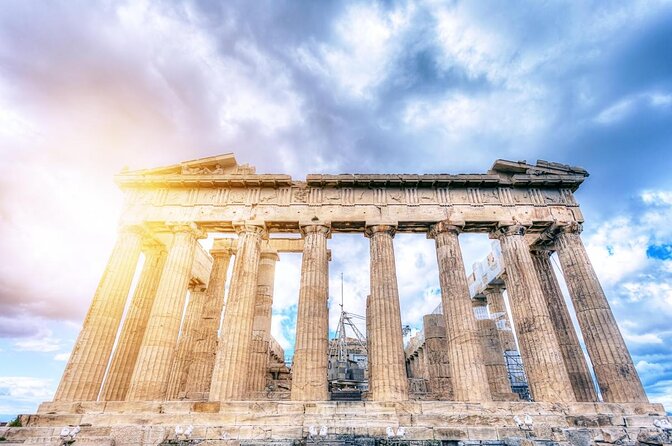
At the top, the Parthenon takes center stage. This temple dedicated to Athena is the image most associated with Athens, but the guide adds the missing layers: why the temple was built, how its decoration worked, and what its details meant in Greek mythology and civic life. You get about 10 minutes listed for this stop, but the actual explanation is part of the wider Acropolis walk.
One limitation is that you may want more free time at the summit. The guide keeps the group moving and makes room for questions and photographs, yet four hours must cover both the Acropolis and museum. If you prefer to linger over every view, plan to return independently another day or choose to stay after the guided portion where permitted.
The Theater of Dionysus and ancient performance
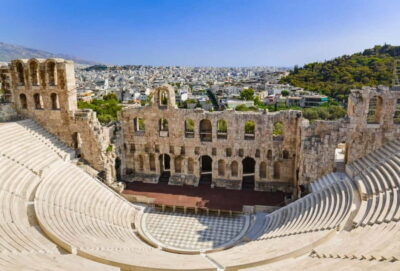
The Theater of Dionysus is one of the most important ancient theaters in the world. It sits on the southern slope of the Acropolis and helps you picture Athens as a city of public gatherings, drama, music, and civic debate.
The stop is listed at about 10 minutes. That is enough for a focused explanation and photographs, but not enough for a long, quiet inspection. A good guide makes this brief visit useful by explaining what happened here rather than simply pointing out rows of stone seats.
Theater lovers will appreciate this stop more than they might expect. The Acropolis is often reduced to temples, yet the theater shows how much ancient Athenian life depended on shared public events. It gives the hill a human scale.
More ways to see the Acropolis:
- Athens: Acropolis & up to 5 Archaeological Sites Combo Pass
★ 4.4 · 12,619 reviews - Athens: Acropolis Ticket with Optional Audio or Live Guide
★ 4.2 · 11,055 reviews - Athens: Acropolis and Parthenon Guided Walking Tour
★ 4.6 · 5,882 reviews - Athens: Acropolis Ticket with Audio Guide
★ 4.0 · 3,575 reviews
Herod Atticus Odeon and the living ancient city
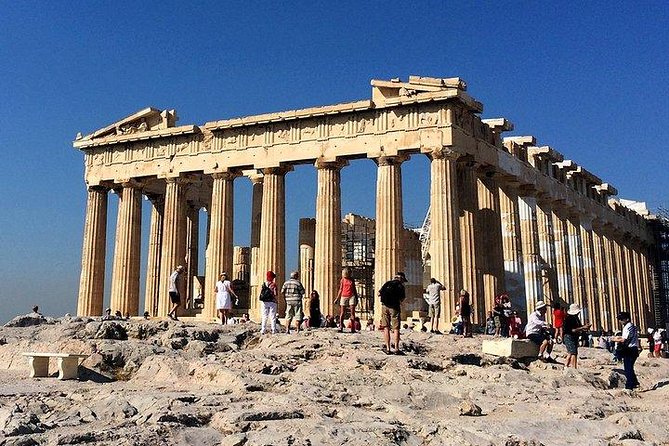
The Herod Atticus Odeon is a Greek and Roman-era performance building that still operates. Its continued use gives the site a rare link between ancient construction and present-day cultural life.
You view the structure as part of the Acropolis route, with roughly 10 minutes allocated. The tour does not turn this into a full performance visit, but your guide can explain its role and help you notice the shape of the venue from above.
This is a good example of why a guided walk beats a checklist. Without context, an ancient theater can look like another semicircle of stone. With context, you begin to see the Acropolis as a working civic center, not just a hilltop temple complex.
Propylaea, the ceremonial entrance
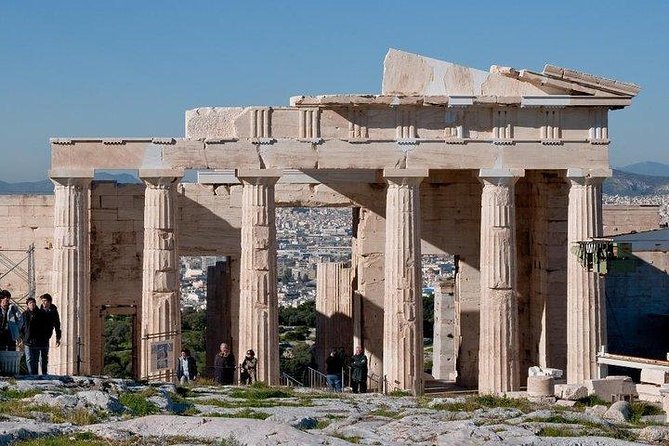
The Propylaea served as the monumental gates of the Acropolis. For many people, it is the first grand architectural statement on the climb, framing the approach to the sacred hill.
The listed stop lasts about 10 minutes. Your guide will likely pause here to explain the entrance, its scale, and the way the route shaped the approach to the temples. The Propylaea also makes a strong photo stop, though moving people can limit how long you hold a position.
Pay attention to the change in feeling as you pass through the gates. The entrance was not an afterthought. It prepared visitors for the buildings beyond and made arrival part of the experience.
The Erechtheion and the Caryatids
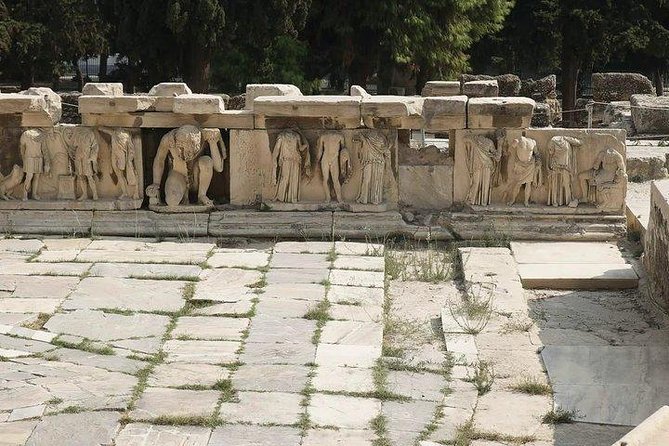
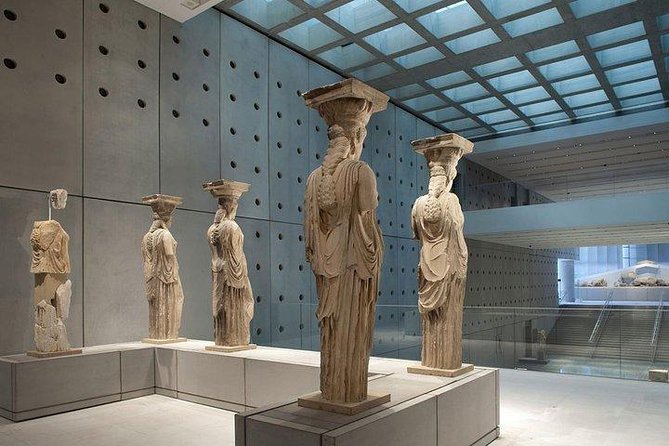
The Erechtheion is best known for its Caryatids, the sculpted female figures used as architectural supports. They are among the most recognizable details on the Acropolis, and they reward a closer look.
The tour allows about 10 minutes here. That is enough for a guide to explain the Caryatids and the temple’s place within the Acropolis complex, though the crowd may affect your viewing angle.
The museum visit becomes especially useful after this stop. Some original architectural sculpture has been protected indoors, while the Acropolis still presents the building and its setting. Seeing both helps you understand the difference between a surviving monument and the individual pieces that once decorated it.
One hour inside the Acropolis Museum
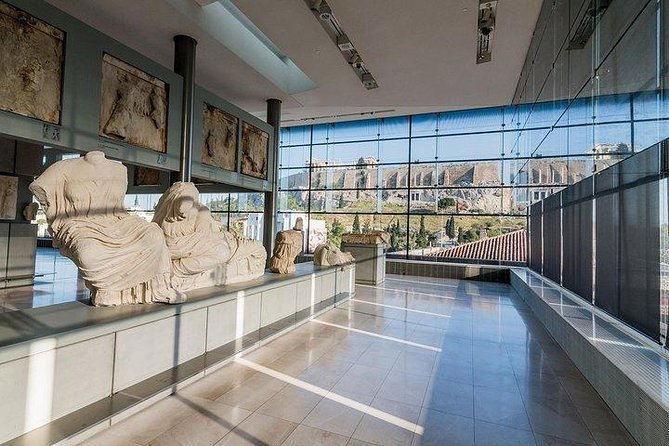
The Acropolis Museum is the second half of the experience, not an optional footnote. The museum focuses on discoveries from the Acropolis and its surrounding slopes, ranging from the Greek Bronze Age through Roman and Byzantine periods.
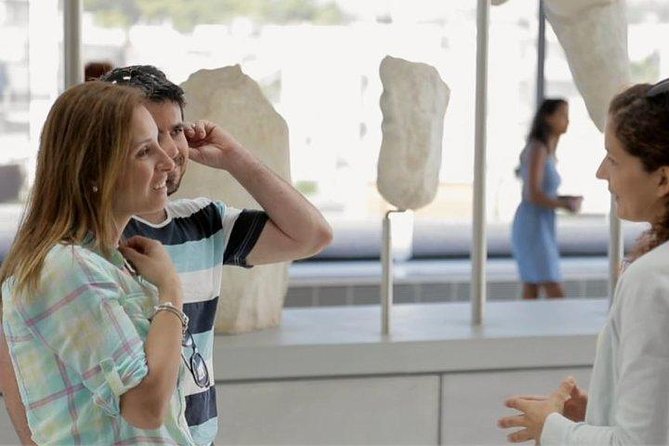
The guided museum visit lasts about one hour. Guides point out details you could easily miss on your own, and the museum’s design helps you connect sculpture, architecture, and the hill outside. Bernardos was praised for making artifacts feel like part of a vivid story, while other guides encouraged people to remain independently after the guided hour to see more.
That final option is valuable. The museum contains enough material to reward slower viewing, especially if you enjoy sculpture, architectural fragments, and the changing story of Athens across different periods. The tour gives you a useful framework, then you can continue at your own pace if your schedule allows.
There is an important ticket detail here. The base price may not include the Acropolis Museum entrance, despite the museum being part of the route. The supplied pricing information lists the museum fee at €20 and the Acropolis fee at €30 unless you select an option with entrance tickets. Confirm the exact ticket package before paying, since the difference can change the value considerably.
If you arrive without tickets, the guide can sell entrance tickets for cash at the meeting point, unless you already bought them or selected the ticket-inclusive option. People under 25 need a physical passport or identity card to confirm eligibility for a reduced price. Bring the original document, not just a phone image, if you plan to use that reduction.
What the $72.59 price really buys
At $72.59 per person, the tour is not simply an entry ticket. You are paying for a licensed English-speaking guide, route management, historical interpretation, water, and the convenience of linking two major sites in four hours.
The value is strongest if you want context. An unguided visit can show you the Parthenon, but it may leave you wondering why the surrounding buildings matter or how the sculptures relate to the structures. Several guides have been praised for explaining mythology, construction, civic life, and the people who built the monuments.
The value is weaker if you want a slow, independent museum visit. About one hour with the guide gives you a useful introduction, but art lovers may want more time. The same is true at the Acropolis, where the group pace can limit lingering.
Add the entrance fees when comparing this tour with other options. The Acropolis ticket is listed as €30, and the museum ticket as €20, unless included in the option you choose. That can bring the total well above the headline price, but the guide may justify it for first-time visitors who want the major sights explained clearly.
Who will enjoy this tour most
I would recommend it to a first-time Athens visitor who wants the essential Acropolis experience without spending a full day on one hill. Families and mixed-age groups may appreciate the clear structure, shade stops, and the guide’s ability to keep history lively.
It suits cruise passengers too, since the fixed morning start and four-hour length leave room for other Athens plans. You will need to arrange your own transport to Porinou 5, but the meeting point is near public transportation.
History lovers should choose the museum option if available. The museum helps turn the Acropolis from a dramatic ruin into a place with surviving objects, decoration, and human detail.
I would be more cautious if you dislike group tours, need extensive rest, or want complete control over every stop. A group of up to 20 is reasonable, yet the site itself is crowded and the ground is uneven. If your priority is quiet photography, book the tour for guidance, then use another visit for unhurried photographs.
Small details that improve the day
Bring sunscreen, water, and a hat even though bottled water is provided. The Greek sun can be strong, and the stone reflects heat.
Wear shoes with a good grip. The slippery rock is one of the few repeated cautions, and it is easy to forget your footing while admiring the view.
Arrive early for the 9:00 a.m. start. The group may be able to reach the Acropolis before the worst heat and later crowd levels.
Pay attention to your guide’s gathering instructions. Guides have used earpieces, but sound can still be difficult in noisy areas. Your own wired headphones may help if the tour provides compatible audio equipment.
Keep your passport or physical ID with you if you are under 25 and seeking a reduced entrance price. This requirement is specific and easy to overlook.
The cancellation policy allows a full refund if you cancel at least 24 hours before the local start time. Changes or cancellations inside that window are not accepted for a refund.
Should you book this Acropolis tour?
Book it if you want the Parthenon explained, not just photographed. The strongest part is the guide-led connection between the Acropolis and museum, backed by guides who have been praised for archaeological skill, humor, clear English, and care with shade and water.
Before booking, check the ticket option and calculate the entrance fees. Choose the museum, especially if this is your first visit. The only serious drawback is the tight schedule, so allow extra time afterward if you want to explore the museum or nearby Athens on your own.
For a first look at ancient Athens, this is a well-planned, highly rated introduction. Just bring good shoes, protect yourself from the sun, and remember that even the best guide cannot make the Acropolis empty.
FAQ
How long does the tour last?
The experience lasts approximately four hours. About two hours are allocated to the Acropolis area and about one hour to the Acropolis Museum, with the remaining time used for movement and monument stops.
What time does the tour start?
The tour starts at 9:00 a.m. local time.
Where does the tour begin?
The meeting point is Porinou 5, Athina 117 42, Greece.
Where does the tour end?
The activity ends back at the meeting point.
Is the tour offered in English?
Yes. The tour is offered in English.
Is the Acropolis entrance ticket included?
Entrance is included only if you select the option with entrance tickets. Otherwise, the Acropolis entrance fee is listed as €30 per person.
Is the Acropolis Museum ticket included?
The museum ticket is included only with the applicable ticket-inclusive option. Otherwise, the listed museum entrance fee is €20 per person.
Can I buy tickets at the meeting point?
Yes. If you do not already have tickets and did not select the ticket-inclusive option, you can buy them with cash from the guide at the meeting point.
What documents do people under 25 need?
People under 25 need a physical passport or identity card to confirm eligibility for a reduced entrance price.
Is the tour physically demanding?
A moderate level of physical fitness is recommended. The experience includes walking over uneven and potentially slippery stones at the Acropolis.
Just added around Athens
- Traditional Greek Show in Plaka with Dinner★ 3.6 · 178 reviews
- Santorini Wine Roads Tour with Wine Tastings Morning & Sunset★ 5.0 · 106 reviews
- Private Sunset Wine Tour with 3 Wineries and Tapas★ 5.0 · 34 reviews
- Insightful Pistachio Orchard and Factory Tour★ 4.5 · 27 reviews
- Traditional Villages Full day Tour in Santorini★ 4.0 · 84 reviews
- Half Day Tour★ 5.0 · 63 reviews
- Half-Day Shared Fishing Experience in Hydra★ 5.0 · 35 reviews
- Athens Old City Private Photoshoot Tour / 2 hrs★ 5.0 · 109 reviews
Acropolis Tours, compared.
Acropolis & up to 5 Archaeological Sites Combo Pass
Read our review →
Acropolis, Parthenon & Acropolis Museum Guided Tour
Read our review →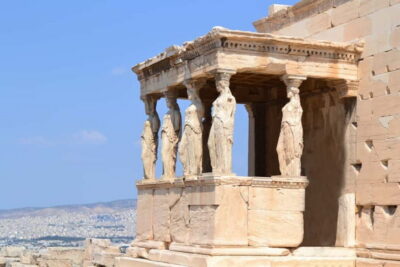
Acropolis, Parthenon & Acropolis Museum Guided Tour
Read our review →

Acropolis: Acropolis and Parthenon Guided Walking Tour
Read our review →
Acropolis monuments & Parthenon Walking Tour with Optional Acropolis Museum
Read our review →Browse the lists this tour appears in