
Reviewed · ACROPOLIS TOURS
Athens: Acropolis and Acropolis Museum Premium Guided Tour
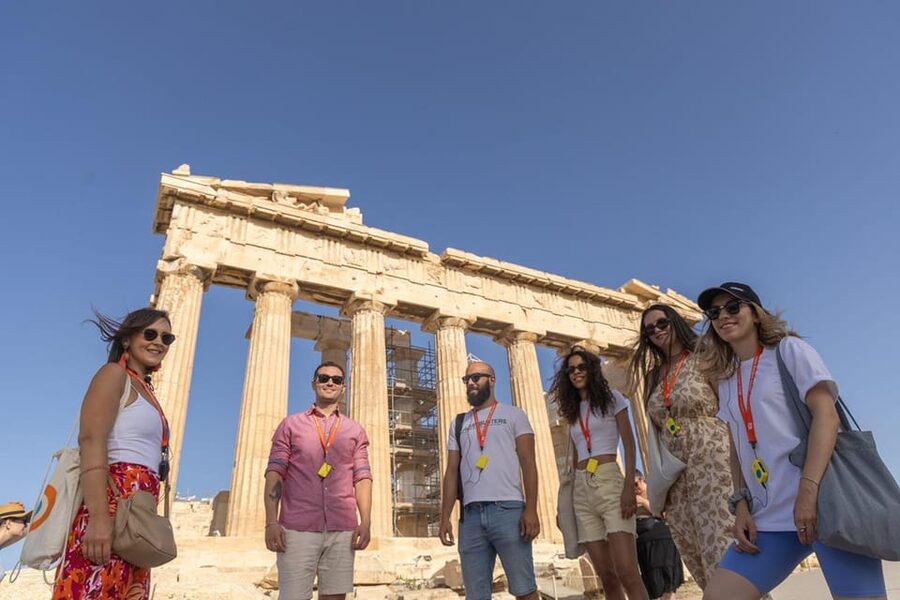
Athens makes its greatest case on a hill. This 3.5-hour walk links the Acropolis monuments with the excellent Acropolis Museum, giving you the stories, context, and practical direction that are easy to miss alone. I especially like the south-slope approach, which begins with the Theatre of Dionysus, and the way the tour ends inside the museum rather than sending you back into the street.
The licensed local guides are the main reason to book. Guides including Yolanda, Apollon, Maria, Sissy, and Angeliki have been praised for clear storytelling, good pacing, and the ability to connect architecture with politics, theater, religion, and daily life. The tradeoff is physical: slippery marble, stairs, inclines, strong sun, and nearly four hours on your feet can be tiring, especially when the museum follows the hill.
In This Review
- Key points to know before booking
- Starting near Hadrian’s Arch
- The Theatre of Dionysus and the south slope
- The Odeon of Herodes Atticus
- Entering through the Propylaea
- The Erechtheion and Temple of Athena Nike
- The Parthenon and Athens from above
- Crossing to the Acropolis Museum
- How the guides shape the experience
- Is $55 a fair price?
- Timing, heat, and crowd control
- Who should book this Athens tour?
- Should you book it?
- FAQ
- How long does the Acropolis and museum tour last?
- Where does the tour begin?
- Are entrance tickets included?
- What should I bring?
- Is the tour suitable for wheelchair users?
- Can I skip all lines with this tour?
Key points to know before booking

- The south slope gives the tour a strong opening: You enter through a less crowded side of the Acropolis area and begin at the Theatre of Dionysus.
- The Parthenon is only part of the story: The route also covers the Propylaea, Erechtheion, Temple of Athena Nike, Odeon of Herodes Atticus, and nearby ancient sites.
- The museum adds essential context: Glass floors expose excavations, while the galleries help explain the statues and buildings you have just seen.
- The guides receive the strongest praise: Yolanda, Apollon, Philippina, Maria, and others are noted for vivid explanations and patient answers.
- Timed entry requires discipline: Arrive 20 minutes early, and bring identification if you need a reduced or free admission ticket.
- The $55 price can be good value: It includes guiding at both sites, but check carefully if your booking includes entrance tickets.
Starting near Hadrian’s Arch
The meeting point is at 3 Dionysiou Areopagitou Street, in front of the Lukumades and Pilino stores. It is at the start of the pedestrian walkway running from Hadrian’s Arch toward the Acropolis, about three minutes from the Acropolis Metro Station.
Look for the orange Athens Walking Tours sign. You should arrive 20 minutes before departure. That advice matters here because Acropolis admission uses strict timed entry. If you arrive late, the group cannot simply wait and enter you later, and missed admission is not refundable.
The location is convenient, but give yourself extra time if you are unfamiliar with central Athens. The Acropolis Metro Station is close, and the pedestrian street is easy to recognize once you reach it. Do not arrive carrying a large suitcase or oversized backpack. Luggage and large bags are not allowed, and baby strollers are also excluded.
More Museums in Athens
- Athens: Acropolis, Parthenon & Acropolis Museum Guided Tour
★ 4.8 · 9,316 reviews - Athens: Mythology of Delphi, Museum and Arachova Guided Tour
★ 4.6 · 4,008 reviews - Athens: Acropolis, Parthenon & Acropolis Museum Guided Tour
★ 4.8 · 3,579 reviews
The Theatre of Dionysus and the south slope
The tour approaches the Acropolis from the south slope instead of beginning at the busiest main entrance. This does not mean you will have the hill to yourself. Even a Monday morning in shoulder season can be crowded, but this route gives the opening portion a calmer rhythm and avoids starting with the biggest crush of people.
The first major stop is the Theatre of Dionysus, a fifth-century amphitheater often described as the birthplace of the performing arts. Your guide helps you picture the space filled with ancient spectators, then explains how theater fit into Athenian religious and civic life.
That is a useful beginning because the Acropolis can otherwise feel like a collection of broken stones and famous names. At the theater, you start to see ancient Athens as a working city with festivals, arguments, performances, and public rituals.
Nearby, you pause at the Sanctuary of Dionysus, dedicated to the god of wine and fertility. It is not the most visually complete stop, but it gives the route a welcome layer of meaning before you climb higher.
The Odeon of Herodes Atticus
As you continue uphill, you pass the Odeon of Herodes Atticus. The itinerary allows about ten minutes here, so treat it as a guided look and photo opportunity rather than a long visit inside.
The theater is especially effective from the approach because its curved stone structure remains easy to read. Your guide also points out the relationship between the Acropolis, the theater, and the broader ceremonial area below.
This part of the walk begins to reveal how carefully the sacred hill was placed above the city. You are not simply heading toward the Parthenon. You are moving through a series of spaces that once controlled how people approached the religious center of Athens.
Entering through the Propylaea

The Propylaea is the monumental gateway to the Acropolis. Its purpose was practical, ceremonial, and political: it marked the transition from ordinary city life to the sacred summit.
The climb and stone paving demand attention. Some sections are uneven, and the marble can be slippery. Wear shoes with a secure sole, and do not expect to stroll at a relaxed street pace.
A good guide earns the fee here by explaining what you are seeing before the crowd carries you forward. The proportions, unfinished sections, and remains make more sense when someone points out how the gateway framed entry to the hill.
The walk is not suitable for wheelchair users or people with mobility impairments. It includes stairs and inclines, and the footing can be awkward. I would also think twice about bringing a young child who is likely to need a stroller, since strollers are not permitted.
More ways to see the Acropolis:
- Athens: Acropolis & up to 5 Archaeological Sites Combo Pass
★ 4.4 · 12,619 reviews - Athens: Acropolis Ticket with Optional Audio or Live Guide
★ 4.2 · 11,055 reviews - Athens: Acropolis and Parthenon Guided Walking Tour
★ 4.6 · 5,882 reviews - Athens: Acropolis Ticket with Audio Guide
★ 4.0 · 3,575 reviews
The Erechtheion and Temple of Athena Nike
At the summit, the Erechtheion gives you one of the Acropolis’ most memorable views. Its unusual design reflects the layered religious importance of the hill, and the famous Caryatid figures make it instantly recognizable.
Your guide will likely explain why this building differs so much from the Parthenon. That contrast is one of the pleasures of a guided visit. You begin to understand that the Acropolis was not built as one simple project with one purpose. Different shrines carried different traditions and associations.
The Temple of Athena Nike is smaller, but its position near the entrance makes it visually important. It honors Athena as a bringer of victory and adds a more delicate note beside the larger structures.
Photography is easy to fit into the route, but the tour is not designed as an unhurried photo session. The guide stops at the main viewpoints, then keeps the group moving. If you want every angle of every column, plan to return independently another day, if your ticket allows and your schedule permits.
The Parthenon and Athens from above
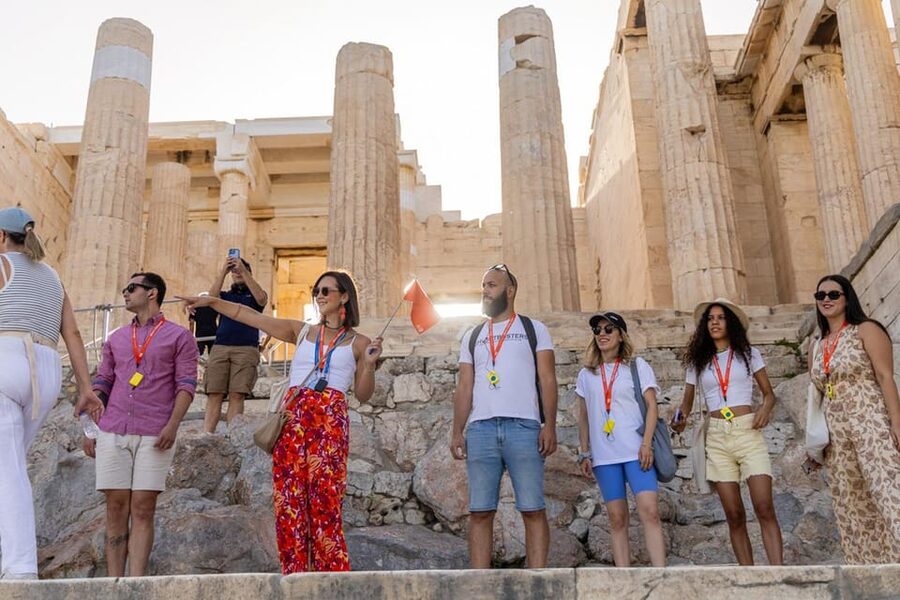
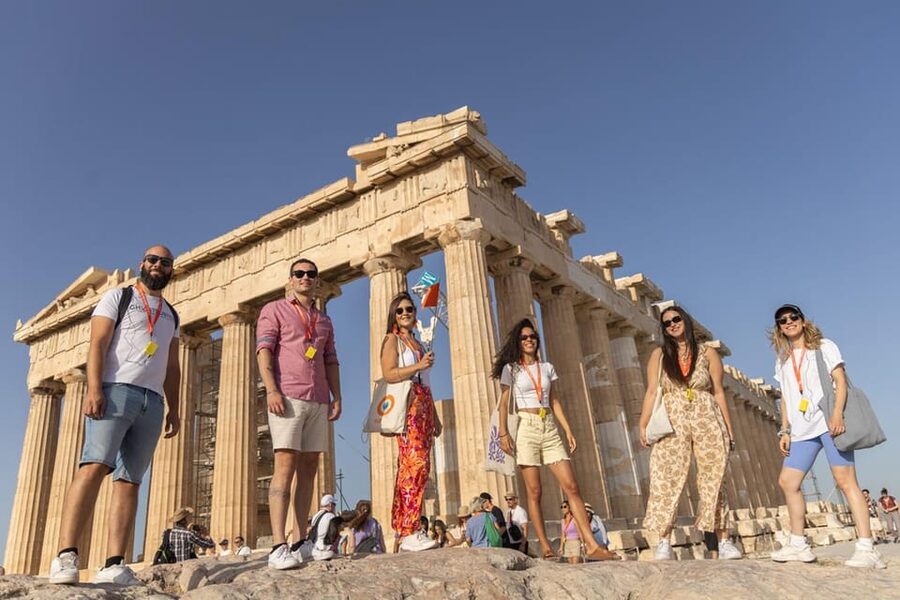
The Parthenon is the centerpiece, and the tour gives it about 20 minutes of focused attention. That is enough time to hear the main explanation, understand the building’s place in Athenian identity, and take photographs without turning the visit into a lecture marathon.
Look closely at the structure’s surviving details, but also look beyond it. From the top of the Acropolis, you can see Athens spreading in every direction, with major sites such as Mars Hill and the ancient Agora below. The Odeon of Herodes Atticus is visible from the hill, and your guide connects these places to the city’s political, religious, and cultural life.
The views are a major reward, but the summit is exposed. In warm months, shade can be scarce, and the stone reflects the heat. Guides have been praised for finding shaded places for explanations and warning groups about tricky footing, but you still need water, a hat, and sensible clothing.
The tour includes about 15 minutes for a break and photos at the Acropolis. That short pause is welcome. Still, you may wish it were longer if you want quiet time among the ruins. The main value here is interpretation, not unlimited free wandering.
Crossing to the Acropolis Museum
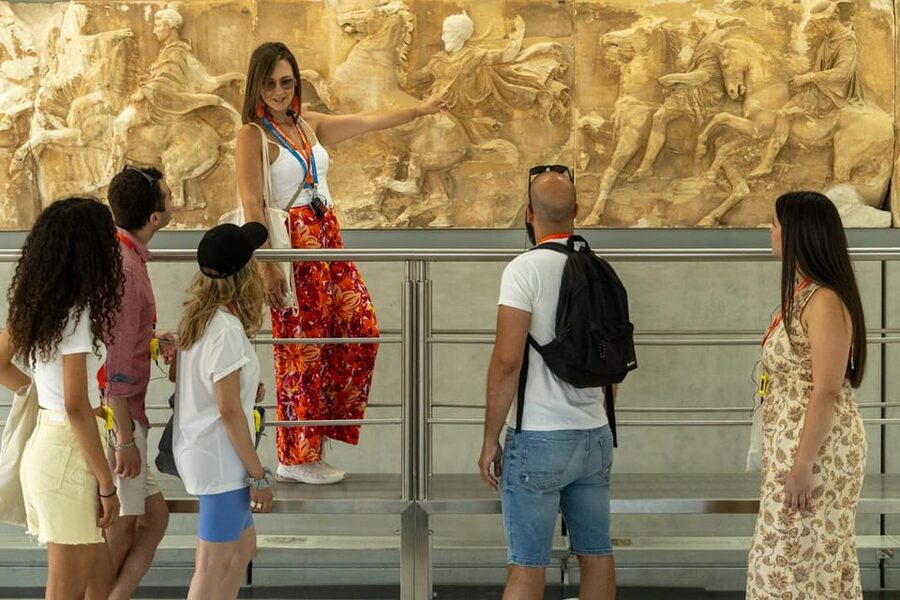
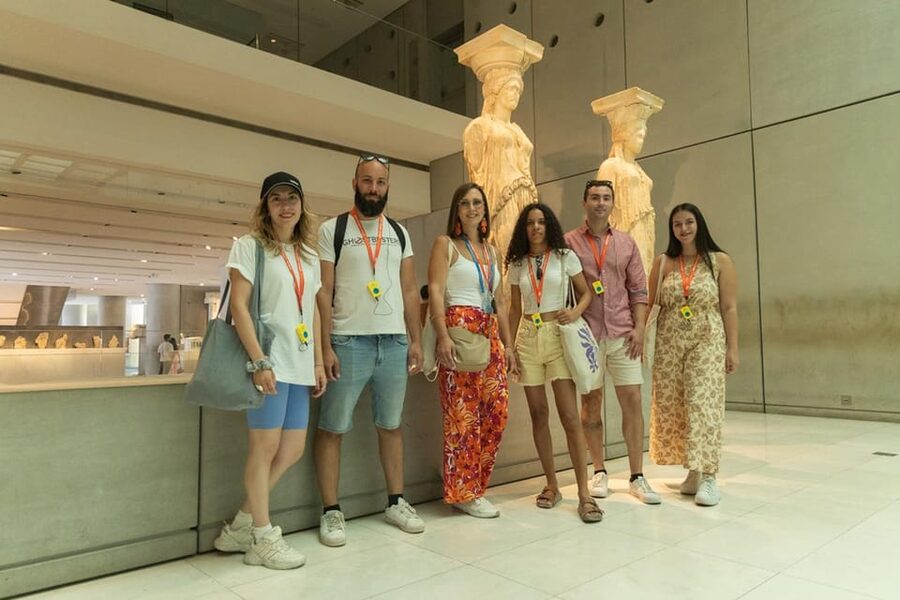
After roughly two hours on the hill, the group continues to the Acropolis Museum for about 90 minutes of guided viewing. This change of setting is one of the best features of the experience. On the Acropolis, you see buildings in place. In the museum, you see sculpture, fragments, and objects with the protection and lighting needed to study them properly.
The Gallery of the Slopes is especially useful. Glass floors reveal archaeological remains beneath the building, allowing you to see that modern Athens still sits above layers of earlier settlement.
Inside, the guide focuses on key statues and relics rather than trying to cover every case. That is the right approach for a museum this large. Without direction, you could spend hours wandering from one object to the next without understanding what connects them.
The museum is also physically easier than the hill, but it comes at the end, when your feet may already be tired. One past participant found the combined visit too much after a hot morning, while others felt that seeing both sites was exactly what made the day worthwhile. I agree with both reactions. The museum is not filler, but it does require attention after a demanding climb.
Backpacks may need to be checked at the museum, so carry a smaller bag if possible. Museum entry can also create a delay. The tour includes skip-the-ticket-line service, but that does not remove security checks. Depending on crowd levels, you may wait from a few minutes to 10 or 30 minutes, and peak-season delays can exceed that.
How the guides shape the experience
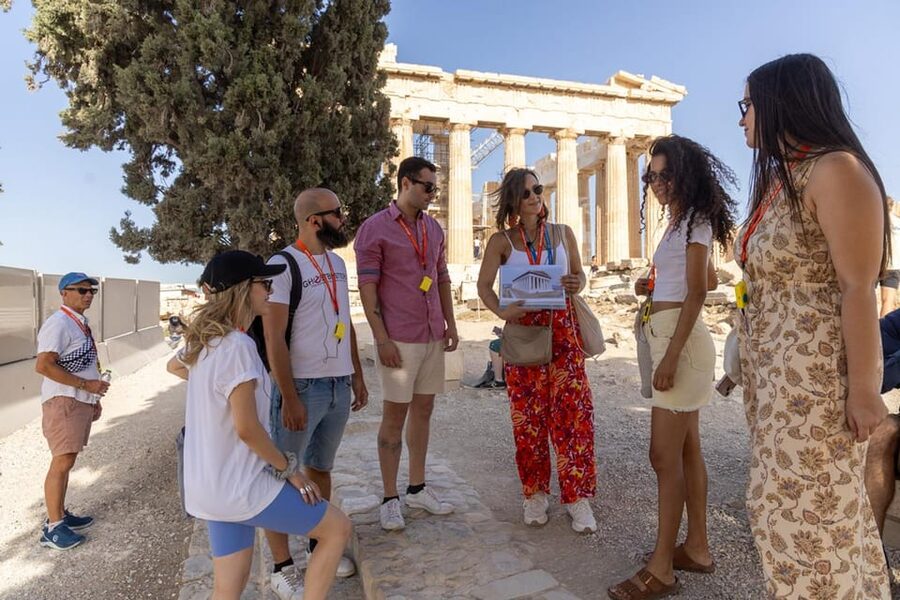
The strongest reason to choose this tour is the person leading it. The company has operated Athens walking tours for more than 20 years, and the guide quality appears to be a consistent strength.
Yolanda has been praised for getting a group efficiently through crowded areas while still telling a strong story. Apollon was noted for being entertaining, articulate, and generous with his time. Maria received particular praise for making the museum feel like one of the best museum visits a participant had experienced.
Other guides, including Philippina, Sissy, Angeliki, Alexandria, and Olysia, have been singled out for clear English, humor, patience, and good judgment in the heat. Several guides are described as balancing walking and talking well, which is important here. A nonstop lecture on a hot, exposed hill would wear anyone down.
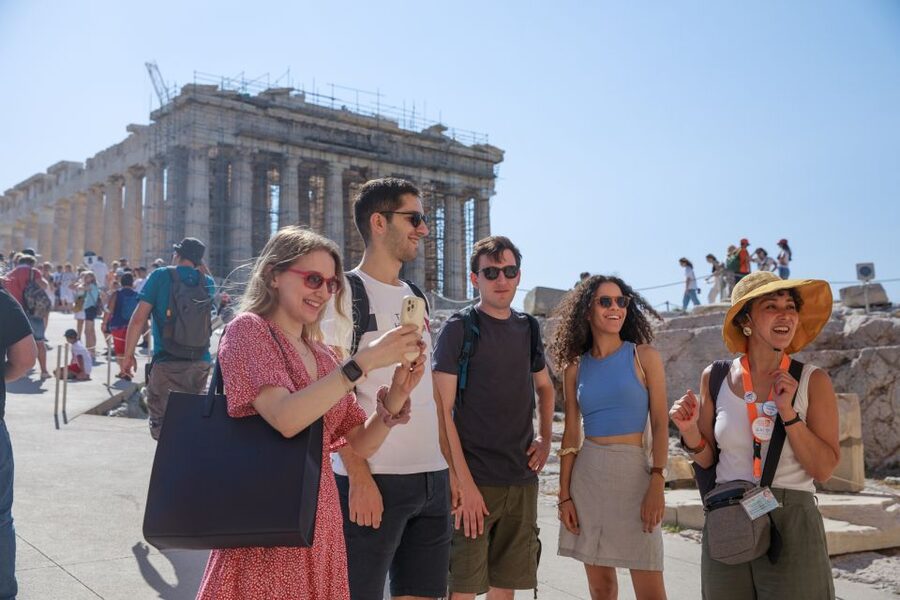
The group size is not fixed in the information provided, but one participant described a group of fewer than 20 as comfortable. That gives you a useful expectation without promising a private or tiny tour. Ask questions when there is a natural pause, and stay close enough to hear. Crowds and stone walls can make it hard to keep up with a guide’s voice.
Is $55 a fair price?

At $55 per person, the value depends mainly on the ticket option and your appetite for guided interpretation.
The experience includes a local licensed guide, a two-hour guided Acropolis visit, a 1.5-hour guided museum visit, an Athens guide magazine, and an Athens map. Food, drinks, and hotel transfers are not included.
If you select the option with entrance tickets, the price is easier to judge because the main admissions are bundled. If you select the option without tickets, you receive instructions after booking to purchase Acropolis and Acropolis Museum admission yourself. Check that your Acropolis ticket time matches the tour’s entry time exactly.
For someone visiting Athens for the first time, $55 is reasonable if you want the major sights explained and prefer not to manage timed admission on your own. You are paying for structure, access handling, and three and a half hours of interpretation, not just transportation.
You can visit the hill and museum independently for less or with more control over your pace. The tradeoff is that you must arrange the tickets, follow the route, and supply your own context. At the Acropolis, the monuments are famous but not always self-explanatory. I think the guide is worth the added cost for most first-time visitors.
Timing, heat, and crowd control
The early morning departure at 8:30 received praise for getting onto the hill before the worst heat and larger crowds. A 9:30 start can also work, but do not assume shoulder season means empty paths. Even a Monday morning can bring major crowds.
The tour runs in rain or sunshine. Bring comfortable clothes and shoes, plus water and sun protection. The supplied information does not include a drink stop, so you should arrive prepared rather than count on buying refreshments during the walk.
Security works much like an airport check. Skip-the-ticket-line service helps with ticket purchase, but everyone still passes through security. In busy periods, allow for more than the typical wait.
The tour may run longer than 3.5 hours. Several participants described four-hour visits, often because the guide allowed extra explanation or questions. That can be a benefit, but do not schedule a tight lunch reservation or an immediate transfer afterward.
Who should book this Athens tour?
I would choose this tour if you want the Acropolis to make sense, not just appear in your camera roll. It suits first-time visitors, history fans, museum lovers, and anyone who prefers a clear route through a major site.
It is also a good fit if your time in Athens is short. The tour covers the hill and museum in one outing, then leaves you inside the museum to continue independently if you still have energy.
I would be cautious if you dislike fixed schedules or long guided visits. The combined format leaves little room to sit, wander, or return to a favorite monument. It is also a poor choice for anyone with significant mobility limits, since the hill has slippery rocks, stairs, and steep sections.
Bring identification for children or anyone seeking reduced or free admission. Official proof of age and nationality may be required, and failure to show it can lead to full-price payment or denied entry. If you need to cancel, free cancellation is available up to 24 hours before departure, and the reserve-now, pay-later option keeps the booking flexible.
Should you book it?
Book this tour if you want expert storytelling, a practical route, and both the Acropolis and museum in one well-organized morning or afternoon. The guide’s explanations add real value, especially at the Theatre of Dionysus, the Erechtheion, and the museum galleries where objects need context.
Skip it if you already know the monuments well, want a slow photographic visit, or find three and a half to four hours of walking too demanding. For most first-time visitors who can manage the climb, the $55 cost is a sound investment, provided you select the ticket option carefully and arrive early.
FAQ
How long does the Acropolis and museum tour last?
The scheduled duration is 3.5 hours. About two hours are devoted to the Acropolis and about 1.5 hours to the Acropolis Museum. Some tours may run closer to four hours if the guide spends extra time answering questions or explaining the sites.
Where does the tour begin?
It begins at 3 Dionysiou Areopagitou Street, in front of the Lukumades and Pilino stores. The meeting point is about three minutes from the Acropolis Metro Station, near the walkway from Hadrian’s Arch to the Acropolis.
Are entrance tickets included?
They are included only if you choose the With Tickets option. With the Without Tickets option, you receive an email after booking with a link to purchase the Acropolis and Acropolis Museum tickets.
What should I bring?
Bring comfortable shoes, comfortable clothing, water, and sun protection. If you need a reduced or free admission ticket, bring official documentation or valid identification showing your age and nationality.
Is the tour suitable for wheelchair users?
No. The tour is not suitable for wheelchair users or people with mobility impairments. The route includes stairs, inclines, uneven surfaces, and slippery rocks.
Can I skip all lines with this tour?
The tour offers skip-the-ticket-line access, but security checks still apply. Waiting times can range from a few minutes to 10 or 30 minutes, and peak-season waits may be longer.
Just added around Athens
- Delphi One Day Trip from Athens★ 4.0 · 98 reviews
- Mercedes Private Tour to Delphi and Arachova★ 5.0 · 30 reviews
- Private Delphi and Hosios Loukas Monastery – Great Lunch and Drinks Included★ 5.0 · 36 reviews
- Day tour to Ancient Olympia,Ancient Sparta Mycenae Including Meal★ 5.0 · 54 reviews
- Athens: Half Day Trip To Cape Sounio/Poseidon Temple Semi Private★ 5.0 · 131 reviews
- Culinary Secrets of Downtown Athens★ 5.0 · 103 reviews
- Athens Half-Day Private Tour Acropolis, Parthenon City Highlights★ 5.0 · 35 reviews
- From Athens: Day Tour to Mykonos★ 5.0 · 64 reviews
Acropolis Tours, compared.
Acropolis & up to 5 Archaeological Sites Combo Pass
Read our review →

Acropolis, Parthenon & Acropolis Museum Guided Tour
Read our review →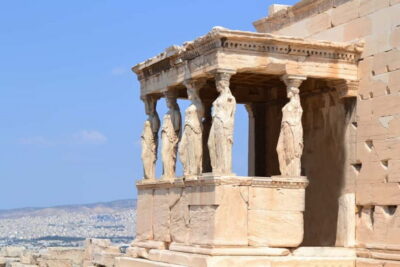
Acropolis, Parthenon & Acropolis Museum Guided Tour
Read our review →

Acropolis: Acropolis and Parthenon Guided Walking Tour
Read our review →
Acropolis monuments & Parthenon Walking Tour with Optional Acropolis Museum
Read our review →Browse the lists this tour appears in