
Reviewed · ACROPOLIS TOURS
Athens: Acropolis Guided Walking Tour without Entry Ticket
Ancient Athens rewards a closer look. This two-hour walking tour takes you through the Acropolis with a Spanish-speaking licensed guide, linking the stones, temples, theaters, gods, and old stories that can be easy to miss on your own. At $32.75 per person, it offers a reasonably priced way to add context to one of Greece’s most important sites.
I especially like the focus on mythology and history, not just quick photo stops. I also like the chance to ask questions in a small group, with guides such as Juan praised for making the visit clear and lively even in strong heat and heavy crowds. The main catch is important: your Acropolis entry ticket is not included, so you must buy it separately and match it to the tour time.
In This Review
- Key points to know before booking
- What this Acropolis walk does well
- Meeting at Acropolis Metro station
- Theater of Dionysus and the world of Greek drama
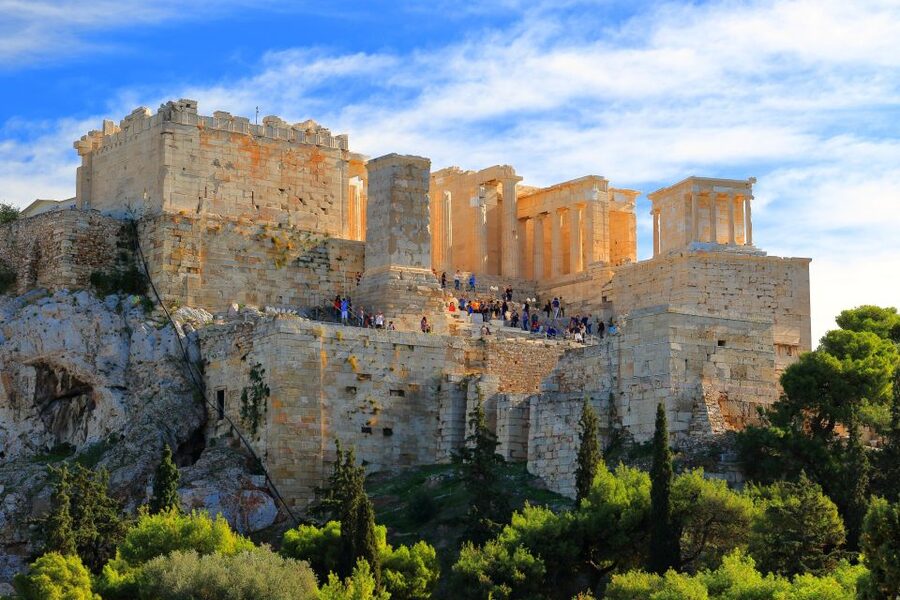
- The Propylaea, the Acropolis gateway
- Parthenon views and Athena’s sacred hill
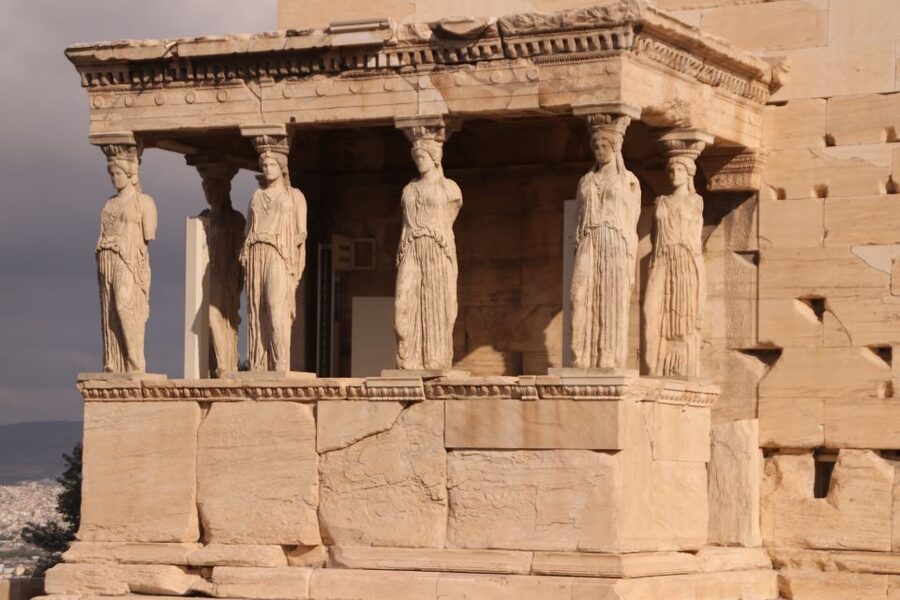
- Erechtheion and the Caryatides
- Temple of Athena Nike and Odeon of Herodes Atticus
- Asclepius, mythology, and the ancient healing tradition
- The guide and Spanish-language experience
- Price, ticket costs, and overall value
- Heat, crowds, and how to plan the visit
- Who should book this Acropolis tour?
- Should you book it?
- FAQ
- Is the Acropolis entry ticket included?
- How much does the guided tour cost?
- How long does the tour last?
- What language is the tour conducted in?
- Where do you meet the guide?
- How early should you arrive?
- Can I buy the Acropolis ticket at the entrance?
- What ticket time is needed for the tour?
- Are strollers and wheelchairs allowed?
- Can I cancel the booking?
Key points to know before booking
- Spanish-language guiding: The tour is offered with a live guide in Spanish, so it suits Spanish-speaking visitors best.
- Two hours inside the Acropolis: The route covers major monuments, including the Parthenon, Propylaea, Erechtheion, and Temple of Athena Nike.
- Ticket required in advance: The $32.75 price covers the guide and tour, not admission to the archaeological site.
- Strong focus on stories: Greek gods, ancient festivals, and the myths connected with the ruins are central to the commentary.
- Meeting point by Acropolis Metro station: You meet at street level, then walk to the entrance area with the guide.
- Time to continue exploring: After the guided portion, you can stay longer and see more of the Acropolis at your own pace.
What this Acropolis walk does well
The Acropolis can look straightforward in photographs: one hill, a few famous temples, lots of pale marble. On site, it is a more complicated place. The ruins belong to different periods, served different religious purposes, and are tied to stories about Athena, Dionysus, Asclepius, and other figures from Greek mythology.
That is where this tour earns its fee. A guide can point out what you are seeing in the right order and explain why each building mattered. Instead of treating the Parthenon as one isolated monument, you get a wider picture of the citadel as a religious center above Athens.
The tour also includes several places that are easy to pass without understanding. You see the Theater of Dionysus, where festivals honoring the god Dionysus took place, and the Temple of Athena Nike, a much smaller temple dedicated to the goddess who protected the city. The guide also discusses the Odeon of Herodes Atticus, the Erechtheion, the Caryatides, and the Propylaea.
I like that balance. The Parthenon gets the attention it deserves, but the tour does not pretend that the Acropolis begins and ends with one building.
More Walking Tours in Athens
- Athens: Acropolis and Parthenon Guided Walking Tour
★ 4.6 · 5,882 reviews - Greek Food Walking Tour in Athens
★ 5.0 · 4,740 reviews - Acropolis: Acropolis and Parthenon Guided Walking Tour
★ 4.7 · 3,442 reviews
Meeting at Acropolis Metro station
The meeting point is at the street-level entrance of the Acropolis Metro station. You should arrive between 10 and 5 minutes before the scheduled start, though I would aim for the earlier end of that window. Athens traffic, warm weather, and the need to locate your guide can quickly turn five spare minutes into none.
The meeting point is less than two minutes on foot from the ticket office area at the South Entrance. That short distance matters because the ticket process is separate from the tour itself. You need to have your admission ticket ready before joining the group.
If you buy your ticket at the ticket office, plan to arrive there around 30 minutes before the tour starts. You will need time to wait, receive the ticket, and then walk to the meeting point. The cleaner option is to buy online ahead of time, especially during the high season when a preferred time slot may sell out.
The exact ticket time must match the tour schedule. For the low season, from November 1 through March 31, the 9:15 tour requires an entry slot from 9:00 to 10:00, while the 2:30 tour requires a slot from 2:00 to 3:00. In the high season, from April 1 through October 31, the 8:15 tour requires an 8:00 to 9:00 ticket, and the 5:00 tour requires a 5:00 to 6:00 ticket.
This is the part of the booking process most likely to cause trouble. Check admission availability before paying for the guided walk. If you cannot find a ticket, the operator says it will help, but it is wiser to handle the ticket early rather than rely on last-minute fixes.
Theater of Dionysus and the world of Greek drama
The route includes the Theater of Dionysus, a major open-air theater below the Acropolis. Its stated capacity is 17,000 spectators, which gives you a useful sense of the scale of public festivals in ancient Athens.
This stop adds an important human element to the visit. The Acropolis is often presented as a collection of temples, but the theater connects the site to performance, civic life, and religious celebrations. The festivals honoring Dionysus were not simply entertainment in the modern sense. They were part of the city’s religious and public calendar.
A guide is especially useful here because the surviving stone seats and foundations do not explain themselves. You can look across the theater and picture the size of the audience, then connect the site to the plays and ceremonies associated with ancient Athens.
Do not expect a long theatrical presentation or a separate performance. This is a walking tour, so the guide’s explanation is the experience. The stop works best for you if you enjoy historical context and want to understand how the buildings fit into ancient city life.
The Propylaea, the Acropolis gateway
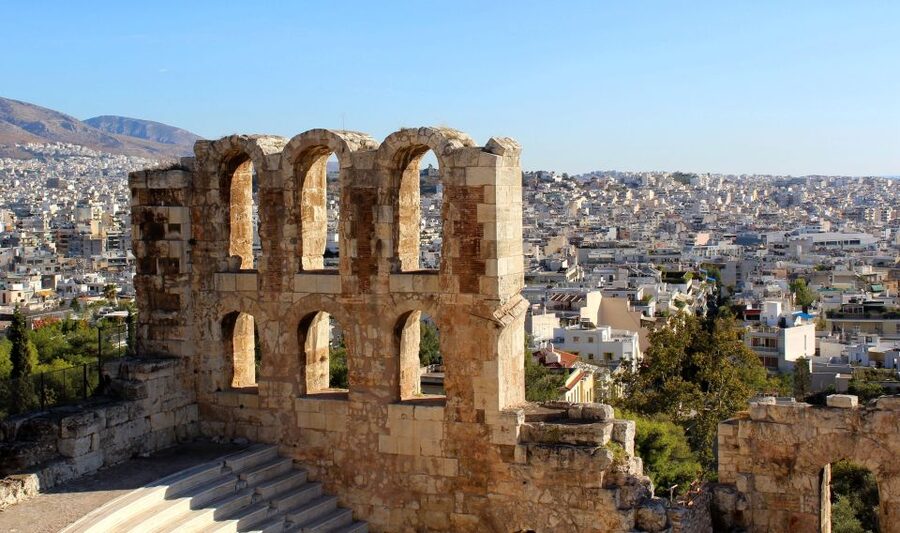
The Propylaea forms the monumental gateway into the rocky citadel. Passing through it gives the tour a natural sense of arrival. You are not simply walking uphill toward scattered ruins. You are entering a carefully planned sacred area dedicated to Athena, the goddess protector of Athens.
This is also one of the places where a guide can help you read the architecture. The Propylaea is grand, formal, and imposing, but its role as an entrance can be overlooked when everyone is eager to see the Parthenon. The guide places it in the larger design of the Acropolis and explains how visitors would have approached the sacred center.
The route is on ancient, uneven ground. The supplied information specifically says that baby strollers, non-folding wheelchairs, and electric wheelchairs are not allowed. That restriction gives you a practical warning about the terrain and access conditions. Wear shoes with a secure grip, and be ready for a walking visit rather than a smooth, paved museum route.
More ways to see the Acropolis:
- Athens: Acropolis & up to 5 Archaeological Sites Combo Pass
★ 4.4 · 12,619 reviews - Athens: Acropolis Ticket with Optional Audio or Live Guide
★ 4.2 · 11,055 reviews - Athens: Acropolis, Parthenon & Acropolis Museum Guided Tour
★ 4.8 · 9,316 reviews - Athens: Acropolis, Parthenon & Acropolis Museum Guided Tour
★ 4.8 · 3,579 reviews
Parthenon views and Athena’s sacred hill
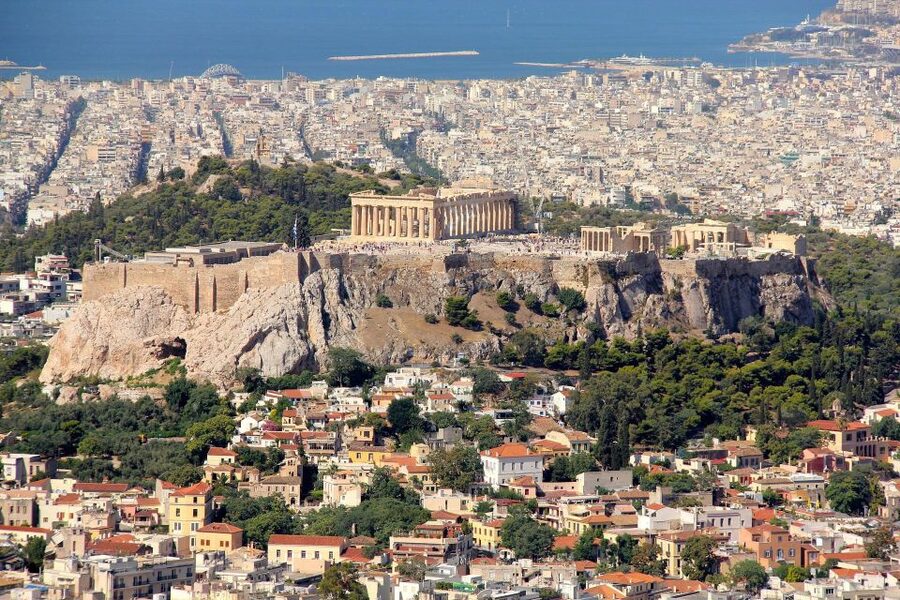
The Parthenon is the main reason most people come to the Acropolis, and the tour gives it proper attention. The temple was dedicated to Athena, whose protection was central to the identity of Athens.
The guide’s role here is to move beyond the familiar postcard view. You hear about the religious meaning of the site, the mythology connected with Athena, and the long story of Athens as both an ancient city and the capital of modern Greece. That broader explanation helps you understand why the Parthenon matters beyond its size and fame.
You should also keep your expectations realistic. This is a two-hour guided walk through a major archaeological site, not a private architectural seminar. Crowd levels and heat can affect how long the group can pause at each location. One of the tour’s strengths is that the commentary remains useful even when the site is busy, but busy conditions may limit quiet viewing and photography.
The guide may be the difference between feeling rushed and feeling oriented. The Spanish-speaking guide can give you a clear sequence, identify the major structures, and answer questions while you are standing in front of them rather than trying to piece everything together later.
Erechtheion and the Caryatides
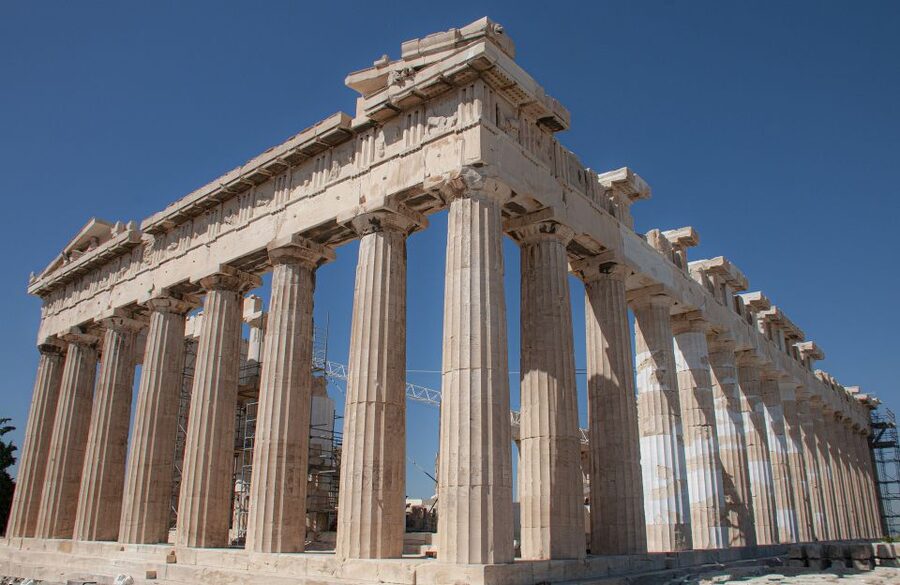
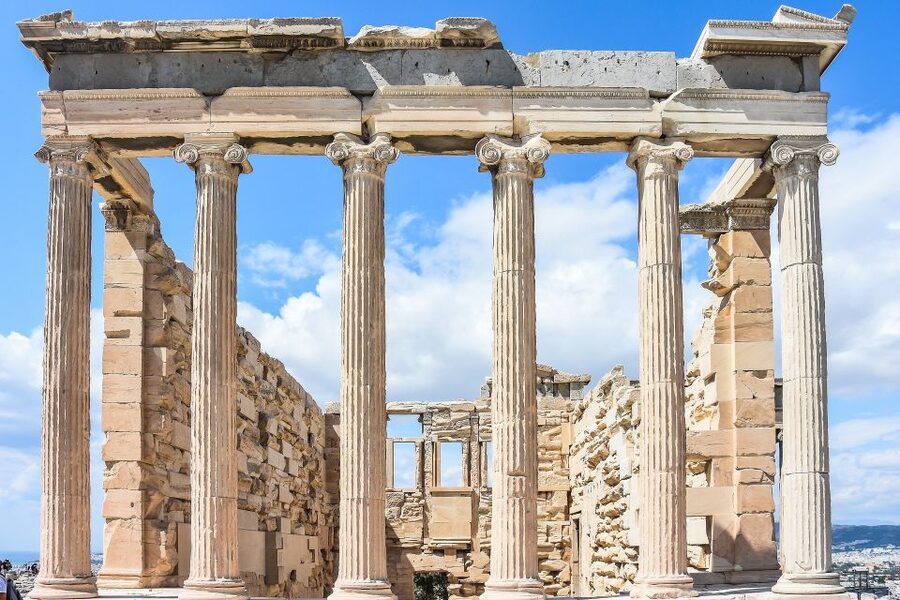
The Erechtheion is one of the most distinctive buildings on the Acropolis. It is connected with Erechtheus, a figure described in the tour material as a demi-god, and it has an unusual design that makes it especially memorable after the more formal Parthenon.
The Caryatides are the famous carved female figures associated with the building. Seeing them in person gives you a chance to notice their posture, clothing, and architectural role. They are not simply decorative statues placed beside a temple. They function as supporting figures, combining sculpture with the structure of the building.
This is a good stop for questions. You can ask about the figures, the name Erechtheion, or the myths tied to the site. The tour’s small-group format should make that easier than a large coach visit, although the exact group size is not provided.
The Caryatides are also a reminder that the Acropolis is not one single style or one simple story. Different monuments have different purposes and legends. A guide helps keep those distinctions clear.
Temple of Athena Nike and Odeon of Herodes Atticus
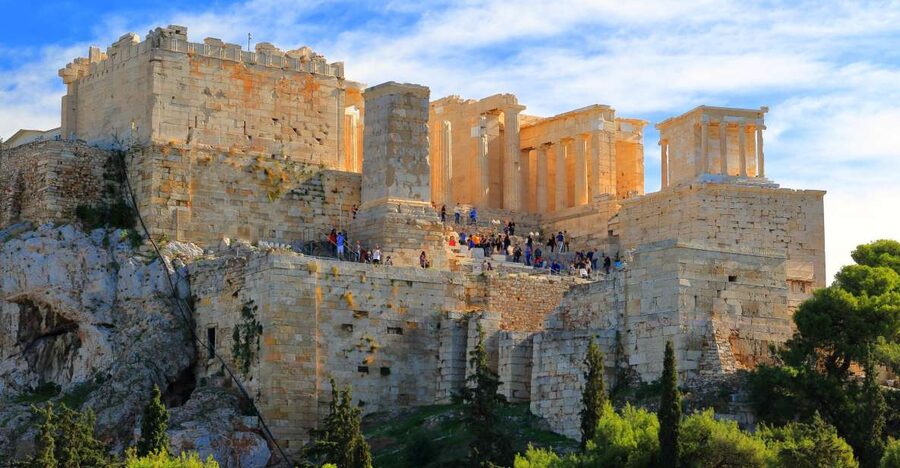
The Temple of Athena Nike is described as the smallest temple on the route. Its compact scale makes it a useful contrast with the Parthenon and the Propylaea. The building is dedicated to Athena Nike, the aspect of Athena associated with victory.
The stop is brief in physical scale but important in meaning. It shows how the Athenians gave different roles and titles to the same goddess, depending on the protection or success they sought. The guide’s mythology commentary helps turn that detail into something understandable rather than a list of unfamiliar names.
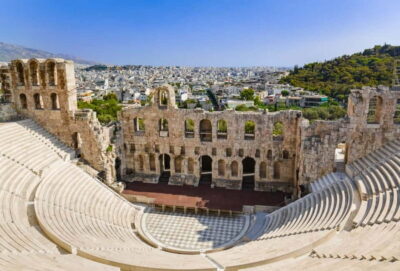
The Odeon of Herodes Atticus is much larger and more dramatic. This giant stone theater is still one of the Acropolis area’s most striking structures. Its curved form and scale help you grasp how public performances were built into the cultural life of Athens.
The tour includes both temples and theaters, which gives the walk a good rhythm. You move from religious monuments to civic and performance spaces, then back to the central buildings of the citadel. That variety keeps the two hours from becoming a parade of similar columns.
Asclepius, mythology, and the ancient healing tradition
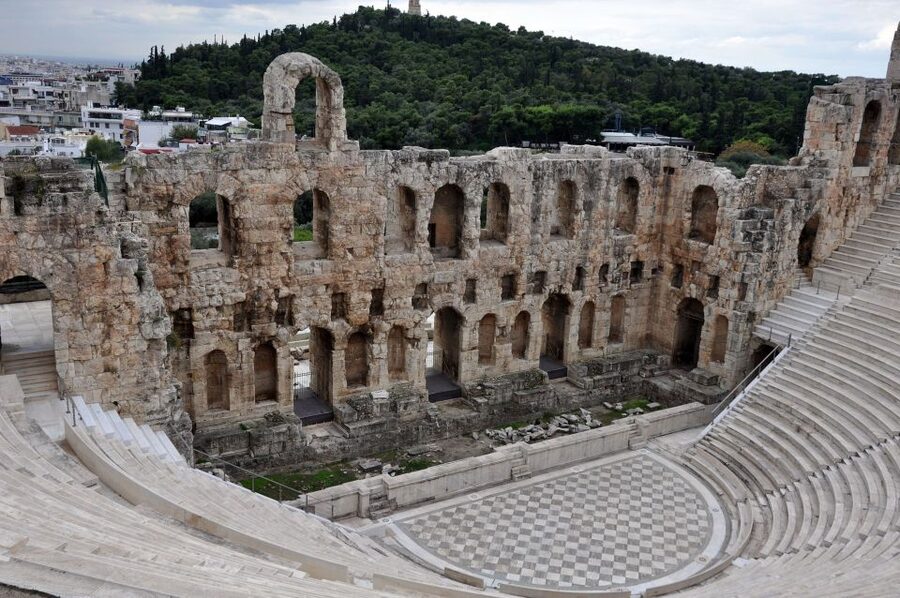
The itinerary also calls attention to the temple of Asclepius. Asclepius was linked with healing, and this part of the site adds another layer to the religious world surrounding the Acropolis.
The value here lies in seeing ancient religion as practical as well as ceremonial. People came to sacred places with hopes for protection, victory, good fortune, and health. The guide connects these sites with the myths behind the ruins, giving you a more complete picture of what the Acropolis meant to the people who used it.
You will hear stories about Greek gods and the legends tied to the archaeological site throughout the walk. This makes the experience a good fit for you if mythology helps historical places come alive. If you prefer only dates, architectural terms, and excavation facts, the storytelling approach may feel less focused than a specialist archaeology tour.
The guide and Spanish-language experience
The tour is led by a licensed guide and is conducted in Spanish. That language detail is central, not incidental. You should book only if Spanish is comfortable for you, since the value of the tour depends on following the explanations, asking questions, and catching the connections between the monuments and the myths.
The strongest feedback centers on the guide’s explanations. One guide named Juan is singled out for sharing history and anecdotes in a way that stayed engaging despite heat and crowds. Other praise highlights detailed explanations about Athens and a pleasant, well-organized route.
That points to the tour’s best quality: interpretation. The Acropolis itself is impressive without help, but a good guide gives you a way to organize what you see. The small-group setting also gives you a chance to ask about a specific temple, myth, or historical detail instead of staying silent in a large crowd.
Guide quality can vary from one departure to another, so I would not book this as a guaranteed private experience. Still, the licensed guide, Spanish-language format, and strong emphasis on questions make it a better choice than simply entering with no plan.
Price, ticket costs, and overall value
The guided walk costs $32.75 per person. That is a fair price for two hours with a licensed guide at one of Athens’ most important archaeological sites, but the figure does not cover admission.
You need to budget for the Acropolis ticket separately. This changes how you should compare the tour with other options. A cheaper-looking guided walk may not be cheaper once admission is added, while a more expensive package may include the ticket and save you the trouble of arranging a timed entry.
I see the $32.75 as payment for orientation, stories, and access to a live Spanish-speaking expert rather than for admission itself. If you already know the Acropolis well or prefer reading at your own pace, you may not need that extra cost. If this is your first visit, the fee can be worthwhile because the site is large, busy, and packed with monuments that are easy to confuse.
Free cancellation up to 24 hours in advance and the option to reserve now and pay later add useful flexibility. The most important financial rule remains simple: confirm that you can obtain the required Acropolis ticket before the selected tour time.
Heat, crowds, and how to plan the visit
The tour lasts two hours, and you should expect a steady walking visit in an exposed archaeological setting. Heat and crowds have affected past departures, so early or late options may be more comfortable when available, particularly during the high season.
The exact starting times vary by date. You must check availability, then purchase the correct admission time for the chosen departure. The high-season times provided are 8:15 in the morning and 5:00 in the afternoon. The low-season times are 9:15 in the morning and 2:30 in the afternoon.
Arrive early enough to deal with your ticket, especially if you plan to buy it at the South Entrance ticket office. Bring water and protect yourself from the sun, though the supplied details do not specify what facilities or equipment are available on site.
After the guided portion, you have free time to continue exploring at your own pace. This is a useful feature because two hours may be enough for the key monuments but not enough for every corner of the archaeological area. The formal activity ends back at the meeting point, yet the free time lets you linger instead of leaving as soon as the guide finishes.
Who should book this Acropolis tour?
I would choose this experience if you want a short, focused introduction to the Acropolis and prefer Spanish commentary. It suits first-time visitors, couples, families with older children, and anyone who wants mythology explained alongside the architecture.
It also works well if you want to leave room in your day for other parts of Athens. Two hours gives you a strong foundation without taking over a full morning or afternoon.
I would look elsewhere if you need wheelchair access, want to bring a baby stroller, or require a non-Spanish tour. I would also skip it if you want a private guide, a long archaeological lecture, or a package with admission already handled.
Should you book it?
Book this tour if you value clear storytelling, a licensed Spanish-speaking guide, and a compact route through the Acropolis’ major monuments. The praise for detailed explanations, organization, and guides such as Juan gives it a strong case at $32.75, provided you treat the admission ticket as a separate purchase.
The best practical move is to secure the timed Acropolis ticket first, then match it to the tour’s departure. If you do that, arrive early, prepare for heat and uneven ground, and use the free time afterward to explore at your own speed.
FAQ
Is the Acropolis entry ticket included?
No. You must buy the Acropolis entry ticket separately, either online or at the ticket office.
How much does the guided tour cost?
The tour costs $32.75 per person. This price covers the guided Acropolis visit and licensed guide, but not admission.
How long does the tour last?
The guided walking tour lasts two hours. Afterward, you have free time to continue exploring the site at your own pace.
What language is the tour conducted in?
The live tour guide speaks Spanish.
Where do you meet the guide?
You meet the guide at the street-level entrance of the Acropolis Metro station.
How early should you arrive?
You should arrive between 10 and 5 minutes before the tour begins. If buying your ticket at the ticket office, go to the South Entrance ticket office around 30 minutes before the tour.
Can I buy the Acropolis ticket at the entrance?
Yes. You can buy it at the ticket office area of the South Entrance, but you need to allow time for the line before going to the meeting point.
What ticket time is needed for the tour?
The required entry time depends on the season and departure. In low season, use the 9:00 to 10:00 slot for the 9:15 tour or the 2:00 to 3:00 slot for the 2:30 tour. In high season, use the 8:00 to 9:00 slot for the 8:15 tour or the 5:00 to 6:00 slot for the 5:00 tour.
Are strollers and wheelchairs allowed?
Baby strollers, non-folding wheelchairs, and electric wheelchairs are not allowed.
Can I cancel the booking?
Yes. You can cancel up to 24 hours before the tour for a full refund. You can also reserve now and pay later.
Just added around Athens
- Delphi One Day Trip from Athens★ 4.0 · 98 reviews
- Mercedes Private Tour to Delphi and Arachova★ 5.0 · 30 reviews
- Private Delphi and Hosios Loukas Monastery – Great Lunch and Drinks Included★ 5.0 · 36 reviews
- Day tour to Ancient Olympia,Ancient Sparta Mycenae Including Meal★ 5.0 · 54 reviews
- Athens: Half Day Trip To Cape Sounio/Poseidon Temple Semi Private★ 5.0 · 131 reviews
- Athens Half-Day Private Tour Acropolis, Parthenon City Highlights★ 5.0 · 35 reviews
- From Athens: Day Tour to Mykonos★ 5.0 · 64 reviews
- Culinary Secrets of Downtown Athens★ 5.0 · 103 reviews
Acropolis Tours, compared.
Acropolis & up to 5 Archaeological Sites Combo Pass
Read our review →

Acropolis, Parthenon & Acropolis Museum Guided Tour
Read our review →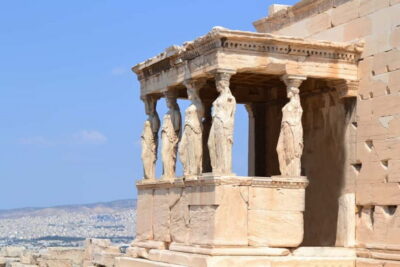
Acropolis, Parthenon & Acropolis Museum Guided Tour
Read our review →

Acropolis: Acropolis and Parthenon Guided Walking Tour
Read our review →
Acropolis monuments & Parthenon Walking Tour with Optional Acropolis Museum
Read our review →Browse the lists this tour appears in