
Reviewed · ACROPOLIS TOURS
Athens & Acropolis Highlights: Greek Mythology Small-Group Tour
Myth makes Athens easier to read. This four-hour walk connects the Acropolis, Ancient Agora, and Temple of Olympian Zeus with the gods, heroes, artists, and rulers behind them. I like the way the tour joins stories to stones, and I like the small-group format, capped at 15 people. The main catch is that admission fees are extra, and the climb includes steep steps, uneven ground, and little shade.
The mythology focus gives this tour more life than a basic monument walk. Guides such as Irene, Michael, Dani, Christina, and Alexandros have been praised for explaining difficult ideas in plain language, using visual aids, asking questions, and tying ancient Athens to the modern city.
You should also know that the quality depends heavily on your guide. Most guides have kept the pace friendly and informative, but one reported group had trouble staying together. A guide without a microphone can also be hard to hear when the Acropolis is crowded.
In This Review
- Key points before you book
- Why Greek mythology changes the Acropolis
- Starting beneath the Arch of Hadrian
- Climbing to the Acropolis
- The Theater of Dionysus and the birth of drama
- Athena Nike and the wingless goddess
- The Erechtheion and Athena’s sacred city
- The Parthenon in 20 focused minutes
- From the Acropolis to the Ancient Agora
- Ending at the Temple of Hephaestus
- What the $54.42 price really covers
- The guide makes or breaks the morning
- Who will get the most from this tour?
- Booking, timing, and cancellation details
- Should you book the Athens mythology tour?
- FAQ
- How long is the Athens and Acropolis mythology tour?
- Where does the tour begin?
- Where does the tour end?
- Are Acropolis tickets included?
- Are Ancient Agora tickets included?
- What is included in the tour price?
- Is the tour suitable for people with limited mobility?
- Can I cancel for a refund?
Key points before you book
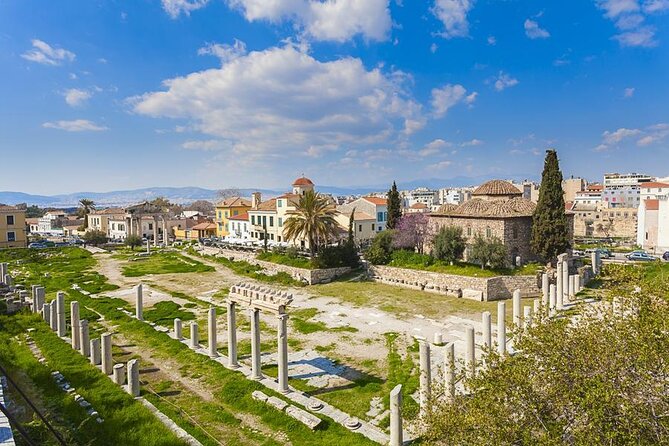
- Myths connect the major ruins: Hear why Athena became Athens’ patron goddess, why Nike had no wings, and how Hephaestus served the tradespeople of the Agora.
- The route covers two major archaeological areas: You visit the Acropolis and Ancient Agora, then finish at the Temple of Hephaestus.
- The group is limited to 15 people: That is small enough for questions and easier movement than a large coach tour.
- Tickets cost extra: The listed admission is €30 for the Acropolis and €20 for the Ancient Agora, in addition to the $54.42 tour price.
- Expect a real walk: The route includes a steep Acropolis climb, stairs, downhill sections, and uneven ancient paving.
- The timing matters: At about four hours, this uses a good part of a morning or afternoon, but it gives you a useful framework for further sightseeing.
Why Greek mythology changes the Acropolis
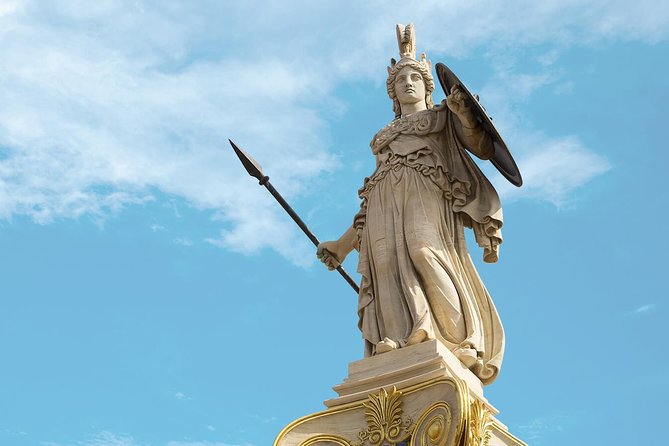
The Acropolis can be confusing if you see it as a collection of broken columns. The monuments are beautiful, but their purpose is easier to understand when you know who they honored and what role religion played in public life.
This tour uses mythology as the thread. You hear about Athena, Zeus, Nike, Dionysus, Hephaestus, and the old legends tied to Athens. The stories do not replace archaeology or architecture. They give you a way to remember what you are seeing.
I especially like this approach for visitors who know the names of the Greek gods but not the differences between them. Guides have used printed pictures and visual aids to show how damaged buildings may once have looked. That can help you picture the original colors, sculptures, and crowded religious setting.
The best guides also connect myth with political power. The Acropolis was not only a place for worship. It showed the strength and wealth of Athens. As you look at the temples, you begin to see the hill as a religious center, civic symbol, and public statement all at once.
More ways to see the Acropolis:
- Athens: Acropolis & up to 5 Archaeological Sites Combo Pass
★ 4.4 · 12,619 reviews - Athens: Acropolis Ticket with Optional Audio or Live Guide
★ 4.2 · 11,055 reviews - Athens: Acropolis, Parthenon & Acropolis Museum Guided Tour
★ 4.8 · 9,316 reviews
Starting beneath the Arch of Hadrian
The meeting point is by the Arch of Hadrian on Leoforos Vasilisis Amalias 50, near the Temple of Olympian Zeus. This is a practical central location between the Acropolis and the city center, and it is near public transportation.
The tour begins with the Temple of Olympian Zeus, known in Greek as the Olympeion. The guide discusses the temple from outside for about 15 minutes, so this is an orientation stop rather than a full visit inside the archaeological site.
The remaining columns give you a sense of the temple’s enormous scale. It was dedicated to Zeus and became one of the great marble buildings of the ancient world. The legends surrounding Zeus also set the tone for the rest of the walk, where gods and human ambition repeatedly overlap.
Because admission is not included, you do not enter the Temple of Olympian Zeus on this tour. That is worth knowing if you want a close look at the entire site. Still, the exterior stop works well as a quick introduction before the main climb.
Climbing to the Acropolis
The Acropolis receives about 90 minutes, making it the main event. You see the Propylaia, Parthenon, Temple of Athena Nike, Erechtheion, and views around the hill. You also pass the Theater of Dionysus as part of the route.
This is an active walking tour. The climb can be steep, and the surfaces are uneven. Several guides have broken the ascent into short sections, pausing at shaded spots to explain the next site. That makes a real difference on a hot day.
Bring water, wear sturdy walking shoes, and use a hat if you have one. Large backpacks, big bags, and strollers are not allowed at the Acropolis and should not be brought on the tour. You will be much more comfortable with a small amount of gear.
The group size should help here. A maximum of 15 people is manageable, especially when the guide stops to point out architectural details or answer questions. Still, the Acropolis can be crowded, and you may need to stay close to the guide to hear every explanation.
The Theater of Dionysus and the birth of drama
The Theater of Dionysus receives about 15 minutes. It sits on the southern slope of the Acropolis and is tied to Dionysus, the god of wine and the grape harvest.
This is where the works of Aeschylus, Sophocles, Euripides, and Aristophanes were first performed. Even a short stop helps you understand that theater in Athens was not simply entertainment. It was part of religious festivals and public life.
I find this one of the most useful stops for making the Acropolis feel less like a museum piece. You are looking at a place connected with comedy, tragedy, civic debate, and religious celebration. The stones remain, but the stories give the setting a human scale.
The 15-minute allocation is brief. You will not have time for a long theater lecture or an extended look at every seat. The purpose is to place the theater in the wider story of Athens before you continue uphill.
A few more Athens half-days to weigh up
- Athens: Cape Sounion & Poseidon Temple Sunset Half-Day Trip
★ 4.8 · 8,241 reviews - Athens: Acropolis and Parthenon Guided Walking Tour
★ 4.6 · 5,882 reviews - All Day Cruise -3 Islands to Agistri,Moni, Aegina with lunch and drinks included
★ 5.0 · 4,958 reviews - Athens, Piraeus, and Coastline: Blue Hop-On Hop-Off Bus
★ 3.9 · 4,849 reviews
Athena Nike and the wingless goddess
The Temple of Athena Nike gets about 10 minutes. It is a small, elegant temple dedicated to Athena in her role as Nike, the goddess of victory.
One memorable detail concerns the cult statue. The statue was said to have no wings so Nike would never leave Athens. This is exactly the sort of compact myth that makes the stop easy to remember.
The temple itself is also a lesson in how much meaning the Athenians packed into small spaces. While the Parthenon dominates the hill, Athena Nike is more intimate. It is easy to pass by without a guide, but the explanation gives it a clear place in the religious program of the Acropolis.
The stop is short, so you should expect a focused explanation rather than quiet time alone with the monument.
The Erechtheion and Athena’s sacred city
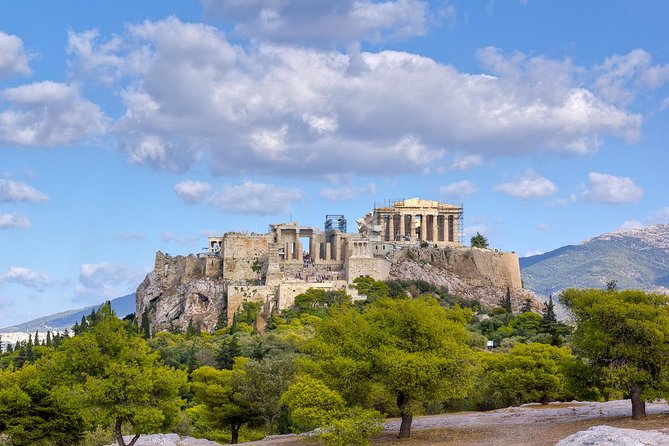
The Erechtheion receives about 10 minutes. This unusual temple was built to house the ancient wooden cult statue of Athena and to honor the city at the height of its influence.
Its irregular form sets it apart from the more balanced Parthenon. The shape reflects the complicated sacred traditions of the Acropolis, where several important myths and older cults came together.
A guide can help you understand why the building does not look like a simple rectangular temple. The Erechtheion was not designed only for visual symmetry. It served several religious purposes in a difficult spot on the hill.
If you want close photographs of the famous Caryatid figures, check what is accessible on the day of your visit. The tour gives you the historical setting, but crowd control and site rules can affect how long you can linger.
The Parthenon in 20 focused minutes
The Parthenon gets about 20 minutes, which is enough for a strong introduction but not enough for every architectural detail. Built in the mid-fifth century BCE, it was dedicated to Athena Parthenos, Athena the Virgin.
The guide explains the temple’s place in the development of the Doric order. You will also hear how the Parthenon served both religious and civic purposes. Its clean lines and massive columns can look simple from a distance, but the building contains careful adjustments designed to make it appear balanced to the eye.
The mythology matters here because Athena was more than a character in old stories. She was the patron goddess of Athens, linked with wisdom and victory in war. The Parthenon therefore represented the city’s identity as much as it honored a deity.
Do not expect a private viewing. The Acropolis is one of Athens’ busiest sights, and the guide must work around other groups. A morning start can help. One guide noted that the crowds had doubled or tripled by the time the group was leaving, so an earlier time is worth considering if the schedule allows.
From the Acropolis to the Ancient Agora
The tour then moves to the Ancient Agora for about an hour. This is a major strength of the route because it shows you how Athens worked below the sacred hill.
The Agora was the city’s political, commercial, administrative, social, religious, and cultural center. It was also connected with justice. Instead of seeing Athens only through grand temples, you get a picture of daily public life.
The contrast is useful. The Acropolis presents the city’s religious and symbolic power. The Agora shows the debates, trade, legal business, and social contact that kept the city going.
The guide’s mythology stories continue here, but the emphasis shifts toward people and institutions. You learn how the public spaces shaped ancient Athenian life and why this area mattered long after the first temples were built.
The one-hour visit is long enough to make the Agora feel like more than a short add-on. You should still expect walking across uneven ground and stopping at selected points rather than examining every ruin in detail.
Ending at the Temple of Hephaestus
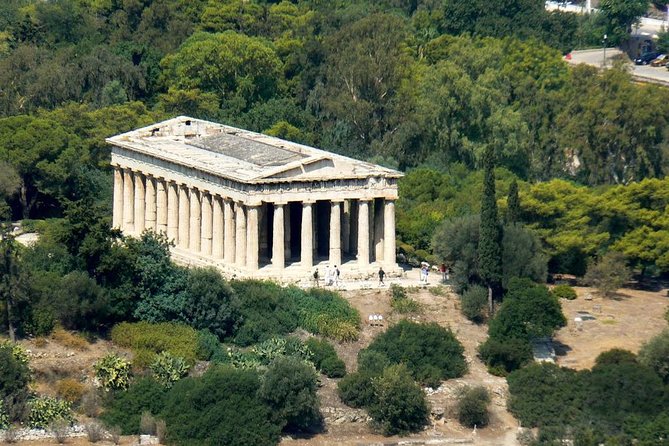
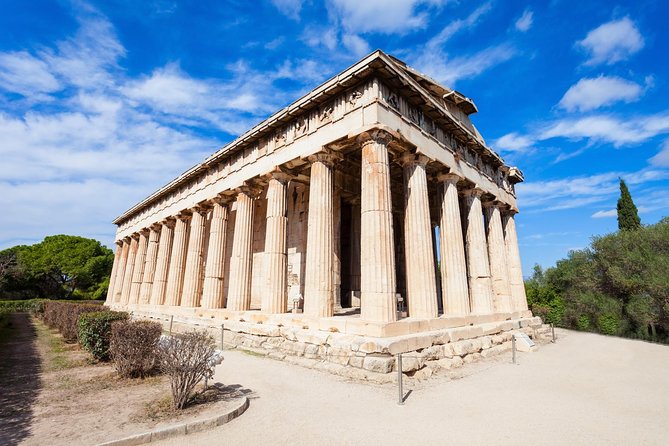
The tour finishes at the Temple of Hephaestus, described in the itinerary as the Temple of Aries, which appears to be a naming error. The monument is dedicated to Hephaestus and Athena Ergani.
Hephaestus protected metalworkers, while Athena Ergani protected potters and other skilled trades. That pairing makes sense in the Agora, a place where merchants, craftspeople, and shop owners worked.
The temple is one of the best-preserved ancient temples in the world. Its condition lets you see the basic design and function more clearly than at the heavily damaged Parthenon. The guide uses the final 20 minutes to explain the building and its link with the working life of the Agora.
Ending here is practical. You finish at the Ancient Agora in central Athens rather than returning to the original meeting point. You can continue sightseeing nearby, eat in the surrounding area, or make your own way back using public transportation.
What the $54.42 price really covers
The tour costs $54.42 per person, which is a reasonable price for a four-hour guided walk with a certified guide, a small group, and a map of ancient Athens. The value depends on how much you want interpretation rather than simply access.
The important catch is the ticket bill. Acropolis admission is listed at €30 per person, and Ancient Agora admission is listed at €20 per person. That adds €50 to the tour price if you need both tickets, so your total cost can be much higher than the headline amount.
The operator can pre-purchase tickets if you request it. That may save time and reduce confusion, but entry fees are not refundable or exchangeable. People under 25 should carry an ID card or passport in case a discount applies.
Food, drinks, and transportation to and from the meeting point are not included. The tour begins at the Arch of Hadrian and ends at the Ancient Agora, so plan your route before you arrive.
The guide makes or breaks the morning
The strongest part of this experience is the guiding. Past guides have included Irene, Athena, Michael, Dani, Christina, Maria, Theo, Chrysanthi, Alexandros, Sophia, Marika, Demi, Angie, and Ismini. The most praised qualities are clear storytelling, patience, strong mythological knowledge, and a good sense of pace.
Some guides have used printed photographs to show how monuments once looked. Others have asked questions about the gods, which keeps the group involved instead of turning the walk into a long lecture.
Care also matters. Guides have stopped in shade, pointed out places to refill water bottles or sit, and adjusted the climb for the group. That is especially useful in Athens’ heat.
There are limits. One account described a group of 18 and difficulty staying together, although the stated maximum is 15. Another found it hard to hear without a microphone. Stay near the guide, especially on the Acropolis, and ask where the group will regroup if you fall behind.
Who will get the most from this tour?
I would choose this tour if you want the major Athens monuments explained through stories rather than viewed in silence. It suits first-time visitors, families with older children, mythology fans, and anyone who wants a clear introduction before exploring museums or individual ruins on their own.
It is also useful if your Athens time is limited. Four hours covers a lot, and the route gives you a working map of the city’s sacred, political, and social centers.
I would be more cautious if you dislike hills, stairs, crowds, or fixed group pacing. The walk is described as moderate, but that does not mean easy. Hot weather, uneven paving, and the Acropolis climb can make the morning tiring.
You should also skip large bags and strollers. Most people can participate, but the route is not a gentle pavement stroll.
Booking, timing, and cancellation details
The experience is offered in English and uses a mobile ticket. Confirmation usually arrives at booking, although reservations made within one hour of departure are confirmed as soon as possible, subject to availability.
Free cancellation applies up to 24 hours before the start time. Cancellations or changes made inside that 24-hour window are not refunded. The tour also requires good weather and a minimum number of participants. If the operator cancels for either reason, you are offered another date or experience, or a full refund.
I would book early if your schedule is tight. The tour is booked an average of 46 days ahead, which suggests that popular dates can fill well before arrival.
Should you book the Athens mythology tour?
Yes, if you want the Acropolis and Agora to feel connected rather than separate archaeological stops. The guide-led storytelling, small group, and four-hour route offer good value at the base price, especially for a first visit.
Just budget for the €50 in listed entry fees, prepare for a steep walk, and choose a morning departure if you can. If you want quiet photography, detailed architectural study, or a museum visit, add separate time elsewhere.
For a practical introduction to Athens’ gods, temples, theater, politics, and working life, I would book it. The best guides turn a demanding walk into a memorable lesson, and that is exactly what this city deserves.
FAQ
How long is the Athens and Acropolis mythology tour?
The tour lasts approximately four hours.
Where does the tour begin?
It begins at the Arch of Hadrian, at Leoforos Vasilisis Amalias 50 in Athens.
Where does the tour end?
It ends at the Ancient Agora of Athens.
Are Acropolis tickets included?
No. Acropolis admission is not included. The listed admission fee is €30 per person for the Acropolis.
Are Ancient Agora tickets included?
No. Ancient Agora admission is not included. The listed admission fee is €20 per person for the four-hour tour option.
What is included in the tour price?
The price includes an expert certified guide, a small-group experience, and a fun ancient Athens map.
Is the tour suitable for people with limited mobility?
The tour includes a steep Acropolis climb, stairs, uphill and downhill walking, and uneven surfaces. Most people can participate, but you should be comfortable with that level of walking.
Can I cancel for a refund?
Yes. You can cancel at least 24 hours before the start time for a full refund. Cancellations within 24 hours are not refunded.
Just added around Athens
- Delphi One Day Trip from Athens★ 4.0 · 98 reviews
- Mercedes Private Tour to Delphi and Arachova★ 5.0 · 30 reviews
- Private Delphi and Hosios Loukas Monastery – Great Lunch and Drinks Included★ 5.0 · 36 reviews
- Day tour to Ancient Olympia,Ancient Sparta Mycenae Including Meal★ 5.0 · 54 reviews
- Athens: Half Day Trip To Cape Sounio/Poseidon Temple Semi Private★ 5.0 · 131 reviews
- Athens Half-Day Private Tour Acropolis, Parthenon City Highlights★ 5.0 · 35 reviews
- From Athens: Day Tour to Mykonos★ 5.0 · 64 reviews
- Culinary Secrets of Downtown Athens★ 5.0 · 103 reviews
Acropolis Tours, compared.
Acropolis & up to 5 Archaeological Sites Combo Pass
Read our review →
Acropolis, Parthenon & Acropolis Museum Guided Tour
Read our review →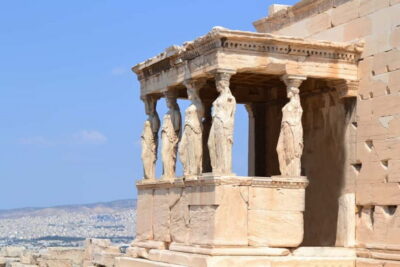
Acropolis, Parthenon & Acropolis Museum Guided Tour
Read our review →

Acropolis: Acropolis and Parthenon Guided Walking Tour
Read our review →
Acropolis monuments & Parthenon Walking Tour with Optional Acropolis Museum
Read our review →Browse the lists this tour appears in