
Reviewed · ACROPOLIS TOURS
Athens: Acropolis, Parthenon & Acropolis Museum Guided Tour
The stones tell only half the story. This Athens walking tour brings the Acropolis to life with a licensed guide, taking you from the Theatre of Dionysus to the Parthenon, then into the Acropolis Museum if you choose that option. I like the strong mix of major monuments and Greek mythology, and I like that guides adjust the pace for families, questions, heat, and tired children. The main catch is price: the $70 tour fee does not include admission tickets, so your total cost can rise quickly.
The route is active and exposed to the sun. You will climb uneven paths and spend much of the visit outdoors, so comfortable shoes, water, sunscreen, sunglasses, and a hat matter. Still, the tour earns its excellent 4.7 rating from 484 reviews, with repeated praise for clear storytelling, patient guides, and the way the museum helps make sense of the broken marble above.
In This Review
- Key points to know before booking
- Meeting at Porinou Street
- Walking through the Theatre of Dionysus
- Climbing through the Propylaea
- Seeing Athena Nike and the Erechtheion
- The Parthenon and the view over Athens
- Adding the Acropolis Museum
- What the $70 price really includes
- Who will get the most from this tour
- Practical advice for a smoother visit
- Should you book the Acropolis guided tour?
- FAQ
- How much does the tour cost?
- How long does the experience last?
- Where do I meet the guide?
- How early should I arrive?
- Is the Acropolis Museum included?
- Which languages are available?
- Is the tour suitable for wheelchair users?
Key points to know before booking
- The guide is the real value: Visitors repeatedly praised guides such as Elizabeth, Alina, Hermes, Anna, Rosa, Mariza, and Thanasis for turning architecture into stories about gods, citizens, artists, and daily life.
- The Acropolis route is more than the Parthenon: You will see the Theatre of Dionysus, Temple of Asclepius, Odeon of Herodes Atticus, Propylaea, Temple of Athena Nike, Erechtheion, and its Caryatids.
- Museum access is optional: Choose the version that includes the Acropolis Museum if you want the statues and archaeological finds explained alongside the monuments.
- Budget for admission separately: The Acropolis ticket is listed at €30 per person, while the museum costs €10 to €20 per person.
- Expect a climb: The tour is not suitable for wheelchair users and requires steady walking on ancient, uneven ground.
- Mondays change the plan: Since the museum closes at 16:00 on Mondays, the itinerary may replace it with the Ancient Agora.
Meeting at Porinou Street
The tour begins at the Athens Walks office at Porinou 5, postal code 11742. Look for the ground-floor office, and arrive at least 15 minutes early. Only one person from your party needs to check in inside, which keeps the start fairly simple.
This location is near the Acropolis and its metro station, but the narrow streets around the hill can be confusing. One family arrived a few minutes late after getting turned around, and the guide called to check on them. I would still avoid relying on that kindness. Save the address before leaving your hotel and build in extra time.
At check-in, the staff provides hearing devices and assigns you to your group. That detail matters on the Acropolis, where wind, crowds, and distance can make a guide difficult to hear. English, Italian, German, French, and Spanish tours are offered, and private groups are available.
There is no hotel pickup or drop-off. You make your own way to the meeting point, then continue on foot for the duration of the tour.
More Museums in Athens
- Athens: Acropolis, Parthenon & Acropolis Museum Guided Tour
★ 4.8 · 9,316 reviews - Athens: Mythology of Delphi, Museum and Arachova Guided Tour
★ 4.6 · 4,008 reviews - Athens: Acropolis, Parthenon & Acropolis Museum Guided Tour
★ 4.8 · 3,579 reviews
Walking through the Theatre of Dionysus
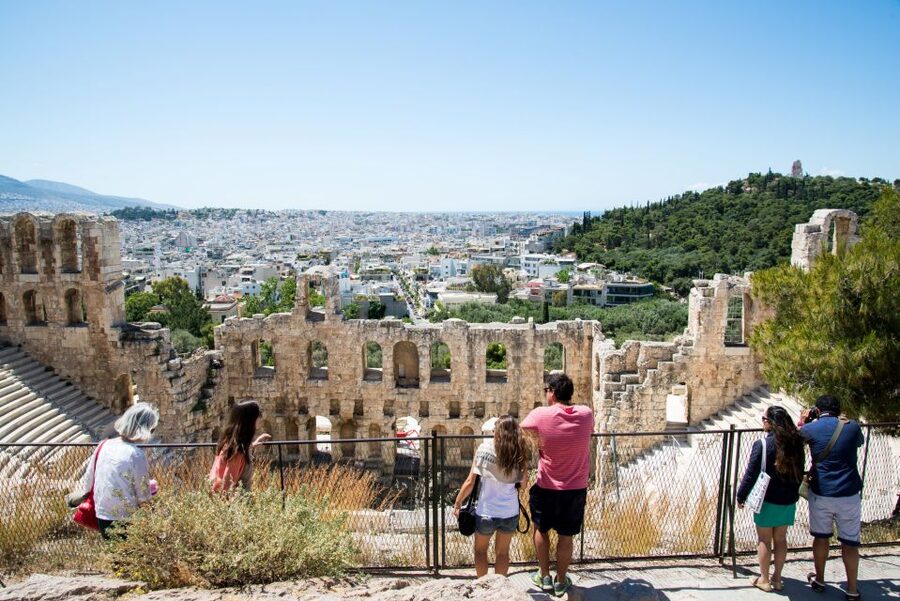
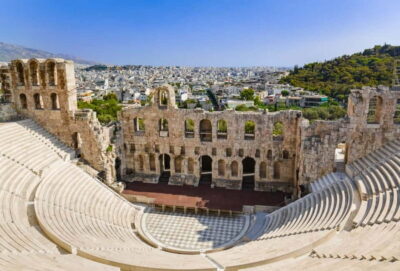
The route introduces you to the Acropolis complex from below, beginning around the Theatre of Dionysus. This is an especially useful first stop because it gives the hill a human setting. Before you look up at temples and columns, you see the place connected with the beginnings of Western theatre.
A guide can explain why this was not simply a performance venue. It was tied to public life, religious festivals, and the worship of Dionysus. Several guides have been praised for mixing mythology with civic history, which helps you understand that ancient Athens was not just a collection of beautiful ruins.
The walk also includes the Temple of Asclepius, associated with healing, and the Odeon of Herodes Atticus. The odeon remains one of the most striking structures near the Acropolis, with its curved form and dramatic setting. Your guide will point out how these places served different purposes and how the hill gathered religion, politics, art, and public ceremony in one compact area.
You will likely stop several times during the climb. That is good news for anyone worried about the steep approach. Guides have been praised for breaking the ascent into manageable sections, adding stories and explanations instead of rushing everyone uphill.
Climbing through the Propylaea
The Propylaea is the grand gateway to the Acropolis. It is not as famous as the Parthenon, but it gives you an immediate sense of how carefully the entrance was designed. The scale shifts as you approach, and your guide can help you notice the planning behind what might otherwise look like scattered columns and damaged walls.
The climb is not a mountain trek, but it is not flat sightseeing either. Ancient paving can be uneven, and the stone may feel slippery underfoot. Wear shoes with a secure sole, and keep your hands free rather than carrying a large bag.
Large luggage and oversized bags are not allowed. Pets and smoking are also prohibited. These rules are easy to follow, but they are worth remembering if you are visiting Athens between hotels or arriving straight from the airport.
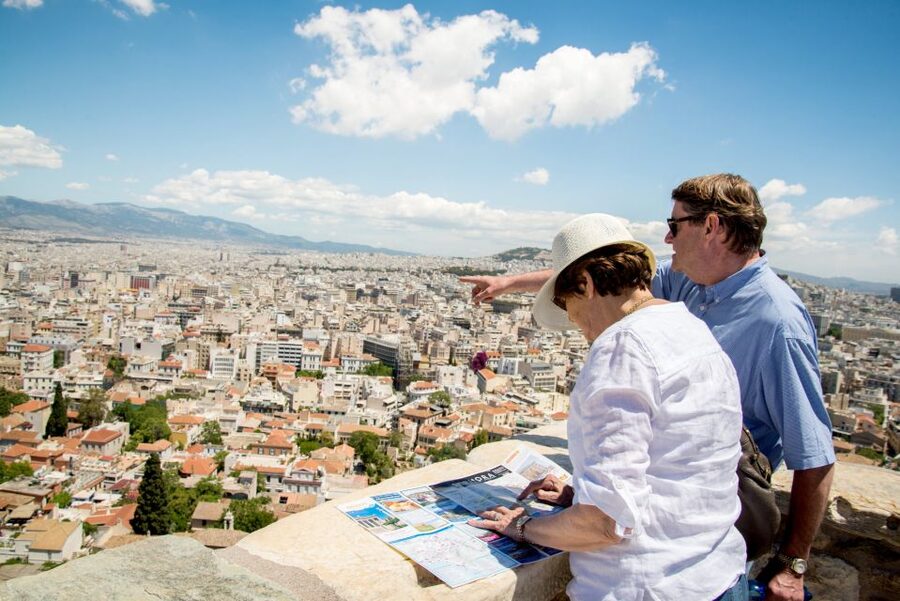
The Propylaea also frames the first major views across Athens. Bring your phone or camera, but listen before taking pictures. The guide’s position and timing can help you get a better sense of how the entrance relates to the temples beyond it.
Seeing Athena Nike and the Erechtheion
The Temple of Athena Nike is small beside the Parthenon, but its name carries a useful lesson. Athena Nike means Athena of Victory, while Nike means victory itself. The compact temple stood near the entrance, where worshippers encountered it as they entered the sacred hill.
This is the kind of detail you could easily miss alone. A guide does not just point at the building. The better guides connect its location, name, decoration, and purpose so the monument becomes easier to remember.
At the Erechtheion, the focus shifts to the famous Caryatids. These sculpted female figures support the porch in place of ordinary columns, though the figures visible on the Acropolis are copies. The originals are preserved in the Acropolis Museum, with one Caryatid also held in the British Museum, a detail your guide may place within the wider story of the sculptures.
The Erechtheion is also linked to several important myths and cults. Guides often use this stop to explain the contest between Athena and Poseidon for the protection of Athens. If Greek mythology interests you, this part of the tour can be especially rewarding. If you prefer dates and architectural facts, you can ask the guide to focus more on those.
That flexibility is one of the strongest features of a guided visit. Past private groups have praised guides for answering long strings of questions and adapting their explanations for young children. Families with teenagers have also appreciated guides who keep the stories moving rather than delivering a long lecture.
More ways to see the Acropolis:
- Athens: Acropolis & up to 5 Archaeological Sites Combo Pass
★ 4.4 · 12,619 reviews - Athens: Acropolis Ticket with Optional Audio or Live Guide
★ 4.2 · 11,055 reviews - Athens: Acropolis and Parthenon Guided Walking Tour
★ 4.6 · 5,882 reviews - Athens: Acropolis Ticket with Audio Guide
★ 4.0 · 3,575 reviews
The Parthenon and the view over Athens
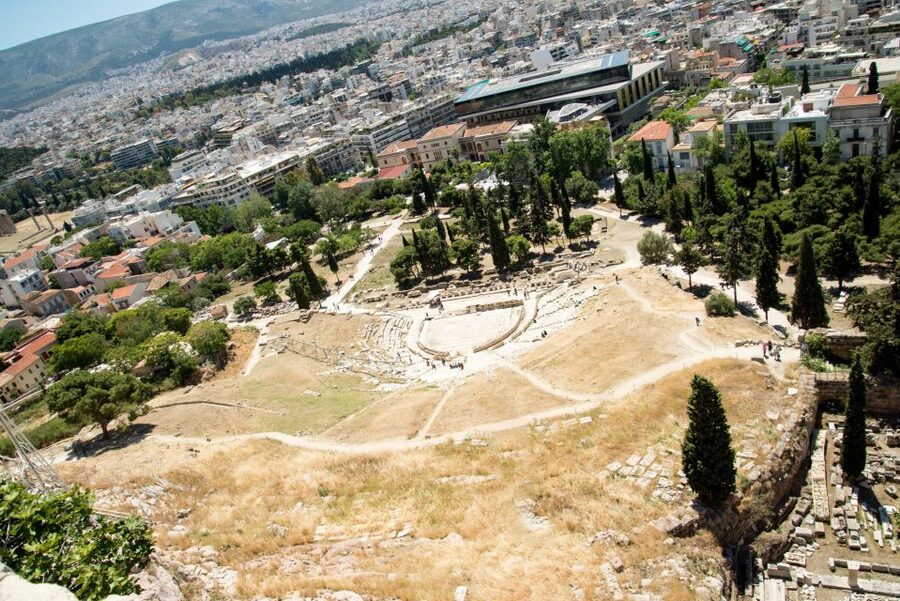
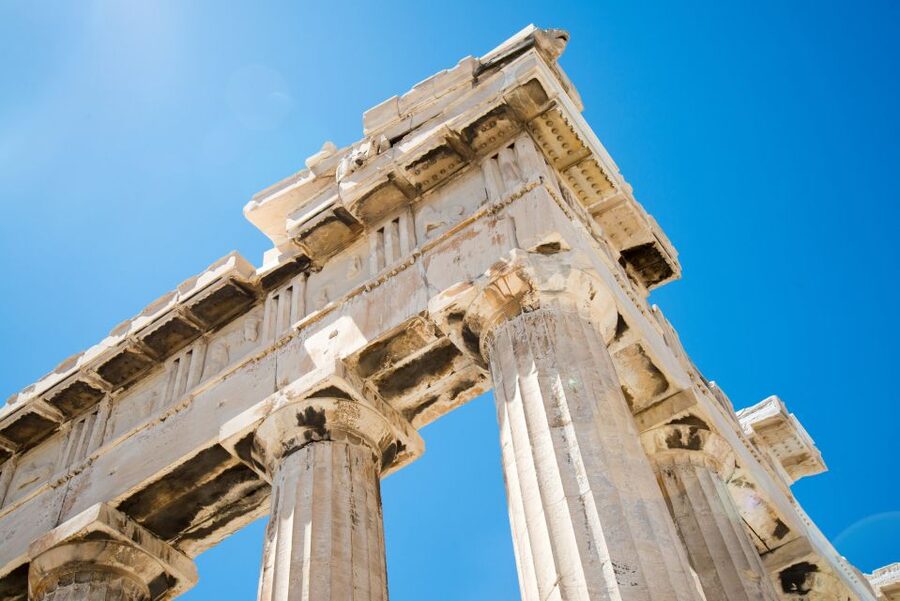
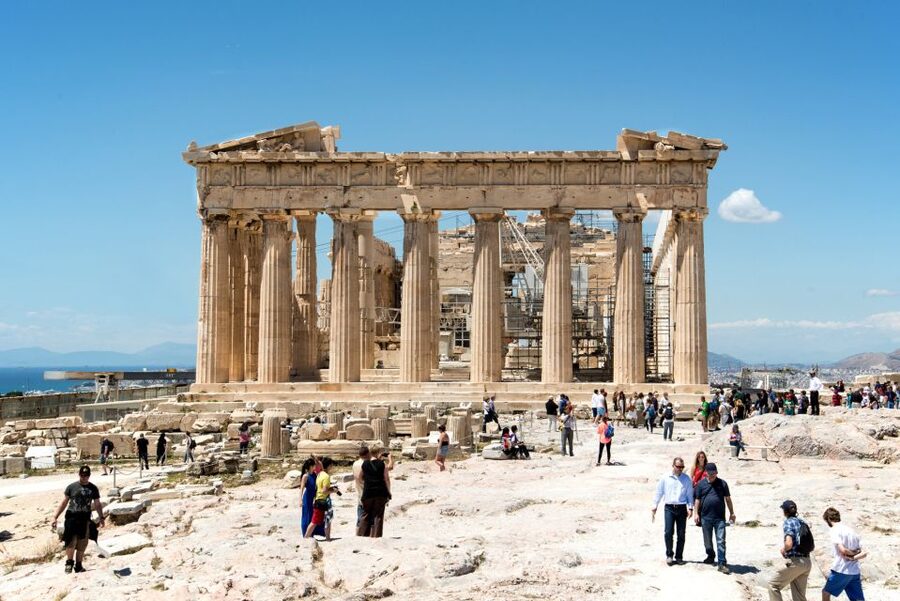
The Parthenon is the main event, but the guide should help you see more than its size. Built as a temple dedicated to Athena, it represented the power and confidence of classical Athens. Its present condition reflects centuries of change, damage, reuse, and removal of sculptures, not a single moment of ancient glory.
Your guide can explain the relationship between the building’s design and the ideals of the city that created it. The tour description specifically focuses on the role these monuments played at the center of classical civilization, so expect attention to architecture, religion, politics, sculpture, and the way Athens shaped later Western thought.
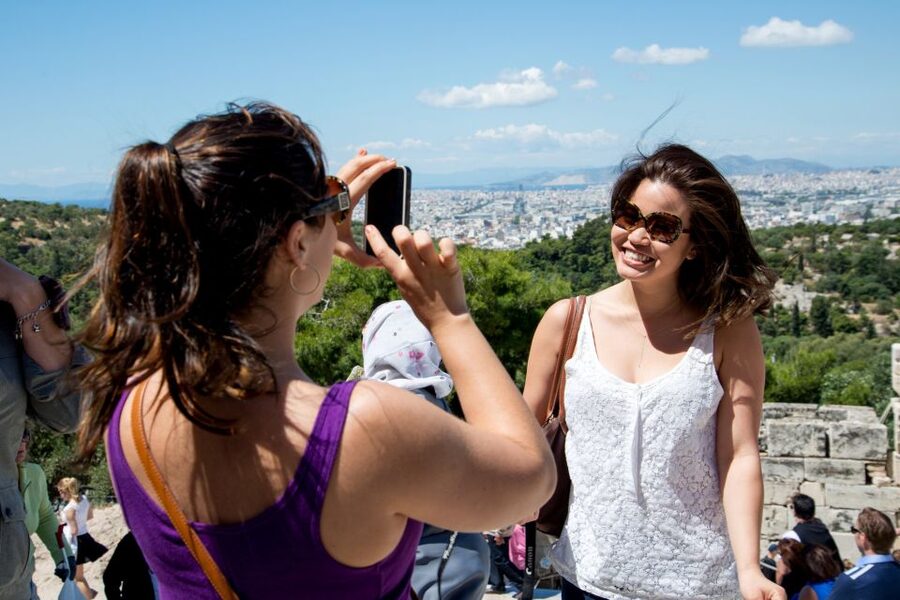
The Parthenon is also where the tour becomes most visually rewarding. From the Acropolis, you can photograph Athens spread below the hill. You will see a dense modern city meeting the ancient stonework, a useful reminder that this is not an isolated archaeological park. The Acropolis remains part of everyday Athens.
Crowds can make the Parthenon stop feel hurried, particularly at busy times. The guide cannot remove other people from the site, but a good guide can position your group, explain details while you wait, and tell you when to look up from your camera. Several guides have been praised for taking family photos, a small service that can be surprisingly helpful when everyone wants to be in the picture.
Adding the Acropolis Museum
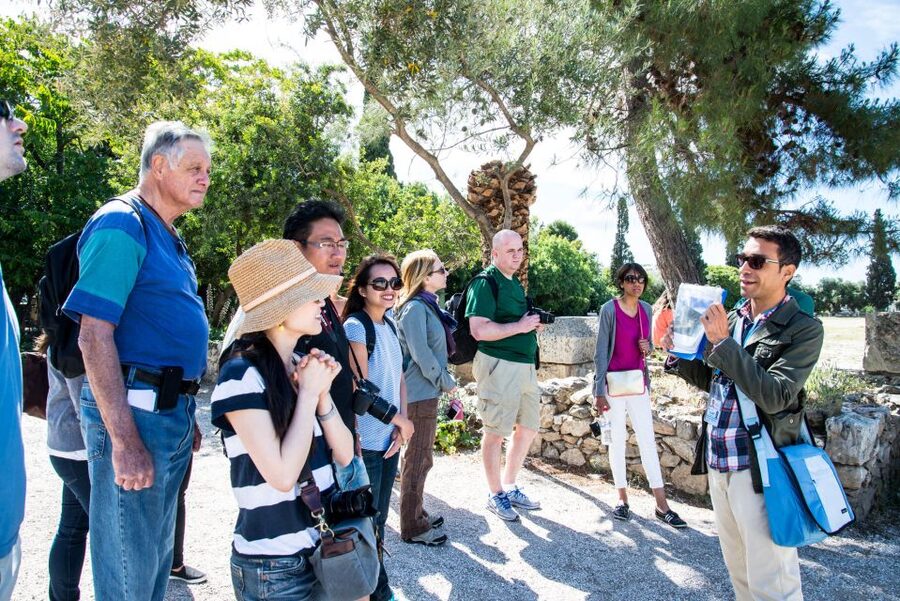
Choose the museum option if you want a fuller explanation of the hill. The Acropolis Museum is not simply a place to see spare statues after visiting the ruins. It provides the objects, original sculptures, and architectural fragments that help you understand what the buildings once looked like.
The galleries are modern and carefully arranged. Inside, you can study the Caryatids at close range and compare them with the porch you saw outdoors. That pairing is one of the best reasons to include the museum. At the Acropolis, you see the setting and scale. In the museum, you can study the surviving details.
The collection covers more than the classical period alone. The tour presents objects that describe over 2,500 years of history, giving you a broader view of how the Acropolis changed over time. A strong guide will keep the visit from becoming a march past glass cases, selecting details that connect directly to the temples and theatres you have already seen.
The order can vary. Some private groups have begun at the museum and then gone up to the Acropolis, while others have visited the hill first. Starting in the museum can help you recognize sculptures and architectural features before seeing the ruins. Starting outdoors gives you the dramatic setting first, then supplies the missing pieces inside.
The museum option adds time and cost. The stated tour duration is two to four hours, depending on the option and schedule. You should check the available start time carefully, especially on Monday, when the museum closes at 16:00. On Mondays, the plan changes to the Acropolis monuments and Ancient Agora instead.
What the $70 price really includes
The $70 per-person price covers a licensed tour guide. It does not cover the €30 Acropolis admission fee or the €10 to €20 museum admission fee. That means an adult booking with both sites can cost roughly $70 plus €40 to €50 per person, before considering exchange rates.
That is a serious expense, particularly for a family. One past private group of six felt the cost was too high once the guide fee and entrance tickets were combined. This is the main financial criticism to keep in mind.
The value improves if you care about context, ask questions, or have children who need help staying interested. Many guides have been praised for turning myths, sculpture, architecture, and ancient civic life into a coherent story. Several families felt they would have understood far less by walking through the monuments alone.
You should also confirm the ticket arrangement before the tour. The information advises booking entrance tickets online through the official Acropolis ticket website before departure. Some guides in past bookings had tickets ready and helped groups avoid long ticket lines, but you should not assume that your ticket cost is included or that the guide will purchase it unless your booking instructions clearly say so.
People under 18 receive free access, and EU passport holders under 25 also receive free access. Students and people under 18 should bring a passport or ID card to confirm eligibility for reduced or free admission. Bring identification even if you think the age discount will be obvious.
Who will get the most from this tour
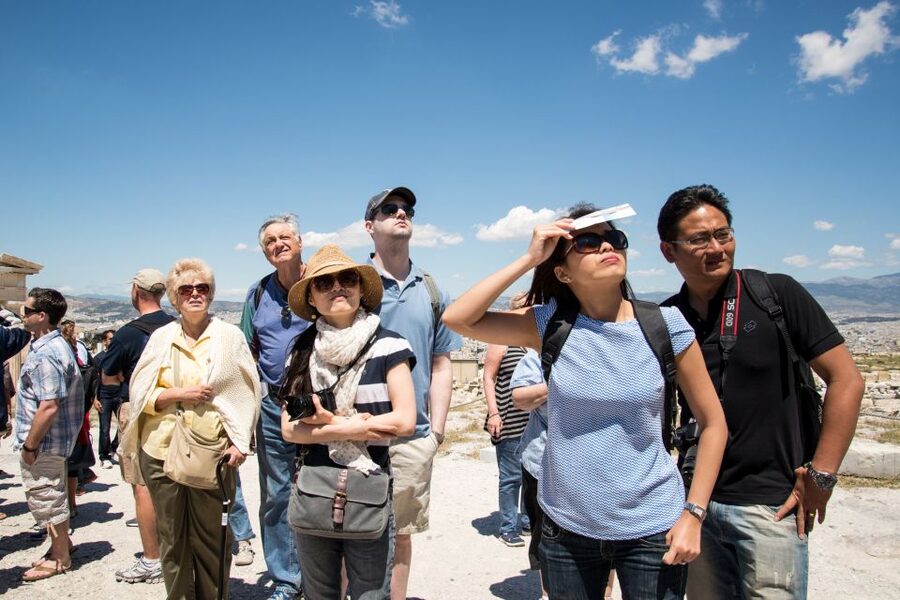
I would choose this experience if you want the Acropolis explained rather than simply photographed. It suits first-time visitors, families, and anyone who wants to ask questions about mythology, ancient society, sculpture, or architecture.
It is also a good fit for a short Athens stay. The tour gathers several major sights into two to four hours, helping you establish a useful framework before exploring the city on your own.
Families have a particularly strong reason to consider it. Guides such as Anna, Margherita, Christina, Maria, and Rosa were praised for keeping children involved, changing the pace, and explaining complex stories in an approachable way. That does not guarantee the exact same guide, but it shows what a good match can add.
You may prefer a self-guided visit if you are mainly interested in taking photographs, dislike fixed meeting times, or want to spend a long period at one monument. The tour gives you structure, but structure also means moving with the guide rather than wandering wherever you wish.
The activity is not suitable for wheelchair users. Anyone with limited mobility should consider this carefully because of the climb, uneven surfaces, and ancient paving. A past guide arranged a wheelchair for a visitor using crutches, but that was an individual accommodation, not a stated feature to count on.
Practical advice for a smoother visit
- Book the entrance tickets early: Use the official Acropolis ticket website before the tour, and check exactly which admission fees your booking covers.
- Arrive 15 minutes early: Find Porinou 5 before the start time, not at the last minute.
- Carry water and sun protection: The climb and exposed stone can feel demanding in warm weather.
- Wear proper shoes: Sandals with poor grip are a bad match for uneven ancient surfaces.
- Bring identification: This is important for reduced or free admission.
- Use the hearing device: It helps you follow the guide when the site is noisy or crowded.
- Ask for the pace you need: Guides have adjusted tours for young children, extreme heat, tired groups, and visitors with physical limitations.
- Do not bring large bags: Luggage and large bags are not allowed.
Free cancellation is available up to 24 hours before the tour, and you can reserve now and pay later. These policies are useful if your Athens schedule is still shifting, but they do not remove the need to plan the admission tickets.
Should you book the Acropolis guided tour?
Book it if the story behind the stones matters to you. The strongest part is not simply skipping a ticket line. It is having a licensed guide explain why the Theatre of Dionysus, Athena Nike, the Erechtheion, and the Parthenon belong to one larger story.
Choose the museum option if you want to understand the Caryatids, sculpture fragments, and ancient objects at close range. Skip it only if your time or budget is tight and your main goal is the Acropolis itself.
At $70 before admission, this is not the cheapest way up the hill. For a family, the final total deserves a close look. But if you value clear explanations, flexible pacing, and the chance to ask real questions, the guide can turn a famous monument into a much more meaningful visit. For a first day in Athens, that added context is often worth paying for.
FAQ
How much does the tour cost?
The tour costs $70 per person. Acropolis admission costs €30 per person, and Acropolis Museum admission costs €10 to €20 per person. These entrance fees are not included.
How long does the experience last?
The tour lasts between two and four hours. The exact duration depends on the selected option and available start time.
Where do I meet the guide?
Meet at the Athens Walks office at Porinou 5, 11742 Athens. The office is on the ground floor.
How early should I arrive?
Arrive at least 15 minutes before the scheduled departure. Only one person from your group needs to check in indoors.
Is the Acropolis Museum included?
The museum is included only when you select the option that includes the Acropolis Museum. On Mondays, the museum closes at 16:00, so the tour visits the Acropolis monuments and Ancient Agora instead.
Which languages are available?
Guided tours are available in English, Italian, German, French, and Spanish.
Is the tour suitable for wheelchair users?
No. The activity is listed as unsuitable for wheelchair users because the route includes a climb and uneven ancient surfaces.
Just added around Athens
- Delphi One Day Trip from Athens★ 4.0 · 98 reviews
- Mercedes Private Tour to Delphi and Arachova★ 5.0 · 30 reviews
- Private Delphi and Hosios Loukas Monastery – Great Lunch and Drinks Included★ 5.0 · 36 reviews
- Day tour to Ancient Olympia,Ancient Sparta Mycenae Including Meal★ 5.0 · 54 reviews
- Athens: Half Day Trip To Cape Sounio/Poseidon Temple Semi Private★ 5.0 · 131 reviews
- Athens Half-Day Private Tour Acropolis, Parthenon City Highlights★ 5.0 · 35 reviews
- From Athens: Day Tour to Mykonos★ 5.0 · 64 reviews
- Culinary Secrets of Downtown Athens★ 5.0 · 103 reviews
Acropolis Tours, compared.
Acropolis & up to 5 Archaeological Sites Combo Pass
Read our review →

Acropolis, Parthenon & Acropolis Museum Guided Tour
Read our review →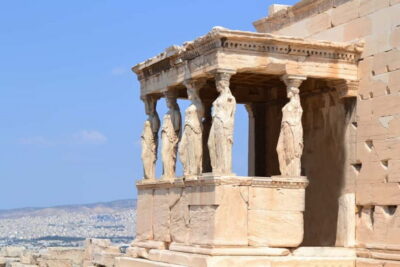
Acropolis, Parthenon & Acropolis Museum Guided Tour
Read our review →

Acropolis: Acropolis and Parthenon Guided Walking Tour
Read our review →
Acropolis monuments & Parthenon Walking Tour with Optional Acropolis Museum
Read our review →Browse the lists this tour appears in