
Reviewed · ACROPOLIS TOURS
Athens: Acropolis, Parthenon Guided Walking Tour
The climb is part of the ancient story. This roughly two-hour tour takes you through Athens’ famous hilltop citadel with a guide who explains what you are seeing instead of leaving you to decode a pile of old stones alone. I like the way the route covers the main monuments in a clear order, and I especially like the pauses for shade, photos, and rest that several guides build into the climb. The option to include admission also makes the arrival easier, since you can avoid the ticket-office queue.
The main catch is physical. This is a steep uphill walk over uneven, sometimes slippery stone, not a gentle stroll through a museum. Morning visits can also become very crowded, particularly when cruise ships arrive, so your choice of start time matters. You will need solid shoes, water, sun protection, and enough stamina to enjoy the place rather than simply survive it.
In This Review
- Five things to know before you book
- What the $41.13 price really covers
- Meeting at Mitseon 2 and getting started
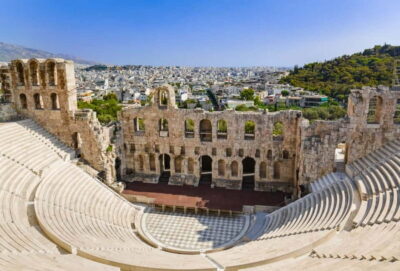
- Theater of Dionysus and the Herodion
- Climbing through the Propylaea
- The Parthenon, Athens’ grand centerpiece
- The Erechtheion and its sculpted figures
- How the guides shape the experience
- Timing, heat, and crowd control
- Who should book this Acropolis tour?
- Should you book it?
- FAQ
- How long does the Acropolis guided walking tour last?
- Is the Acropolis admission ticket included?
- Can I avoid the ticket-office line?
- Does the tour include the Acropolis Museum?
- Is the tour suitable for people with mobility impairments?
- What should I bring to the Acropolis?
- What is the maximum group size?
Five things to know before you book
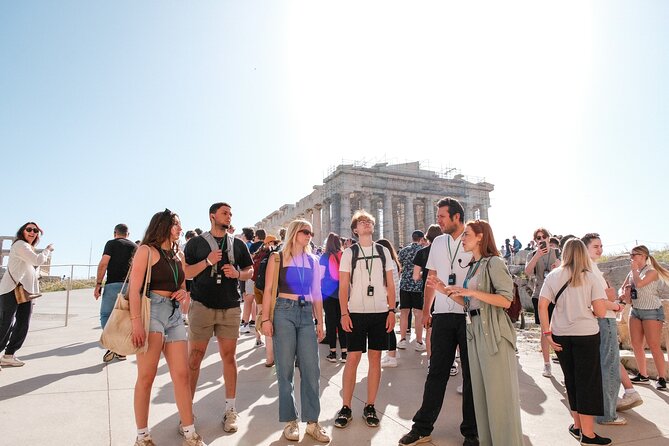
- The route covers the Acropolis essentials: You see the Theater of Dionysus, Herodion, Propylaea, Temple of Athena Nike, Parthenon, and Erechtheion.
- Admission is optional: The listed price is $41.13 per person, but check carefully to see if your selected option includes the Acropolis ticket.
- The climb is real: Expect hills, steps, uneven surfaces, and slippery patches, especially after rain.
- Good guides make the difference: Guides such as Dimitri, Bernie, Orestis, Ani, Angel, John, Natasha, and Sissy are praised for clear explanations, humor, pacing, and care.
- Crowds affect the experience: Early starts can help with heat, while late afternoon may be calmer on some days.
- Groups can reach 24 people: Groups larger than five receive disposable earphones, though sound can be affected by other groups nearby.
What the $41.13 price really covers
At $41.13 per person, this tour can be a fair deal if you want an organized introduction to the Acropolis and a guide who can put each ruin into context. You are paying for the guide, the planned route, and the convenience of moving through a large, crowded site without constantly stopping to work out where to go next.
But do not assume the ticket is always included. Some booking choices include Acropolis admission, while others do not. The Acropolis entry fee is listed as €30 per person when bought separately. The Acropolis Museum ticket is separate too, at €20 unless you select an option that includes it.
That makes the booking screen important. If you choose the option without entry tickets, the provider says it can buy the tickets in advance for you, helping you avoid the ticket-office queue. You should carry cash for that arrangement. You can also buy the tickets yourself, but you must arrive on time for the tour.
The tour is not a private skip-the-line entrance into the Acropolis itself. The ticket-office queue can be avoided with the appropriate option, but nobody can skip every line at the archaeological site. That distinction matters on a crowded day.
For a private experience, a private option is available, with the start time arranged on request. The standard tour has a maximum of 24 people. That is not a tiny group, but it is manageable if the guide uses the earphones properly and keeps everyone together.
More Walking Tours in Athens
- Athens: Acropolis and Parthenon Guided Walking Tour
★ 4.6 · 5,882 reviews - Greek Food Walking Tour in Athens
★ 5.0 · 4,740 reviews - Acropolis: Acropolis and Parthenon Guided Walking Tour
★ 4.7 · 3,442 reviews
Meeting at Mitseon 2 and getting started
The meeting point is at Mitseon 2, Athens 117 42, near public transportation. The tour ends at the Acropolis of Athens, so you finish at the site rather than returning to your starting point.
That one-way setup works well if you plan to continue sightseeing nearby. You can visit the Acropolis Museum, find lunch, or walk onward through the historic center. It also means you should think about what you are carrying. A bulky bag becomes annoying on a steep climb, and the site does not allow strollers.
Your guide may change the order of the monuments. This is not a sign that the tour is off track. The adjustment is meant to reduce discomfort and respond to heat, crowd levels, and conditions on the hill. The exact order can vary, but the main sights remain the same.
Before the climb, use a restroom if needed and fill your water bottle. There is no café bar inside the site, only a water fountain. A hat and sunglasses are sensible in bright weather, while an umbrella can help on a rainy day.
Theater of Dionysus and the Herodion
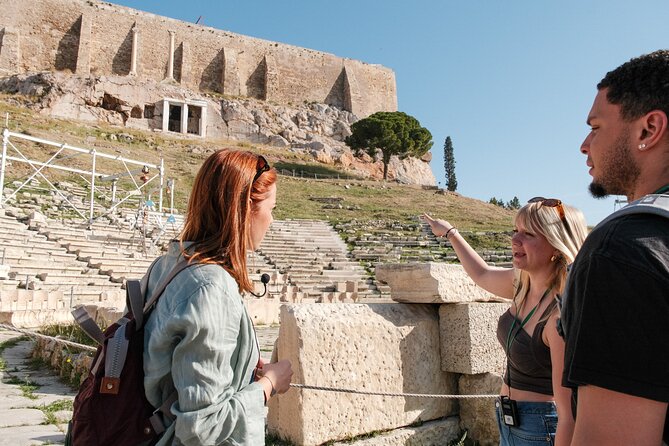
The approach brings you to the Theater of Dionysus, one of the most meaningful stops before the upper Acropolis. This is where many famous ancient comedies and tragedies were first performed. A good guide can help you picture the theater as a working performance space rather than treating it as just another stone ruin.
This early stop also gives the tour a useful rhythm. You begin with major cultural history before tackling the steepest part of the climb. Guides often use the lower area to explain the development of Athens and the role of drama in public life.
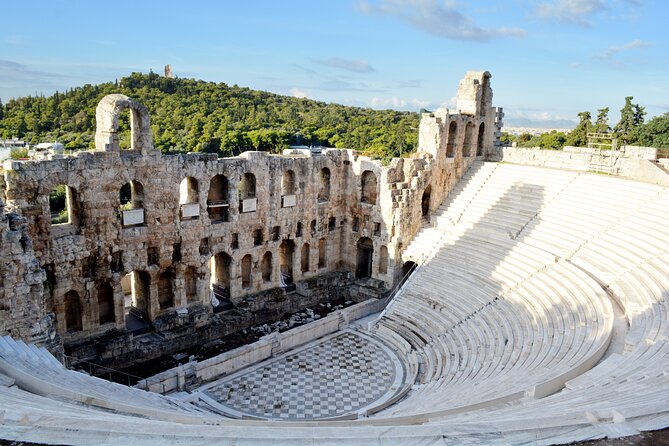
You then continue toward the Roman Herodion theater, built in memory of the wife of Herodes Atticus. Its curved stone structure is especially striking from the approach. The stop gives you a clear reminder that the Acropolis was used and reshaped across many centuries, not only during the age of Pericles.
The route is outdoors from start to finish. You will not be moving between air-conditioned rooms, so heat can become a serious factor. Several guides are praised for finding shaded places to pause, but shade is not guaranteed at every point along the route.
Climbing through the Propylaea
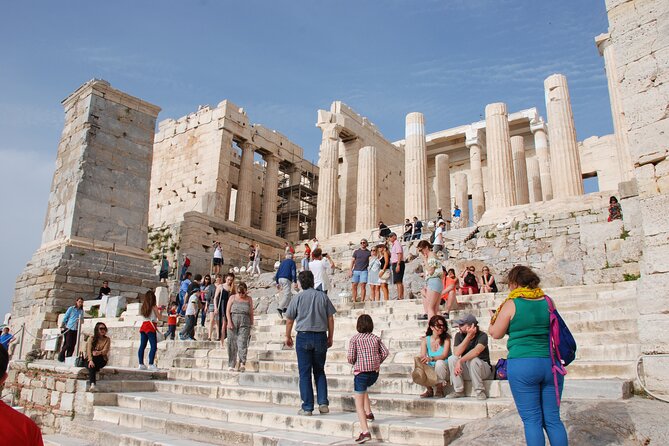
The Propylaea is the monumental gateway to the Acropolis. Reaching it is one of the moments when the physical work of the visit becomes obvious. You climb toward the entrance over worn stone, with the city opening behind you.
The gateway deserves more than a quick photograph. Its scale tells you that the Acropolis was designed to impress long before you reached the Parthenon. A guide can explain how the entrance shaped the approach and why the first sight of the upper sanctuary had such force.
The planned time here is about 15 minutes, though the actual pace can change with crowding and the group’s condition. Guides praised in the feedback tend to keep the group together, explain clearly, and allow time for photos without letting the stop sprawl.
You will also take in views of the Temple of Athena Nike. This small temple sits near the entrance and is easy to miss if you rush toward the Parthenon. Its position gives it a strong visual role, and the guide helps make sure it does not disappear among the larger monuments.
The stone can be slippery, especially after rain. Take short steps, use care on slopes, and do not feel pressured to match the fastest person in the group. A considerate guide will set a workable pace.
More ways to see the Acropolis:
- Athens: Acropolis & up to 5 Archaeological Sites Combo Pass
★ 4.4 · 12,619 reviews - Athens: Acropolis Ticket with Optional Audio or Live Guide
★ 4.2 · 11,055 reviews - Athens: Acropolis, Parthenon & Acropolis Museum Guided Tour
★ 4.8 · 9,316 reviews - Athens: Acropolis, Parthenon & Acropolis Museum Guided Tour
★ 4.8 · 3,579 reviews
The Parthenon, Athens’ grand centerpiece
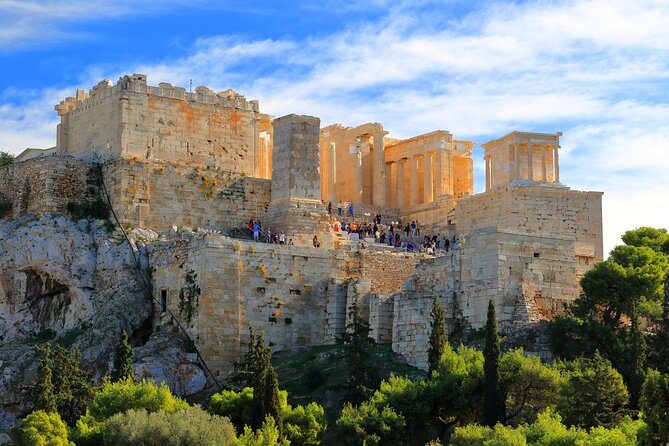
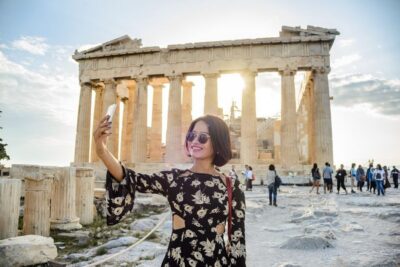
The Parthenon is the reason many people come to the Acropolis, and the tour allows about 30 minutes at this central monument. Dedicated to Athena, the city’s patron goddess, it represents the high point of fifth-century Doric architecture.
The building is not simply a large temple to admire from a distance. Its design, proportions, decoration, and position on the hill all carry meaning. A guide gives you a better chance of noticing those details, especially when scaffolding, missing sculpture, and crowds make the monument harder to read at first glance.
This is also where the value of a live guide becomes most apparent. You can find basic facts online, but an on-site explanation connects the structure to the other monuments around it. Guides including John, Sissy, Natasha, and others have been praised for bringing the site to life with stories, archaeological detail, and an entertaining delivery.
The Parthenon is a good place for photographs, but you may need patience. The approach can be crowded, and other groups may be speaking through their own audio systems. If your group uses earphones, the narration should be easier to follow, though the audio quality can still suffer when many groups gather close together.
Do not expect a quiet private audience with the temple. The Acropolis is one of Europe’s busiest ancient sites. The guide helps you handle that reality, but cannot remove it.
The Erechtheion and its sculpted figures
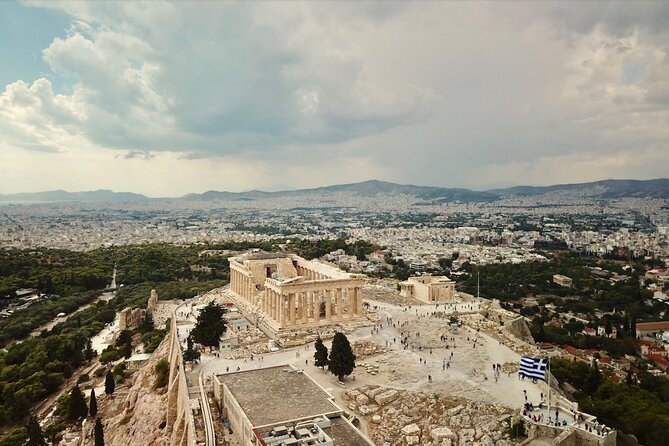
The final main stop is the Erechtheion, planned for about 20 minutes. Its unusual shape makes it a useful contrast to the Parthenon. The building has an asymmetrical composition, with different sections serving different religious purposes.
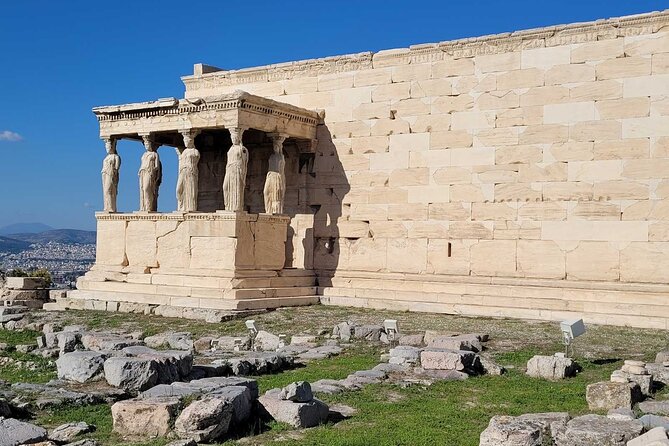
The most famous feature is the porch supported by six sculpted female figures, commonly called the Caryatids. Their elegance can make the structure seem decorative and light, but the design also reflects the complex traditions attached to the Acropolis.
This stop often rewards a slower explanation. The Erechtheion is less immediately grand than the Parthenon, yet its odd layout and sculpted supports give a guide plenty to discuss. You will also have another chance to look across Athens and take photographs before the tour ends.
The route finishes at the Acropolis. If you add a museum visit, you can continue with the guide or visit separately, depending on the option you book. The museum adds another layer to the experience by giving you a closer look at objects and sculpture connected with the hilltop sanctuary.
How the guides shape the experience
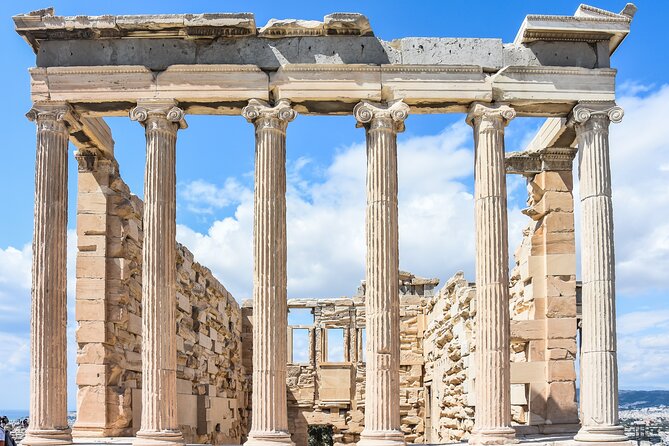
The strongest part of this tour is the guiding. The best guides combine facts with timing, humor, and practical care. Dimitri is praised for making the experience highly informative, while Orestis is remembered for humor and a well judged pace. Ani, Angel, Bernie, John, Sissy, Natasha, Greg, Simon, and others are praised for clear explanations and strong command of the subject.
That variety matters because a two-hour visit can feel very different depending on the person leading it. One guide may focus on archaeology, another on stories, and another on helping the group handle the climb. The most useful guides do all three.
Good pacing comes up again and again in the feedback. Guides stop for shade, point out safe paths, give people time for photographs, and make sure nobody is quietly left behind. Simon is specifically praised for arranging a restroom opportunity before the ascent, while Angel is praised for warning the group about slippery surfaces and safer routes.
There is one caution. One poor experience involved a rude, impatient guide with a monotone delivery. That appears to be an exception among the supplied experiences, but it is a useful reminder that no guided tour guarantees a perfect personality match.
Groups larger than five receive disposable earphones. They help when the guide is speaking while you stand several steps away, but sound can be affected by the equipment used by other groups. Stay close enough to see the guide’s gestures and follow the route.
Timing, heat, and crowd control
Start time can shape your day. Early departures, including 8:00 and 9:00 starts, are useful for avoiding the worst heat. One early visit finished near the museum around lunchtime, which allowed time to eat before the afternoon rush.
There is no universal best hour. One morning can be calm, while another can be overwhelmed by cruise ship arrivals and hundreds of tour groups. A late-afternoon start may offer more breathing room on some days, and one particularly unhappy experience found the morning too crowded to focus.
The practical lesson is simple: ask yourself what matters most. Choose early if heat is your main worry. Consider late afternoon if crowd pressure is your biggest concern and the available departure fits your schedule. The provider may change the order of stops to make the visit more comfortable, but the Acropolis remains a popular place at nearly all useful times.
Allow extra energy after the tour if you plan to visit the museum. The basic walk is listed at about two hours, but a guide-led Acropolis and museum combination can run longer. You do not want to schedule an important reservation immediately afterward.
Who should book this Acropolis tour?
I would choose this tour if you want the main monuments explained by a live guide and prefer a planned route to wandering on your own. It suits first-time visitors who want a solid introduction to the Acropolis without committing to a full-day program.
It is also a good fit for people who enjoy archaeology but do not want a dry lecture. The best guides use humor, stories, and clear descriptions. Families with older children may appreciate the structure, though the tour is not suitable for children under six.
You should think twice if you have mobility impairments or dislike steep walks. The site sits on a relatively steep hill, and the group tours cannot use the elevator. Strollers are not allowed. Even fit walkers should wear shoes with good grip.
The tour can work for a small group of friends or a family, but the standard format is not intimate. With a maximum of 24 people, you will share the experience with a crowd. Choose the private option if personal attention and a flexible start time are worth the extra cost.
Cancellation is free when you cancel at least 24 hours before the start time. Changes or cancellations inside that window are not accepted for a refund.
Should you book it?
Book this tour if you want the Acropolis’ main sights covered with clear explanations and practical help on the climb. The strongest value comes from the guide, not from simple entry into the site. You can enter on your own, but a good guide helps you understand why the Theater of Dionysus, Propylaea, Parthenon, and Erechtheion matter.
Choose the ticket-included option if you want the simplest arrival. Check the price carefully, since the $41.13 starting figure may not include admission. Pick an early time for cooler conditions, or look for late afternoon if crowd levels are your chief concern.
I would skip it only if you want complete freedom, already know the Acropolis well, or cannot manage a steep, uneven climb. For most first visits, the combination of famous monuments, strong guide commentary, and a sensible two-hour route makes this a worthwhile introduction to Athens.
FAQ
How long does the Acropolis guided walking tour last?
The tour lasts approximately two hours. The exact duration can vary if the guide changes the order of the stops or if the group moves more slowly.
Is the Acropolis admission ticket included?
Admission is included only if you select the option that includes tickets. The option without tickets does not include the entry fee, which is listed as €30 per person.
Can I avoid the ticket-office line?
Yes, if you select the appropriate ticket option. For the option without entry tickets, the provider may buy tickets in advance for you, but you should carry cash. You cannot skip every line at the Acropolis entrance.
Does the tour include the Acropolis Museum?
The museum is not automatically included. The Acropolis Museum entry ticket is listed separately at €20 unless you select an option that includes it.
Is the tour suitable for people with mobility impairments?
No. The Acropolis is on a relatively steep hill with uneven and potentially slippery surfaces. The group tour cannot use the hill’s elevator, and strollers are not allowed.
What should I bring to the Acropolis?
Bring solid walking shoes, a bottle of water, a hat, and sunglasses. On a rainy day, bring an umbrella and take extra care on slippery sections.
What is the maximum group size?
The standard tour can have up to 24 participants. Groups larger than five receive disposable earphones so the guide’s narration is easier to hear.
Just added around Athens
- Delphi One Day Trip from Athens★ 4.0 · 98 reviews
- Mercedes Private Tour to Delphi and Arachova★ 5.0 · 30 reviews
- Private Delphi and Hosios Loukas Monastery – Great Lunch and Drinks Included★ 5.0 · 36 reviews
- Day tour to Ancient Olympia,Ancient Sparta Mycenae Including Meal★ 5.0 · 54 reviews
- Athens: Half Day Trip To Cape Sounio/Poseidon Temple Semi Private★ 5.0 · 131 reviews
- Culinary Secrets of Downtown Athens★ 5.0 · 103 reviews
- Athens Half-Day Private Tour Acropolis, Parthenon City Highlights★ 5.0 · 35 reviews
- From Athens: Day Tour to Mykonos★ 5.0 · 64 reviews
Acropolis Tours, compared.
Acropolis & up to 5 Archaeological Sites Combo Pass
Read our review →
Acropolis, Parthenon & Acropolis Museum Guided Tour
Read our review →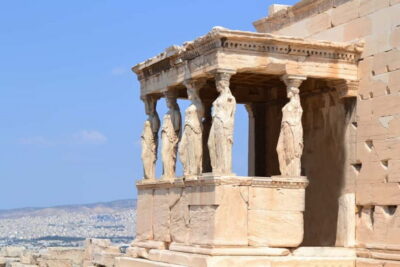
Acropolis, Parthenon & Acropolis Museum Guided Tour
Read our review →
Acropolis: Acropolis and Parthenon Guided Walking Tour
Read our review →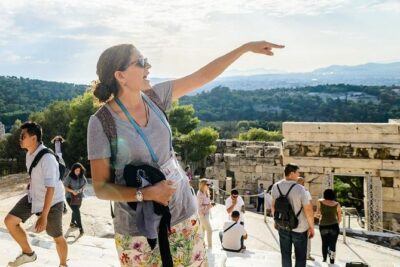
Acropolis monuments & Parthenon Walking Tour with Optional Acropolis Museum
Read our review →Browse the lists this tour appears in