
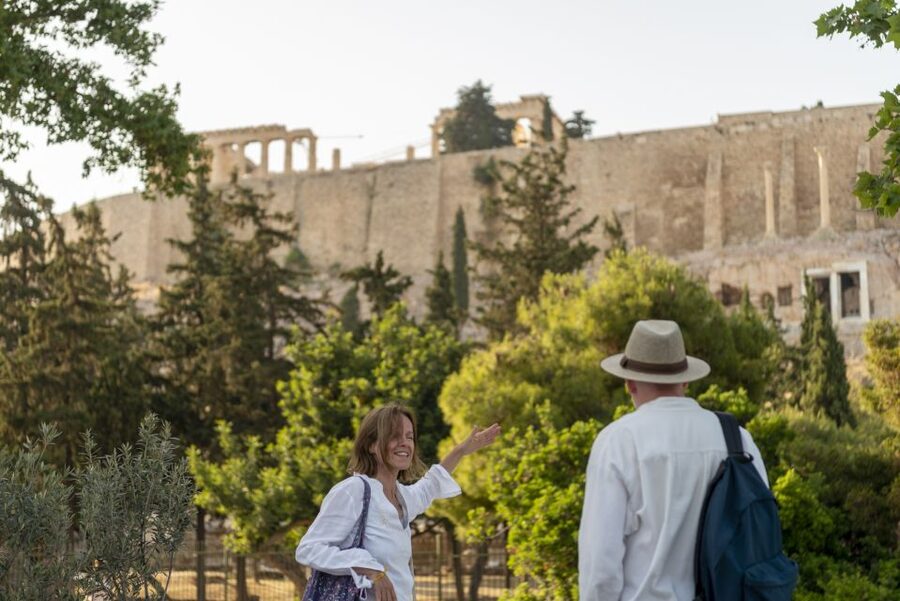
Reviewed · ACROPOLIS TOURS
Athens: Acropolis & Plaka Neighborhood Private Walking Tour
Ancient Athens comes alive on foot. This private tour pairs the Acropolis and Parthenon with Plaka’s narrow lanes, local shops, and old monuments, giving you both the grand view and the everyday feel of central Athens. I like the access to a state-accredited archaeological guide, and I like the flexible format, which lets you choose a 90-minute Acropolis visit or add 90 minutes in Plaka with food tastings. The main drawback is cost: at $163 per person, this is a serious splurge, and Acropolis admission is extra.
The guide-led pace is another strong point. Guides such as Eva, Valia, Christina, and Lisa have been praised for clear explanations, patience, useful Athens advice, and the ability to connect archaeology with Greek culture and legends. Still, you need to be ready for steep steps, uneven stone, sun, and crowds around the monuments.
In This Review
- Key points to know before booking
- Starting near the Acropolis Museum
- The Theater of Dionysus and the birth of drama
- The old defensive walls and the climb to Propylaea
- Athena Nike and the view across Athens
- The Parthenon, where architecture carries the story
- The Erechtheion and the contest between Athena and Poseidon
- Descending past the Odeon of Herodes Atticus
- Plaka, from ancient lanes to artisan shops
- Optional Greek food and family-friendly stops
- Guide quality and the value of a private format
- Is $163 per person a fair price?
- Timing, tickets, and who should book
- Should you book the Acropolis and Plaka tour?
- FAQ
- How long does the tour last?
- What monuments are included at the Acropolis?
- Are Acropolis admission tickets included?
- Where does the tour meet?
- What languages are available?
- Can I add food tastings?
- Where does the tour end?
- Is the route suitable for people with mobility impairments?
Key points to know before booking
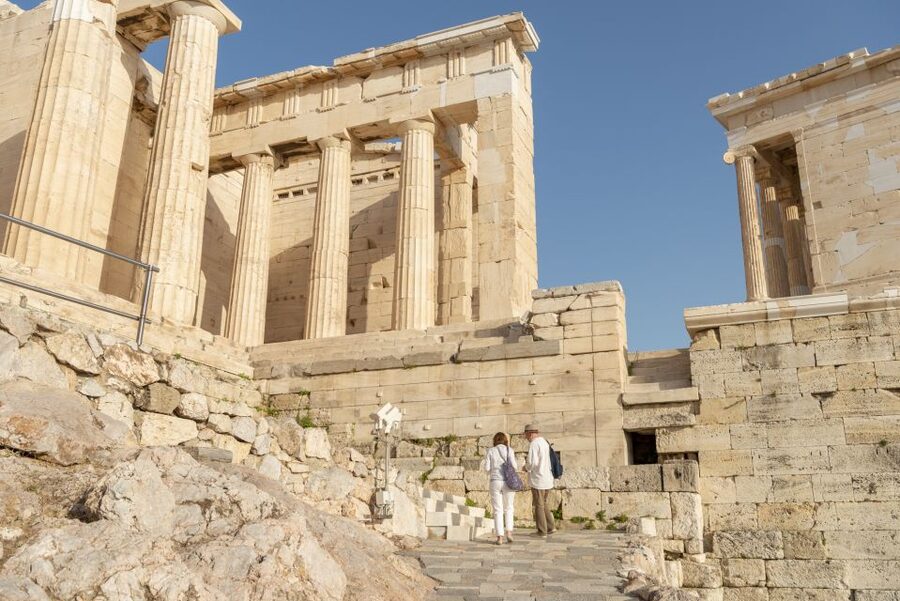
- The Acropolis portion covers the major monuments: You visit the Theater of Dionysus, Propylaea, Temple of Athena Nike, Parthenon, Erechtheion, and Odeon of Herodes Atticus.
- A private guide makes the history adaptable: The guide can explain ancient Athens in detail for adults while keeping children interested with myths and vivid stories.
- Plaka adds a very different side of Athens: You walk through small streets, artisan shops, markets, cafés, restaurants, and monuments from several periods.
- Food tastings are optional: The added food format can include Greek coffee or mountain tea, souvlaki, savory pies, and sweets.
- Tickets are not included: You must have Acropolis admission, unless you ask the provider to arrange skip-the-line tickets after booking.
- The tour is best for active walkers: The Acropolis has steps and uneven surfaces, and the experience is not suitable for people with mobility impairments.
Starting near the Acropolis Museum
The meeting point is at Makrigianni 7, close to the Acropolis Museum. Your guide holds a sign with your name, which should make the first meeting fairly simple, even in a busy part of Athens.
From here, the tour heads toward the Acropolis. The exact experience depends on your selected format. The Acropolis-only option lasts about 90 minutes and ends at the site, giving you extra time for photographs and views. The longer version adds about 90 minutes in Plaka, making the total duration roughly three hours.
That choice matters. If you have limited time or mainly want ancient monuments, the shorter version keeps your attention on the Acropolis. If this is your first substantial look at Athens, I prefer the extended option because Plaka helps connect the archaeological site with the modern city below it.
Your guide can also adjust the level of detail. The tour is designed for mixed ages and interests, so you should be able to ask for more archaeology, more mythology, or a simpler explanation for children. That personal format is one reason the price can make sense for families or small groups.
More Walking Tours in Athens
- Athens: Acropolis and Parthenon Guided Walking Tour
★ 4.6 · 5,882 reviews - Greek Food Walking Tour in Athens
★ 5.0 · 4,740 reviews - Acropolis: Acropolis and Parthenon Guided Walking Tour
★ 4.7 · 3,442 reviews
The Theater of Dionysus and the birth of drama
The first major stop is the Theater of Dionysus, described as the world’s oldest theater. Its importance is easy to miss if you only take a quick photograph, but a guide gives the site a human purpose.
Here, you learn how some of ancient Greece’s best-known plays were performed roughly 3,000 years ago. The setting helps you picture drama as a civic event, not simply evening entertainment. Ancient theater, religion, politics, and public life were closely connected.
This is also a good early stop for children. The idea that actors performed famous stories in this same place is easier to grasp than a list of dates and architectural terms. Your guide may use mythology and dramatic stories to make the stones feel less remote.
The drawback is that the stop is brief, listed at about 15 minutes. That is enough for orientation and explanation, but not a long study of the theater itself.
The old defensive walls and the climb to Propylaea
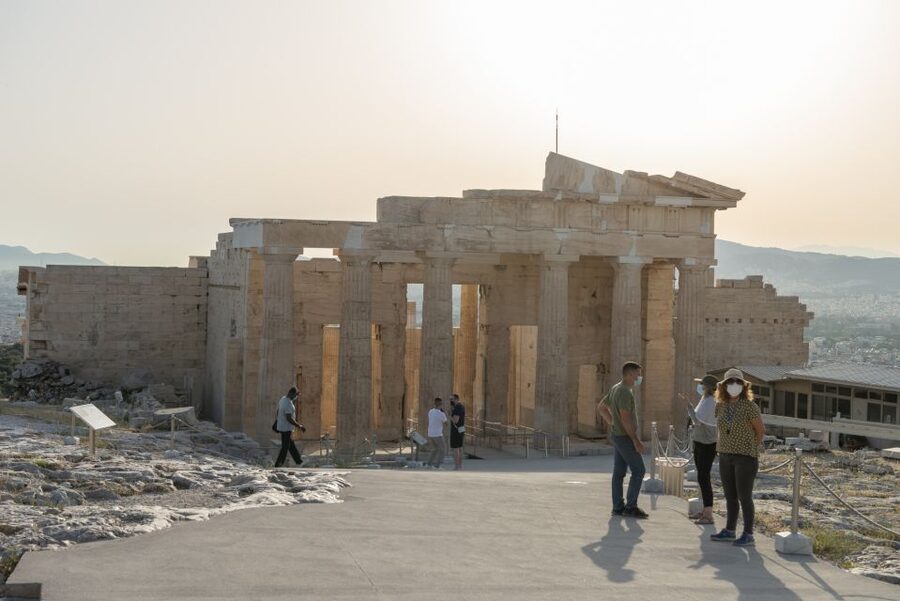
As you continue uphill, the guide points out the Acropolis defenses. The walls are about five meters thick and were built by ancestors of the classical Greeks, rather than by the people most visitors associate with the fifth century BCE.
That detail adds useful depth. Athens did not begin with the Parthenon. Earlier communities shaped the hill, fortified it, and gave later generations a foundation to build upon.
The route then reaches the Propylaea, the monumental entrance to the Acropolis. This is more than a gateway. It was designed to control the approach and prepare visitors for the sacred buildings above.
One particularly memorable detail concerns the giant statue of Athena that once stood near the entrance. The bronze spear tip may have caught the sun and been visible to sailors leaving Cape Sounion, about 70 kilometers away, for trade or war in the Mediterranean. I like this kind of explanation because it connects a monument on the hill with the wider ancient world.
The climb does require effort. You will encounter steps, slopes, and uneven surfaces, and shade is not guaranteed at every point. Peter’s comments about guide Eva are useful here: she paid attention to movement and tried to keep the group in shade or on the shaded side of the street when possible. That sort of care can make a real difference during a hot Athens day.
Athena Nike and the view across Athens
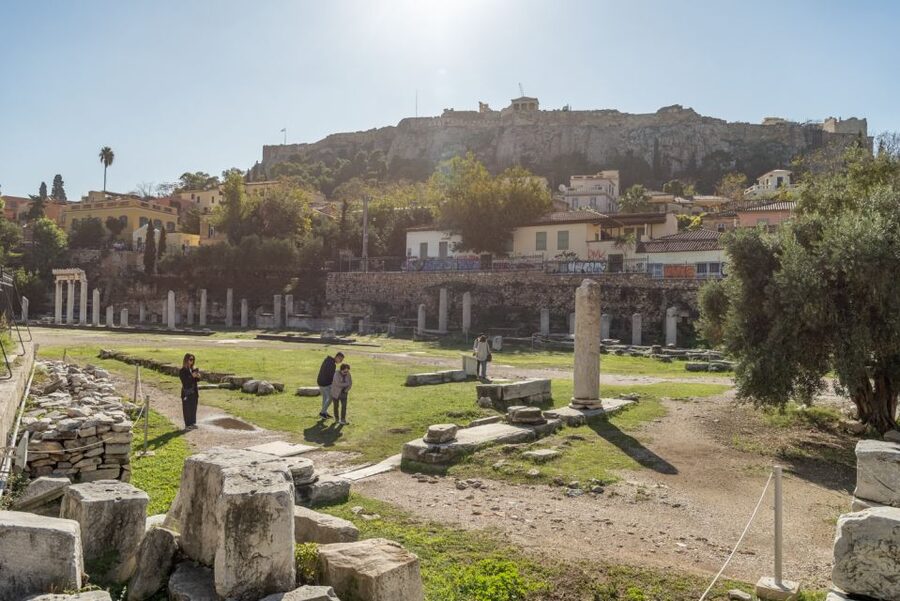
Near the entrance, you see the Temple of Athena Nike. Though smaller than the Parthenon, it occupies an important position and rewards careful attention.
The guide explains its connection with Athena as a goddess associated with victory. You also get time to look outward across Athens, where the city spreads below the ancient hill.
The view is one of the tour’s great rewards, but it is not only scenic. Your guide helps you understand the Acropolis as a place with military, religious, political, and cultural meaning. The city below is not just a modern backdrop. It is part of the long story that the hill has watched unfold.
The stop is scheduled for about 15 minutes. That can feel short if you want photographs, especially when other groups are nearby. You may want to save some picture-taking for the end of the Acropolis-only option, which allows more time at the site after the guided portion.
More ways to see the Acropolis:
- Athens: Acropolis & up to 5 Archaeological Sites Combo Pass
★ 4.4 · 12,619 reviews - Athens: Acropolis Ticket with Optional Audio or Live Guide
★ 4.2 · 11,055 reviews - Athens: Acropolis, Parthenon & Acropolis Museum Guided Tour
★ 4.8 · 9,316 reviews - Athens: Acropolis, Parthenon & Acropolis Museum Guided Tour
★ 4.8 · 3,579 reviews
The Parthenon, where architecture carries the story
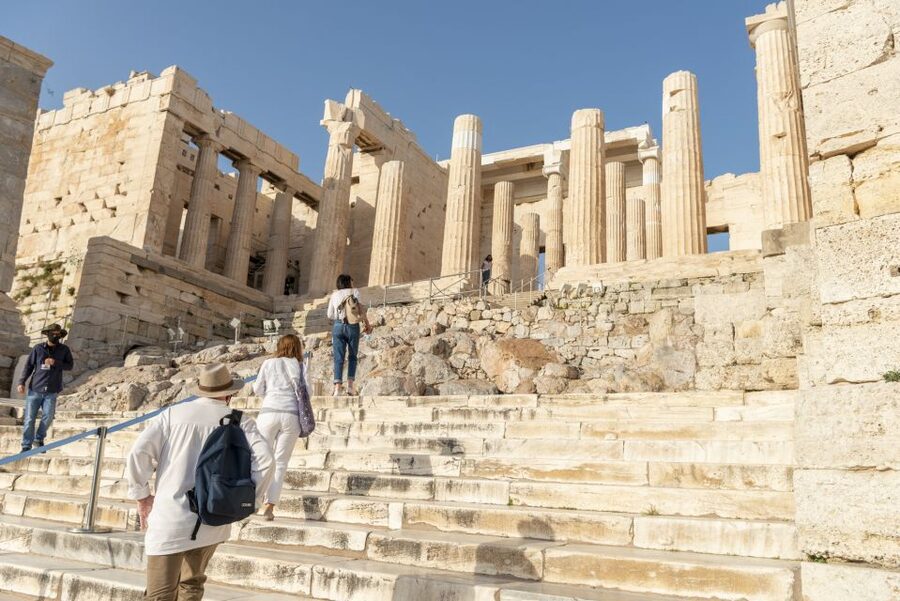
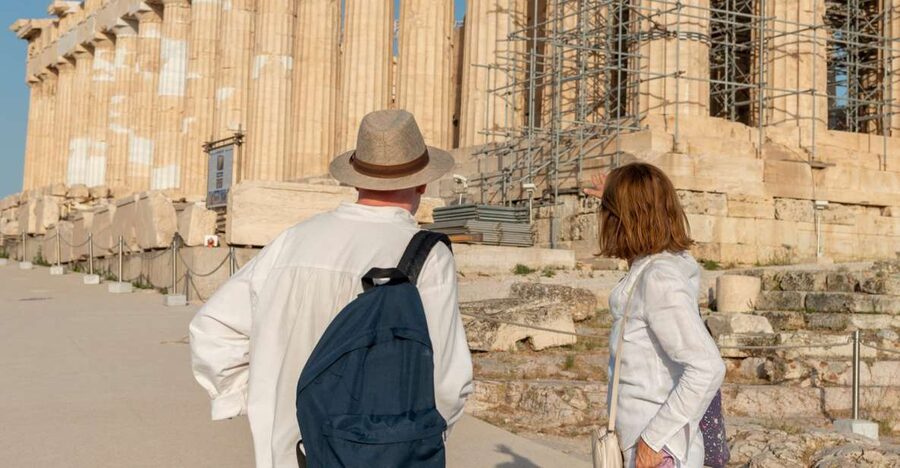
The Parthenon receives the attention you would expect. This is the tour’s central monument, and the licensed archaeological guide gives you more than a quick identification of columns and pediments.
You learn why the building is regarded as a masterpiece of art and architecture, while also hearing about the religious setting that shaped it. The guide places the structure within the world of ancient Greek mythology and civic pride.
A private tour is useful here because you can stop to ask questions. In a large group, you may hear a polished speech and move on. In a private group, you can ask about construction, decoration, Athena, or the way the building has changed over time. The supplied descriptions do not promise a specialist lecture on every architectural detail, so you should not book this expecting an academic seminar. You should expect clear explanations pitched to your group.
The Parthenon is also the place where the practical challenges are most obvious. Stone surfaces are uneven, the approach includes steps, and the open hill can feel exposed. Comfortable shoes, water, and sensible sun protection are important, although those items are not supplied by the tour.
The Erechtheion and the contest between Athena and Poseidon
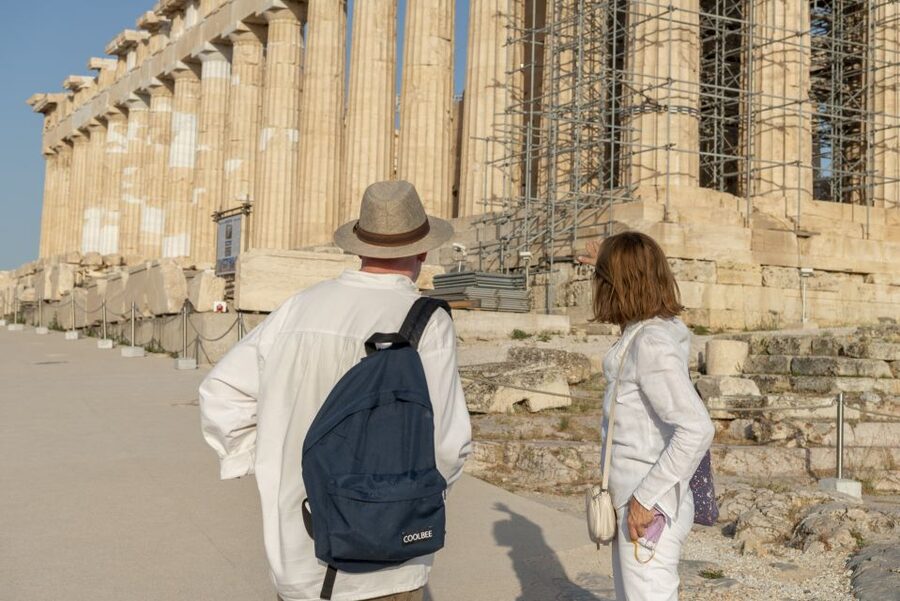
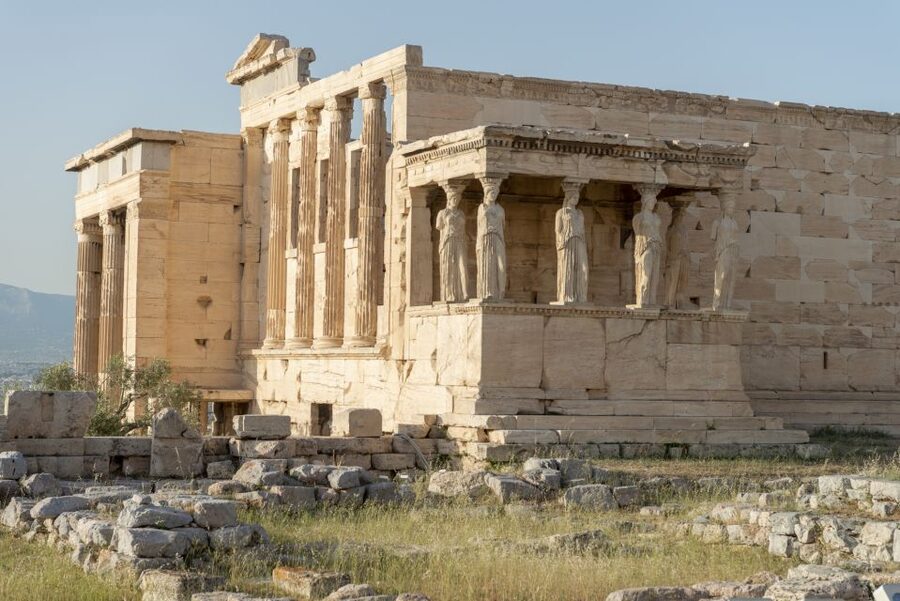
The Erechtheion brings a more complicated layer of myth to the visit. Here, the guide explains the contest between Athena and Poseidon, two powerful figures competing for the city’s protection and favor.
This is exactly the kind of story that helps younger visitors stay engaged. Instead of treating the Acropolis as a set of ruins, you begin to see it as a place shaped by rival gods, sacred traditions, and local identity.
The guide also discusses the mysteries connected with the Erechtheion. The wording of the tour emphasizes mythology rather than promising every technical detail, so the experience should suit you if you want a lively introduction to ancient beliefs.
As with the Parthenon, the stop is planned for about 15 minutes. That is enough to hear the main story and admire the building, but you may want more time if you are focused on photography or architectural study.
Descending past the Odeon of Herodes Atticus
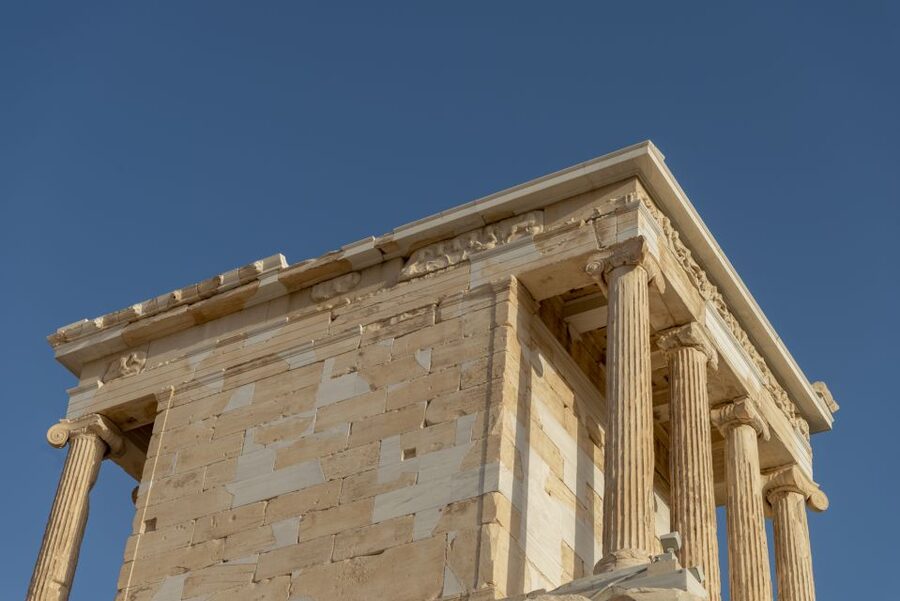
After the main monuments, the route descends through olive trees toward the Odeon of Herodes Atticus. This theater is still used each summer, giving the site a rare link between ancient construction and present-day performance.
That continuing use helps explain why Athens is not simply an archaeological park. Ancient places remain part of the city’s cultural life, even when their original purpose has changed.
The descent may be easier than the climb, but the surface remains uneven. If you have knee, balance, or walking concerns, this part of the route reinforces the importance of the stated accessibility warning.
At this point, the guide completes the Acropolis story before the Plaka portion begins. If you selected the shorter tour, this is where the experience ends, leaving you inside the Acropolis area with time for views and photographs.
Plaka, from ancient lanes to artisan shops
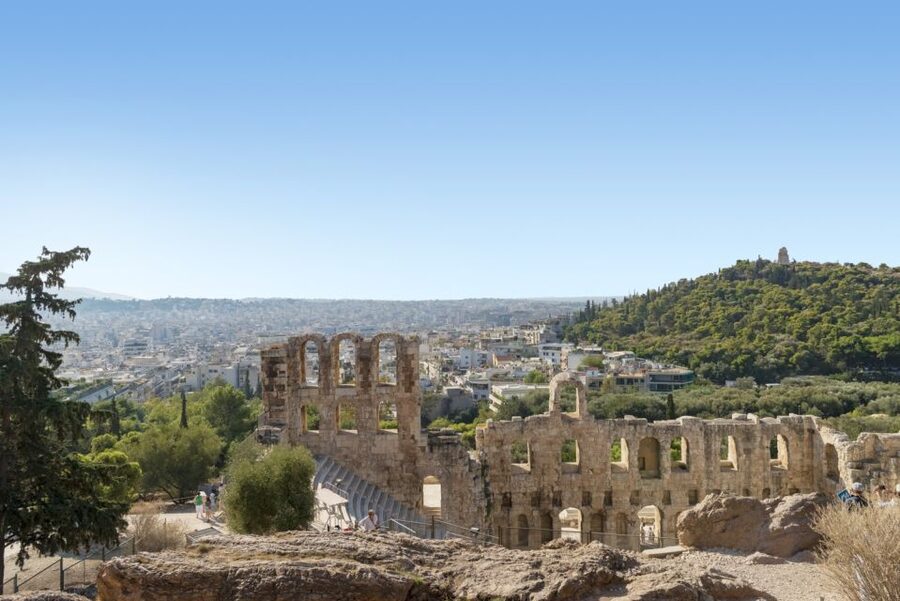
The longer tour continues into Plaka, the old neighborhood at the foot of the Acropolis. Plaka has been continuously inhabited since ancient times, and its streets contain signs of Greek, Roman, Byzantine, and later city life.
The change in mood is immediate. You leave the monumental scale of the Acropolis and enter smaller streets lined with attractive houses, shops, cafés, restaurants, and market stalls. Your guide points out pleasant routes, lesser-known corners, and local details that are easy to pass without context.
This is where the private format has a practical advantage. You can ask where a particular street leads, what a shop sells, or which parts feel more local than tourist-oriented. The area includes authentic products and artisan jewelry, but also basic souvenirs, so the guide’s local knowledge helps you understand what you are seeing rather than treating every shop as equally special.
You should keep your expectations realistic. Plaka is a popular central district, not an untouched village. Some streets are commercial and crowded, while others are quieter and more atmospheric. The appeal lies in the mixture: old monuments, small lanes, food, shopping, and daily city life close together.
The Plaka section lasts about 90 minutes. That is long enough for a proper walk rather than a quick pass-through. At the end, you can remain in the neighborhood or return to the original meeting point. The listed drop-off locations are Makrigianni 7 and Plaka, which gives you a useful choice for continuing your day.
Optional Greek food and family-friendly stops
The food option adds tastings in Plaka. Possible stops include Greek coffee or mountain tea, souvlaki, traditional savory pies, and sweet or cake delicacies.
I see this as a good choice for families and for anyone who wants the neighborhood explained through everyday food. A bite of souvlaki or a traditional pie can tell you more about local habits than another long lecture about dates and rulers. Children also tend to welcome a snack break after the Acropolis climb.
The food option is not included in the basic price, so check the selected format carefully. The supplied details do not specify the exact portions, number of tastings, or dietary arrangements. If you have food restrictions, ask before booking rather than assuming substitutions are available.
The food stops also change the rhythm of the tour. Instead of walking continuously, you pause in Plaka and experience the area through its cafés and eateries. That makes the longer format feel more relaxed, although it may not suit you if you want to spend every available minute inside the archaeological site.
Guide quality and the value of a private format
The strongest part of this experience is the guide. Eva was praised for excellent German, modern explanations of Greek history, and careful attention to shade and walking pace. Valia received strong marks for competence, patience, and availability, while Christina was valued for an engaging route and helpful suggestions for the rest of an Athens stay.
Lisa was especially praised for combining archaeology with culture, legends, and history. That combination is important. The Acropolis can become a parade of names and dates without a guide who can explain why the stories mattered to the people who built and used these places.
The private format lets your guide adapt to your group. You can ask more questions, request a faster pace, or keep younger children involved. It also avoids the fixed feel of a large group, though the quality of the experience still depends on the guide assigned and the language you choose.
German, English, Italian, and Greek are available. If language is important to you, select carefully when booking.
Is $163 per person a fair price?
At $163 per person, this is not a budget walk. You also pay for Acropolis admission separately, and skip-the-line tickets can be arranged on request after booking rather than being included automatically.
The price makes the most sense for a small private group that values personal attention. If you are traveling with family or several friends, the cost may compare more favorably than booking several separate guided experiences. The guide’s archaeological credentials, flexible pacing, and ability to combine the Acropolis with Plaka add real value.
For one person or a couple on a tight budget, the price is harder to justify. You could visit the Acropolis independently and explore Plaka on your own. You would save money, but you would lose the structured explanations, mythological stories, local orientation, and help with pacing.
The 5/5 score across 27 ratings supports the idea that the guiding is a major strength. Still, value depends on your priorities. Pay for this tour if you want context and personal attention, not simply entry to the monuments.
Timing, tickets, and who should book
Check your admission before arriving. The tour price does not include Acropolis tickets, and you are specifically expected to have admission with you unless the provider purchases skip-the-line tickets after you make contact. Starting times can change if availability is limited, so confirm the final time rather than relying only on an initial preference.
Free cancellation is available up to 24 hours before the tour, and you can reserve now and pay later. Those policies are useful when your Athens schedule is still moving, but they do not remove the need to secure the Acropolis ticket correctly.
I would choose this tour if you:
- Want a private guide rather than a large group
- Care about Greek mythology as well as archaeological facts
- Have children who need stories and breaks to stay interested
- Want to combine the Acropolis with Plaka in one organized outing
- Appreciate guidance in German, English, Italian, or Greek
- Can manage steps and uneven surfaces
I would skip it if you mainly want a low-cost entrance ticket, need a fully accessible route, or prefer to spend several hours studying the Acropolis at your own pace.
Should you book the Acropolis and Plaka tour?
Book it if you want Athens explained by a licensed archaeological guide and you value a private, adjustable experience. The combination of the Parthenon, ancient theaters, mythological stories, city views, Plaka lanes, and optional food gives you a well-rounded first look at central Athens.
Choose the Acropolis-only format if your priority is the monuments and photographs. Choose the longer Plaka and food format if you want the ancient city connected to modern Greek life. At $163 per person plus admission, it is a premium choice, but the attentive guiding and private format can justify the cost for families and small groups.
FAQ
How long does the tour last?
The experience lasts about 1.5 to 3 hours. The Acropolis-only option is about 90 minutes, while the longer format adds about 90 minutes in Plaka.
What monuments are included at the Acropolis?
The route includes the Theater of Dionysus, the Propylaea, the Temple of Athena Nike, the Parthenon, the Erechtheion, and the Odeon of Herodes Atticus.
Are Acropolis admission tickets included?
No. Acropolis ticket costs are not included. You need to have admission tickets before the tour, or ask the provider after booking about purchasing skip-the-line tickets.
Where does the tour meet?
The meeting point is Makrigianni 7 in Athens, close to the Acropolis Museum. Your guide will hold a sign with your name.
What languages are available?
The tour is available in German, English, Italian, and Greek.
Can I add food tastings?
Yes. You can select a food option that includes tastings in Plaka, such as Greek coffee or mountain tea, souvlaki, traditional savory pies, and sweet or cake delicacies.
Where does the tour end?
The longer tour can end at Makrigianni 7 or in Plaka. The Acropolis-only option ends at the Acropolis, allowing extra time for photographs and views.
Is the route suitable for people with mobility impairments?
No. The Acropolis includes steps and uneven surfaces, and the experience is not suitable for people with mobility impairments.
Just added around Athens
- Delphi One Day Trip from Athens★ 4.0 · 98 reviews
- Mercedes Private Tour to Delphi and Arachova★ 5.0 · 30 reviews
- Private Delphi and Hosios Loukas Monastery – Great Lunch and Drinks Included★ 5.0 · 36 reviews
- Day tour to Ancient Olympia,Ancient Sparta Mycenae Including Meal★ 5.0 · 54 reviews
- Athens: Half Day Trip To Cape Sounio/Poseidon Temple Semi Private★ 5.0 · 131 reviews
- Culinary Secrets of Downtown Athens★ 5.0 · 103 reviews
- Athens Half-Day Private Tour Acropolis, Parthenon City Highlights★ 5.0 · 35 reviews
- From Athens: Day Tour to Mykonos★ 5.0 · 64 reviews
Acropolis Tours, compared.
Acropolis & up to 5 Archaeological Sites Combo Pass
Read our review →
Acropolis, Parthenon & Acropolis Museum Guided Tour
Read our review →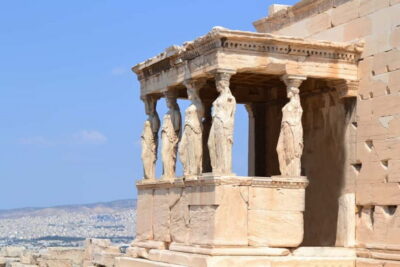
Acropolis, Parthenon & Acropolis Museum Guided Tour
Read our review →
Acropolis: Acropolis and Parthenon Guided Walking Tour
Read our review →
Acropolis monuments & Parthenon Walking Tour with Optional Acropolis Museum
Read our review →Browse the lists this tour appears in