
Reviewed · ACROPOLIS TOURS
Athens: Guided Tour of Acropolis & Parthenon with Tickets
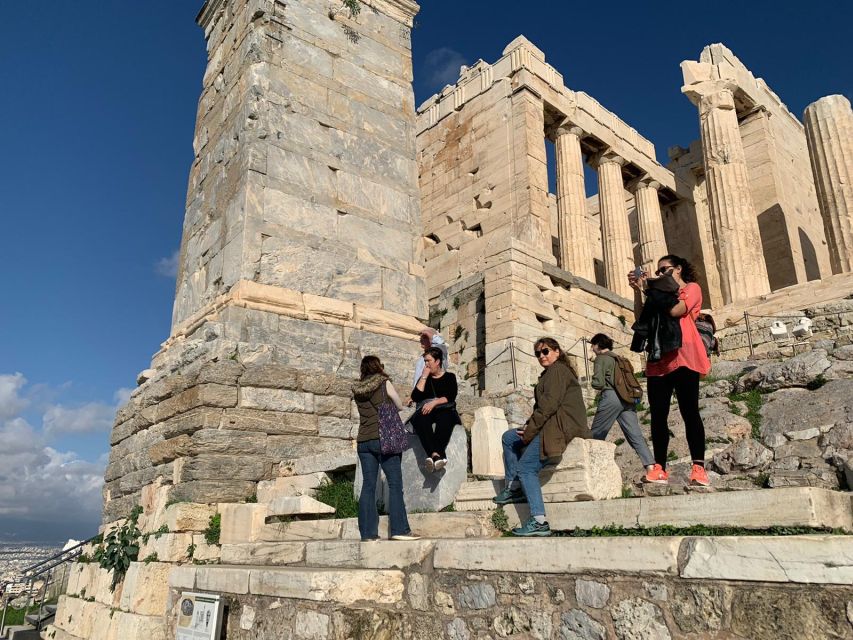
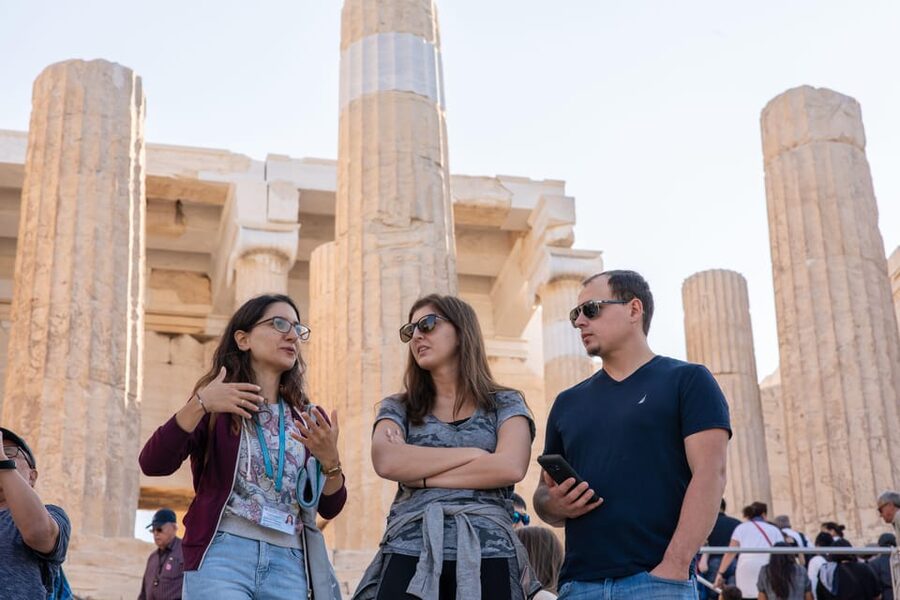
Athens saves its biggest lesson for the hill. This two-hour walk makes the Acropolis easier to understand, pairing pre-reserved entry with a licensed guide who explains the Parthenon, Erechtheion, Propylaea, and Temple of Athena Nike in a sensible order. I like the small-group format and the headsets, which help you hear the guide even when other tour groups crowd the hill.
I also like the balance of architecture, mythology, and later history. Guides such as Lisa, Vicki, Eva, Maria, and Elina have been praised for clear explanations, humor, patience, and thoughtful pacing. The catch is the climb: steep, uneven walking in full sun can make this a poor choice for anyone with limited mobility, heart problems, or difficulty walking uphill.
In This Review
- Key points at a glance
- Why a guide helps at the Acropolis
- Meeting at Makrigianni 7
- Climbing into the Acropolis
- The Propylaea: a grand first impression
- The Parthenon and the power of proportion
- Erechtheion and the city’s older myths
- Temple of Athena Nike above the city
- The Theater of Dionysus and the south slope
- Timing, crowds, and the best departure
- Is $35 a fair price?
- Who should book this Acropolis tour?
- My verdict: book it for meaning, not just entry
- FAQ
- How long does the Acropolis tour last?
- Where does the tour meet?
- Are Acropolis entry tickets included?
- What happens if I choose the option without tickets?
- Does the tour include skip-the-line entry?
- What languages are available?
- Are headsets provided?
- Can I bring a stroller?
- Is the tour suitable for wheelchair users?
- What should I bring?
Key points at a glance
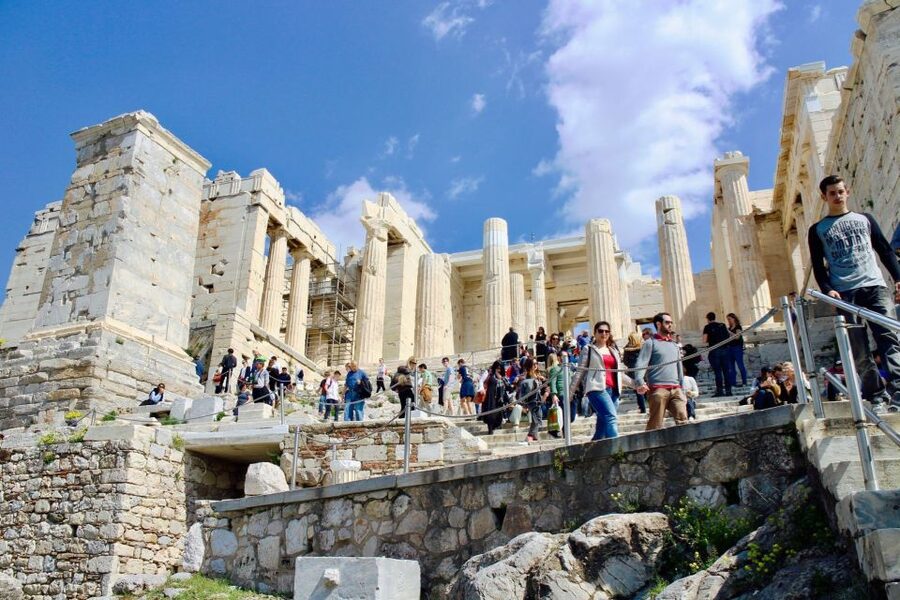
- A two-hour route covers the main monuments: You see the Parthenon, Propylaea, Erechtheion, Temple of Athena Nike, and the Theater of Dionysus.
- Timed entry saves useful time: Pre-reserved tickets let you use the designated ticket-holder queue, though busy periods can still bring a wait.
- Headsets make the guide easier to follow: You can hear explanations without standing shoulder to shoulder with the guide.
- Early departures are the smart choice: Morning tours are cooler, and several tour participants found the Acropolis less crowded early in the day.
- The guide shapes the experience: The strongest part of this tour is the human explanation, especially for mythology, architecture, and the site’s changing history.
- The hill demands honest preparation: Wear proper walking shoes, carry water, and leave strollers and large bags behind.
Why a guide helps at the Acropolis
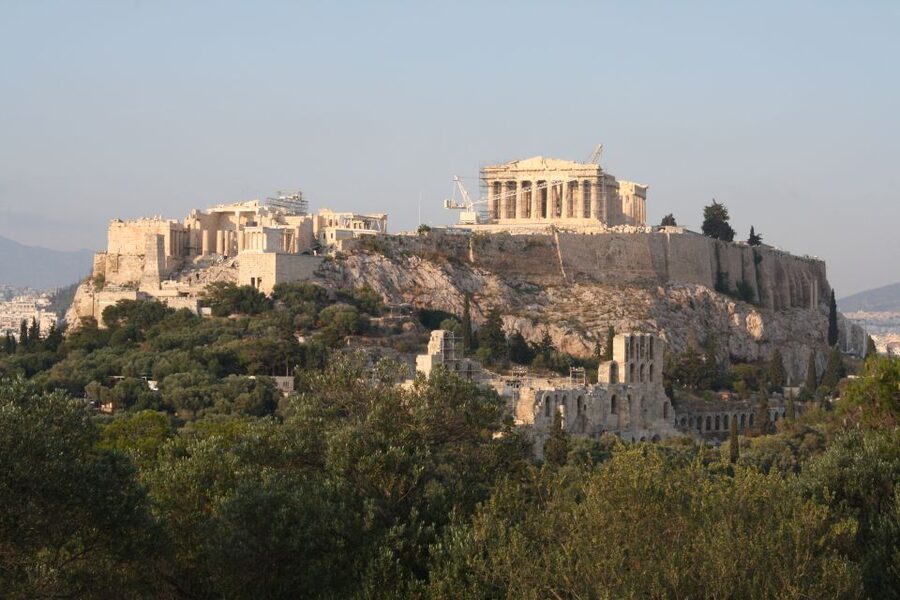
The Acropolis is famous enough to recognize from a postcard, but its meaning is easy to miss when you walk through it alone. A guide gives you a story to follow, from ancient religious ceremonies to the later Roman, Byzantine, Ottoman, and modern chapters that changed the hill.
That context matters because the ruins are not a single frozen moment. The Acropolis has been used and altered across many centuries. A good guide helps you see the difference between the fifth-century BCE monuments and the later layers of history, rather than treating every stone as part of one ancient scene.
The mythology also gives the site a human voice. Your guide may explain the gods associated with Athens, early cults, and the festivals that once brought ceremonies and crowds to these paths. This is where the tour earns its fee. You are not simply looking at columns. You are learning why these buildings were placed here and what they meant to the people who built them.
The headsets are a practical bonus. The Acropolis can be noisy, and the group may spread out slightly on the climb. With an audio system, you can pause for a photograph or stay a few steps behind without losing the explanation.
More ways to see the Acropolis:
- Athens: Acropolis & up to 5 Archaeological Sites Combo Pass
★ 4.4 · 12,619 reviews - Athens: Acropolis Ticket with Optional Audio or Live Guide
★ 4.2 · 11,055 reviews - Athens: Acropolis, Parthenon & Acropolis Museum Guided Tour
★ 4.8 · 9,316 reviews
Meeting at Makrigianni 7
The meeting point is outside the Acropolis Metro Station, at Makrigianni 7. If you arrive by metro, use the Makrygianni and Dionysiou Areopagitou exit, go up to street level, and look for the sign marked Akropoli.
Your guide waits with a sign displaying the names on the booking. This is a useful setup in a busy part of Athens, but do not arrive at the last second. You should be at the meeting point five to ten minutes early because entry times are reserved. The tickets can expire within five to ten minutes, and joining after the group has entered is not feasible.
Transport to the meeting point is not included. The metro station makes the starting point convenient if you are staying in central Athens, but you need to plan your own way there.
Climbing into the Acropolis
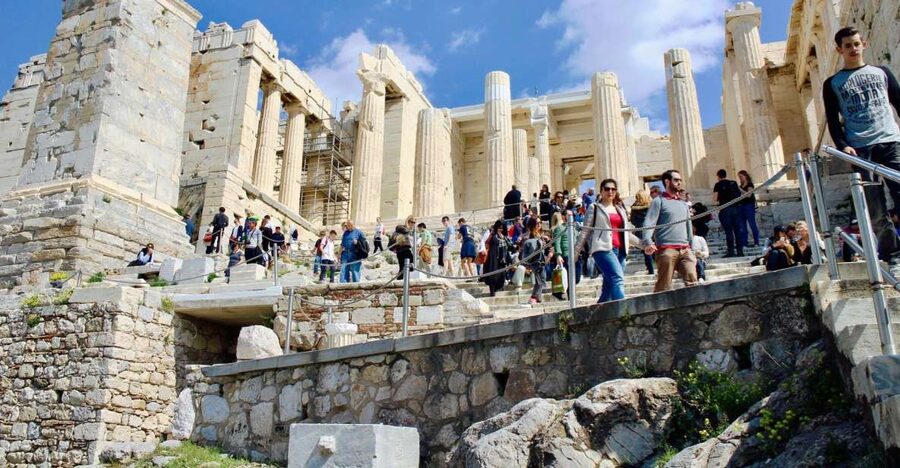
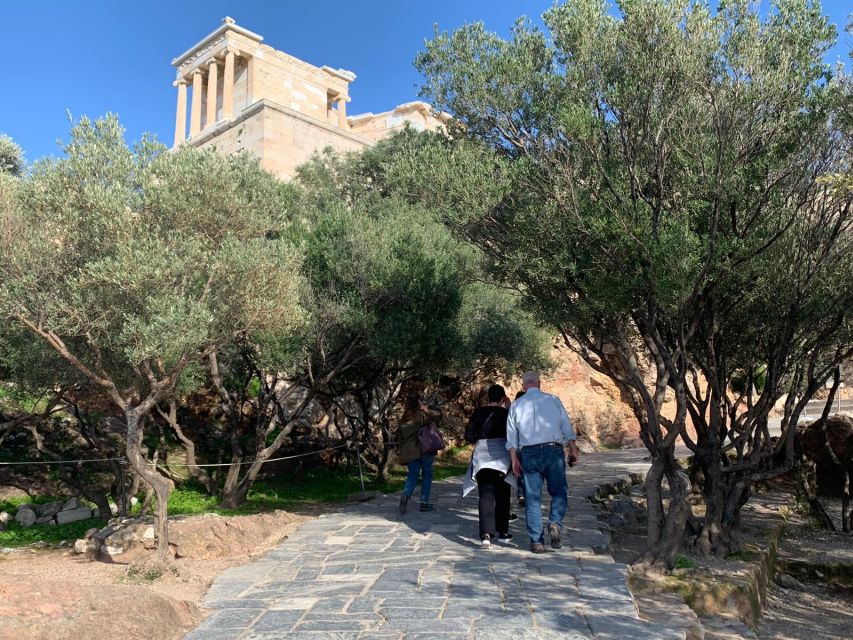
The walk begins with an uphill ascent toward the sacred hill. Silvery olive trees provide some character and occasional relief, but you should not count on shade throughout the route. Summer heat can be severe, and several participants praised guides who stopped in shaded places and kept the group together on very hot mornings.
This is not a flat museum visit. You will walk uphill over uneven surfaces, stone paths, and steps. Sandals and flip flops are not allowed, so bring sturdy, comfortable shoes. A sun hat, sunscreen, and water are equally important.
The physical effort is worth considering before you book. The tour is not suitable for wheelchair users, people using walkers, or anyone who needs an elevator. Baby strollers are also prohibited inside the Acropolis, and a baby pouch is suggested instead. The activity is not recommended for children under six, pregnant women, people with heart problems, or people with certain medical and mobility conditions.
The climb also affects the pace. The guide must keep the group moving toward its timed entry and main stops, but several guides have been praised for allowing rest breaks and not rushing people who needed more time. That is encouraging, though you should still be realistic about your own comfort on hills.
The Propylaea: a grand first impression
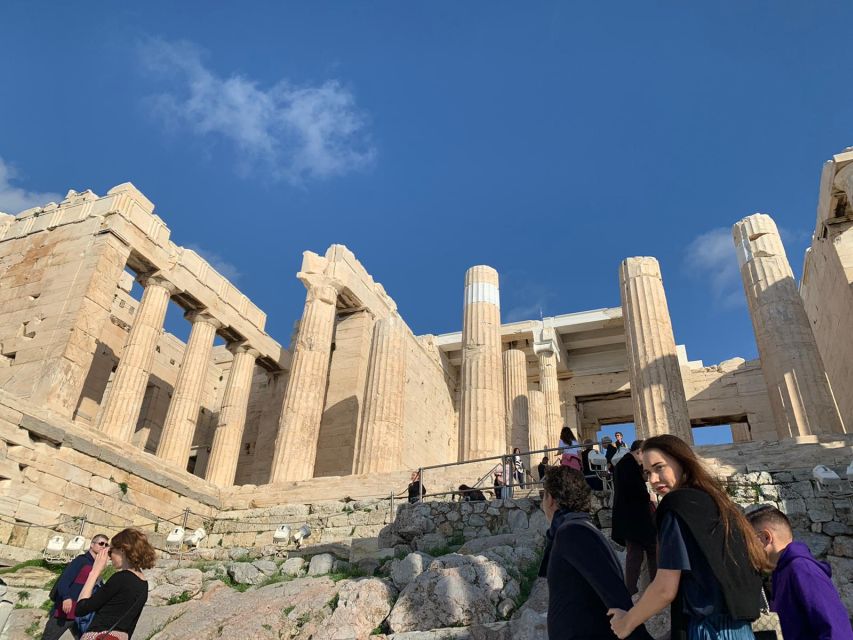
The Propylaea forms the monumental entrance to the Acropolis. It was designed to make arrival feel important, and it still does. Instead of slipping quietly into an archaeological site, you pass through a structure created for ceremony and visual impact.
Your guide can point out how the entrance controlled movement toward the sacred buildings above. This is a good first stop for understanding the Acropolis as a planned religious center rather than a random collection of ruins.
The Propylaea can also be a crowded point, especially when several groups arrive at once. The headsets help here. You can listen while taking in the scale of the gateway without needing to stand directly beside the guide.
A few more Athens half-days to weigh up
- Athens: Cape Sounion & Poseidon Temple Sunset Half-Day Trip
★ 4.8 · 8,241 reviews - Athens: Acropolis and Parthenon Guided Walking Tour
★ 4.6 · 5,882 reviews - All Day Cruise -3 Islands to Agistri,Moni, Aegina with lunch and drinks included
★ 5.0 · 4,958 reviews - Athens, Piraeus, and Coastline: Blue Hop-On Hop-Off Bus
★ 3.9 · 4,849 reviews
The Parthenon and the power of proportion
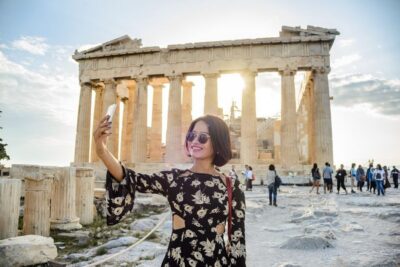
The Parthenon is the main event, and the tour gives it the attention it deserves. Dedicated to Athena, the city’s patron goddess, the temple expresses the ambition and confidence of classical Athens.
The guide’s explanation is most useful when it moves beyond dates and names. You learn about Greek architecture, the role of religious buildings, and the way the Parthenon has been understood through its later Roman, Byzantine, Ottoman, and modern periods.
The building is not preserved as a complete ancient temple, and restoration work is part of the modern view. That can disappoint anyone expecting a fully intact monument. Still, the surviving structure is powerful, especially when your guide explains how its design worked and why its proportions mattered.
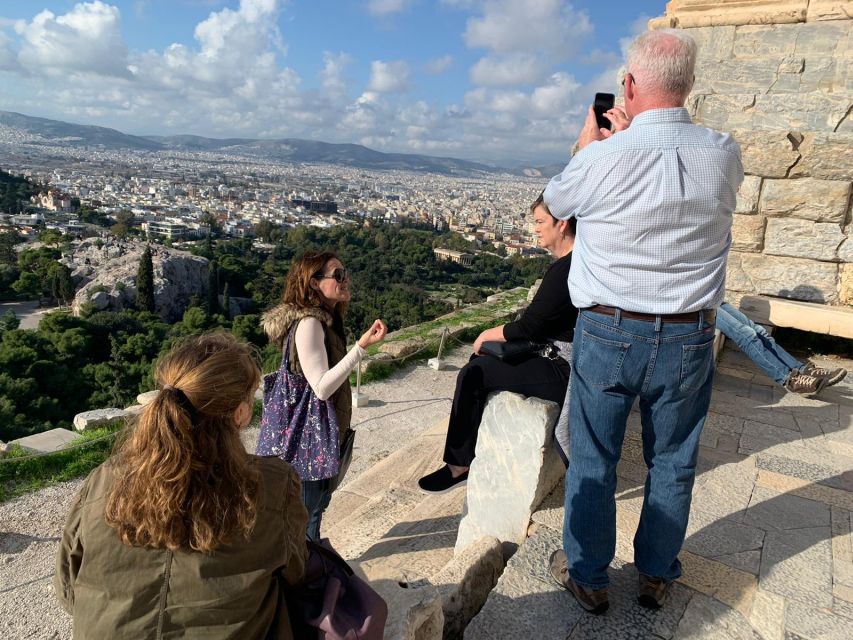
The surrounding views add another layer. From the Acropolis, Athens stretches below you, with nearly 3,000 years of history connected to the hill. Guides often pause at good photo angles, and one of the tour’s practical strengths is knowing when to stop for a picture without turning the whole visit into a photo session.
You cannot walk inside the Parthenon itself, so the experience depends on what you see from outside and what the guide adds. If you want more objects and closer views of sculpture, pairing this tour with the Acropolis Museum is a sensible plan.
Erechtheion and the city’s older myths
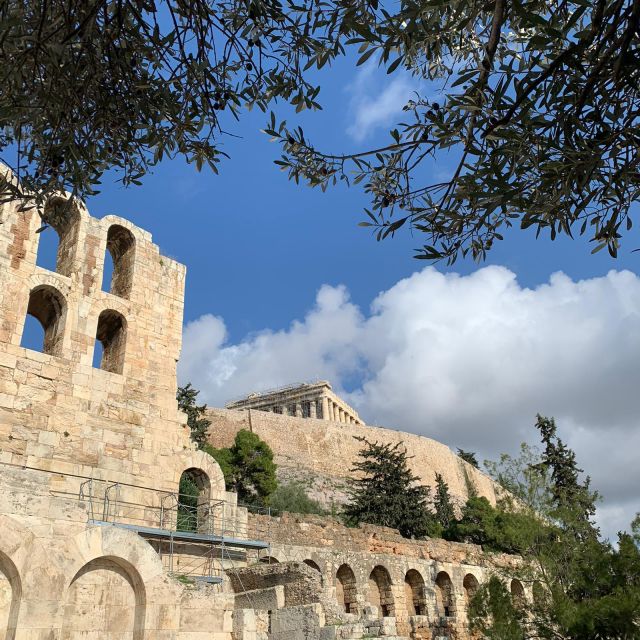
The Erechtheion is more intricate and unusual than the Parthenon. Its design is less straightforward, and its religious associations are tied to older myths and sacred traditions connected with Athens.
This is one of the places where a guide adds real value. Without explanation, you might simply notice a smaller temple with famous sculpted female figures. With context, the building becomes a place of competing cults, sacred stories, and complex ritual meaning.
The tour’s mythology is not limited to decorative storytelling. It helps explain why the Acropolis mattered before the great classical monuments were built. Your guide may connect the Erechtheion with Athena, Poseidon, and the early religious identity of the city.
Because the structure is detailed and visually delicate, it can attract a crowd. Stay close enough to hear the explanation, but allow yourself a quiet moment after the guide finishes. The Erechtheion rewards a slower look.
Temple of Athena Nike above the city
The Temple of Athena Nike is smaller than the Parthenon, but its position gives it a strong presence. It sits near the entrance, poised above the city, and its location would have made it an important visual part of the approach.
The guide can show how the temple’s size does not reflect a lack of importance. Small buildings could carry major religious and political meaning. This is also a useful place to compare different forms of Greek architecture within a short walk.
The temple may not hold your attention as long as the Parthenon, but it is part of the complete Acropolis story. A short guided stop helps you avoid walking past it without understanding what you are seeing.
The Theater of Dionysus and the south slope
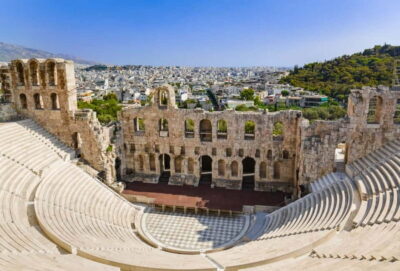
After the main guided walk, you may be able to continue toward the south slope with your guide. This route can include the Sanctuary of Asclepius and the Theater of Dionysus, often described as the birthplace of drama.
This portion is especially useful if you want the Acropolis to feel like a living civic center rather than only a hilltop temple complex. The Theater of Dionysus connects the site with performance, festivals, and public life. It shows how religion, politics, and theater were closely linked in ancient Athens.
The tour description allows you to linger on the Acropolis at your own pace after the guided portion, or follow the guide toward the south slope. Confirm the precise ending arrangement when booking, since the main activity lasts two hours and the optional continuation may depend on the day’s conditions and timing.
Timing, crowds, and the best departure
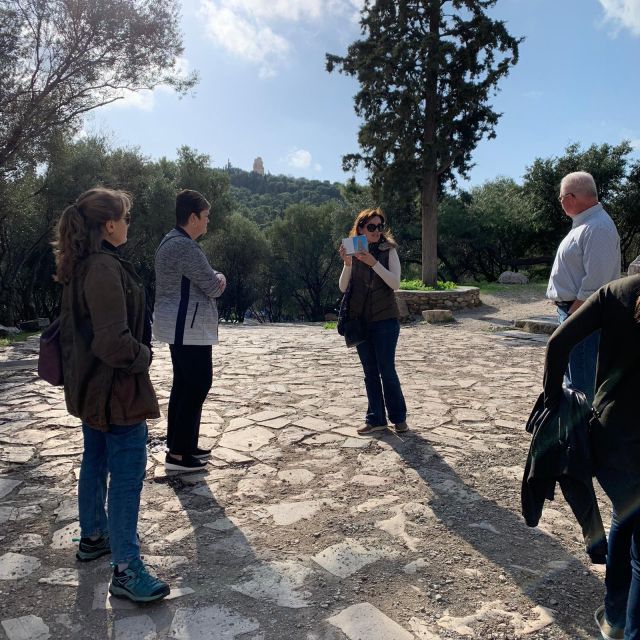
The first morning departures receive the strongest practical praise. An 8 a.m. tour can be cooler and less crowded by the time you come down, though one participant found 10 a.m. quieter than expected. There is no single perfect time for every date, since crowd levels change.
I would choose an early start in the hottest months. You gain cooler temperatures and a better chance of hearing the guide without constant noise around you. An 11 a.m. start can still work, but the heat becomes a serious factor, especially on the climb.
High season requires a realistic view of skip-the-line entry. Pre-reserved tickets do not mean you walk through an empty gate. At popular time slots, you may still wait in the queue for pre-reserved ticket holders. The advantage is that you avoid the regular ticket-buying process and arrive with a timed place in the entry system.
The tour is punctual for a reason. The Acropolis uses timed admission, so a late arrival can cost you the entire activity. Build in extra time for the metro, finding the correct exit, and walking to the meeting sign.
Is $35 a fair price?
At $35 per person, this is a reasonable price for a two-hour guided visit if the selected option includes the Acropolis ticket. You are paying for timed admission, a licensed guide, the walking route, and headsets. For a first visit, that package removes several small hassles and gives the ruins a clear meaning.
The value depends on how you travel. If you already know Greek archaeology and prefer wandering alone, you may find two hours restrictive or unnecessary. The guide sets the route and pace, and the focus is on the major monuments rather than a long, quiet exploration of every corner.
For most first-time visitors, the guide is the main reason to pay. Several people who normally prefer independent sightseeing found the explanations changed the experience for them. That is a useful sign, especially at a site where a guidebook cannot point out the best viewing angle or explain a ritual while you are standing beside the building it concerned.
Check the booking option carefully. If you select the version without tickets, you must bring the exact cash amount for the Acropolis admission fee. Other tickets or passes are not accepted for that payment. The supplied information does not give the separate admission amount, so confirm it before you arrive.
Free cancellation is available up to 24 hours before the scheduled start, and you can reserve now and pay later. Those terms help if your Athens plans are still shifting, but the timed entry itself is not flexible on the day.
Who should book this Acropolis tour?
This is a strong fit for you if:
- You are visiting Athens for the first time.
- You want the main monuments explained in a logical two-hour route.
- You prefer stories and context to reading every sign alone.
- You want help with the timed-entry process.
- You appreciate photo stops and a guide who keeps the group together.
- You can comfortably manage an uphill walk over uneven ground.
It is less suitable if you want a private, slow archaeological study or if you have serious mobility limits. A private group is available, but the standard experience is still a guided walking tour with a set start time.
The best guides combine facts with personality. Names praised repeatedly include Lisa and Vicki, along with Eva, Maria, Elina, Ria, Frosso, and Andi. Guide assignments can change, so you should not book solely for a particular person. The consistent strength is the guide’s role: explaining architecture and mythology, answering questions, watching the group’s safety, and finding sensible places to pause.
My verdict: book it for meaning, not just entry
I would book this tour if the Acropolis is a major reason for your Athens visit. The Parthenon is impressive on its own, but the Propylaea, Erechtheion, Temple of Athena Nike, and Theater of Dionysus become far more memorable when someone explains their purpose and connections.
Choose an early time, wear real walking shoes, carry water, and arrive at Makrigianni 7 early. If you have extra time, add the Acropolis Museum separately. At $35, the tour is not the cheapest way to enter the hill, but it is a solid way to make two hours count.
FAQ
How long does the Acropolis tour last?
The guided tour lasts two hours.
Where does the tour meet?
The meeting point is outside the Acropolis Metro Station at Makrigianni 7. Use the Makrygianni and Dionysiou Areopagitou exit and look for the guide holding a sign with the booking names.
Are Acropolis entry tickets included?
Pre-reserved Acropolis entry tickets are included if you choose the ticketed option during booking.
What happens if I choose the option without tickets?
You must bring the exact cash amount for the Acropolis entry fee to the meeting point. Other tickets or passes are not accepted for this payment.
Does the tour include skip-the-line entry?
It includes access through the pre-reserved ticket-holder process. During busy periods, you may still wait in the queue for people with pre-reserved tickets.
What languages are available?
The tour is offered in English and German.
Are headsets provided?
Yes. Headsets are included so you can hear the guide more clearly during the walk.
Can I bring a stroller?
No. Baby strollers of any kind are not permitted inside the Acropolis. A baby pouch is recommended instead.
Is the tour suitable for wheelchair users?
No. There is no wheelchair, walker, or elevator access during the tour.
What should I bring?
Bring comfortable shoes, a sun hat, sunscreen, and water. Sandals, flip flops, luggage, and large bags are not allowed.
Just added around Athens
- Delphi One Day Trip from Athens★ 4.0 · 98 reviews
- Mercedes Private Tour to Delphi and Arachova★ 5.0 · 30 reviews
- Private Delphi and Hosios Loukas Monastery – Great Lunch and Drinks Included★ 5.0 · 36 reviews
- Day tour to Ancient Olympia,Ancient Sparta Mycenae Including Meal★ 5.0 · 54 reviews
- Athens: Half Day Trip To Cape Sounio/Poseidon Temple Semi Private★ 5.0 · 131 reviews
- Athens Half-Day Private Tour Acropolis, Parthenon City Highlights★ 5.0 · 35 reviews
- From Athens: Day Tour to Mykonos★ 5.0 · 64 reviews
- Culinary Secrets of Downtown Athens★ 5.0 · 103 reviews
Acropolis Tours, compared.
Acropolis & up to 5 Archaeological Sites Combo Pass
Read our review →

Acropolis, Parthenon & Acropolis Museum Guided Tour
Read our review →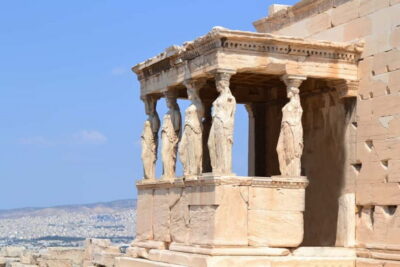
Acropolis, Parthenon & Acropolis Museum Guided Tour
Read our review →
Acropolis: Acropolis and Parthenon Guided Walking Tour
Read our review →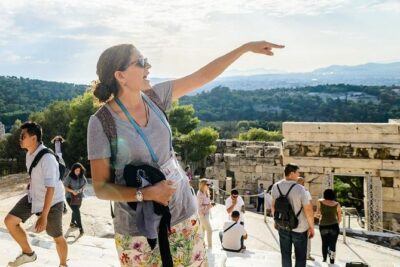
Acropolis monuments & Parthenon Walking Tour with Optional Acropolis Museum
Read our review →Browse the lists this tour appears in