
Reviewed · MUSEUMS
Athens: Kotsanas Ancient Greek Technology Museum Guided Tour
Ancient Greeks had more gadgets than you might expect. The Kotsanas Museum turns that surprise into a hands-on private tour, where an engineer, historian, archaeologist, or museologist explains working models of ancient inventions. I like the unusual subject and the chance to see mechanisms operate, not just sit behind glass. The main drawback is the short one-hour format, which can feel brisk if you want to study every display.
I also like the easy central location, only about five minutes on foot from Syntagma Metro Station, and the private format for up to four people. Guides such as Vasilis, Irina, and Maria have been praised for making the exhibits clear and enjoyable for families and non-engineers. Keep in mind that the museum is not suitable for people with mobility impairments, and food and drinks are not allowed inside.
In This Review
- Key points to know before you book
- Why ancient technology feels surprisingly modern
- Arriving at Pindarou 6 near Syntagma
- Starting with the interactive exhibition
- The Antikythera mechanism and ancient computing
- From robot servants to mechanical theater
- Water clocks, gears, and practical problem solving
- What the one-hour tour is really like
- The value of a private group for $54
- Who will get the most from this museum
- My practical plan for visiting
- Should you book the Kotsanas Museum tour?
- FAQ
- Where is the Kotsanas Ancient Greek Technology Museum?
- How long does the guided tour last?
- What language is the guided tour in?
- How many people can join the private group?
- What is included in the price?
- Can I cancel the booking for a refund?
- Is the museum suitable for people with mobility impairments?
Key points to know before you book
- The Antikythera mechanism is a star attraction: See an operating model of the world’s oldest known analog computer.
- The tour is genuinely interactive: Many exhibits can be tried or operated, helping you understand how the mechanisms worked.
- Your guide is a specialist: The private tour is led in English by a qualified engineer, archaeologist, historian, or museologist.
- The museum is close to Syntagma: Pindarou 6 is roughly five minutes from Syntagma Metro Station.
- The price works best for a small group: The listed cost is $54 for up to four people, or $13.50 each when four people share.
- Allow extra time after the tour: Your ticket includes free time to explore the displays on your own.
Why ancient technology feels surprisingly modern
The Kotsanas Museum tackles a side of Greek culture that many visitors never encounter. Athens is filled with temples, statues, and political history, but this museum asks a different question: how did ancient people solve practical problems with gears, water, air, sound, and movement?
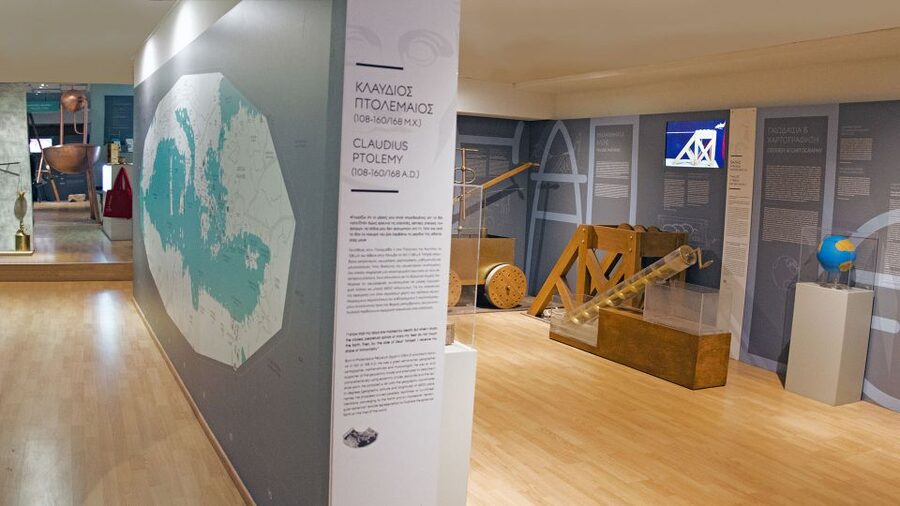
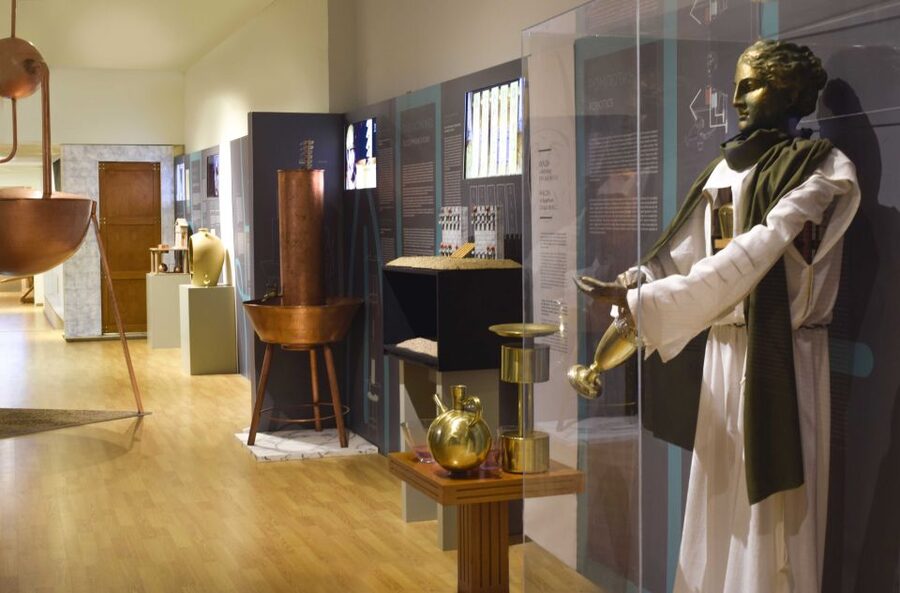
The answer comes through about 300 artifacts across the museum’s exhibitions, including roughly 100 selected pieces in the exhibition titled The Hi-Tech Inventions of Ancient Greeks. These are not simply ancient objects placed on shelves. Many are operating models, designed to show what the original mechanisms could do.
That distinction matters. A written label can tell you that an ancient Greek inventor built a hydraulic clock. Watching water control a moving display gives you a much clearer idea of the problem the inventor was solving. The museum’s approach turns technical history into something you can follow with your eyes and hands.
You do not need an engineering background. The guides explain the basic principles in plain English, and the displays use diagrams, photographs, large posters, videos, animations, and documentaries. I would still expect some technical terms, but the interactive format helps keep the material from becoming a lecture.
More Museums in Athens
- Athens: Acropolis, Parthenon & Acropolis Museum Guided Tour
★ 4.8 · 9,316 reviews - Athens: Mythology of Delphi, Museum and Arachova Guided Tour
★ 4.6 · 4,008 reviews - Athens: Acropolis, Parthenon & Acropolis Museum Guided Tour
★ 4.8 · 3,579 reviews
Arriving at Pindarou 6 near Syntagma
The museum is at Pindarou 6 in central Athens, about a five-minute walk from Syntagma Metro Station. That makes this a practical stop between other central sights, especially if you are staying near Syntagma or planning time around the city center.
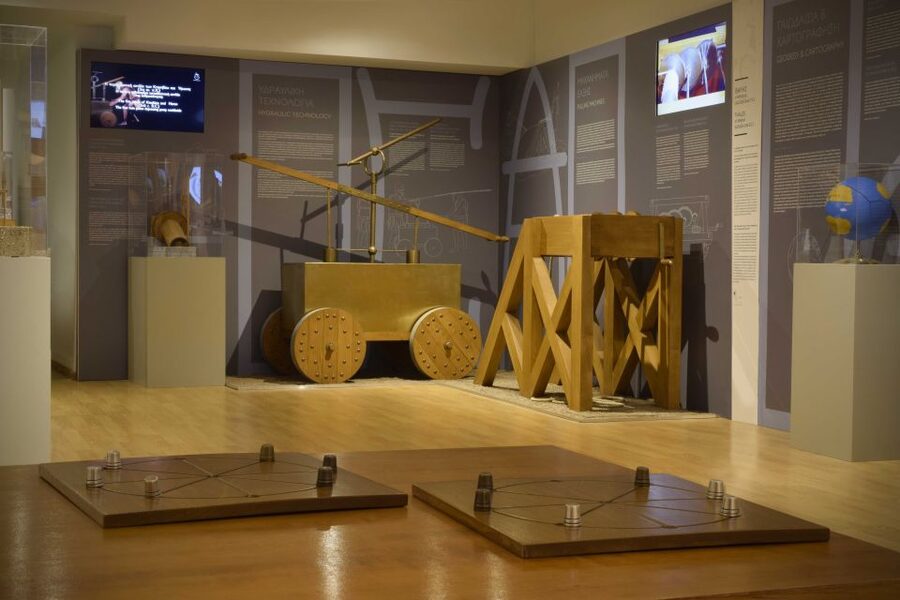
The museum occupies a historic Art Nouveau building with about 700 square meters of space. The setting gives the visit a different feel from a large national museum. You are entering a focused collection devoted to mechanisms and invention rather than a broad survey of Greek art and archaeology.
The meeting point is also the end point. There is no hotel transfer, so you arrange your own way to Pindarou Street. Since the tour lasts one hour, it is easy to fit into a morning or afternoon plan, but you should check the available starting times before building the rest of your day around it.
Food and drinks are not allowed inside. This is a small point, but it is useful to know if you are coming directly from lunch or carrying a coffee. Finish it before you enter.
Starting with the interactive exhibition
The guided visit introduces you to a selection of ancient Greek technologies through models and explanatory material. The exact order of the displays can depend on the guide, but the central idea remains the same: you see the mechanism, learn what problem it addressed, and then watch how it worked.
This is where the private format earns its place. In a large group, you might have to wait for your turn at an interactive display or struggle to hear a technical explanation. With a private group of up to four, you can ask questions as they arise and spend more time on the subjects that catch your attention.
The guides come from technical or historical fields, including engineering, archaeology, history, and museology. That mix is useful because the exhibits need both kinds of explanation. You want to know how a gear system functions, but you also want to understand why it mattered in ancient Greek society.
If you are visiting with children, the working models should help hold their attention. One family described the museum as a must-see for children, and that makes sense here. A moving puppet, a robot-like servant, or a device that responds to water is easier to remember than a paragraph on a wall.
The Antikythera mechanism and ancient computing
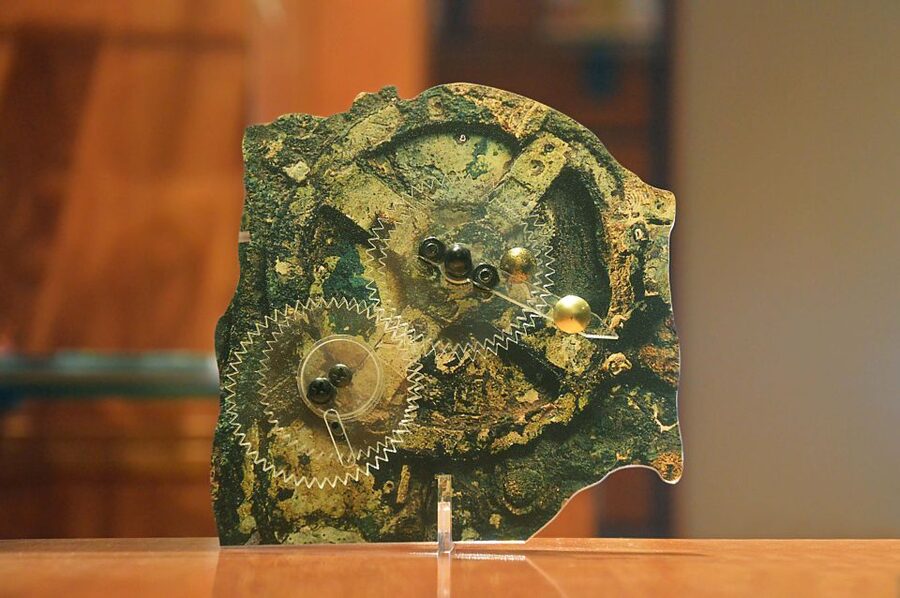
The Antikythera calculating mechanism is likely to be one of the most memorable displays. It is often described as the oldest analog computer in the world, and the museum includes an operating model that helps show why it is so important.
The value of seeing a model in motion is that you can grasp the relationship between its parts. The exhibit is not just about an old object recovered from the sea. It presents a complicated system of gears and calculations, showing that ancient Greek technology included precise mechanical thinking far beyond the simple tools many people imagine.
The museum’s videos, diagrams, and animations add useful support. If the mechanism seems difficult at first, the guide can break it into smaller ideas. You may not leave able to build one, but you should leave with a clearer sense of what it calculated and why the design was remarkable for its time.
This is one place where the guide makes a major difference. Without explanation, an intricate model can become another interesting object in a room full of interesting objects. With a good explanation, it becomes a window into ancient science.
More museums and sites in Athens:
- Acropolis monuments & Parthenon Walking Tour with Optional Acropolis Museum
★ 5.0 · 2,678 reviews - Athens All Included: Acropolis and Museum Guided Tour with Ticket
★ 4.5 · 2,673 reviews - Athens: Acropolis Museum Ticket with optional Audio Guide
★ 4.4 · 2,652 reviews - From Athens: Small-Group Delphi, Museum & Arachova Day Trip
★ 4.8 · 2,476 reviews
From robot servants to mechanical theater
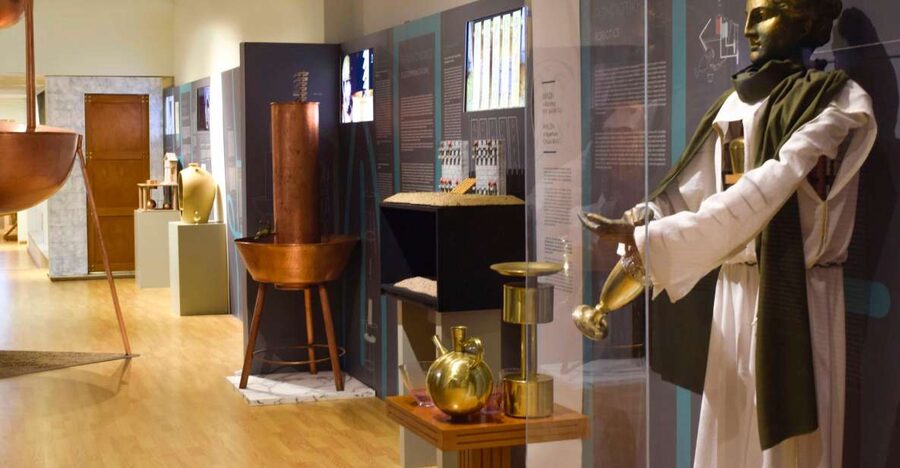
The displays move beyond clocks and calculations. You can see models connected with the robot-servant tradition, including the robot servant associated with Philon, and a mechanical puppet show linked to Heron.
These exhibits are especially good at showing the playful side of ancient engineering. Ancient inventors were not only concerned with measurement or industry. They also created devices for entertainment, spectacle, and surprise.
The so-called cinema of Philon is another example of this creative approach. The title may sound modern, but the point is to show how ancient mechanisms could create a sequence of images or visual effects. The display helps connect old mechanical ideas with the basic principles behind later forms of entertainment technology.
Heron’s automotive puppet show offers a similar lesson. A moving performance controlled by mechanisms may sound simple when described, but the operating model lets you see the planning involved. Timing, movement, and hidden controls all have to work together.
I like these exhibits because they make the ancient world feel inventive rather than static. They also give families and visitors who are less interested in pure mathematics something to enjoy.
Water clocks, gears, and practical problem solving
The hydraulic clock of Ktesibios shows another important strand of ancient Greek technology. Water clocks used the steady movement of water to measure time, and the model helps demonstrate how the flow could be controlled.
The point is not just that ancient people had clocks. It is that they had to solve the same basic problems that engineers face today: how to regulate movement, maintain accuracy, and make a system repeat its action.
As you move through the displays, you may notice this pattern again and again. The technology can look familiar because the principles still appear in modern machines. Gears transfer motion. Water creates controlled movement. Air and pressure produce effects. Automated sequences can create a performance.
That does not mean the ancient devices were identical to modern machines. The museum is most useful when it shows both the similarity and the limits. Ancient inventors could produce ingenious mechanisms, but they worked with different materials, tools, and sources of power.
A private guide can help keep that distinction clear. You can ask whether a device was intended for daily use, scientific study, public display, or entertainment. Those questions add context to what might otherwise seem like a collection of clever tricks.
What the one-hour tour is really like
One hour is enough to receive a guided introduction and see a strong selection of the museum’s main ideas. It is not enough for a slow reading of every label, poster, diagram, and video station.
The tour includes entry, a one-hour private guided visit, and free time afterward. I recommend treating the guided hour as your orientation. Listen closely, ask about the models that interest you most, then use the remaining time to return to displays you want to examine at your own pace.
The museum includes about 100 selected exhibits in the main exhibition, while the wider collection and exhibition material refer to approximately 300 artifacts of ancient technology. In practical terms, you should not expect to inspect everything closely during the guided hour.
This is the main tradeoff. The short duration makes the visit easy to schedule, but it also means the guide must keep moving. If you are an engineer, a serious ancient-history student, or someone who reads every technical panel, you will probably value the included free time.
For a first introduction, the pace should work well. The guide gives you a framework, and the visual material fills in the details.
The value of a private group for $54
The listed price is $54 per group of up to four people. Split four ways, that comes to $13.50 per person, which is strong value for a private museum visit with an English-speaking specialist. For two people, the effective cost is $27 each, so the value depends on how many people share the booking.
The private format is more important here than it would be at a simple gallery. The exhibits work through demonstration and explanation, so the ability to ask questions can change the quality of the visit.
You are not paying for transportation, food, or drinks. You also do not receive a hotel transfer. Since the museum is close to Syntagma Metro Station, that is not a serious problem for most people planning time in central Athens, but it is worth including in your budget and schedule.
The tour also offers reserve-now, pay-later booking, and free cancellation up to 24 hours before the activity for a full refund. Those terms help if your Athens plans are still shifting.
Who will get the most from this museum
I would recommend this experience to families, curious adults, students, and anyone who wants a break from the usual ancient monuments. Children can respond to the moving models, while adults may appreciate the engineering, historical context, and links to modern technology.
It is also a good choice for visitors who think museums are mostly about looking at objects from a distance. Here, the interactive displays give you something to test and observe.
The tour suits non-engineers particularly well because the guide provides a path through the technical material. One visitor who described being an admirer of history rather than an engineer found that the explanations stayed memorable days later. That is a good sign for anyone who wants substance without a specialist lecture.
You should think twice if you dislike mechanical subjects or prefer a very slow, self-guided museum visit. The tour has a clear technical focus, and the one-hour guided portion moves at a purposeful pace.
Mobility is another practical concern. The activity is not suitable for people with mobility impairments, so check your personal needs before booking.
My practical plan for visiting
I would schedule the museum near another central Athens activity because of its location and short length. Start at Pindarou 6, take the guided hour, then use the included free time for the exhibits that deserve another look.
Ask your guide to slow down at the Antikythera mechanism if that interests you. The same applies to the hydraulic clock, Philon’s inventions, or Heron’s puppet theater. A private group gives you room to shape the visit around your own curiosity.
If you are bringing children, tell them beforehand that they will see machines, moving figures, clocks, and an ancient calculating device. That simple preview may make the visit feel like a discovery rather than another museum appointment.
English is the stated tour language. The museum also provides audio-visual material in Greek and English, including labels, posters, diagrams, photographs, videos, animations, and documentaries.
Should you book the Kotsanas Museum tour?
Book it if you want to see an unusual side of ancient Greece and prefer exhibits that demonstrate ideas instead of merely describing them. The Antikythera mechanism, hydraulic clock, robot servant, and mechanical theater give the visit plenty of variety, while the private guide helps connect the pieces.
The $54 group price is especially attractive for four people. It is also a sensible add-on for a family or small group already spending time near Syntagma.
Skip it if you need step-free access, dislike technical subjects, or want a full-day museum visit. For everyone else, this is a focused, affordable hour that can change how you picture ancient Greek achievement.
FAQ
Where is the Kotsanas Ancient Greek Technology Museum?
The museum is at Pindarou 6, Athina 106 71, Greece. It is about a five-minute walk from Syntagma Metro Station.
How long does the guided tour last?
The private guided tour lasts one hour. You also receive free time to continue exploring the museum afterward.
What language is the guided tour in?
The live guided tour is conducted in English. The museum’s audio-visual material is available in Greek and English.
How many people can join the private group?
The listed price covers a private group of up to four people.
What is included in the price?
The price includes museum entry, the one-hour private guided tour, and free time to explore further.
Can I cancel the booking for a refund?
Yes. You can cancel up to 24 hours in advance for a full refund.
Is the museum suitable for people with mobility impairments?
No. The activity is listed as not suitable for people with mobility impairments. Food and drinks are also not allowed inside.
Just added around Athens
- Delphi One Day Trip from Athens★ 4.0 · 98 reviews
- Private Delphi and Hosios Loukas Monastery – Great Lunch and Drinks Included★ 5.0 · 36 reviews
- Mercedes Private Tour to Delphi and Arachova★ 5.0 · 30 reviews
- Day tour to Ancient Olympia,Ancient Sparta Mycenae Including Meal★ 5.0 · 54 reviews
- Athens: Half Day Trip To Cape Sounio/Poseidon Temple Semi Private★ 5.0 · 131 reviews
- Athens Half-Day Private Tour Acropolis, Parthenon City Highlights★ 5.0 · 35 reviews
- From Athens: Day Tour to Mykonos★ 5.0 · 64 reviews
- Culinary Secrets of Downtown Athens★ 5.0 · 103 reviews
Museums, compared.

Acropolis, Parthenon & Acropolis Museum Guided Tour
Read our review →
Mythology of Delphi, Museum and Arachova Guided Tour
Read our review →Acropolis, Parthenon & Acropolis Museum Guided Tour
Read our review →
Acropolis monuments & Parthenon Walking Tour with Optional Acropolis Museum
Read our review →
Athens All Included: Acropolis and Museum Guided Tour with Ticket
Read our review →
Acropolis Museum Ticket with optional Audio Guide
Read our review →
Small-Group Delphi, Museum & Arachova Day Trip
Read our review →
Parthenon & Acropolis Museum with Audio or Live Tour Option
Read our review →Browse the lists this tour appears in