
Reviewed · MUSEUMS
Athens: Museum of Cycladic Art Entry Ticket
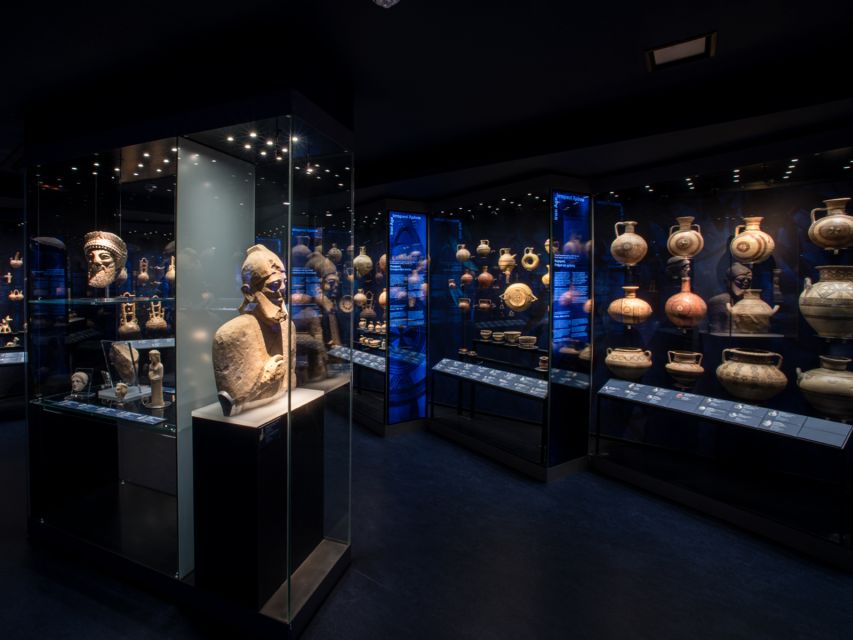
Small museum, big Aegean story. The Museum of Cycladic Art brings together elegant marble figures, ancient pottery, jewelry, weapons, and everyday objects from cultures around the Aegean and Cyprus. I like its clear layout across four floors and the calm setting in a handsome old house, just five minutes from Syntagma Square.
I also like the ticket’s flexibility. At $14, you can visit the permanent collections at your own pace, use the QR-based Clio Muse material, and return to the central Athens sightseeing circuit afterward. The main drawback is that the audio material does not cover every object, and renovation work reported in late 2025 made parts of the visit noisy and harder to enjoy.
In This Review
- Key points to know before you go
- Why this small Athens museum deserves your time
- Starting with the marble figures of the Cyclades
- The second floor follows Greek art through the centuries
- The fourth floor brings Classical Athens indoors
- Ancient Cyprus shows the Mediterranean as a connected world
- How long to spend and how to plan the visit
- The Clio Muse guide and the limits of self-guided information
- Is $14 a fair price?
- Renovation noise and other practical cautions
- Who will enjoy this museum most?
- Should you book the Museum of Cycladic Art ticket?
- FAQ
- Where is the Museum of Cycladic Art?
- How much does entry cost?
- How long is the ticket valid?
- Does the ticket include a guided tour?
- Is the museum wheelchair accessible?
- Can I cancel the booking?
Key points to know before you go
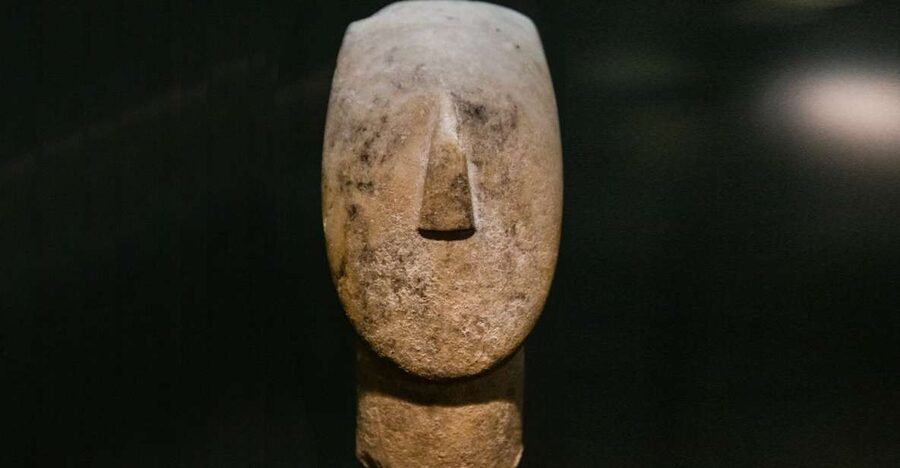
- Marble figures from around 2300 BC: See the famous folded-arm forms that made Cycladic art recognizable around the world.
- Four floors with different subjects: The museum moves from Cycladic and Ancient Greek art to daily life in Classical Athens and Ancient Cypriot culture.
- A quiet alternative to Athens’ major archaeological museums: The rooms are usually manageable in about 1.5 to 2 hours.
- Five minutes from Syntagma: You can easily fit this visit between the Acropolis area, Parliament, shopping streets, and the metro.
- QR-based museum information: Clio Muse Tours is included, but some objects may have little or no audio guidance.
- Cycladic Café on site: Finish with Cycladic-style food made from natural products and virgin ingredients.
Why this small Athens museum deserves your time
Athens has no shortage of major museums. The Acropolis Museum and National Archaeological Museum hold the headline pieces, so it is fair to ask what another museum adds.
Here, the answer is focus. The Museum of Cycladic Art gives you a close look at cultures from the Aegean and Cyprus, with special attention to the forms, materials, and daily objects that shaped ancient life. Instead of rushing past hundreds of objects, you can study a marble figure, a painted vase, or a small gold ornament and understand what it tells you about its time.
The setting helps. The museum is in a handsome old building near Syntagma Square, not in a huge modern complex. The rooms are arranged in a way that most people find easy to follow, and the exhibits do not feel crammed together. One recent visit was completed in about 1.5 to 2 hours, which makes this a sensible choice when you want culture without spending half a day indoors.
I would not call it a substitute for Athens’ larger archaeological museums. Some objects, especially pottery, weapons, statues, and household goods, may feel familiar if you have already visited several museums in Greece. The value is in the arrangement and the strong focus on Cycladic, Greek, and Cypriot connections.
More Museums in Athens
- Athens: Acropolis, Parthenon & Acropolis Museum Guided Tour
★ 4.8 · 9,316 reviews - Athens: Mythology of Delphi, Museum and Arachova Guided Tour
★ 4.6 · 4,008 reviews - Athens: Acropolis, Parthenon & Acropolis Museum Guided Tour
★ 4.8 · 3,579 reviews
Starting with the marble figures of the Cyclades
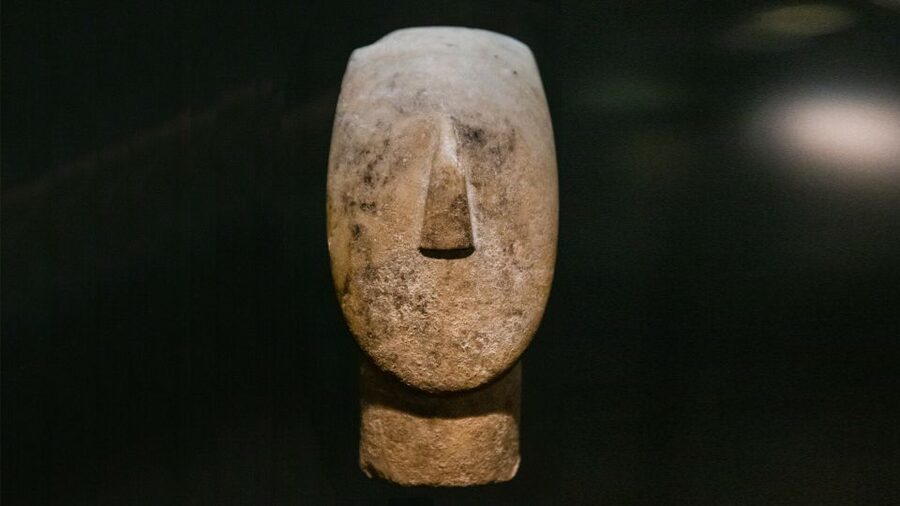
The Cycladic collection is the museum’s main attraction. It covers the culture that developed in the central Aegean during the Early Bronze Age, especially the third millennium BC.
The most famous objects are the simple marble figurines, many dating to about 2300 BC. Their smooth surfaces, folded arms, and spare shapes look surprisingly modern. They are easy to admire as works of art, but the museum also helps place them in their ancient setting. These were not made as decorative pieces for a modern living room. Their original use and meaning are connected to the beliefs and customs of prehistoric island communities.
You will also see marble vessels, vases, pottery, tools, and weapons. These less famous objects matter because they make the figurines feel less isolated. A marble sculpture gives you the strong visual moment, while a cooking vessel or tool provides a glimpse of ordinary work and material skill.
I like this balance. The collection does not rely only on the familiar white figures. It shows the wider culture that produced them and follows Cycladic art through its different phases. If you have seen reproductions of Cycladic figures in design shops or books, this is the place to see the originals and notice how varied their scale, surface, and form can be.
The collection is especially good for visitors interested in early Mediterranean cultures. You can think about how island communities worked with stone, made journeys across the sea, and developed artistic habits long before Classical Athens became the center of Greek culture.
The second floor follows Greek art through the centuries
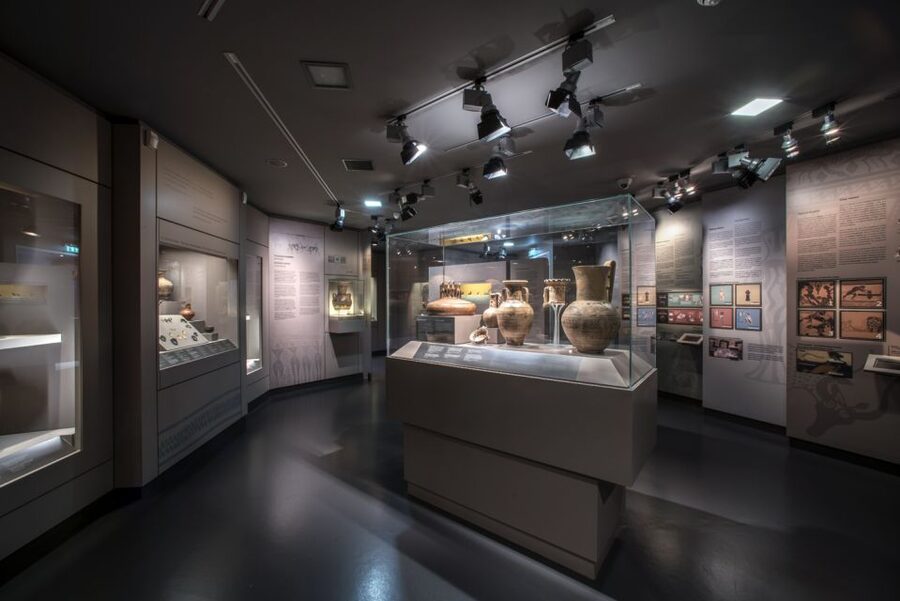
The Ancient Greek Art collection covers a much longer period, from the second millennium BC to the fourth century AD. The display includes painted vases, terracotta figures, bronze vessels, stone sculptures, coins, gold jewelry, and glass objects.
This section is useful because it lets you see change over time. Instead of looking at ancient Greece as one fixed period, you can follow the development of city-states, social life, artistic styles, and technical skills.
Painted pottery can be particularly helpful here. Vases often show people, gods, animals, battles, ceremonies, and daily activities. Even when you do not know every myth, the images give you clues about clothing, movement, tools, and social roles.
The smaller objects deserve your attention too. Coins can show political power and local identity. Jewelry and glasswork reveal taste and craftsmanship. Bronze vessels and terracotta figures connect art with practical life. The range helps you understand that ancient Greek culture was not only marble temples and famous statues.
The second-floor presentation is described as an overview of historical, artistic, and technological development. That makes it a good stop for first-time visitors who want a broad outline without tackling a very large museum. It is also useful if you have already seen major monuments and want objects that explain how people lived around them.
The tradeoff is that a broad display cannot give every object equal attention. You may find a number of items that are interesting but not heavily explained. The QR-based Clio Muse material can help, though the available guide content focuses on selected objects rather than every display.
The fourth floor brings Classical Athens indoors
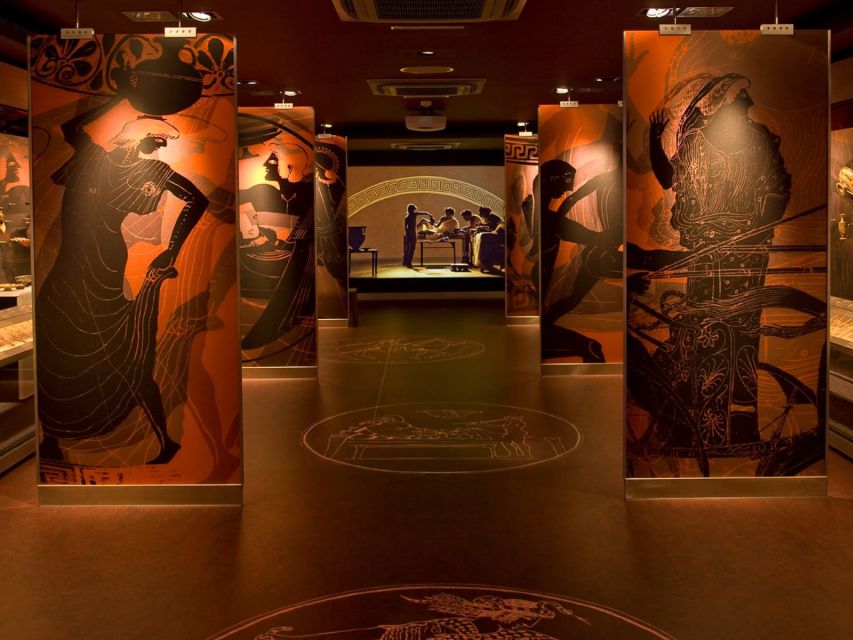
The fourth-floor exhibition shifts from broad historical development to everyday life in Classical Athens.
This is one of the most practical sections for understanding the people behind the temples and political history. You get a closer look at the objects and habits tied to daily life, rather than only the grand public achievements of the city.
That change in scale is important. A museum can tell you about Athens through monumental sculpture, but ordinary objects often make the period easier to picture. The collection encourages you to consider how people dressed, ate, worked, worshipped, and organized their homes and communities.
If you are visiting with children, this section may help keep the subject grounded, but the museum is not designed as a hands-on children’s attraction. One visitor found it less interesting for children under ten. I would agree that younger children may prefer a place with more movement and interactive features.
For adults and older children, the fourth floor works well as a quieter pause after the larger displays. Take your time with the arrangement rather than trying to see every object at speed. The museum is compact enough that you can return to a room if one display catches your eye.
More museums and sites in Athens:
- Acropolis monuments & Parthenon Walking Tour with Optional Acropolis Museum
★ 5.0 · 2,678 reviews - Athens All Included: Acropolis and Museum Guided Tour with Ticket
★ 4.5 · 2,673 reviews - Athens: Acropolis Museum Ticket with optional Audio Guide
★ 4.4 · 2,652 reviews - From Athens: Small-Group Delphi, Museum & Arachova Day Trip
★ 4.8 · 2,476 reviews
Ancient Cyprus shows the Mediterranean as a connected world
The Ancient Cypriot Art collection is one of the museum’s largest sections, with objects dating from the fourth millennium BC through the Medieval period.
You will see prehistoric figurines, Archaic and Classical sculptures, inscriptions, bronzes, coins, gold jewelry, glasswork, and many types of ceramics. The range is important because Cyprus sat at a meeting point between the local culture of the island, Greece, Egypt, and the Near East.
The collection shows how artistic ideas moved around the ancient Mediterranean. A Cypriot object may combine local forms with outside influences, and that mixture tells you something about trade, migration, contact, and political change. Ancient cultures did not develop in sealed boxes. They borrowed, adapted, and reshaped ideas.
This section is a strong reason to choose this museum rather than visiting only collections centered on mainland Greece. Cyprus is often left out of a standard Athens sightseeing plan, yet its objects help explain how wide the ancient Mediterranean world really was.
You may need to read carefully to get the most from this section. The displays cover a long period, and the variety of materials can feel dense if you rush. I would allow enough time to compare the ceramics, jewelry, and sculpture rather than treating the collection as one quick room.
How long to spend and how to plan the visit
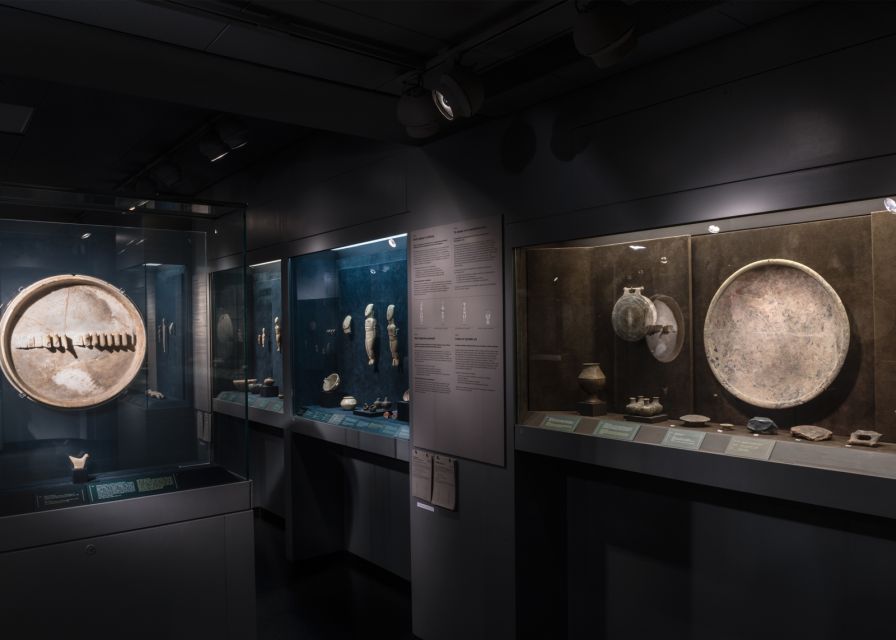
The ticket is valid for one day, but the practical visit is usually shorter. Allow 1.5 to 2 hours for a relaxed look at the permanent collections. You can move faster if you mainly want the Cycladic figurines, or stay longer if ancient Cyprus and Classical Athens interest you.
The museum is on a central street within a five-minute walk of Syntagma Square and Syntagma Metro station. That makes it easy to combine with other parts of central Athens. You do not need hotel transportation, and none is included.
A sensible plan is to visit in the middle of a walking day. Spend the morning around Syntagma, Parliament, or the historic center, then use the museum as a cool, quiet break. Afterward, you can continue toward the Acropolis area or nearby shopping streets.
The building has four floors. If stairs are tiring, ask about the best way to begin. One visitor found it easier to start at the top and work down, reducing the physical effort. The museum is wheelchair accessible, but the available information does not specify the exact route through every room, so it is sensible to confirm details at the entrance if needed.
Food and drinks are not allowed in the museum galleries. Free Wi-Fi is available, which helps if you plan to use the QR material on your phone.
The Clio Muse guide and the limits of self-guided information
This is an entry ticket, not a guided tour. You explore independently, and a QR code provides access to Clio Muse Tours.
That arrangement suits you if you like moving at your own speed. You can spend ten minutes with a favorite object or pass quickly through a section that feels familiar. There is no group schedule and no guide waiting for everyone to catch up.
The museum’s printed information is widely praised for being clear and useful. The displays are arranged in a straightforward way, with enough explanation to give the objects context without filling every wall with text.
The digital guide has a limitation. It does not cover every item, and finding objects by number can feel awkward if you are trying to match the phone content with the display. I would use it as an extra layer, not as the only way to understand the museum.
If you want detailed explanation for every room, this ticket may feel light. If you prefer freedom and readable labels, it offers good value.
Is $14 a fair price?
At $14 per person, the ticket is reasonably priced for a central Athens museum with several collections and a full day of validity.
The value is strongest if you are already planning to spend time near Syntagma and want a compact cultural stop. You get access to the permanent collections, Wi-Fi, and the QR-based museum material without paying for a separate guided tour.
The ticket is less valuable if you only want a quick look at the famous Cycladic figurines and have little interest in Greek or Cypriot art. In that case, you may finish quickly. But the price still compares well with the time available, especially since you can take the visit at a relaxed pace.
There is no hotel transfer, and no live guide is included. That keeps the cost down, but you should arrive ready to explore on your own.
The cancellation terms add useful flexibility. You can cancel up to 24 hours in advance for a full refund, and you can reserve now and pay later. These details matter when your Athens schedule depends on weather, museum hours, or a changing sightseeing plan.
Renovation noise and other practical cautions
Renovation work was reported in November 2025, with loud construction noise affecting the visit. If work is still taking place when you plan to go, bring earplugs or check the current situation before booking.
Access to the main entrance was also temporarily affected by construction in one September 2025 account. The museum remains near Syntagma, but the approach may not always look obvious if street works block the usual route.
The museum itself is described as cool, cleanly arranged, and pleasant in design. That cool interior can be welcome during a hot Athens day, though you may want a light layer if you are sensitive to indoor air conditioning.
The shop and Cycladic Café add a pleasant finish. The café is presented as a quiet oasis serving Cycladic flavors made with natural products and virgin ingredients. I would treat it as an optional pause rather than the main reason for visiting.
Who will enjoy this museum most?
I would recommend this museum to adults interested in archaeology, ancient art, design, and Mediterranean connections. It is also a good choice for anyone who wants a shorter museum visit with strong organization.
Older children and teenagers may enjoy the bold marble forms, painted pottery, weapons, and jewelry, especially if you give them a few objects to find. Children under ten may lose interest because the experience is mostly visual and text-based.
This museum also works well for repeat visitors to Athens. If you have already seen the Acropolis Museum, the National Archaeological Museum, and the major ancient sites, the focus on Cycladic and Cypriot art gives you a different angle.
It may not suit you if you need a live guide, a highly interactive experience, or an activity built around storytelling from room to room. The museum provides context, but you must do some of the connecting yourself.
Should you book the Museum of Cycladic Art ticket?
Book it if you want a well-organized, central, two-hour museum visit with excellent Cycladic material and a useful look at ancient Cyprus. The four-floor arrangement, readable information, and modest $14 price make it an easy addition to an Athens itinerary.
I would postpone or check current conditions if construction noise would spoil your visit. I would also choose the Acropolis Museum or another major site first if this is your only museum stop in Athens.
For most people with a free afternoon near Syntagma, the ticket is a sensible buy. Go for the marble figures, stay for the wider story, and leave enough time to look beyond the famous pieces.
FAQ
Where is the Museum of Cycladic Art?
The main entrance is about a five-minute walk from Syntagma Square and Syntagma Metro station in central Athens.
How much does entry cost?
The listed price is $14 per person.
How long is the ticket valid?
The ticket is valid for one day. Most people can see the permanent collections in about 1.5 to 2 hours, depending on their pace.
Does the ticket include a guided tour?
No. A guided tour is not included. The ticket includes access to Clio Muse Tours through a QR code, along with the permanent collections.
Is the museum wheelchair accessible?
Yes, the museum is wheelchair accessible.
Can I cancel the booking?
Yes. You can cancel up to 24 hours in advance for a full refund. Reserve now and pay later is also available.
Just added around Athens
- Delphi One Day Trip from Athens★ 4.0 · 98 reviews
- Private Delphi and Hosios Loukas Monastery – Great Lunch and Drinks Included★ 5.0 · 36 reviews
- Mercedes Private Tour to Delphi and Arachova★ 5.0 · 30 reviews
- Day tour to Ancient Olympia,Ancient Sparta Mycenae Including Meal★ 5.0 · 54 reviews
- Athens: Half Day Trip To Cape Sounio/Poseidon Temple Semi Private★ 5.0 · 131 reviews
- Athens Half-Day Private Tour Acropolis, Parthenon City Highlights★ 5.0 · 35 reviews
- From Athens: Day Tour to Mykonos★ 5.0 · 64 reviews
- Culinary Secrets of Downtown Athens★ 5.0 · 103 reviews
Museums, compared.

Acropolis, Parthenon & Acropolis Museum Guided Tour
Read our review →
Mythology of Delphi, Museum and Arachova Guided Tour
Read our review →Acropolis, Parthenon & Acropolis Museum Guided Tour
Read our review →
Acropolis monuments & Parthenon Walking Tour with Optional Acropolis Museum
Read our review →
Athens All Included: Acropolis and Museum Guided Tour with Ticket
Read our review →
Acropolis Museum Ticket with optional Audio Guide
Read our review →
Small-Group Delphi, Museum & Arachova Day Trip
Read our review →
Parthenon & Acropolis Museum with Audio or Live Tour Option
Read our review →Browse the lists this tour appears in