Reviewed · GUIDED
Athens: the Great Greek Philosophers Guided Tour in Spanish
Philosophy makes Athens feel personal. This 150-minute walking tour connects the city’s streets and hills with Socrates, Plato, Aristotle, and other Greek thinkers. I especially like the stops at the Areopagus and Socrates Prison, plus the way the guide turns old ideas into questions you can still wrestle with today.
I also like the focus on places beyond the standard sightseeing circuit, including the Greek Agora and Pnyx. The main consideration is simple: this is a walking tour with a strong discussion element, so you should bring water, wear good shoes, and expect less from it if you want only quick facts or photo stops.
The tour costs $34 per person. That is fair value for two and a half hours with an official guide, especially if you want Athens explained through philosophy rather than only temples and monuments. The tour is offered in Spanish, and the guide may adapt the discussion to your interests and level of background.
In This Review
- Key points before you book
- Why philosophy changes the way you see Athens
- Meeting Plato at the statue
- The Greek Agora and the public life of ideas
- The Areopagus and Athens from a different angle
- Socrates Prison and the cost of wisdom
- The Pnyx and the birth of public debate
- Gregory’s teaching style and the Spanish format
- Is two and a half hours enough?
- Who will enjoy this Athens philosophy walk?
- Booking value and practical planning
- Should you book the Great Greek Philosophers tour?
- FAQ
- Where does the tour meet?
- How long does the tour last?
- What language is the tour offered in?
- Which places are included on the route?
- What should I bring?
- Can I cancel or pay later?
Key points before you book
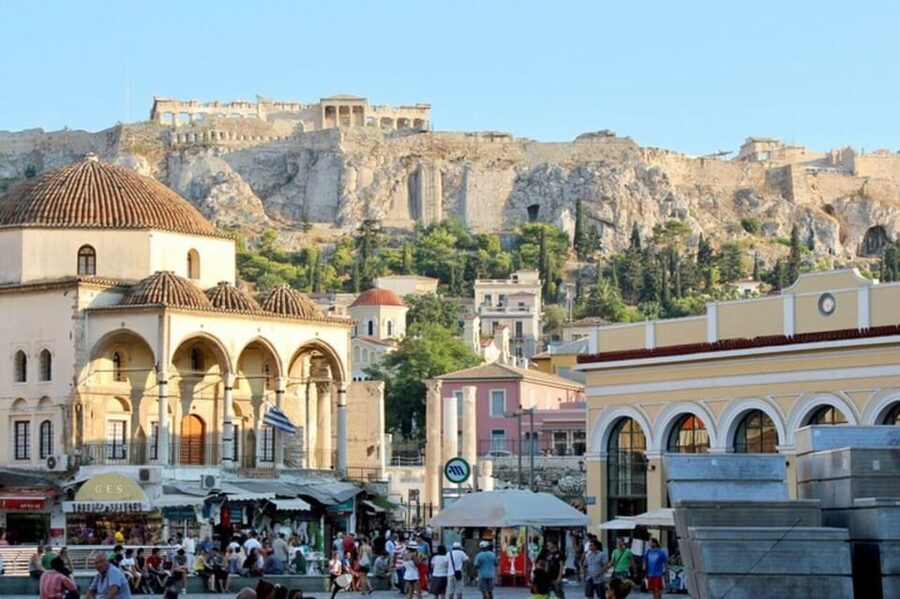
- Plato’s statue is the meeting point: Arrive 10 minutes early in front of the statue.
- The Areopagus gives the tour a powerful setting: You connect philosophy with one of Athens’ best-known historic hills.
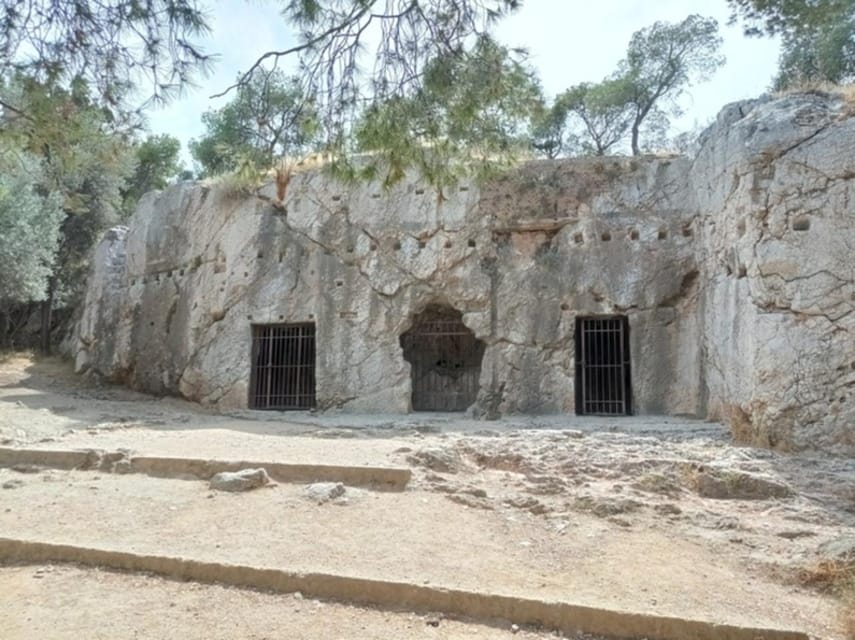
- Socrates Prison is a memorable stop: The site brings the story of Socrates’ final days closer to the ground.
- The walk reaches the Greek Agora and Pnyx: These places help explain how public debate and political thought grew in Athens.
- The guide leads discussion, not just narration: Expect questions, thought exercises, and room to share your own views.
- The tour is a good value at $34: You receive 150 minutes with an official Spanish-speaking guide, but food, drinks, and personal expenses are extra.
Why philosophy changes the way you see Athens
Athens can be hard to read at first. You see ancient stones, busy streets, churches, shops, and famous monuments, but the ideas behind the city can feel distant. This tour gives you a clear theme: how Greek philosophy began, who shaped it, and why those ideas still affect the way people think about society, truth, morality, and knowledge.
I like this approach because it gives familiar places a second meaning. The Agora is not just another archaeological area. It becomes a setting for public argument, teaching, persuasion, and the testing of ideas. The Pnyx is not simply a hill with a view. It helps you think about civic life and the connection between public speech and political change.
You do not need a background in philosophy. The guide explains the main ideas in accessible language and uses everyday comparisons when useful. One past participant with only limited experience in philosophy found the concepts easy to follow because the guide connected them to ordinary life.
The tone also appears to be conversational rather than academic. Gregory, a guide frequently praised for this experience, asks questions and encourages the group to examine its own beliefs. That can make the walk feel more like a friendly philosophy class in the open air than a standard city tour.
A few more Athens half-days to weigh up
- Athens: Acropolis & up to 5 Archaeological Sites Combo Pass
★ 4.4 · 12,619 reviews - Athens: Acropolis Ticket with Optional Audio or Live Guide
★ 4.2 · 11,055 reviews - Athens: Acropolis, Parthenon & Acropolis Museum Guided Tour
★ 4.8 · 9,316 reviews
Meeting Plato at the statue
The tour begins in front of the Statue of Plato. You are asked to arrive 10 minutes before the start, which is sensible because a city-center meeting point can be easier to find with a little extra time.
Starting with Plato sets the mood at once. He represents one of the central figures in the Greek philosophical tradition, and his work shaped later thinking about education, justice, politics, and the nature of reality. The tour does not treat him as a name on a timeline. Instead, you begin considering how his ideas connect with the other thinkers you will encounter.
The statue also gives you a clear landmark for the meeting. Look for the exact location shown in your booking details, then arrive early enough to identify the guide and settle in before the walk begins.
The guide may be Gregory or another member of the team. Gregory has been praised for his warmth, clear explanations, humor, and ability to adjust the conversation to the group. Sunny has also received a positive mention for being friendly, so the experience may vary slightly depending on who leads your departure.
The Greek Agora and the public life of ideas
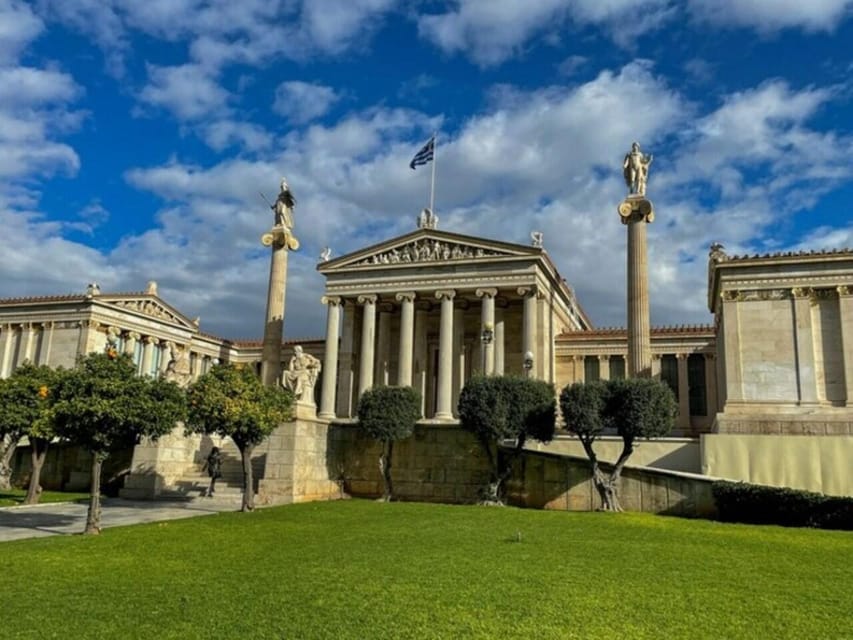
One of the most useful parts of the tour is its attention to the Greek Agora. This was more than a place to pass through. It was tied to the public life of Athens, where people gathered, exchanged views, and took part in the social and political world of the city.
The Agora gives the tour a practical setting for understanding Socrates. His method depended on conversation. Rather than simply presenting a finished answer, he questioned assumptions and pushed people to define what they meant. In a place connected with public exchange, that method becomes easier to picture.
I appreciate that the tour connects philosophical ideas with the society that produced them. You are not only hearing about famous thinkers in isolation. You are also considering how the city’s public spaces helped shape debate, education, and political thought.
The experience may include discussion of Socrates, Plato, Aristotle, and Pythagoras, along with different schools of thought, theories, and dialogues. The pace matters here. Two and a half hours is long enough to provide a real framework, but not so long that the subject becomes a full university course.
Do not expect a silent stroll with a long list of dates. The guide invites questions and may ask you to discuss moral or philosophical problems with the group. If you enjoy conversation, this is a strength. If you prefer to stand back and take photographs without much interaction, it may feel more demanding.
The Areopagus and Athens from a different angle
The Areopagus is one of the tour’s main highlights. Its historic importance gives the guide a strong place to discuss ancient Athens, public authority, and the traditions surrounding law, debate, and civic life.
The setting also changes the physical rhythm of the tour. You are walking through central Athens and moving between locations rather than sitting in a museum. Comfortable footwear is not a minor suggestion. You should take it seriously, particularly because the route includes hills and outdoor sites.
From this point, the experience connects place and argument. The stones under your feet help you picture a city where public speech could affect reputation, policy, and personal fate. The story of Socrates becomes more than a lesson about an old philosopher. It becomes a question about what happens when an individual challenges the beliefs of a community.
That is one reason the tour receives praise from people who are not already philosophy fans. The guide does not treat the subject as a closed world for specialists. He uses the setting, stories, and questions to make the material relevant to anyone interested in how people make decisions and defend their beliefs.
Same stretch of coastline, a completely different day out:
- Athens: Cape Sounion & Poseidon Temple Sunset Half-Day Trip
★ 4.8 · 8,241 reviews - Athens: Acropolis and Parthenon Guided Walking Tour
★ 4.6 · 5,882 reviews - All Day Cruise -3 Islands to Agistri,Moni, Aegina with lunch and drinks included
★ 5.0 · 4,958 reviews - Athens, Piraeus, and Coastline: Blue Hop-On Hop-Off Bus
★ 3.9 · 4,849 reviews
Socrates Prison and the cost of wisdom
Socrates Prison adds an emotional center to the walk. The stop is linked to the philosopher’s imprisonment and gives the tour a physical place for discussing the final stage of his life.
The story of Socrates is especially effective because it combines ideas with consequences. He is remembered for asking difficult questions, but the tour also addresses the price he paid for doing so. The larger point is not simply that Socrates was wise. It is that wisdom, dissent, and social pressure can collide in uncomfortable ways.
At the prison site, expect storytelling rather than a major museum-style presentation. The value comes from the guide’s explanation and the chance to connect the location with the larger story. Gregory has been praised for dramatizing historical events and helping the group picture the people behind the names.
This is also a good place to ask questions. The guide has been described as willing to discuss philosophy beyond the basic route, including broader issues in history and thought. If you are curious about Socrates’ method, his trial, or the meaning of his choices, you should use this part of the walk to speak up.
The Pnyx and the birth of public debate
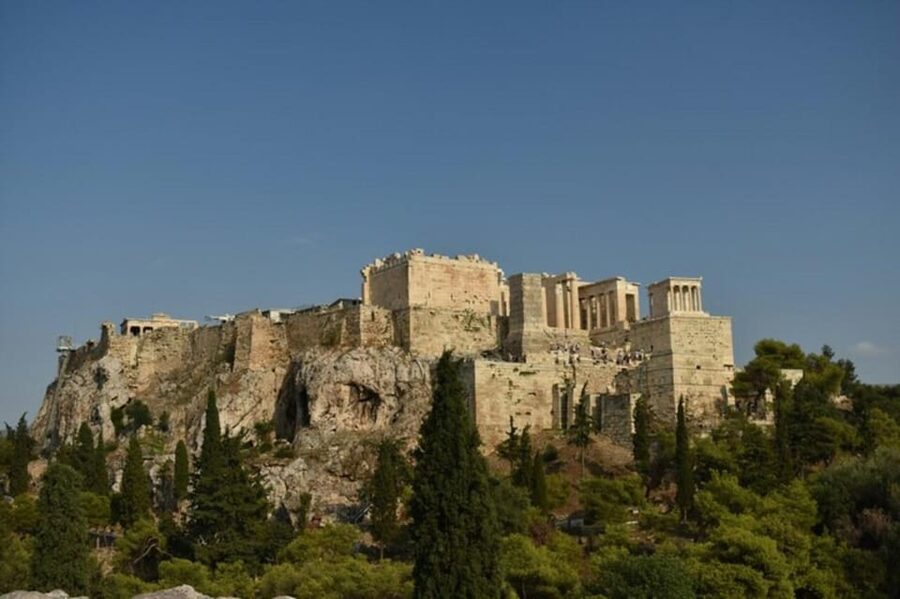
The route also reaches the Pnyx, a place tied to the public life of ancient Athens. The tour uses it to explore the connection between philosophy, civic participation, and the growth of new ways to think about society.
This stop helps explain why Athens became so important in the story of human thought. Ideas did not develop in a vacuum. They were argued over in a city where public speech, politics, education, and social life crossed paths.
The Pnyx also gives the walk a broader ending point. You move from individual thinkers to the society around them. Socrates, Plato, Aristotle, and Pythagoras each represent different approaches, but the tour asks you to consider the larger change they helped create.
I would pay attention to how the guide handles this part. The best value here is not a single fact about the site. It is the connection between a physical place and a major shift in how people examined truth, ethics, politics, and the human role in society.
Gregory’s teaching style and the Spanish format
The guide is the heart of this experience. Gregory has received repeated praise for his passion, organization, patience, and ability to make complex concepts understandable. He also encourages the group to ask questions and to examine its own views, which gives the tour a more active feel.
His approach seems flexible. He has adjusted explanations to suit different levels of experience and followed individual interests, including law and society. That matters because a group can include someone who has studied philosophy alongside someone encountering Socrates for the first time.
The advertised language is Spanish, with a live Spanish-speaking guide. Some feedback also describes an English and Spanish-speaking guide, but you should confirm the language offered for your specific departure when booking. If you are comfortable in Spanish, the tour gives you a chance to discuss the ideas in a natural spoken setting rather than relying on a self-guided translation.
The discussion style may not suit every group. Questions and moral exercises can take time, and the tour may feel less predictable than a tightly scripted sightseeing walk. I see that as a plus for curious people, but a drawback if you want a fast route through fixed attractions.
Is two and a half hours enough?
The 150-minute duration is well judged for this subject. Philosophy needs more than a quick explanation, but you probably do not want to spend a full day moving from one ancient concept to another.
The tour covers a lot: the origin of philosophy, major thinkers, important sites, schools of thought, historical stories, and the meaning of the places themselves. A guide has also brought the group to a metro station afterward, which can be helpful if you need to continue to another part of Athens, although you should not treat that as a guaranteed included service.
You will be walking for most of the experience. Bring water, wear comfortable shoes, and plan around the weather. Food, drinks, and personal expenses are not included, so have your own refreshments ready if you need them.
At $34, the cost is reasonable for a focused two-and-a-half-hour tour with an official guide. I would value it most as an introduction to Athens that adds context to other sightseeing. If you already plan to visit archaeological sites on your own, this walk can help tie them together.
Who will enjoy this Athens philosophy walk?
I would recommend it to you if you enjoy stories, questions, and connections between history and modern life. It also suits first-time visitors who want to understand why Athens matters beyond the Acropolis.
You do not need to be a philosophy specialist. The guide’s style is designed to welcome beginners, while the question-and-answer format gives more experienced readers room to explore difficult ideas.
This tour is especially useful for:
- Couples looking for a thoughtful and unusual city walk.
- Students and teachers interested in ancient philosophy.
- Families with older children who enjoy discussion.
- Visitors who have already seen Athens’ main monuments and want a new angle.
- Anyone interested in ethics, politics, law, society, or the history of ideas.
I would hesitate to book it if you dislike walking, outdoor sites, or group conversation. You may also prefer a traditional archaeological tour if your main goal is architecture, excavation details, or a long stop at each monument.
Booking value and practical planning
The reserve-now, pay-later option keeps your plans flexible, and cancellation is allowed up to 24 hours before the tour for a full refund. Those terms are useful when your Athens schedule is still changing.
Arrive at the Statue of Plato 10 minutes early. Keep your booking information available, wear shoes suitable for city streets and hills, and carry water from the start.
Because the tour is in Spanish, check the departure language before you finalize the booking if your group needs another language. The experience is built around a live guide, so language comfort will affect how much you gain from the discussion.
Should you book the Great Greek Philosophers tour?
Yes, if you want Athens to make you think as well as look impressive. For $34, you get a focused route through places linked with Plato, Socrates, the Agora, the Areopagus, and the Pnyx, plus a guide who turns the walk into an open conversation.
I especially recommend it to curious beginners. Gregory’s teaching style, the questions built into the route, and the visit to Socrates Prison give the tour a human edge. You leave with more than names and dates.
Skip it if you want a quiet sightseeing loop or a strictly archaeological tour. Otherwise, bring water, wear good shoes, and give yourself permission to ask questions. Athens is at its best when its old stones start arguing with you.
FAQ
Where does the tour meet?
The meeting point is in front of the Statue of Plato. You should arrive 10 minutes before the tour begins.
How long does the tour last?
The tour lasts 150 minutes, or two and a half hours. Starting times depend on availability.
What language is the tour offered in?
The advertised live tour language is Spanish. Some experience information also refers to English and Spanish, so confirm the language for your chosen departure before booking.
Which places are included on the route?
The tour highlights the Statue of Plato, the Areopagus, and Socrates Prison. It also discusses the Greek Agora and the Pnyx.
What should I bring?
Bring comfortable shoes and water. Food and drinks are not included.
Can I cancel or pay later?
You can cancel up to 24 hours in advance for a full refund. The reserve-now, pay-later option lets you book without paying immediately.
Just added around Athens
- Delphi One Day Trip from Athens★ 4.0 · 98 reviews
- Mercedes Private Tour to Delphi and Arachova★ 5.0 · 30 reviews
- Private Delphi and Hosios Loukas Monastery – Great Lunch and Drinks Included★ 5.0 · 36 reviews
- Day tour to Ancient Olympia,Ancient Sparta Mycenae Including Meal★ 5.0 · 54 reviews
- Athens: Half Day Trip To Cape Sounio/Poseidon Temple Semi Private★ 5.0 · 131 reviews
- Athens Half-Day Private Tour Acropolis, Parthenon City Highlights★ 5.0 · 35 reviews
- From Athens: Day Tour to Mykonos★ 5.0 · 64 reviews
- Culinary Secrets of Downtown Athens★ 5.0 · 103 reviews
Guided, compared.

Acropolis, Parthenon & Acropolis Museum Guided Tour
Read our review →

Cape Sounio & Poseidon Temple Trip with Audio Guide
Read our review →
Mythology of Delphi, Museum and Arachova Guided Tour
Read our review →Acropolis, Parthenon & Acropolis Museum Guided Tour
Read our review →